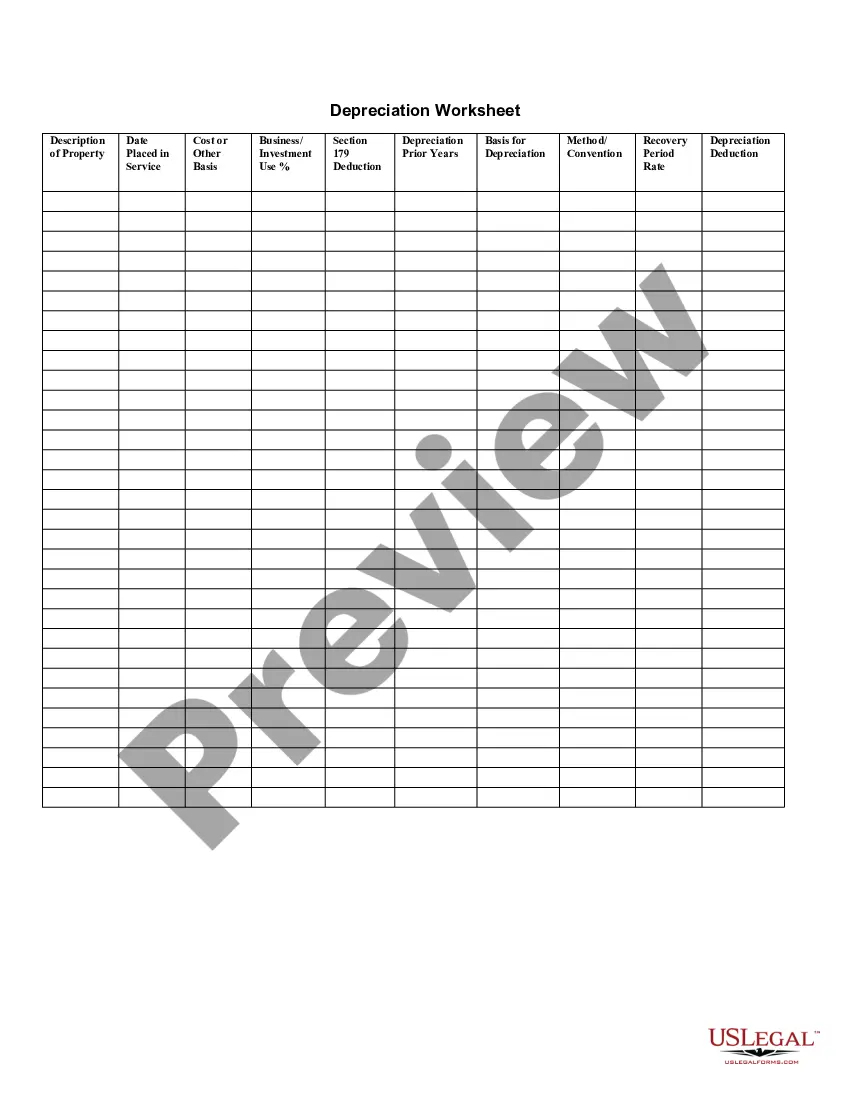
This Depreciation Worksheet is a template used by companies for creating a worksheet to evaluate depreciation expenses. The Depreciation Worksheet organizes and outlines a company's depreciation expenses and can be customized for a company's specific usage.
Vermont Depreciation Worksheet
Category:
State:
Multi-State
Control #:
US-03625BG
Format:
Word;
Rich Text
Instant download
Description
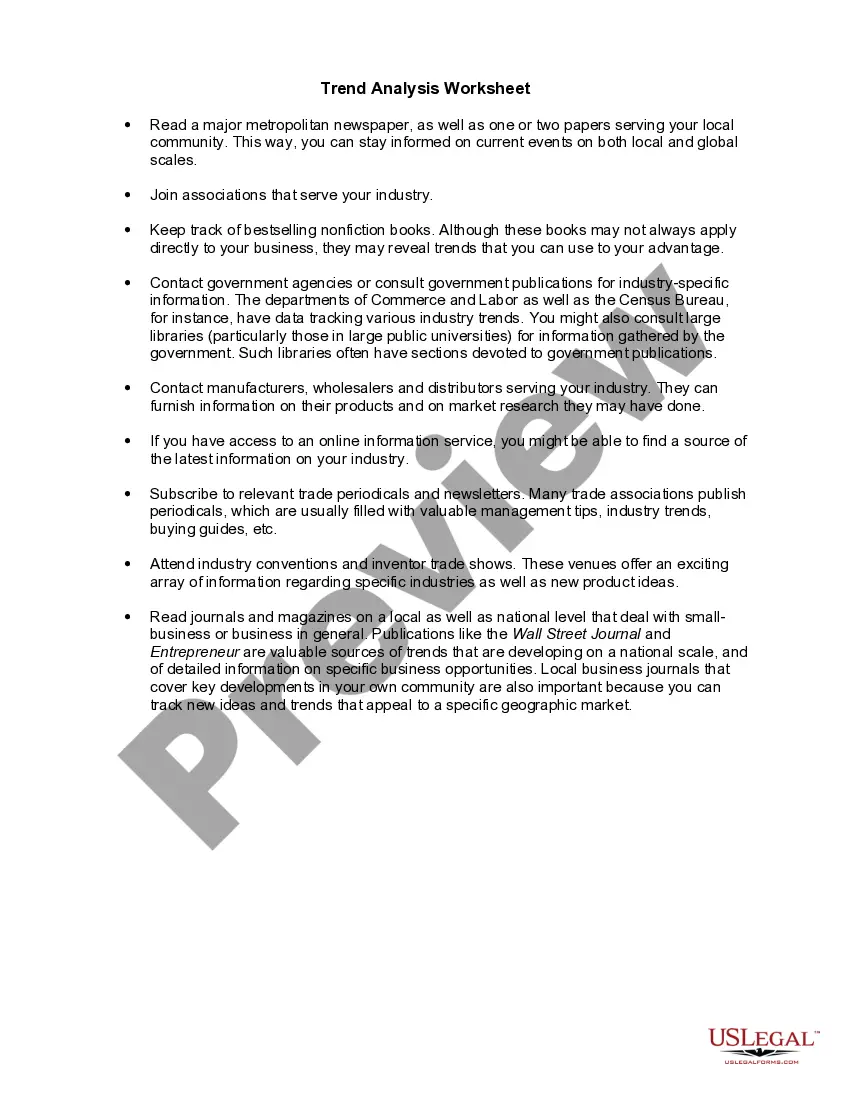
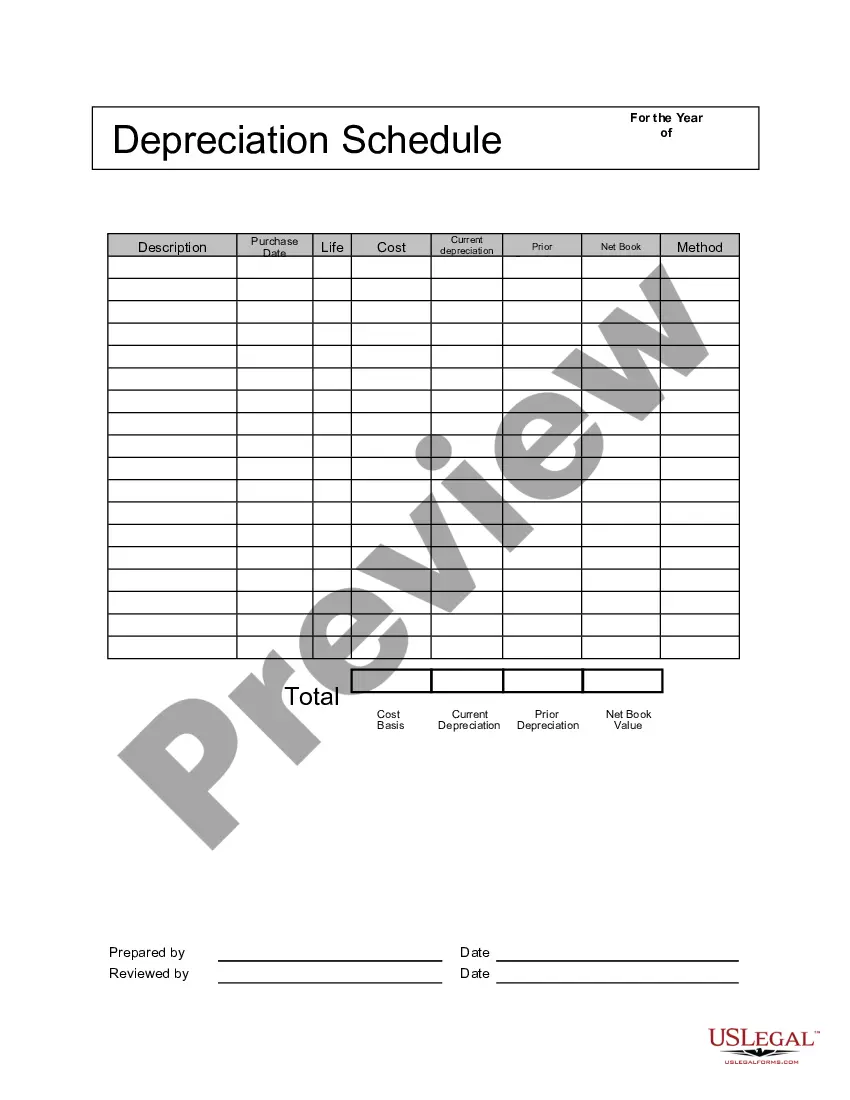
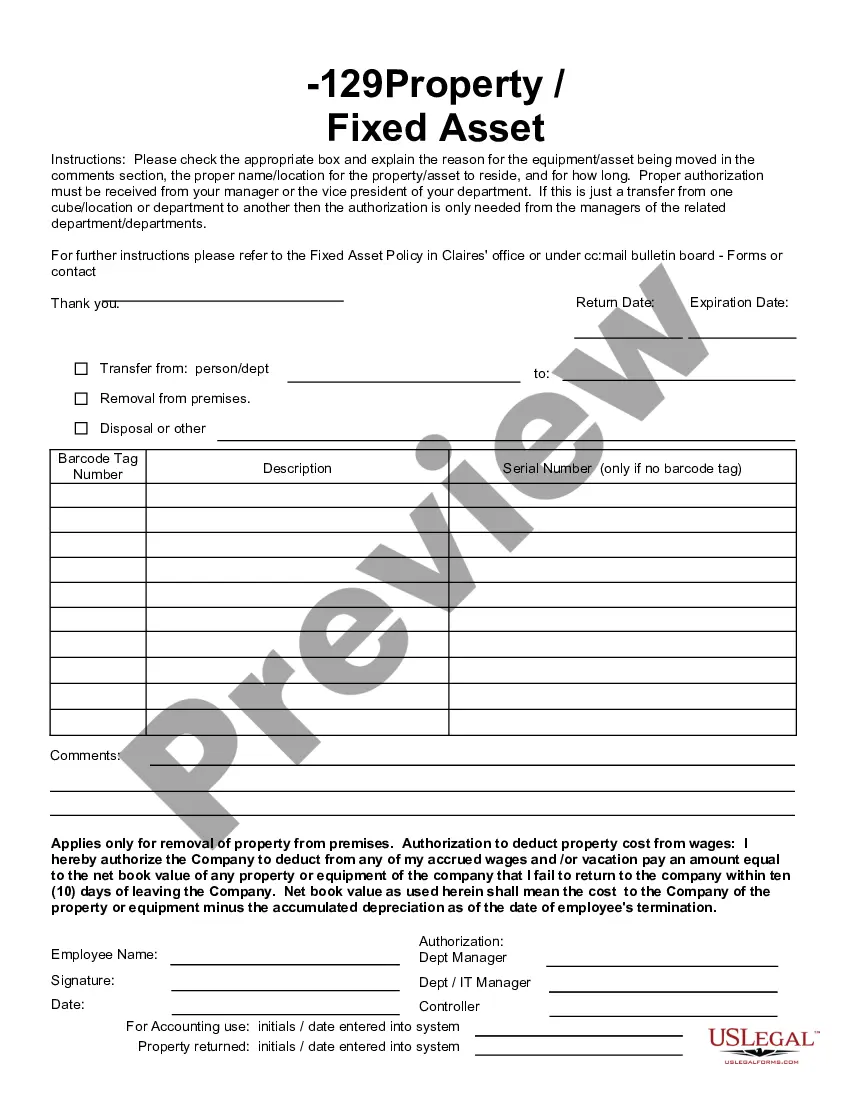
Get your form ready online
Our built-in tools help you complete, sign, share, and store your documents in one place.
Built-in online Word editor
Make edits, fill in missing information, and update formatting in US Legal Forms—just like you would in MS Word.
Export easily
Download a copy, print it, send it by email, or mail it via USPS—whatever works best for your next step.
E-sign your document
Sign and collect signatures with our SignNow integration. Send to multiple recipients, set reminders, and more. Go Premium to unlock E-Sign.
Notarize online 24/7
If this form requires notarization, complete it online through a secure video call—no need to meet a notary in person or wait for an appointment.
Store your document securely
We protect your documents and personal data by following strict security and privacy standards.

Make edits, fill in missing information, and update formatting in US Legal Forms—just like you would in MS Word.

Download a copy, print it, send it by email, or mail it via USPS—whatever works best for your next step.

Sign and collect signatures with our SignNow integration. Send to multiple recipients, set reminders, and more. Go Premium to unlock E-Sign.

If this form requires notarization, complete it online through a secure video call—no need to meet a notary in person or wait for an appointment.

We protect your documents and personal data by following strict security and privacy standards.
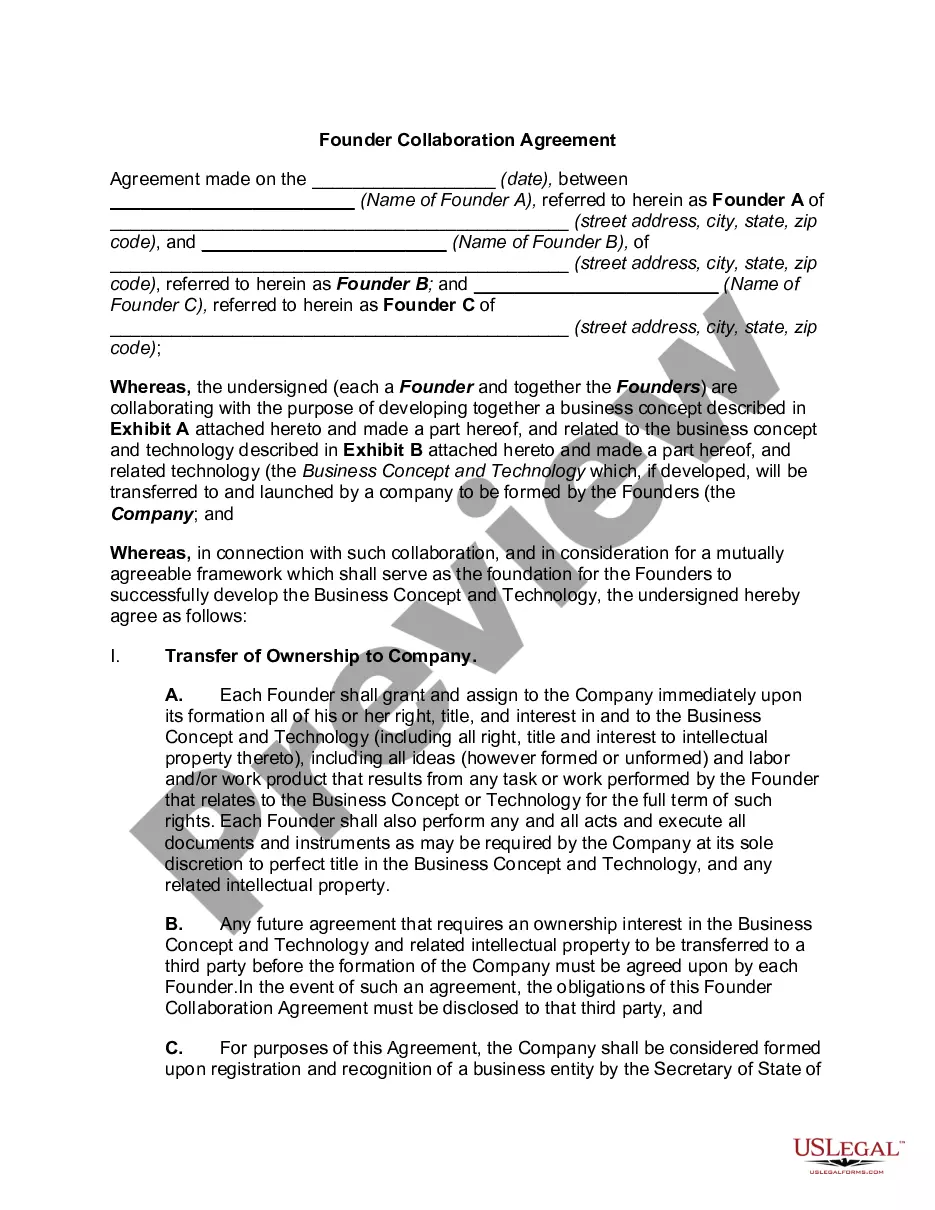
Looking for another form?








How to fill out Depreciation Worksheet?
You may spend several hours online trying to locate the legal document template that complies with the federal and state standards you require.
US Legal Forms offers thousands of legal forms that are reviewed by professionals.
You can easily download or print the Vermont Depreciation Worksheet from my services.
If available, use the Preview button to review the document template as well.
- If you already have a US Legal Forms account, you can Log In and click the Download button.
- Next, you can complete, modify, print, or sign the Vermont Depreciation Worksheet.
- Each legal document template you purchase is yours to keep permanently.
- To obtain another copy of any purchased form, go to the My documents tab and click the corresponding button.
- If you are using the US Legal Forms website for the first time, follow the simple instructions below.
- First, ensure you have chosen the correct document template for the county/area of your choice.
- Review the document description to confirm you have selected the right form.
Form popularity
FAQ
To calculate your taxable income, begin by adding all forms of income, including wages, interest, and dividend earnings. From there, subtract any deductions you qualify for, such as expenses reported in your Vermont Depreciation Worksheet. This process will give you your total taxable income, which is vital for determining your taxes owed. If you have questions or need assistance, the uslegalforms platform is here to help you navigate the complexities.
To calculate taxable income in Vermont, start with your total income and subtract eligible deductions, such as personal exemptions and standard deductions. Understanding these deductions can significantly impact your overall tax liability. Remember, maintaining accurate records using tools like the Vermont Depreciation Worksheet can simplify this calculation, ensuring that you're maximizing your deductions.
Vermont income tax is calculated based on your taxable income, using a progressive tax rate system. This system means that higher income levels are taxed at higher rates. It's essential to accurately report all income and deductions to determine your taxable income correctly. To streamline the process, consider using a Vermont Depreciation Worksheet to ensure you're capturing all deductions effectively.
In Vermont, social security benefits are generally not subject to state income tax. This means that if you receive social security income, you can enjoy it without adding to your tax burden. However, it is important to consider your overall financial situation, as other income sources may affect your taxes. For your financial records, utilizing a Vermont Depreciation Worksheet can help you track any related expenses.
The non-resident tax form for Vermont is Form IN-112. This form is designed for individuals who earn income in Vermont but reside in another state. By accurately completing Form IN-112, you can ensure proper tax compliance while potentially benefiting from deductions. Using a Vermont Depreciation Worksheet can also be valuable for non-residents, as it allows you to detail any asset depreciation related to your Vermont earnings.
Form IN-111 is Vermont's personal income tax return form. This form is essential for individuals to report their income and calculate their tax liability. While filling out the IN-111, taxpayers can utilize a Vermont Depreciation Worksheet to help them account for any applicable depreciation on their assets. This ensures that you maximize your potential deductions and maintain compliance with state tax regulations.
Vermont does conform to certain aspects of bonus depreciation, but nuances may exist compared to federal guidelines. It's essential to stay updated on any changes in state law that could affect your tax filings. Using a Vermont Depreciation Worksheet can guide you through these unique regulations, helping you make informed deductions. Make sure to consult tax resources or a professional for accurate information relevant to your situation.
Certain types of property do not qualify for bonus depreciation, including specific land improvements and buildings. Personal property, such as vehicles and machinery, usually qualifies, while some intangible assets may not. It's crucial to review the eligibility criteria closely. A comprehensive Vermont Depreciation Worksheet can help clarify what property qualifies and assist you in maximizing available deductions.
Yes, Vermont does allow bonus depreciation, but it applies differently compared to federal regulations. Taxpayers can benefit from bonus depreciation when filing their returns, especially for qualifying assets. To make the most of these benefits, utilizing the Vermont Depreciation Worksheet can simplify calculations and ensure compliance with state law. It’s best to review current regulations or consult a tax professional for the latest updates.
The 183 day rule in Vermont stipulates that individuals are considered residents for tax purposes if they spend 183 days or more in the state during the tax year. This residency status affects how income is taxed and may require filing a Vermont tax return. To ensure compliance, keep thorough records of your days spent in Vermont. Using the Vermont Depreciation Worksheet can help in navigating tax implications associated with residency.