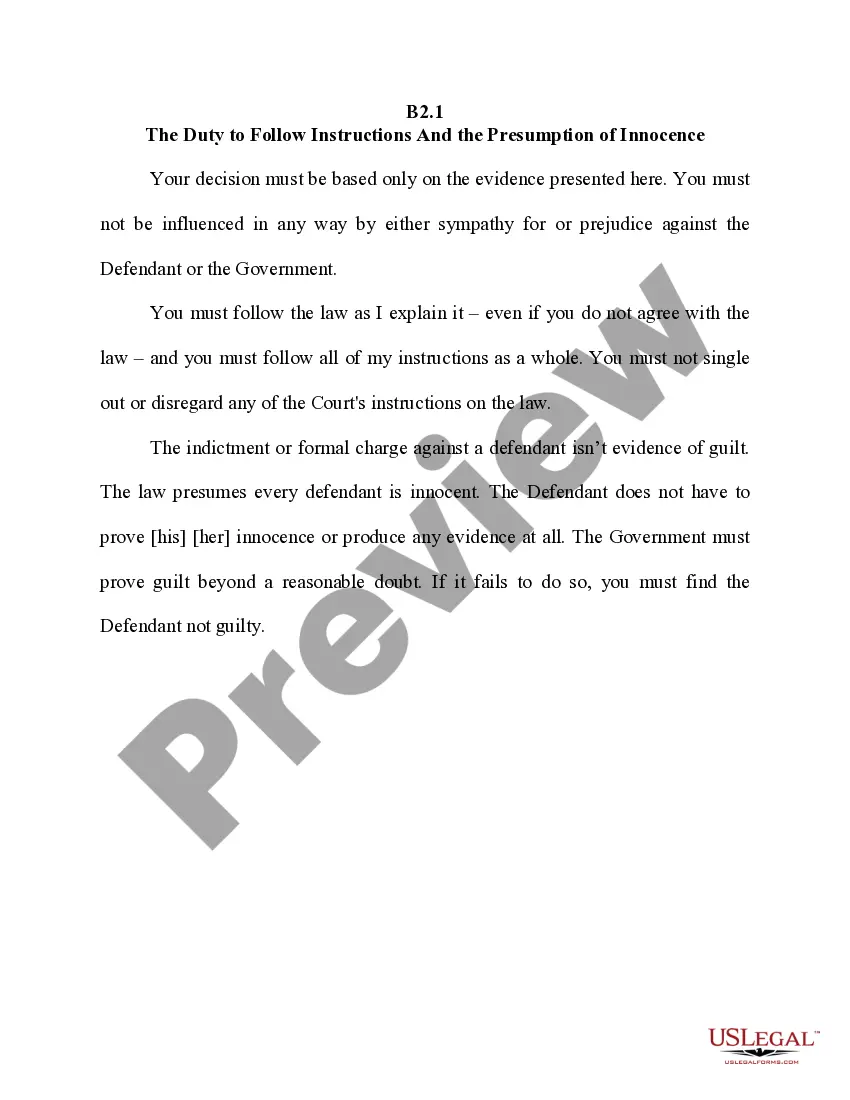
Without an agreement as to the division of fees, attorneys jointly undertaking to represent a client share equally, and this is true even though one attorney employs another attorney to assist in an action for a contingent fee. But where the client's employment of more than one attorney is not joint, or where separate attorneys render separate services, each is entitled only to the reasonable value of each attorney's services.
Vermont Disclosure by Letter from Client to Attorney Regarding Division of Fees between Attorneys
Instant download
Description
Free preview
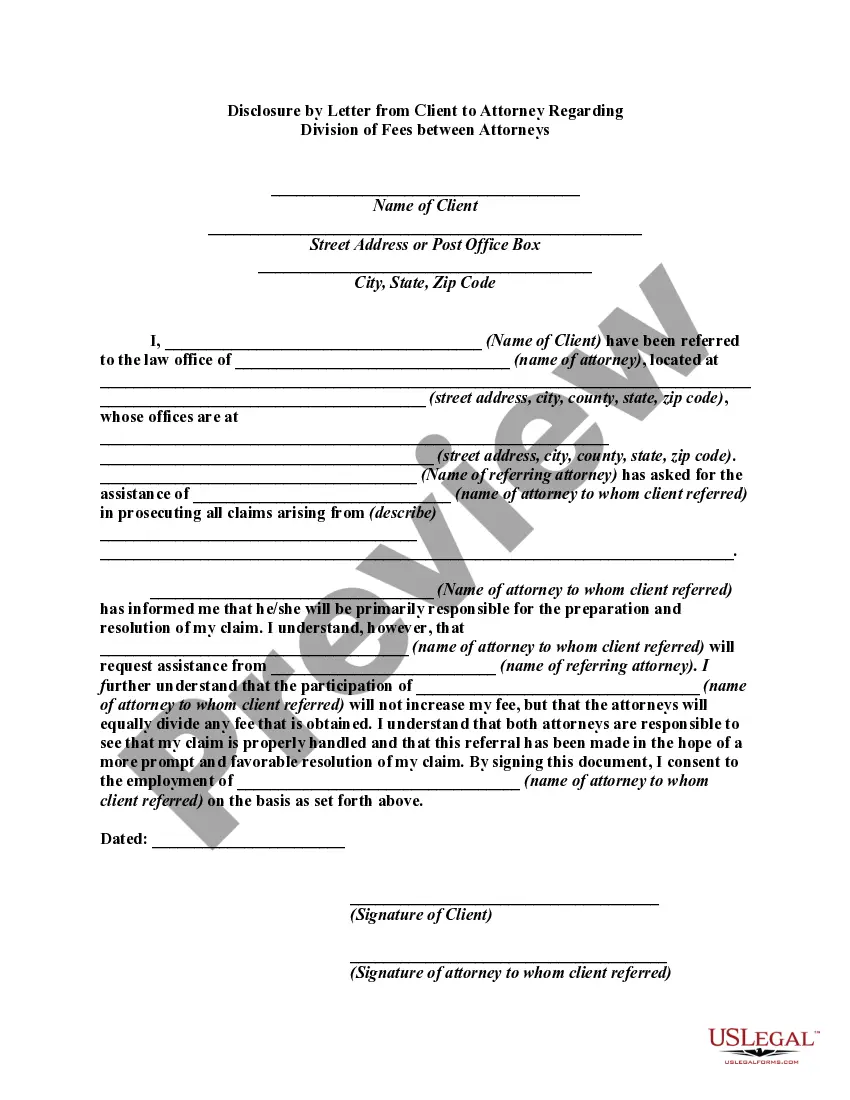


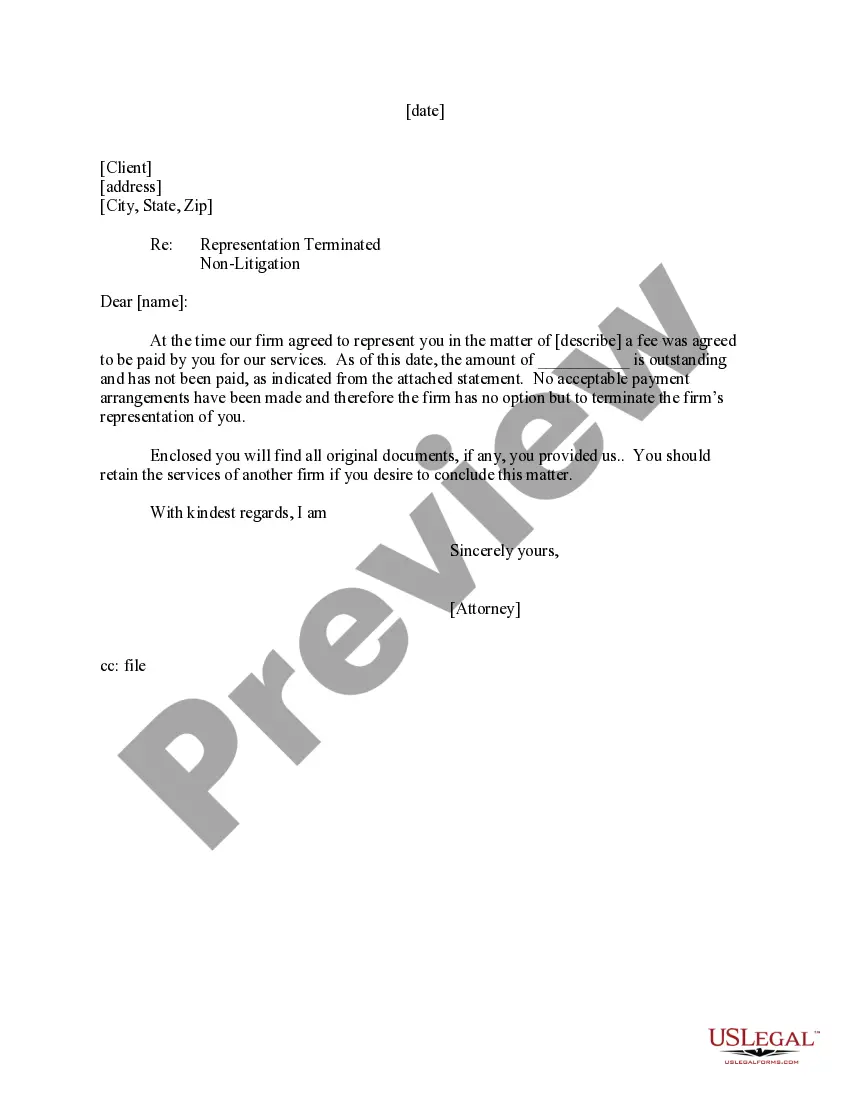
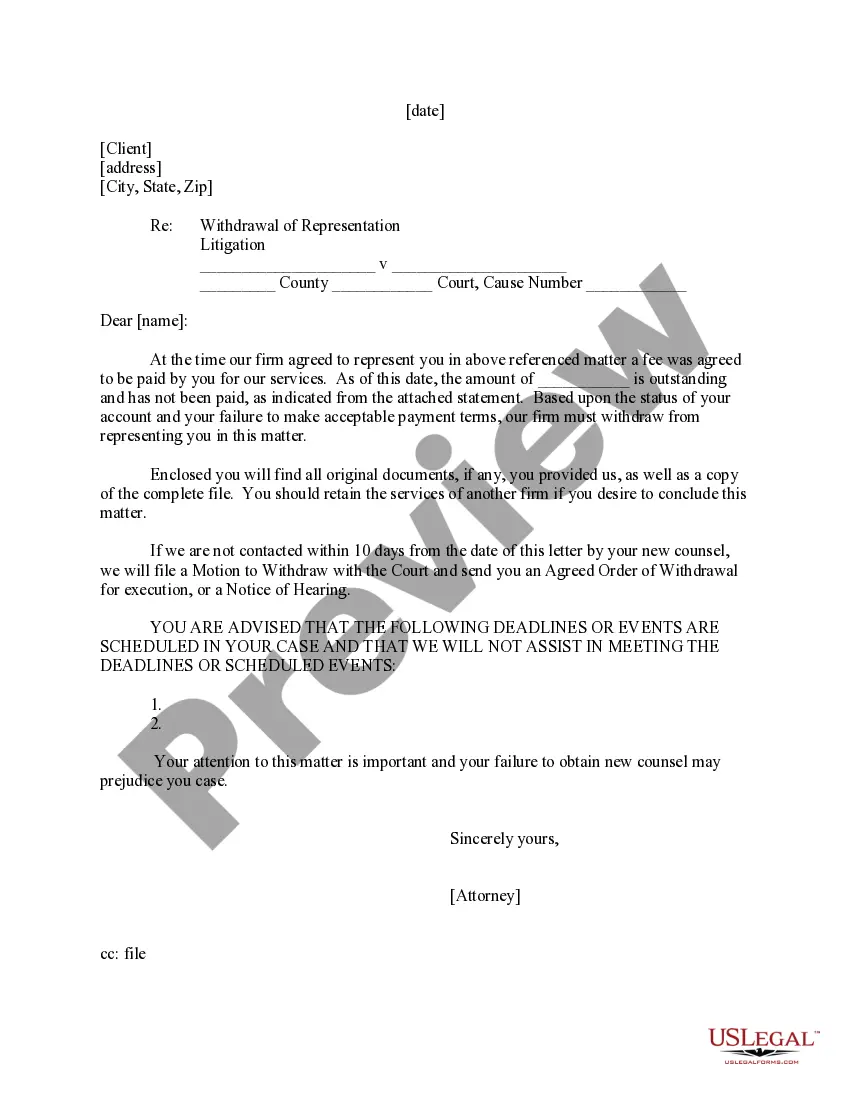

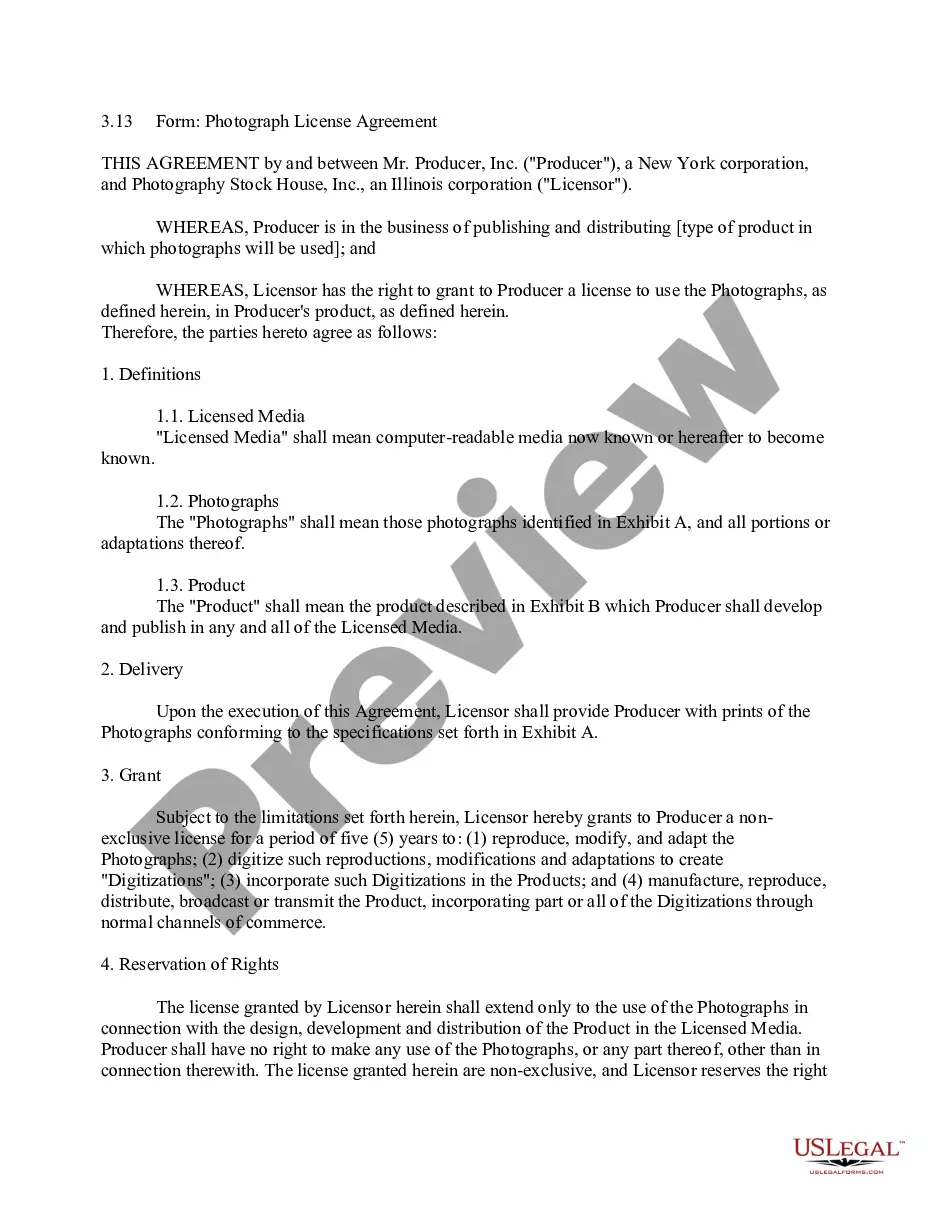

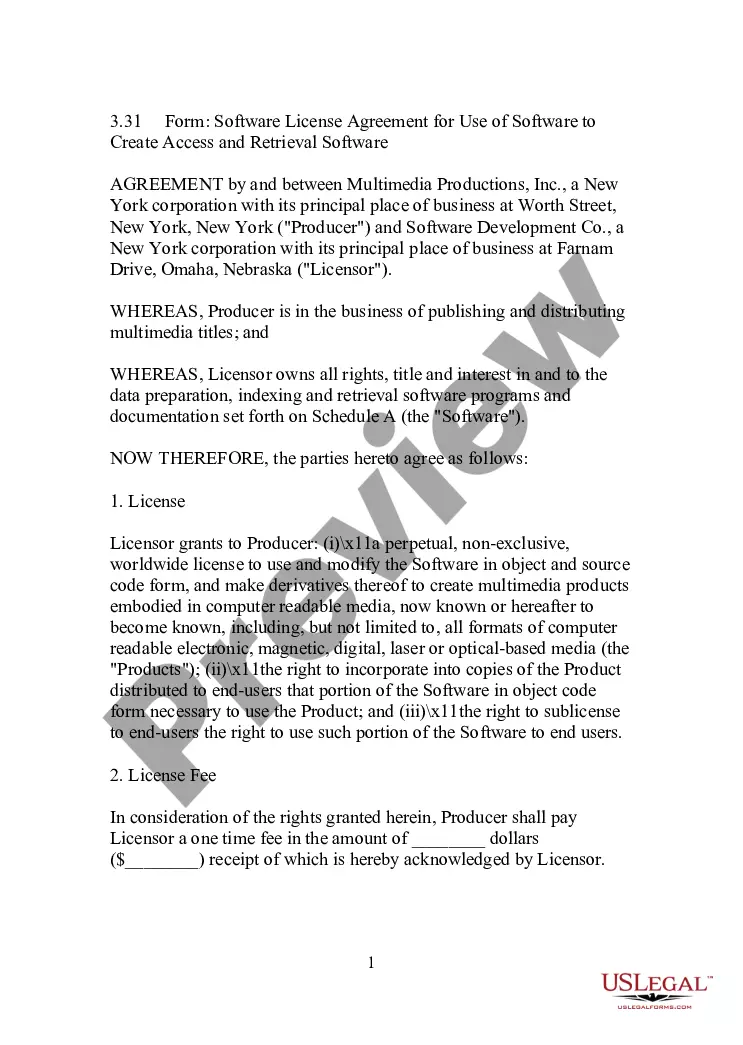

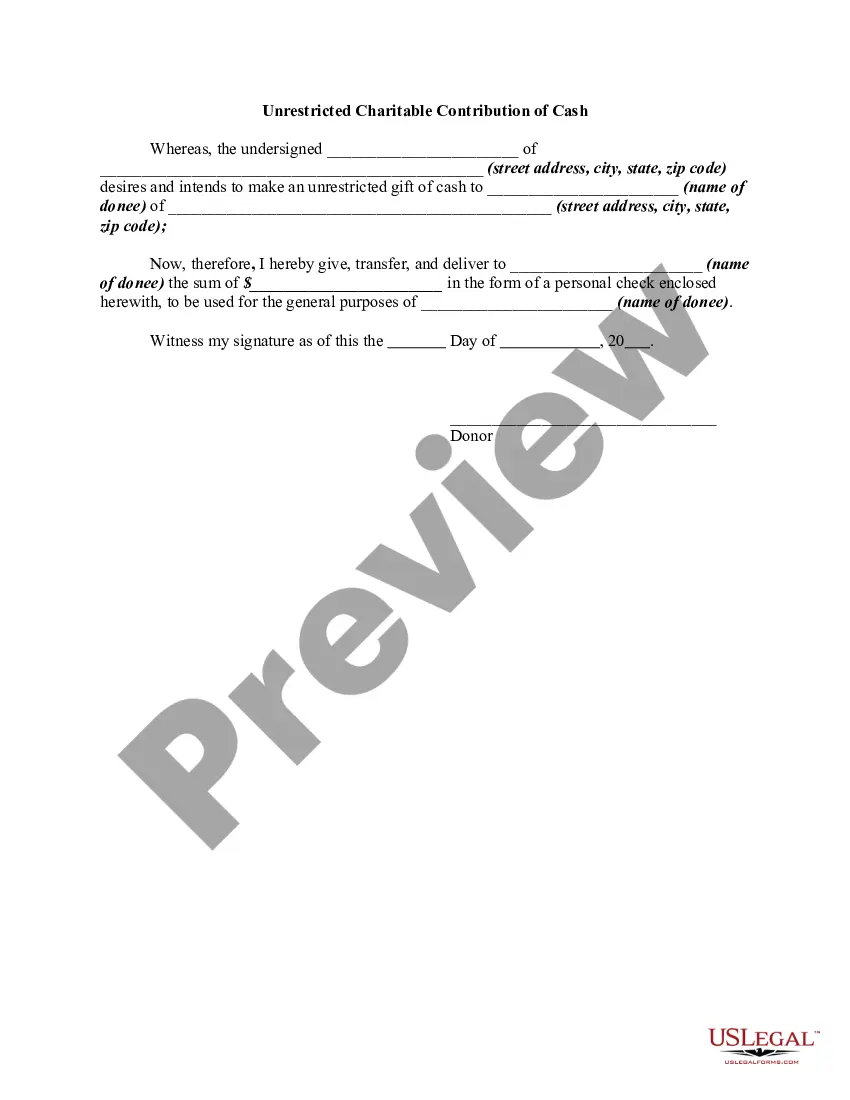
How to fill out Disclosure By Letter From Client To Attorney Regarding Division Of Fees Between Attorneys?
Are you currently in a situation where you require documents for either business or personal purposes almost every day.
There are numerous legal document templates available online, but locating forms you can trust is not simple.
US Legal Forms provides a vast selection of form templates, such as the Vermont Disclosure by Letter from Client to Attorney Regarding Division of Fees between Attorneys, which can be drafted to meet federal and state regulations.
Use US Legal Forms, the most extensive collection of legal forms, to save time and avoid mistakes.
The service offers professionally crafted legal document templates that you can utilize for a variety of purposes. Create an account on US Legal Forms and begin making your life a bit easier.
- If you are already familiar with the US Legal Forms website and possess an account, just Log In.
- Then, you can download the Vermont Disclosure by Letter from Client to Attorney Regarding Division of Fees between Attorneys template.
- If you do not have an account and wish to start using US Legal Forms, follow these steps.
- Obtain the form you need and ensure it is for the correct city/region.
- Utilize the Preview button to view the form.
- Check the description to confirm that you have selected the right form.
- If the form is not what you’re looking for, use the Search field to find the form that meets your needs and criteria.
- When you find the correct form, click Buy now.
- Choose the pricing plan you prefer, fill out the necessary information to create your account, and pay for the order using your PayPal or Visa or MasterCard.
- Select a convenient document format and download your copy.
- Find all the document templates you have purchased in the My documents list. You can obtain another copy of the Vermont Disclosure by Letter from Client to Attorney Regarding Division of Fees between Attorneys at any time, if needed. Just click on the required form to download or print the document template.
Form popularity
FAQ
Prof. Cond. 4.2. In representing a client, a lawyer shall not communicate about the subject of the representation with a person the lawyer knows to be represented by another lawyer in the matter, unless the lawyer has the consent of the other lawyer or is authorized to do so by law or a court order.
Lawyers withdraw from cases all the time, and it usually does not impact the judge's perception of the client unless the client has had multiple changes in legal counsel with attorneys that have a good reputation with the court.
ABA Model Rules 1.7 and Rule 1.9 both require that the lawyer disclose the facts and circumstances surrounding the potential conflict to enable the client to make an informed decision concerning the attorney's representation.
The bright line rule states that a lawyer, or law firm, cannot represent two clients who have adverse legal interests without first obtaining their informed consent.
(g) engage in conduct that the lawyer knows or reasonably should know is harassment or discrimination on the basis of race, sex, religion, national origin, ethnicity, disability, age, sexual orientation, gender identity, marital status, or socioeconomic status in conduct related to the practice of law.
While physicians who engage in sexual activities with their patients are subject to removal from their profession, there is no similar policy with respect to lawyers.
California Rules of Professional Conduct. Rule 1.8. 1 specifically outlines that an attorney may not enter into business transactions with a client. In addition, they may not knowingly acquire ownership, possession, security, or any other pecuniary interest in a client.