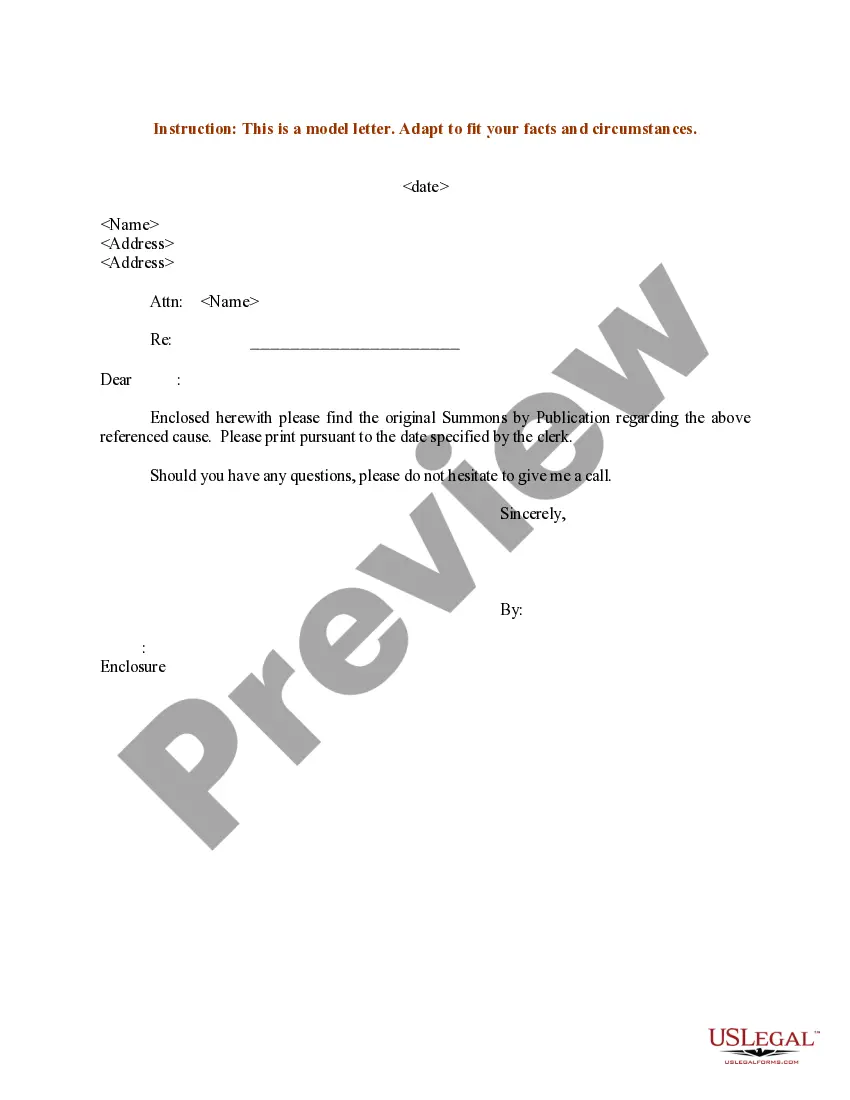
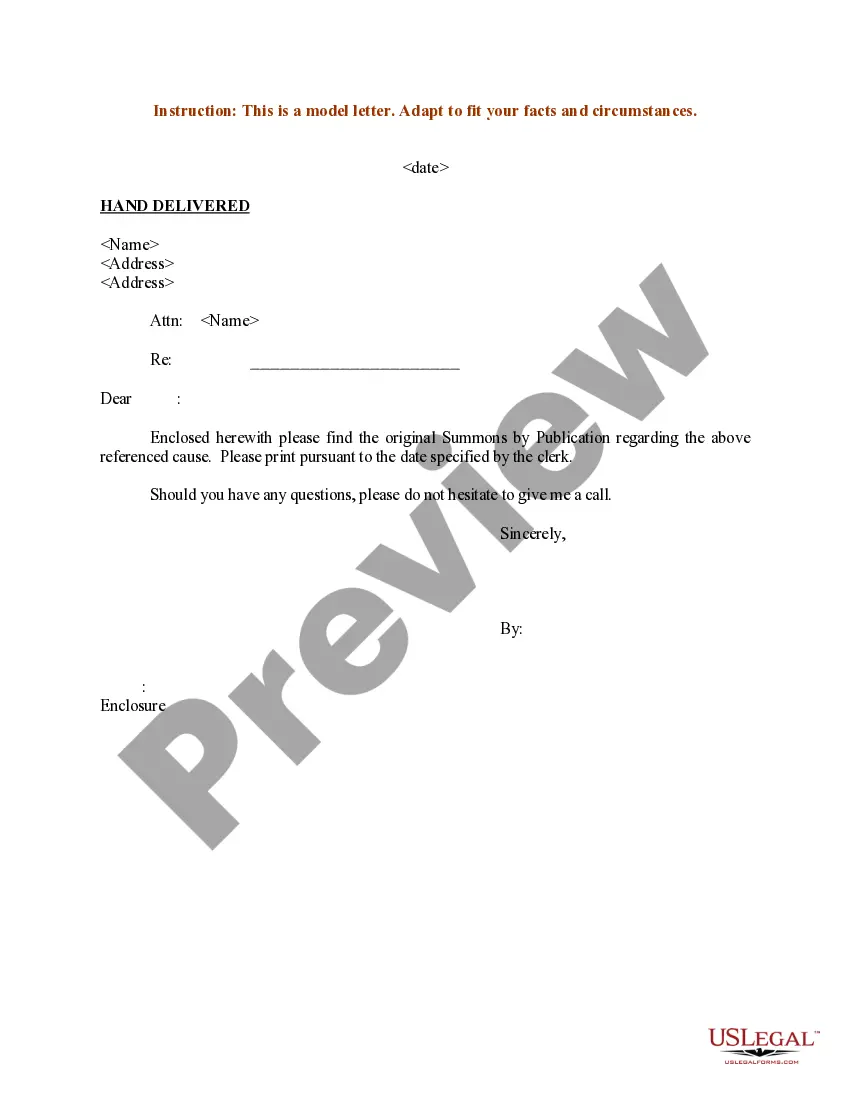
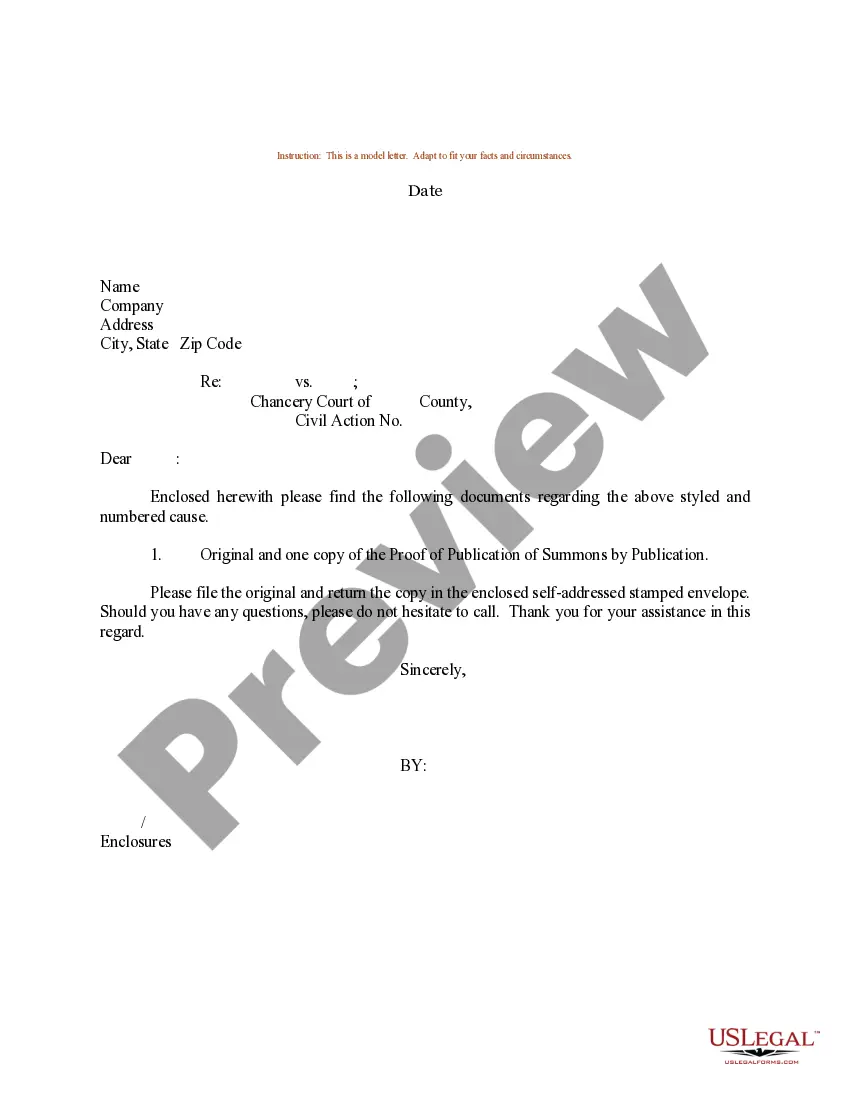
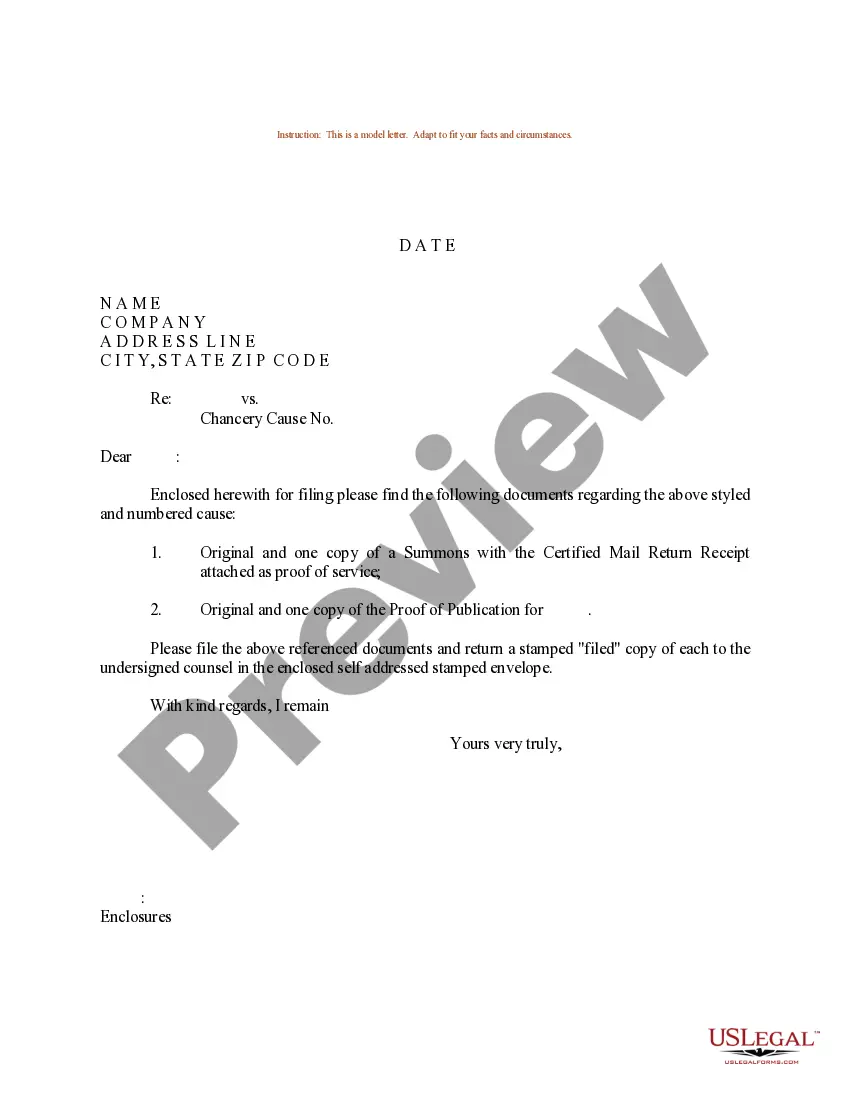
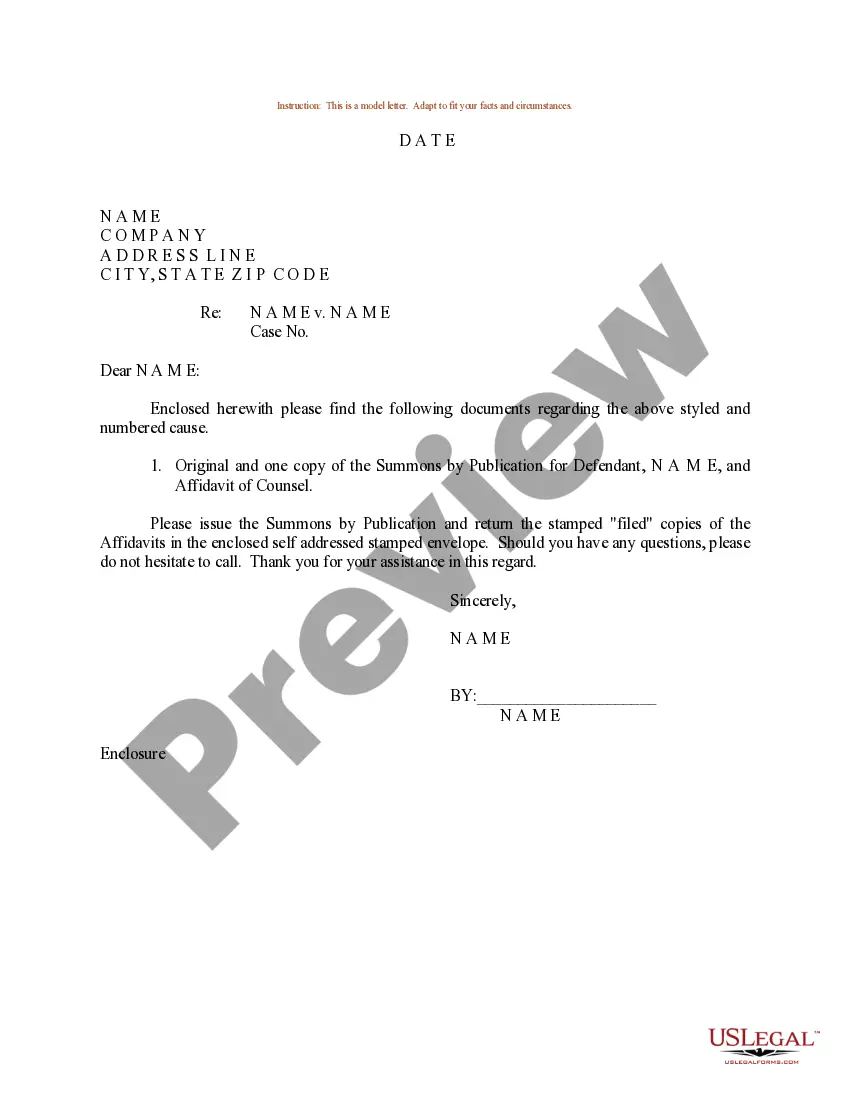
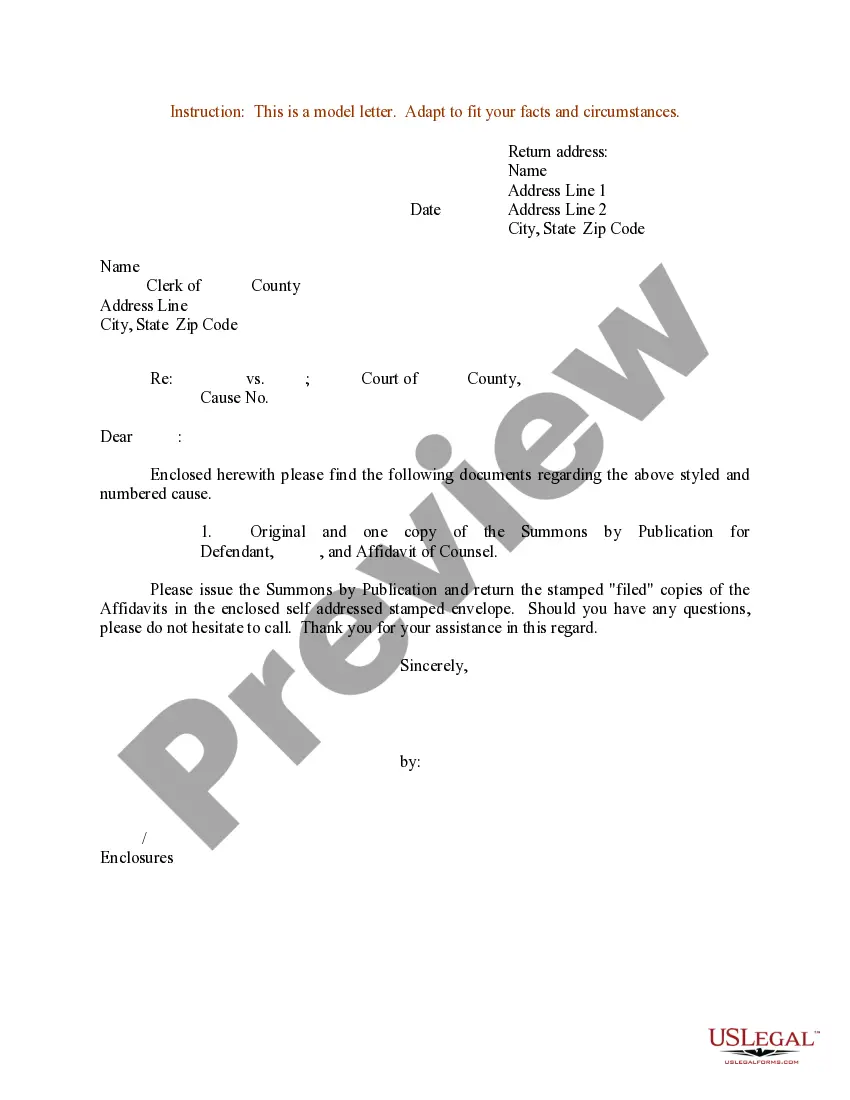
Vermont Sample Letter for Summons by Publication
Description
Get your form ready online
Our built-in tools help you complete, sign, share, and store your documents in one place.
Make edits, fill in missing information, and update formatting in US Legal Forms—just like you would in MS Word.
Download a copy, print it, send it by email, or mail it via USPS—whatever works best for your next step.
Sign and collect signatures with our SignNow integration. Send to multiple recipients, set reminders, and more. Go Premium to unlock E-Sign.
If this form requires notarization, complete it online through a secure video call—no need to meet a notary in person or wait for an appointment.
We protect your documents and personal data by following strict security and privacy standards.

Make edits, fill in missing information, and update formatting in US Legal Forms—just like you would in MS Word.

Download a copy, print it, send it by email, or mail it via USPS—whatever works best for your next step.

Sign and collect signatures with our SignNow integration. Send to multiple recipients, set reminders, and more. Go Premium to unlock E-Sign.

If this form requires notarization, complete it online through a secure video call—no need to meet a notary in person or wait for an appointment.

We protect your documents and personal data by following strict security and privacy standards.
Looking for another form?

How to fill out Sample Letter For Summons By Publication?
US Legal Forms - one of the largest collections of legal documents in the USA - offers a variety of legal form templates that you can download or print. By using the website, you can access thousands of forms for business and personal purposes, organized by categories, states, or keywords. You can obtain the latest versions of forms like the Vermont Sample Letter for Summons by Publication in moments.
If you already have a subscription, Log In and download the Vermont Sample Letter for Summons by Publication from the US Legal Forms catalog. The Download button will appear on every form you view. You can access all previously acquired forms in the My documents section of your account.
If you wish to utilize US Legal Forms for the first time, here are simple instructions to help you get started: Make sure you have selected the correct form for your city/region. Click the Preview button to review the form's content. Check the form details to ensure you have chosen the right form. If the form does not meet your needs, use the Search field at the top of the screen to find one that does. If you are satisfied with the form, confirm your selection by clicking the Purchase now button. Then, choose your preferred pricing plan and provide your credentials to register for an account. Process the transaction. Use your credit card or PayPal account to complete the transaction. Select the format and download the form to your device. Make modifications. Fill out, edit, print, and sign the downloaded Vermont Sample Letter for Summons by Publication. Every template you add to your account has no expiration date and is yours indefinitely. Therefore, if you want to download or print another copy, simply go to the My documents section and click on the form you desire.
- Access the Vermont Sample Letter for Summons by Publication with US Legal Forms, the most extensive collection of legal form templates.
- Utilize numerous professional and state-specific templates that fulfill your business or personal requirements and specifications.
Form popularity
FAQ
The court on motion of a defendant may grant a new trial to the defendent if required in the interests of justice. If trial was by the court without a jury the court on motion of a defendant for a new trial may vacate the judgment if entered, take additional testimony and direct the entry of a new judgment.
(1) In any action for divorce, legal separation, or dissolution of a civil union, the court may grant a final judgment without hearing where the record demonstrates that the action is not for parentage, desertion, or nonsupport and where the following documents have been filed with the court sufficiently before a ...
At any time in its discretion and upon such terms as it deems just, the court may allow any process or proof of service thereof to be amended, unless it clearly appears that material prejudice would result to the substantial rights of the party against whom the process issued.
Prof. Cond. 4.2. In representing a client, a lawyer shall not communicate about the subject of the representation with a person the lawyer knows to be represented by another lawyer in the matter, unless the lawyer has the consent of the other lawyer or is authorized to do so by law or a court order.
No trustee process shall issue against any person for any amount due from such person to the defendant as earnings except where: (i) The claim has first been reduced to judgment; (ii) Execution may issue on the judgment pursuant to these rules; (iii) The judgment debtor has neglected or refused to pay or make ...
Upon timely application anyone may be permitted to intervene in an action: (1) when a statute confers a conditional right to intervene; or (2) when an applicant's claim or defense and the main action have a question of law or fact in common.
The officer or other person making an attachment shall make proof of its execution by setting forth on the original or a certified copy of the writ, or a paper attached to it for that purpose, the date or dates and manner of execution and a description of all real estate and a list of all goods, chattels, or other ...
(A) An attorney admitted pro hac vice must remain associated in the action with a member of the Bar of this court at all times. (B) The local attorney must also sign all filings and attend all court proceedings. (C) The court may waive the provision in (B) for good cause shown.