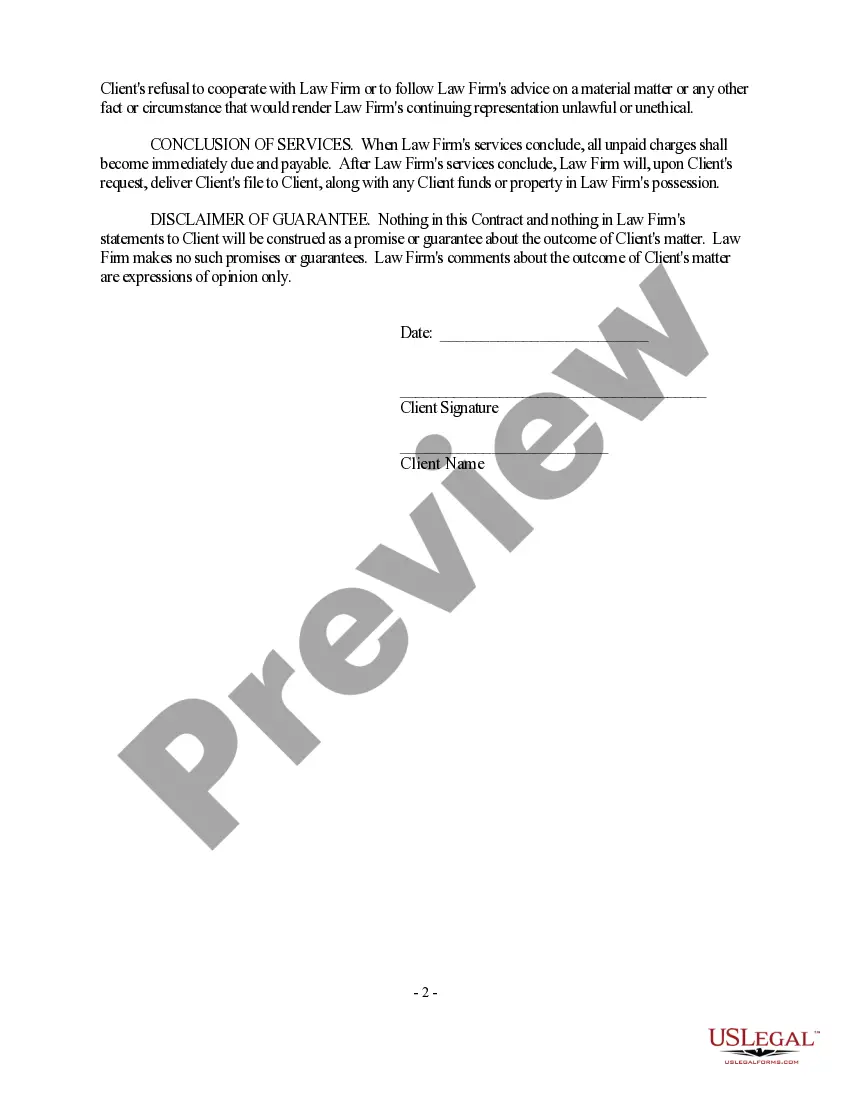
This attorney-client fee contract states that client hires law firm to provide legal services in connection with certain legal proceedings. The law firm shall provide those legal services reasonably required to represent the client and shall take reasonable steps to keep client informed of progress and respond to the clients inquiries.
Vermont Legal Services Agreement - Hourly
Instant download
Description
Free preview

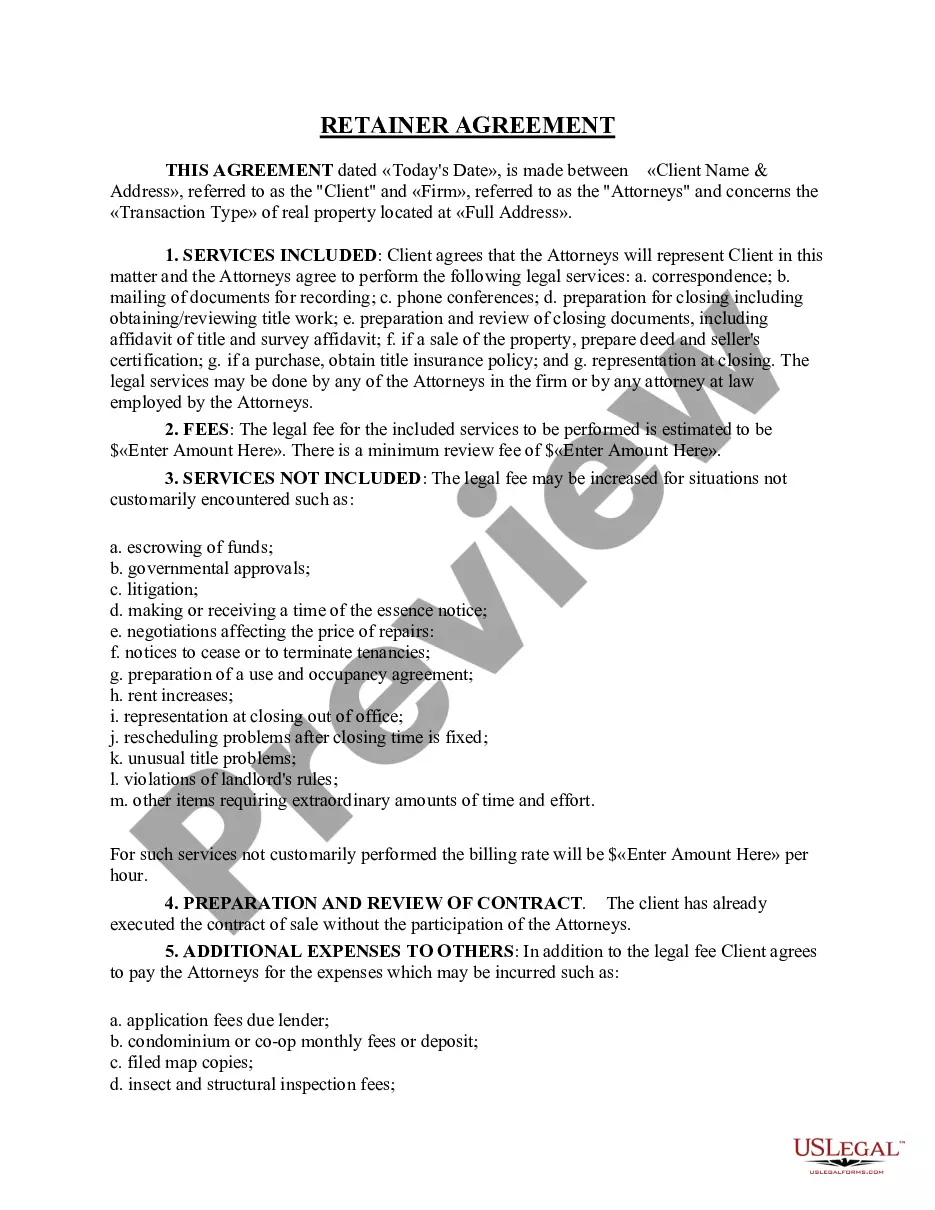
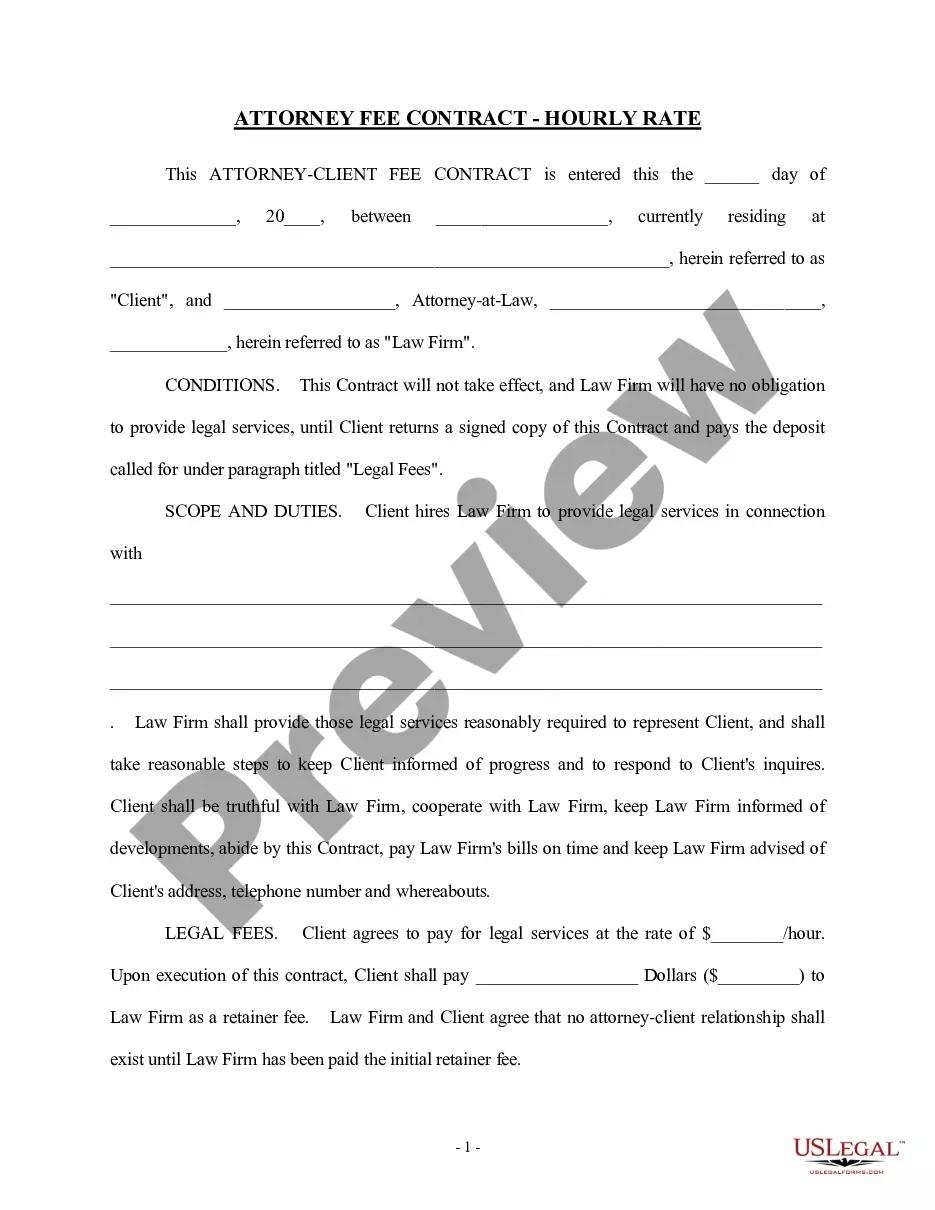
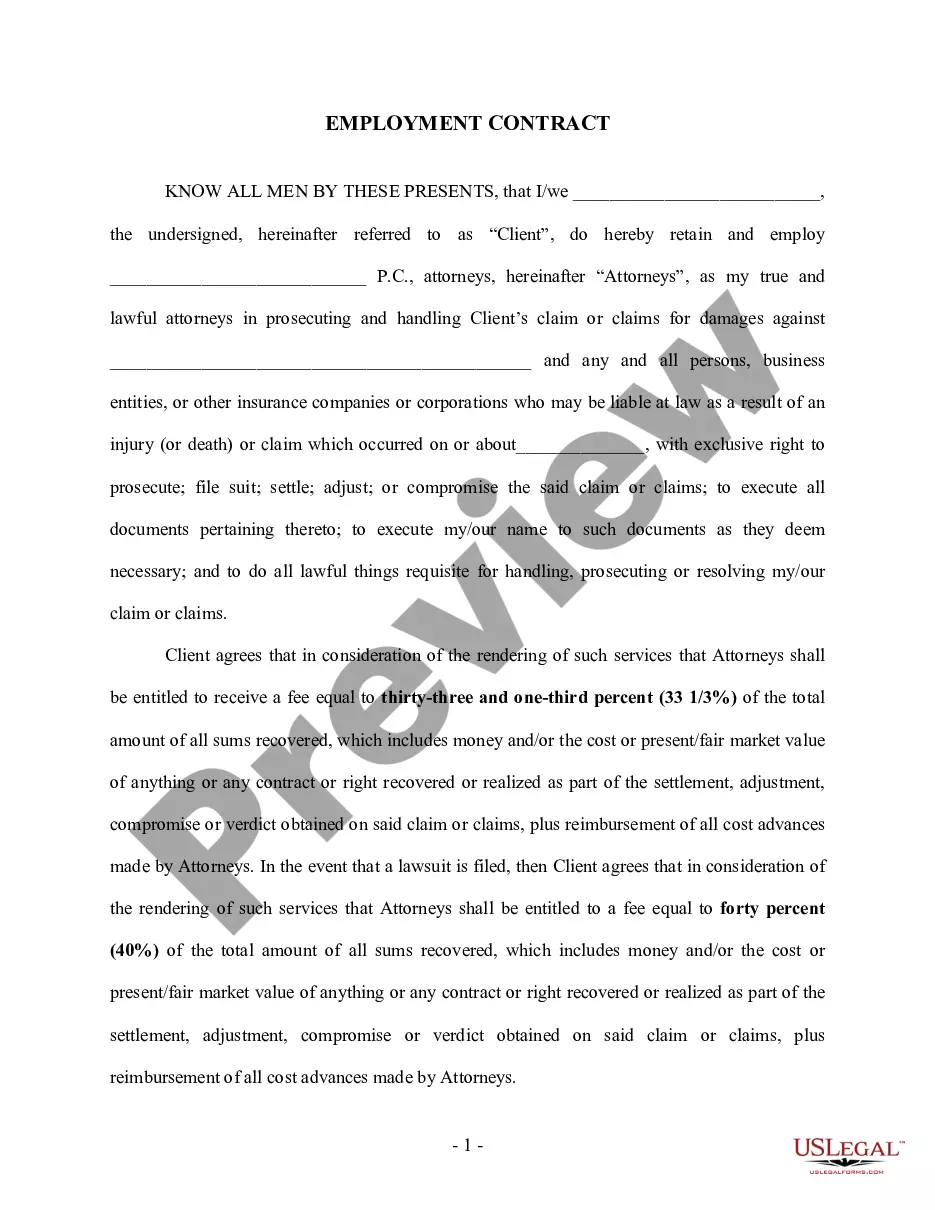
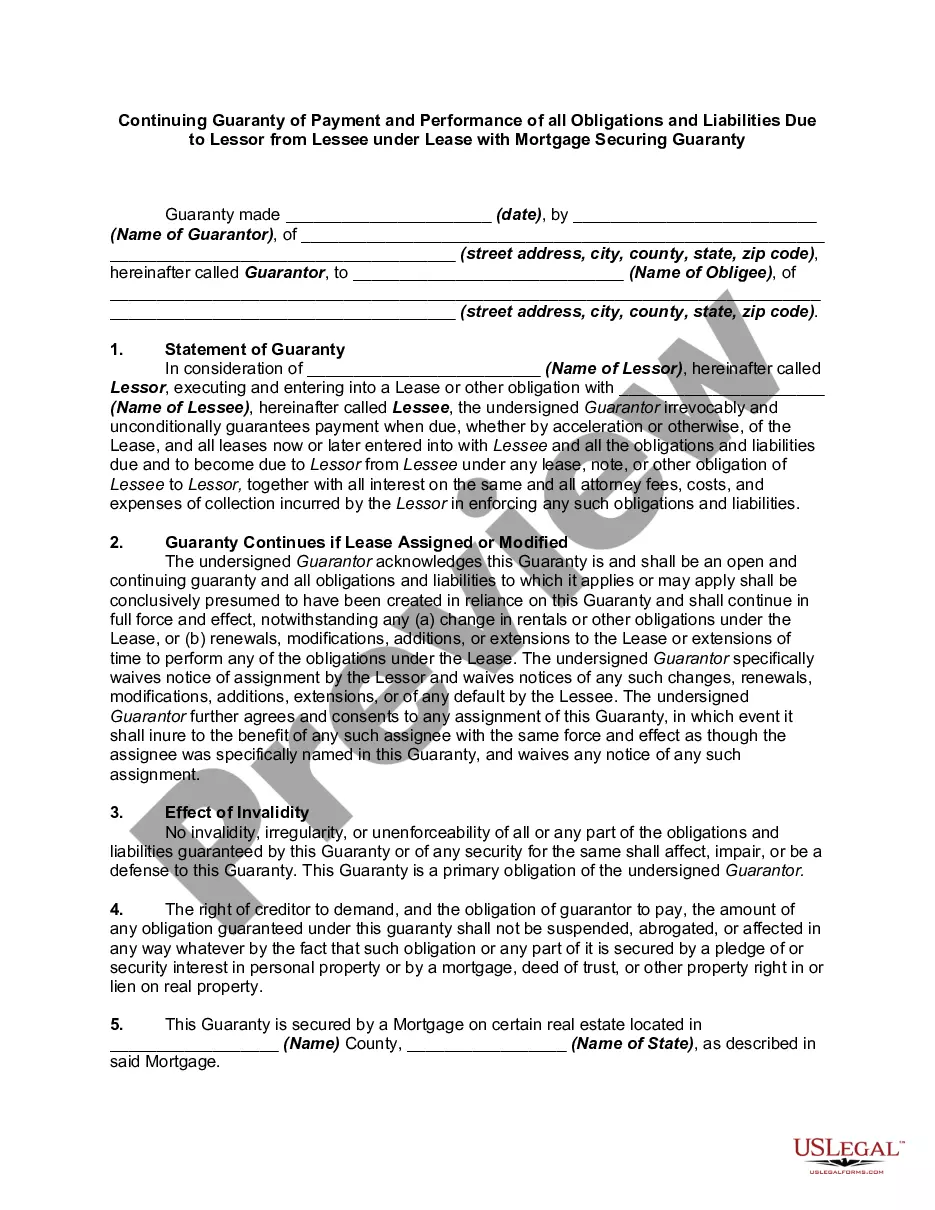

How to fill out Legal Services Agreement - Hourly?
US Legal Forms - one of the largest repositories of legal documents in the United States - provides a variety of legal form templates that you can download or create. By using the website, you can access thousands of forms for business and personal purposes, categorized by types, states, or keywords. You can obtain the most current versions of forms such as the Vermont Legal Services Agreement - Hourly in just a few minutes.
If you already have an account, Log In and retrieve the Vermont Legal Services Agreement - Hourly from the US Legal Forms library. The Download button will appear on every form you view. You have access to all previously downloaded forms in the My documents section of your account.
If you are using US Legal Forms for the first time, here are simple steps to get you started: Ensure that you have selected the correct form for your city/state. Click on the Preview button to review the form's details. Check the form description to ensure you have chosen the right form. If the form does not meet your needs, use the Search box at the top of the screen to find the one that does. If you are satisfied with the form, confirm your selection by clicking the Get now button. Then, choose the payment plan you prefer and provide your information to register for an account. Process the payment. Use your credit card or PayPal account to complete the transaction. Select the format and download the form to your device. Make edits. Fill out, modify, and print and sign the downloaded Vermont Legal Services Agreement - Hourly. Every template you added to your account does not have an expiration date and is yours forever. Therefore, if you wish to download or print another copy, simply go to the My documents section and click on the form you need.
- Access the Vermont Legal Services Agreement - Hourly with US Legal Forms, the most extensive collection of legal document templates.
- Utilize thousands of professional and state-specific templates that meet your business or personal needs and requirements.
Form popularity
FAQ
Rule 1.9 - Duties to Former Clients (a) A lawyer who has formerly represented a client in a matter shall not thereafter represent another person in the same or a substantially related matter in which that person's interests are materially adverse to the interests of the former client unless the former client gives ...
Rule 5.5 - Unauthorized Practice of Law; Multijurisdictional Practice of Law (a) A lawyer shall not practice law in a jurisdiction in violation of the regulation of the legal profession in that jurisdiction or assist another in doing so.
(g) engage in conduct that the lawyer knows or reasonably should know is harassment or discrimination on the basis of race, sex, religion, national origin, ethnicity, disability, age, sexual orientation, gender identity, marital status, or socioeconomic status in conduct related to the practice of law.
Prof. Cond. 4.2. In representing a client, a lawyer shall not communicate about the subject of the representation with a person the lawyer knows to be represented by another lawyer in the matter, unless the lawyer has the consent of the other lawyer or is authorized to do so by law or a court order.
The FTE calculation shall be based on a 40-hour work week. No more than one FTE may be assessed against an individual employee, regardless of the actual number of hours worked by that employee during the calendar quarter.
Employers must pay employees on a weekly basis. However, after providing written notice to its employees, an employer may issue paychecks on a bi-weekly or semi-monthly basis. Payday shall be within six (6) days of the last day of the pay period.
Rule 4.2 of the New York Rules of Professional Conduct, also known as the ?No Contact Rule,? is frequently implicated, yet not always fully understood. At a high level, the Rule prohibits lawyers from speaking directly with a party the lawyer knows to be represented by counsel about the subject of the representation.
It is professional misconduct for a lawyer to: This paragraph does not limit the ability of a lawyer to accept, decline, or withdraw from a representation in ance with Rule 1.16. This paragraph does not preclude legitimate advice or advocacy consistent with these rules.