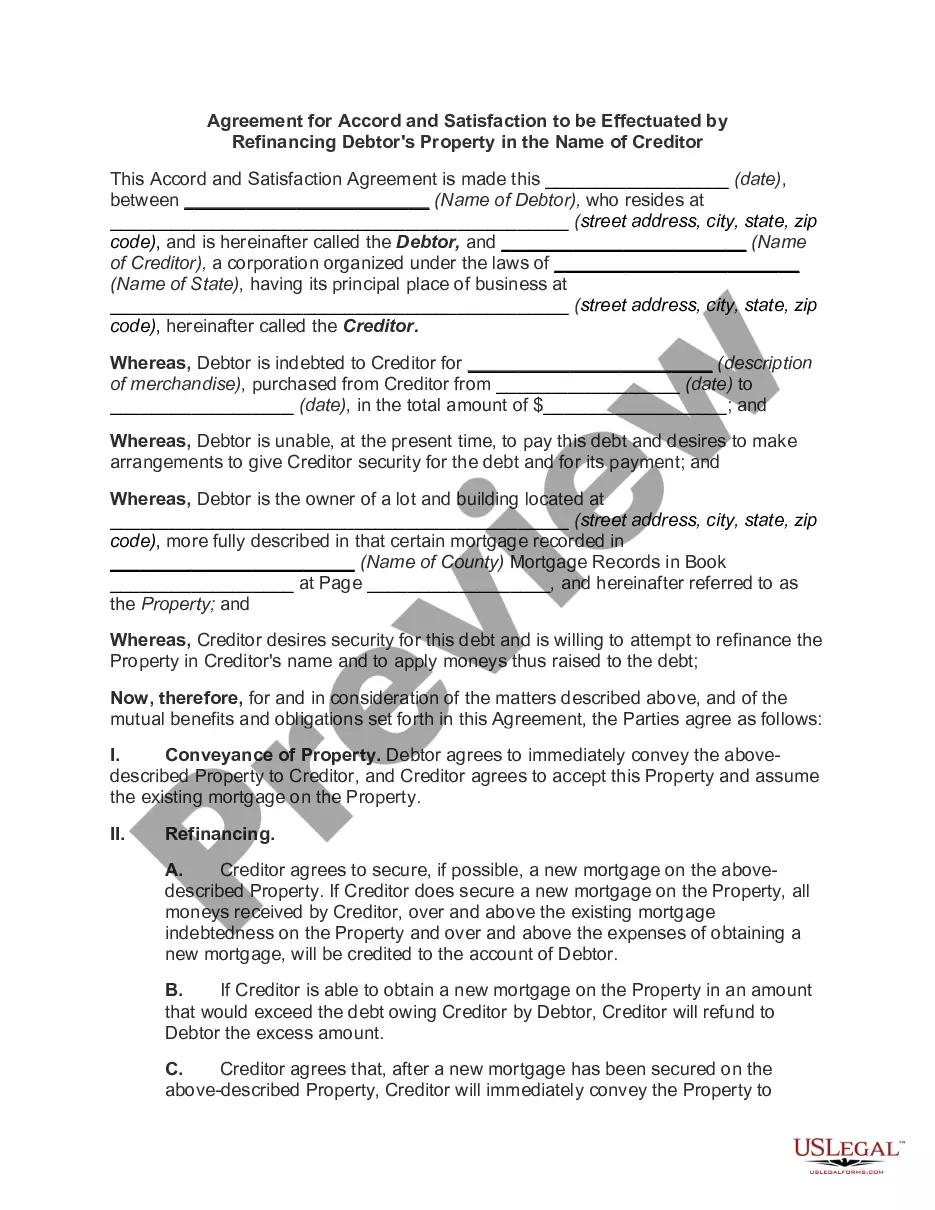
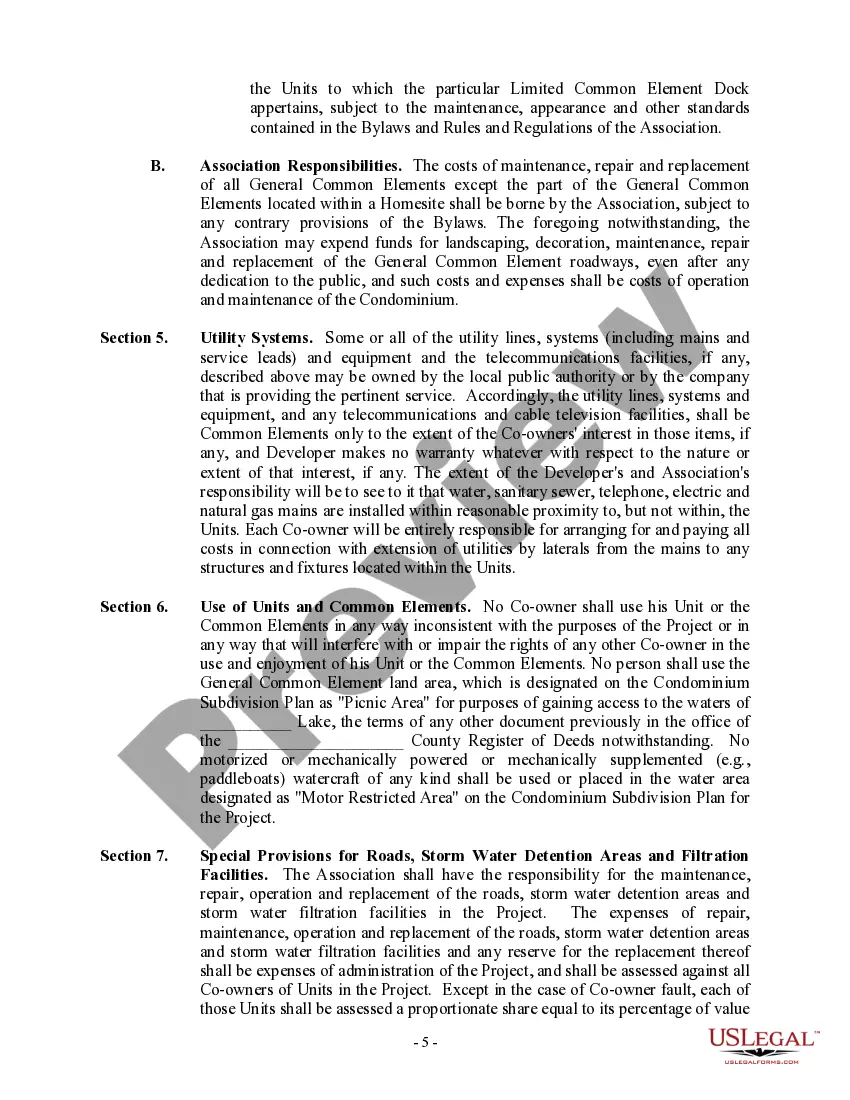
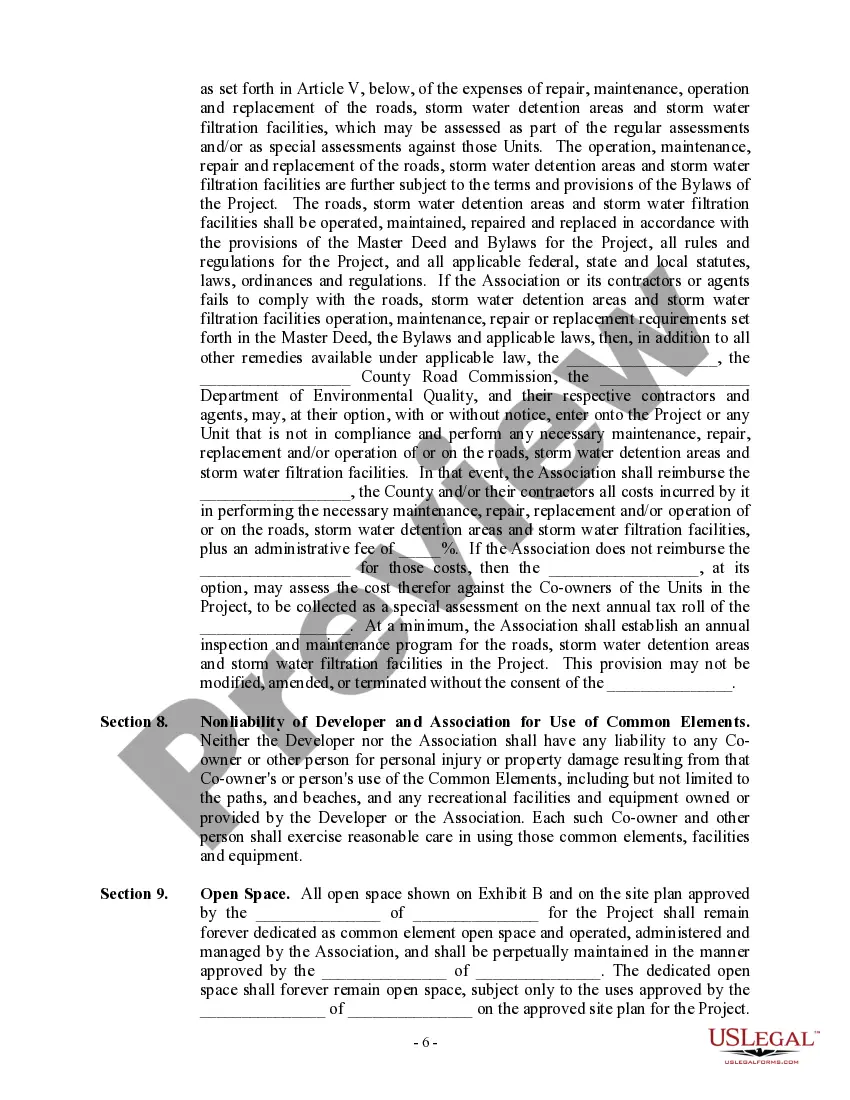
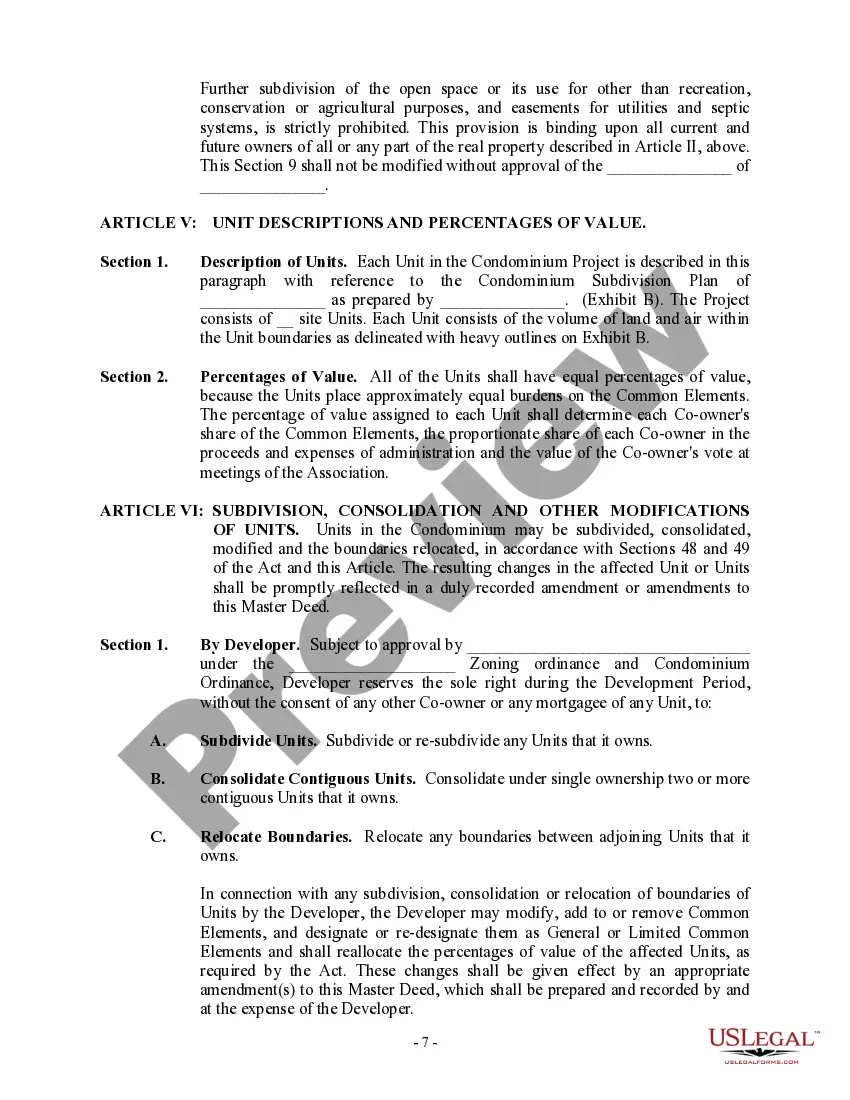
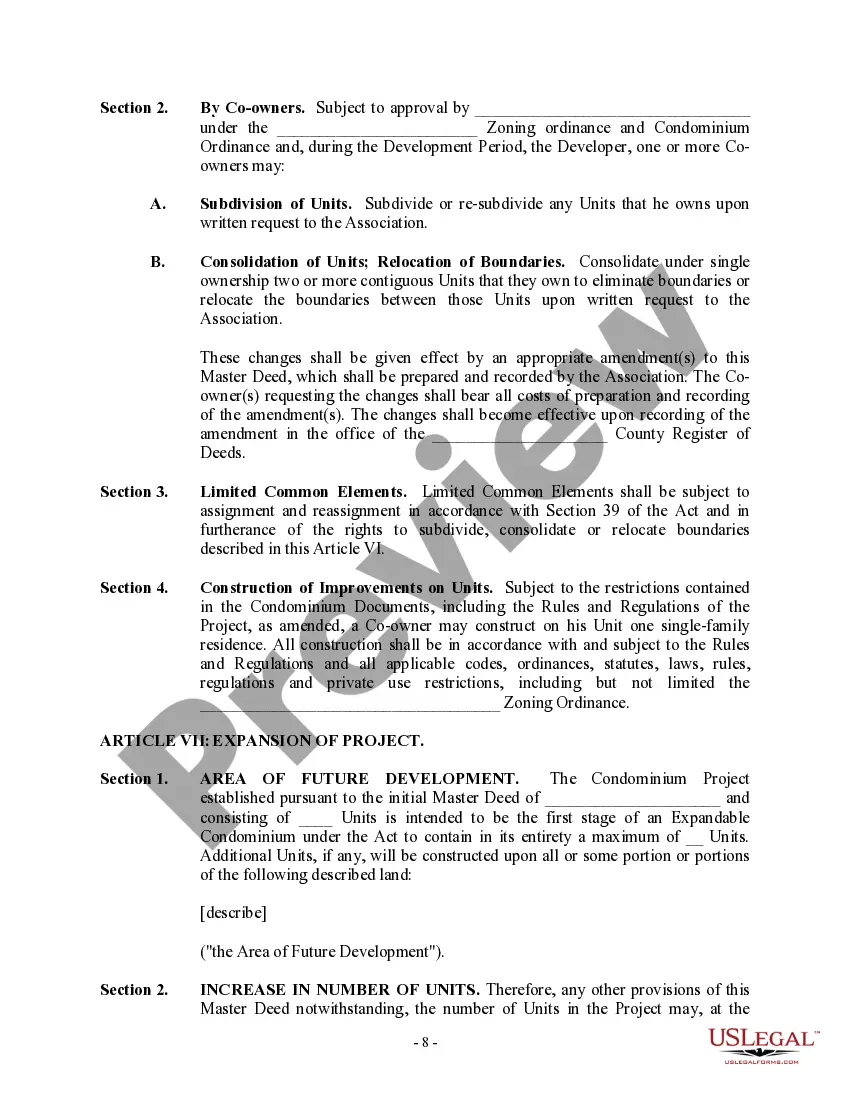
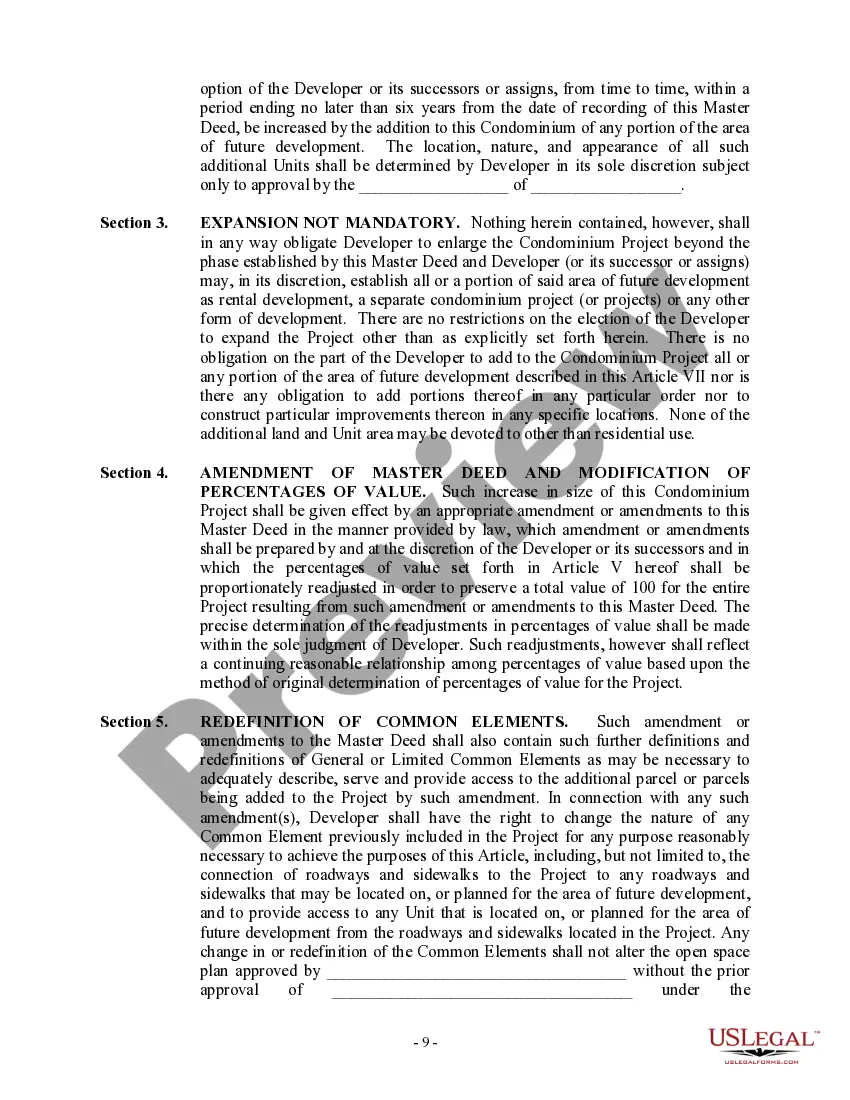
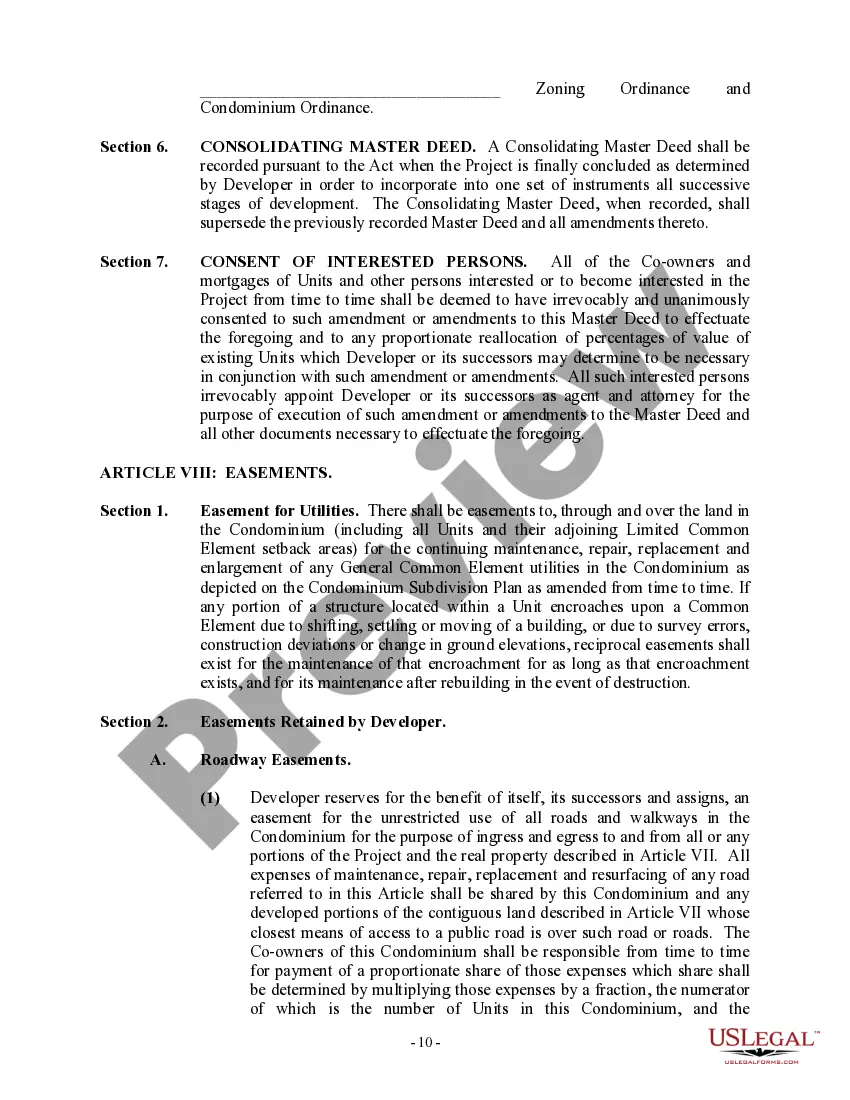
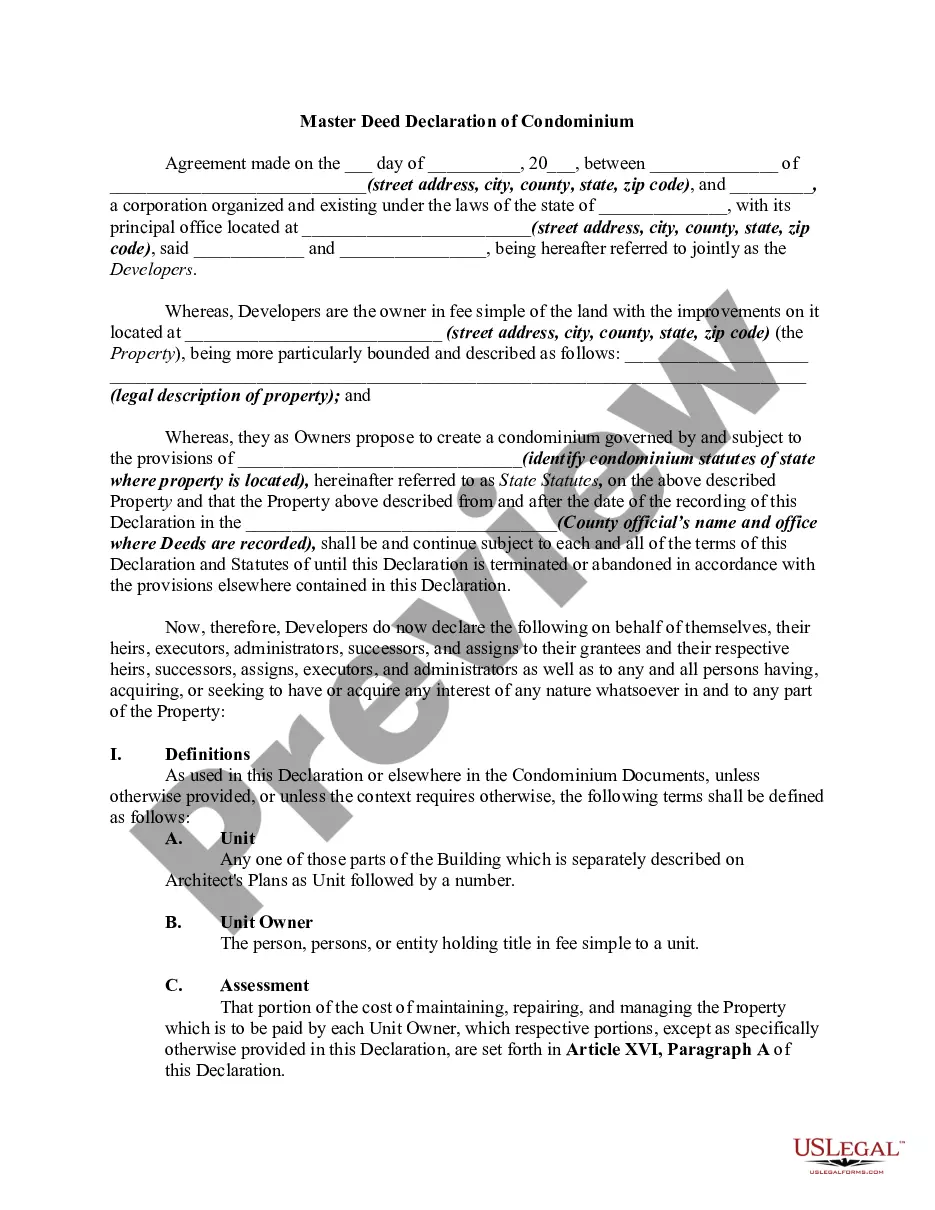
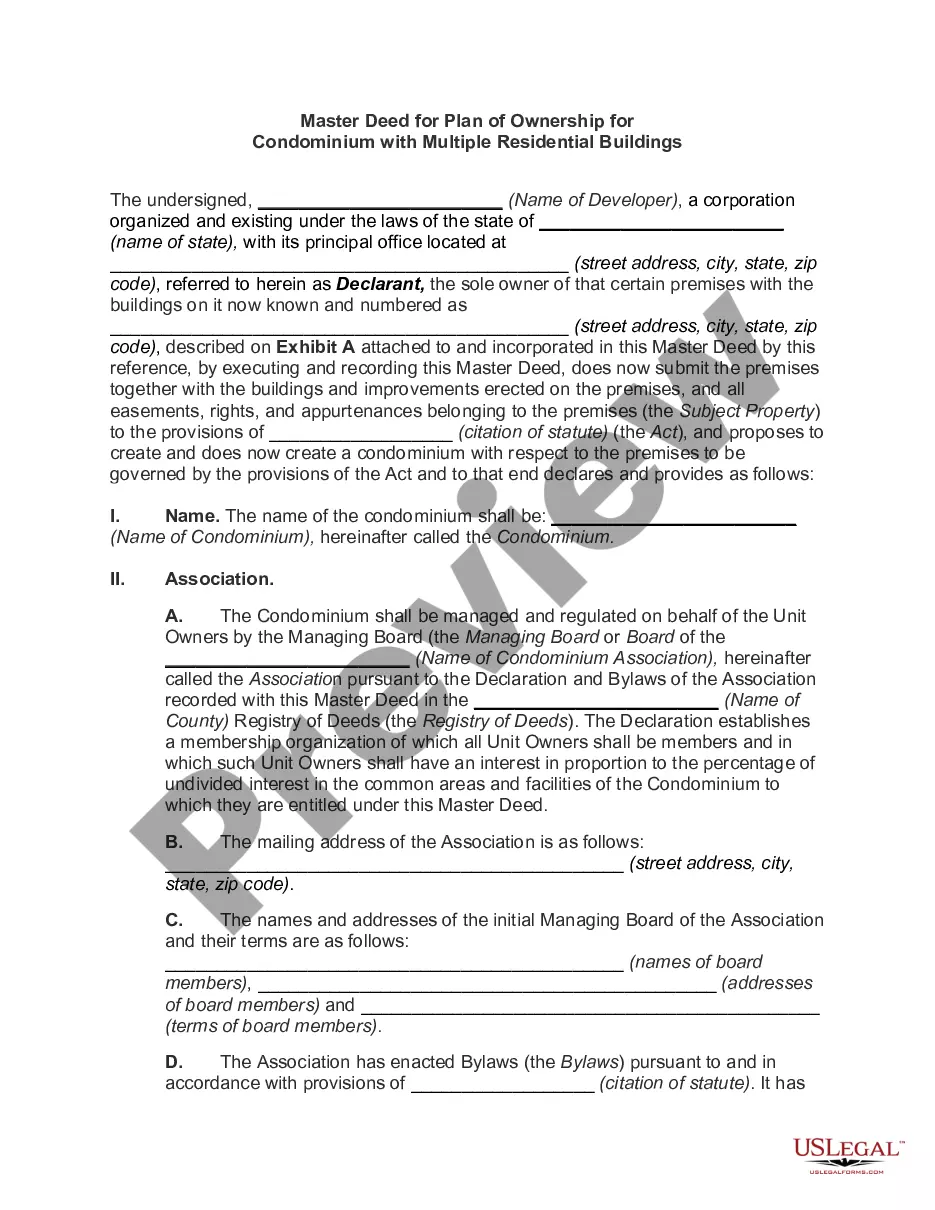
This form is a Master Deed. This Master Deed is executed by a developer pursuant to the provisions of the Condominium Act. The deed contains a legal description of the project and the responsibilities of the co-owner.
Vermont Condominium Master Deed - Residential Condo Development
Instant download
Description
Free preview

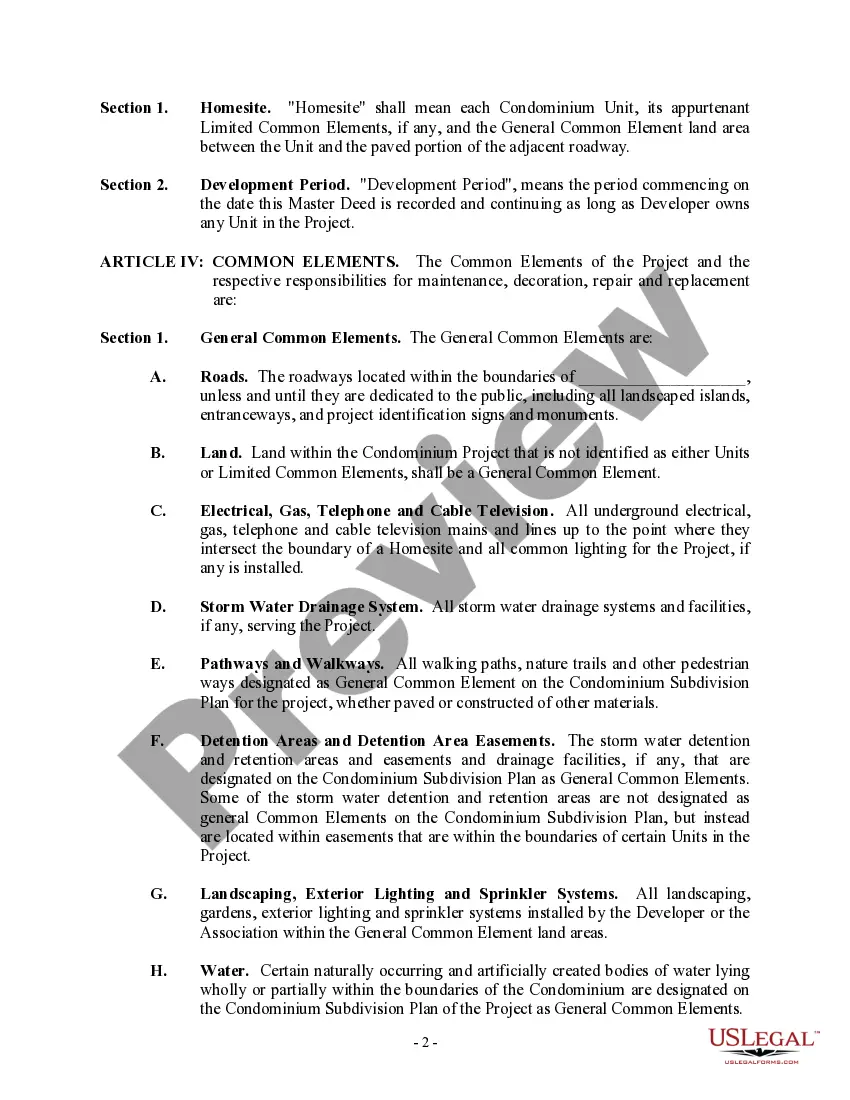
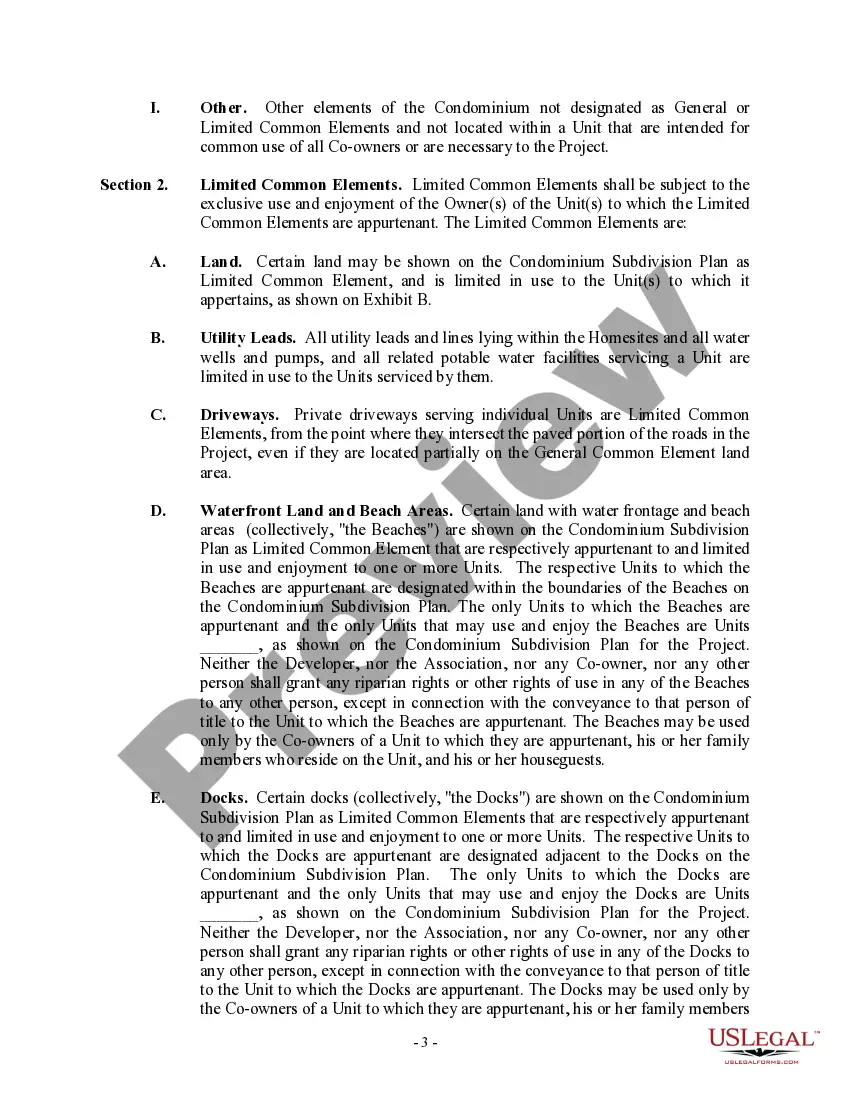
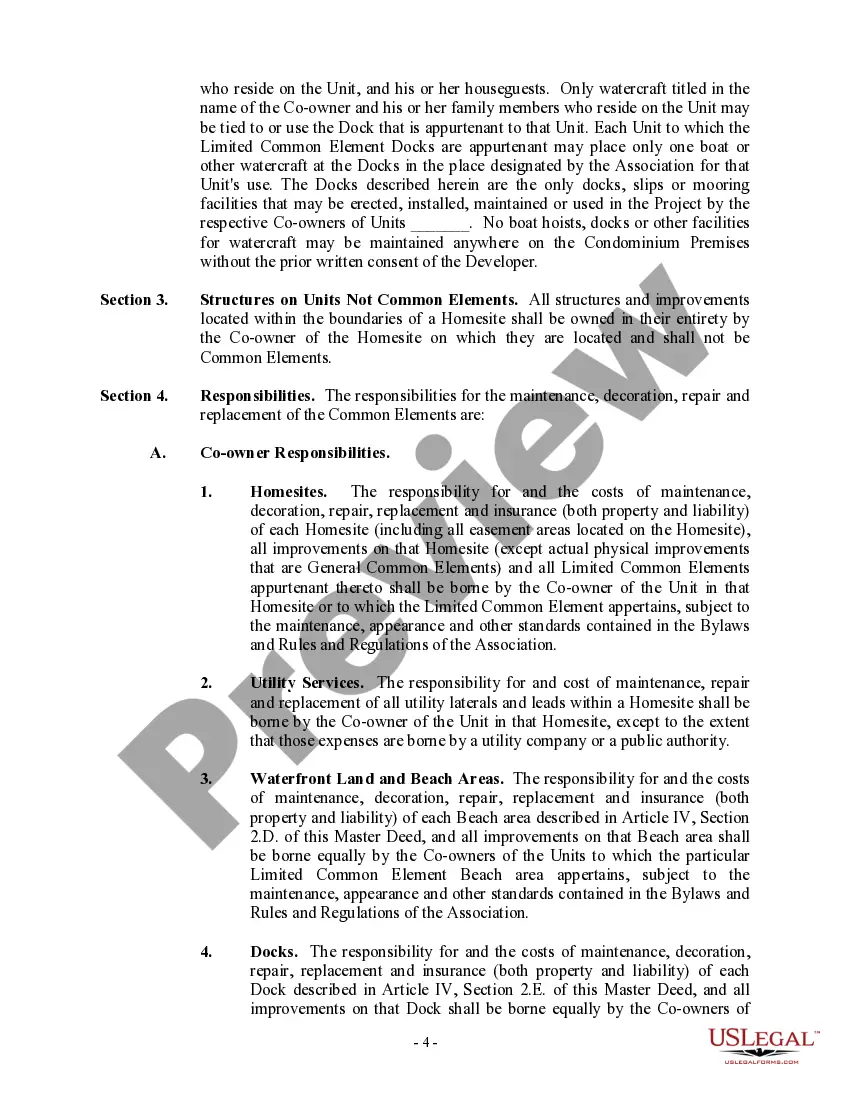


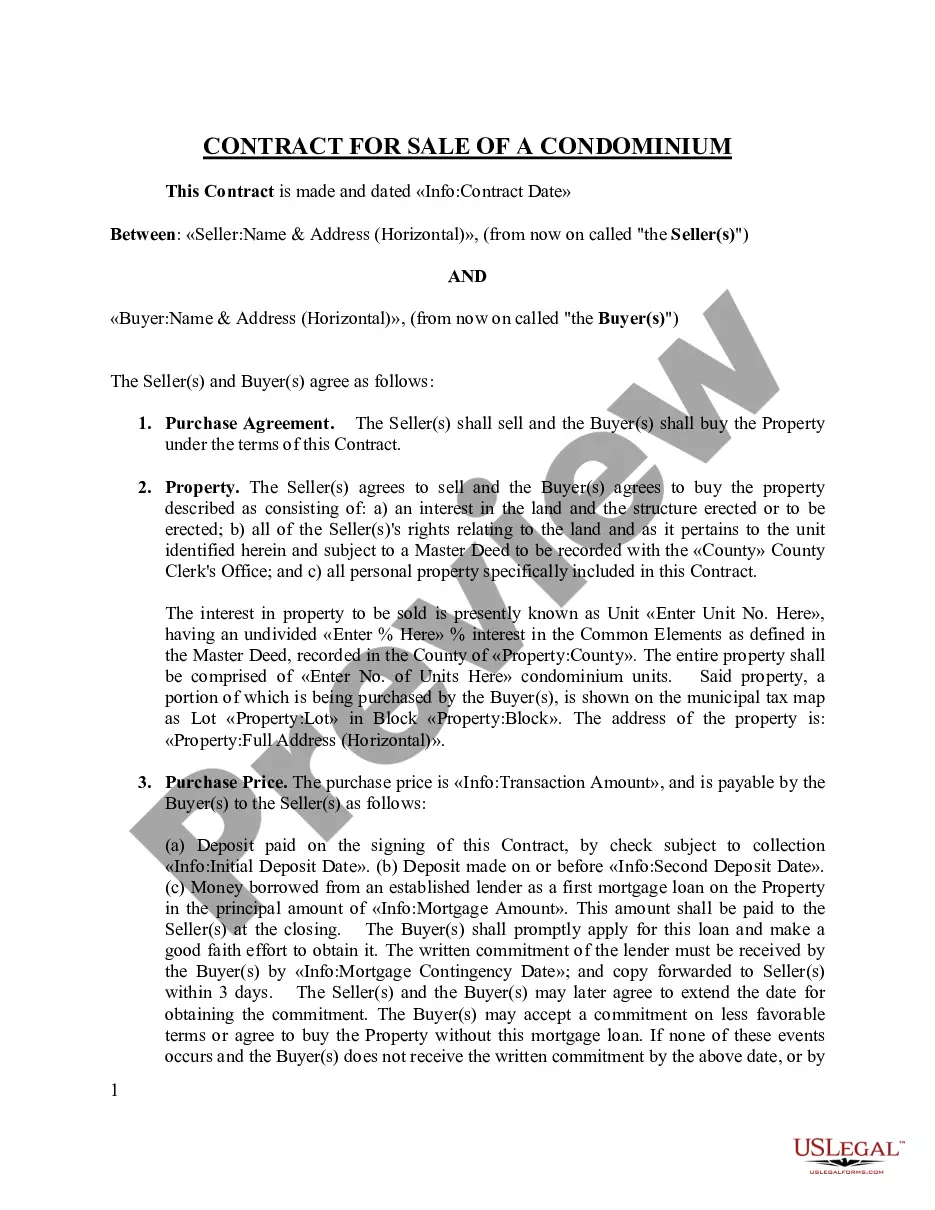
Get your form ready online
Our built-in tools help you complete, sign, share, and store your documents in one place.
Built-in online Word editor
Make edits, fill in missing information, and update formatting in US Legal Forms—just like you would in MS Word.
Export easily
Download a copy, print it, send it by email, or mail it via USPS—whatever works best for your next step.
E-sign your document
Sign and collect signatures with our SignNow integration. Send to multiple recipients, set reminders, and more. Go Premium to unlock E-Sign.
Notarize online 24/7
If this form requires notarization, complete it online through a secure video call—no need to meet a notary in person or wait for an appointment.
Store your document securely
We protect your documents and personal data by following strict security and privacy standards.

Make edits, fill in missing information, and update formatting in US Legal Forms—just like you would in MS Word.

Download a copy, print it, send it by email, or mail it via USPS—whatever works best for your next step.

Sign and collect signatures with our SignNow integration. Send to multiple recipients, set reminders, and more. Go Premium to unlock E-Sign.

If this form requires notarization, complete it online through a secure video call—no need to meet a notary in person or wait for an appointment.

We protect your documents and personal data by following strict security and privacy standards.
Looking for another form?


How to fill out Condominium Master Deed - Residential Condo Development?
You might spend time online attempting to discover the legal document template that satisfies the federal and state requirements you have. US Legal Forms offers a vast array of legal documents that are reviewed by experts.
You can download or print the Vermont Condominium Master Deed - Residential Condo Development from the service. If you possess a US Legal Forms account, you may Log In and hit the Download button. Subsequently, you can complete, modify, print, or sign the Vermont Condominium Master Deed - Residential Condo Development.
Every legal document template you obtain is yours indefinitely. To acquire another copy of a purchased form, navigate to the My documents section and click on the corresponding button. If you are utilizing the US Legal Forms website for the first time, follow the simple instructions below: First, ensure you have selected the correct template for the state/city of your choice. Review the form description to confirm you have chosen the right one. If available, use the Preview button to examine the document as well.
Avoid altering or deleting any HTML tags. Only synonymize plain text outside of the HTML tags.
- If you wish to obtain another version of the form, utilize the Search field to find the template that fits your needs and requirements.
- Once you have located the template you want, click Get now to proceed.
- Select the pricing plan you desire, enter your details, and register for your account on US Legal Forms.
- Complete the transaction. You may use your credit card or PayPal account to pay for the legal document.
- Select the format of the document and download it to your device.
- Make adjustments to your document if necessary. You can complete, modify, and sign and print the Vermont Condominium Master Deed - Residential Condo Development.
- Download and print numerous document templates using the US Legal Forms website, which offers the largest selection of legal forms. Utilize professional and state-specific templates to manage your business or personal requirements.
Form popularity
FAQ
Vermont's 6-year statute of limitations period applies to bribery, embezzlement, forgery, fraud, and felony tax charges. Most other felonies and misdemeanors carry a 3-year statute of limitations. Individual crimes may have their own statute of limitations period.
Although the statute of limitations for property damage under Vermont law is three years after the cause of action accrues, no Vermont court has found a two-year suit limitation provision in an insurance contract offering coverage for property damage unreasonable or contrary to public policy?.
The Vermont Condominium Ownership Act requires the association to file a declaration, floor plans, lot plans, and apartment deeds with the county where the property is located. The association cannot have a lien on the property after the declaration is filed. However, apartment owners can have mortgages.
Cons of a Life Estate Deed These include: Lack of control for the owner. Once a life estate deed is set up, the life tenant can't sell it, take out a mortgage, or otherwise control what happens to the property after they die.
Life Estate Deeds Override Wills: It has the ability to supersede a will. This means that the property named in the life estate deed will pass directly to the named beneficiary (or "remainderman") upon the life tenant's death, irrespective of any different provisions in the life tenant's will.
A Vermont enhanced life estate deed (aka ?lady bird deed?) allows a real estate owner to name a grantee who will inherit their property after their passing.
As of now, Vermont law does not permit the use of TOD deeds to transfer ownership of real estate. Instead, other estate planning tools, such as joint tenancy or a living trust, can be used to avoid probate for real estate.
When the life tenant dies, the remainderman typically receives a step-up tax basis in the property. This means the remainderman takes ownership of the home at its fair market value at the time of the life tenant's death.