Vermont Angel Investment Term Sheet

State:
Multi-State
Control #:
US-00016DR
Format:
Word; 
Rich Text
Instant download

Description

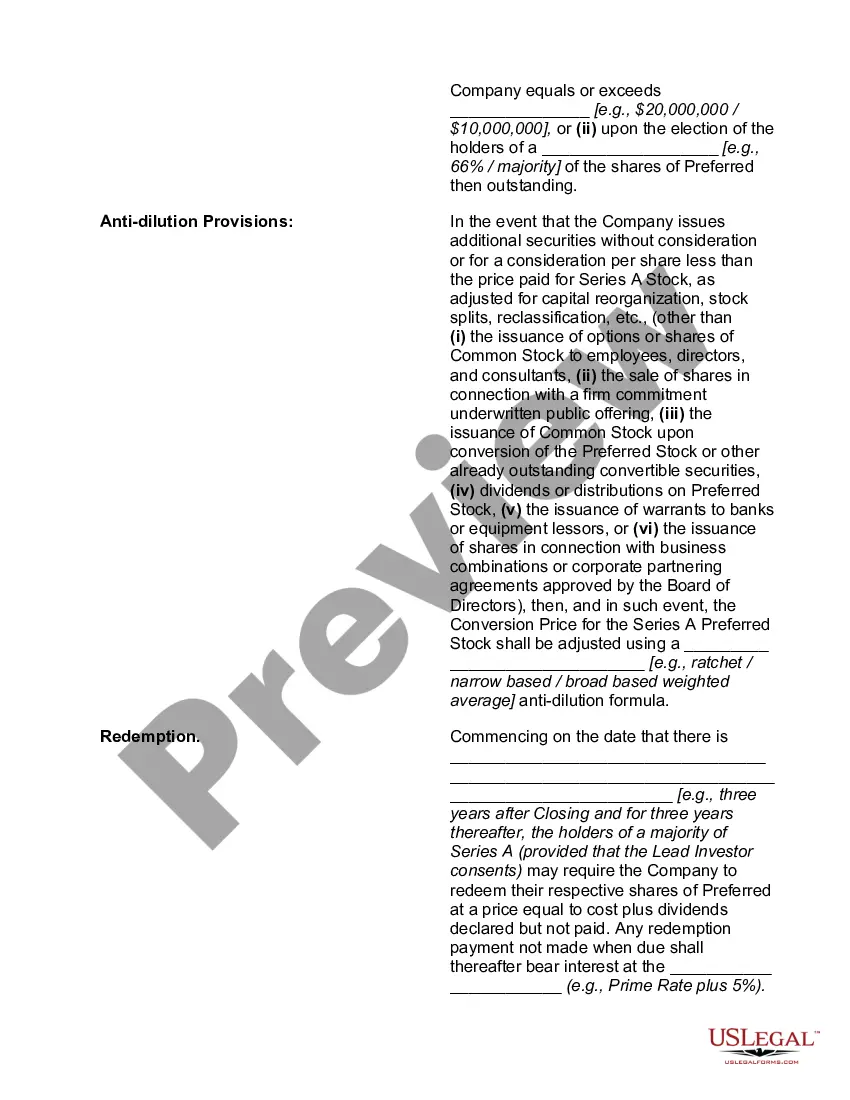
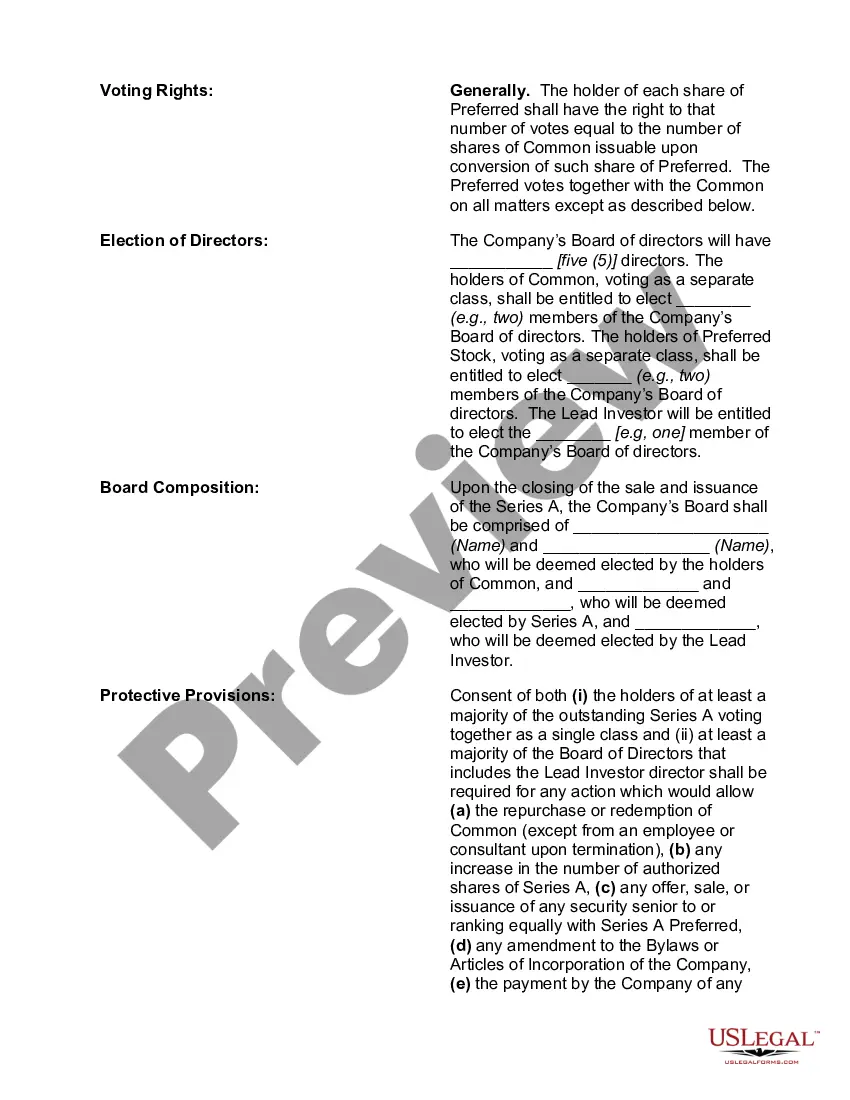
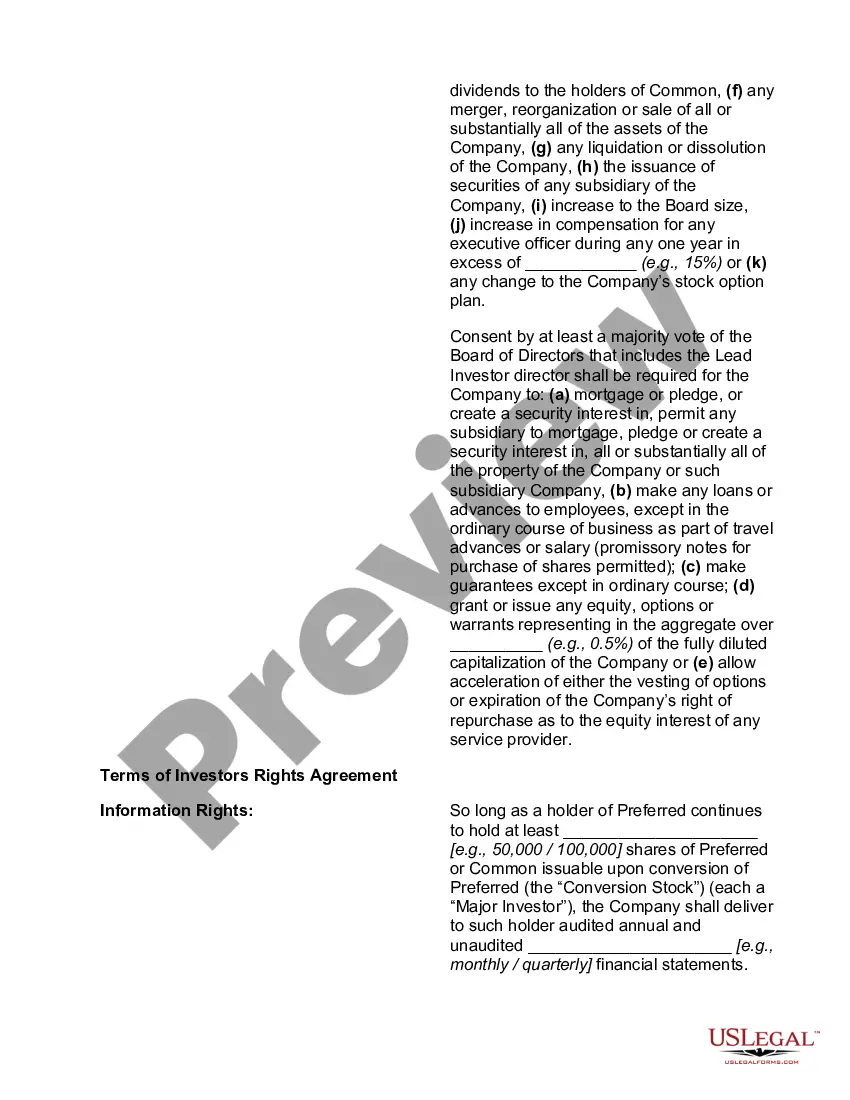
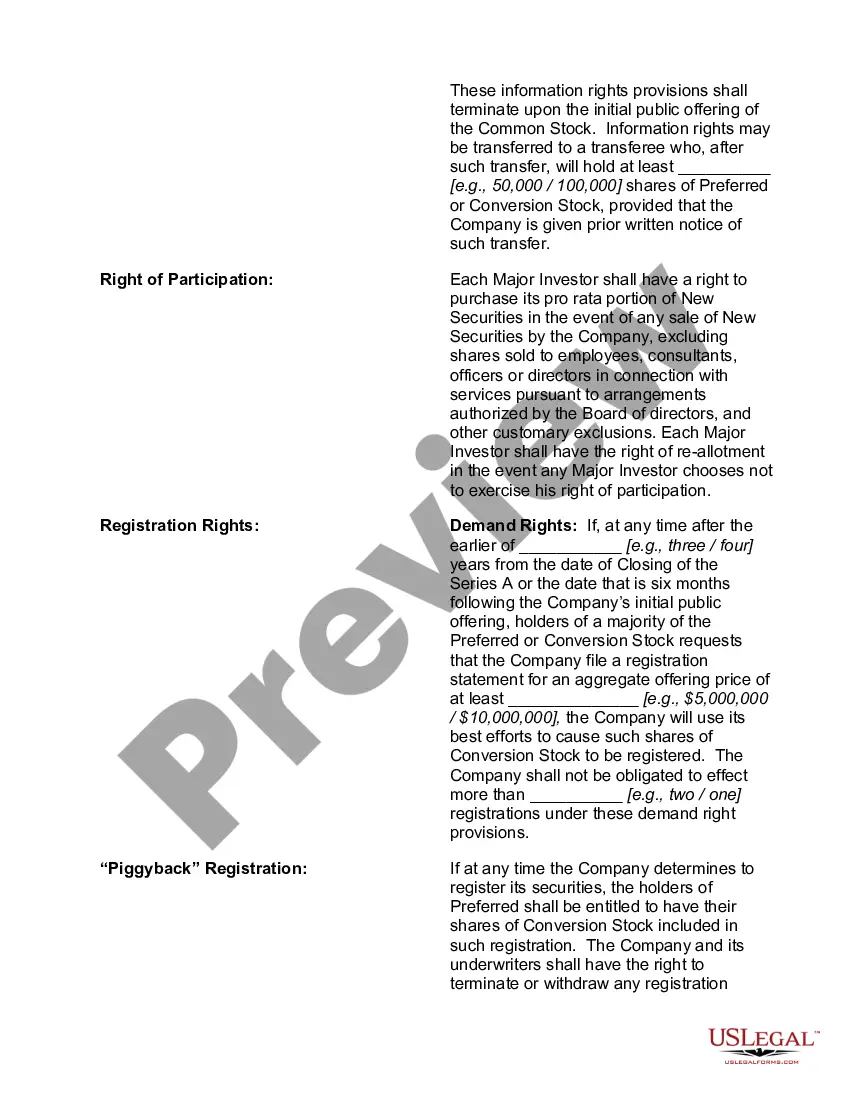
An angel investor or angel (also known as a business angel or informal investor) is an affluent individual who provides capital for a business start-up, usually in exchange for convertible debt or ownership equity. New start-up companies often turn to the private equity market for seed money because the formal equity market is reluctant to fund risky undertakings. In addition to their willingness to invest in a start-up, angel investors may bring other assets to the partnership. They are often a source of encouragement; they may be mentors in how best to guide a new business through the start-up phase and they are often willing to do this while staying out of the day-to-day management of the business.

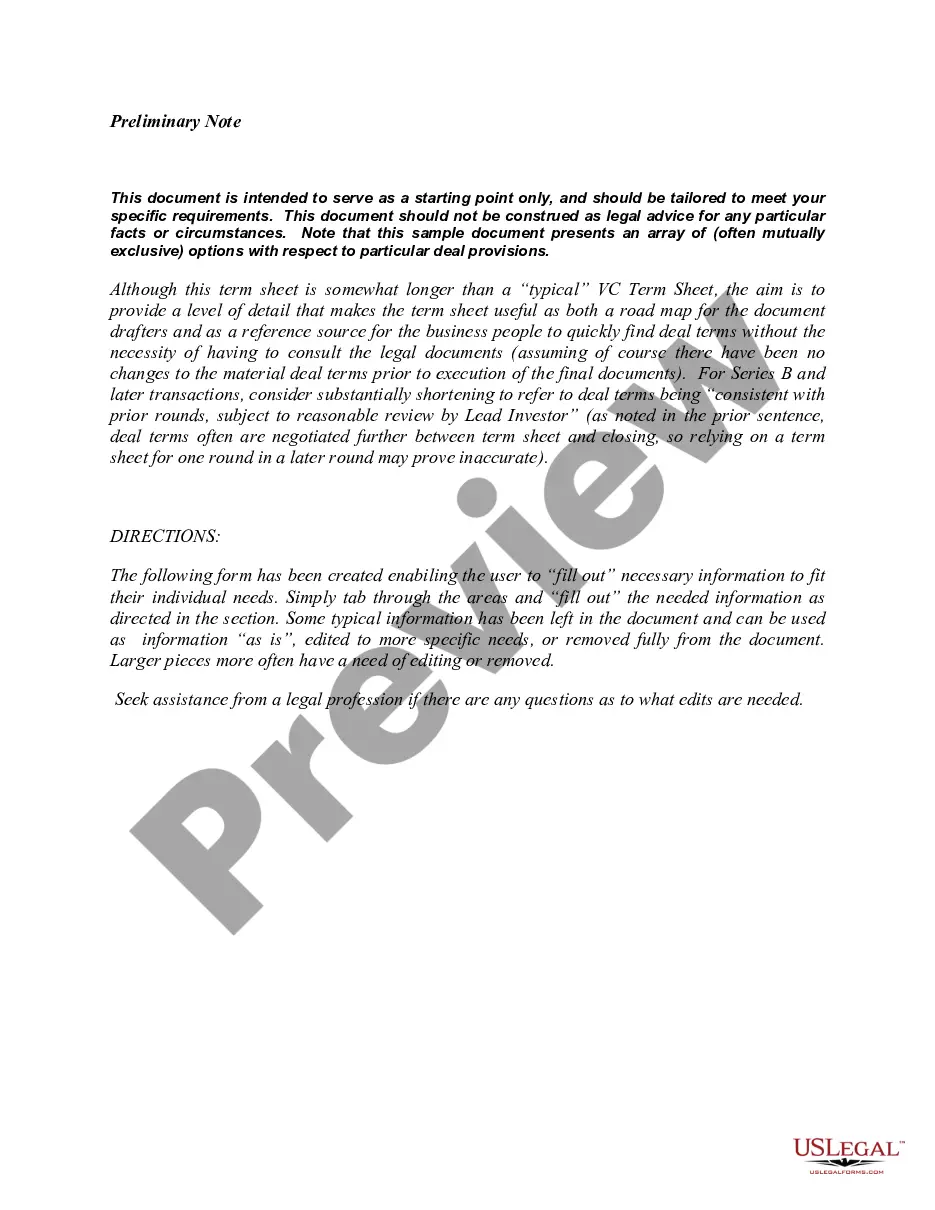
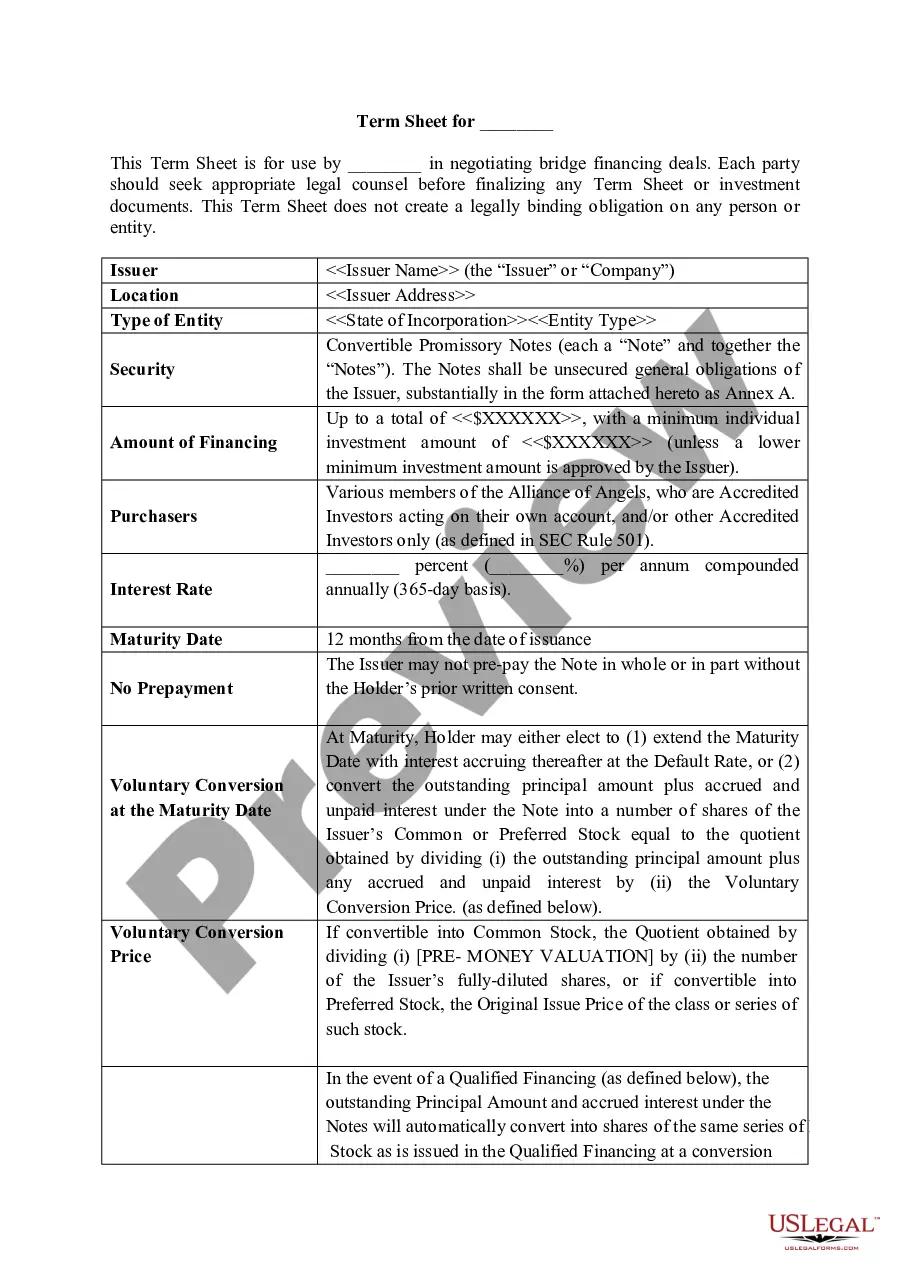
Term sheet is a non-binding agreement setting forth the basic terms and conditions under which an investment will be made.

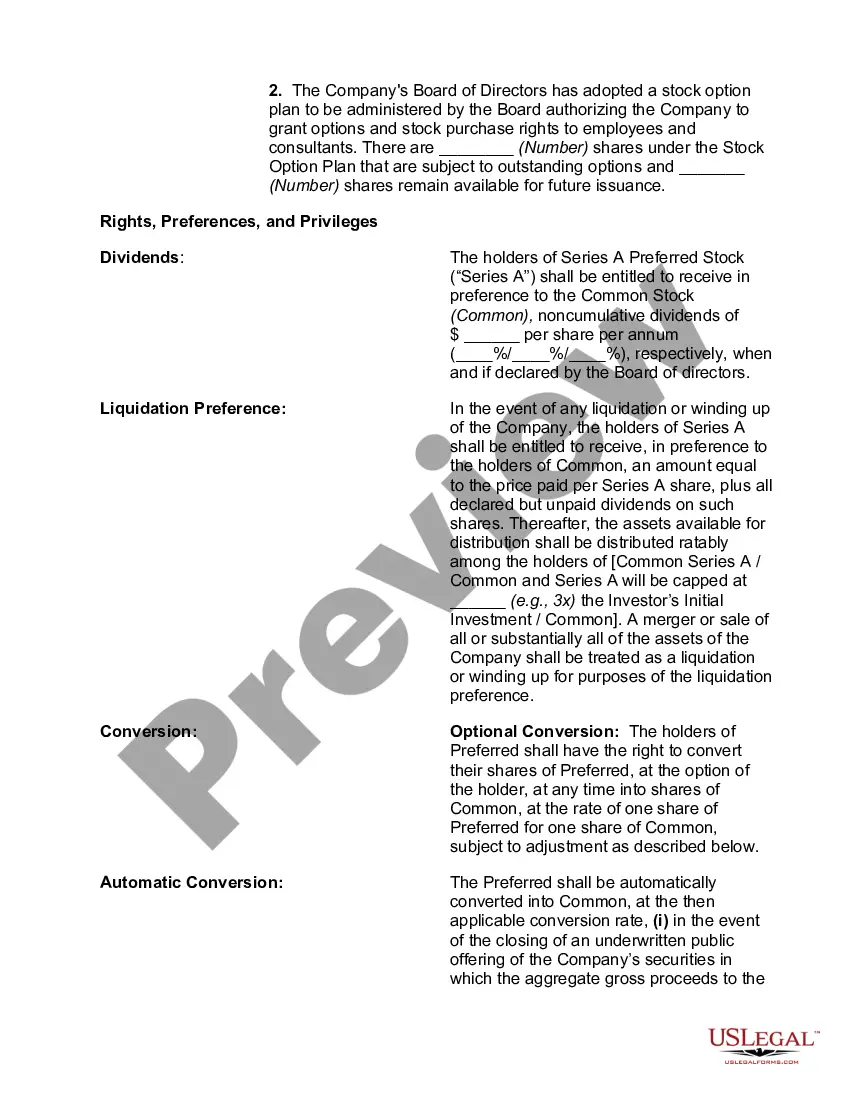
Free preview
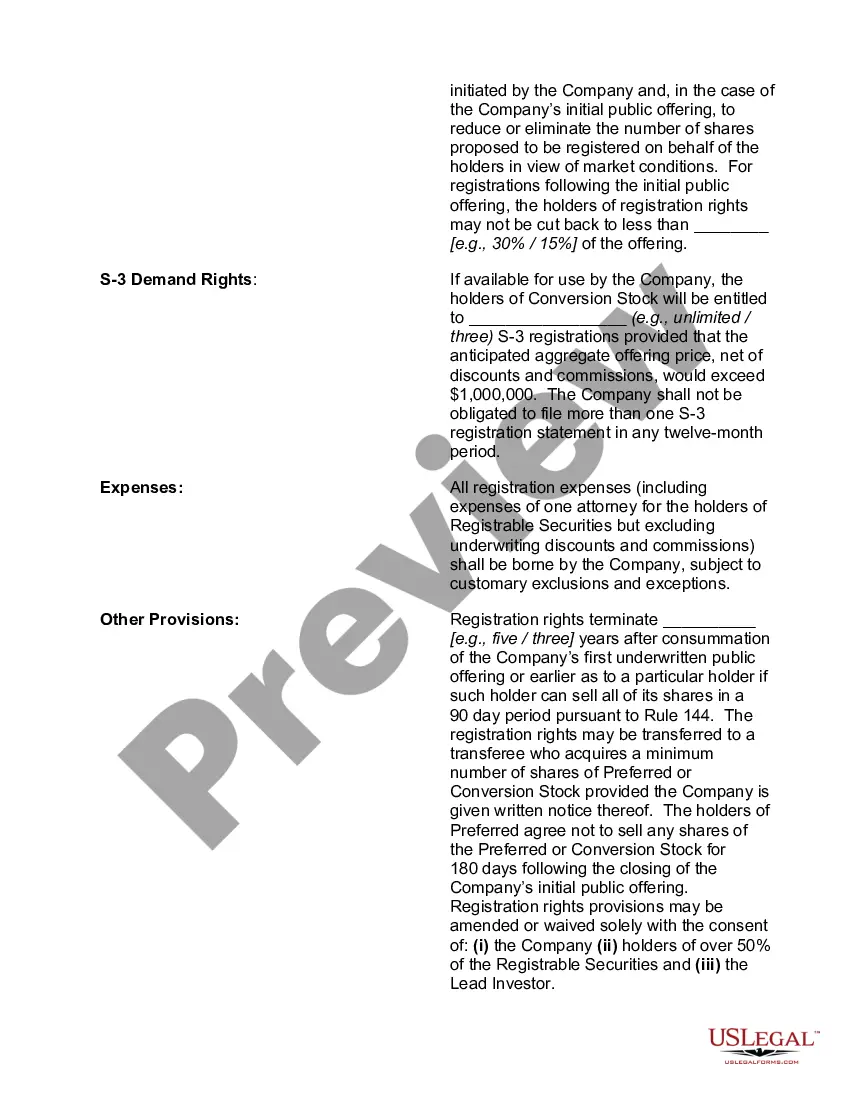
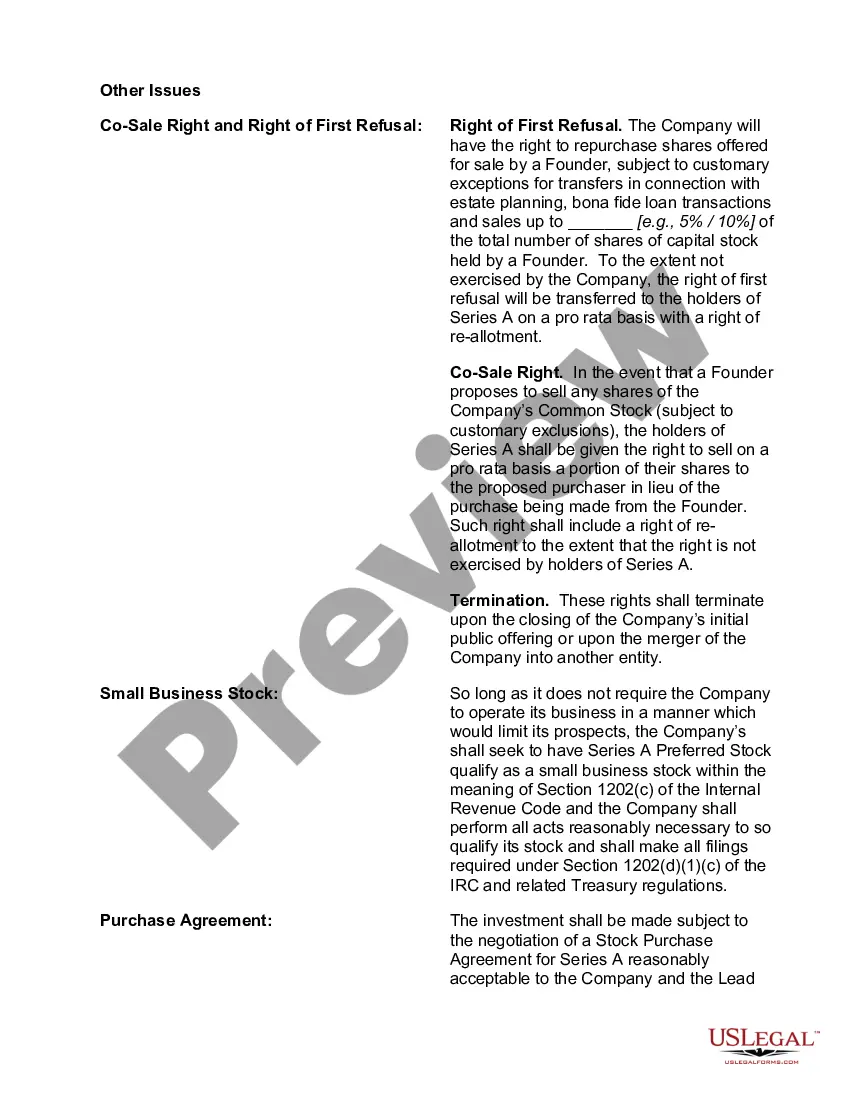
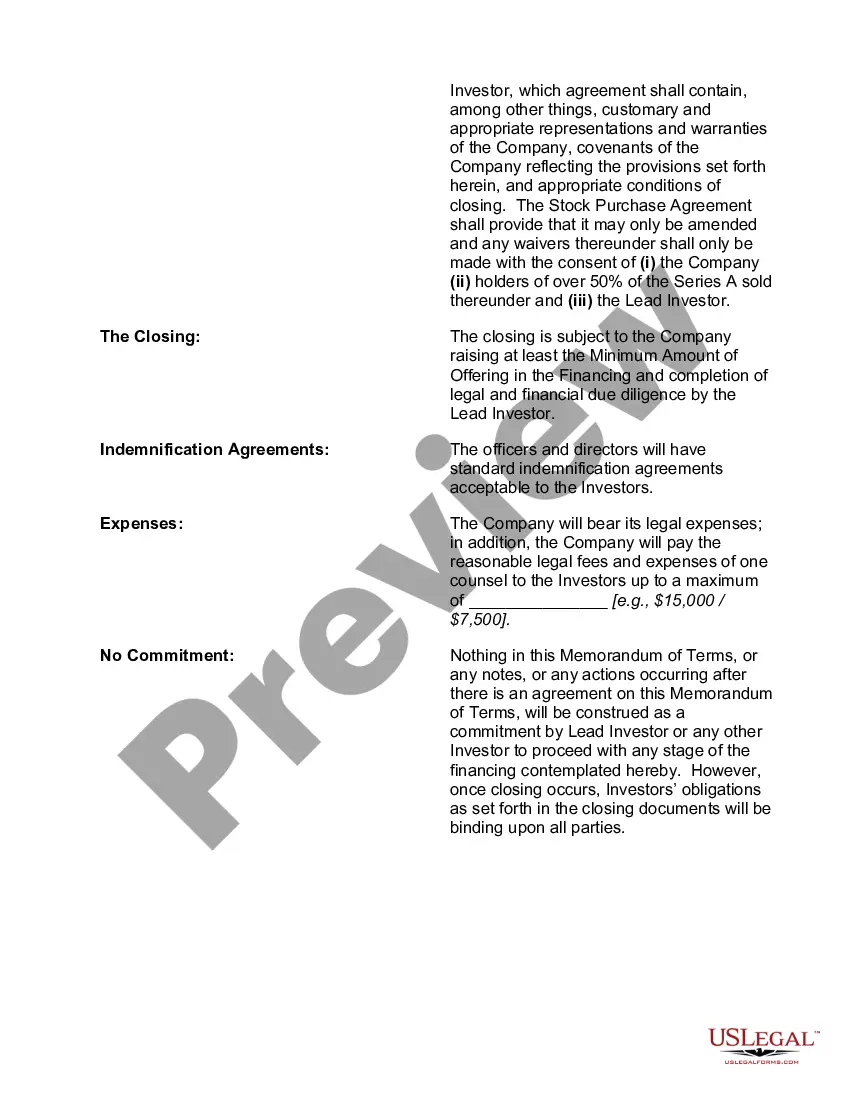
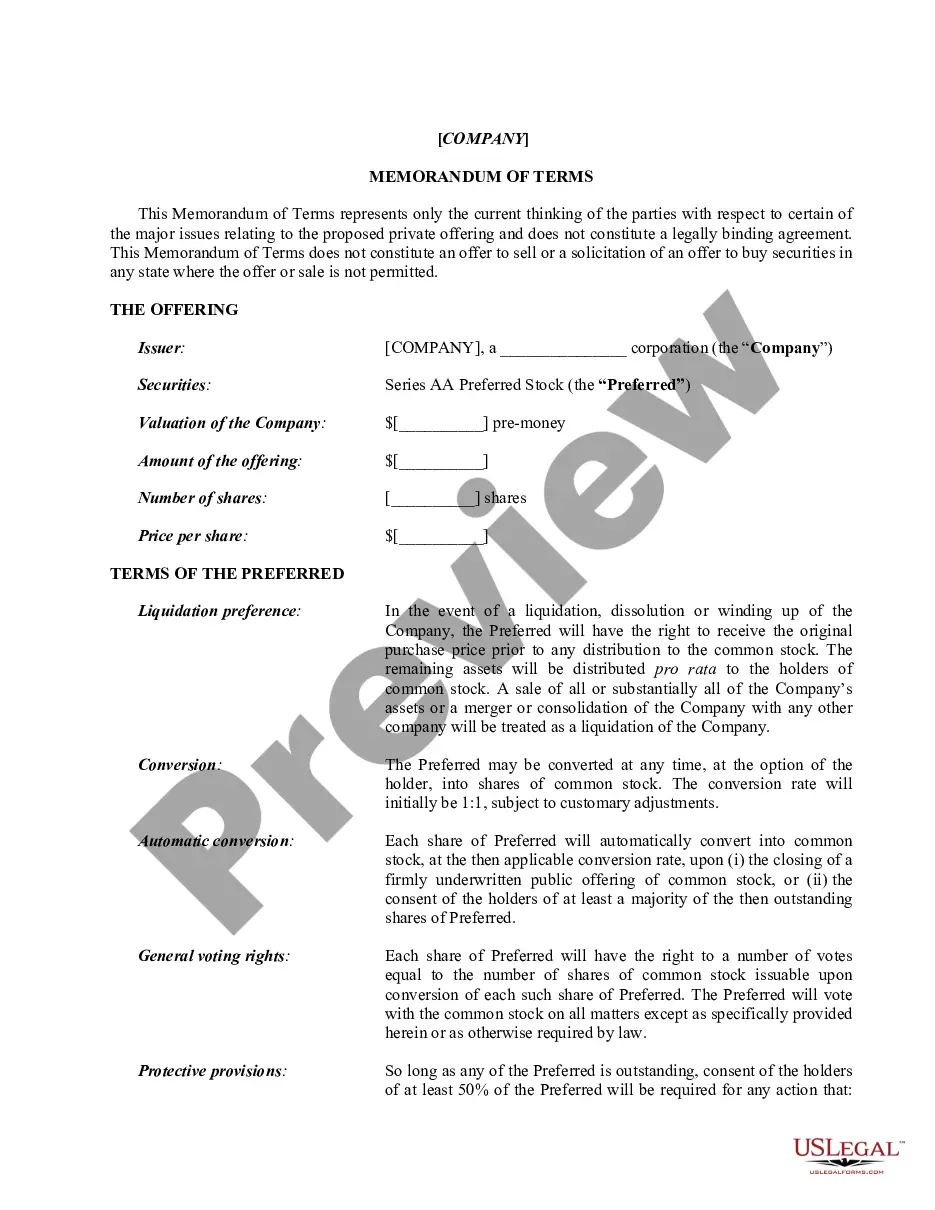
  • Preview Angel Investment Term Sheet
  • Preview Angel Investment Term Sheet
  • Preview Angel Investment Term Sheet
  • Preview Angel Investment Term Sheet
  • Preview Angel Investment Term Sheet
  • Preview Angel Investment Term Sheet
  • Preview Angel Investment Term Sheet
  • Preview Angel Investment Term Sheet
  • Preview Angel Investment Term Sheet

How to fill out Angel Investment Term Sheet?

Have you found yourself in a situation where you frequently need documents for business or personal purposes.

There are numerous legal document templates available online, but finding reliable ones can be challenging.

US Legal Forms offers a vast array of form templates, including the Vermont Angel Investment Term Sheet, designed to comply with both federal and state requirements.

Once you find the appropriate form, click Purchase now.

Select the payment plan you prefer, provide the necessary details to create your account, and complete your order using PayPal or a credit card.

  1. If you're already acquainted with the US Legal Forms website and have an account, simply Log In.
  2. Then, you can download the Vermont Angel Investment Term Sheet template.
  3. If you don't have an account and wish to start using US Legal Forms, follow these instructions.
  4. Find the form you need and ensure it is for the correct region.
  5. Use the Preview button to review the document.
  6. Check the description to verify you have selected the right form.
  7. If the form isn't what you were looking for, utilize the Search field to locate the form that meets your needs.

Form popularity

FAQ

The more money an angel investor gives your business, they more they'll expect a bigger return on investment (ROI). The ROI expectation varies between angels and the specific investing opportunity. It's not uncommon for an angel investor to expect a 30% return on their money.

Angel investing groups generally aim to take 20 to 50 percent ownership stake of early-stage companies. Therefore, structuring the deal and negotiating the terms begin with the valuation of the company.

Angel investors are typically experienced investors who take a long-term view and understand that they may not see a return on their investment for a long period of time. Many angel investors are also looking for personal opportunities in addition to investment opportunities.

While there are a number of ways an investment can be structured, deals you come across will commonly be one of three structures:Convertible Notes. Convertible notes (also known as convertible debt), are a form of debt that convert to equity once a company raises a further round of financing.SAFEs.Priced Rounds.

A typical vesting period for an employee or Founder might be 3 4 years, which would mean they would earn 25% of their stock each year over a 4 year period. If they leave early, the unvested portion returns back to the company.

In general, angel investors expect to get their money back within 5 to 7 years with an annualized internal rate of return (IRR) of 20% to 40%. Venture capital funds strive for the higher end of this range or more.

Advantages of angel investorsAngel investors are typically experienced investors who take a long-term view and understand that they may not see a return on their investment for a long period of time. Many angel investors are also looking for personal opportunities in addition to investment opportunities.

What do angel investors want in return? Angel investors typically want ownership in the company they invest in. An angel investor usually provides capital in exchange for equity (stock in the company) or convertible debt, which is a loan that can be converted to equity at a later date.

Angel investors usually take between 20 and 50 percent stake in the companies they help. Sometimes the exact amount is determined strictly by negotiation. However, frequently angel investors use a company's valuation as a measure for how much ownership they should take.

Trusted and secure by over 3 million people of the world’s leading companies

Vermont Angel Investment Term Sheet