Vermont Annual Minutes
About this form
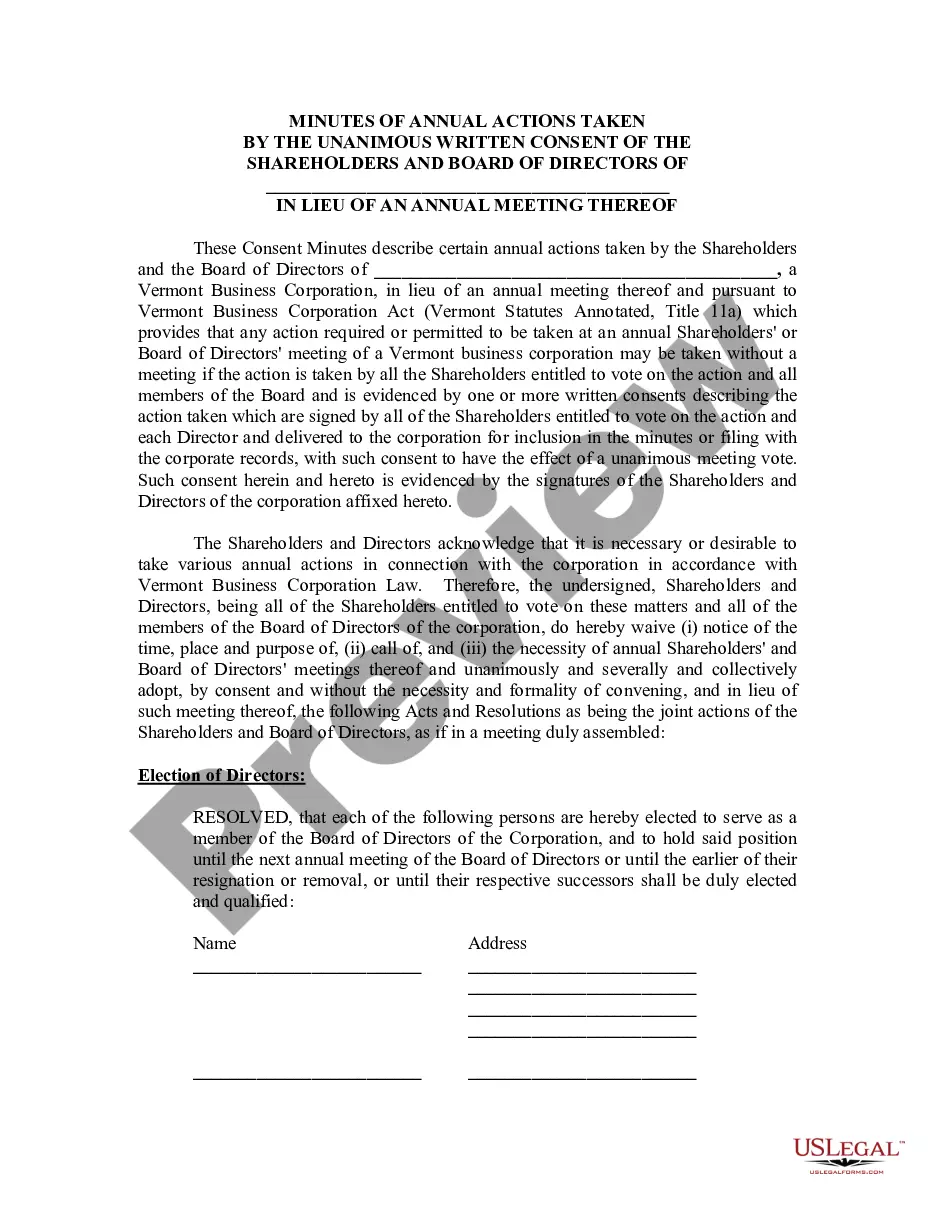
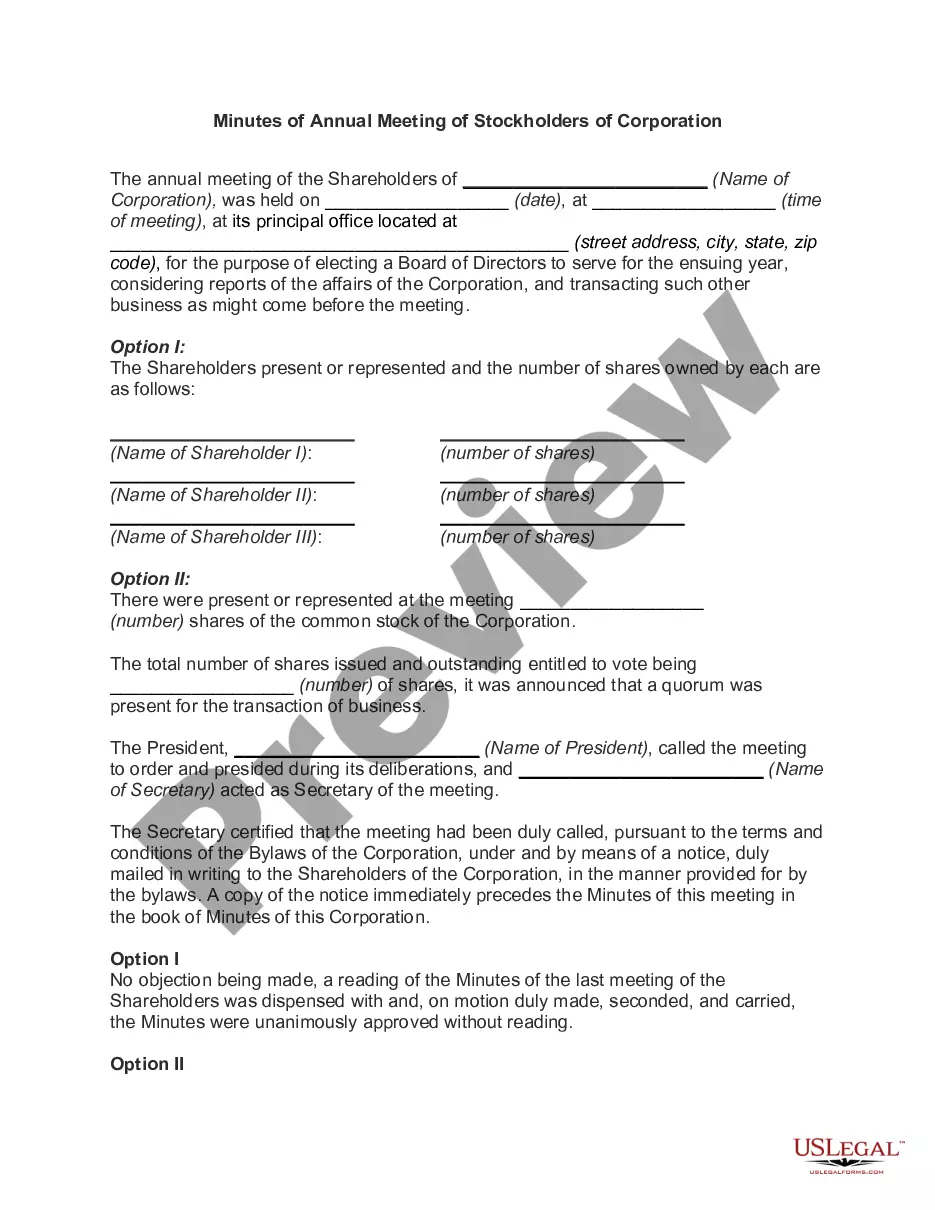
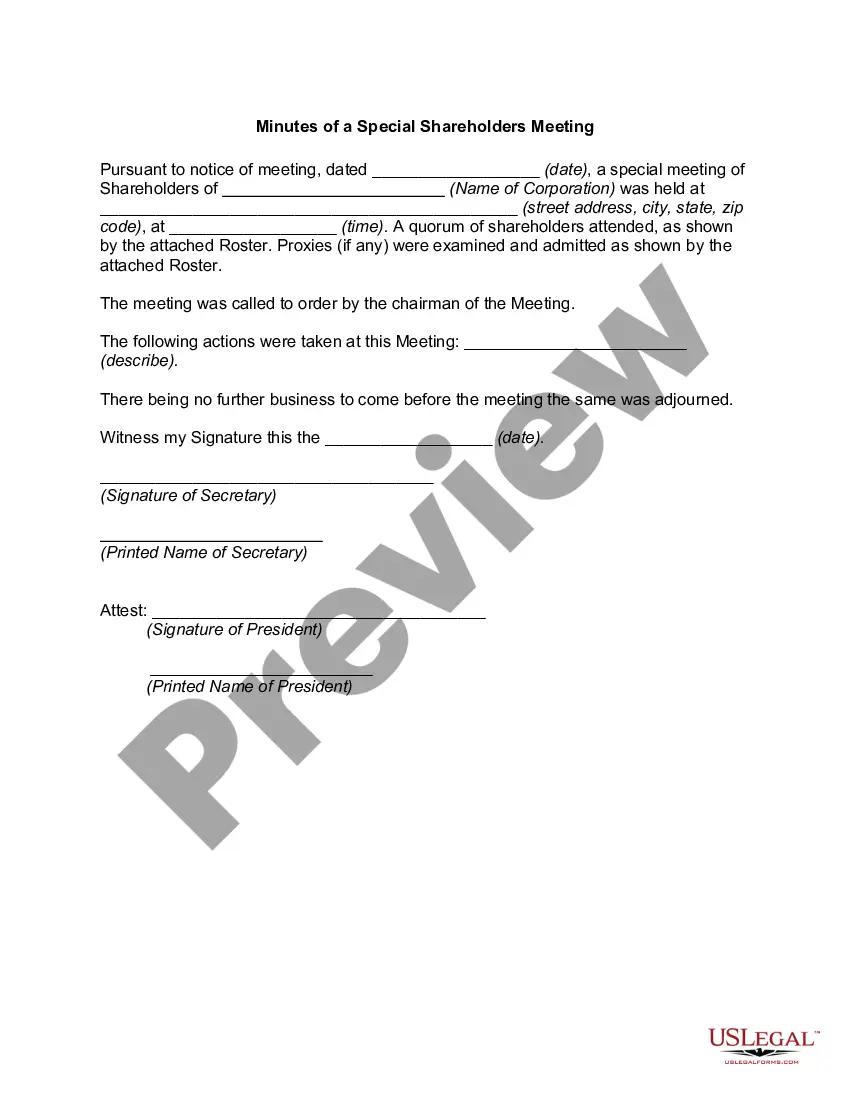
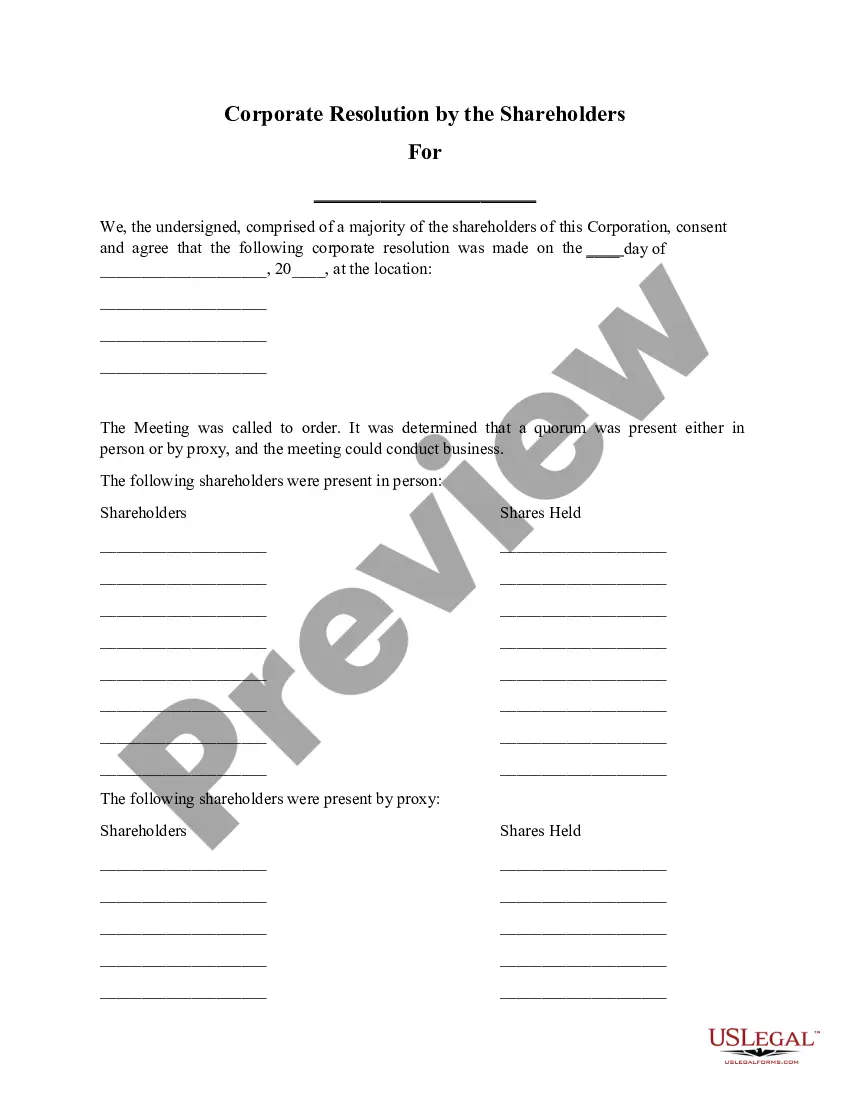
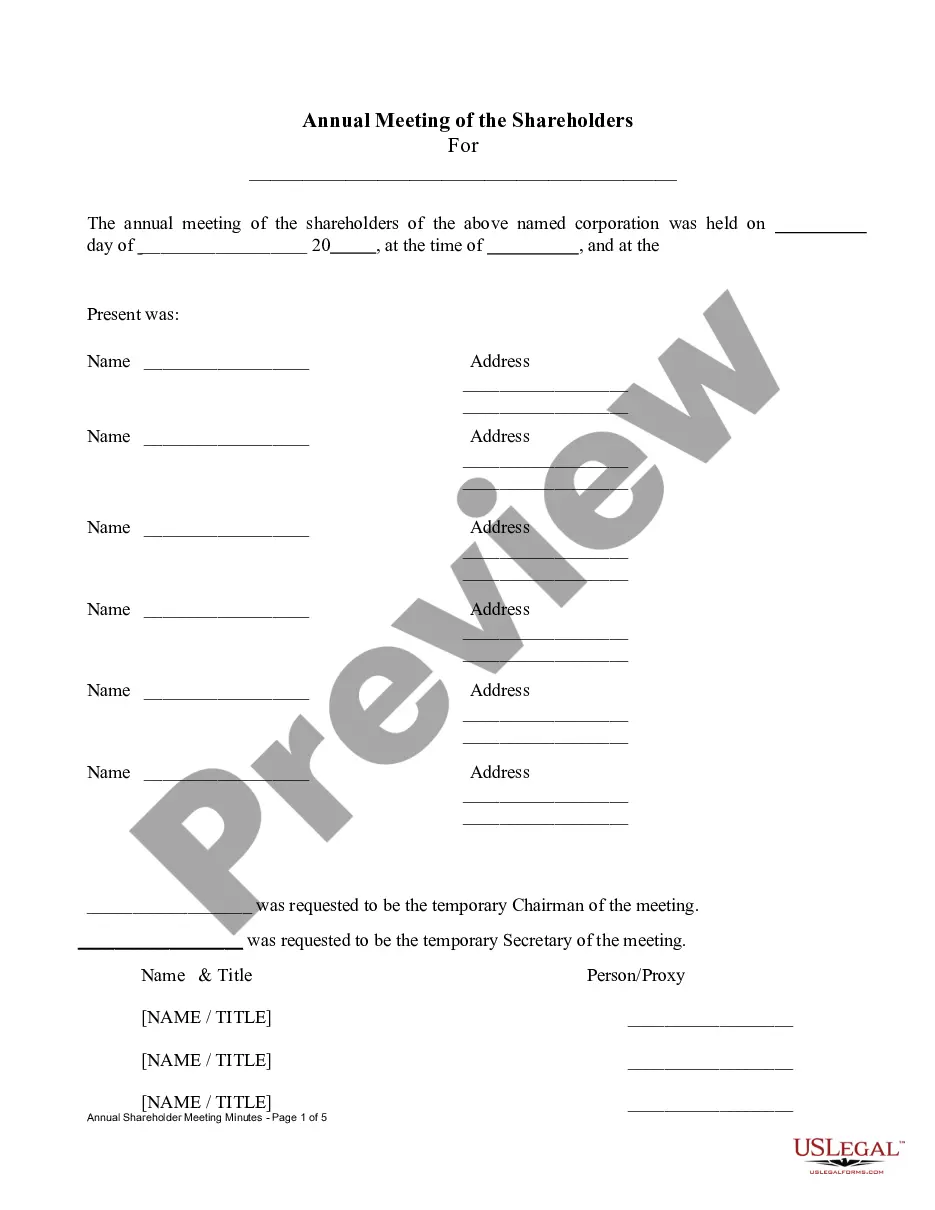
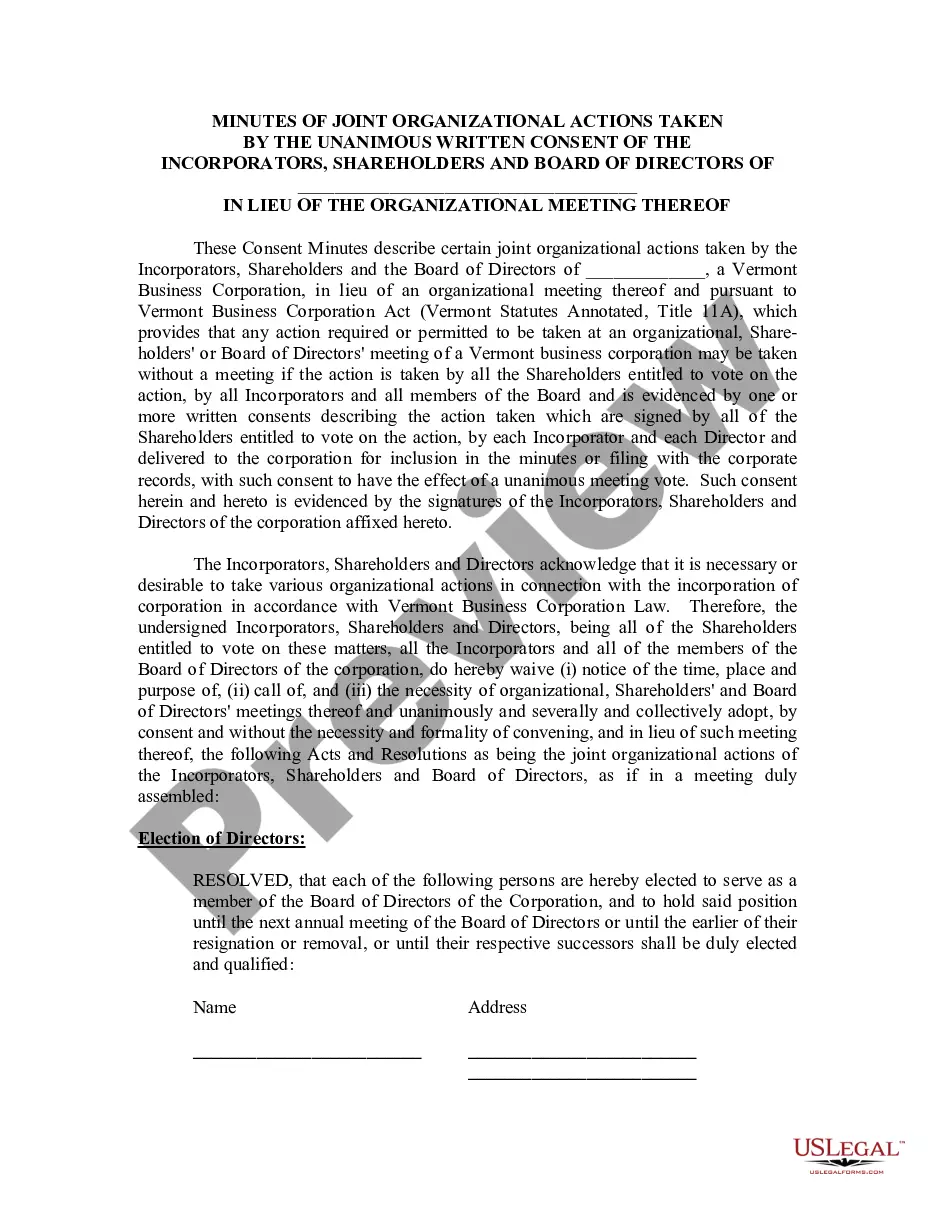
The Annual Minutes form is a legal document used by corporations to record significant decisions and changes made by shareholders and the board of directors throughout the year. This form serves as an alternative to holding a formal annual meeting, allowing all actions to be approved via unanimous written consent, which simplifies the decision-making process and ensures compliance with Vermont's business regulations.
Main sections of this form
- Identification of the corporation and date of the consent.
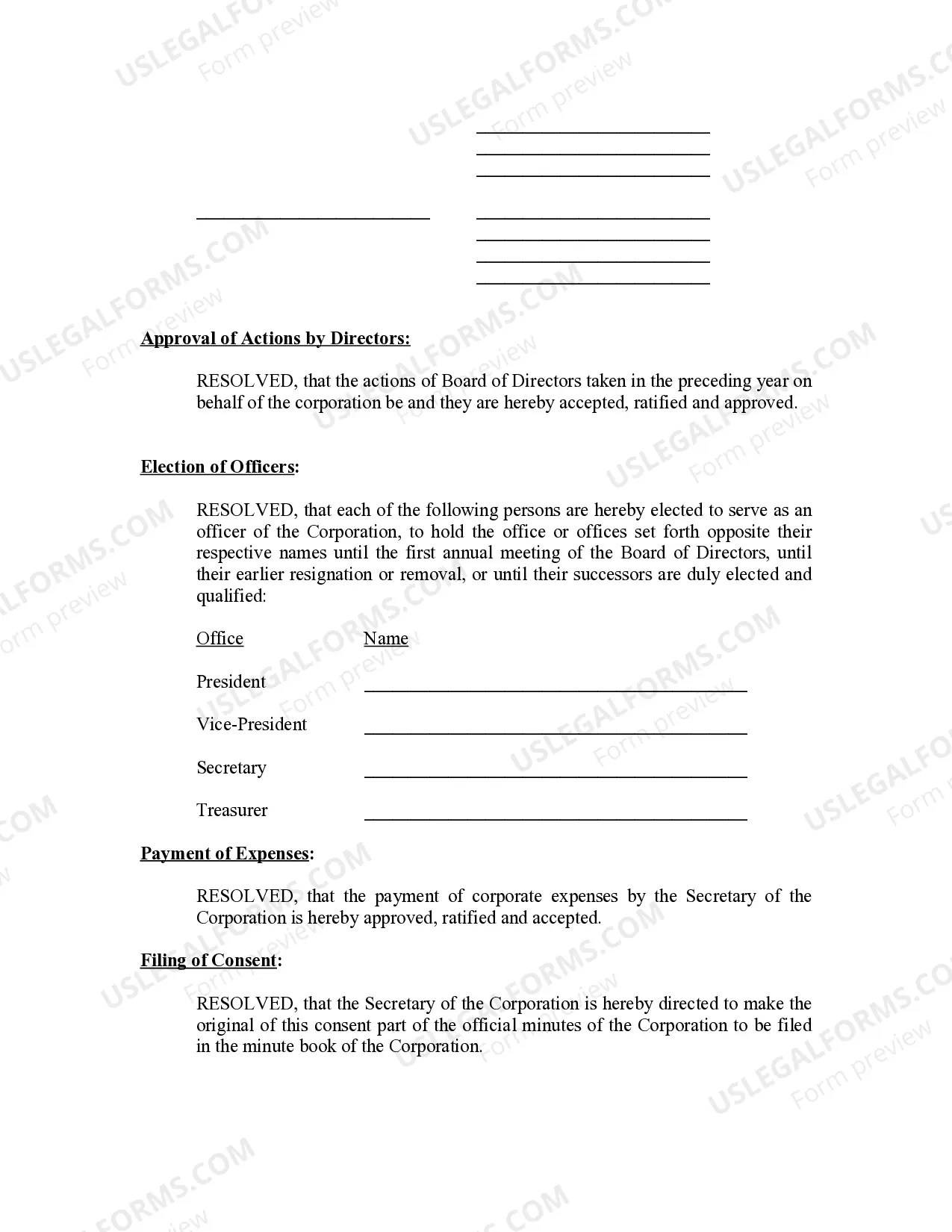
- Election of directors and officers for the corporation.
- Approval of prior actions taken by the board of directors.
- Details regarding the payment of corporate expenses.
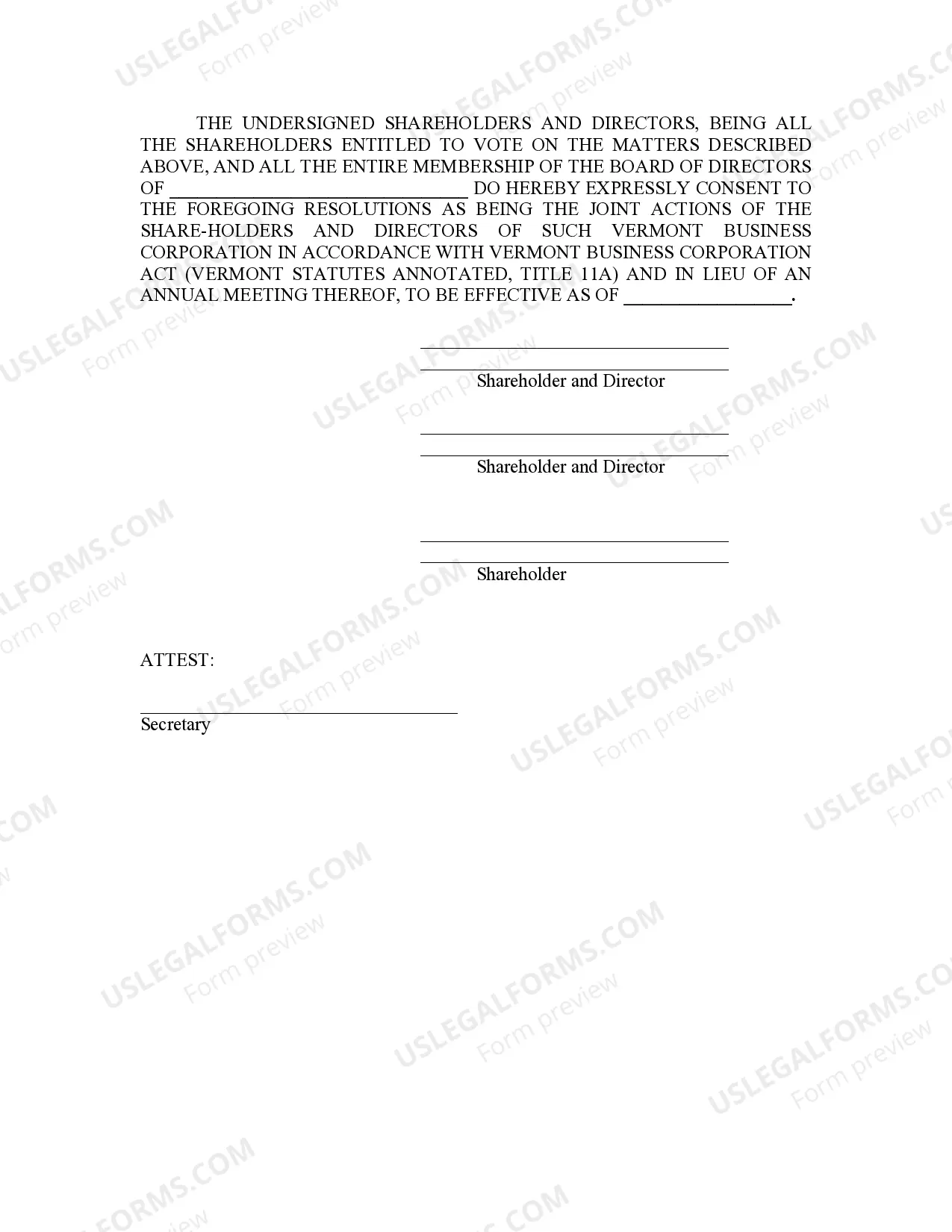
- Signatures of all shareholders and directors involved.
When to use this document
This form should be used when a Vermont business corporation is unable or prefers not to hold a physical annual meeting. It is particularly useful when all stakeholders agree on key actions, allowing them to document decisions efficiently while still meeting legal requirements.
Who this form is for
This form is intended for:
- Shareholders of a Vermont business corporation.
- Members of the board of directors of a corporation.
- Corporations seeking to streamline their annual meeting process.
- Individuals responsible for maintaining corporate records.
Instructions for completing this form
- Enter the name of the corporation and the date of the consent.
- List the names and addresses of the elected directors and officers.
- Include the resolutions for the election of directors and approval of actions.
- Have all shareholders and directors sign the document.
- Ensure that the Secretary retains the original for proper filing in the corporate records.
Does this form need to be notarized?
In most cases, this form does not require notarization. However, some jurisdictions or signing circumstances might. US Legal Forms offers online notarization powered by Notarize, accessible 24/7 for a quick, remote process.
Get your form ready online
Our built-in tools help you complete, sign, share, and store your documents in one place.
Make edits, fill in missing information, and update formatting in US Legal Forms—just like you would in MS Word.
Download a copy, print it, send it by email, or mail it via USPS—whatever works best for your next step.
Sign and collect signatures with our SignNow integration. Send to multiple recipients, set reminders, and more. Go Premium to unlock E-Sign.
If this form requires notarization, complete it online through a secure video call—no need to meet a notary in person or wait for an appointment.
We protect your documents and personal data by following strict security and privacy standards.

Make edits, fill in missing information, and update formatting in US Legal Forms—just like you would in MS Word.

Download a copy, print it, send it by email, or mail it via USPS—whatever works best for your next step.

Sign and collect signatures with our SignNow integration. Send to multiple recipients, set reminders, and more. Go Premium to unlock E-Sign.

If this form requires notarization, complete it online through a secure video call—no need to meet a notary in person or wait for an appointment.

We protect your documents and personal data by following strict security and privacy standards.
Mistakes to watch out for
- Failing to include all necessary signatures from shareholders and directors.
- Not documenting all required resolutions clearly.
- Neglecting to keep a copy of the consent in the official corporate records.
Benefits of completing this form online
- Convenient access to forms that can be downloaded and completed at your own pace.
- Editability allows for quick updates to details as needed.
- Reliability comes from forms drafted by licensed attorneys ensuring legal compliance.
Looking for another form?

Form popularity
FAQ
They're only about 9 months long, but those other 3 months make you miss the winter. I love playing outside with the kids, but the summer month(s) are replete with chores to help you get ready for winter.
Vermont has some seriously brutal winters, with most areas averaging around 8ft of snow. Butin the same vein of places like ColoradoVermonters actually seem to relish in the inability to drive anything without chains.
This old Vermont expression describes the typical weather found in Vermont. Winter generally begins sometime in late November, although snow has been known to fall sometimes as early as Halloween! The snow will typically last through March and sometimes on into the beginning of April.
Vermont has warm and humid summers with average high temperatures of 75°F (23.9A°C) to 82A°F (27.8A°C) in the peak of July. Summer nights are mild with average low temperatures of 55A°F (12.8A°C) to 60A°F (15.6A°C).Although it rains throughout the year, spring and early summer tend to receive more rainfall.
January is the snowiest and coldest month of the year in Vermont. The New Year alternates between a few hours of daily sunshine, gloomy skies, and inclement weather. Temperatures drop even below -10°F (-23.3A°C) in many places, while the average temperatures are between 2A°F (-16.7A°C) to 31A°F (-0.6A°C).
Burlington's coldest month is January when the average temperature overnight is 9.3°F. In July, the warmest month, the average day time temperature rises to 81.4A°F.
How will Vermont's climate change in the future? Vermont will continue to get warmer and experience more frequent heavy precipitation events. By the end of the century, Vermont climate scientists expect: The frost-free season will likely increase by several weeks, with more rain and less snow in winter.
Vermont is a four-season destination. Fall is famous for colorful foliage from mid-September through mid-October, and winter brings ski season from late December through March. Spring weather can be unpredictable with the potential for late season snowstorms, a lot of rain, or even sunny skies.