Virgin Islands Waiver and Release From Liability For Adult for Scuba Diving and Skin Diving
Description
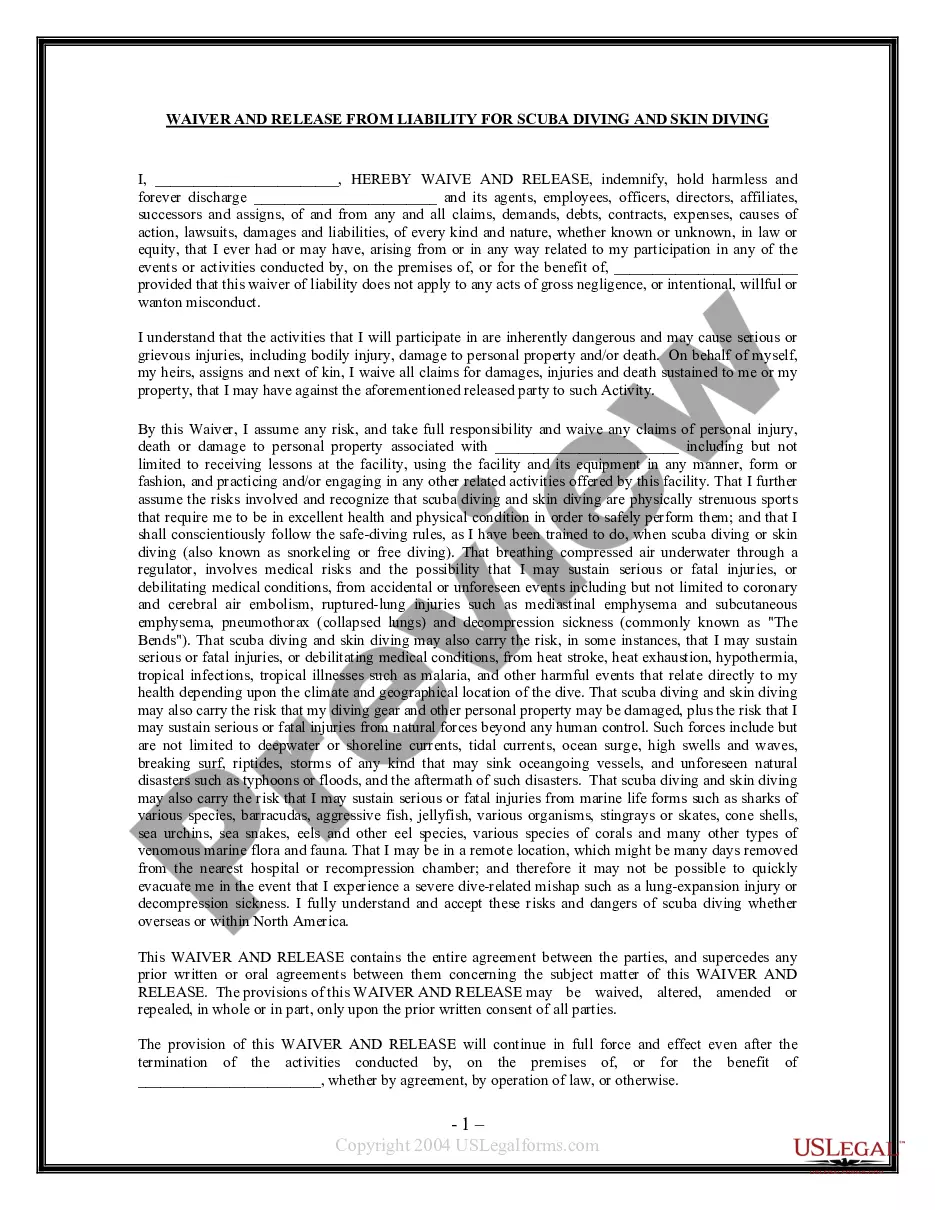
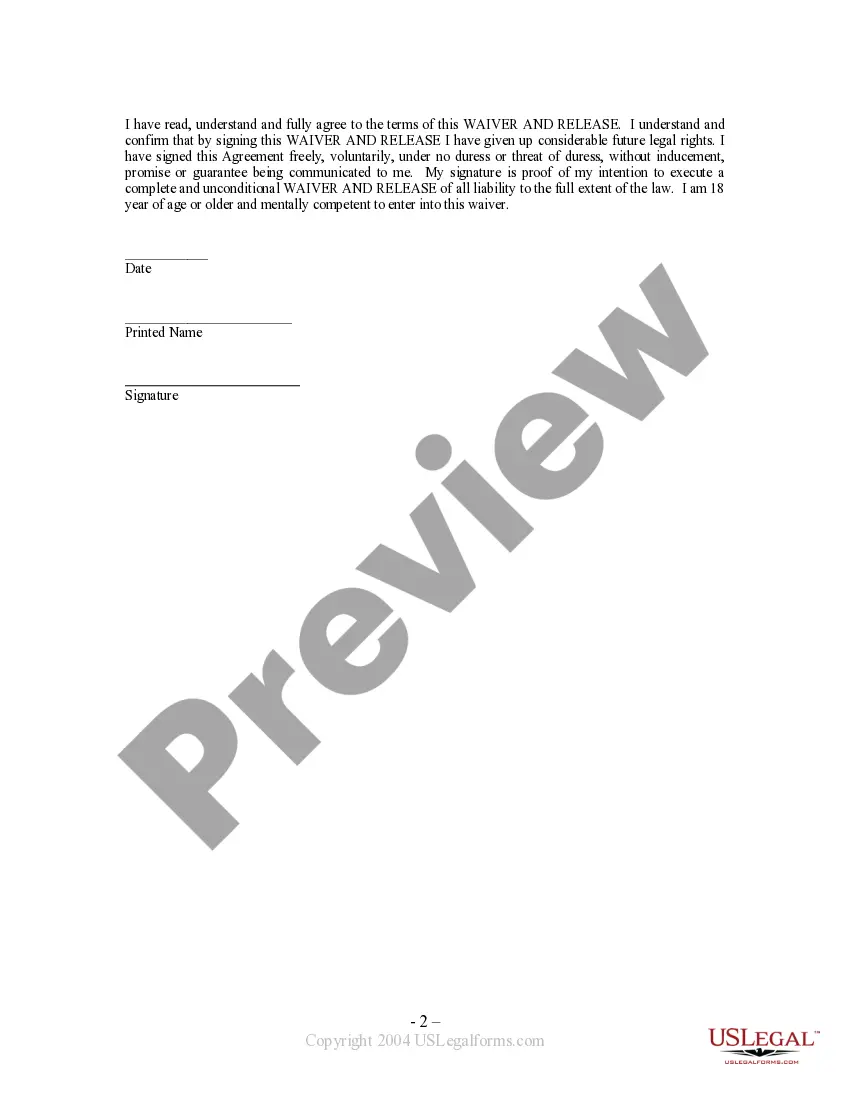
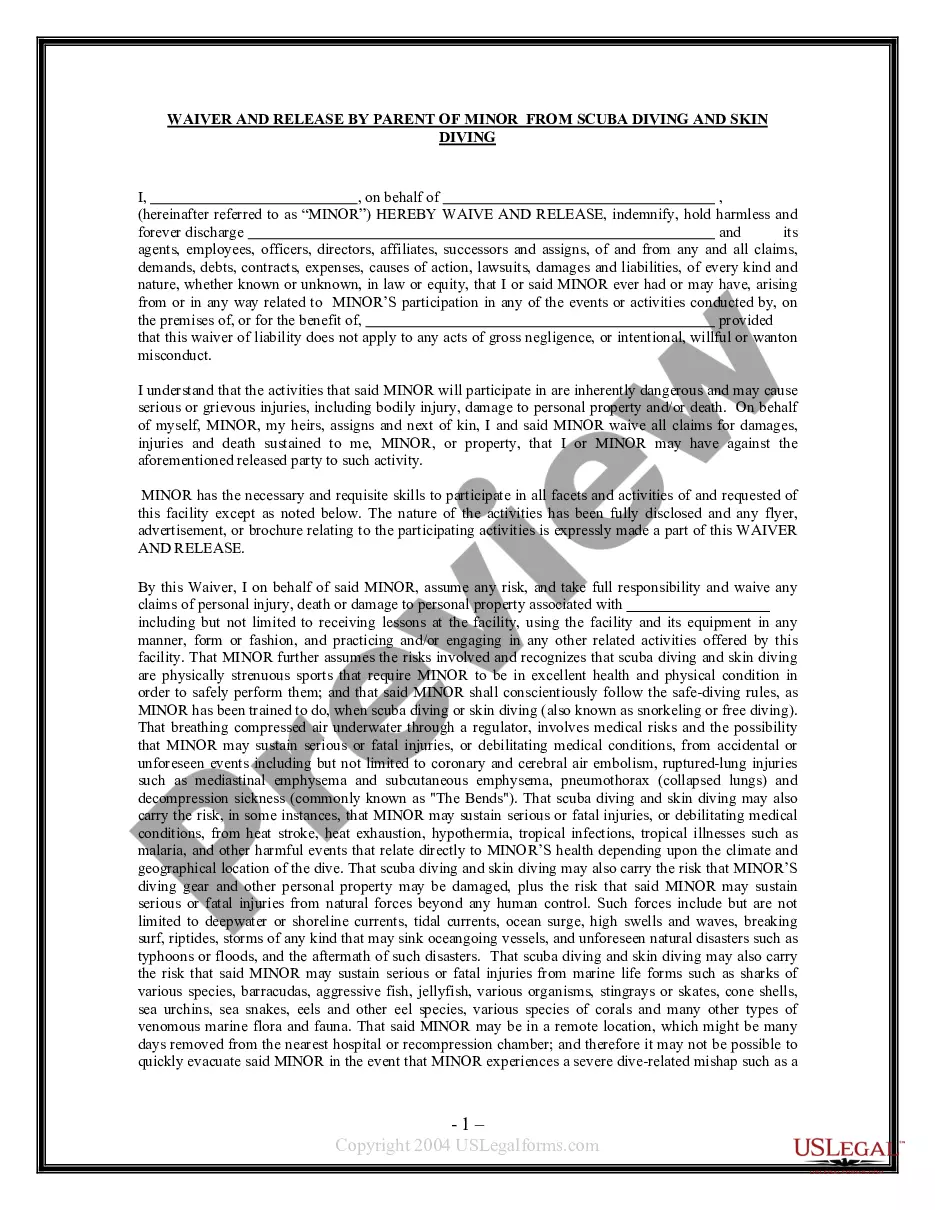
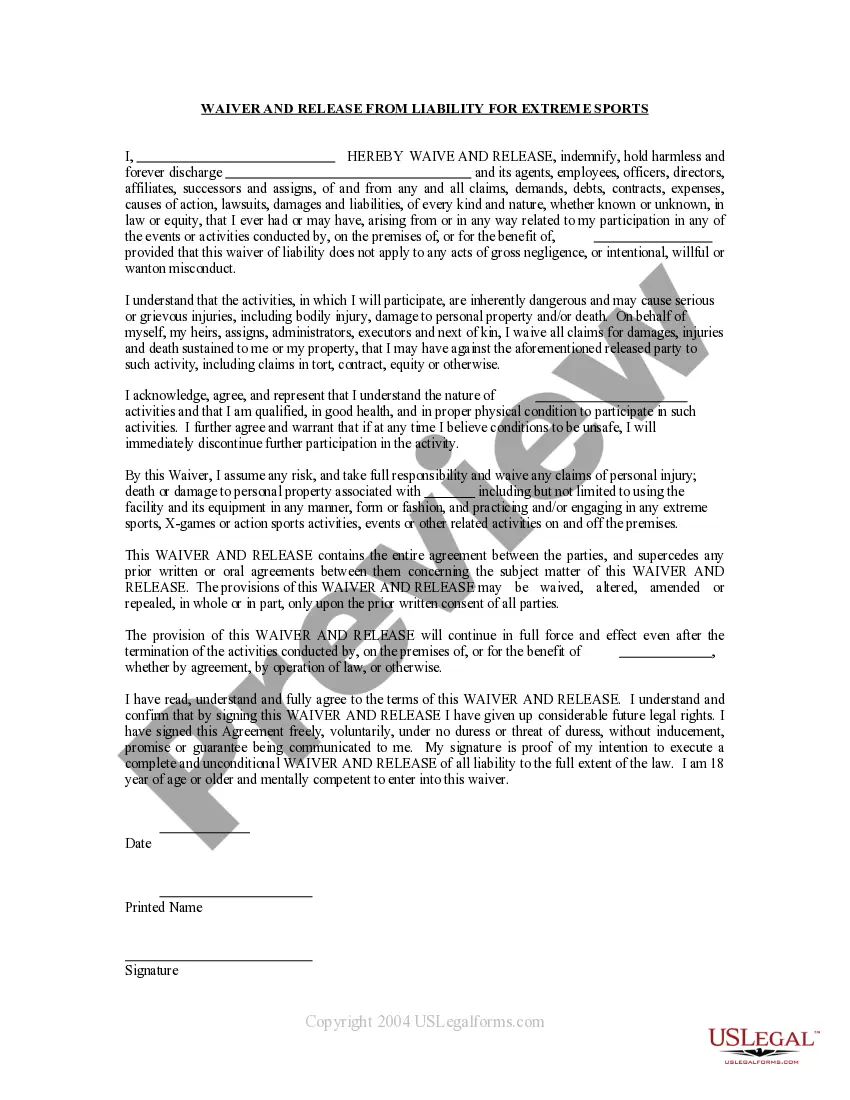
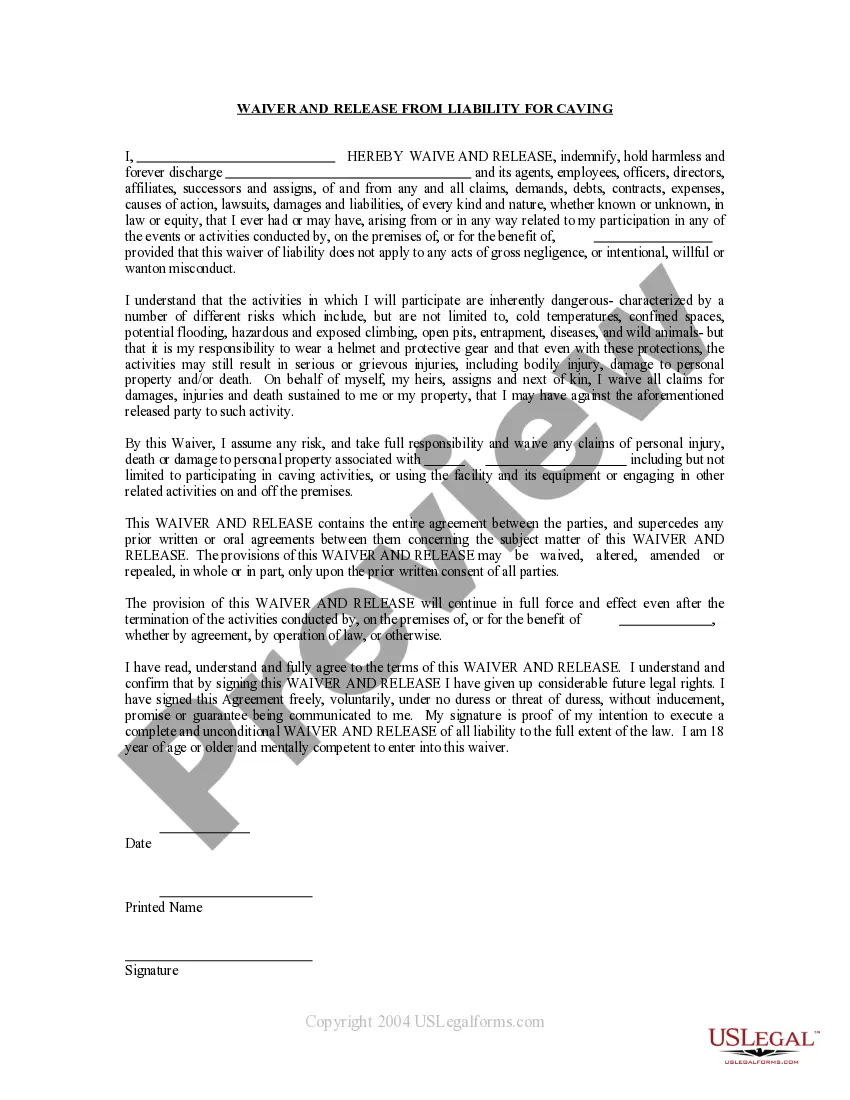
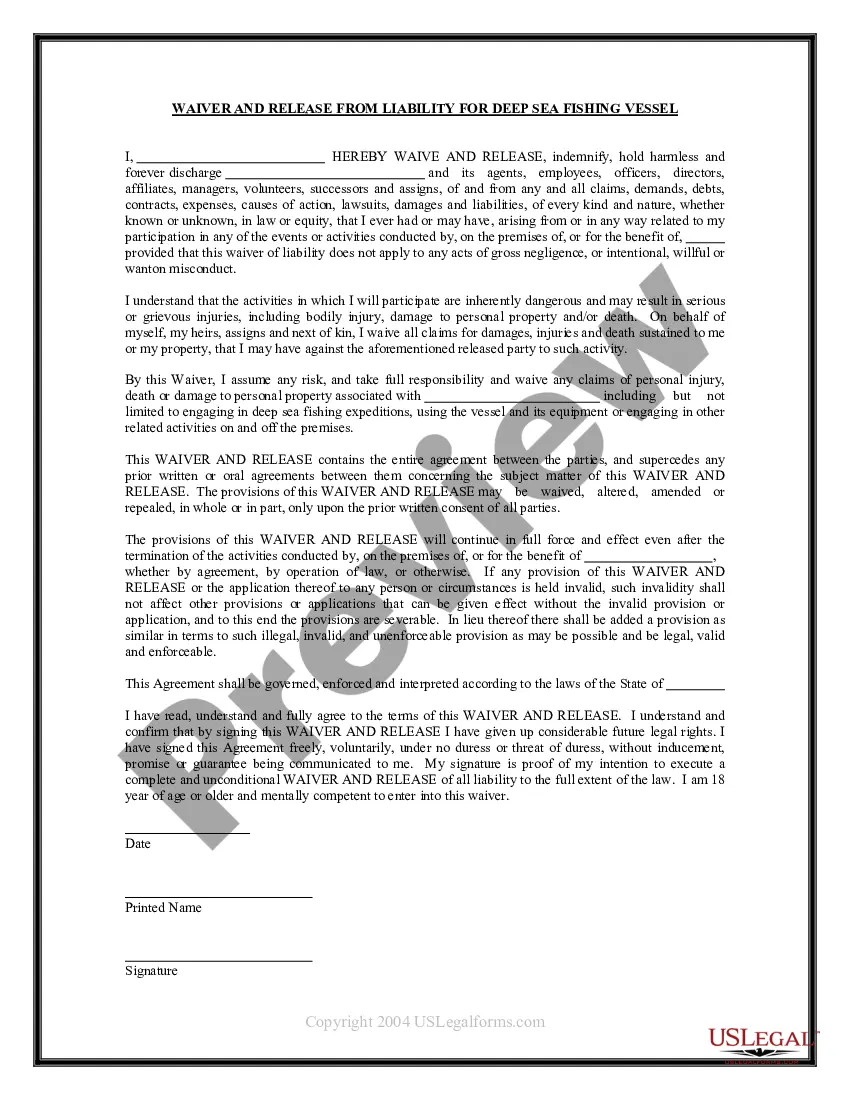
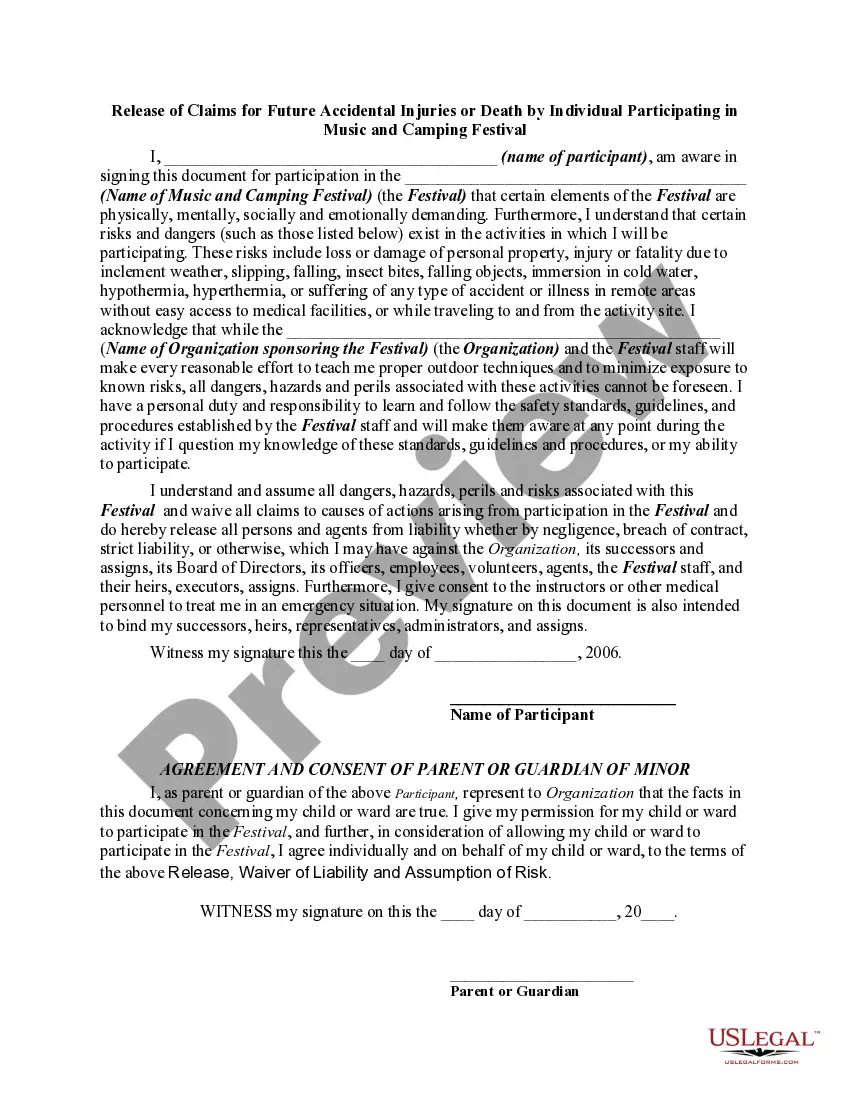
How to fill out Waiver And Release From Liability For Adult For Scuba Diving And Skin Diving?
Are you currently in a situation that you need documents for both business or personal reasons almost every day.
There are numerous legal document templates available online, but locating reliable ones isn't easy.
US Legal Forms offers thousands of form templates, including the Virgin Islands Waiver and Release From Liability For Adult for Scuba Diving and Skin Diving, which can be tailored to meet federal and state regulations.
Once you find the right form, click on Acquire now.
Choose the pricing plan you want, complete the necessary information to create your account, and pay for your order using your PayPal or credit card. Select a convenient document format and download your copy. You can find all the document templates you have purchased in the My documents menu. You can obtain another copy of Virgin Islands Waiver and Release From Liability For Adult for Scuba Diving and Skin Diving whenever needed. Just select the desired form to download or print the document template. Use US Legal Forms, the most extensive collection of legal forms, to save time and avoid mistakes. The service provides properly crafted legal document templates that you can use for various purposes. Create an account on US Legal Forms and start making your life easier.
- If you are already familiar with the US Legal Forms website and have an account, simply Log In.
- Then, you can download the Virgin Islands Waiver and Release From Liability For Adult for Scuba Diving and Skin Diving template.
- If you do not have an account and wish to start using US Legal Forms, follow these steps.
- Obtain the form you need and ensure it is for the correct city/state.
- Use the Preview button to view the form.
- Review the details to ensure you have selected the correct form.
- If the form isn’t what you are looking for, use the Lookup field to find the form that meets your needs.
Form popularity
FAQ
The 120 rule in scuba diving is a safety guideline stating that divers should not ascend faster than 120 feet per minute. This rule is designed to reduce the risk of decompression sickness, which can result from rapid ascents. Embracing this rule is crucial as you consider the Virgin Islands Waiver and Release From Liability For Adult for Scuba Diving and Skin Diving.
Divers shower off after each dive to rinse off saltwater, sand, or any contaminants that may have accumulated on their skin or equipment. This practice helps maintain hygiene and protects the skin from irritation caused by saltwater. Understanding this routine is beneficial as you prepare to sign the Virgin Islands Waiver and Release From Liability For Adult for Scuba Diving and Skin Diving.
The 1/3 rule in diving, similar to the 1 3 rule, emphasizes that divers should allocate one-third of their gas supply for descent, one-third for the dive, and reserve one-third for ascent. This strategy helps ensure divers have enough air for safe ascension. Following this guideline is especially important when signing the Virgin Islands Waiver and Release From Liability For Adult for Scuba Diving and Skin Diving.
A waiver of liability or consent form cannot waive all liability for the party that offers it, especially in cases of negligence. Legal protections vary by jurisdiction, making it essential to understand the limitations of such waivers. When completing the Virgin Islands Waiver and Release From Liability For Adult for Scuba Diving and Skin Diving, it is vital to be aware of your rights and obligations.
The two golden rules of scuba diving are to always dive with a buddy and to never hold your breath while ascending. Diving with a partner enhances safety by providing support in emergencies. Additionally, following these rules is important when acknowledging the Virgin Islands Waiver and Release From Liability For Adult for Scuba Diving and Skin Diving, as they help mitigate risks.
The 1 3 rule in diving suggests that divers should use one-third of their air supply for the descent, one-third for exploring underwater, and reserve one-third for the ascent. This approach ensures that divers maintain adequate air for safe return. Adhering to this rule is crucial, especially when signing the Virgin Islands Waiver and Release From Liability For Adult for Scuba Diving and Skin Diving.
The 120 rule in scuba diving refers to the guideline that divers should ascend no faster than 120 feet per minute. This rule helps prevent decompression sickness, which can occur if divers surface too quickly. Following this rule is essential for safety, and understanding it is necessary when completing the Virgin Islands Waiver and Release From Liability For Adult for Scuba Diving and Skin Diving.