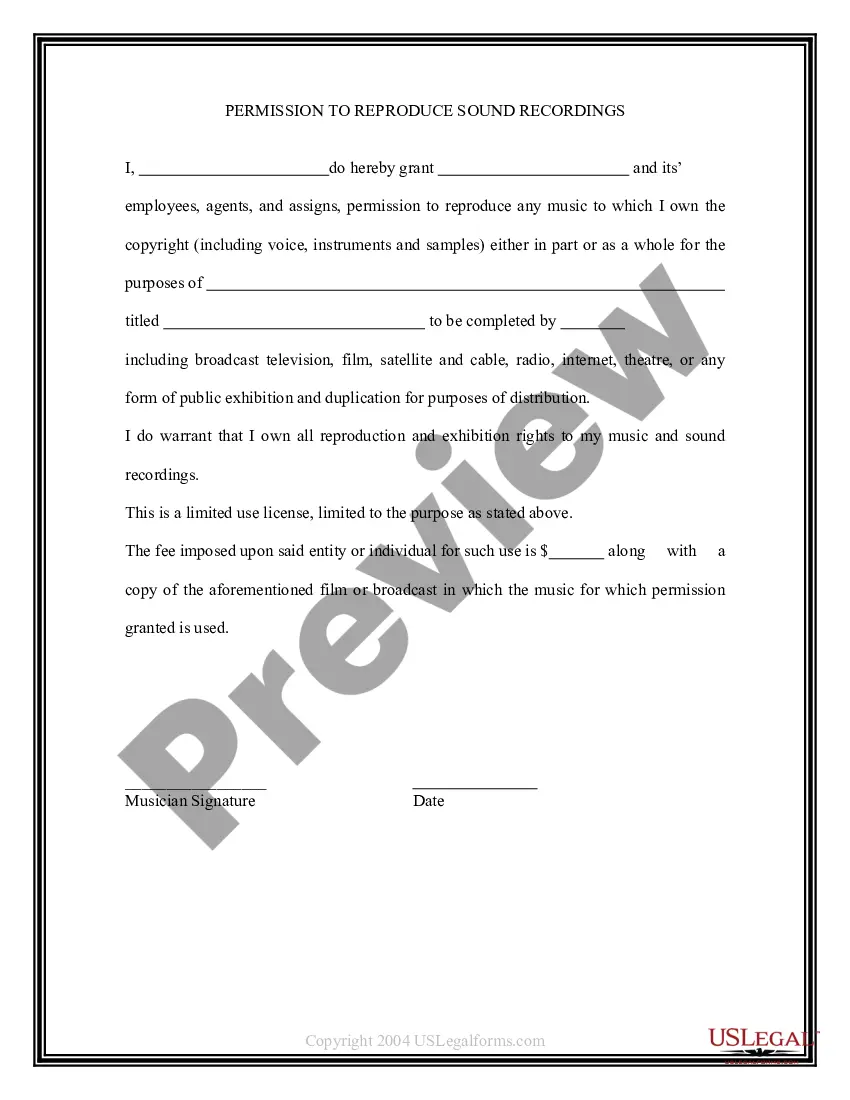
This is a form signed by a musician or owner of music granting permission to reproduce copyrighted music for use in a film, television, Internet, radio etc.
Virgin Islands Permission To Reproduce Sound Recordings
State:
Multi-State
Control #:
US-PRM-23
Format:
Word;
Rich Text
Instant download
Description

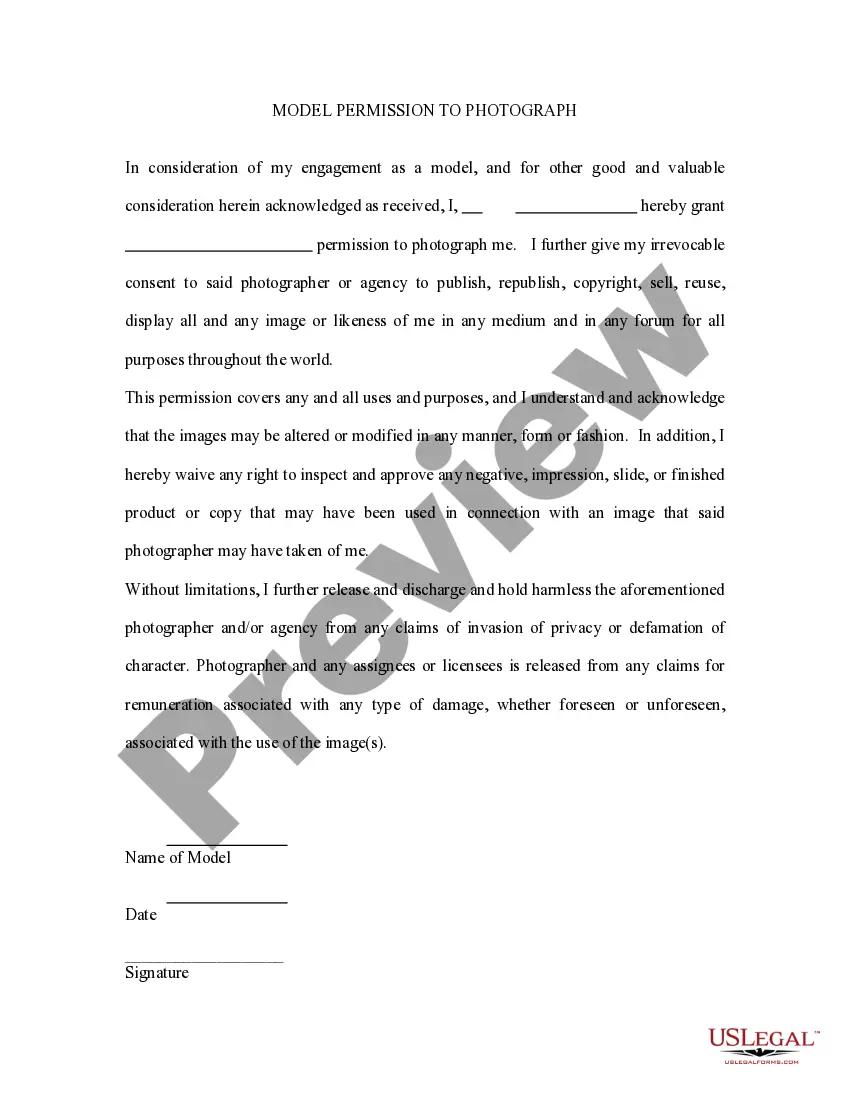
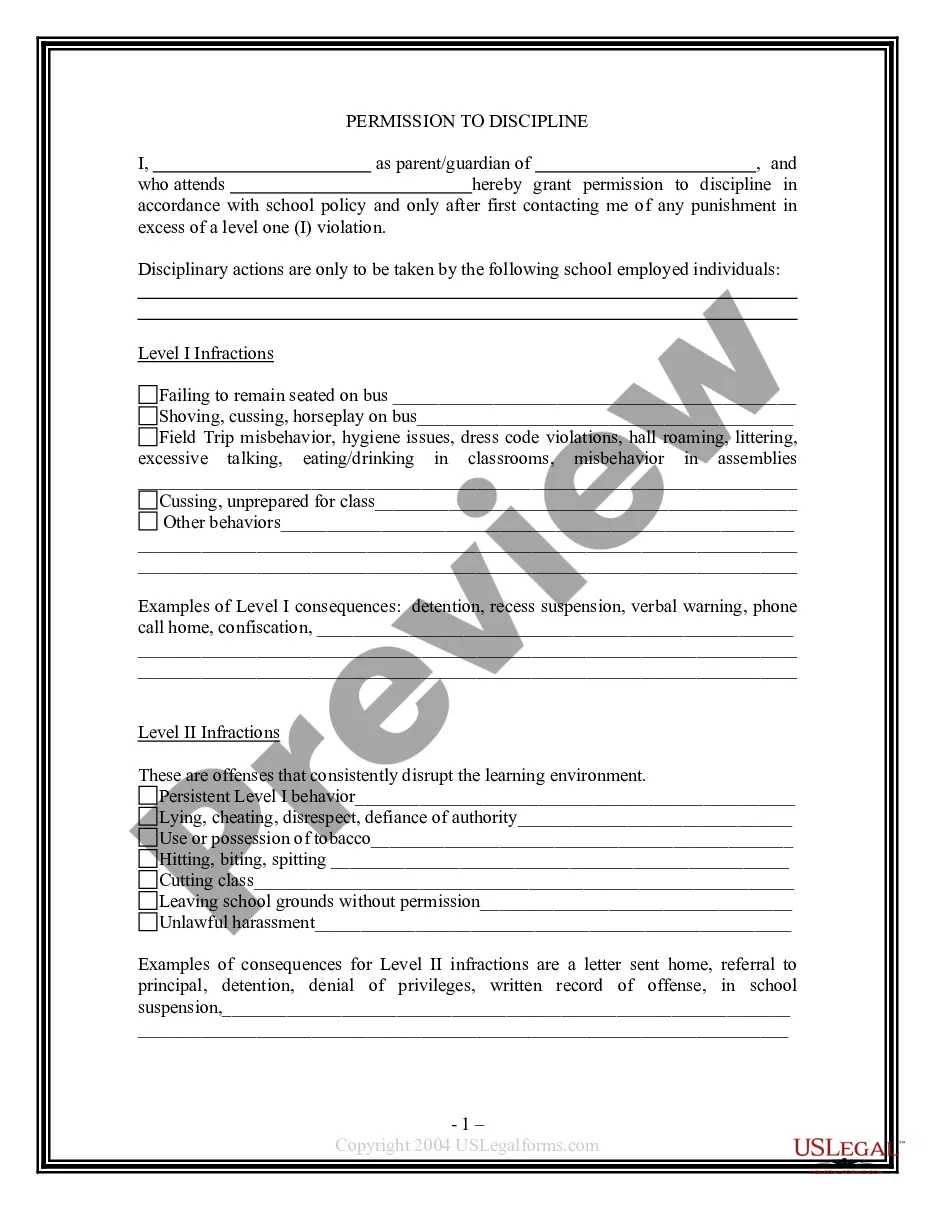
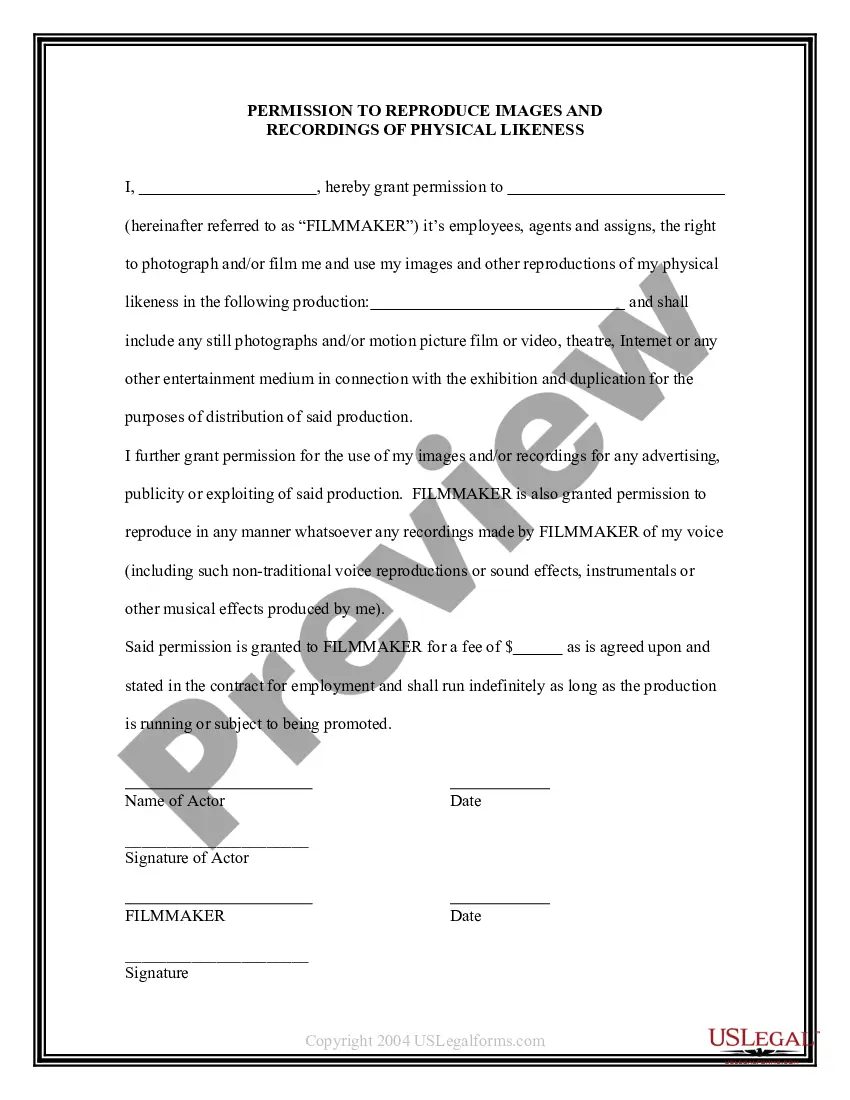
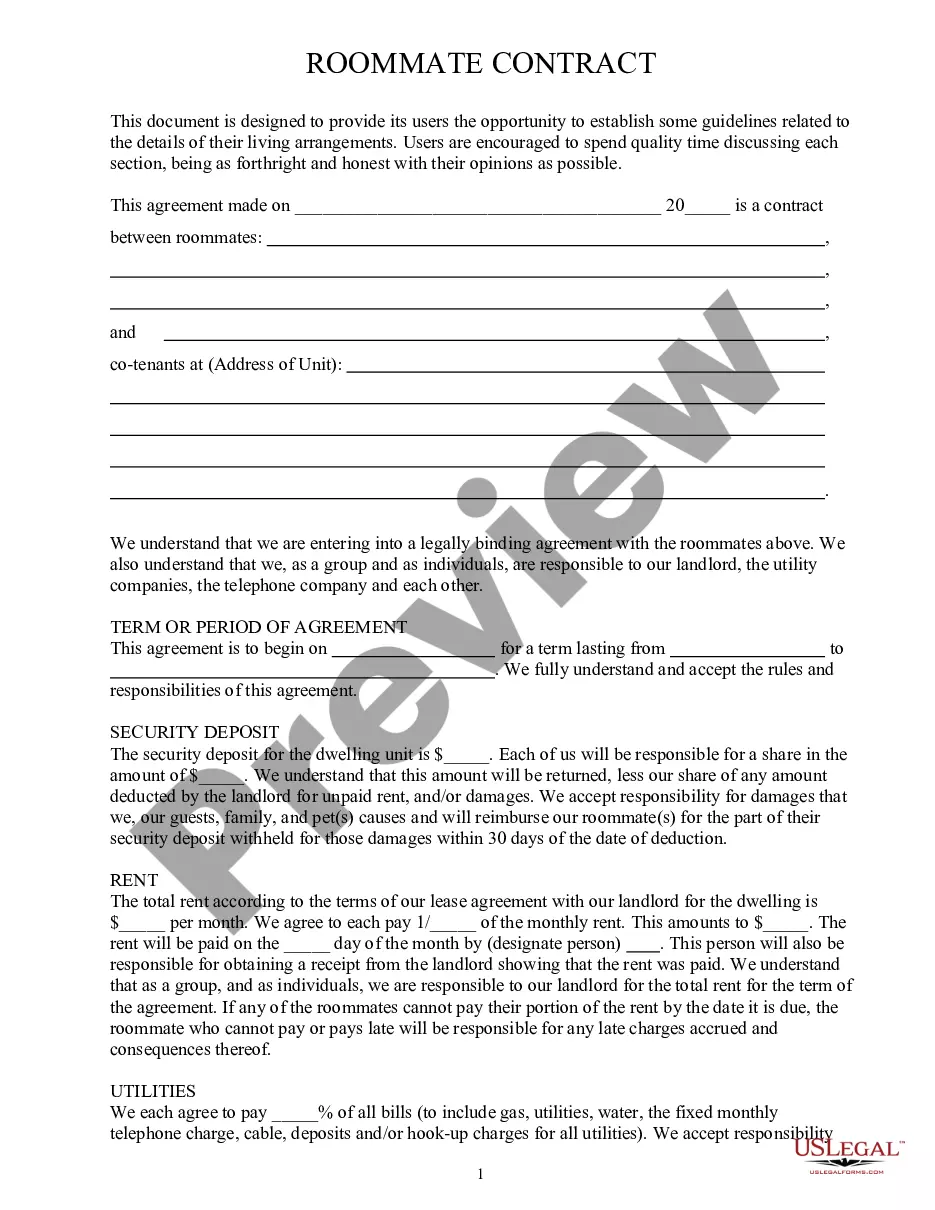
How to fill out Permission To Reproduce Sound Recordings?
You can spend hours online searching for the legal document template that meets the state and federal requirements you will need.
US Legal Forms provides a vast array of legal forms that are reviewed by experts.
You can easily download or print the Virgin Islands Permission To Reproduce Sound Recordings from my service.
If available, utilize the Preview option to review the document format as well. If you wish to find another variation of the form, use the Search field to locate the format that fits your needs and requirements. Once you have found the format you want, click Get now to proceed. Select the pricing plan you desire, enter your credentials, and register for an account on US Legal Forms. Complete the purchase. You can use your Visa or Mastercard or PayPal account to buy the legal form. Choose the format of the document and download it to your device. Make adjustments to your document if needed. You can complete, modify, and sign and print Virgin Islands Permission To Reproduce Sound Recordings. Download and print numerous document templates using the US Legal Forms website, which offers the largest selection of legal forms. Use professional and state-specific templates to address your business or personal needs.
- If you already have a US Legal Forms account, you may Log In and click the Download option.
- After that, you may complete, modify, print, or sign the Virgin Islands Permission To Reproduce Sound Recordings.
- Every legal document template you purchase is yours permanently.
- To obtain another copy of any purchased form, go to the My documents tab and click the relevant option.
- If you are using the US Legal Forms website for the first time, follow the simple instructions below.
- First, ensure you have chosen the correct document format for the region/city you select.
- Review the form description to confirm you have selected the right form.
Form popularity
FAQ
Copyright does indeed protect sound recordings, granting creators control over their works. This protection covers the specific recording rather than the underlying musical composition. If you're planning to use a sound recording, it is essential to seek Virgin Islands Permission To Reproduce Sound Recordings to avoid legal issues.
Yes, sound recordings are protected by copyright under U.S. law. This protection grants the copyright owner exclusive rights to reproduce, distribute, and publicly perform the recording. If you need to use a sound recording, obtaining Virgin Islands Permission To Reproduce Sound Recordings ensures you respect these legal protections.
Yes, the Virgin Islands have a rich musical heritage that includes genres like calypso, reggae, and steelpan music. Many local artists and bands contribute to this vibrant scene, reflecting the culture of the Islands. If you're interested in using this music, exploring Virgin Islands Permission To Reproduce Sound Recordings is a great way to support local talent.
In the United States, copyright for sound recordings typically lasts for 70 years after the death of the author or creator. If the work is created by a corporation, the copyright lasts 95 years from publication or 120 years from creation, whichever is shorter. Knowing the duration of copyright is crucial when considering Virgin Islands Permission To Reproduce Sound Recordings.
To determine if a sound is copyrighted, you can start by searching the U.S. Copyright Office's database. Many sounds also contain copyright notices, which can help you identify their status. If you're unsure, seeking Virgin Islands Permission To Reproduce Sound Recordings through legal channels can provide clarity.
The owner of a sound recording copyright is typically the person or entity that created the recording, such as the artist or music producer. However, this ownership can be transferred through contracts, meaning a record label or publisher may hold the rights instead. Understanding who holds the copyright is essential when seeking Virgin Islands Permission To Reproduce Sound Recordings.
Duplicating sound recordings without permission is generally illegal, as it infringes on copyright laws. However, certain exceptions, like fair use, may apply in specific situations. To navigate the complexities of Virgin Islands Permission To Reproduce Sound Recordings, it's best to consult legal experts or resources like uslegalforms.
The copyright in a sound recording typically belongs to the producer or the individual who created it. However, if a recording was made as part of employment, the employer may hold the rights. Understanding ownership is vital for obtaining Virgin Islands Permission To Reproduce Sound Recordings and ensuring you respect the rights of creators.
Audio recordings may face admissibility issues in court due to concerns about authenticity, privacy, and consent. Courts require evidence that recordings were obtained legally and without violating any rights. For Virgin Islands Permission To Reproduce Sound Recordings, ensuring proper documentation and consent is crucial to avoid legal challenges.
Sound recordings are primarily protected by copyright law, which grants the creator exclusive rights to reproduce, distribute, and perform their work. This protection allows the creator to control the use of their recordings and seek legal remedies if infringed. If you seek Virgin Islands Permission To Reproduce Sound Recordings, understanding copyright law is essential.