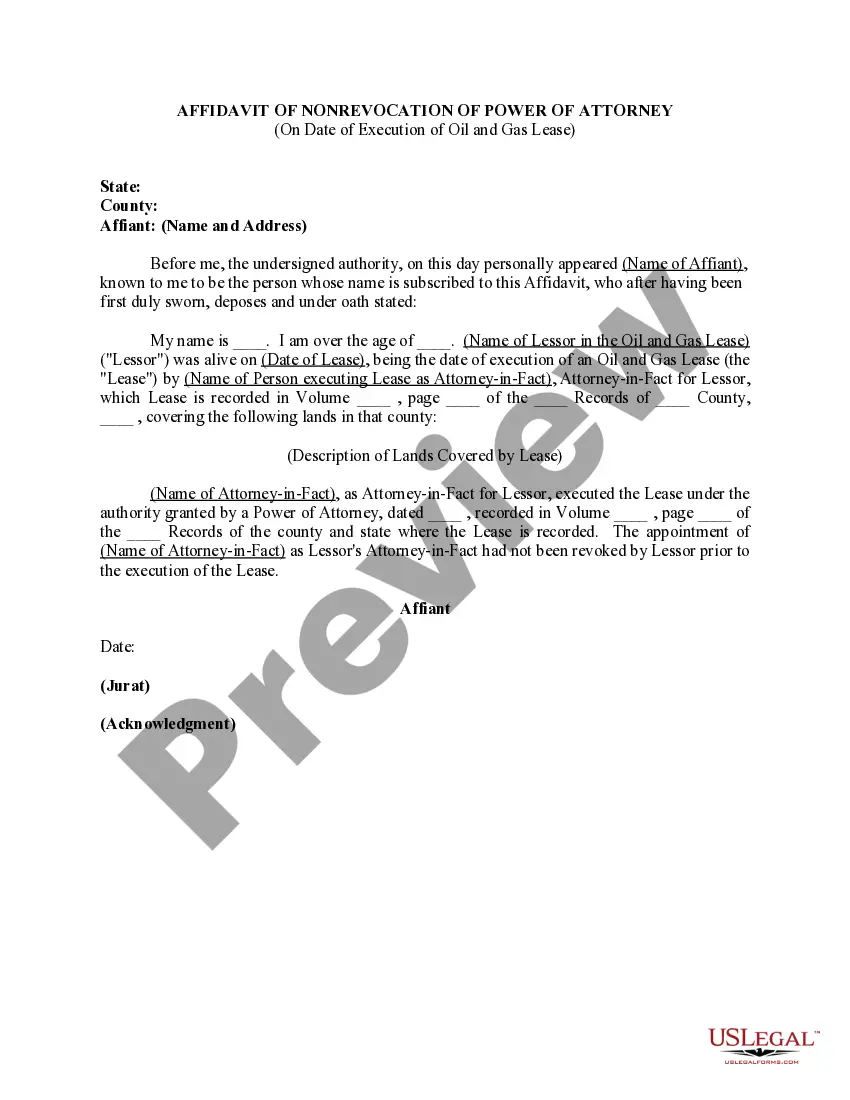
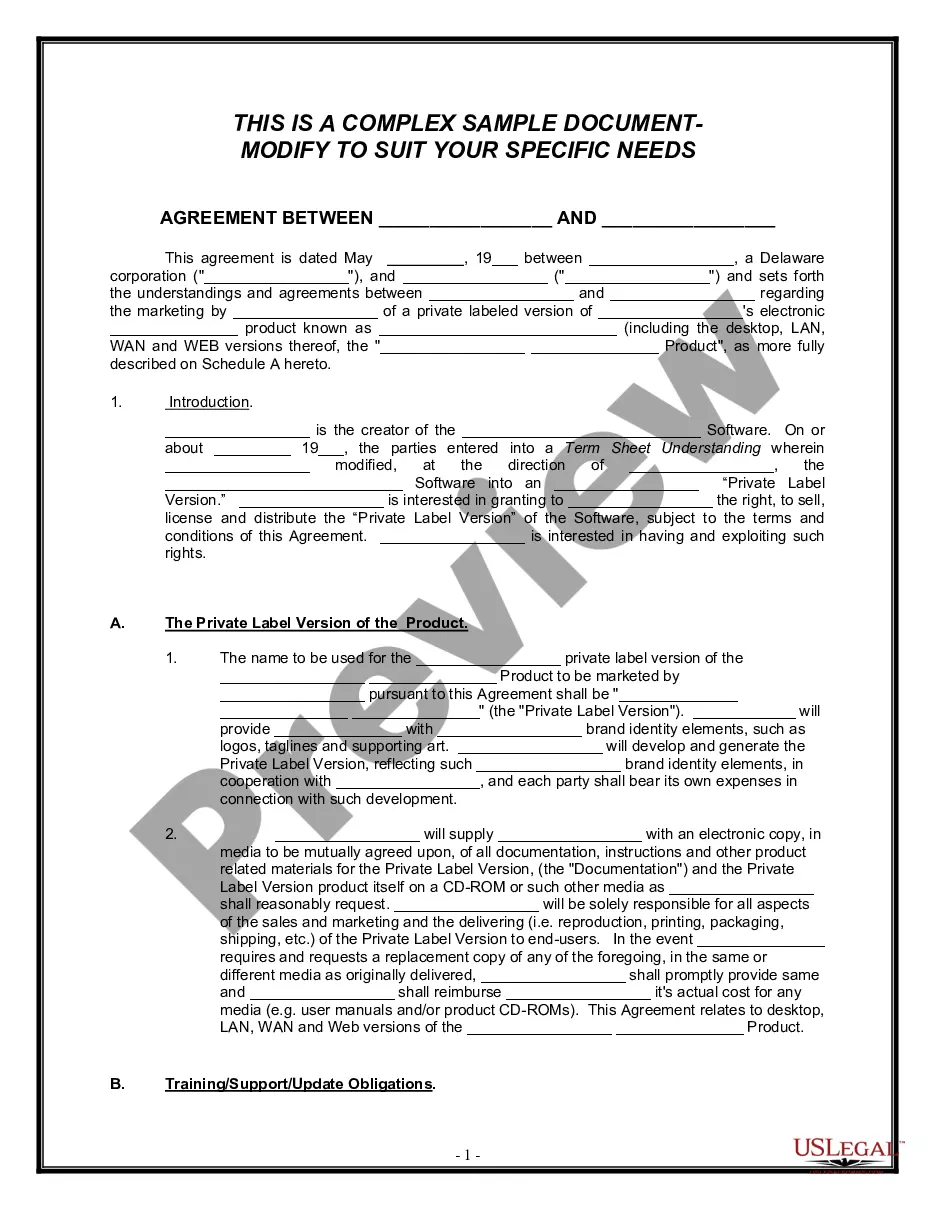
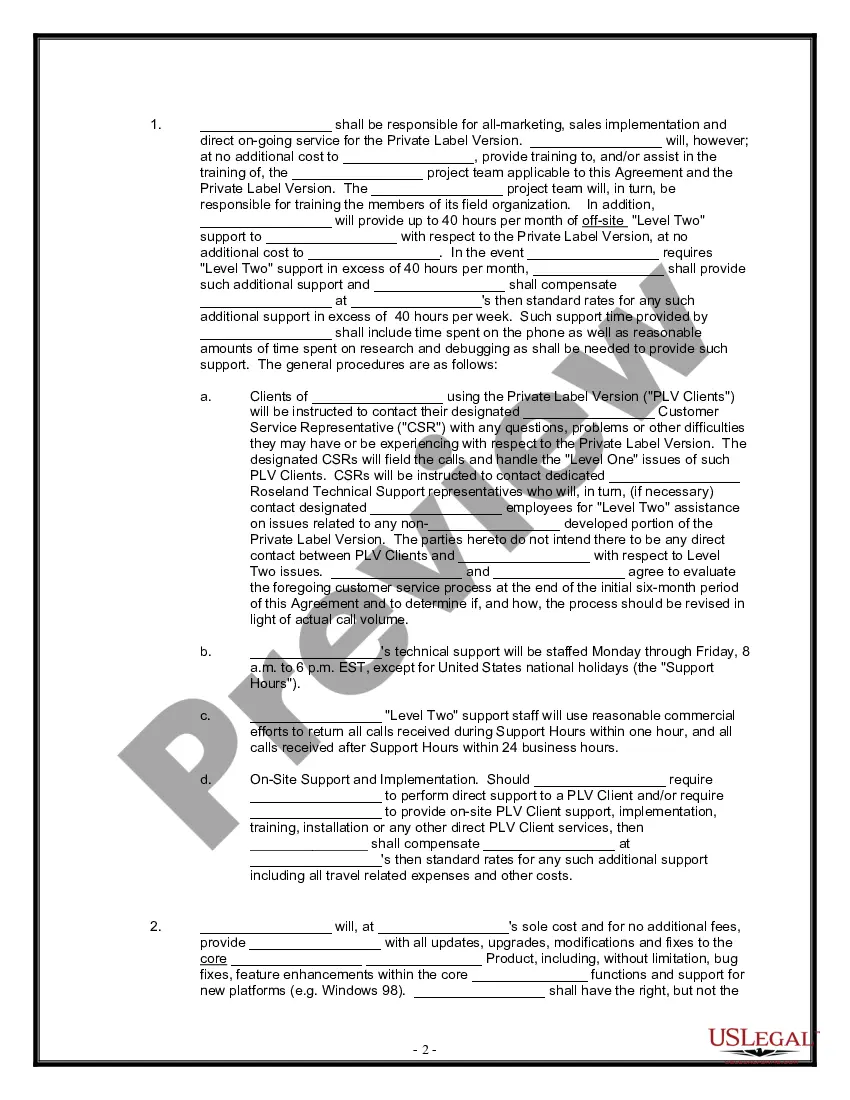
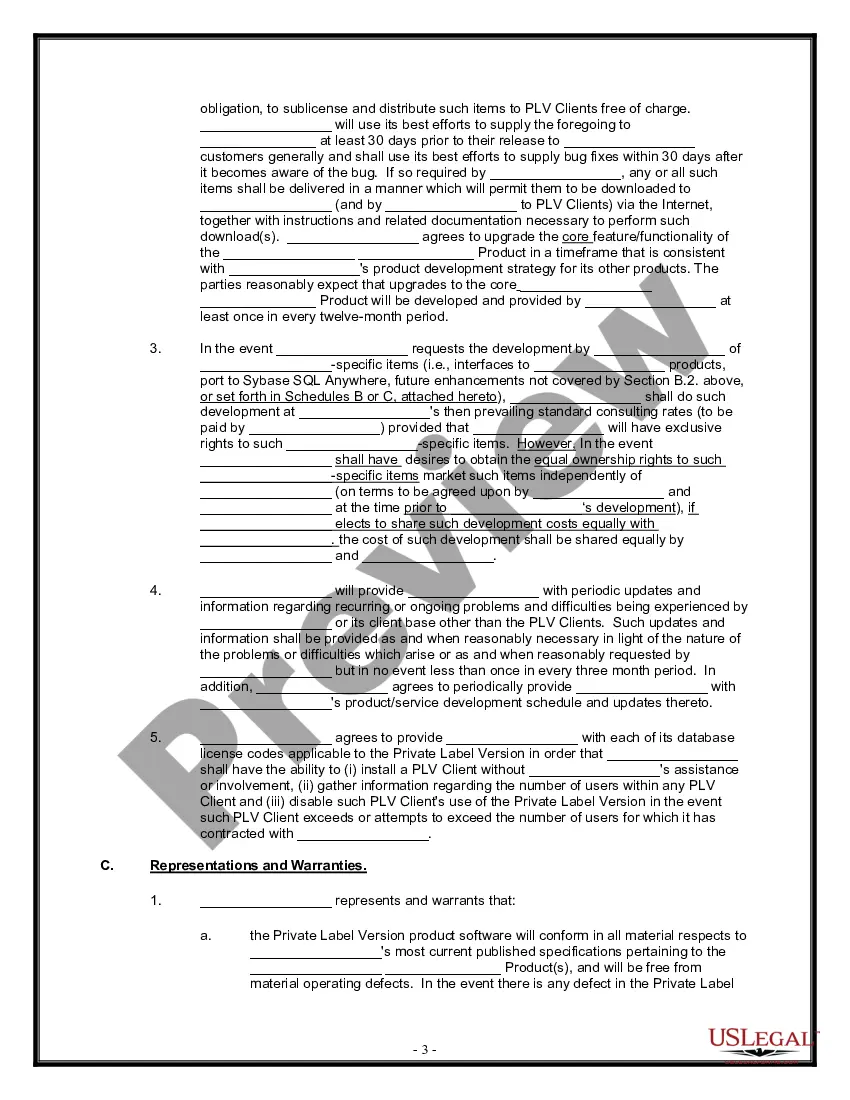
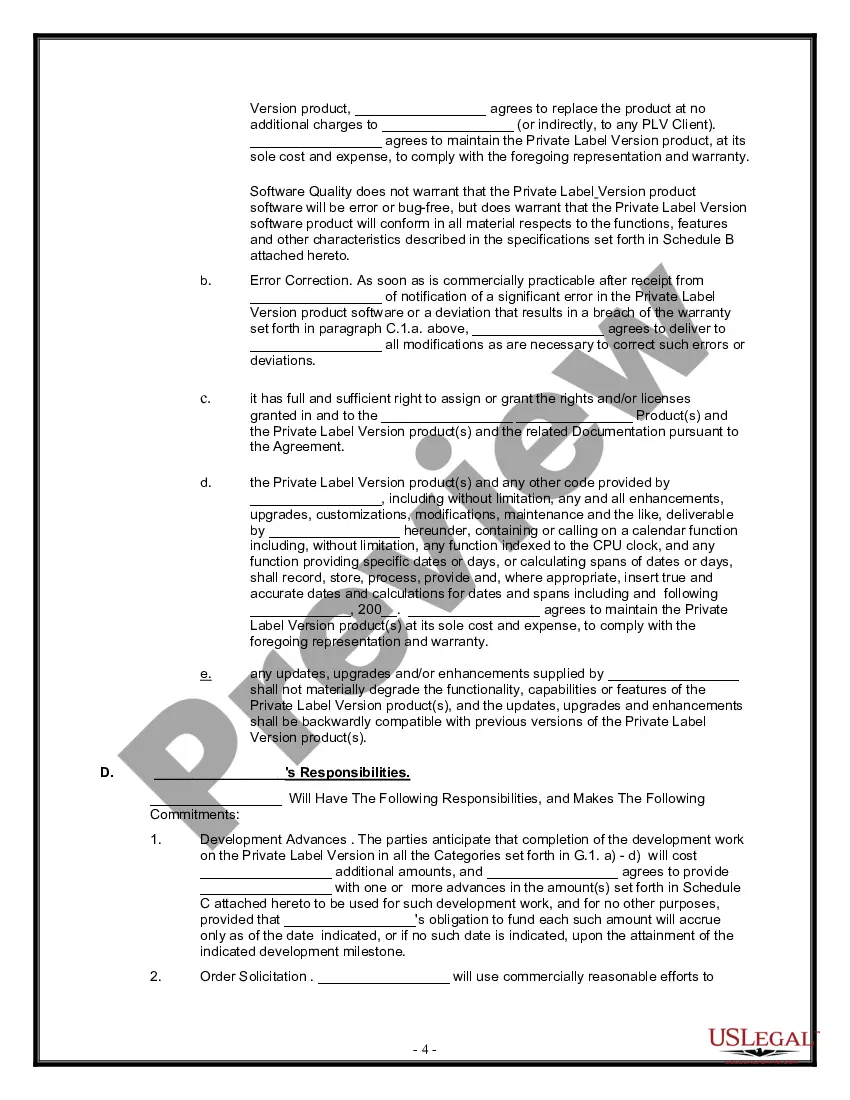
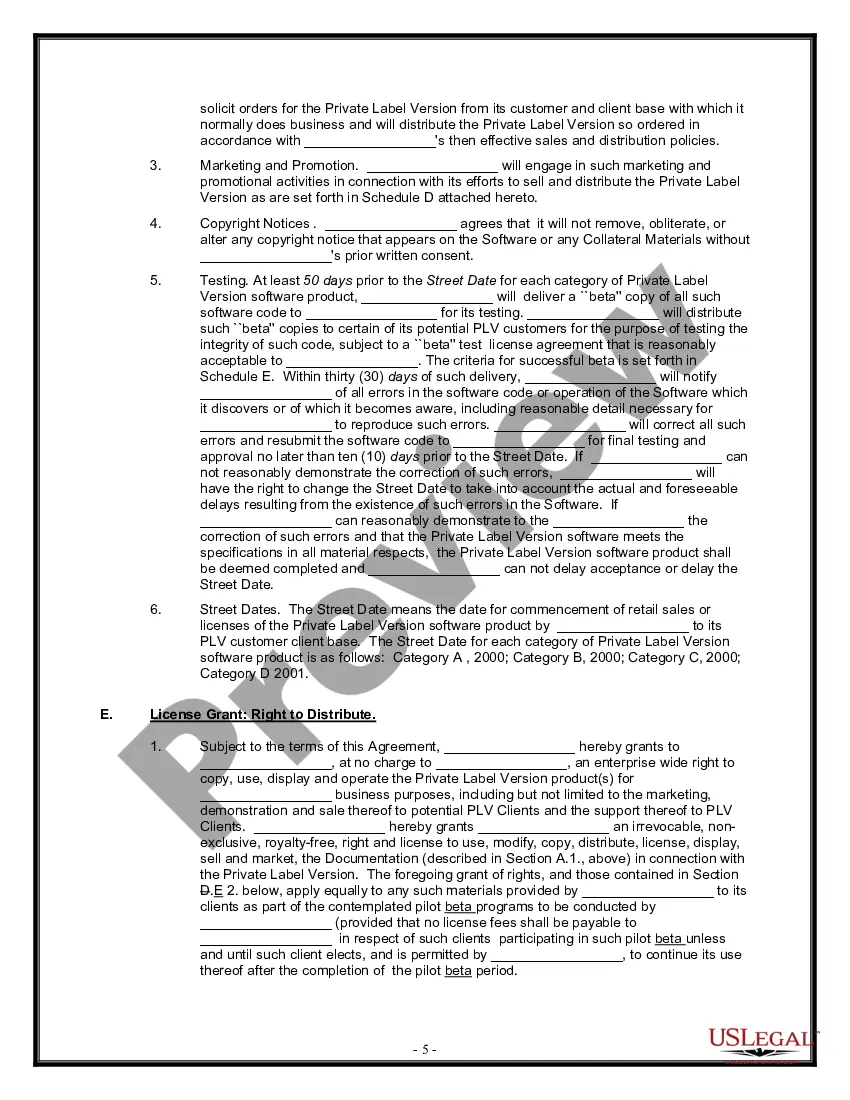
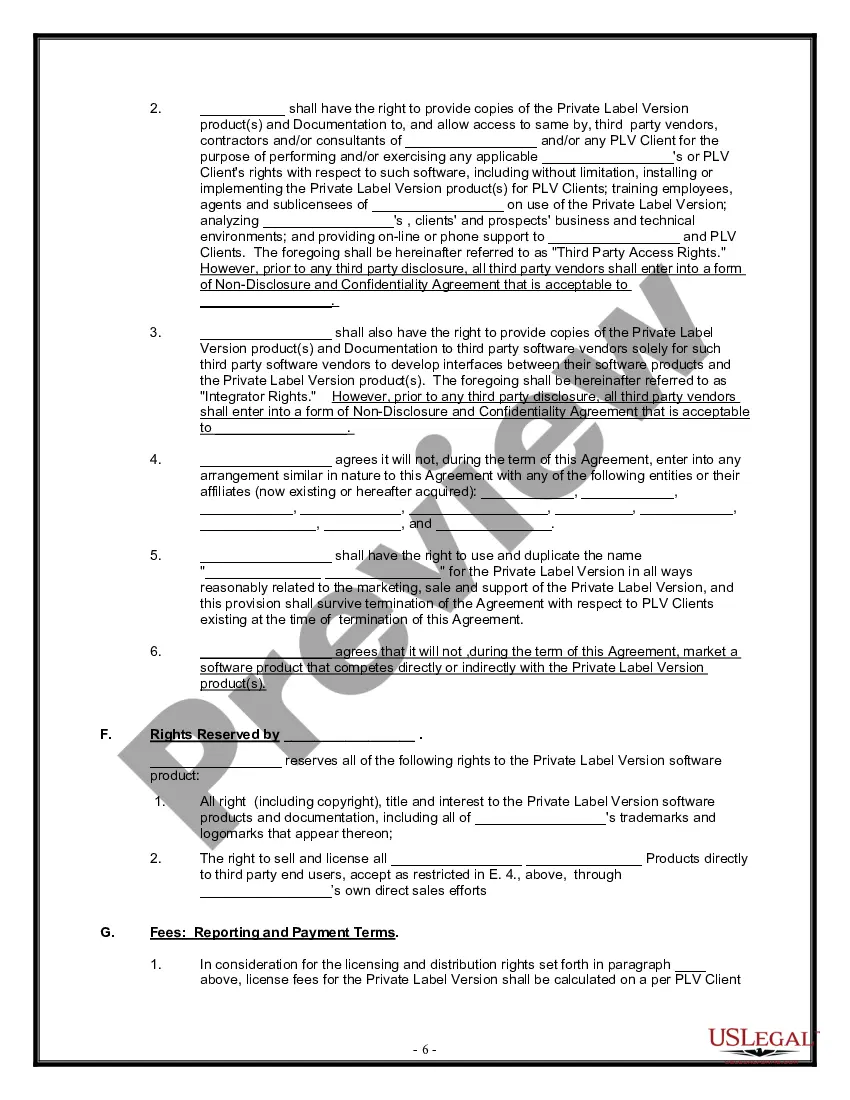
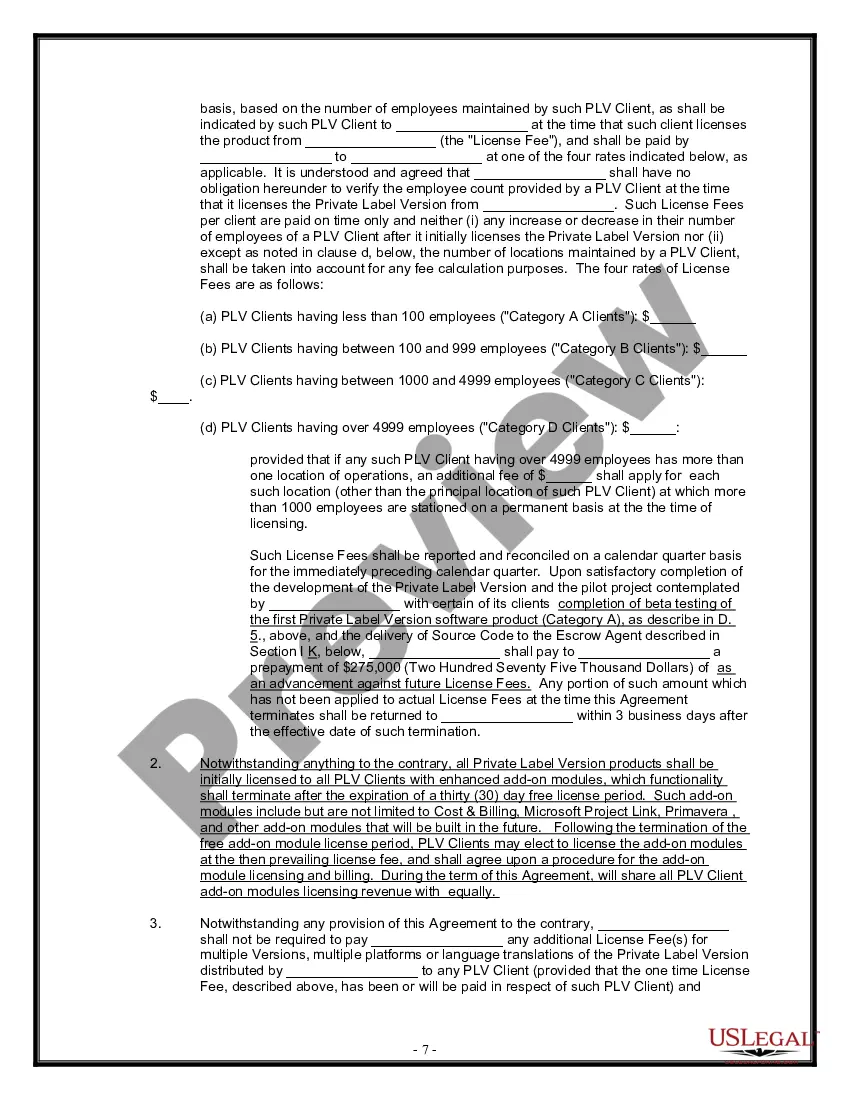
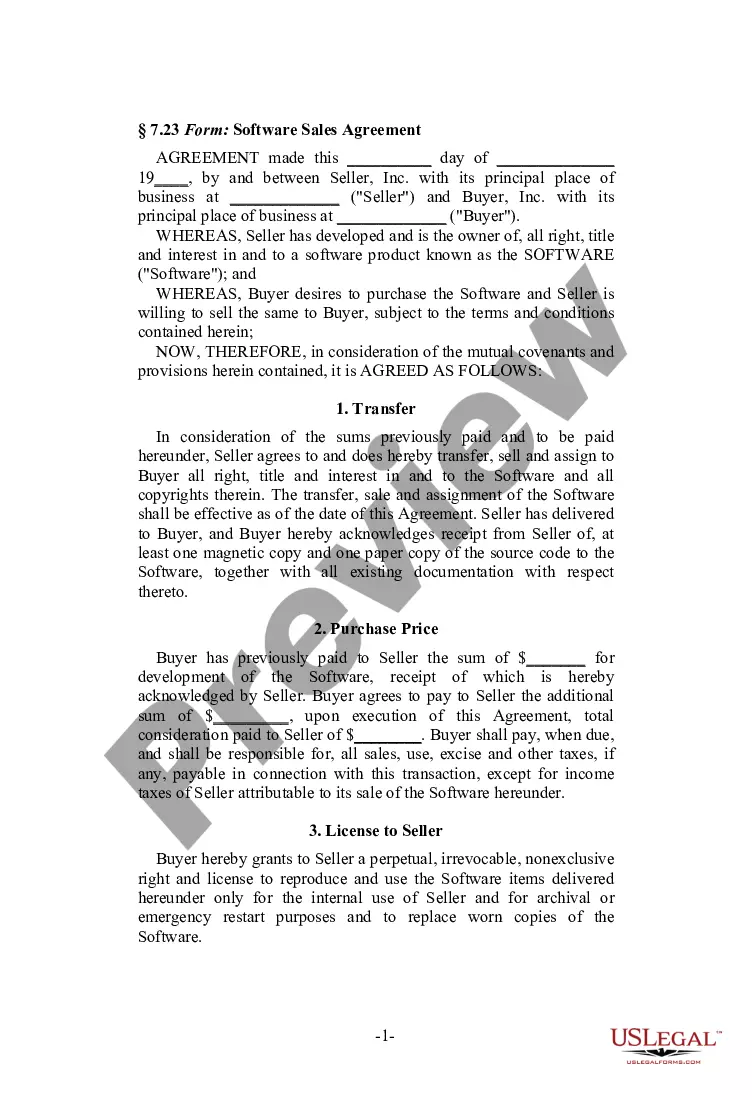
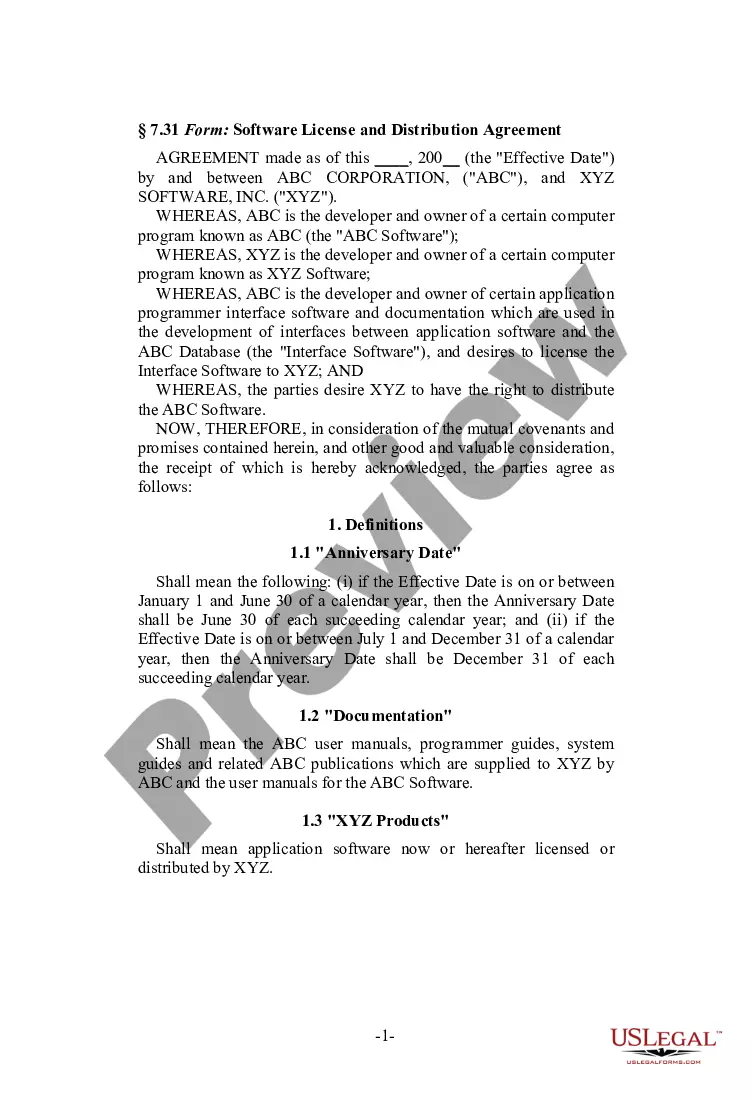
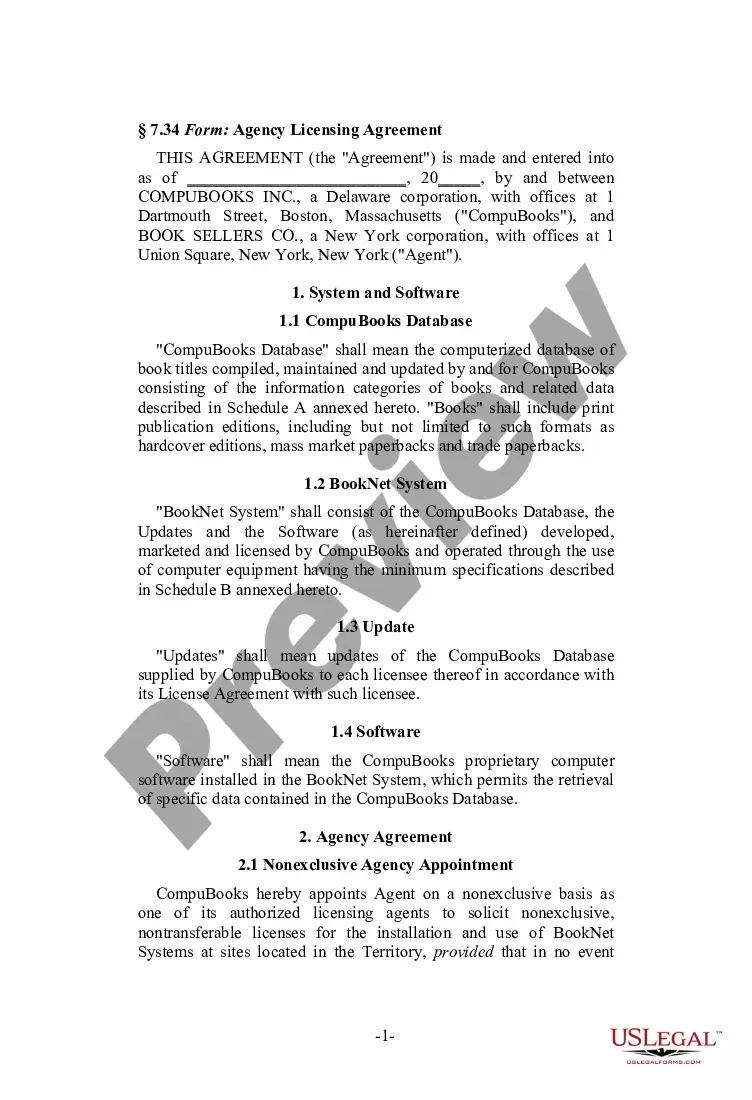
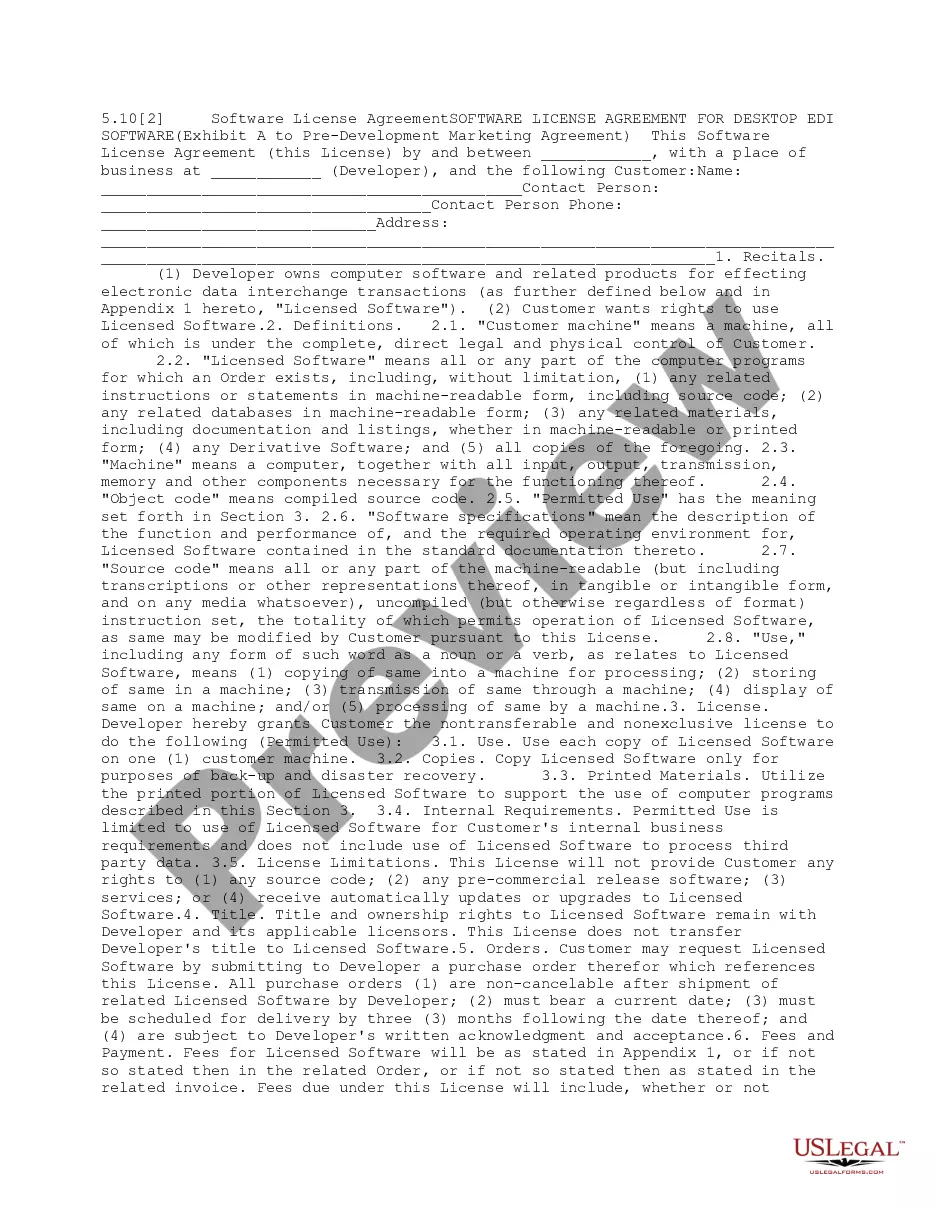
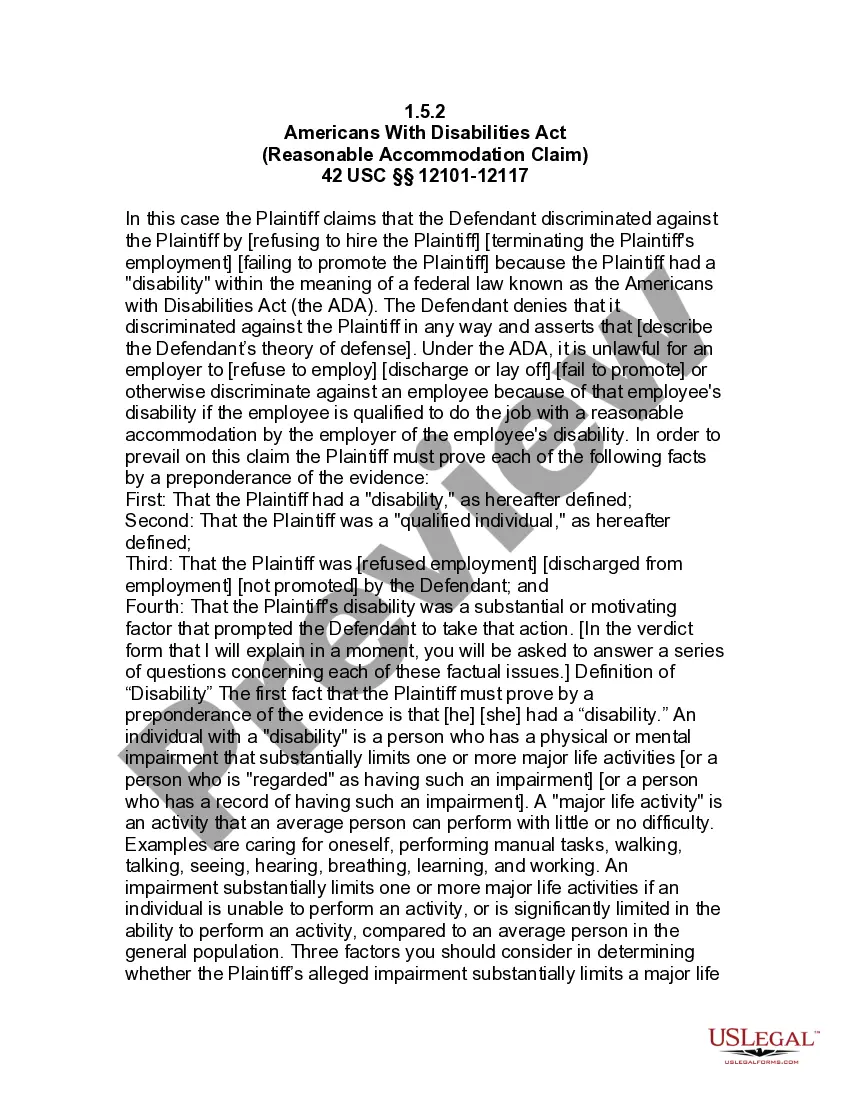
This form is a Software Marketing and Licensing Agreement under Private Label. This form includes, but is not limited to, the following sections: Private Label Version of the Product, Training/Support/Update Obligations, and Representations and Warranties. The document supercedes all proposals, oral or written, all negotiations, conversations, or discussions between the parties relating to the subject of the agreement.
Virgin Islands Software Marketing and Licensing Agreement under Private Label
Instant download
Description
Free preview

Get your form ready online
Our built-in tools help you complete, sign, share, and store your documents in one place.
Built-in online Word editor
Make edits, fill in missing information, and update formatting in US Legal Forms—just like you would in MS Word.
Export easily
Download a copy, print it, send it by email, or mail it via USPS—whatever works best for your next step.
E-sign your document
Sign and collect signatures with our SignNow integration. Send to multiple recipients, set reminders, and more. Go Premium to unlock E-Sign.
Notarize online 24/7
If this form requires notarization, complete it online through a secure video call—no need to meet a notary in person or wait for an appointment.
Store your document securely
We protect your documents and personal data by following strict security and privacy standards.

Make edits, fill in missing information, and update formatting in US Legal Forms—just like you would in MS Word.

Download a copy, print it, send it by email, or mail it via USPS—whatever works best for your next step.

Sign and collect signatures with our SignNow integration. Send to multiple recipients, set reminders, and more. Go Premium to unlock E-Sign.

If this form requires notarization, complete it online through a secure video call—no need to meet a notary in person or wait for an appointment.

We protect your documents and personal data by following strict security and privacy standards.
Looking for another form?

How to fill out Software Marketing And Licensing Agreement Under Private Label?
Locating the appropriate legal document template can be challenging. Naturally, there is a multitude of formats accessible online, but how do you secure the legal document you require? Utilize the US Legal Forms website. This service offers thousands of templates, including the Virgin Islands Software Marketing and Licensing Agreement under Private Label, suitable for both business and personal purposes. All forms are vetted by experts and comply with federal and state regulations.
If you are already registered, Log In to your account and click the Download button to access the Virgin Islands Software Marketing and Licensing Agreement under Private Label. Use your account to browse the legal documents you have previously purchased. Navigate to the My documents section of your account to retrieve another copy of the document you need.
If you are a new user of US Legal Forms, here are simple steps you can follow: First, ensure you have selected the correct document for your jurisdiction/area. You can review the document using the Review button and examine the document summary to confirm it is suitable for you. If the document does not meet your requirements, utilize the Search field to find the correct document. Once you are confident that the document is appropriate, click the Buy now button to acquire it. Choose the payment plan you prefer and enter the necessary information. Create your account and pay for your order using your PayPal account or credit card. Select the file format and download the legal document template to your device. Complete, edit, print, and sign the obtained Virgin Islands Software Marketing and Licensing Agreement under Private Label.
With US Legal Forms, you can efficiently access and manage your legal documentation needs.
- US Legal Forms is the premier repository of legal documents where you can find a variety of document templates.
- Utilize the service to obtain professionally crafted documents that adhere to state requirements.
- The templates offered are suitable for various business and personal needs.
- All forms are validated by professionals ensuring compliance with regulations.
- The platform allows for easy navigation and retrieval of previously purchased documents.
- It provides a user-friendly experience for both new and existing customers.
Form popularity
FAQ
Private labeling is not illegal; in fact, it is a common practice across many industries. However, businesses must ensure they comply with all regulations and laws governing the products they sell. It's crucial to have clear agreements in place to protect intellectual property and brand identity. A Virgin Islands Software Marketing and Licensing Agreement under Private Label can help navigate these legal requirements effectively.
Private label agreements encompass various contracts that allow retailers to sell products manufactured by others under their own name. These agreements can include terms for marketing, distribution, and exclusivity. They are essential for businesses looking to expand their product offerings without heavy investments in production. Engaging in a Virgin Islands Software Marketing and Licensing Agreement under Private Label can provide a robust framework for these transactions.
Setting up a licensing agreement involves several key steps. First, identify the software you wish to license and determine the terms of use. Next, draft the agreement to outline rights, responsibilities, and any fees involved. Utilizing a Virgin Islands Software Marketing and Licensing Agreement under Private Label can streamline this process, ensuring your interests are protected while complying with local laws.
A private label product is one that a retailer brands and sells under its own name, while another company manufactures it. For example, a grocery store might sell a cereal brand that it owns, but the actual production happens at a different factory. This strategy allows businesses to offer unique products while maintaining lower costs. In the context of a Virgin Islands Software Marketing and Licensing Agreement under Private Label, this means you can license software to sell under your own brand.
The two main types of licensing agreements are exclusive and non-exclusive agreements. An exclusive licensing agreement grants the licensee sole rights to use the software, which can be beneficial in a Virgin Islands Software Marketing and Licensing Agreement under Private Label. Non-exclusive agreements allow multiple licensees to use the same software, providing flexibility and wider access for businesses looking to expand their reach.
The primary difference between a Service Level Agreement (SLA) and an End User License Agreement (EULA) lies in their focus areas. An SLA outlines service expectations and performance metrics, which are critical for maintaining quality in a Virgin Islands Software Marketing and Licensing Agreement under Private Label. On the other hand, a EULA defines the terms under which users can access and utilize the software, focusing more on user rights and restrictions.
A End User License Agreement (EULA) specifically governs the use of software by the end user, while a software license agreement may cover a broader range of licensing terms. In the context of a Virgin Islands Software Marketing and Licensing Agreement under Private Label, the EULA typically restricts how users can interact with the software. Conversely, a software license agreement can include terms about distribution, modifications, and support, offering more comprehensive coverage.
Yes, SLAs are legally binding documents that outline the expectations and responsibilities of both parties involved. When you enter into a Virgin Islands Software Marketing and Licensing Agreement under Private Label, it is essential to ensure that both parties agree to the terms. This agreement can provide legal recourse in case of disputes, making it crucial for companies to understand the implications of their SLAs.
In the context of Virgin Islands Software Marketing and Licensing Agreement under Private Label, the three primary types of Service Level Agreements (SLAs) are customer-based, service-based, and multi-level SLAs. Customer-based SLAs focus on specific agreements for individual customers, while service-based SLAs apply to all customers using a particular service. Multi-level SLAs combine both customer and service-based elements, providing flexibility and tailored solutions.
A company can use a licensing agreement, such as the Virgin Islands Software Marketing and Licensing Agreement under Private Label, to allow other businesses to sell its products under their brand. This strategy enables companies to expand their reach without the need for significant investment in new markets. By partnering with local businesses, you can effectively tap into new customer bases and enhance brand visibility.