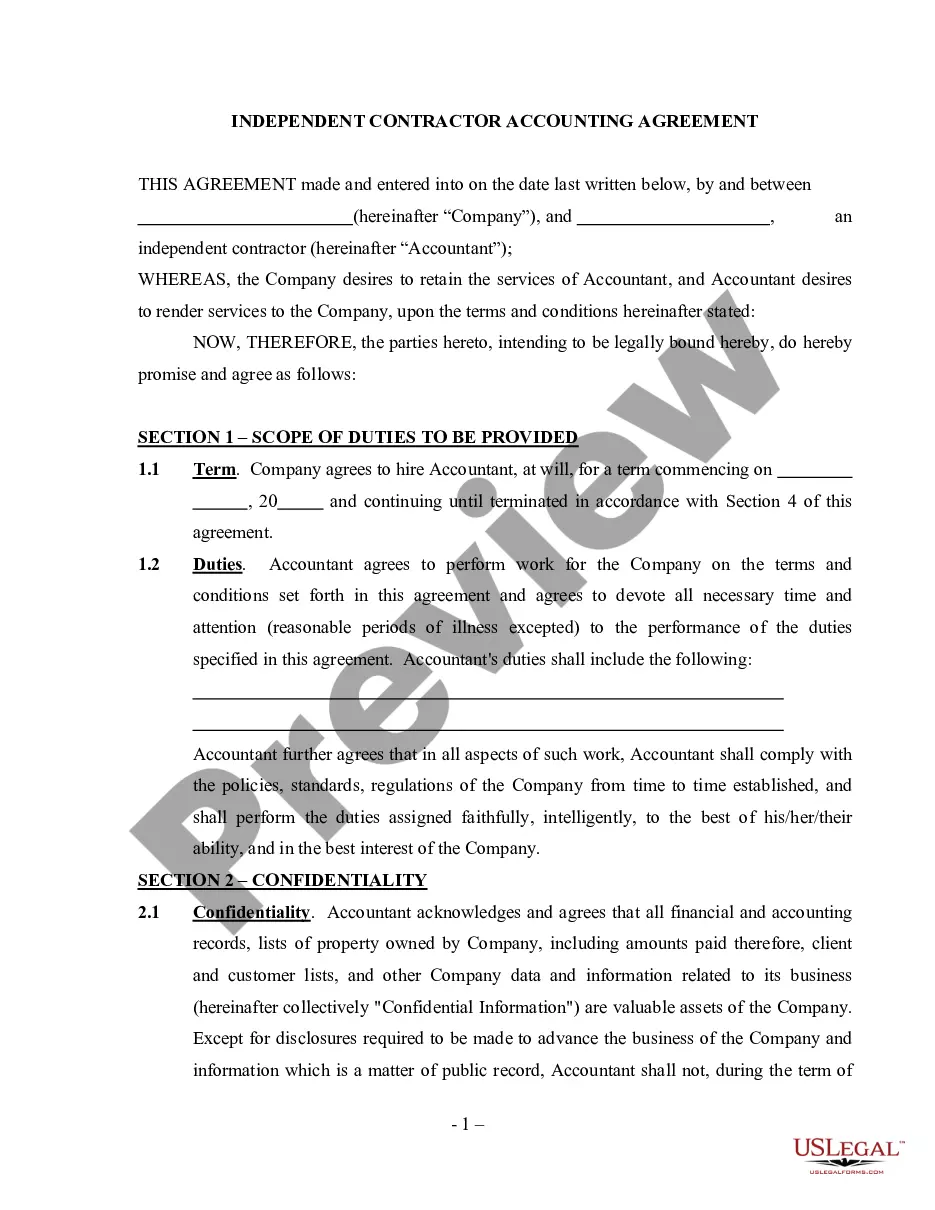
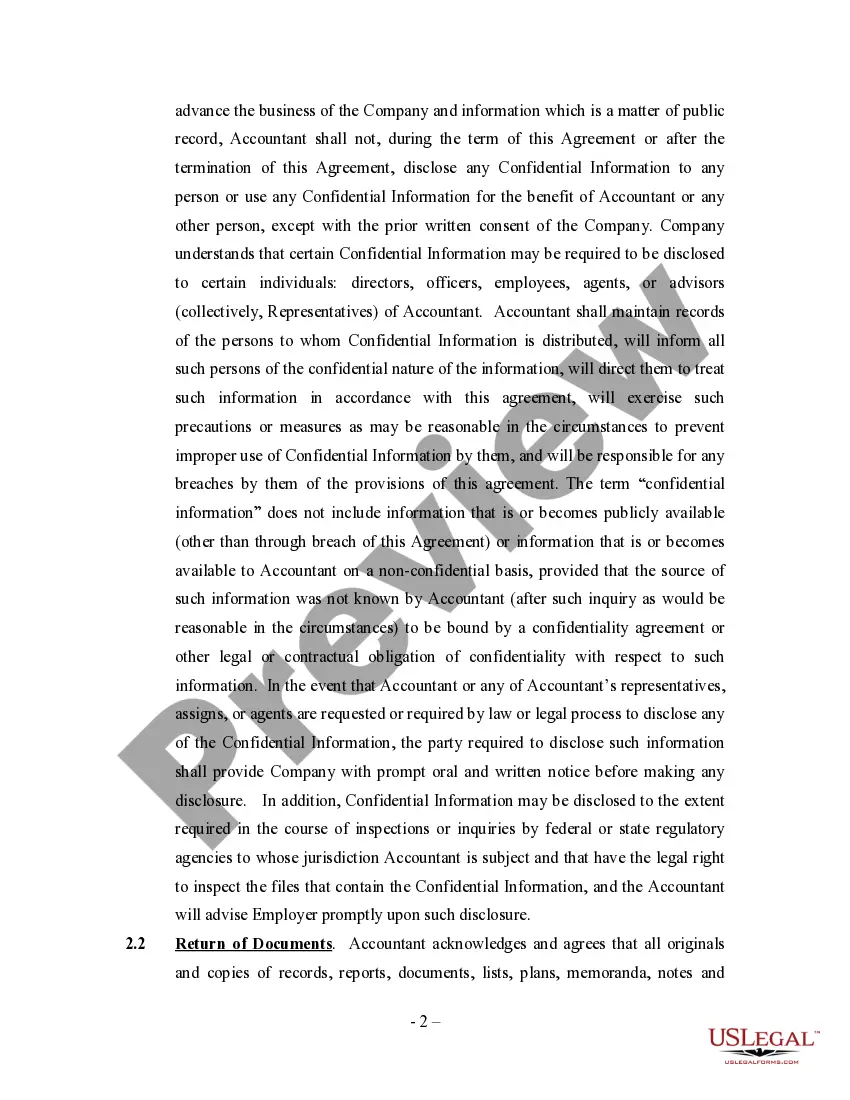
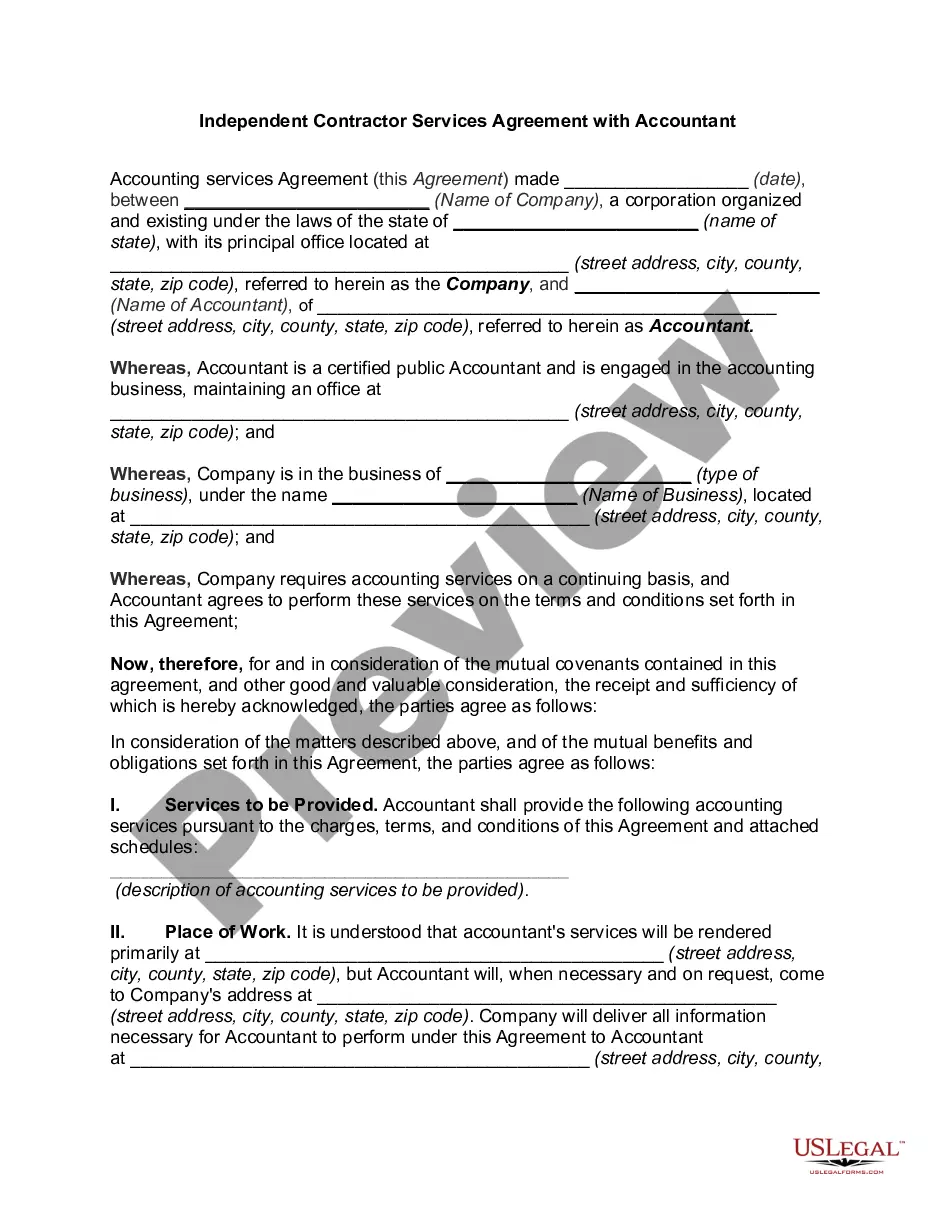
This is a contract whereby an employer hires an independent contractor to perform various accounting functions as designated in the Agreement.
Virgin Islands Accounting Agreement - Self-Employed Independent Contractor
State:
Multi-State
Control #:
US-INDC-40
Format:
Word;
Rich Text
Instant download
Description
Free preview
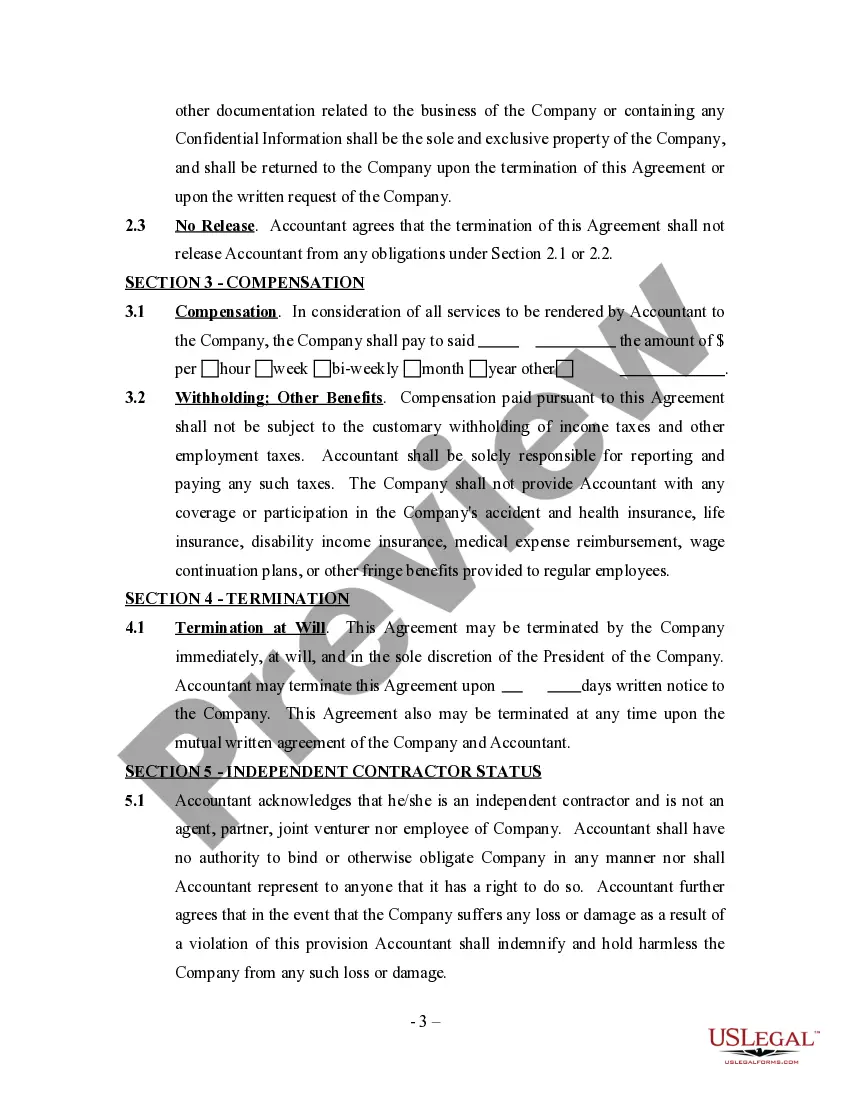
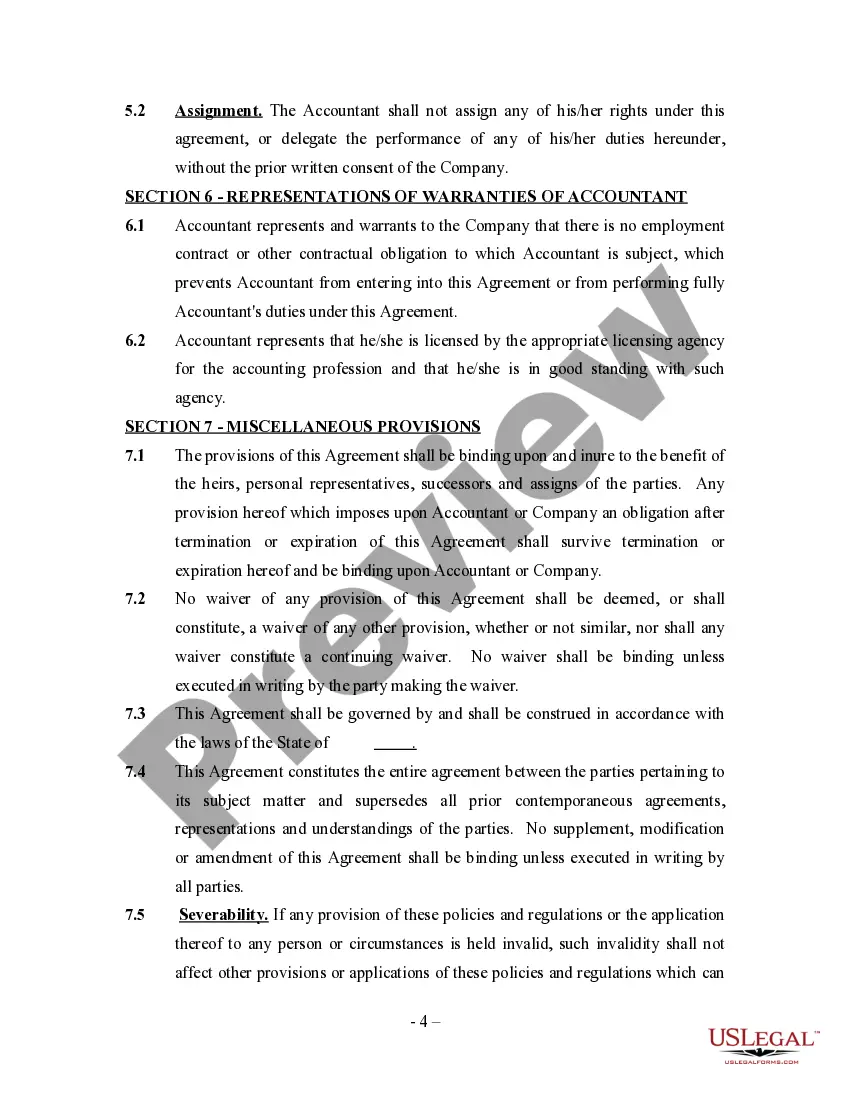
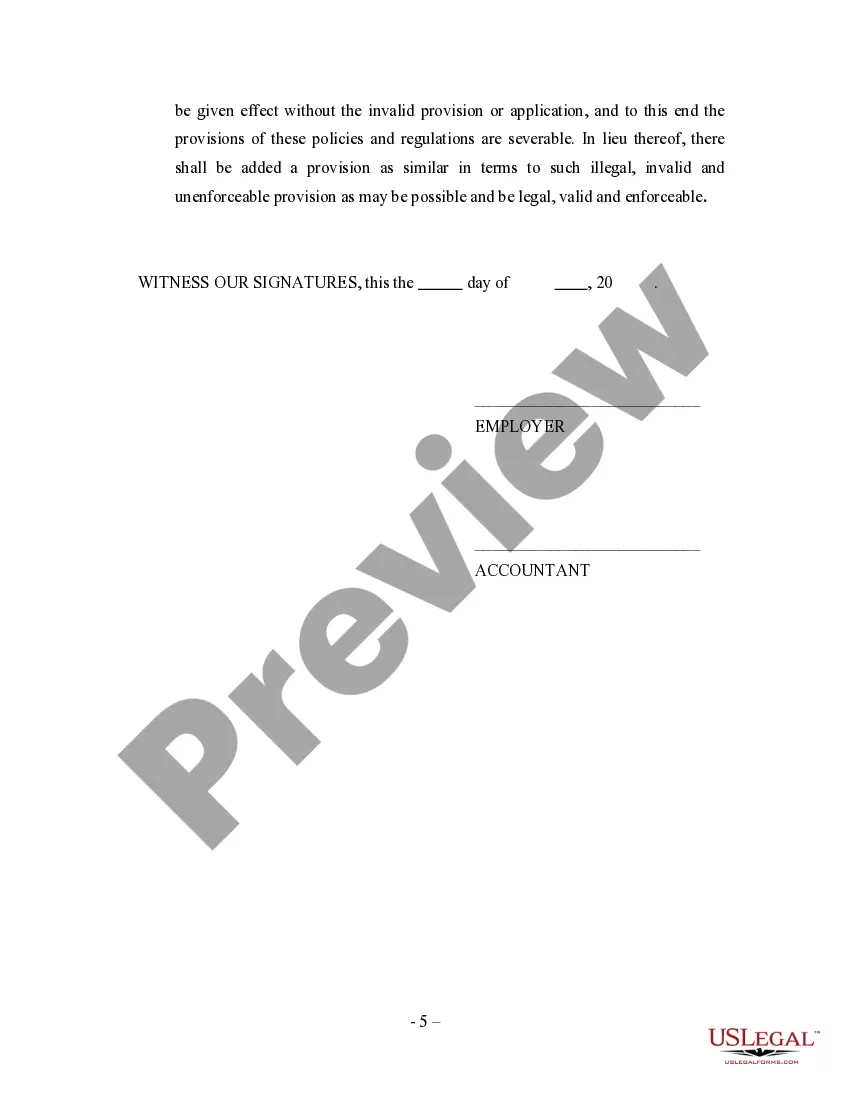
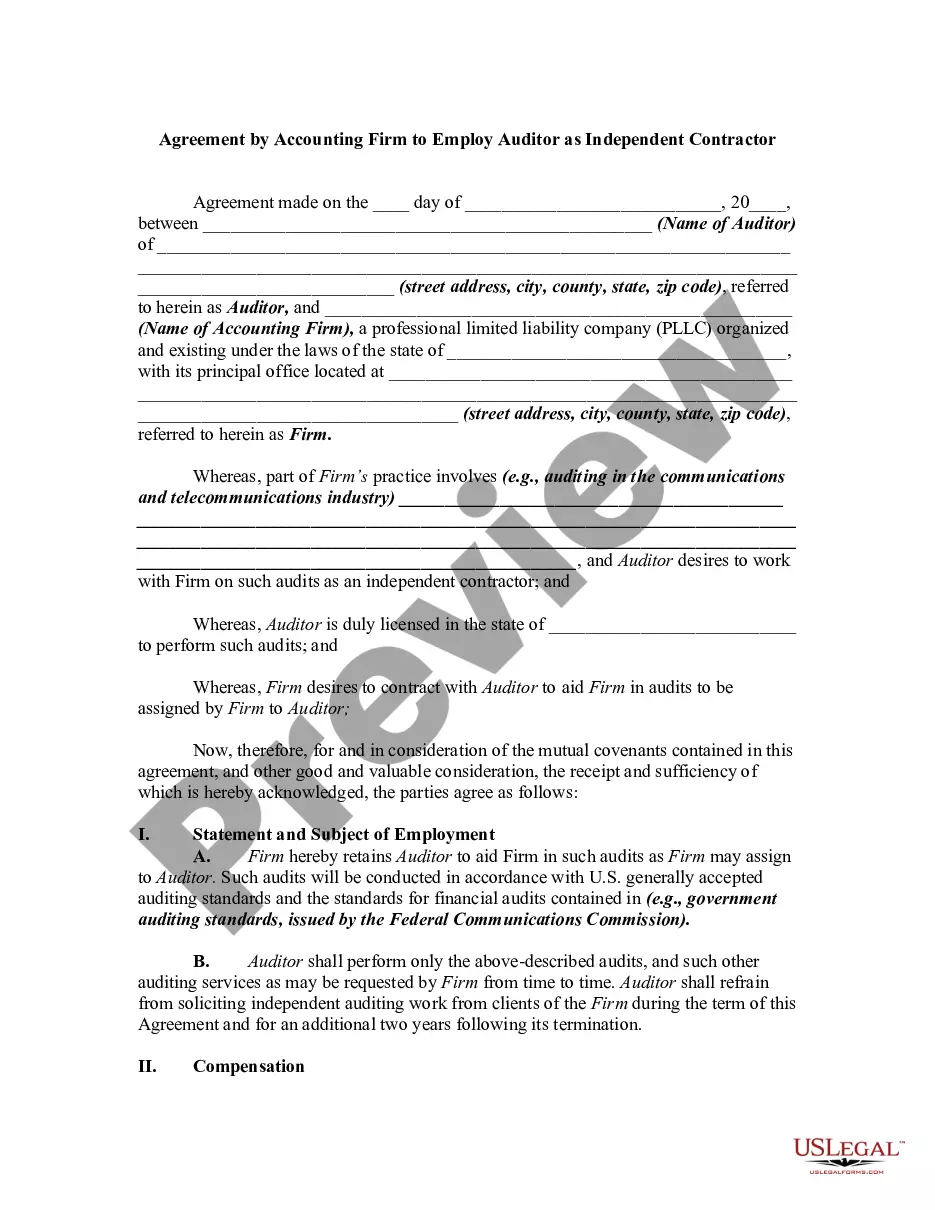
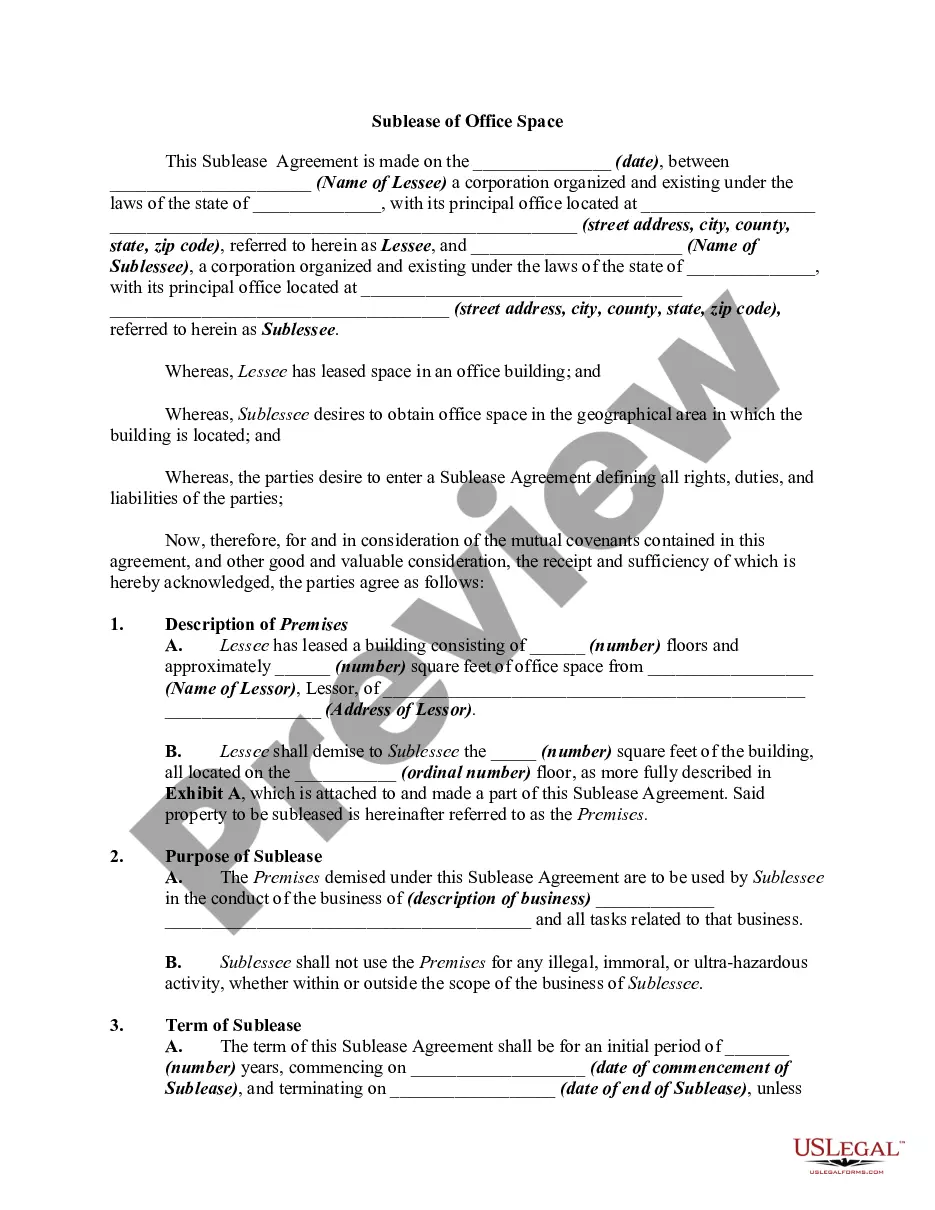

How to fill out Accounting Agreement - Self-Employed Independent Contractor?
Selecting the appropriate legal document design can be a challenge.
There is a range of templates available online, but how can you acquire the legal document you require? Utilize the US Legal Forms site.
The platform offers a vast array of templates, including the Virgin Islands Accounting Agreement - Self-Employed Independent Contractor, which you can utilize for both business and personal purposes.
You can review the document using the Review option and examine the form summary to confirm it is the right one for you.
- All of the documents are vetted by experts and comply with federal and state regulations.
- If you are currently registered, Log In to your account and select the Download option to get the Virgin Islands Accounting Agreement - Self-Employed Independent Contractor.
- Use your account to review the legal documents you have previously purchased.
- Navigate to the My documents section of your account to obtain another copy of the documents you need.
- If you are a new user of US Legal Forms, here are simple instructions to follow.
- First, ensure you have chosen the correct form for your jurisdiction.
Form popularity
FAQ
A 1099 employee is a US self-employed worker that reports their income to the IRS on a 1099 tax form. Freelancers, gig workers, and independent contractors are all considered 1099 employees.
The law does not require you to complete a contract with your self-employed or freelance workers - a verbal contract can exist even when there is nothing in writing.
Here is a list of some of the things you can write off on your 1099 if you are self-employed:Mileage and Car Expenses.Home Office Deductions.Internet and Phone Bills.Health Insurance.Travel Expenses.Meals.Interest on Loans.Subscriptions.More items...?
Becoming an independent contractor is one of the many ways to be classified as self-employed. By definition, an independent contractor provides work or services on a contractual basis, whereas, self-employment is simply the act of earning money without operating within an employee-employer relationship.
Simply put, being an independent contractor is one way to be self-employed. Being self-employed means that you earn money but don't work as an employee for someone else.
Accrual Method Accounting When you operate a business providing services as an independent contractor, you have the option of using the accrual method of accounting for your contractor earnings and expenses while reporting your personal income and deductions using the cash method.
Independent contractors are self-employed workers who provide services for an organisation under a contract for services. Independent contractors are not employees and are typically highly skilled, providing their clients with specialist skills or additional capacity on an as needed basis.
Remember that an independent contractor is considered to be self-employed, so in effect, you are running your own one-person business. Any income that you earn as an independent contractor must be reported on Schedule C. You'll then pay income taxes on the total profit.
Independent contractors generally report their earnings to the IRS quarterly using Form 1040-ES, Estimated Tax for Individuals. This covers both their federal income tax and self-employment tax liabilities. They may also have to pay state and local taxes according to their state and local government guidelines.