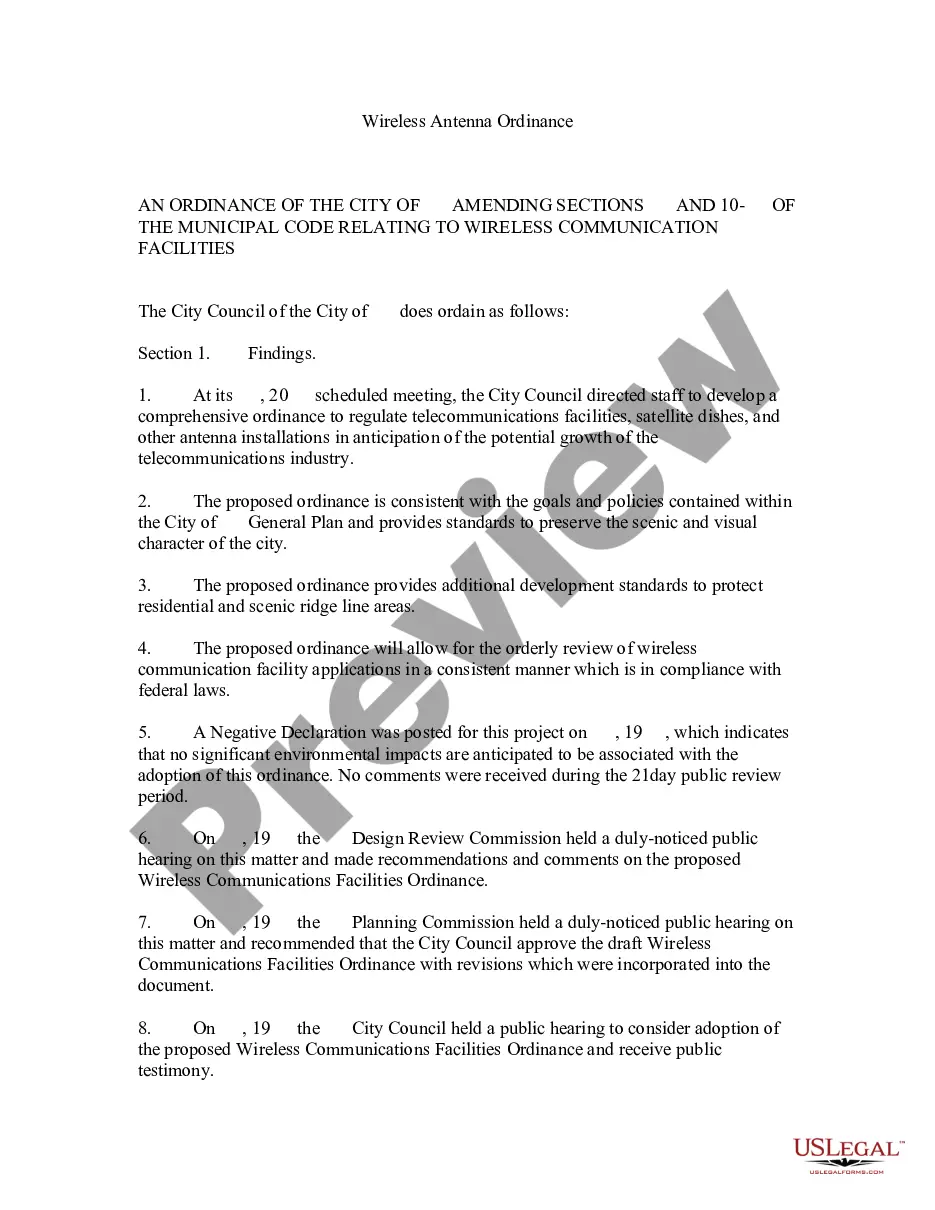
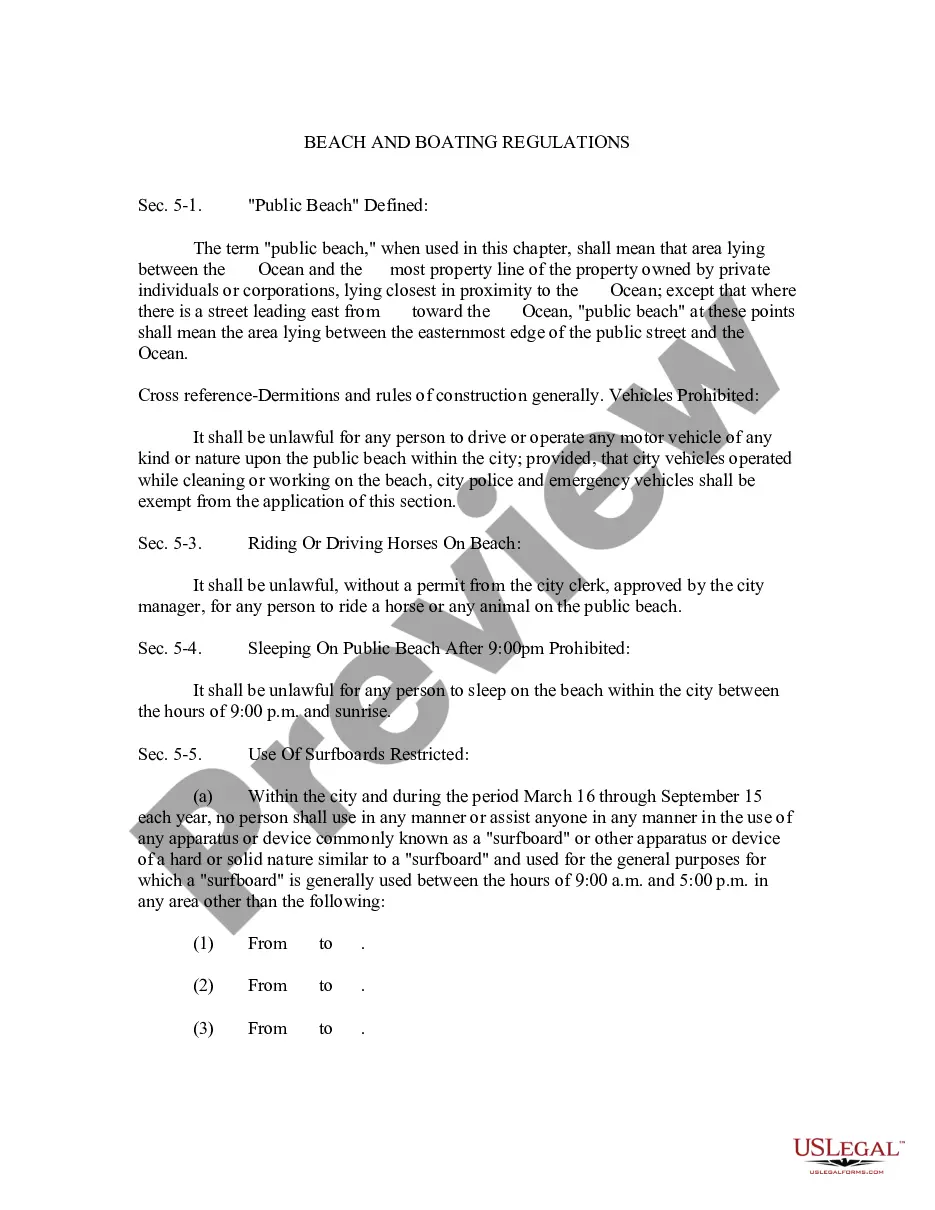
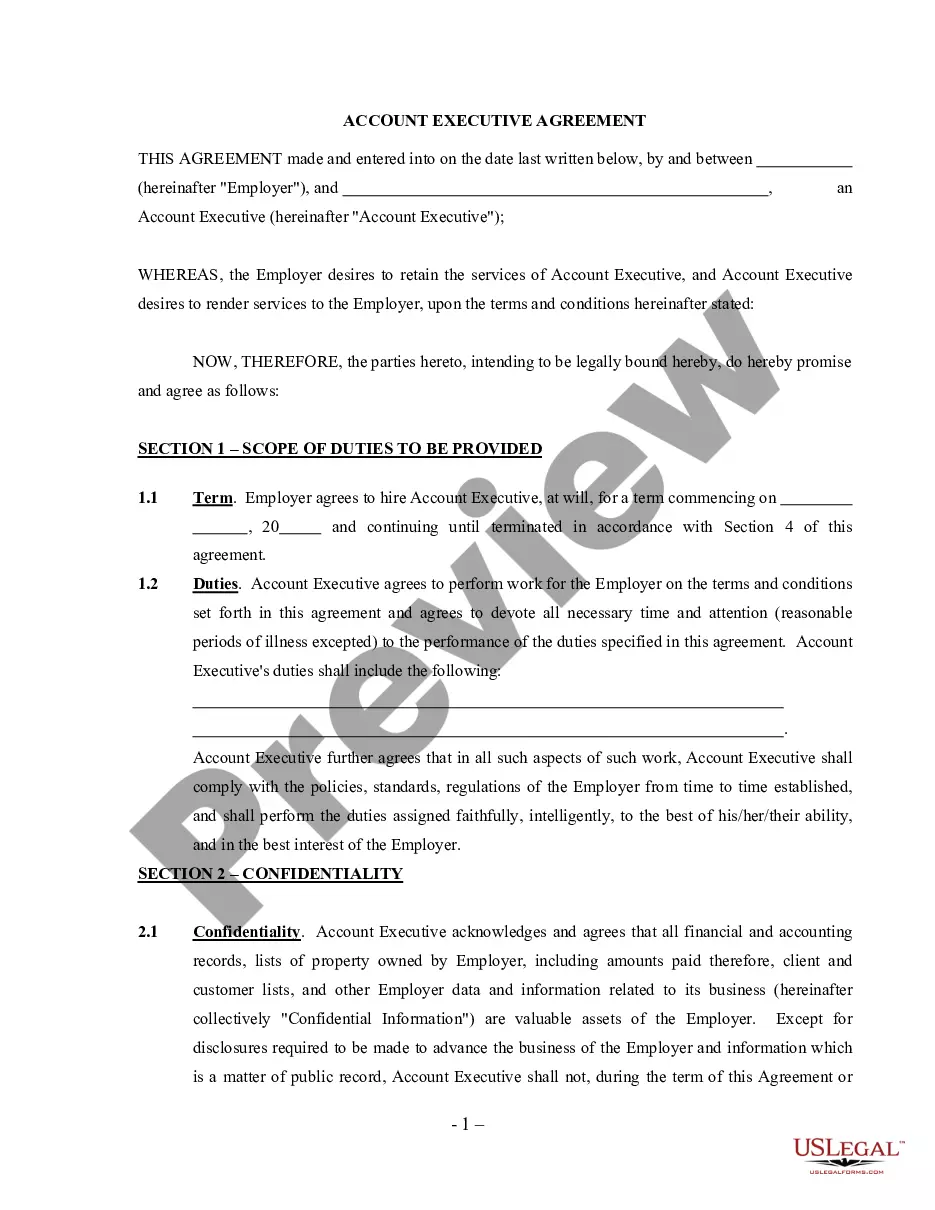
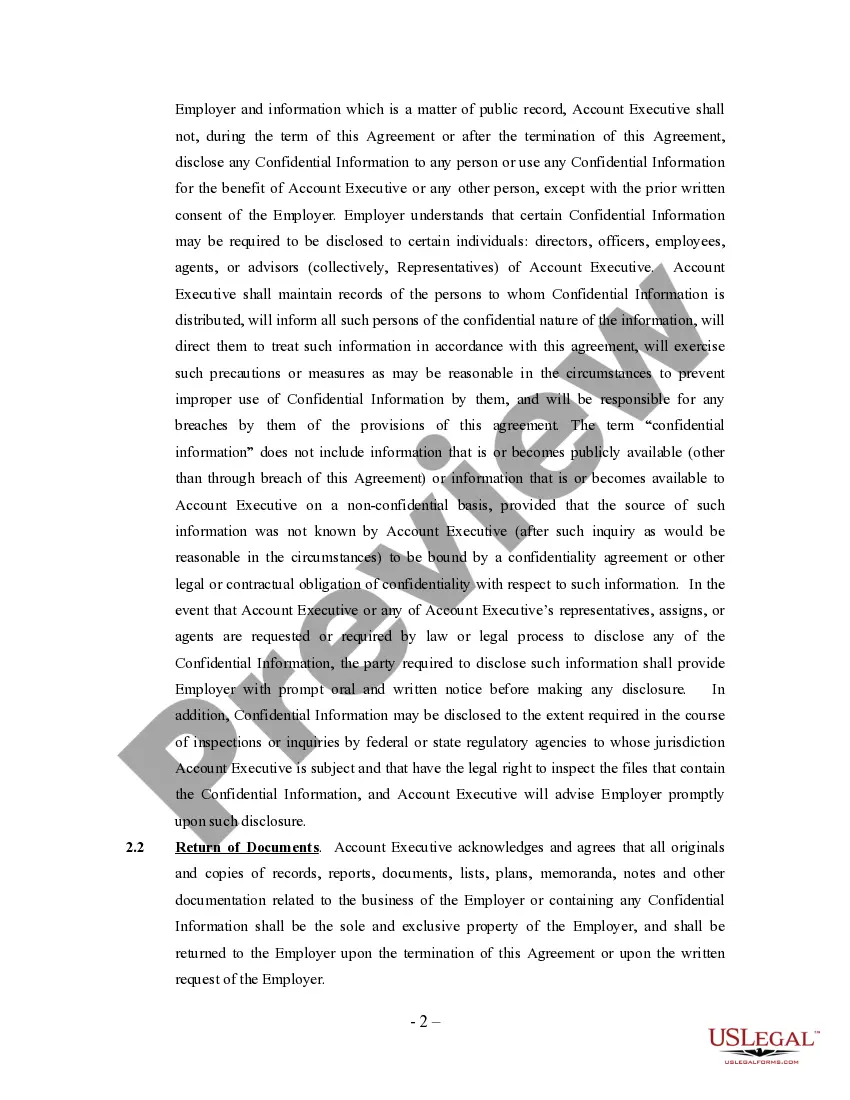
This is a contract between an employer and an independent contractor who is hired as an account executive at employer's business.
Virgin Islands Account Executive Agreement - Self-Employed Independent Contractor
State:
Multi-State
Control #:
US-INDC-20
Format:
Word;
Rich Text
Instant download
Description
Free preview
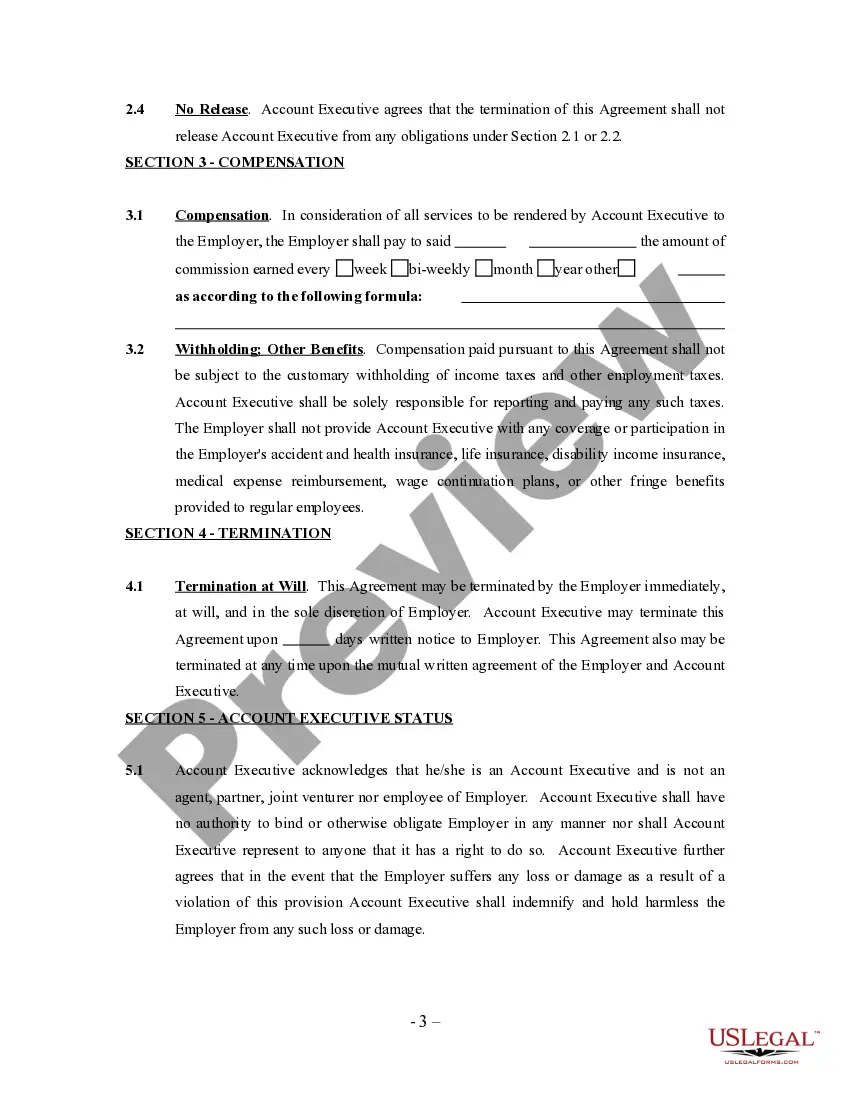
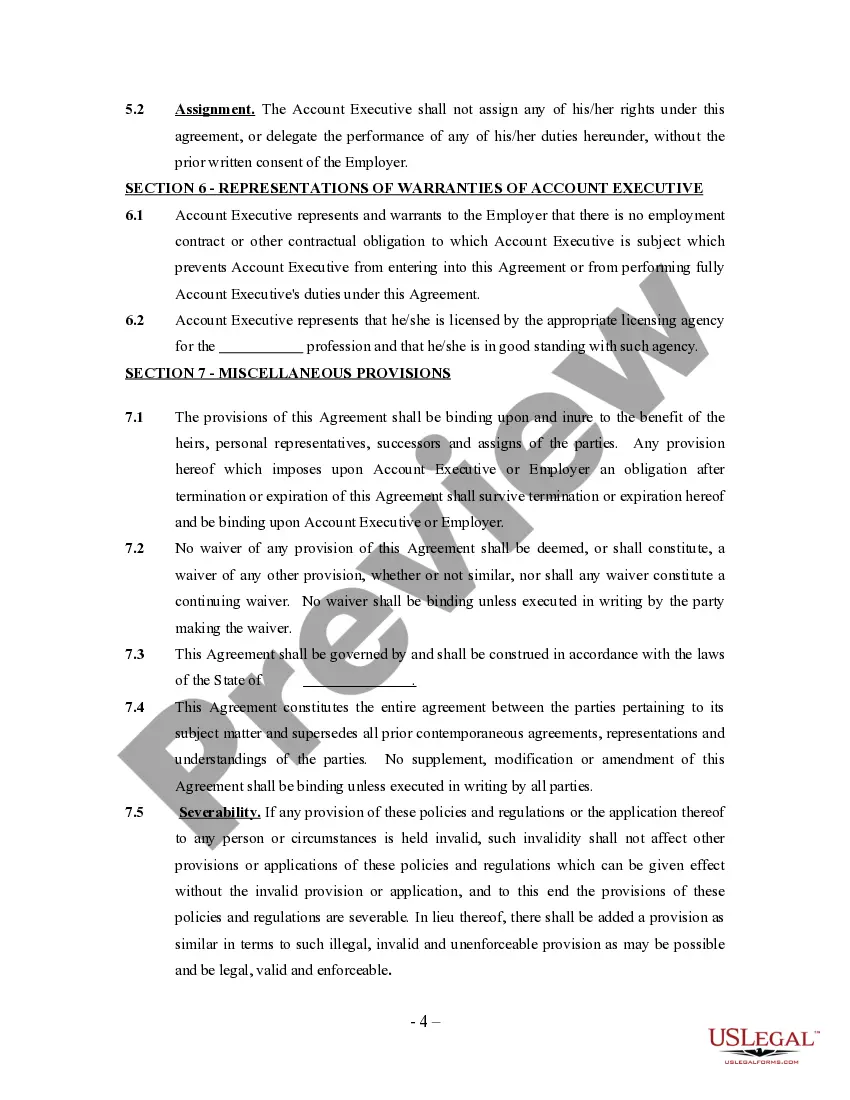
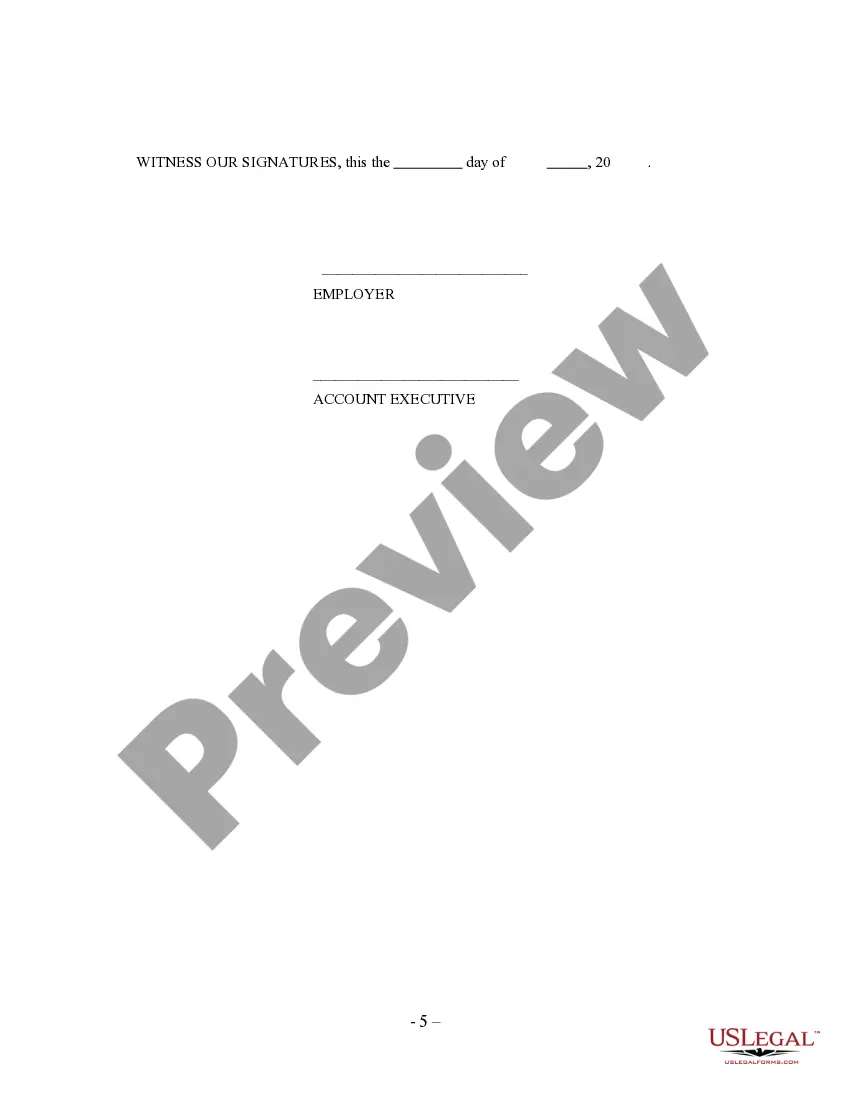
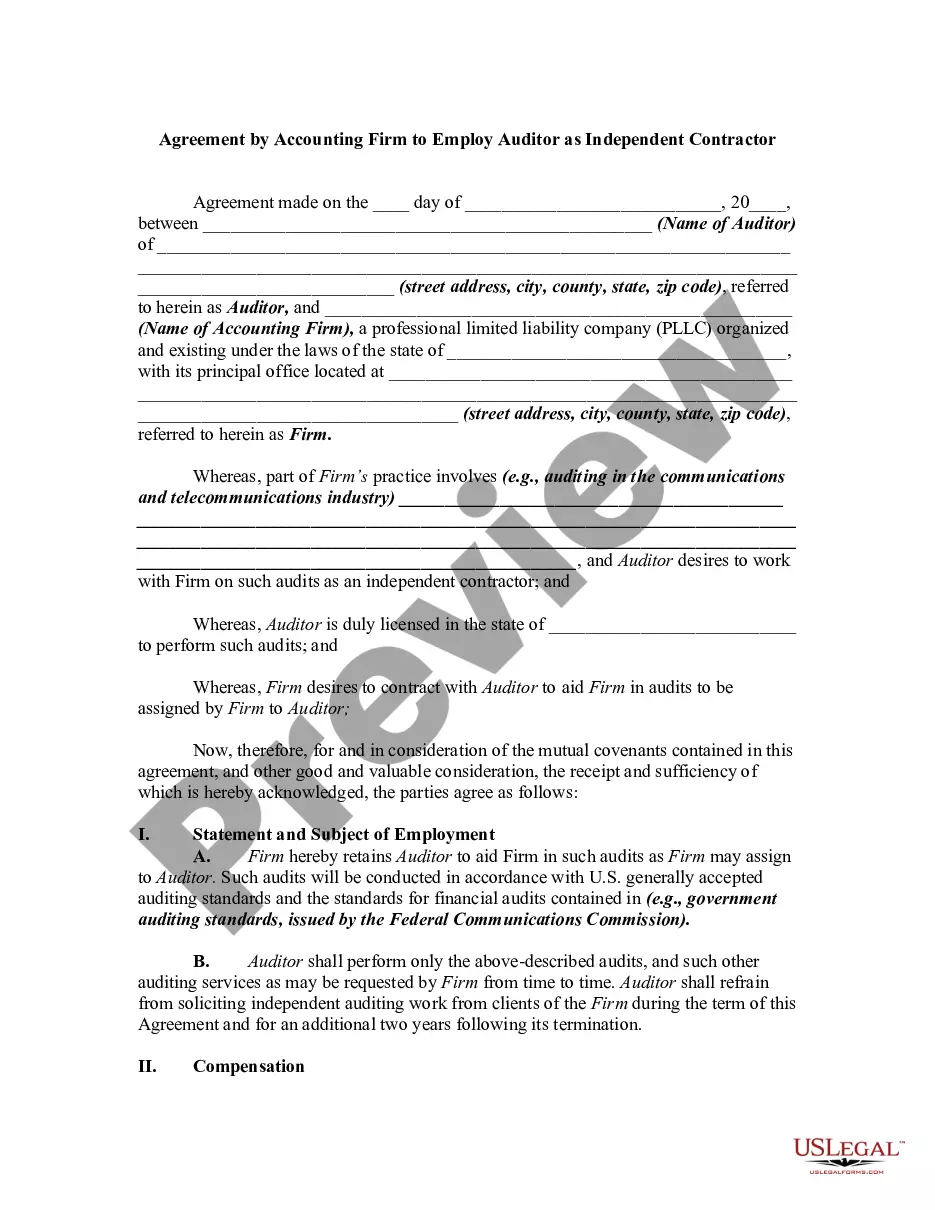
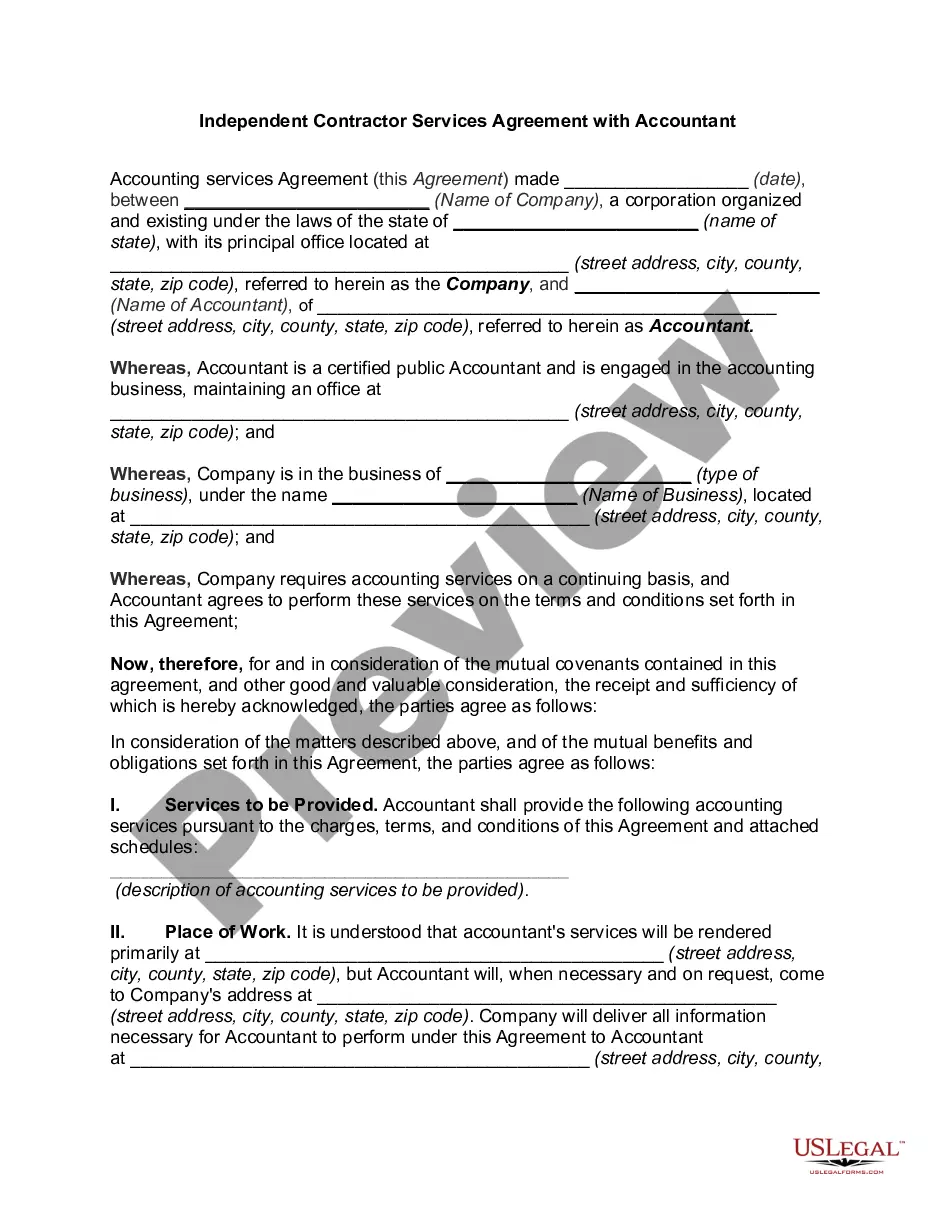
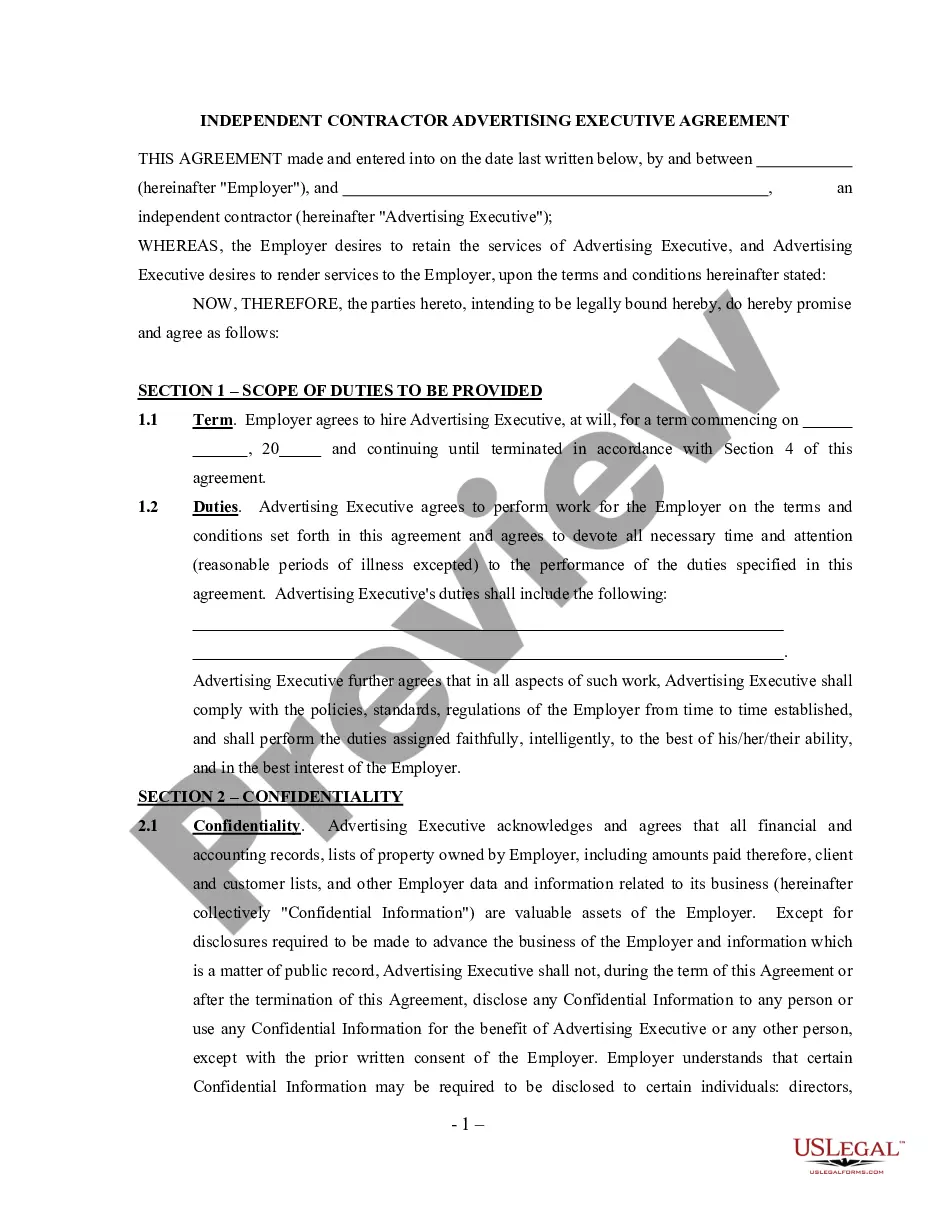
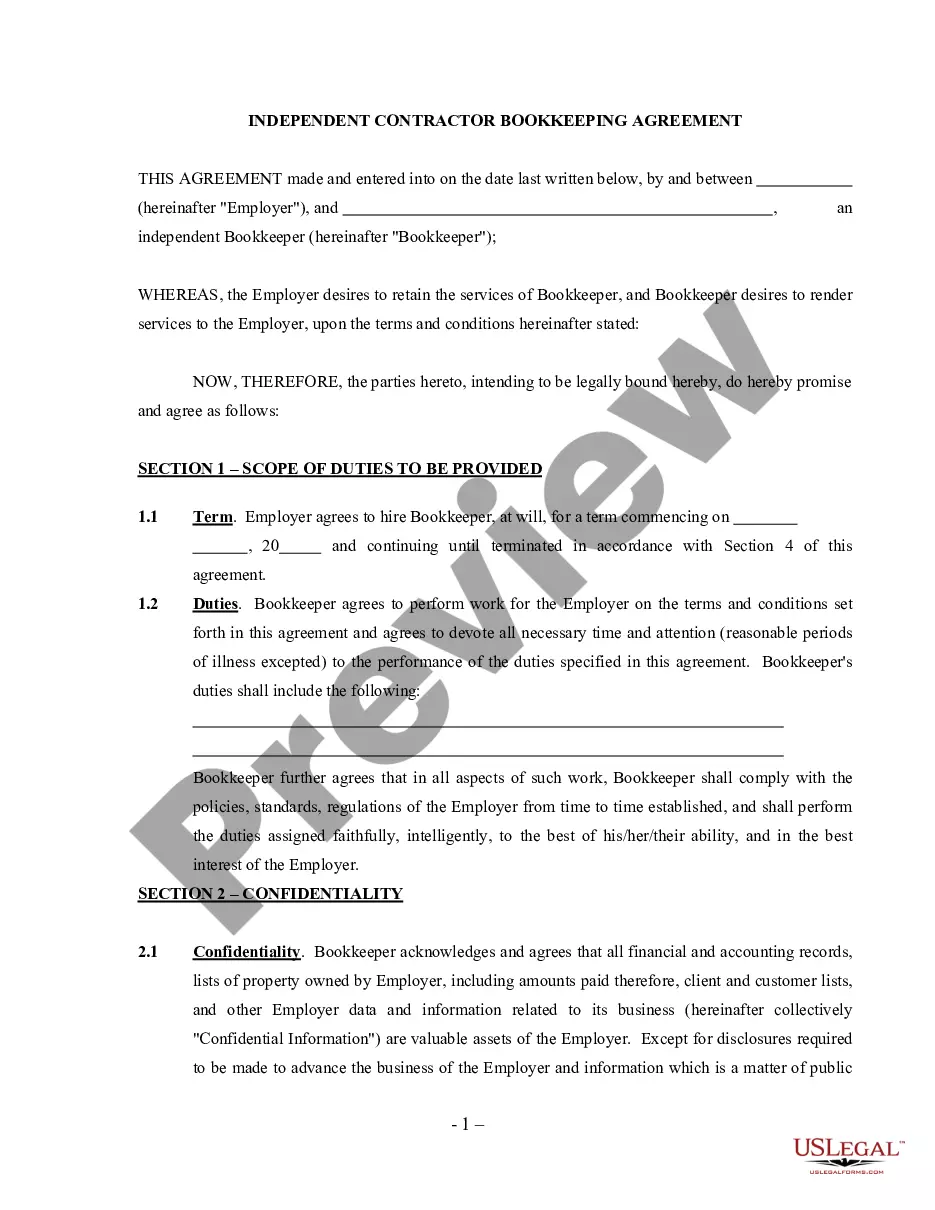
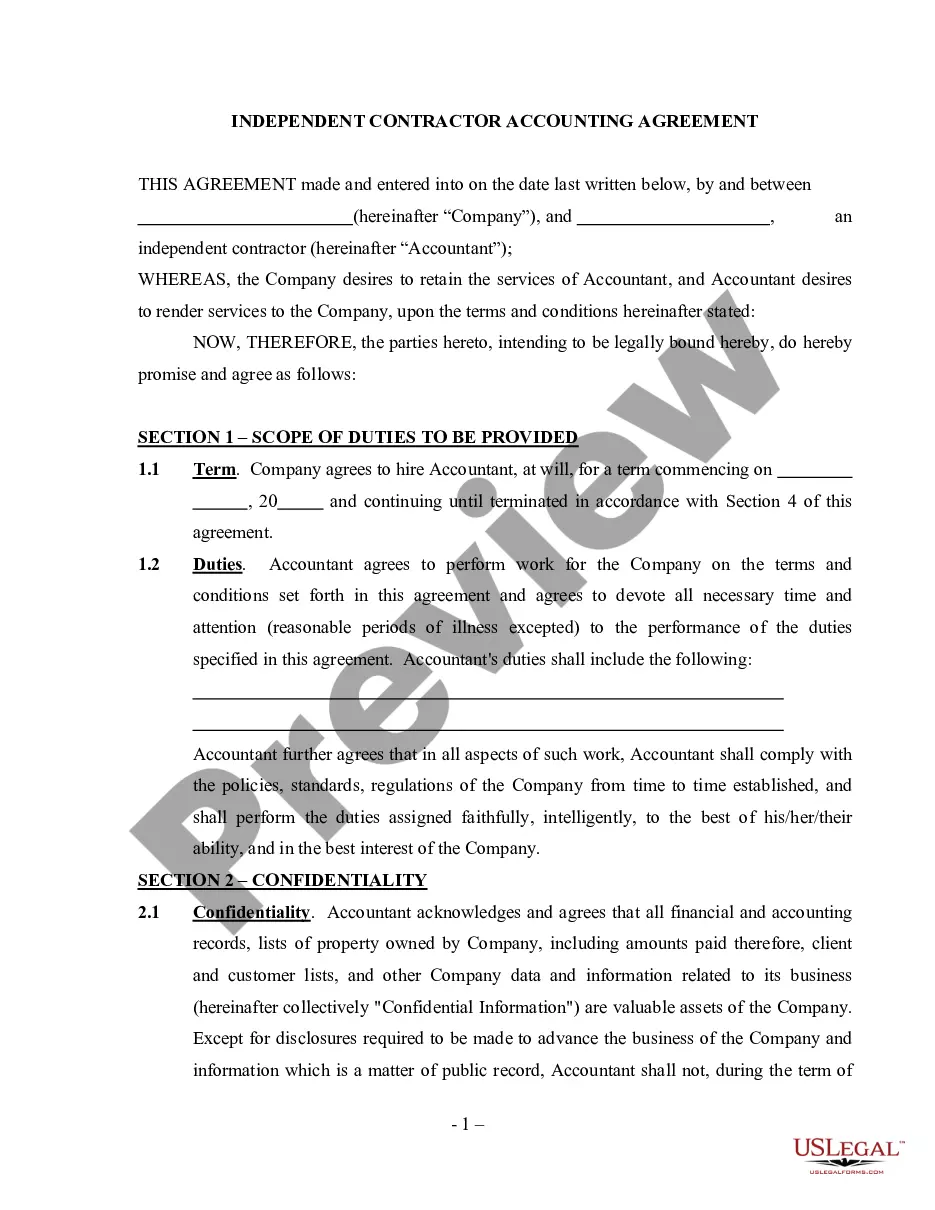
Get your form ready online
Our built-in tools help you complete, sign, share, and store your documents in one place.
Built-in online Word editor
Make edits, fill in missing information, and update formatting in US Legal Forms—just like you would in MS Word.
Export easily
Download a copy, print it, send it by email, or mail it via USPS—whatever works best for your next step.
E-sign your document
Sign and collect signatures with our SignNow integration. Send to multiple recipients, set reminders, and more. Go Premium to unlock E-Sign.
Notarize online 24/7
If this form requires notarization, complete it online through a secure video call—no need to meet a notary in person or wait for an appointment.
Store your document securely
We protect your documents and personal data by following strict security and privacy standards.

Make edits, fill in missing information, and update formatting in US Legal Forms—just like you would in MS Word.

Download a copy, print it, send it by email, or mail it via USPS—whatever works best for your next step.

Sign and collect signatures with our SignNow integration. Send to multiple recipients, set reminders, and more. Go Premium to unlock E-Sign.

If this form requires notarization, complete it online through a secure video call—no need to meet a notary in person or wait for an appointment.

We protect your documents and personal data by following strict security and privacy standards.
Looking for another form?


How to fill out Account Executive Agreement - Self-Employed Independent Contractor?
Have you ever been in a situation where you require documentation for possibly business or personal purposes almost every time.
There are numerous authentic document templates available online, but acquiring ones you can rely on isn't straightforward.
US Legal Forms provides thousands of form templates, such as the Virgin Islands Account Executive Agreement - Self-Employed Independent Contractor, that are designed to meet federal and state regulations.
Avoid altering or removing any HTML tags. Only synonymize plain text outside of the HTML tags.
- If you are already acquainted with the US Legal Forms website and possess an account, simply Log In.
- After that, you can download the Virgin Islands Account Executive Agreement - Self-Employed Independent Contractor template.
- If you do not have an account and wish to begin using US Legal Forms, follow these steps.
- Locate the form you need and ensure it is for the correct city/state.
- Utilize the Review button to inspect the form.
- Check the details to ensure you have selected the correct form.
- If the form isn't what you're looking for, use the Search field to find the form that suits your needs and requirements.
- Once you find the correct form, click Get now.
- Choose the pricing plan you prefer, fill out the required information to create your account, and pay for the transaction using your PayPal or credit card.
- Select a convenient file format and download your copy.
- Access all the document templates you have purchased in the My documents list. You can download an additional copy of Virgin Islands Account Executive Agreement - Self-Employed Independent Contractor at any time if needed. Just click the desired form to download or print the document template.
- Utilize US Legal Forms, one of the most extensive collections of authentic forms, to save time and avoid errors.
- The service offers professionally crafted legal document templates that you can use for various purposes.
- Create an account on US Legal Forms and start making your life easier.
Form popularity
FAQ
To report foreign self-employment income in the US, you need to declare it on your tax return. Make sure to convert the income to US dollars and report it on Schedule C. Seeking guidance from the Virgin Islands Account Executive Agreement - Self-Employed Independent Contractor can ensure you're meeting all necessary reporting requirements.
Both terms are valid, but 'independent contractor' often provides clarity regarding your business status. It helps communicate that you freelance or work on a contract basis. The Virgin Islands Account Executive Agreement - Self-Employed Independent Contractor can clarify the specific terms of your work arrangement.
Absolutely, an independent contractor is considered self-employed. As you work independently rather than under an employer's control, you are both responsible for your work and its implications. The Virgin Islands Account Executive Agreement - Self-Employed Independent Contractor defines this relationship clearly.
Yes, independent contractors file taxes as self-employed individuals. This means you must report your earnings and expenses on your tax returns. Understanding the Virgin Islands Account Executive Agreement - Self-Employed Independent Contractor will help clarify your tax responsibilities further.
Independent contractors need to report all income earned, which typically involves filing a Schedule C along with Form 1040. You will also need to keep track of business expenses that can be deducted. Being informed about your obligations under the Virgin Islands Account Executive Agreement - Self-Employed Independent Contractor helps you manage your taxes efficiently.
To prove you are an independent contractor, you'll need to maintain documentation such as contracts, invoices, and any 1099 forms received. These documents establish your work arrangements and income sources. Furthermore, the Virgin Islands Account Executive Agreement - Self-Employed Independent Contractor can be a solid reference point when demonstrating your status as an independent contractor.
Yes, receiving a 1099 form typically indicates that you are self-employed. This form shows your earnings as an independent contractor. Under the Virgin Islands Account Executive Agreement - Self-Employed Independent Contractor, you work for yourself, not an employer. Thus, you have the freedom and responsibilities that come with self-employment.
Being self-employed means you run your own business without being an employee of another organization. To qualify, you typically must earn income from your services, take on business risks, and manage your own expenses. The Virgin Islands Account Executive Agreement - Self-Employed Independent Contractor can serve as a solid foundation to formalize your self-employment status.
Yes, as an independent contractor, having a contract is essential. A well-defined contract, such as the Virgin Islands Account Executive Agreement - Self-Employed Independent Contractor, protects your rights and outlines your obligations. This legal document helps prevent misunderstandings and clarifies payment terms, project scope, and other vital details.
Yes, an executive director can operate as an independent contractor under the Virgin Islands Account Executive Agreement - Self-Employed Independent Contractor. This arrangement allows for flexibility and autonomy in managing responsibilities. However, it is crucial to define the terms clearly in the contract to ensure both parties understand their roles and expectations.