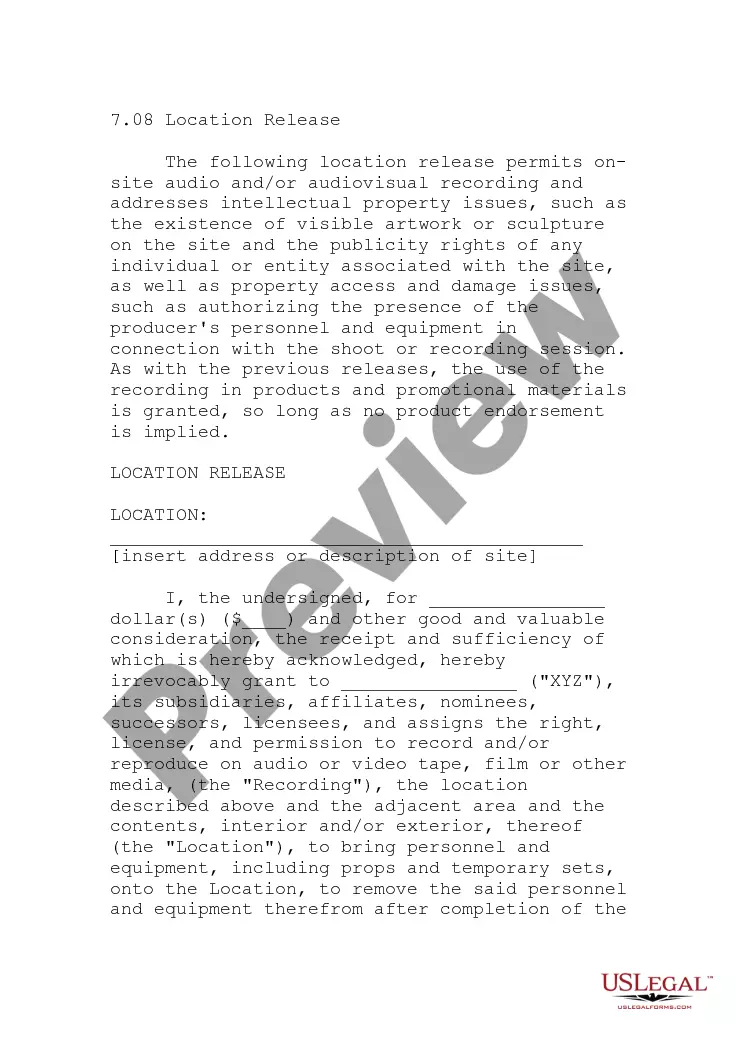
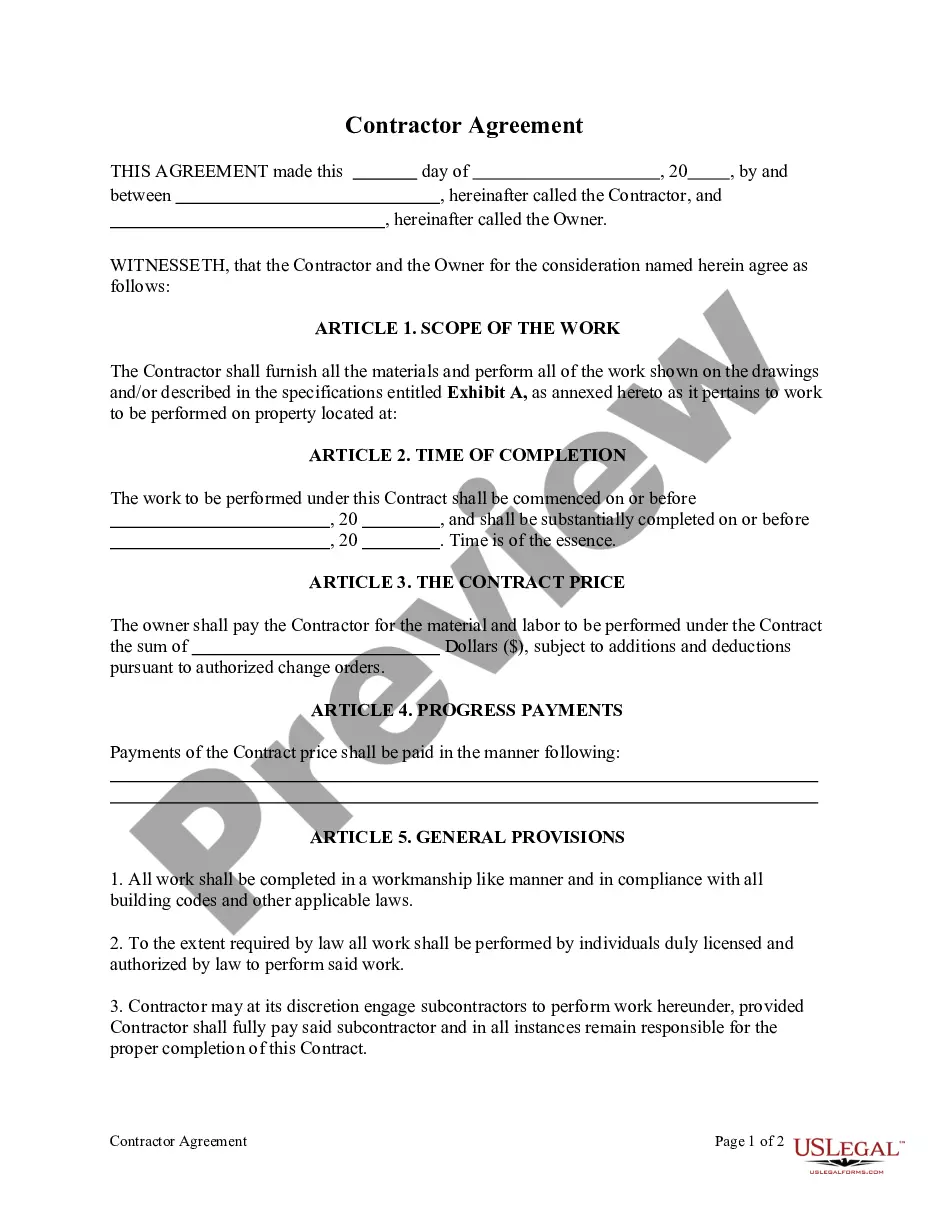
Virgin Islands Self-Employed Independent Contractor Payment Schedule
Description

Get your form ready online
Our built-in tools help you complete, sign, share, and store your documents in one place.
Make edits, fill in missing information, and update formatting in US Legal Forms—just like you would in MS Word.
Download a copy, print it, send it by email, or mail it via USPS—whatever works best for your next step.
Sign and collect signatures with our SignNow integration. Send to multiple recipients, set reminders, and more. Go Premium to unlock E-Sign.
If this form requires notarization, complete it online through a secure video call—no need to meet a notary in person or wait for an appointment.
We protect your documents and personal data by following strict security and privacy standards.
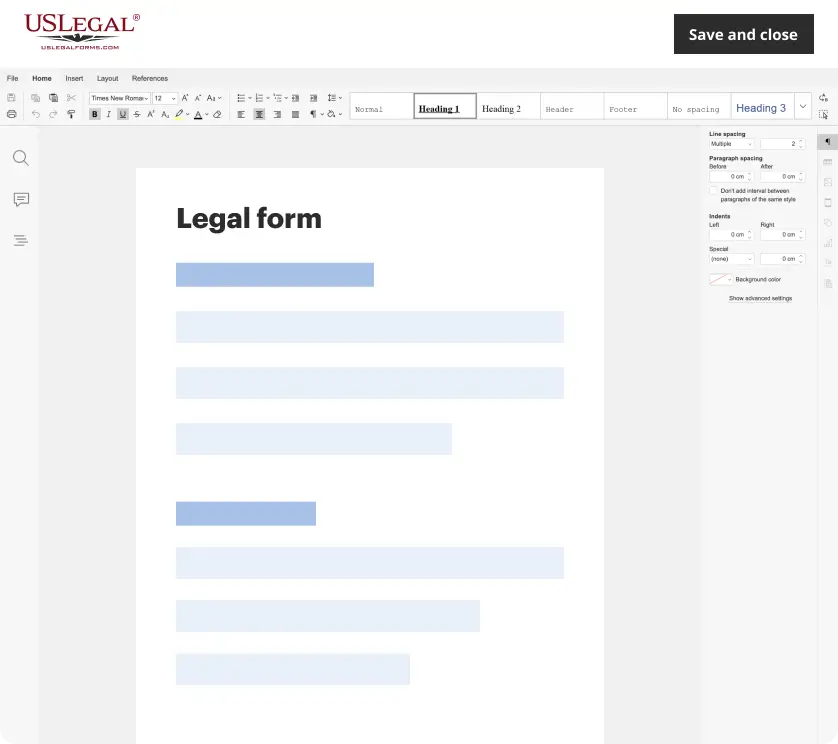
Make edits, fill in missing information, and update formatting in US Legal Forms—just like you would in MS Word.
Download a copy, print it, send it by email, or mail it via USPS—whatever works best for your next step.
Sign and collect signatures with our SignNow integration. Send to multiple recipients, set reminders, and more. Go Premium to unlock E-Sign.
If this form requires notarization, complete it online through a secure video call—no need to meet a notary in person or wait for an appointment.
We protect your documents and personal data by following strict security and privacy standards.
Looking for another form?





How to fill out Self-Employed Independent Contractor Payment Schedule?
Locating the appropriate authentic document template can be challenging. Clearly, there are numerous templates available online, but how can you find the authentic form you require? Utilize the US Legal Forms website. This service offers thousands of templates, including the Virgin Islands Self-Employed Independent Contractor Payment Schedule, which can be utilized for both business and personal purposes. All forms are reviewed by professionals and comply with state and federal regulations.
If you are already registered, Log In to your account and click on the Acquire button to obtain the Virgin Islands Self-Employed Independent Contractor Payment Schedule. Use your account to browse the authentic forms you may have previously obtained. Visit the My documents section of your account to retrieve another copy of the document you need.
If you are a new user of US Legal Forms, here are simple steps you should follow: First, ensure you have selected the correct form for your specific city/state. You can browse the form using the Review button and read the form description to confirm it is suitable for you. If the form does not meet your needs, utilize the Search field to find the correct form. Once you are confident that the form is accurate, click on the Purchase now button to obtain the form. Choose the pricing plan you prefer and enter the required information. Create your account and pay for the order using your PayPal account or credit card. Select the document format and download the authentic document template to your device. Complete, modify, print, and sign the acquired Virgin Islands Self-Employed Independent Contractor Payment Schedule.
- US Legal Forms is the largest repository of authentic forms where you can explore a variety of document templates.
- Utilize the service to obtain professionally crafted documents that adhere to state requirements.
- Access thousands of templates for both business and personal use.
- All forms are vetted by experts to ensure compliance.
- Efficiently manage your documents through your user account.
- Easily navigate to find the forms that meet your specific needs.
Form popularity
FAQ
As a self-employed individual, you should use Schedule C to report your business activities. This form is essential for independent contractors in the Virgin Islands to outline their earnings and expenses accurately. Moreover, integrating the Virgin Islands Self-Employed Independent Contractor Payment Schedule can streamline your payment tracking, simplifying your financial management and enhancing your compliance with tax requirements.
Yes, if you are self-employed, you generally need to file Schedule C with your tax return. This schedule provides the IRS with information about your business income and expenses, which is crucial for calculating your tax liability. Additionally, utilizing the Virgin Islands Self-Employed Independent Contractor Payment Schedule can help you manage your payments effectively, ensuring you remain compliant with local tax regulations.
For self-employment, you typically use Schedule C to report your income and expenses. This form allows you to detail your business earnings, deduct eligible expenses, and understand your net profit or loss. If you are an independent contractor in the Virgin Islands, using the Virgin Islands Self-Employed Independent Contractor Payment Schedule will help you accurately track your payments and obligations. Make sure to keep thorough records to support your claims.
The primary form for independent contractor payment is the 1099 form, which clients use to report payments made to you. Additionally, as an independent contractor, you will use Schedule C to report your income and expenses during tax time. Following the Virgin Islands Self-Employed Independent Contractor Payment Schedule ensures that all your financial records align with tax requirements.
Individuals who do not have self-employment income should not file a Schedule C. This includes those who earn wages from traditional employment or receive income not related to a business. If you are unsure, it’s beneficial to check the Virgin Islands Self-Employed Independent Contractor Payment Schedule to determine your filing requirements.
Yes, independent contractors fill out Schedule C to report their business income and expenses. This form is essential for those who operate as self-employed individuals. By following the Virgin Islands Self-Employed Independent Contractor Payment Schedule, you can systematically track your income and ensure accurate tax filings.
Yes, you can fill out your own Schedule C if you feel comfortable with the tax process and have the necessary information. Many independent contractors choose to handle this themselves, especially if they follow the Virgin Islands Self-Employed Independent Contractor Payment Schedule. However, if you have complex financial situations, consider consulting a tax professional for assistance.
Schedule C is filled out by self-employed individuals, including freelancers and independent contractors. If you earn income from your business, this form helps you report your earnings and track your expenses. By adhering to the Virgin Islands Self-Employed Independent Contractor Payment Schedule, you can ensure accurate reporting and compliance with tax regulations.
Independent contractors usually fill out a W-9 form to provide their Taxpayer Identification Number to clients. Additionally, when it comes time to file taxes, they will complete Schedule C to report their income and expenses. Following the Virgin Islands Self-Employed Independent Contractor Payment Schedule helps ensure you have all necessary documentation to manage your finances effectively.
Filing taxes in the US Islands involves several steps, including determining your residency status and income sources. You will need to use the appropriate tax forms and possibly consult local tax guidelines to ensure compliance. For self-employed individuals, it's essential to accurately report your income from independent contractors. Leveraging tools like USLegalForms can help streamline the process, especially when managing your Virgin Islands Self-Employed Independent Contractor Payment Schedule.