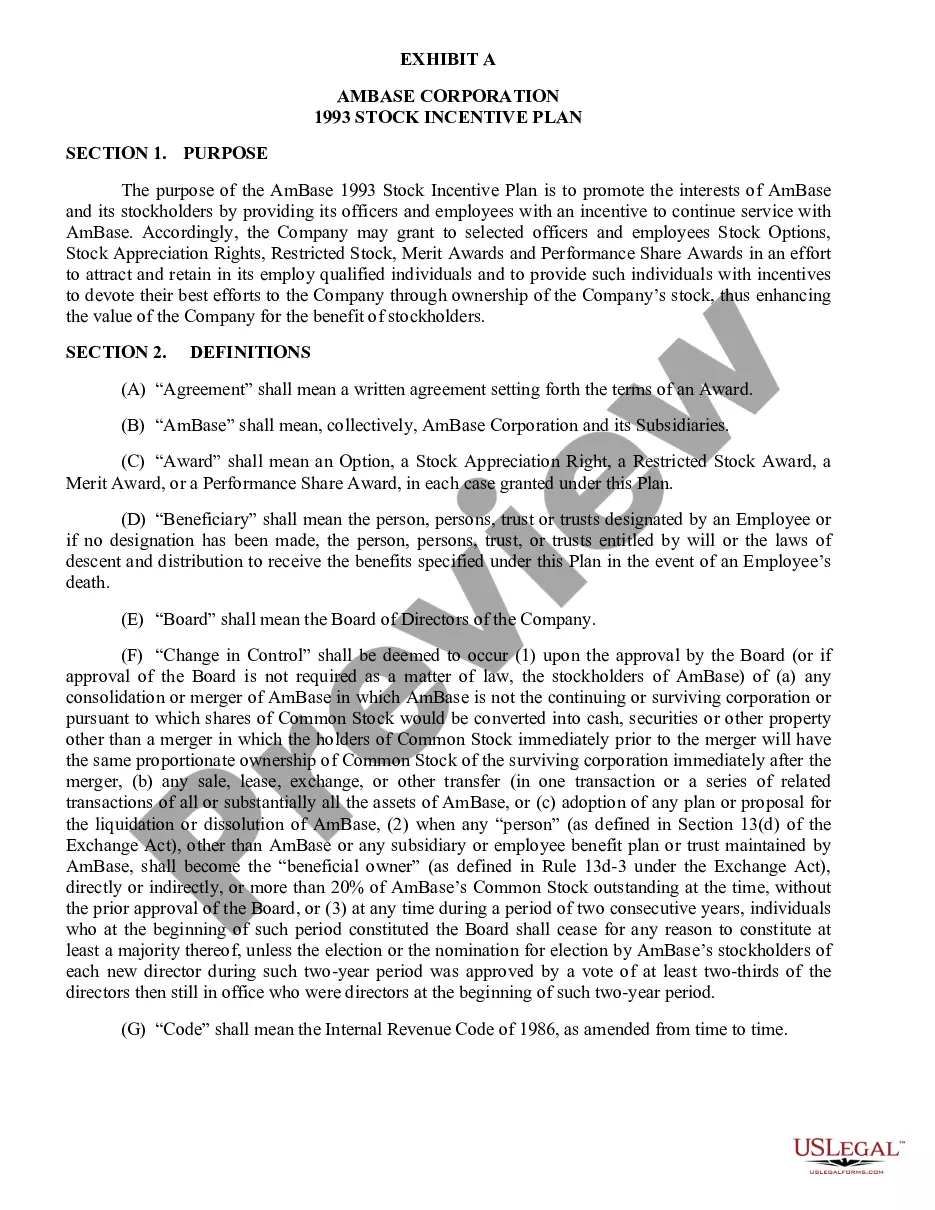
Pursuant to 15 USC 1692g (Sec. 809 of the Federal Debt Collection Practices Act), a debtor is allowed to challenge the validity of a debt that a collection agency states you owe to the creditor they represent. Use this form letter requires that the agency verify that the debt is actually the alleged creditor's and owed by the alleged debtor.
Virgin Islands Letter Denying that Alleged Debtor Owes the Amount of Finance Charges, Interest or Penalties being Charged on the Alleged Debt and Requesting a Collection Agency to Validate that Alleged Debtor Owes these Charges
Category:
State:
Multi-State
Control #:
US-DCPA-21.4BG
Format:
Word;
Rich Text
Instant download
Description
Free preview
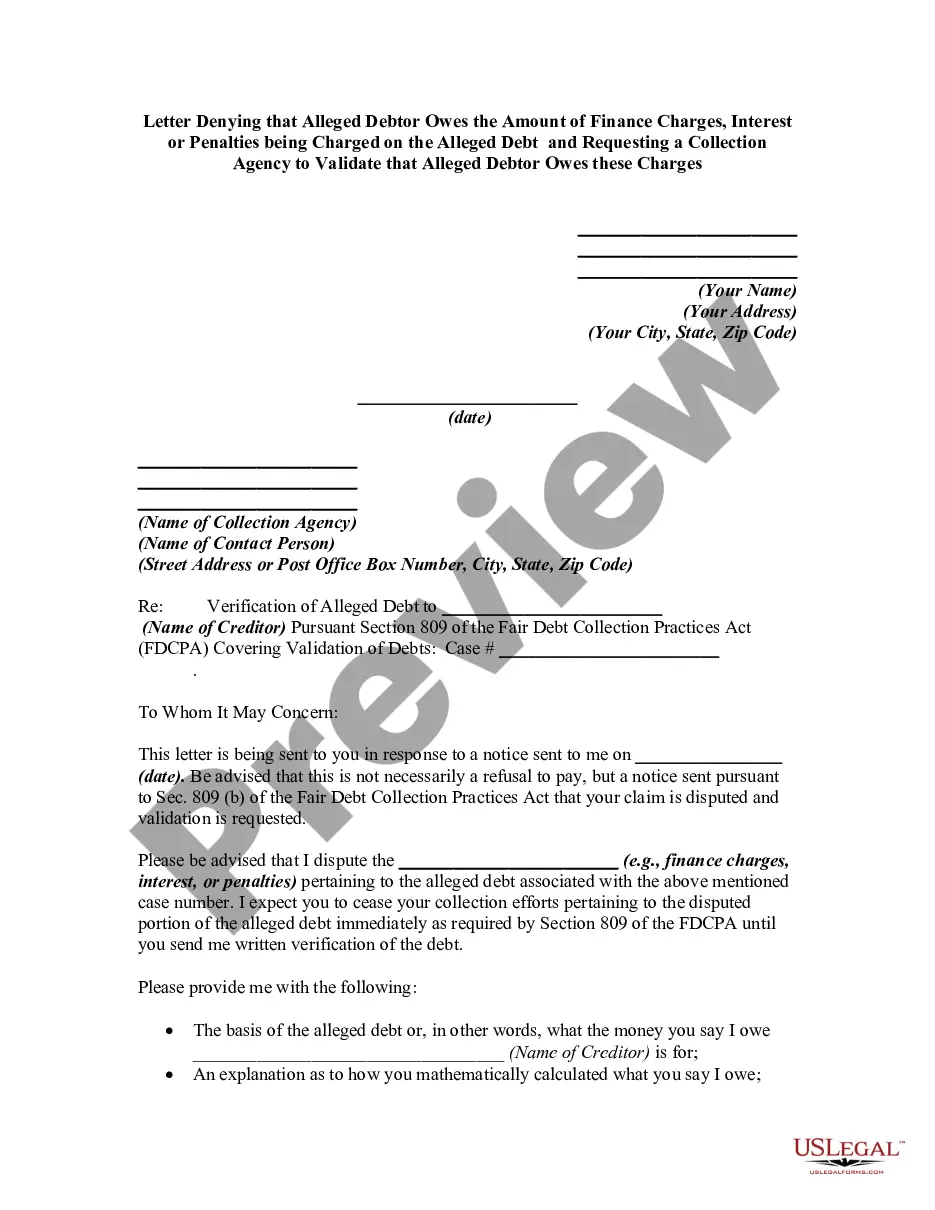
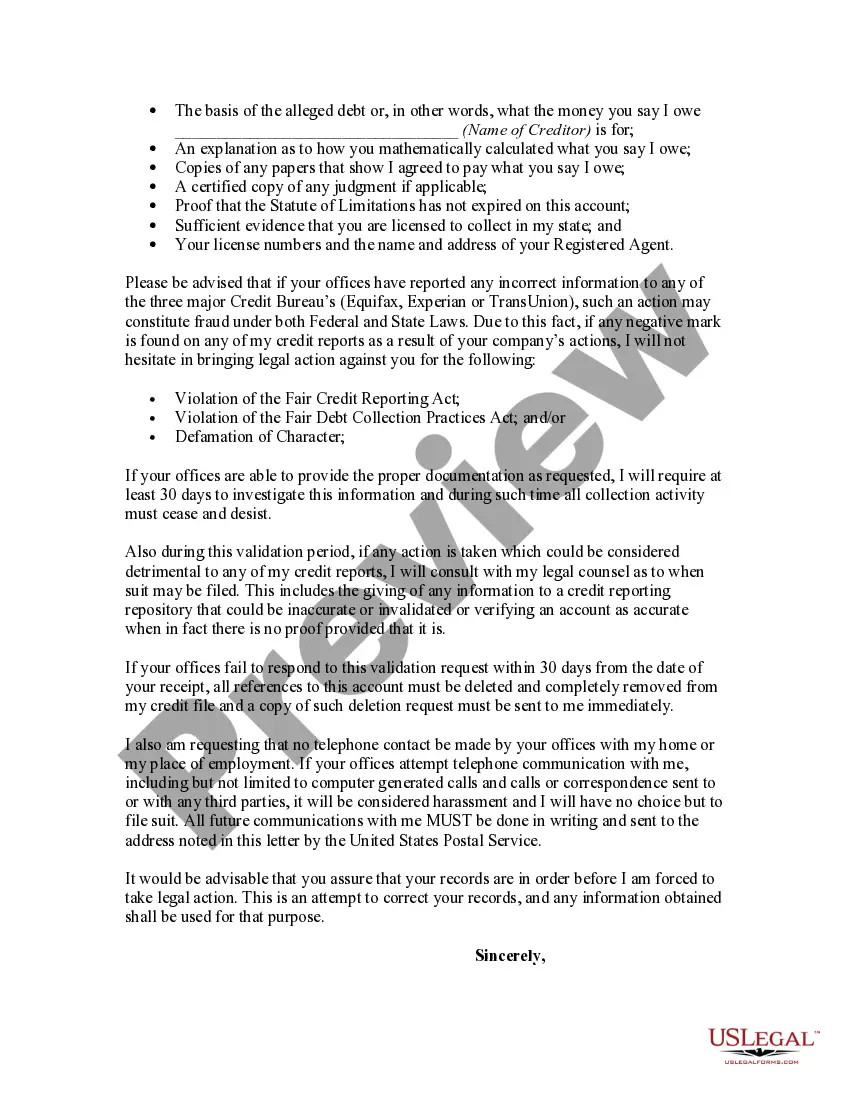
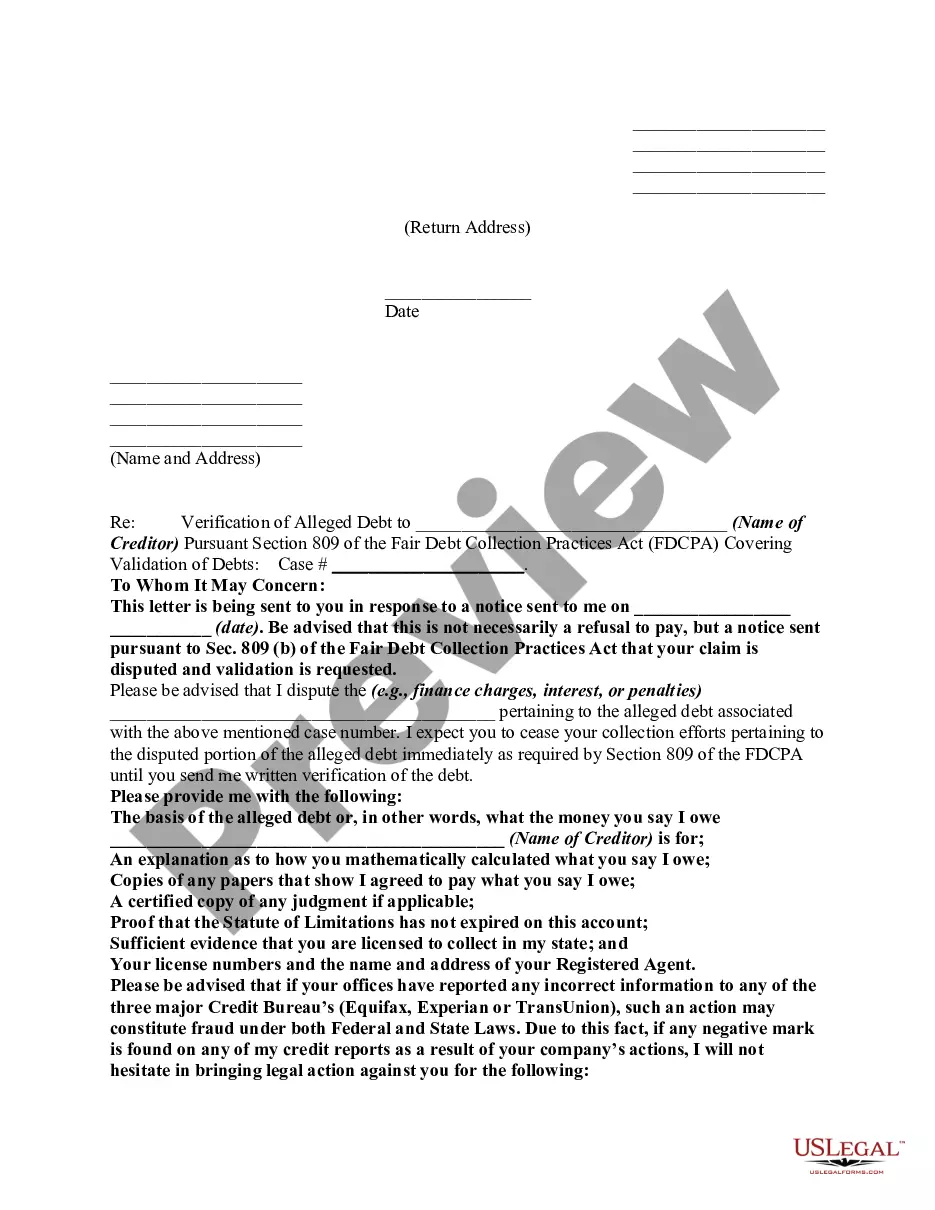
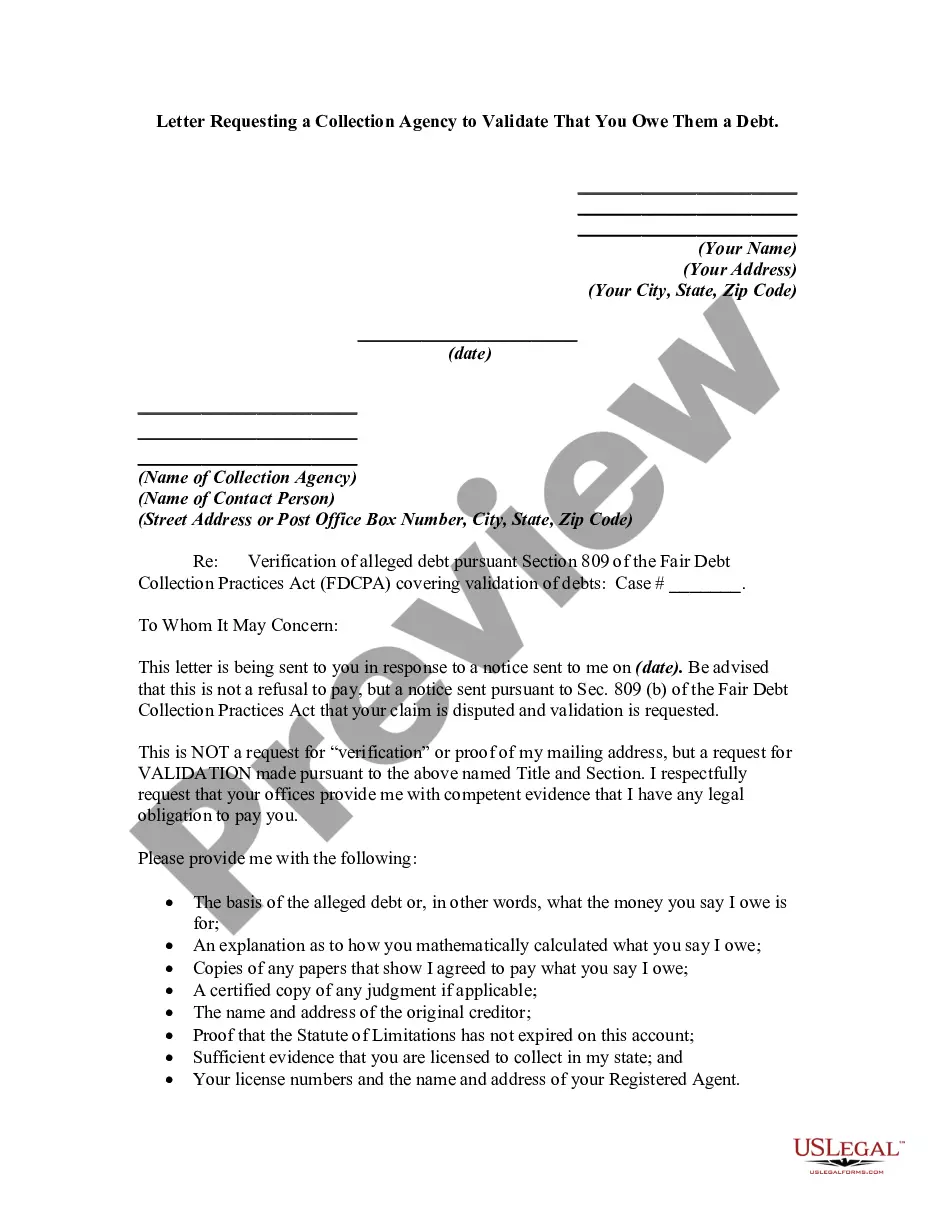
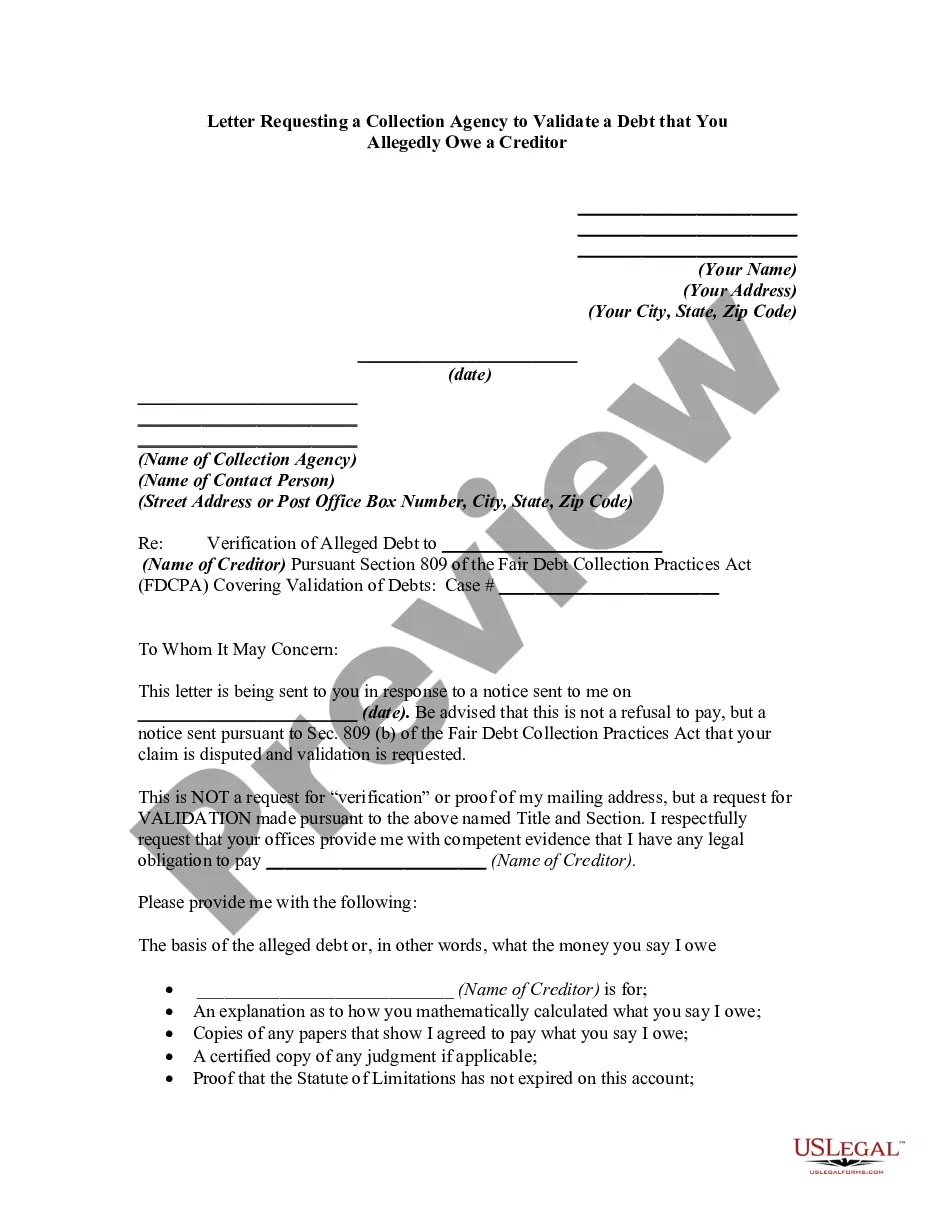
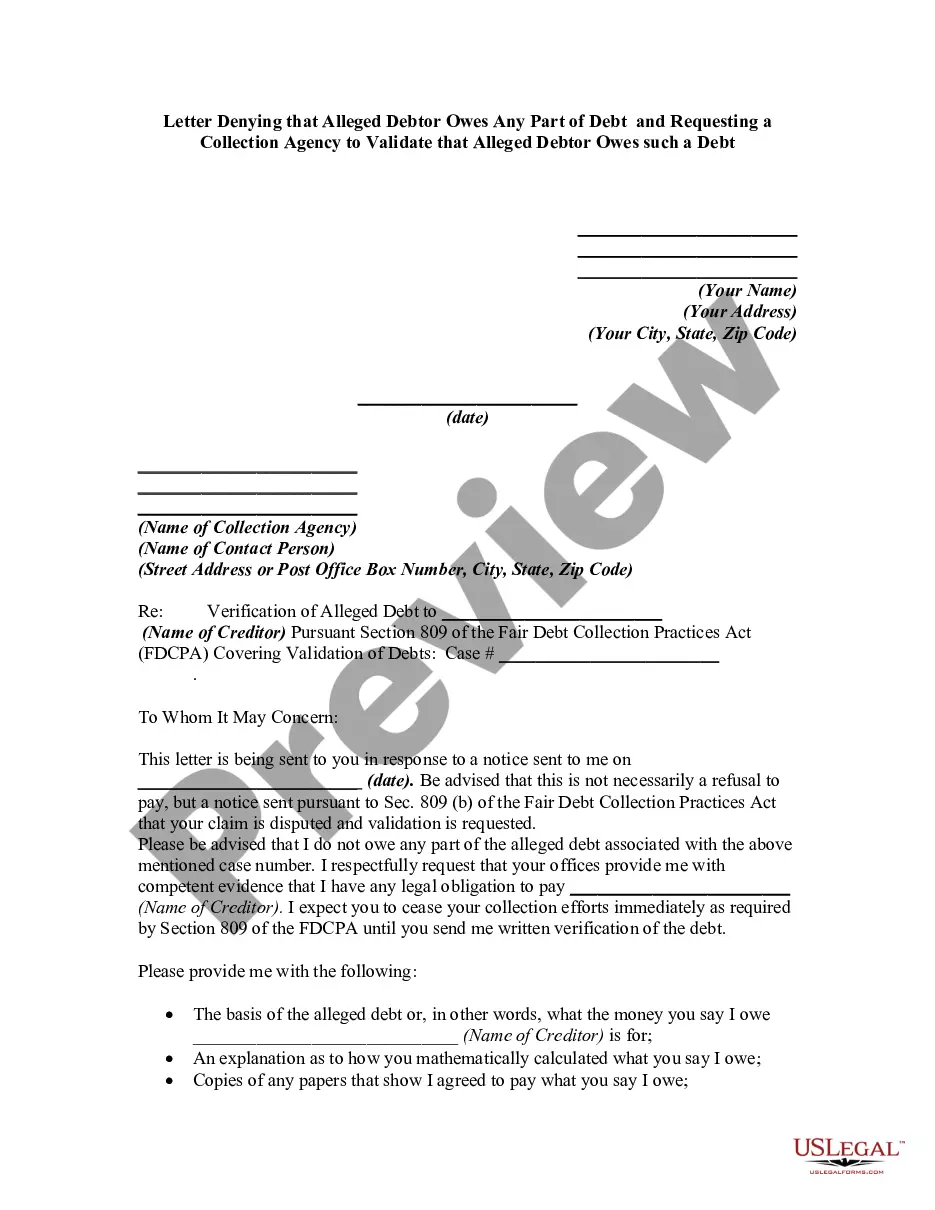
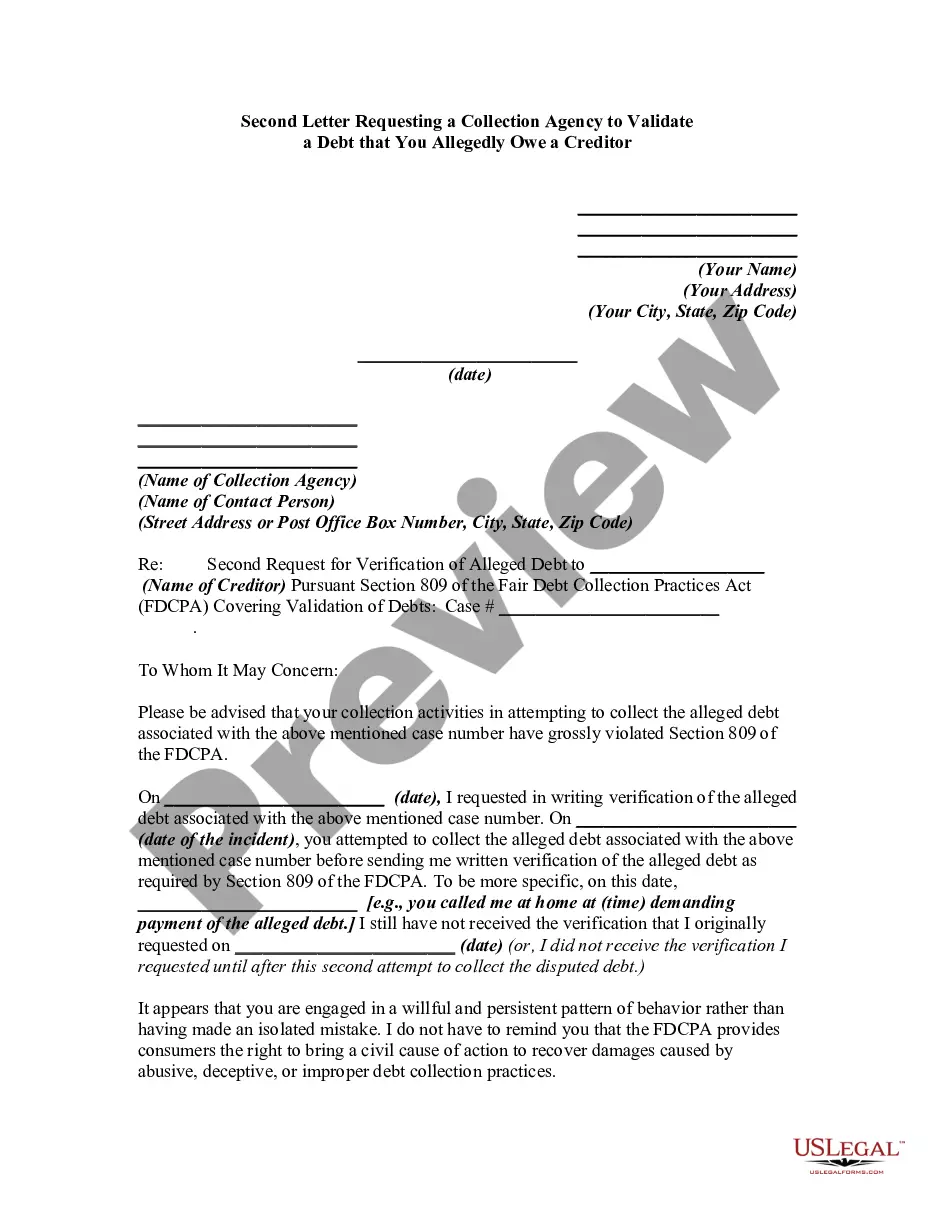
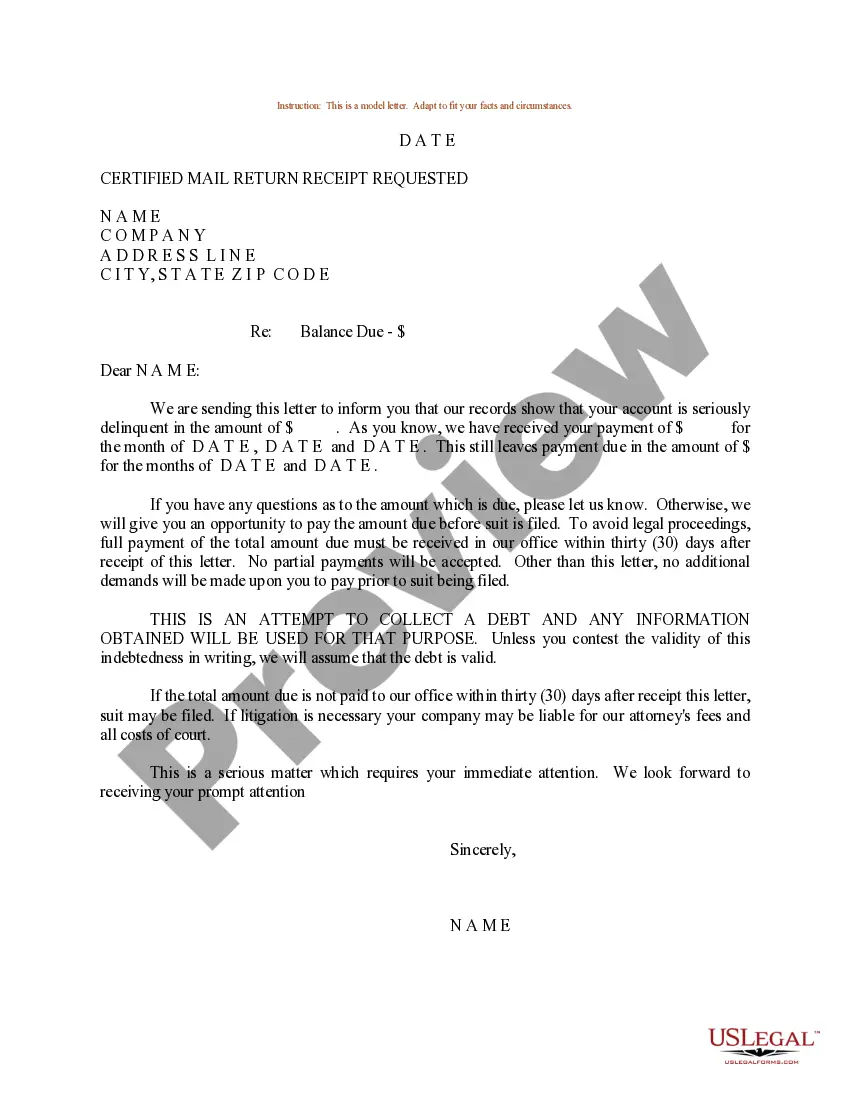

How to fill out Letter Denying That Alleged Debtor Owes The Amount Of Finance Charges, Interest Or Penalties Being Charged On The Alleged Debt And Requesting A Collection Agency To Validate That Alleged Debtor Owes These Charges?
Have you ever found yourself in a scenario where you require documents for both business or personal purposes every single day.
There are numerous legal document templates available online, but locating trustworthy ones isn't easy.
US Legal Forms offers thousands of template forms, including the Virgin Islands Letter Refuting that Alleged Debtor Owes the Amount of Finance Charges, Interest or Penalties being Charged on the Alleged Debt and Requesting a Collection Agency to Confirm that Alleged Debtor Owes these Charges, which are crafted to meet state and federal requirements.
Choose a convenient file format and download your copy.
Find all the document templates you have purchased in the My documents list. You can request an additional copy of the Virgin Islands Letter Refuting that Alleged Debtor Owes the Amount of Finance Charges, Interest or Penalties being Charged on the Alleged Debt and Requesting a Collection Agency to Confirm that Alleged Debtor Owes these Charges at any time, if needed. Just select the required form to download or print the document template.
- If you are already familiar with the US Legal Forms site and have an account, simply Log In.
- Then, you can download the Virgin Islands Letter Refuting that Alleged Debtor Owes the Amount of Finance Charges, Interest or Penalties being Charged on the Alleged Debt and Requesting a Collection Agency to Confirm that Alleged Debtor Owes these Charges template.
- If you do not have an account and wish to start using US Legal Forms, follow these steps.
- Locate the form you need and make sure it is for the correct area/region.
- Utilize the Preview button to review the form.
- Examine the information to ensure you have selected the correct form.
- If the form isn't what you are looking for, use the Search section to find a form that fulfills your needs and requirements.
- Once you find the correct form, click Purchase now.
- Select the pricing plan you prefer, fill in the required details to create your account, and pay for your order using your PayPal or credit card.
Form popularity
FAQ
The best samples for a debt validation letter include clear, direct language that outlines your request for validation. Templates often include spaces for your information, creditor's details, and a statement requesting proof of the alleged debt. Starting with the Virgin Islands Letter Denying that Alleged Debtor Owes the Amount of Finance Charges, Interest or Penalties being Charged on the Alleged Debt and Requesting a Collection Agency to Validate that Alleged Debtor Owes these Charges can serve as an excellent foundation.
A creditor may refuse to accept the tender of payment if the tender is made before the obligation of the debtor becomes due, or the thing tendered is different in specie or amount from what is due, or the obligation is not payable at the time the tender of payment was made as in the present case.
As per the Limitation Act 1980, a creditor can chase a debt for a period of six years if the debt is unsecured. If the debt is a mortgage debt, then the period is twelve years in most cases.
If a creditor waits too long to take court action, the debt will become 'unenforceable' or statute barred. This means the debt still exists but the law (statute) can be used to prevent (bar) the creditor from getting a court judgment or order to recover it.
If the debtor still refuses to pay the unsecured debt, the creditor can file a lawsuit against the debtor. Once a court grants judgment in favor of the creditor, it can usually take money from the debtor's bank account or garnish the debtor's wages.
Remember, debts that cannot be enforced are only protected from court action; the bad debt is still going on your credit report. If you want to settle the debt, you have to negotiate. If the collector cannot produce the agreement, you don't have to pay your dues.
If you don't pay a collection agency, the agency will send the matter back to the original creditor unless the collection agency owns the debt. If the collection agency owns the debt, they may send the matter to another collection agency. Often, the collection agency or the original creditor will sue you.
Not being able to meet payment obligations can make anyone feel anxious and worried, but in most cases, you won't have to worry about serving jail time if you are unable to pay off your debts. You cannot be arrested or go to jail simply for being past-due on credit card debt or student loan debt, for instance.
A debt validation letter should include the name of your creditor, how much you supposedly owe, and information on how to dispute the debt. After receiving a debt validation letter, you have 30 days to dispute the debt and request written evidence of it from the debt collector.
When writing the letter, request that the collection agency or creditor provide you with:Documentation that you owed the debt at some point, such as a contract you signed.How much you owe and the last outstanding action on the debt, which can be shown by documents such as the last statement or bill.More items...?