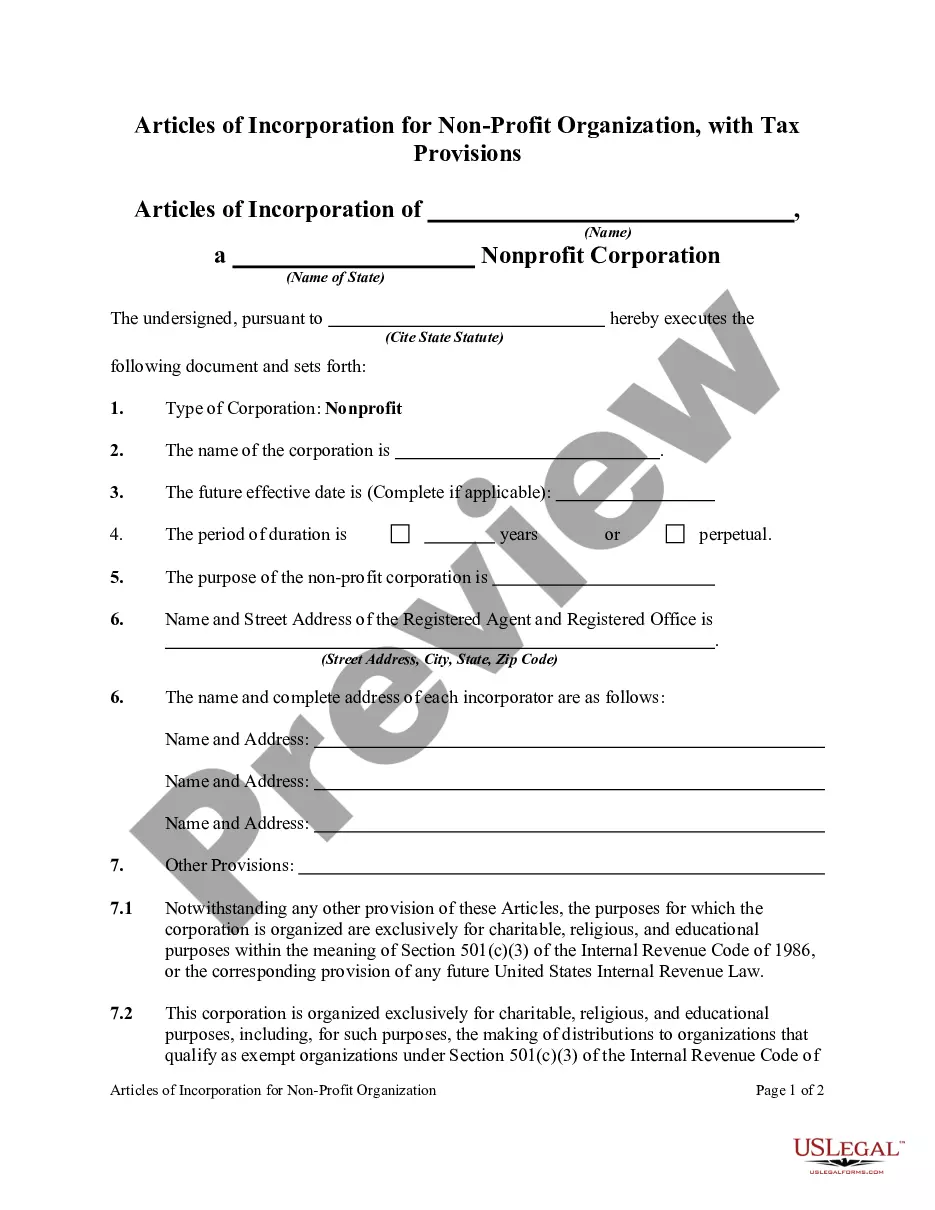
Virgin Islands Provisions for Testamentary Charitable Remainder Unitrust for One Life
Description
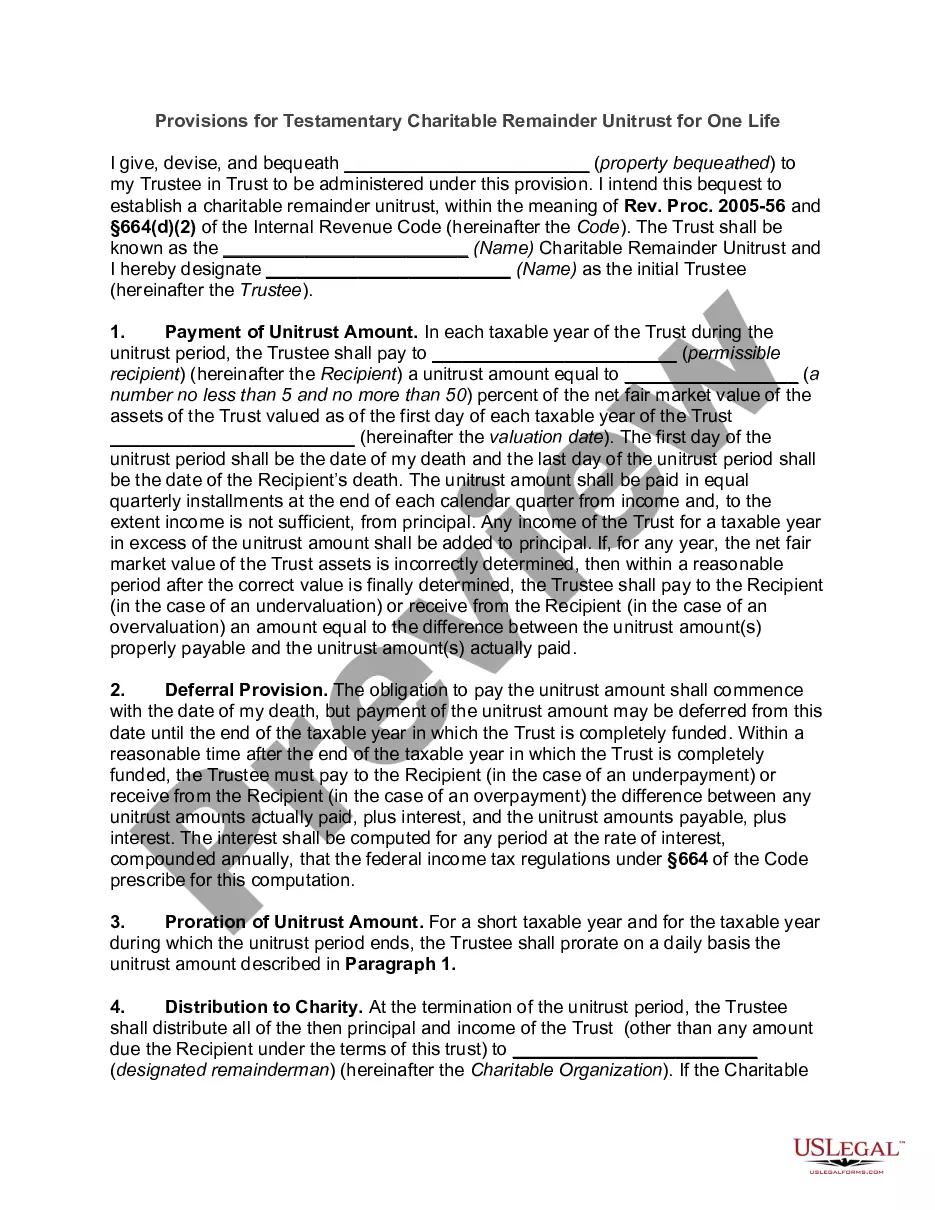


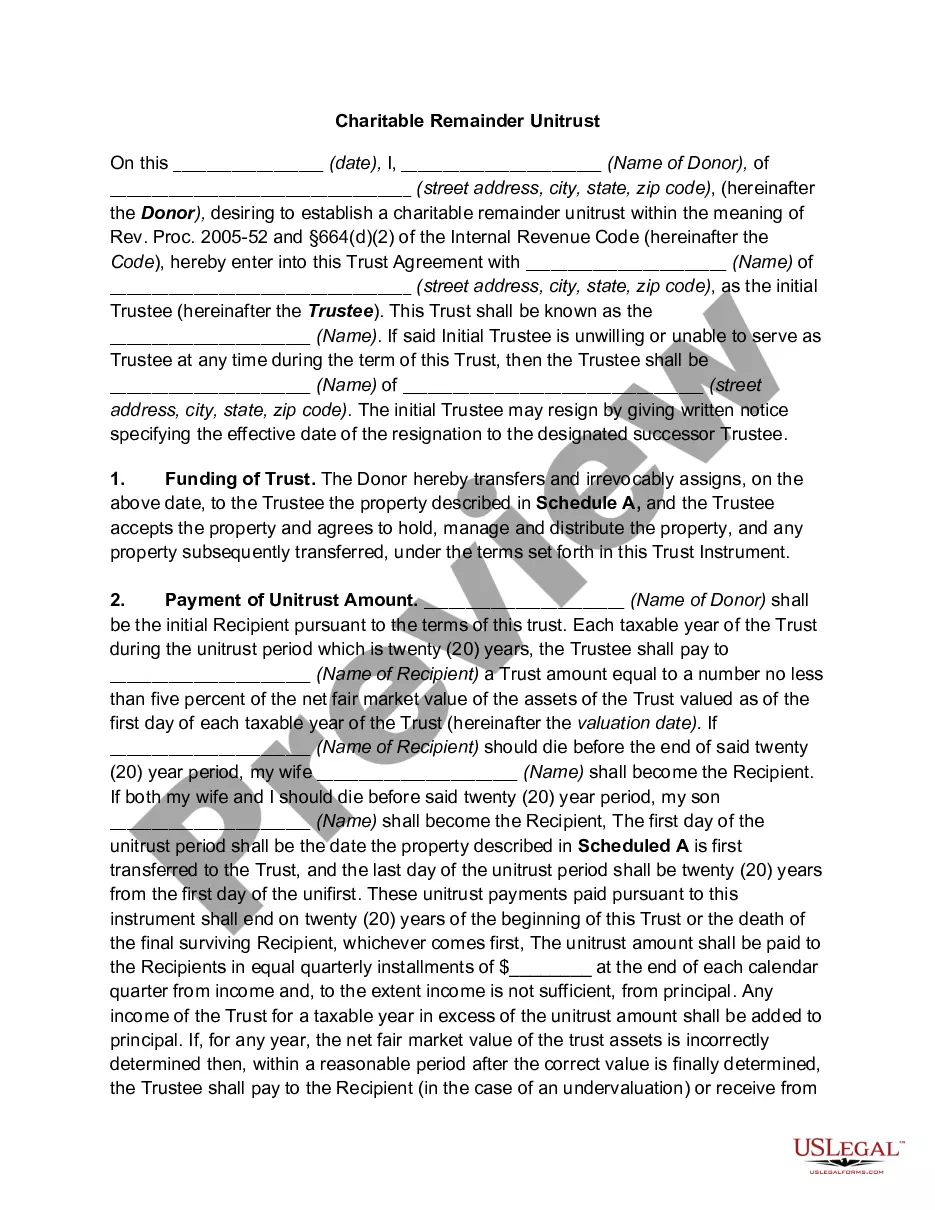
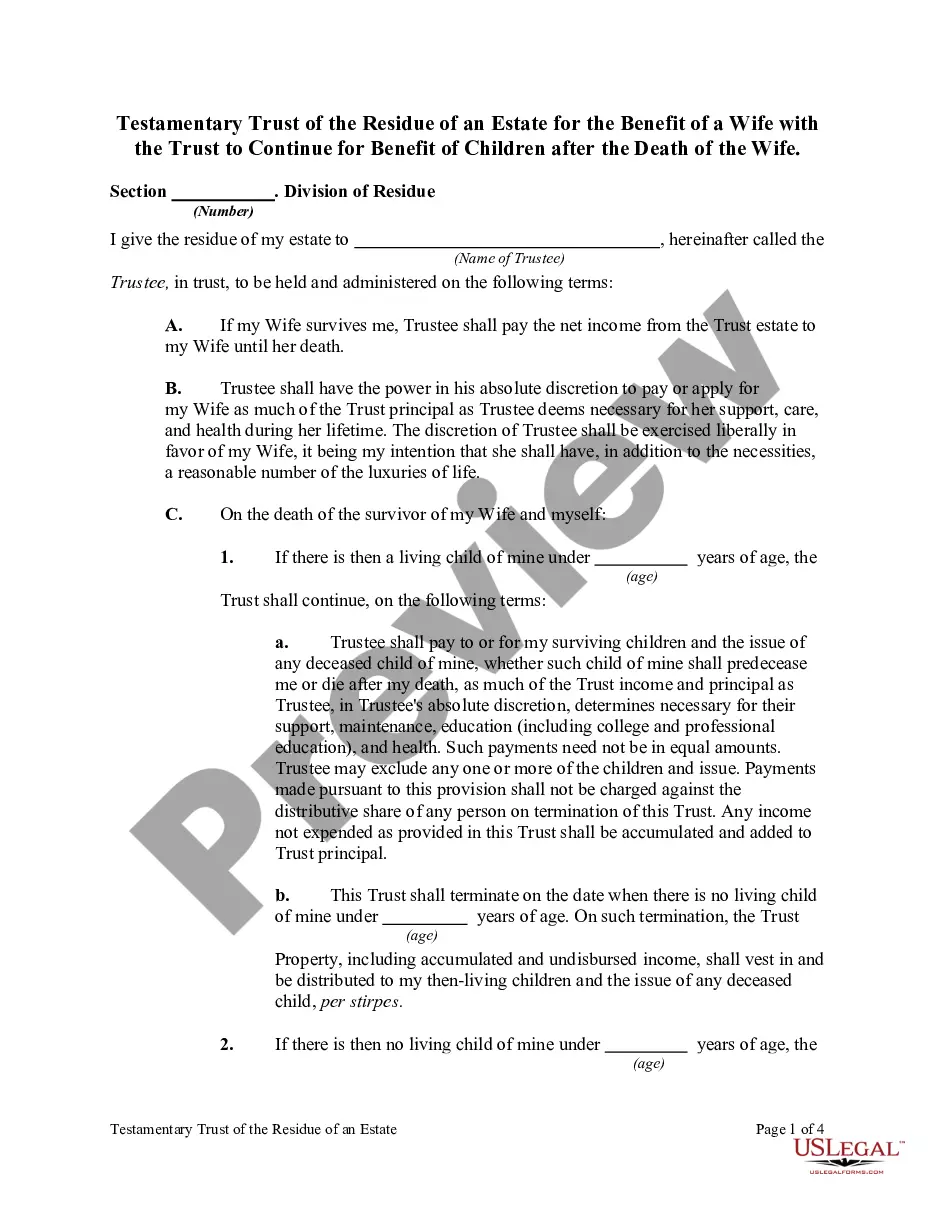
Get your form ready online
Our built-in tools help you complete, sign, share, and store your documents in one place.
Make edits, fill in missing information, and update formatting in US Legal Forms—just like you would in MS Word.
Download a copy, print it, send it by email, or mail it via USPS—whatever works best for your next step.
Sign and collect signatures with our SignNow integration. Send to multiple recipients, set reminders, and more. Go Premium to unlock E-Sign.
If this form requires notarization, complete it online through a secure video call—no need to meet a notary in person or wait for an appointment.
We protect your documents and personal data by following strict security and privacy standards.

Make edits, fill in missing information, and update formatting in US Legal Forms—just like you would in MS Word.

Download a copy, print it, send it by email, or mail it via USPS—whatever works best for your next step.

Sign and collect signatures with our SignNow integration. Send to multiple recipients, set reminders, and more. Go Premium to unlock E-Sign.

If this form requires notarization, complete it online through a secure video call—no need to meet a notary in person or wait for an appointment.

We protect your documents and personal data by following strict security and privacy standards.
Looking for another form?

How to fill out Provisions For Testamentary Charitable Remainder Unitrust For One Life?
Are you presently in a situation where you require documents for potential business or personal needs nearly every day.
There is a multitude of legal document templates accessible online, but locating ones you can trust is challenging.
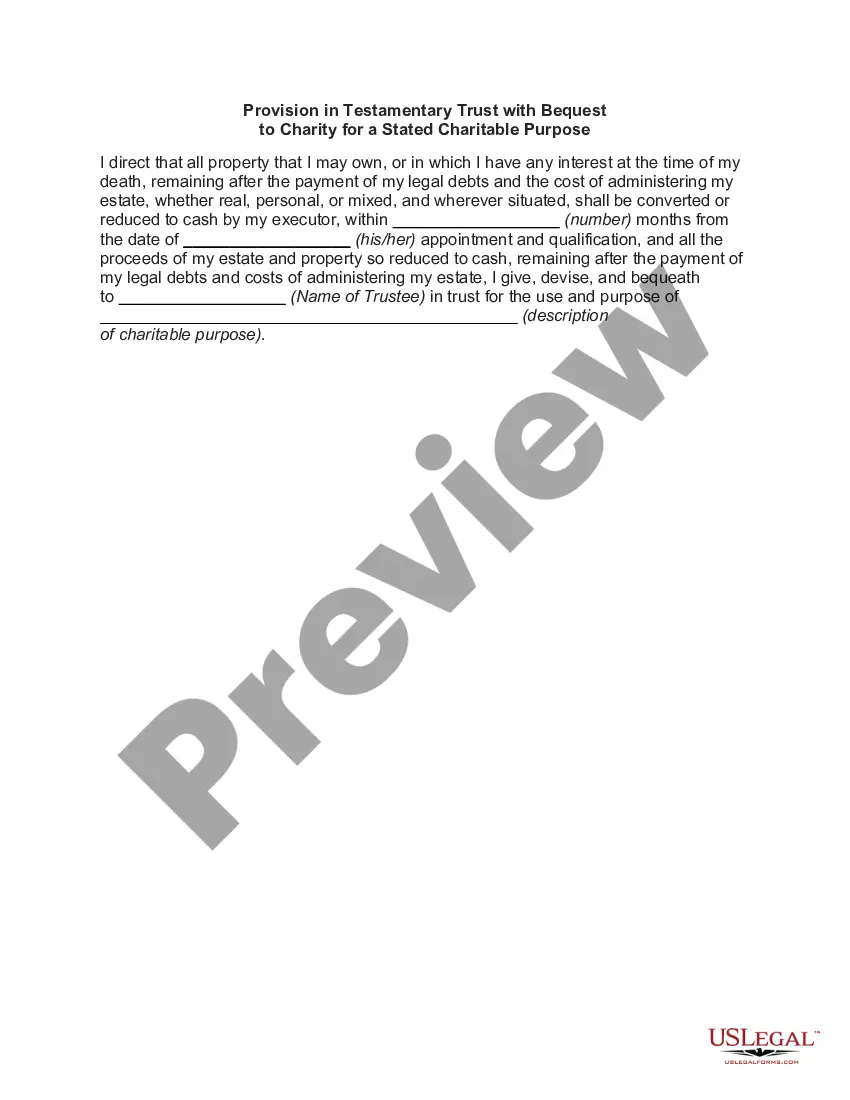
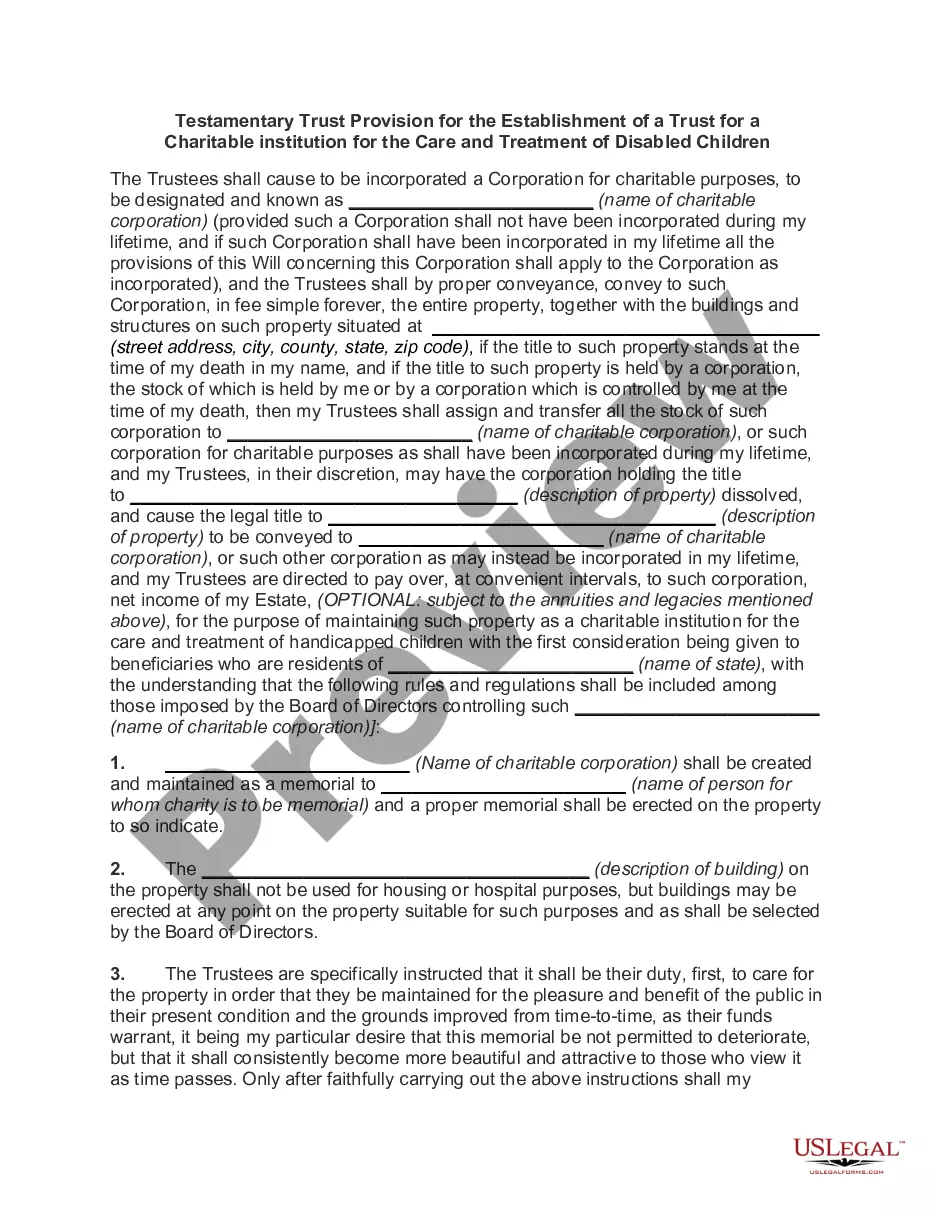
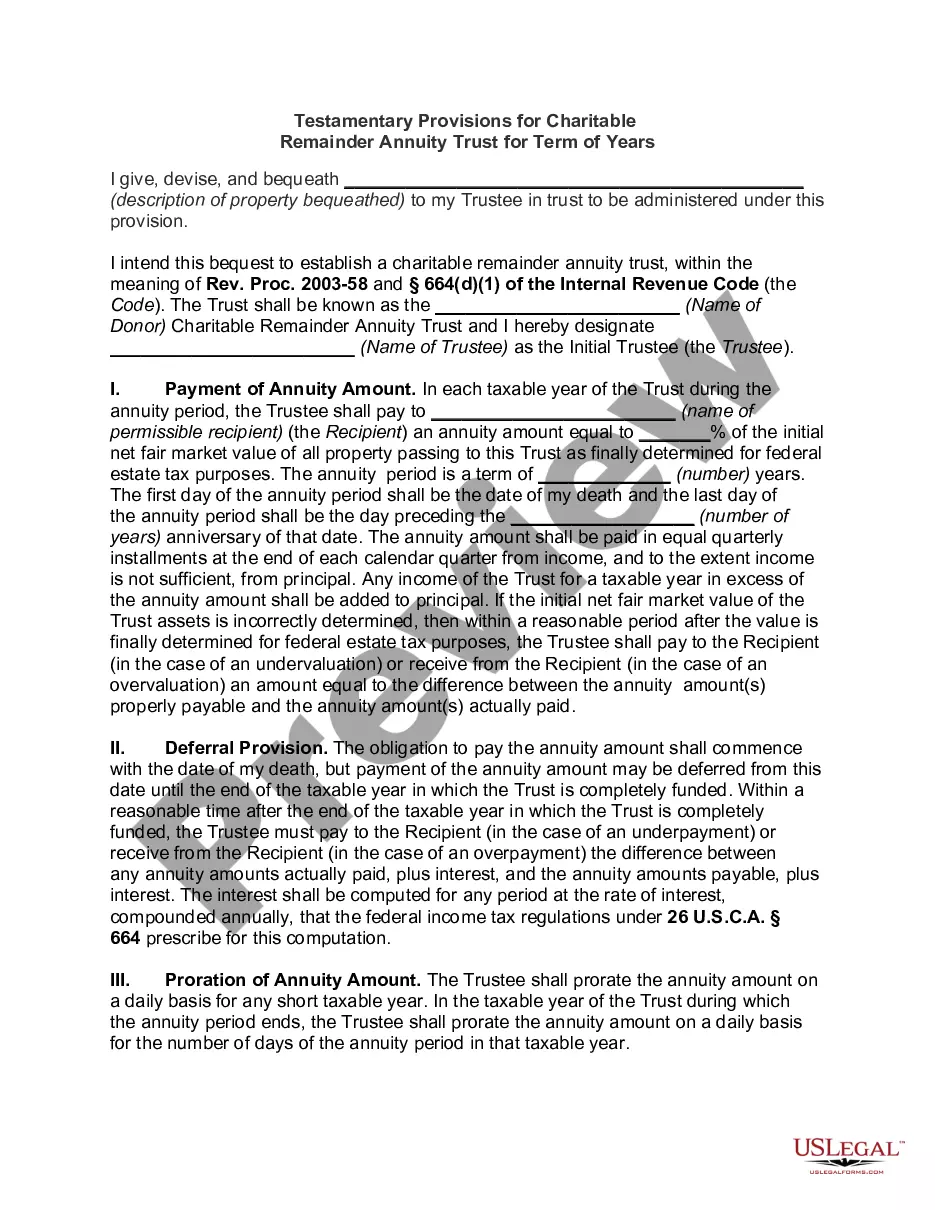
US Legal Forms offers thousands of form templates, such as the Virgin Islands Provisions for Testamentary Charitable Remainder Unitrust for One Life, that are designed to comply with state and federal regulations.
Once you locate the correct form, click Get now.
Select the pricing plan you desire, provide the necessary information to create your account, and complete the purchase using your PayPal or Visa or Mastercard.
- If you are already acquainted with the US Legal Forms website and have an account, simply Log In.
- After that, you can download the Virgin Islands Provisions for Testamentary Charitable Remainder Unitrust for One Life template.
- If you do not possess an account and wish to start using US Legal Forms, follow these steps.
- Obtain the form you need and verify it corresponds to the correct city/state.
- Utilize the Preview button to view the form.
- Review the details to ensure you have picked the right form.
- If the form is not what you are looking for, use the Search field to find the form that suits your needs and requirements.
Form popularity
FAQ
A charitable remainder unitrust typically pays out a percentage of the trust's value, which can range from 5% to 7% or more, depending on the terms set within the Virgin Islands Provisions for Testamentary Charitable Remainder Unitrust for One Life. The payout is recalculated each year based on the trust's asset valuation. This structure allows beneficiaries to potentially receive increasing annual payments as the assets grow over time.
By the Charitable Strategies Group A Charitable Remainder Trust (CRT) is a gift of cash or other property to an irrevocable trust. The donor receives an income stream from the trust for a term of years or for life and the named charity receives the remaining trust assets at the end of the trust term.
CRUT lie in what the trust pays out on a yearly basis and whether additional contributions are permitted once the trust has been created. With a CRAT, the annuity amount paid each year is fixed. Once you establish a CRAT and make the initial contribution, no further contributions are allowed.
A charitable remainder trust is a tax-exempt irrevocable trust designed to reduce the taxable income of individuals. A charitable remainder trust dispenses income to one or more noncharitable beneficiaries for a specified period and then donates the remainder to one or more charitable beneficiaries.
Benefits of CRUTsimmediate income tax deduction for a portion of the contribution to the trust. no upfront capital gains tax on appreciated assets you donate to the trust. steady income stream for life or many years. federal and possible state income tax charitable deduction, and.
You can name yourself or someone else to receive a potential income stream for a term of years, no more than 20, or for the life of one or more non-charitable beneficiaries, and then name one or more charities to receive the remainder of the donated assets.
Any income that you receive from your charitable trust could reduce the total contribution that you end up leaving to your charity. You may risk leaving nothing to your charity if you plan to receive high payments from the trust while you're alive.
1. Charitable remainder unit trust (CRUT) pays the beneficiary a fixed percentage of the trust at least annually, often for life or a period up to 20 years.
Any income that you receive from your charitable trust could reduce the total contribution that you end up leaving to your charity. You may risk leaving nothing to your charity if you plan to receive high payments from the trust while you're alive.
Charitable remainder annuity trusts (CRATs) distribute a fixed annuity amount each year, and additional contributions are not allowed. Charitable remainder unitrusts (CRUTs) distribute a fixed percentage based on the balance of the trust assets (revalued annually), and additional contributions can be made.