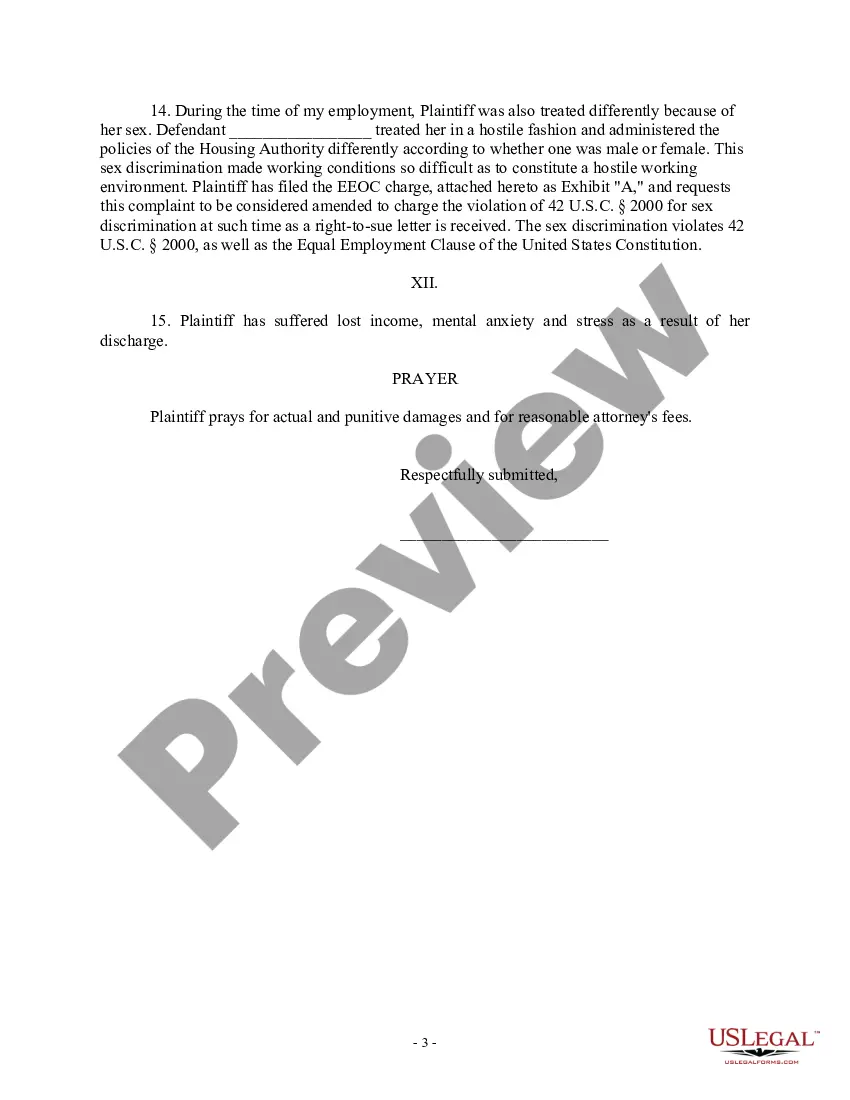
Plaintiff seeks to recover damages for violation of the First Amendment of the United States Constitution. Plaintiff states that she was unlawfully terminated and treated differently because of her gender.
Virgin Islands Complaint for Violation of Civil Rights and for Wrongful Discharge for Reporting Illegal Acts - 1st, 14th Amendments, US Constitution - Jury Trial Demand
Category:
State:
Multi-State
Control #:
US-000284
Format:
Word;
Rich Text
Instant download
Description
Free preview





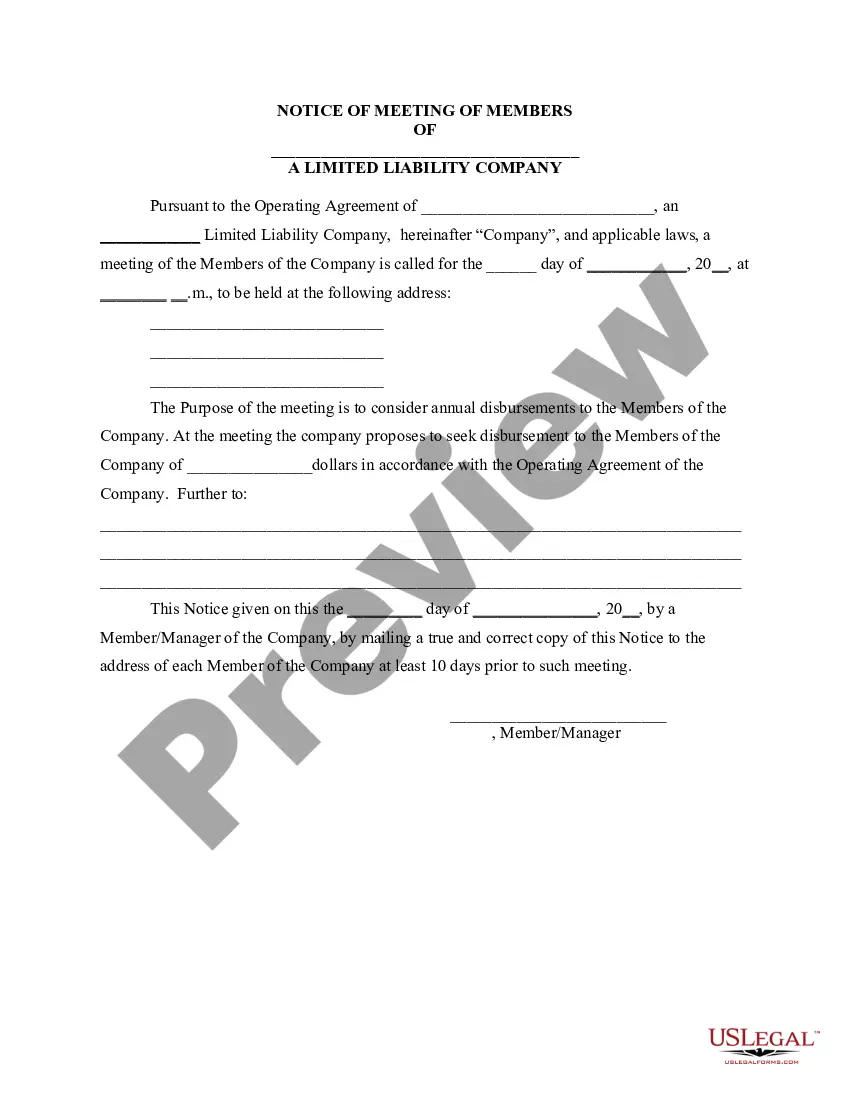
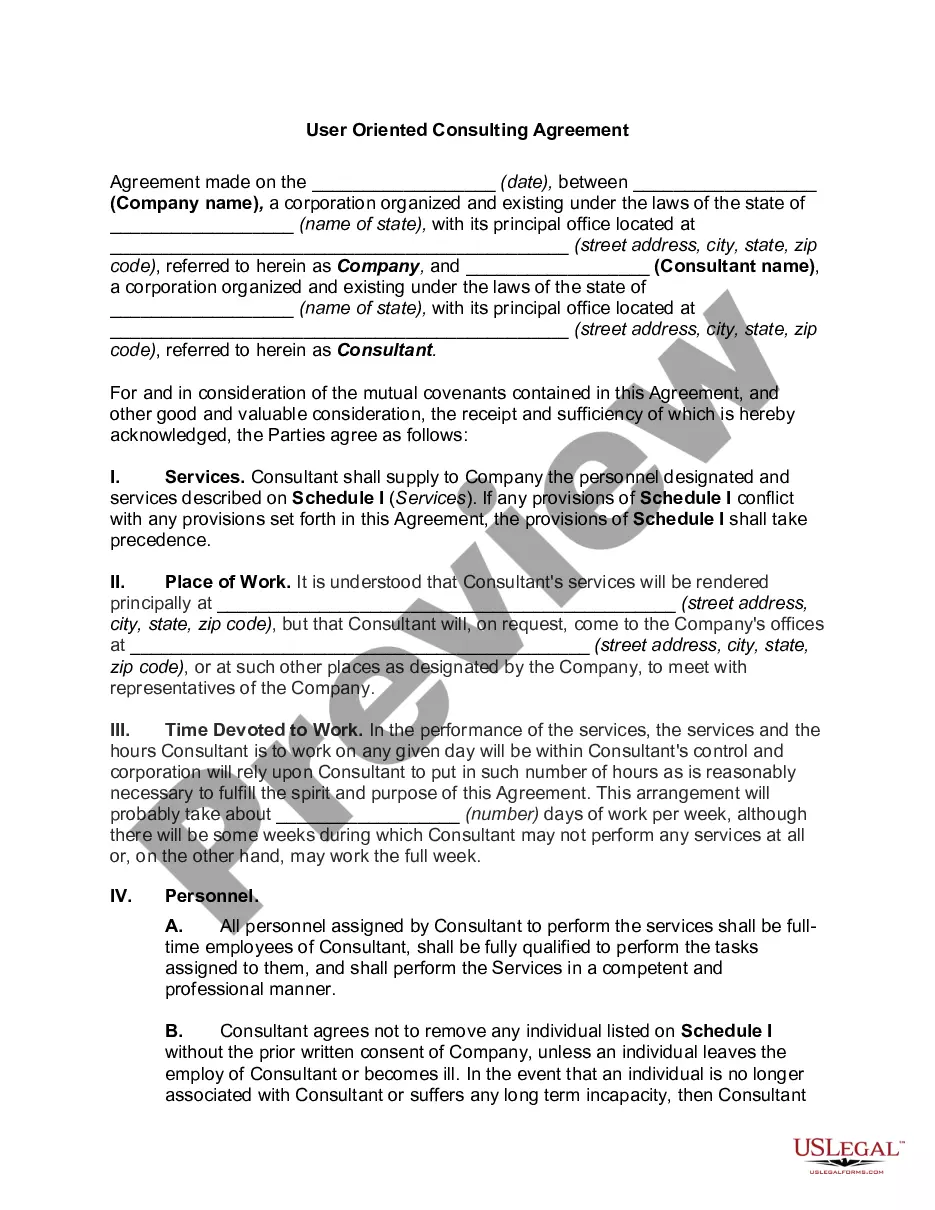
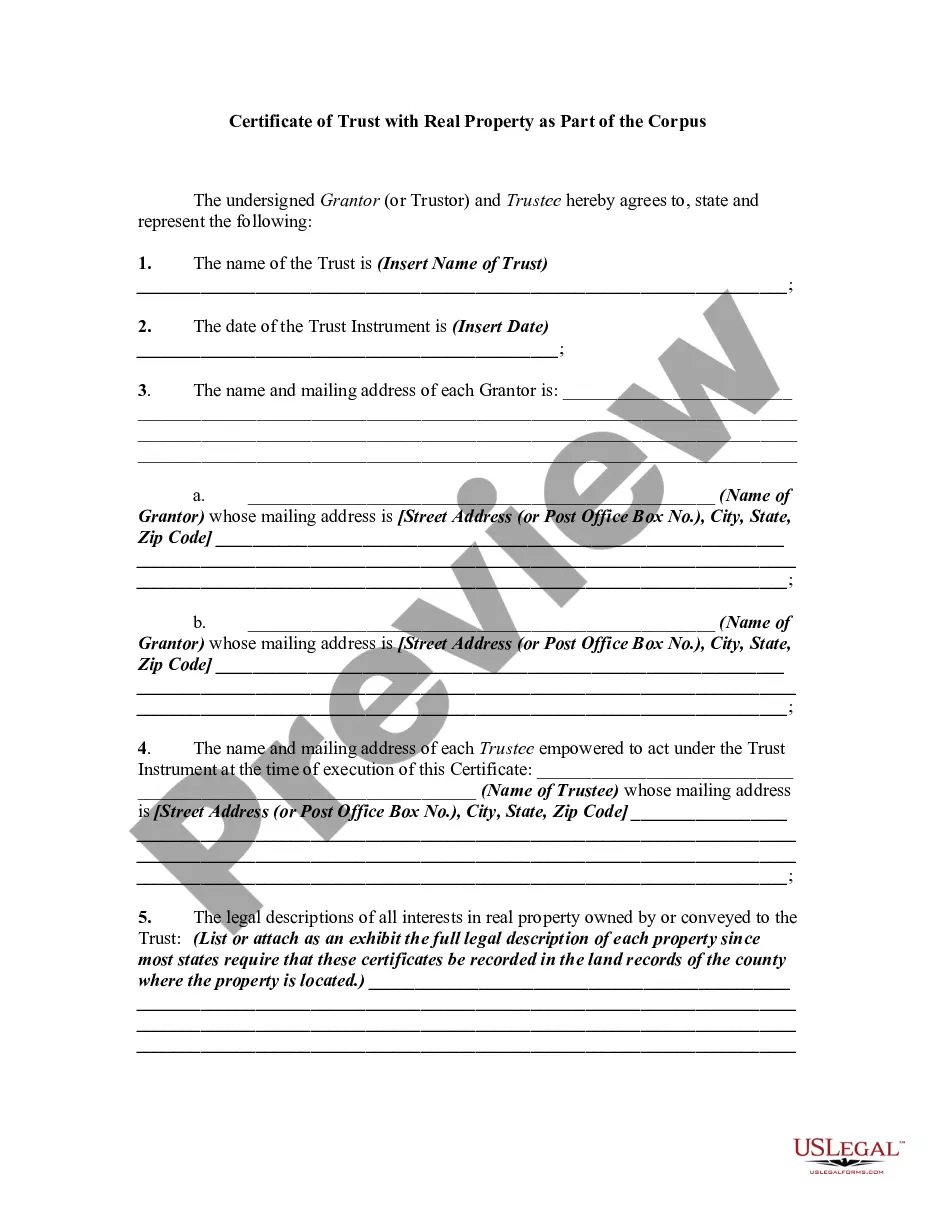
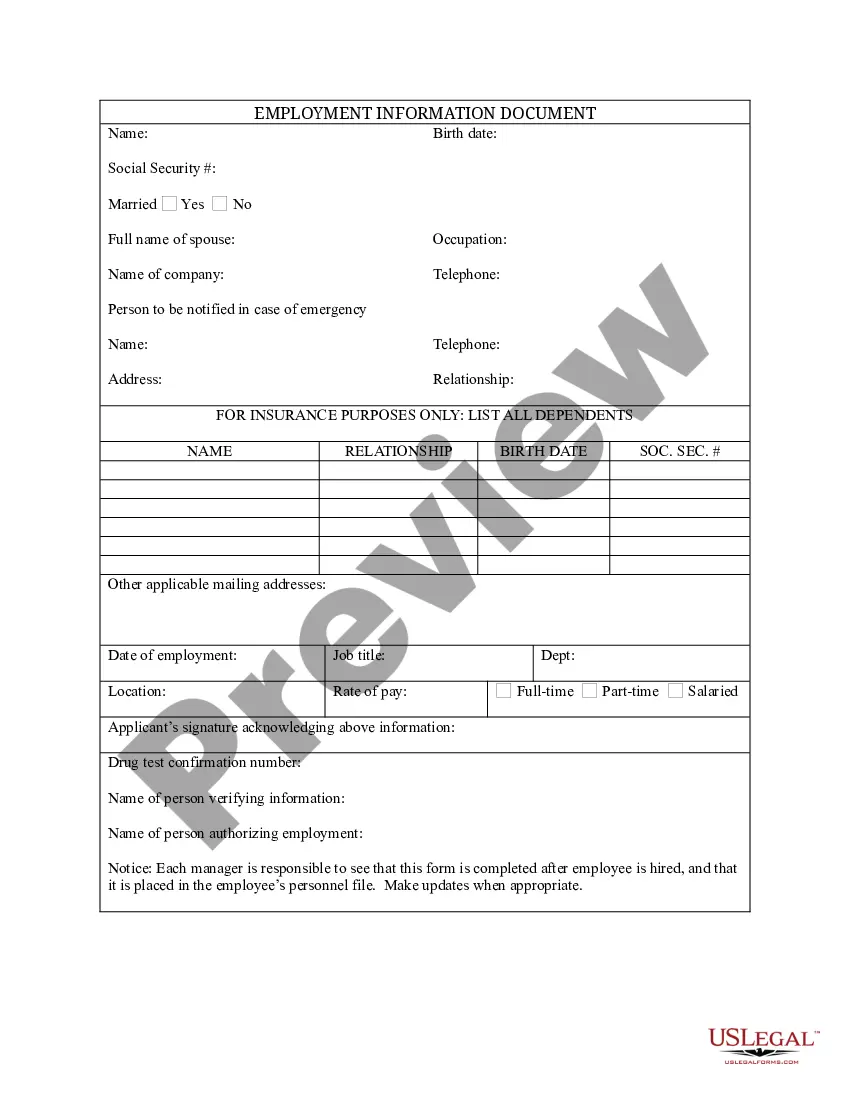
How to fill out Complaint For Violation Of Civil Rights And For Wrongful Discharge For Reporting Illegal Acts - 1st, 14th Amendments, US Constitution - Jury Trial Demand?
Finding the appropriate legal document format can be challenging. Certainly, there are numerous templates accessible online, but how do you locate the legal document you require.
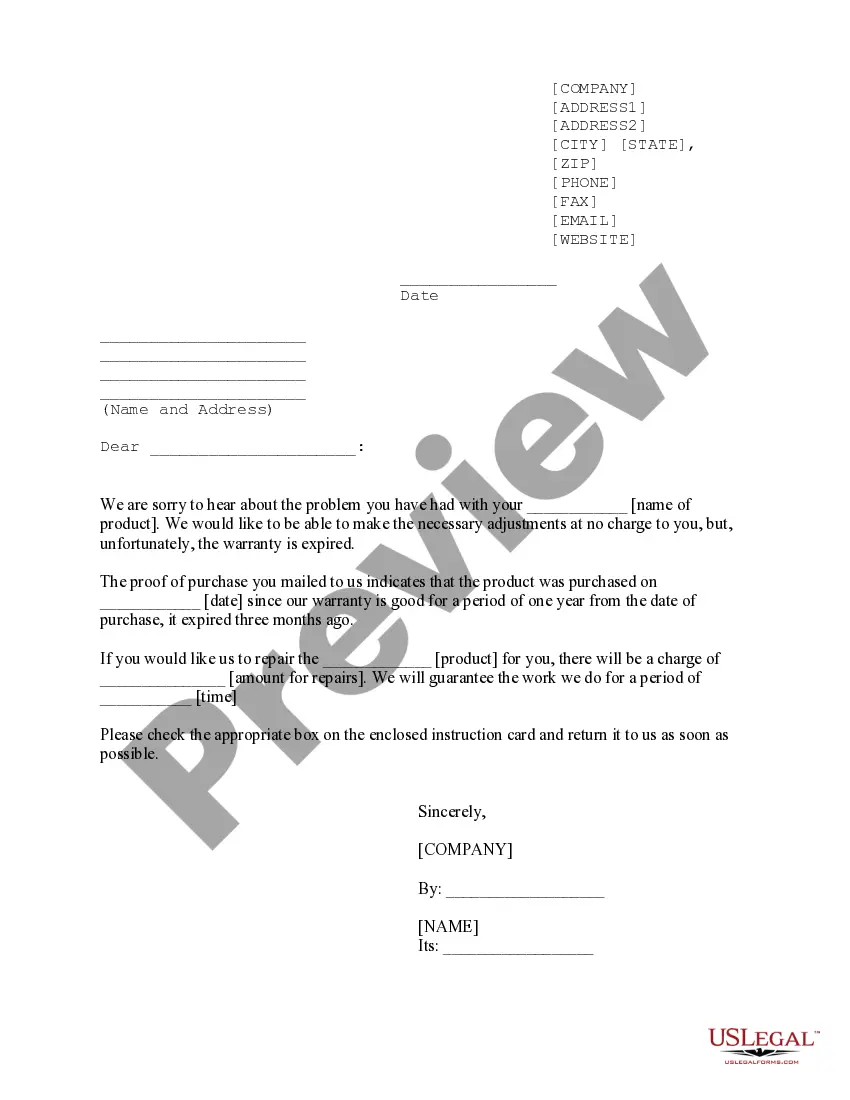
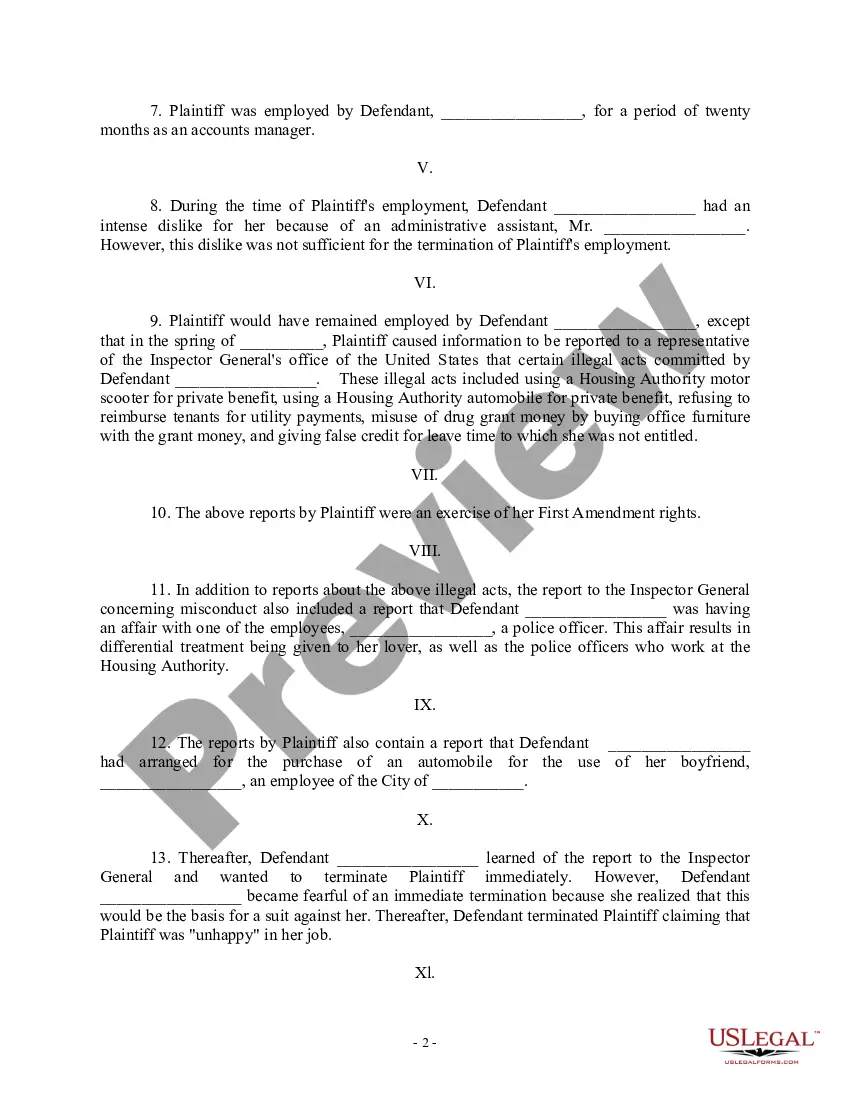
Make use of the US Legal Forms website. The service offers thousands of templates, such as the Virgin Islands Complaint for Violation of Civil Rights and for Wrongful Termination for Reporting Illegal Activities - 1st, 14th Amendments, US Constitution - Jury Trial Demand, which you can utilize for business and personal needs. All of the forms are reviewed by professionals and comply with state and federal regulations.
If you are already registered, Log In to your account and click the Download button to acquire the Virgin Islands Complaint for Violation of Civil Rights and for Wrongful Termination for Reporting Illegal Activities - 1st, 14th Amendments, US Constitution - Jury Trial Demand. Use your account to review the legal forms you have previously purchased. Visit the My documents tab of your account and retrieve an additional copy of the document you need.
Complete, modify, print, and sign the downloaded Virgin Islands Complaint for Violation of Civil Rights and for Wrongful Termination for Reporting Illegal Activities - 1st, 14th Amendments, US Constitution - Jury Trial Demand. US Legal Forms is the largest repository of legal forms where you can access numerous document templates. Use the service to obtain professionally crafted documents that adhere to state requirements.
- If you are a new user of US Legal Forms, here are simple steps you can follow.
- First, ensure you have selected the correct form for your city/state. You can browse the form using the Preview option and read the form summary to confirm it is suitable for you.
- If the form does not meet your requirements, utilize the Search section to find the appropriate form.
- When you are confident that the form is correct, click the Get now button to obtain the form.
- Select the pricing plan you prefer and enter the required information. Create your account and pay for your order using your PayPal account or credit card.
- Choose the document format and download the legal file format for your item.
Form popularity
FAQ
Title VI, 42 U.S.C. § 2000d et seq., was enacted as part of the landmark Civil Rights Act of 1964. It prohibits discrimination on the basis of race, color, and national origin in programs and activities receiving federal financial assistance.
What is title 42? Title 42 of the United States Code is the code that addresses public health, social welfare, and civil rights. Title 42 was a previously rarely-used clause of the 1944 Public Health Services Law until the Trump Administration began using it 2020 to prevent migrants from entering the United States.
Section 1981 is a shorthand reference to 42 U.S.C. § 1981, which derives from Section 1 of the 1866 Civil Rights Act. The statute establishes that certain rights are to be guaranteed to all citizens of the United States, and these rights are to be protected against impairment by nongovernment and state discrimination.
To succeed on a Section 1983 claim, a plaintiff must prove that his constitutional rights were violated, and that the violation was caused by a person acting under color of law.
Prohibition against discrimination or segregation required by any law, statute, ordinance, regulation, rule or order of a State or State agency. 2000a?2. Prohibition against deprivation of, interference with, and punishment for exercising rights and privileges secured by section 2000a or 2000a?1 of this title .
Title 42 was created to address public health and social welfare and grants the government the ability to take emergency action in numerous ways, including to ?stop the introduction of communicable diseases.? While the code has been in place for decades, it was used widely beginning in March 2020 by the administration ...
The elements of a § 1983 claim are (1) the action occurred ?under color of state law? and (2) the action resulted in the deprivation of a constitutional right or federal statutory right.
Three typical types of damages are compensatory damages (to cover your actual losses), punitive (punishment if you can show defendant(s) acted with malice or recklessly without care for your rights), and nominal damages (meaning your rights were violated but you suffered minimal or no monetary loses).