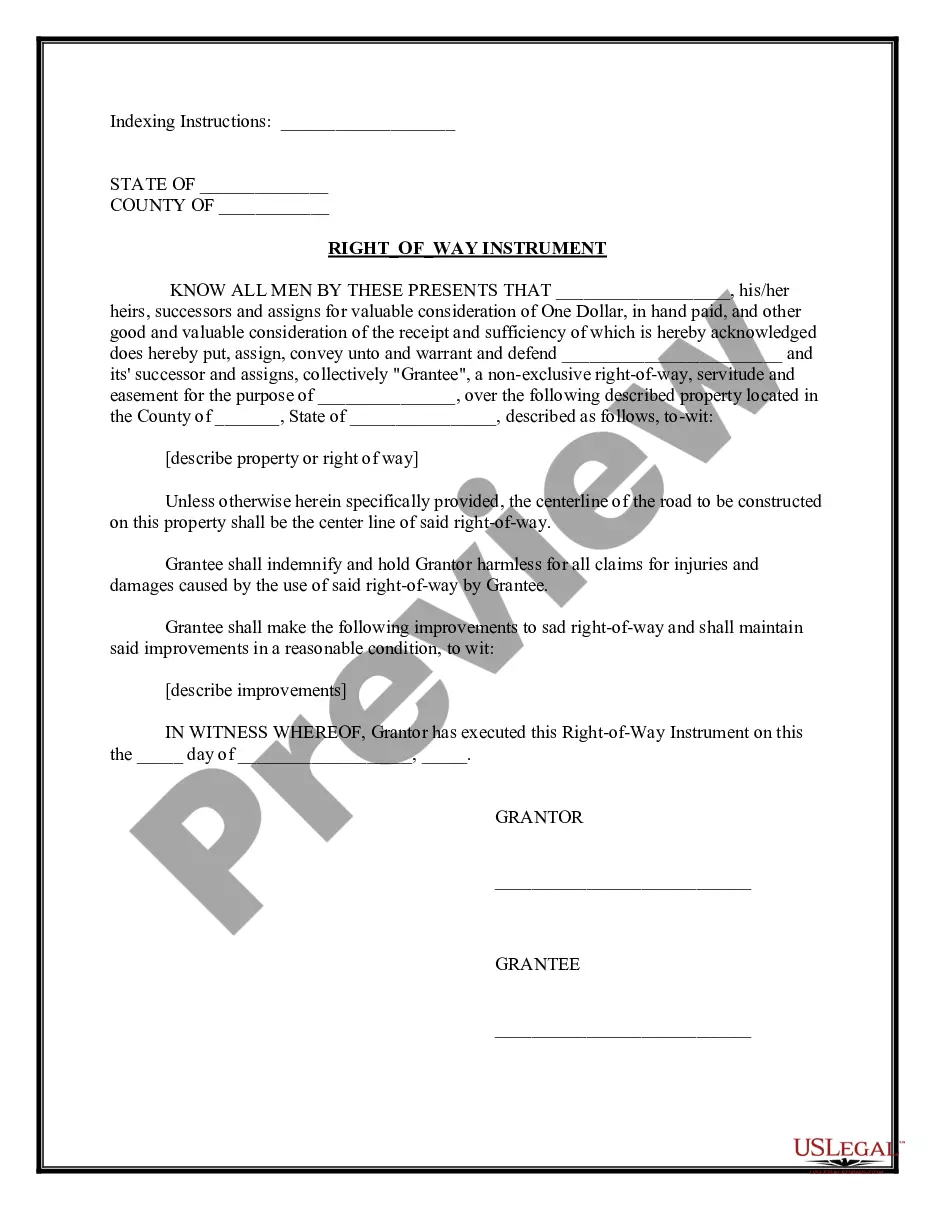
Virginia Right of Way Agreement
Description

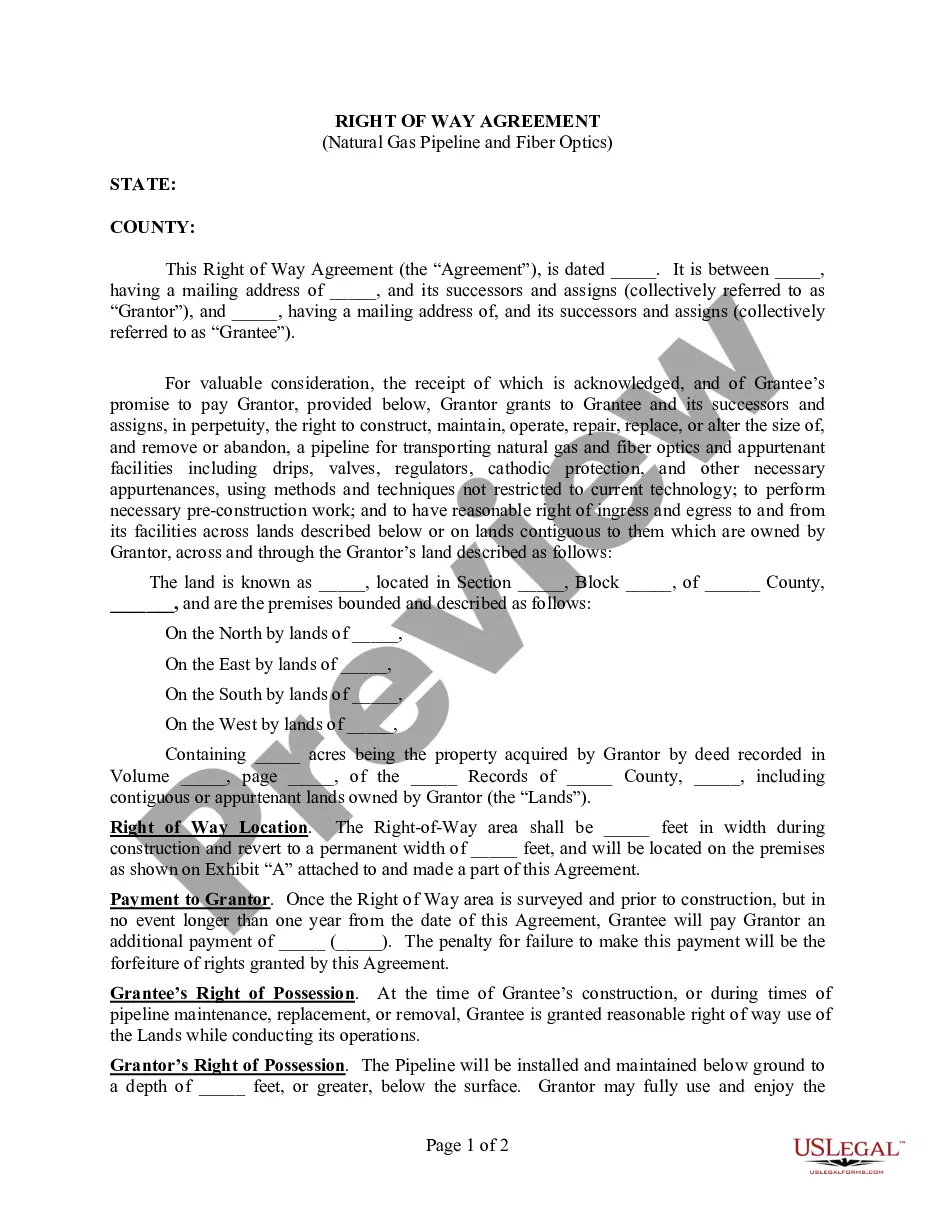
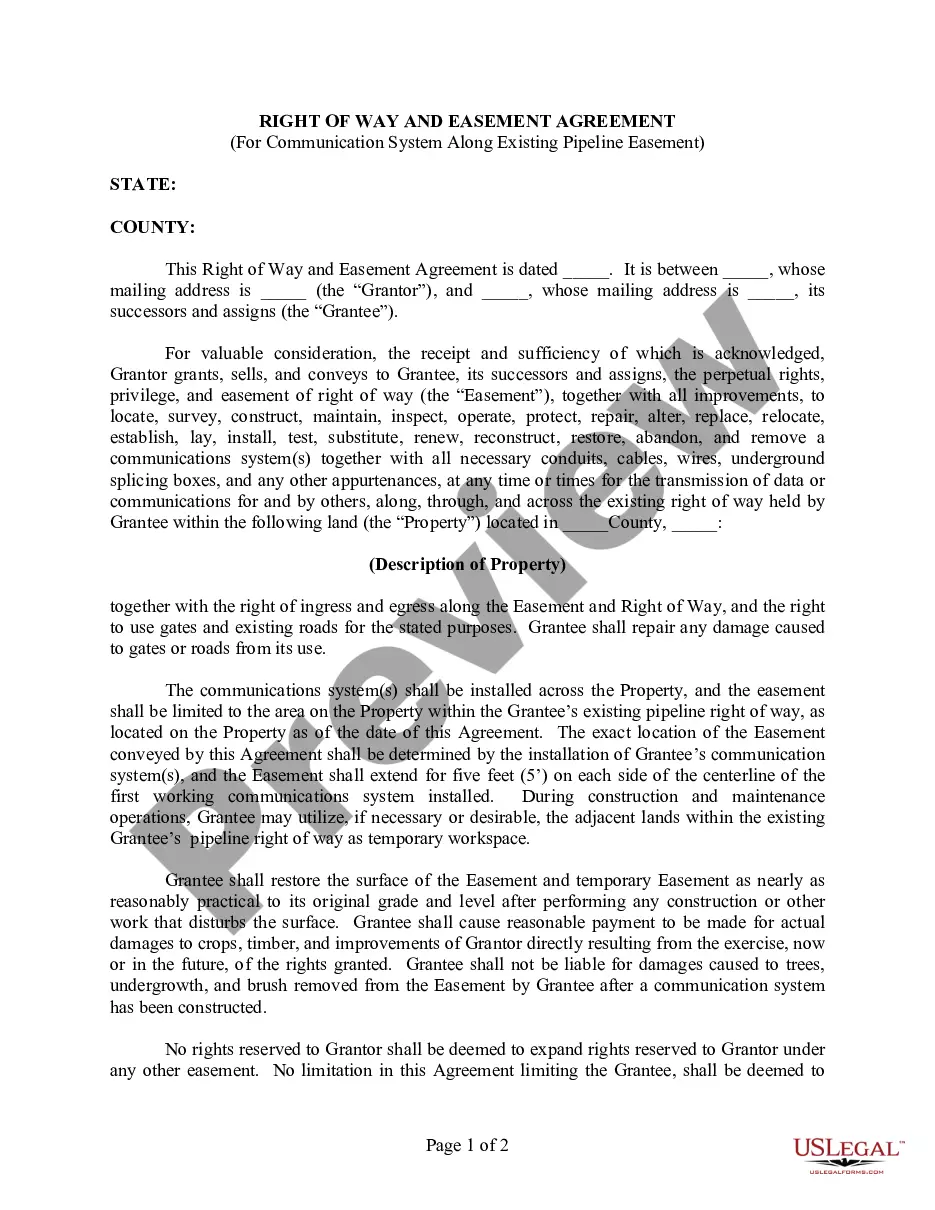
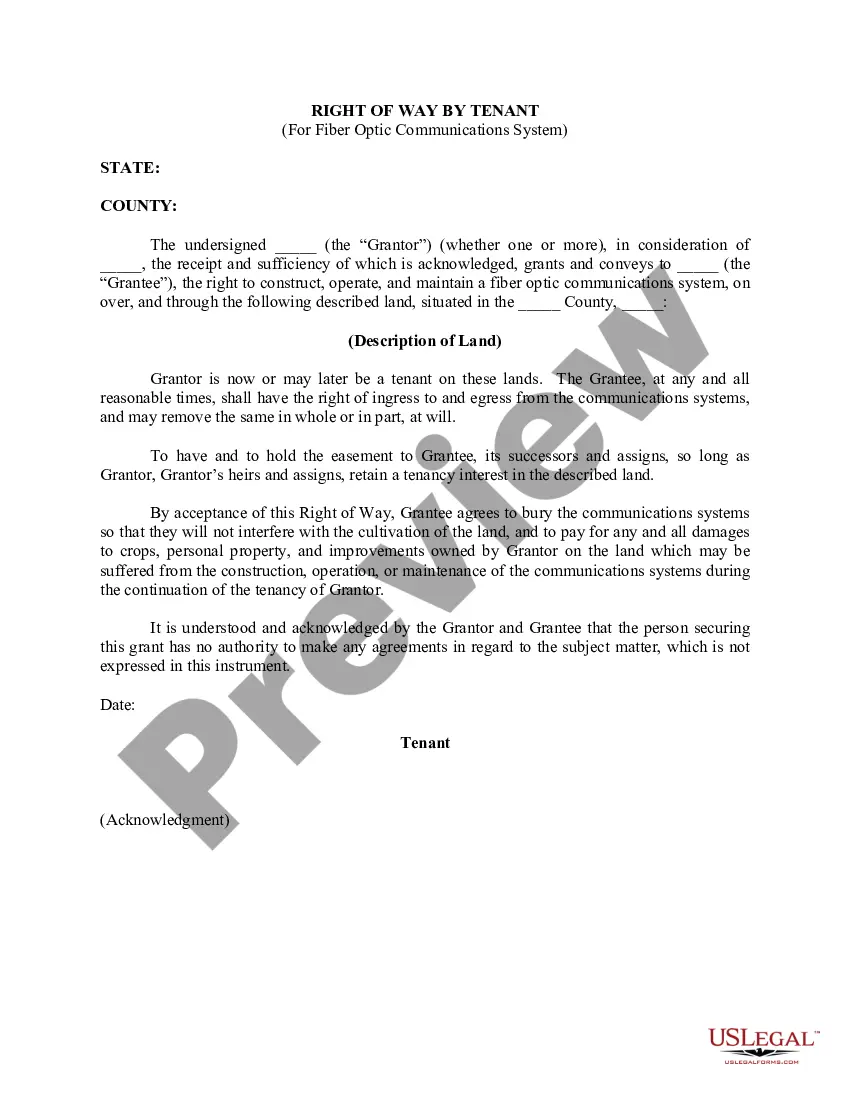
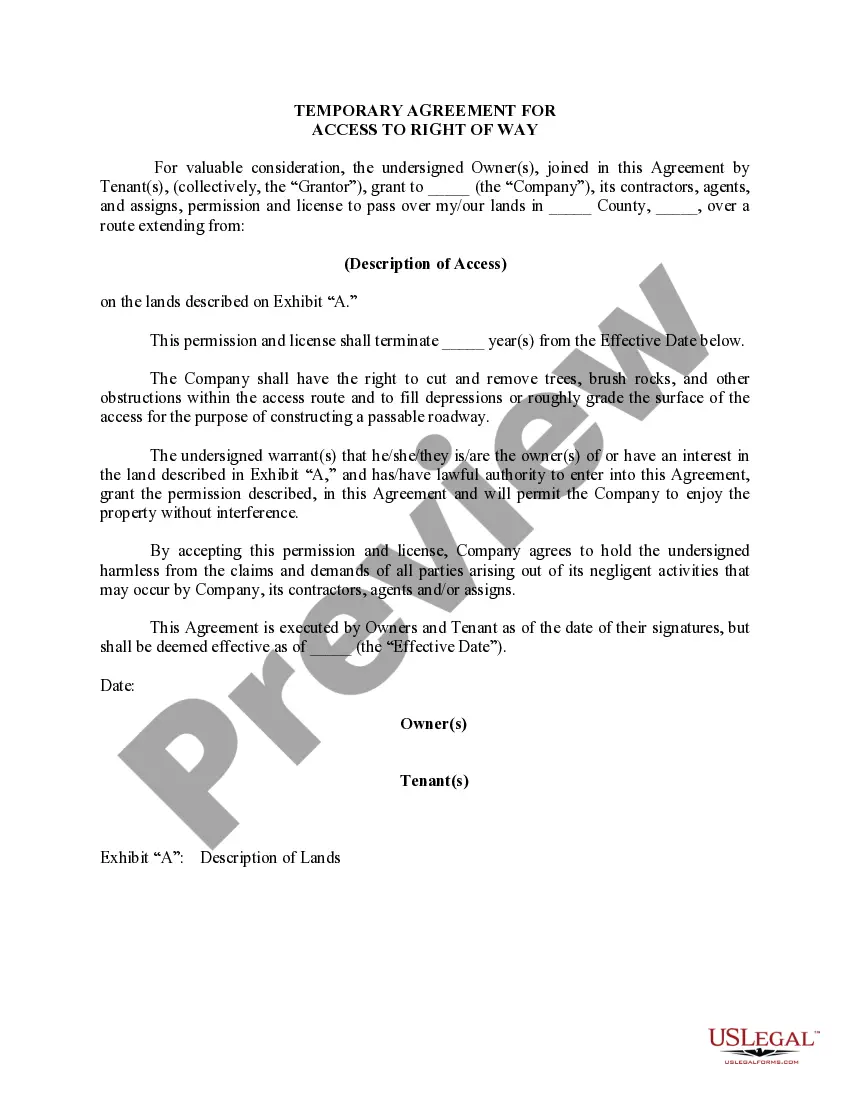
Get your form ready online
Our built-in tools help you complete, sign, share, and store your documents in one place.
Make edits, fill in missing information, and update formatting in US Legal Forms—just like you would in MS Word.
Download a copy, print it, send it by email, or mail it via USPS—whatever works best for your next step.
Sign and collect signatures with our SignNow integration. Send to multiple recipients, set reminders, and more. Go Premium to unlock E-Sign.
If this form requires notarization, complete it online through a secure video call—no need to meet a notary in person or wait for an appointment.
We protect your documents and personal data by following strict security and privacy standards.

Make edits, fill in missing information, and update formatting in US Legal Forms—just like you would in MS Word.

Download a copy, print it, send it by email, or mail it via USPS—whatever works best for your next step.

Sign and collect signatures with our SignNow integration. Send to multiple recipients, set reminders, and more. Go Premium to unlock E-Sign.

If this form requires notarization, complete it online through a secure video call—no need to meet a notary in person or wait for an appointment.

We protect your documents and personal data by following strict security and privacy standards.
Looking for another form?
How to fill out Right Of Way Agreement?
Have you ever found yourself in a situation where you require documents for either business or personal use almost all the time.
There are many genuine document templates accessible online, but finding ones you can trust is not straightforward.
US Legal Forms offers thousands of form templates, such as the Virginia Right of Way Agreement, which are designed to comply with federal and state regulations.
Once you find the appropriate form, click Acquire now.
Select the pricing plan you prefer, complete the required information to create your account, and pay for the order using your PayPal or credit card.
- If you are already familiar with the US Legal Forms website and have an account, simply Log In.
- After that, you can download the Virginia Right of Way Agreement template.
- If you do not have an account and wish to start using US Legal Forms, follow these steps.
- Find the form you need and ensure it is for the correct city/region.
- Utilize the Review button to inspect the form.
- Read the description to make sure you have selected the right form.
- If the form is not what you are looking for, use the Search field to find the form that meets your needs and requirements.
Form popularity
FAQ
The width of the right-of-way in Virginia can vary significantly depending on the type of road or utility involved, but it typically ranges from 30 to 100 feet. This space is essential for maintaining safety and accessibility. When engaging in property development, a solid understanding of the Virginia Right of Way Agreement will help you navigate these dimensions effectively.
The utility right of way in Virginia allows utility companies to access and maintain their infrastructure, such as power lines and pipelines, across private property. These easements are critical for ensuring that utilities remain functional and accessible. If you are a property owner, knowing the details of the Virginia Right of Way Agreement can help you understand how it affects your land.
The right-of-way statute in Virginia governs the legal framework surrounding the use and acquisition of right-of-way easements. It outlines the rights and responsibilities of property owners and those seeking access. Familiarizing yourself with the Virginia Right of Way Agreement can help ensure that you comply with these laws and protect your interests.
ofway easement in Virginia is a legal allowance that grants one party the right to cross or use another person's land for a specified purpose. This is often essential for utilities, access roads, or drainage. If you are involved in property transactions, understanding the Virginia Right of Way Agreement will help you navigate this process effectively.
VDOT right of way refers to the land designated by the Virginia Department of Transportation for public use, primarily for transportation purposes. This usually includes roads, highways, and sidewalks. Understanding the Virginia Right of Way Agreement is crucial if you need to negotiate or utilize this land for your property developments or access.
The standard right-of-way on a property can vary by location and purpose but is typically established through local zoning regulations. Commonly, it ranges from 50 to 100 feet, depending on the type of road or utility access. To ensure compliance, always refer to your Virginia Right of Way Agreement for specific standards related to your property.
Determining the right of way on your property involves checking local property records, maps, and any existing agreements. You can often find this information through your local planning or transportation department. For a clear understanding, reviewing a Virginia Right of Way Agreement can provide valuable insights.
In Virginia, the length of the right of way can vary widely based on the road type and local jurisdiction. Right of way dimensions can typically extend from 50 feet to over 100 feet. It's crucial to consult your Virginia Right of Way Agreement to determine the exact right of way for your property.
The size of an easement in Virginia can differ based on its purpose and the agreements made. Generally, easements may range from a few feet to several dozen feet wide. If you require clarity on easement dimensions, refer to your Virginia Right of Way Agreement for the specific measurements applicable.
The width of the road right-of-way in Virginia can vary based on local regulations and the type of road. Typically, it ranges from 50 to 100 feet, depending on the road classification. To find specific details relevant to your property, reviewing the Virginia Right of Way Agreement is essential.