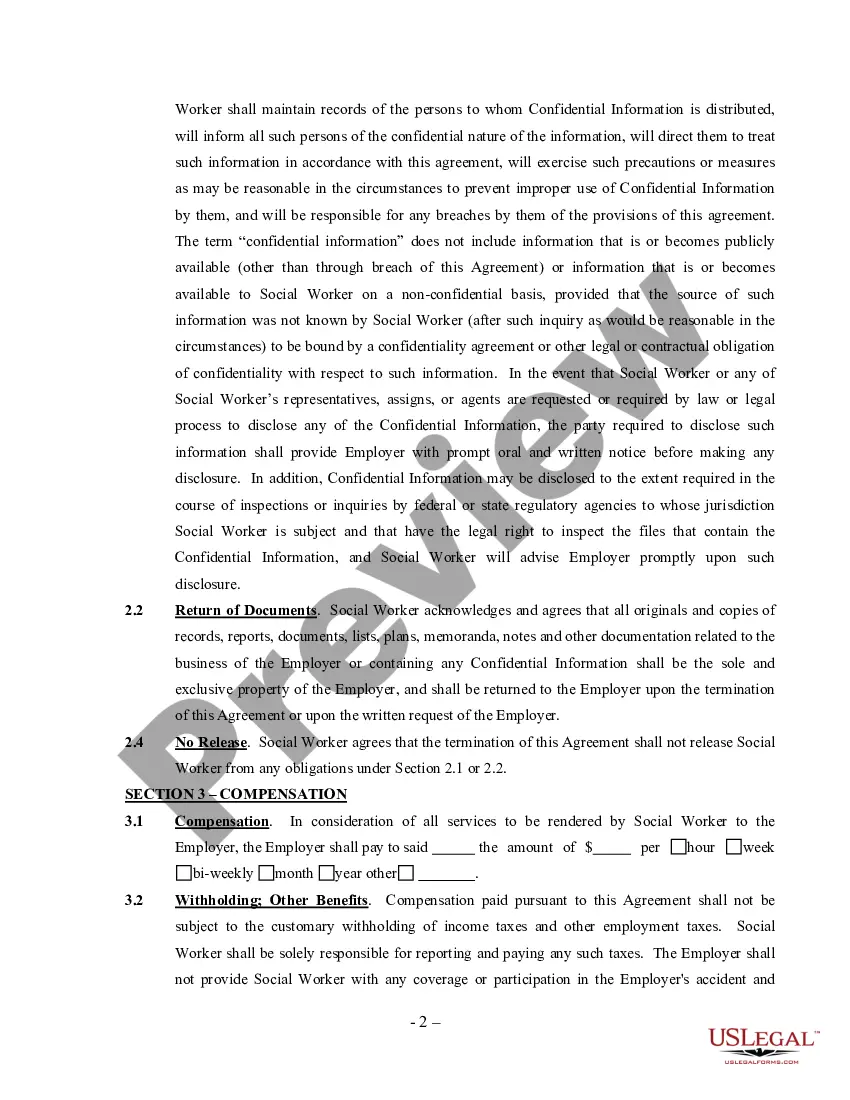
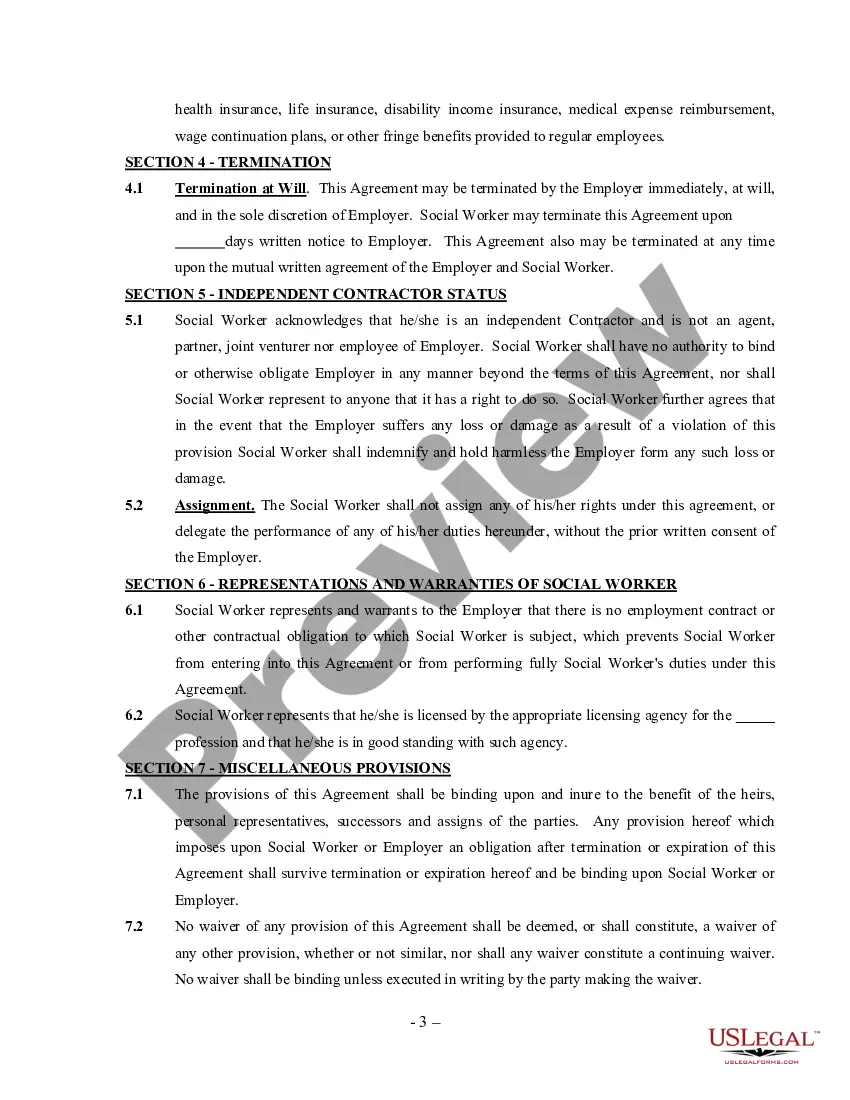
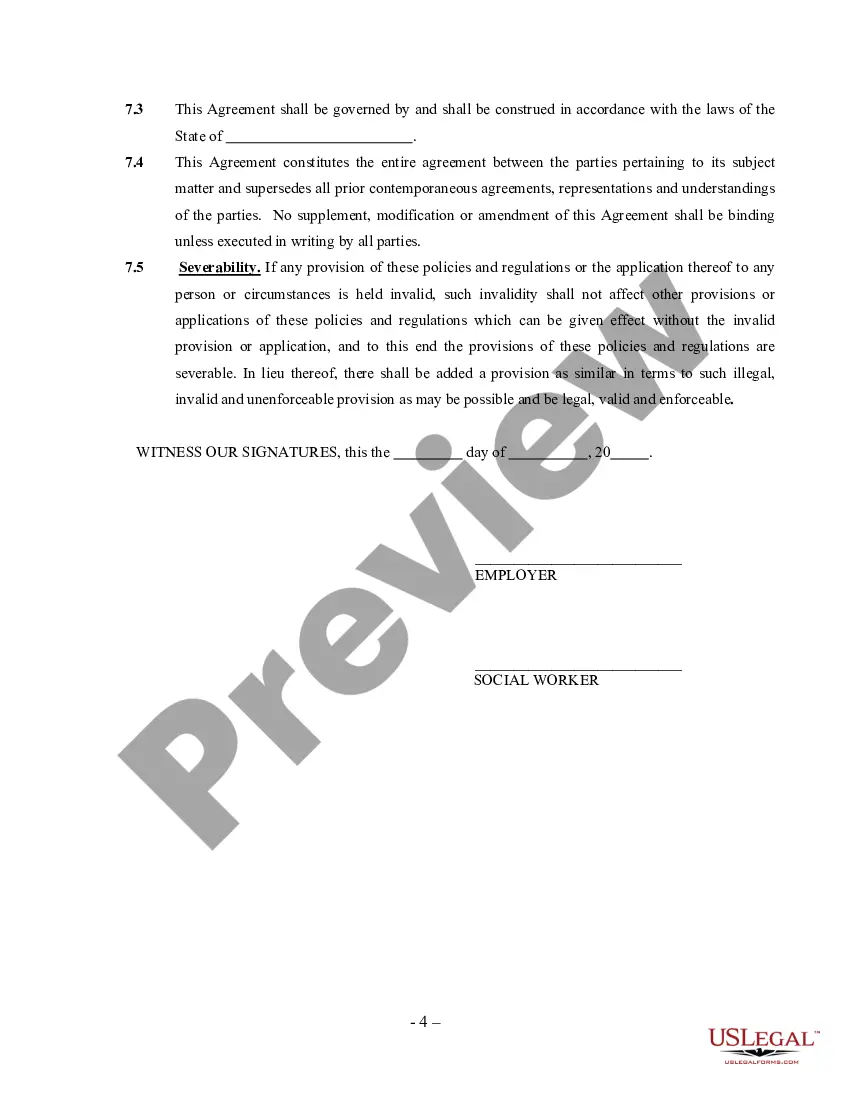
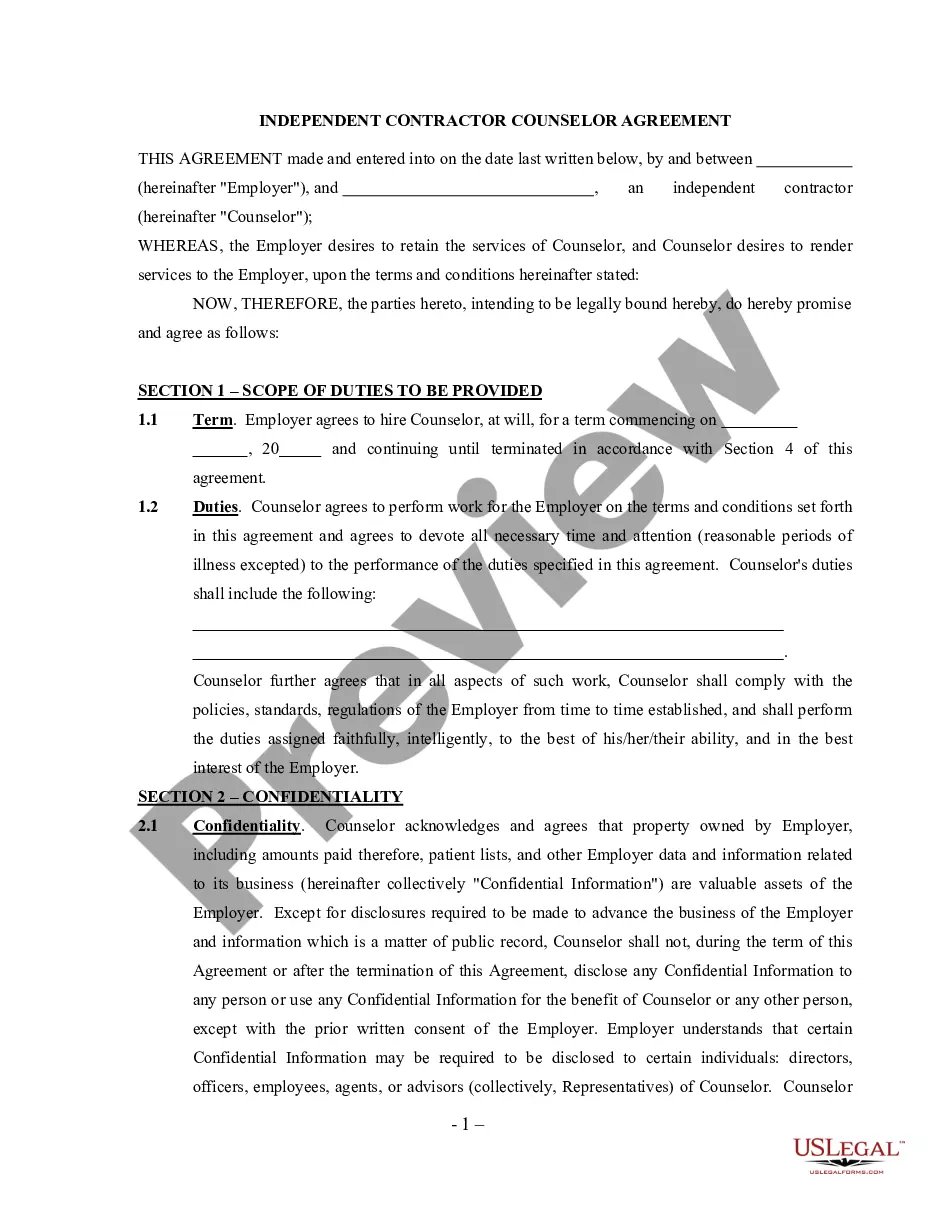
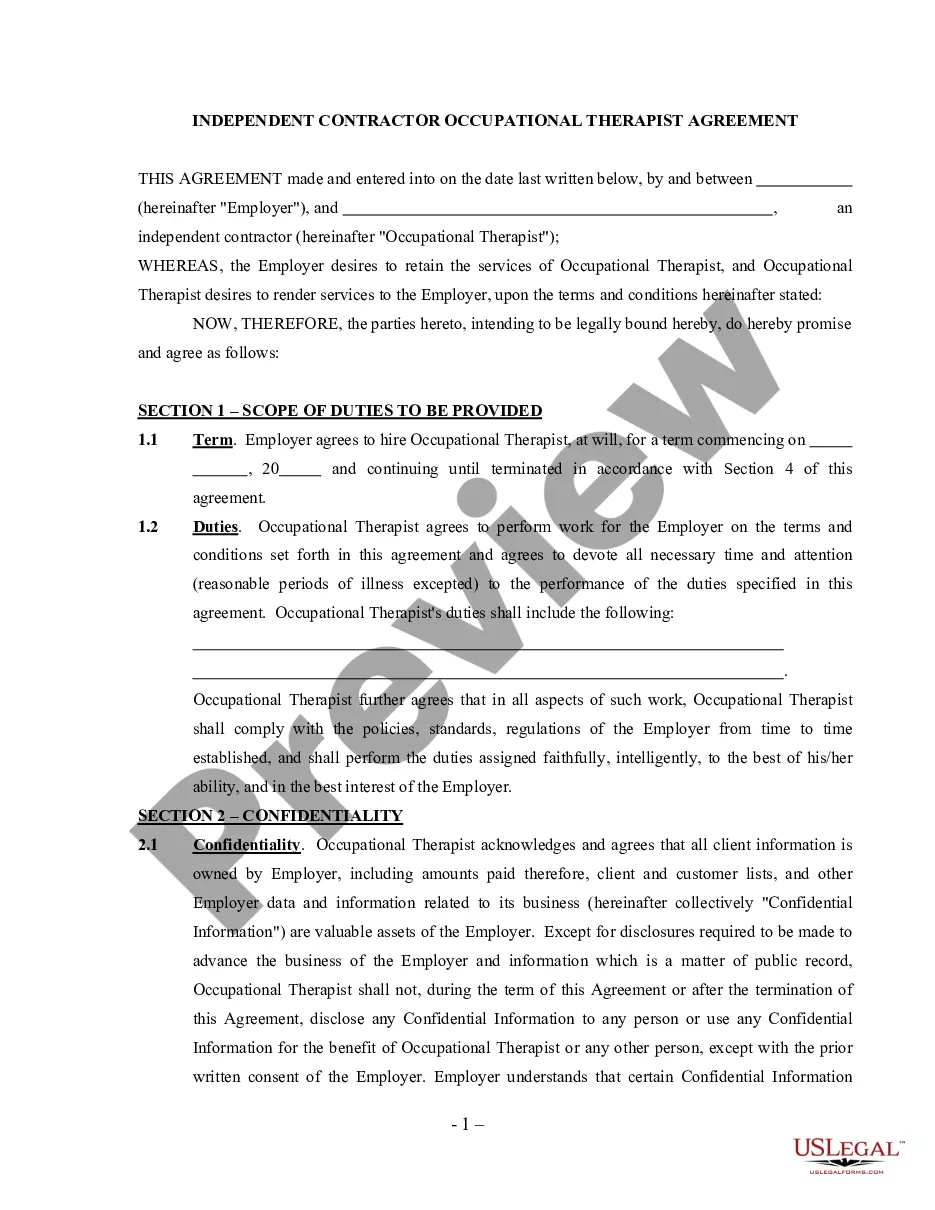
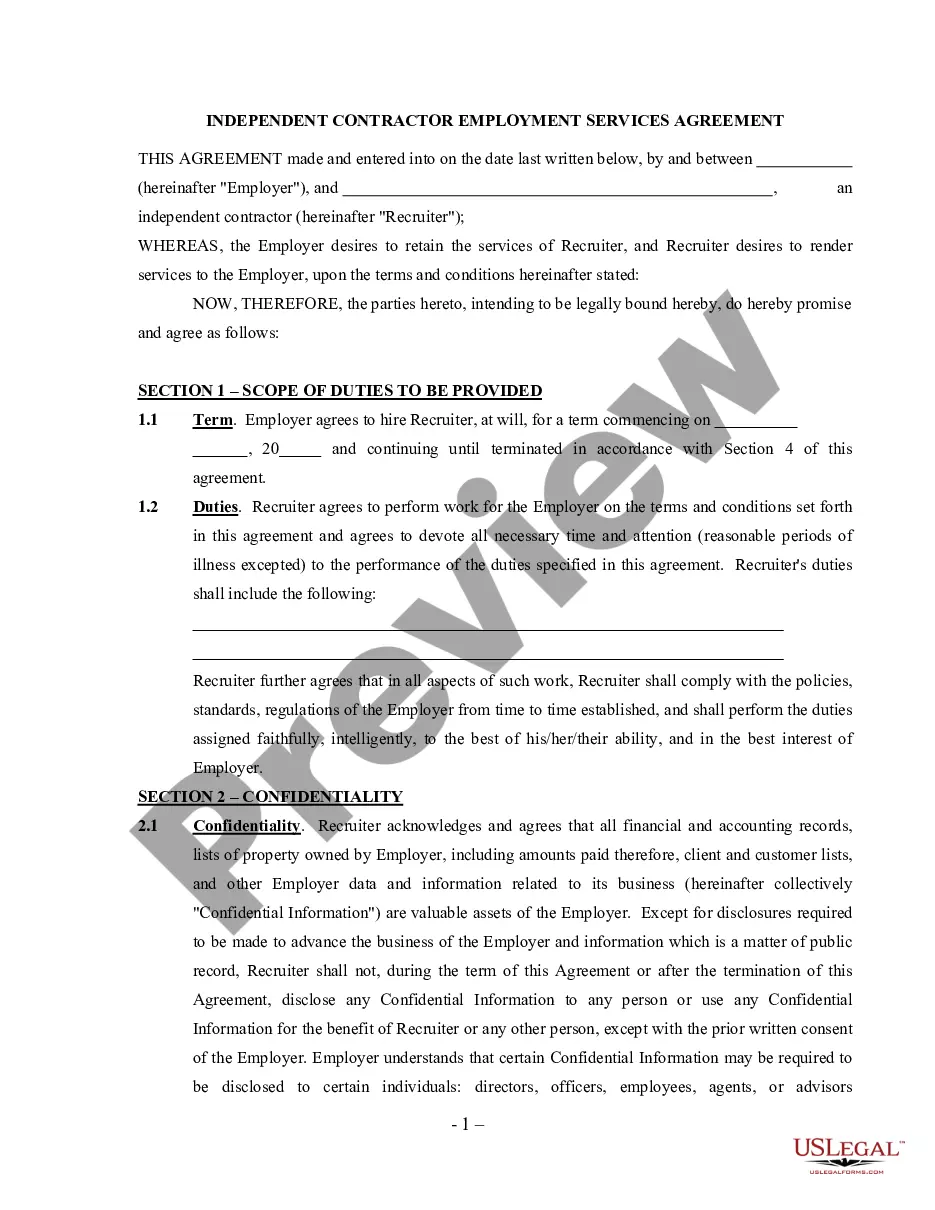
Employer hires a social worker on an independent contractor basis to provide services for employer as specified in the contract.
Virginia Social Worker Agreement - Self-Employed Independent Contractor
State:
Multi-State
Control #:
US-INDC-226
Format:
Word;
Rich Text
Instant download
Description
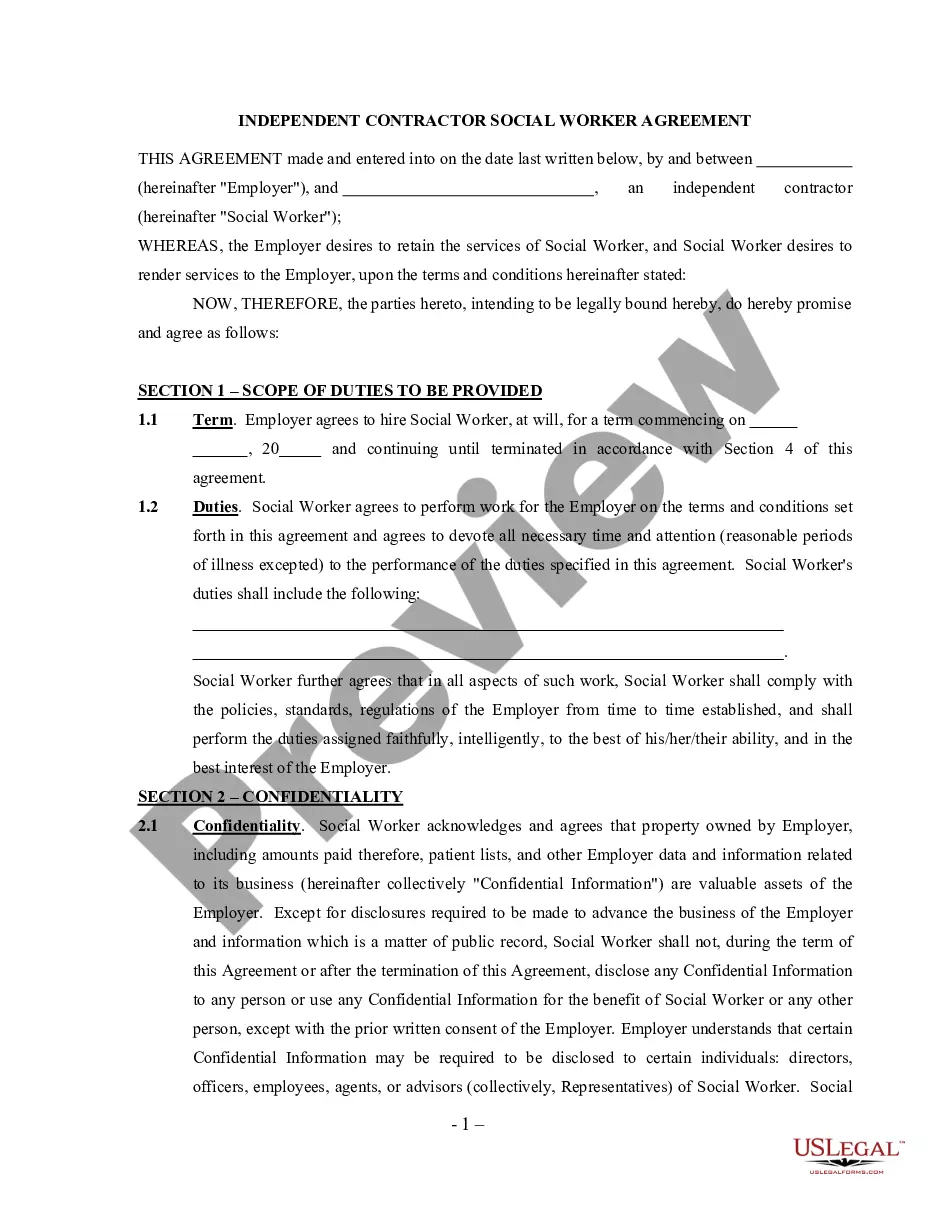
Free preview
Get your form ready online
Our built-in tools help you complete, sign, share, and store your documents in one place.
Built-in online Word editor
Make edits, fill in missing information, and update formatting in US Legal Forms—just like you would in MS Word.
Export easily
Download a copy, print it, send it by email, or mail it via USPS—whatever works best for your next step.
E-sign your document
Sign and collect signatures with our SignNow integration. Send to multiple recipients, set reminders, and more. Go Premium to unlock E-Sign.
Notarize online 24/7
If this form requires notarization, complete it online through a secure video call—no need to meet a notary in person or wait for an appointment.
Store your document securely
We protect your documents and personal data by following strict security and privacy standards.

Make edits, fill in missing information, and update formatting in US Legal Forms—just like you would in MS Word.

Download a copy, print it, send it by email, or mail it via USPS—whatever works best for your next step.

Sign and collect signatures with our SignNow integration. Send to multiple recipients, set reminders, and more. Go Premium to unlock E-Sign.

If this form requires notarization, complete it online through a secure video call—no need to meet a notary in person or wait for an appointment.

We protect your documents and personal data by following strict security and privacy standards.
Looking for another form?




How to fill out Social Worker Agreement - Self-Employed Independent Contractor?
Selecting the ideal authorized document template can be challenging.
It goes without saying, there are numerous templates accessible online, but how can you acquire the legal form you require.
Utilize the US Legal Forms website. The service offers a vast selection of templates, including the Virginia Social Worker Agreement - Self-Employed Independent Contractor, which can be utilized for both business and personal purposes.
First, ensure you have selected the correct form for your city/region. You can review the form using the Review button and read the form description to confirm it meets your needs.
- All of the forms are verified by professionals and meet federal and state regulations.
- If you are already registered, sign in to your account and click on the Obtain button to download the Virginia Social Worker Agreement - Self-Employed Independent Contractor.
- Use your account to navigate through the legal forms you have previously purchased.
- Visit the My documents tab of your account to retrieve another copy of the document you require.
- If you are a new user of US Legal Forms, here are simple instructions for you to follow.
Form popularity
FAQ
To write an independent contractor agreement, start with a clear title at the top of the document. Next, detail the services you will provide, the terms of payment, and the duration of the agreement. Be sure to incorporate specifics that pertain to your role under the Virginia Social Worker Agreement - Self-Employed Independent Contractor, and use USLegalForms for guidance and templates to streamline the process.
Filling out an independent contractor agreement involves outlining the scope of work, payment terms, and duration of the contract. Include your name and the client’s name clearly to avoid any confusion. If you’re looking for a straightforward process, consider utilizing USLegalForms, where you can find a Virginia Social Worker Agreement - Self-Employed Independent Contractor template that suits your needs.
Independent contractors usually need to fill out a W-9 form to provide their taxpayer information. Additionally, you may need to complete a Virginia Social Worker Agreement - Self-Employed Independent Contractor to outline the terms of your services. It’s advisable to consult with a tax professional or use platforms like USLegalForms to ensure you have all necessary forms and understand their purpose.
To fill out a declaration of independent contractor status form, start by entering your personal information, including your name and address. Then, describe the nature of the work you perform as a Virginia Social Worker Agreement - Self-Employed Independent Contractor. Finally, ensure you read the accompanying guidelines carefully to guarantee accurate completion, and consider using USLegalForms for access to templates and examples.
The new federal rule on independent contractors seeks to clarify how workers are classified at the national level. This rule intends to streamline the classification process, making it easier for individuals to understand their status as independent contractors. For professionals working under a Virginia Social Worker Agreement - Self-Employed Independent Contractor, this change could impact various aspects of work, including benefits and protections. Staying updated on these federal regulations is essential for all independent contractors.
In Virginia, the amount of work you can do without a contractor license may vary based on the specific services you provide. Generally, small projects or jobs that don't exceed a certain monetary limit might not require a license. However, if you plan to operate under a Virginia Social Worker Agreement - Self-Employed Independent Contractor for higher-scale projects, it is wise to check the specific licensing requirements. Ensuring compliance protects you and your clients from potential legal issues.
Starting July 1st, 2025, Virginia will introduce several new laws affecting independent contractors. These laws will focus on ensuring fair treatment and proper classification of workers operating under agreements like the Virginia Social Worker Agreement - Self-Employed Independent Contractor. Key changes may include updates on compensation, rights, and responsibilities, which will further clarify the relationship between contractors and their clients. Becoming familiar with these changes will help you navigate your business effectively.
Yes, an independent contractor is considered self-employed. When you operate under a Virginia Social Worker Agreement - Self-Employed Independent Contractor, you are not classified as an employee of a company, giving you the autonomy to manage your own business operations. This self-employed status allows for greater flexibility in your work schedule and practices but also requires you to handle your own taxes and benefits. Understanding this distinction is vital for proper financial planning.
The new independent contractor law in Virginia clarifies the classification of independent contractors. It emphasizes that independent contractors, such as those operating under a Virginia Social Worker Agreement - Self-Employed Independent Contractor, should have greater flexibility in how they manage their work. This law aims to protect the rights of independent contractors while providing employers with clear guidelines on their responsibilities. Staying informed about this law is crucial for anyone engaging in such agreements.
In Virginia, whether you need a business license as a self-employed independent contractor, like those operating under a Virginia Social Worker Agreement, largely depends on your business activities and local laws. Generally, most cities require a business license for independent contractors to legally operate. It is important to check with your local government to determine specific requirements. Using platforms like uslegalforms can help streamline the process of understanding and obtaining the necessary licenses, ensuring you stay compliant while focusing on your work.