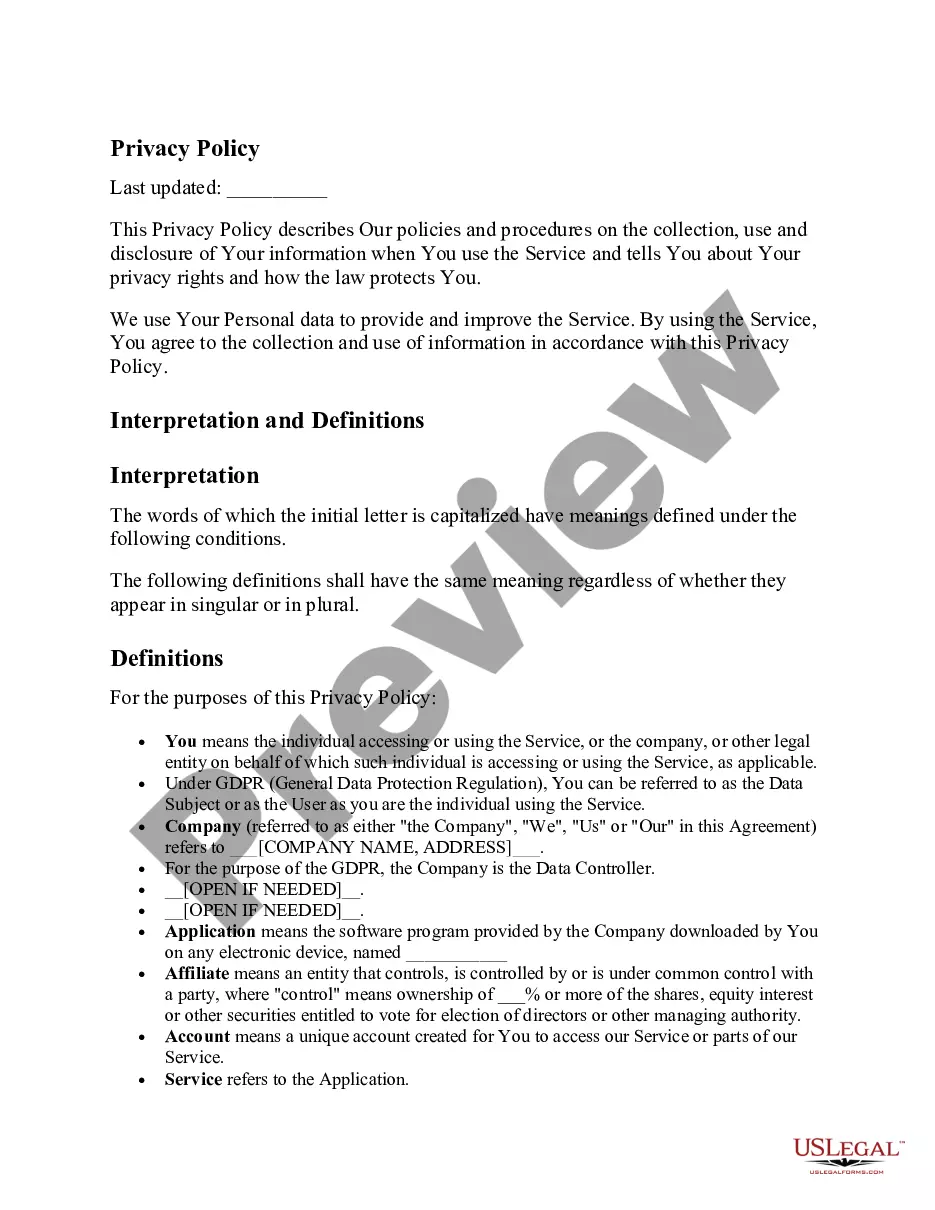
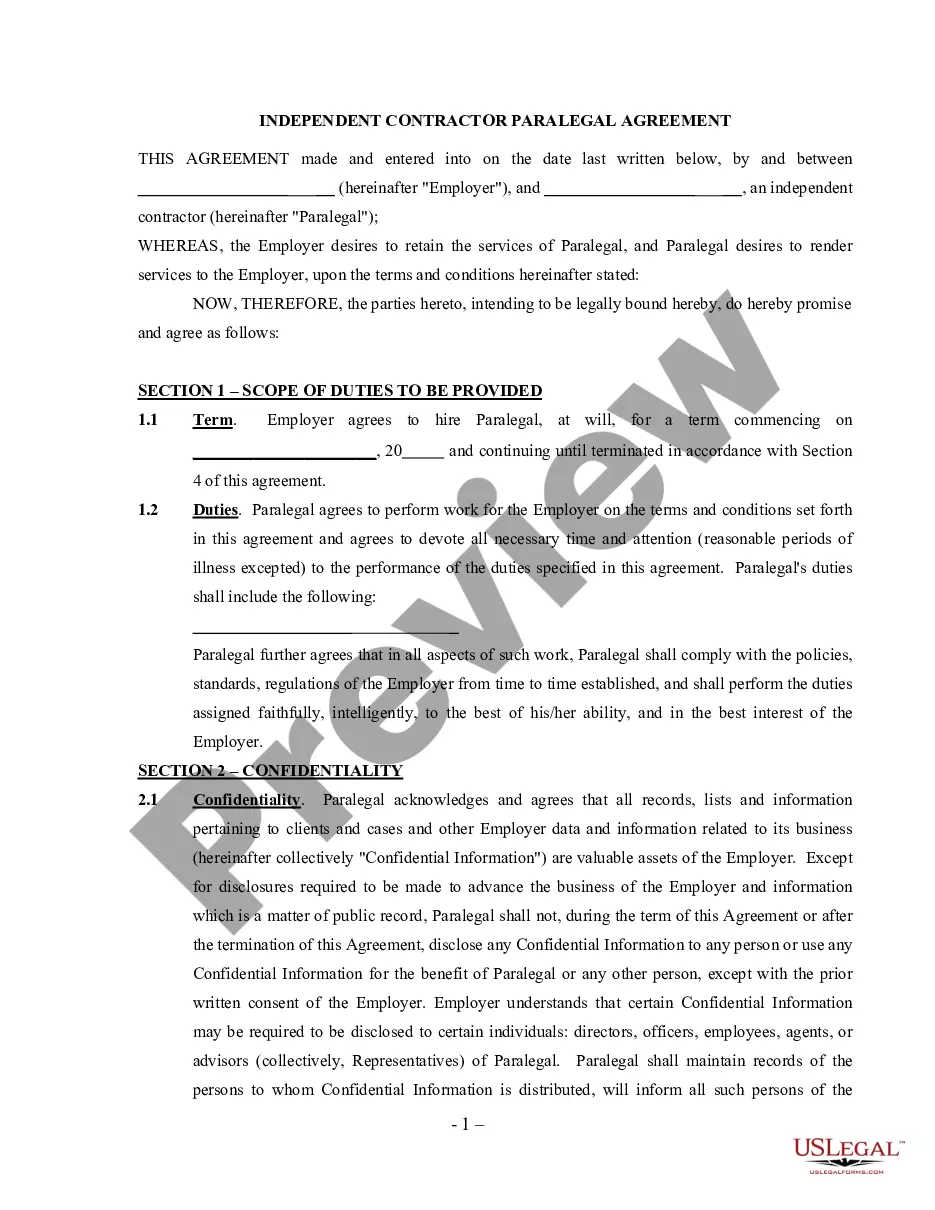
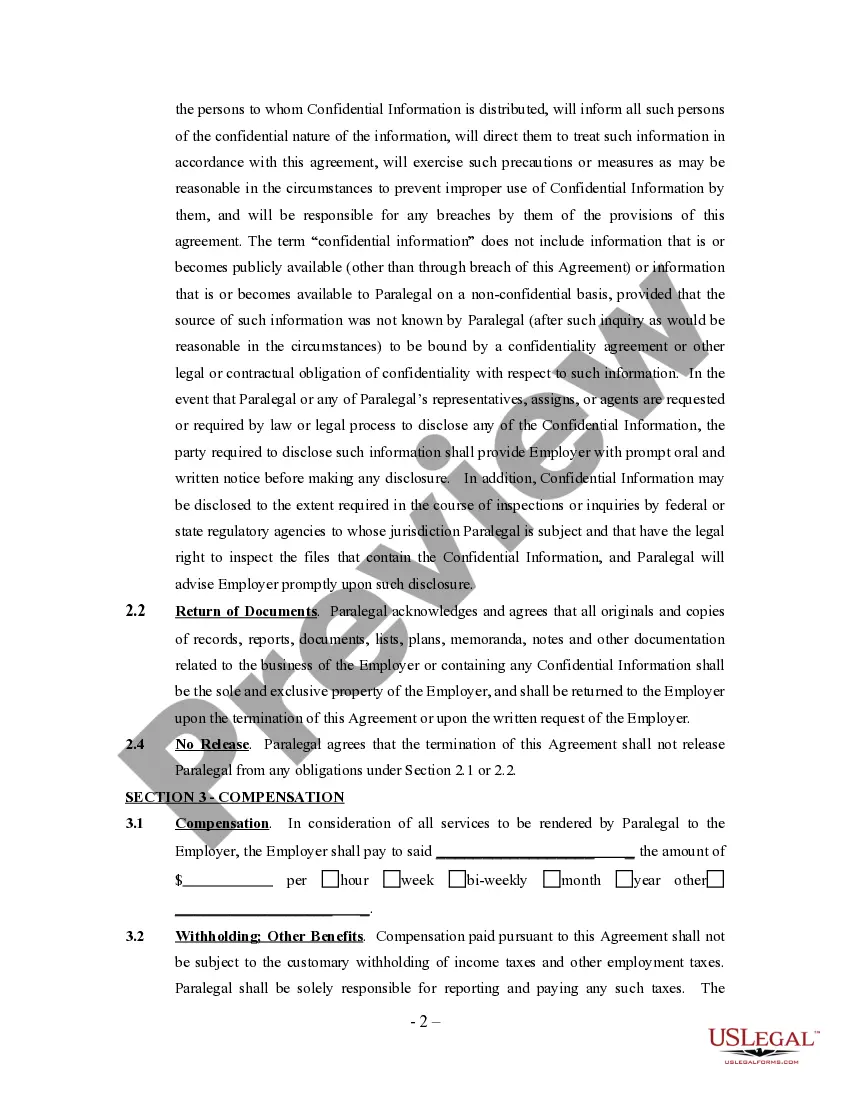
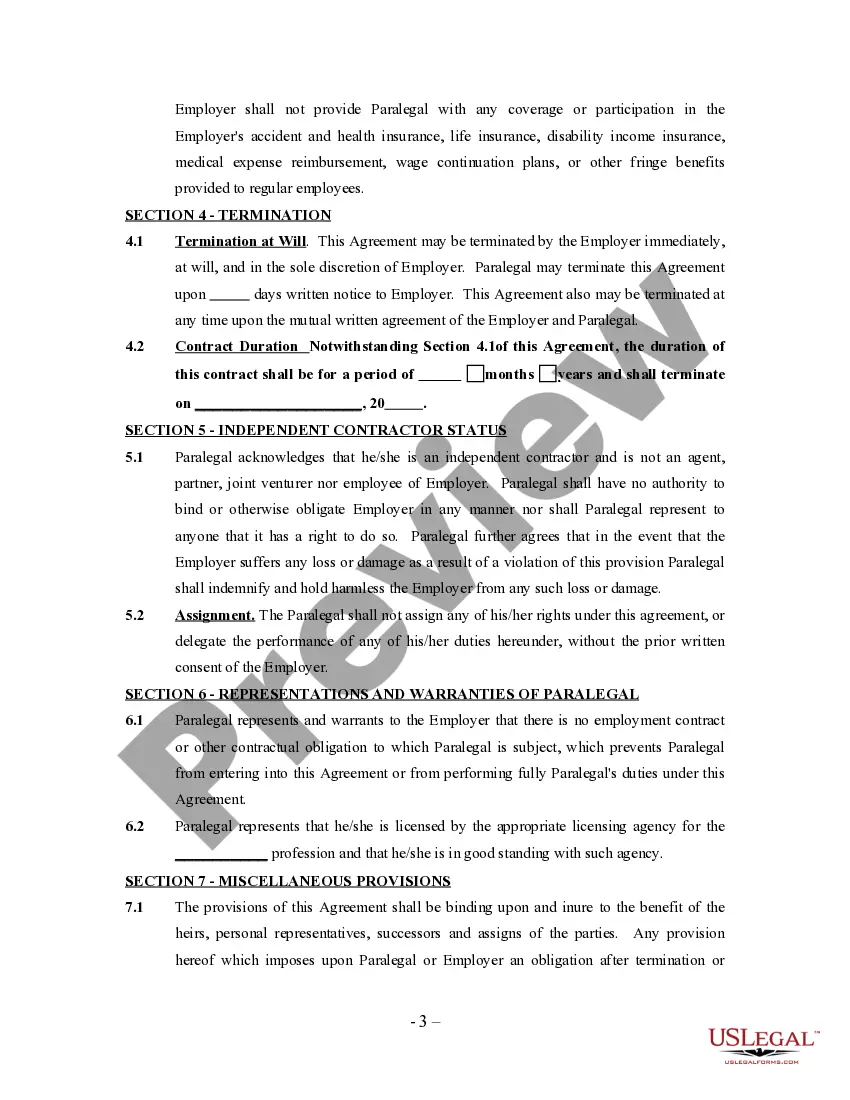
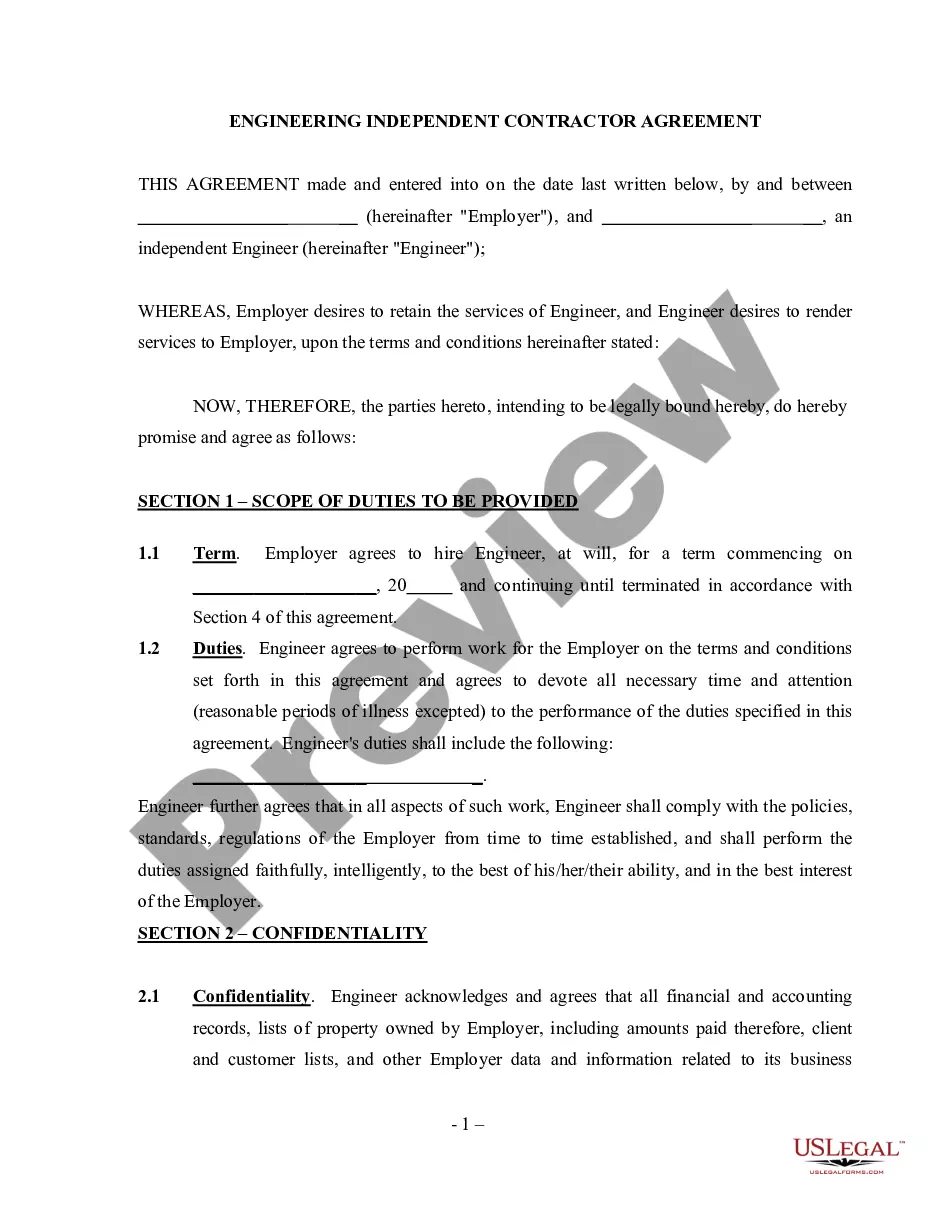
Employer contracts with a paralegal as independent contractor to provide paralegal services for employer as specified and agreed upon in the contract. Contract includes confidentiality clause.
Virginia Paralegal Agreement - Self-Employed Independent Contractor
State:
Multi-State
Control #:
US-INDC-131
Format:
Word;
Rich Text
Instant download
Description
Free preview



How to fill out Paralegal Agreement - Self-Employed Independent Contractor?
Are you presently in a situation where you need documents for either business or personal needs almost constantly.
There are many authentic document templates available online, but finding ones you can trust is challenging.
US Legal Forms offers a vast array of form templates, including the Virginia Paralegal Agreement - Self-Employed Independent Contractor, which is designed to comply with state and federal regulations.
Once you find the correct form, click Purchase now.
Choose the pricing plan you need, complete the required information to create your account, and pay for the order using your PayPal or credit card. Select a convenient document format and download your copy. View all the document templates you have purchased in the My documents section. You can obtain another copy of the Virginia Paralegal Agreement - Self-Employed Independent Contractor whenever necessary. Click on the desired form to download or print the document template. Utilize US Legal Forms, the most extensive collection of legal forms, to save time and avoid errors. The service provides well-crafted legal document templates that you can use for various purposes. Create an account on US Legal Forms and start simplifying your life.
- If you are already familiar with the US Legal Forms website and have an account, simply Log In.
- Then, you can download the Virginia Paralegal Agreement - Self-Employed Independent Contractor template.
- If you do not have an account and wish to start using US Legal Forms, follow these steps.
- Obtain the form you need and ensure it is for the correct city/region.
- Use the Preview option to review the form.
- Read the description to ensure you have selected the right form.
- If the form is not what you are looking for, use the Search field to find the form that meets your needs and specifications.
Form popularity
FAQ
Creating an independent contractor agreement is straightforward. Start by defining the scope of work, payment terms, and expected deliverables in your Virginia Paralegal Agreement - Self-Employed Independent Contractor. You need to include all crucial details to protect both parties and clarify the professional relationship. For a seamless experience, you can use platforms like US Legal Forms to access templates that ensure you include all necessary elements in your agreement.
Yes, a paralegal can be classified as a 1099 independent contractor under a Virginia Paralegal Agreement - Self-Employed Independent Contractor. This arrangement allows paralegals to offer their services to law firms or attorneys on a contract basis. As a 1099 contractor, the paralegal is responsible for their own taxes and benefits, which can provide greater flexibility. Keep in mind that you should ensure your agreement outlines the terms clearly to avoid misclassification.
To fill out an independent contractor agreement, start by entering the names and addresses of both parties involved. Next, outline the specific services offered, along with the agreed-upon payment terms and deadlines. Make sure to include any necessary terms and conditions that protect both the contractor and the client. For a structured and legally sound agreement, you may want to utilize the Virginia Paralegal Agreement - Self-Employed Independent Contractor template from US Legal Forms.
Filling out an independent contractor form requires you to provide accurate personal information, including your name, address, and tax identification number. Next, describe the services you will provide and include payment details. Ensure that you review the document thoroughly to confirm all information is correct. Resources like the Virginia Paralegal Agreement - Self-Employed Independent Contractor from US Legal Forms can streamline this process.
An independent contractor should complete forms such as the W-9 for tax purposes, which helps clients gather essential information. Depending on your specific situation, you may also need to sign an independent contractor agreement. This establishes your working relationship and clarifies expectations. For a comprehensive understanding, explore the Virginia Paralegal Agreement - Self-Employed Independent Contractor options on US Legal Forms.
To write an independent contractor agreement, start by defining the scope of work clearly, specifying the services the contractor will provide. Include payment terms, deadlines, and any relevant legal clauses. The goal is to create a document that protects both parties, reducing the risk of misunderstandings. If you need guidance, consider using the Virginia Paralegal Agreement - Self-Employed Independent Contractor template available on US Legal Forms.
To become an independent contractor paralegal, start by obtaining the necessary qualifications, such as a degree in paralegal studies. Next, consider drafting a Virginia Paralegal Agreement - Self-Employed Independent Contractor to outline terms with potential clients. Networking and building a solid client base will also be crucial in establishing your independent practice.
Virginia has introduced new regulations concerning independent contractors that emphasize the distinction between employees and contractors. These laws clarify criteria for classification, affecting how contracts like the Virginia Paralegal Agreement - Self-Employed Independent Contractor are formed. Staying informed about these changes is essential for both paralegals and the firms that hire them.
Paralegals must adhere to specific regulations, and there are certain tasks they cannot perform. For instance, they cannot give legal advice, represent clients in court, prepare legal documents for unsupervised clients, or set legal fees. Understanding these limitations is crucial for anyone entering into a Virginia Paralegal Agreement - Self-Employed Independent Contractor.
Yes, an independent contractor is indeed considered self-employed in the context of a Virginia Paralegal Agreement - Self-Employed Independent Contractor. This classification means that they operate their own business and are not entitled to employee benefits from any client. They manage their own business expenses, income, and taxes.