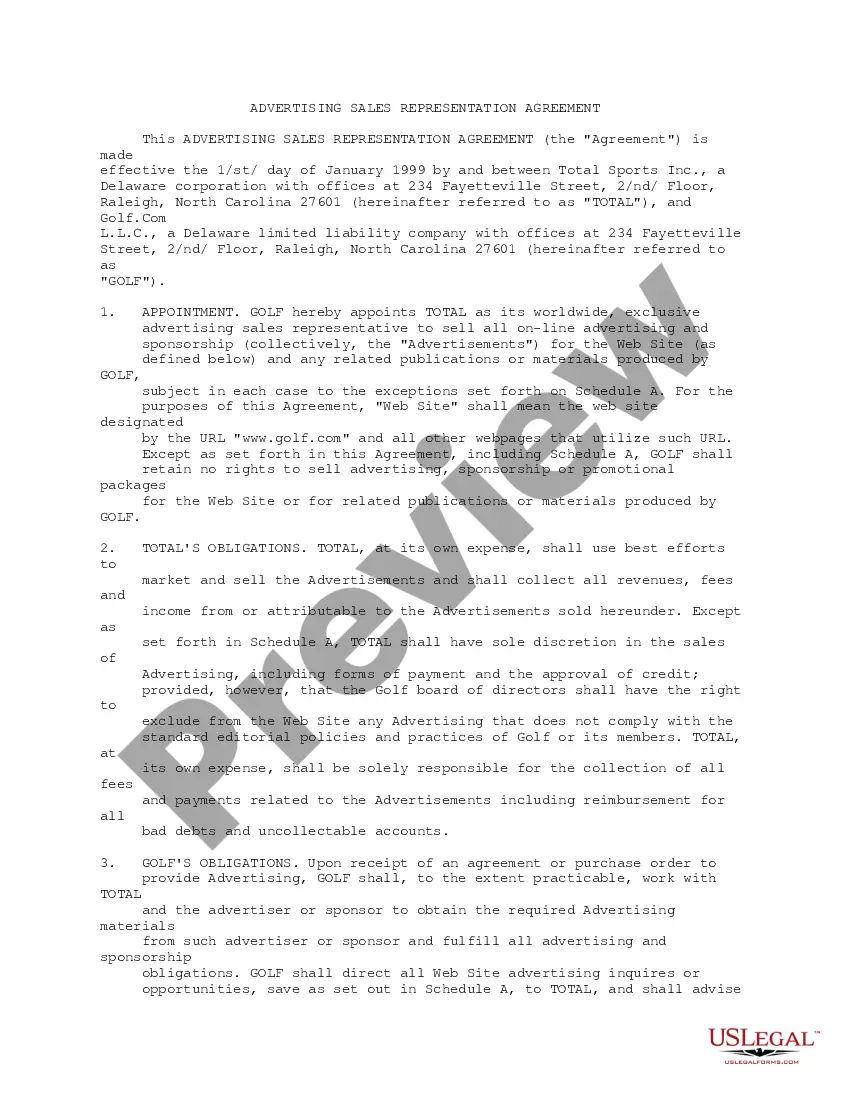
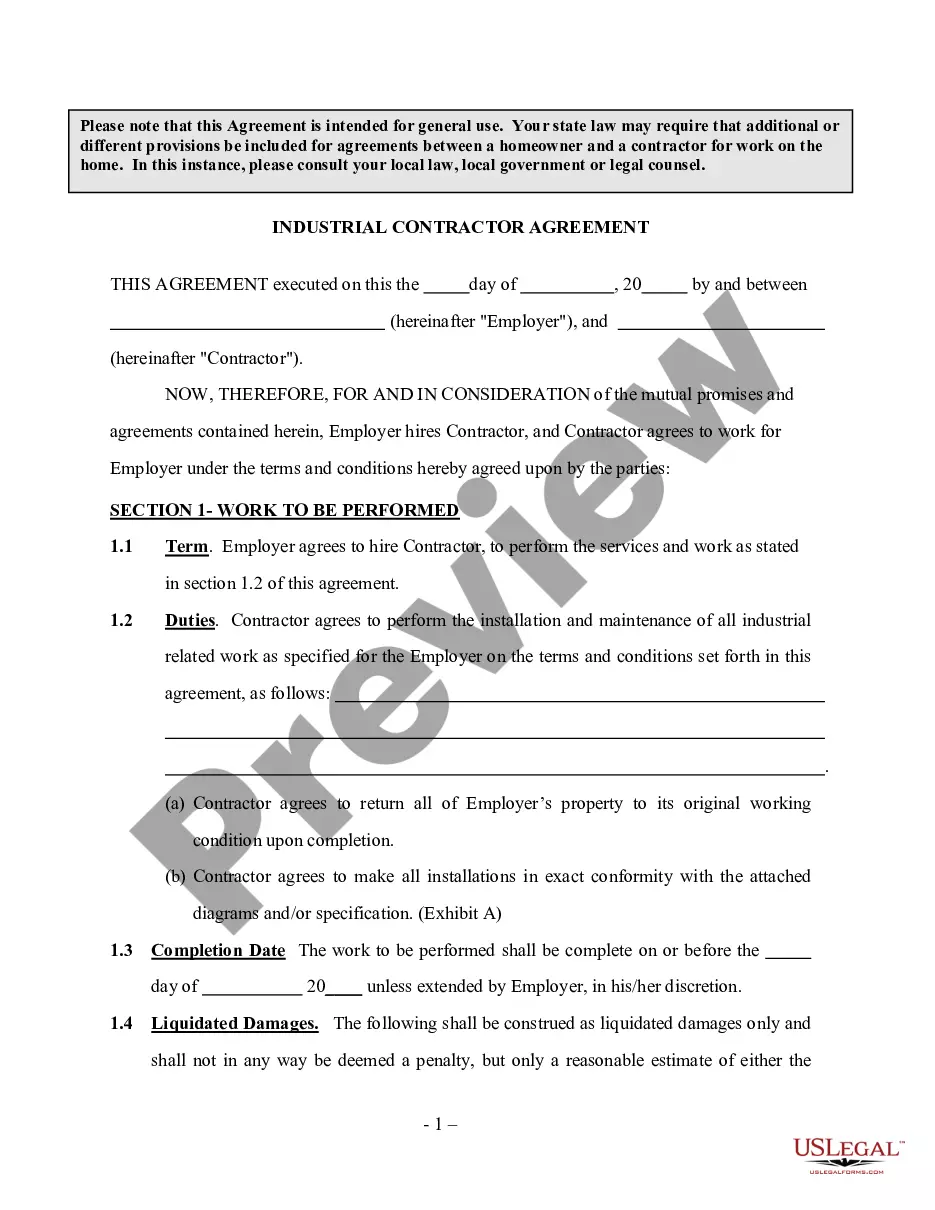
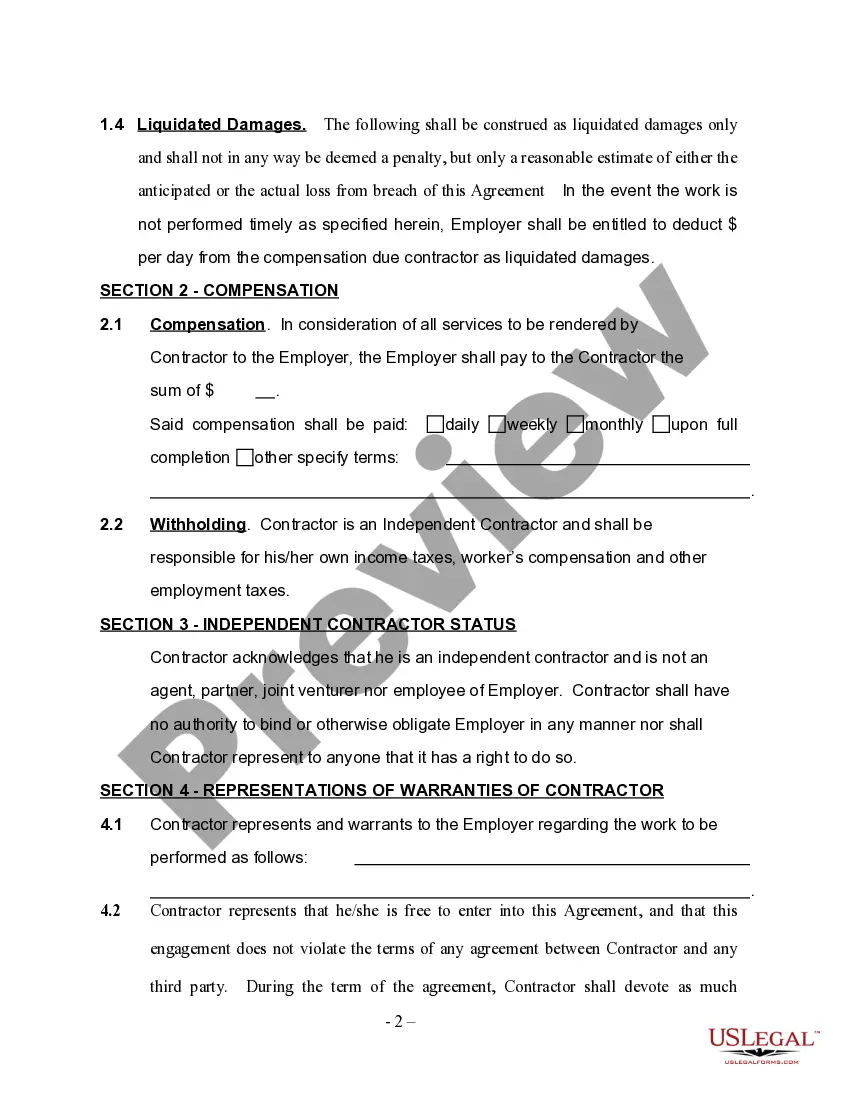
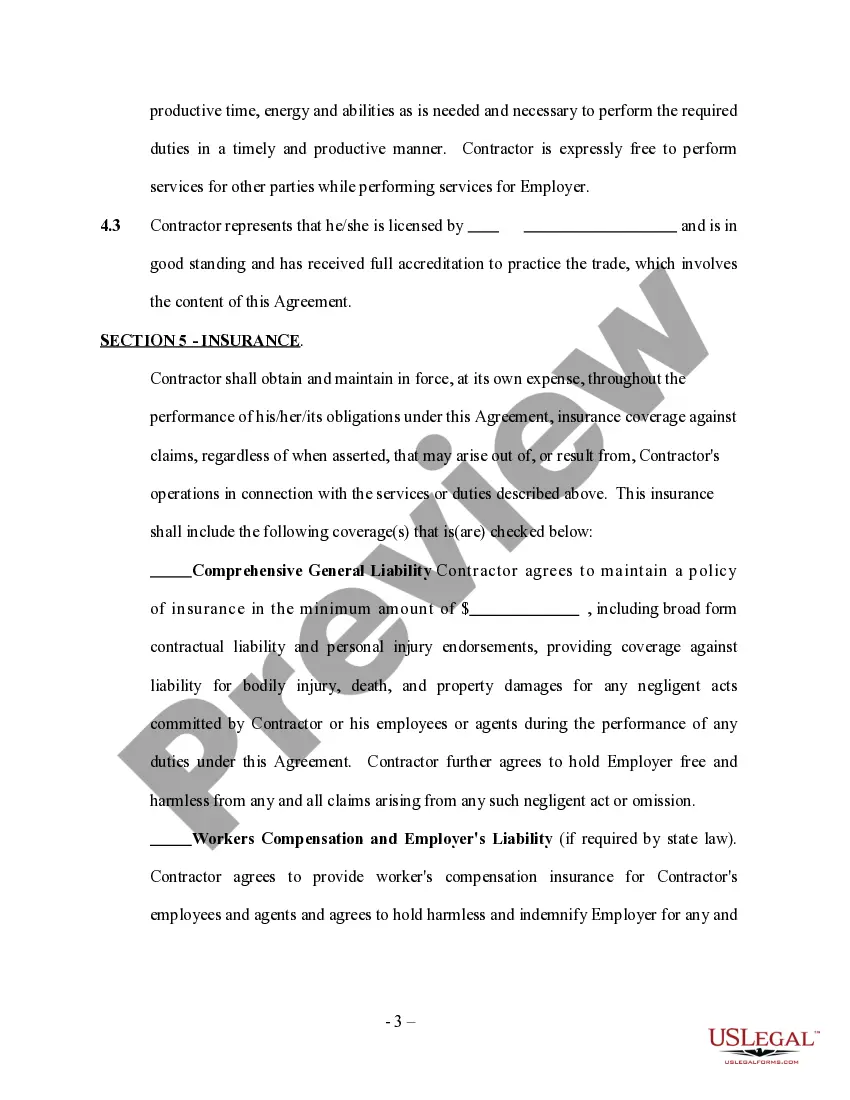
Employer contracts with an independent contractor to provide industrial contractor services as specified and agreed upon in the contract.
Virginia Industrial Contractor Agreement - Self-Employed
State:
Multi-State
Control #:
US-INDC-110
Format:
Word;
Rich Text
Instant download
Description
Free preview
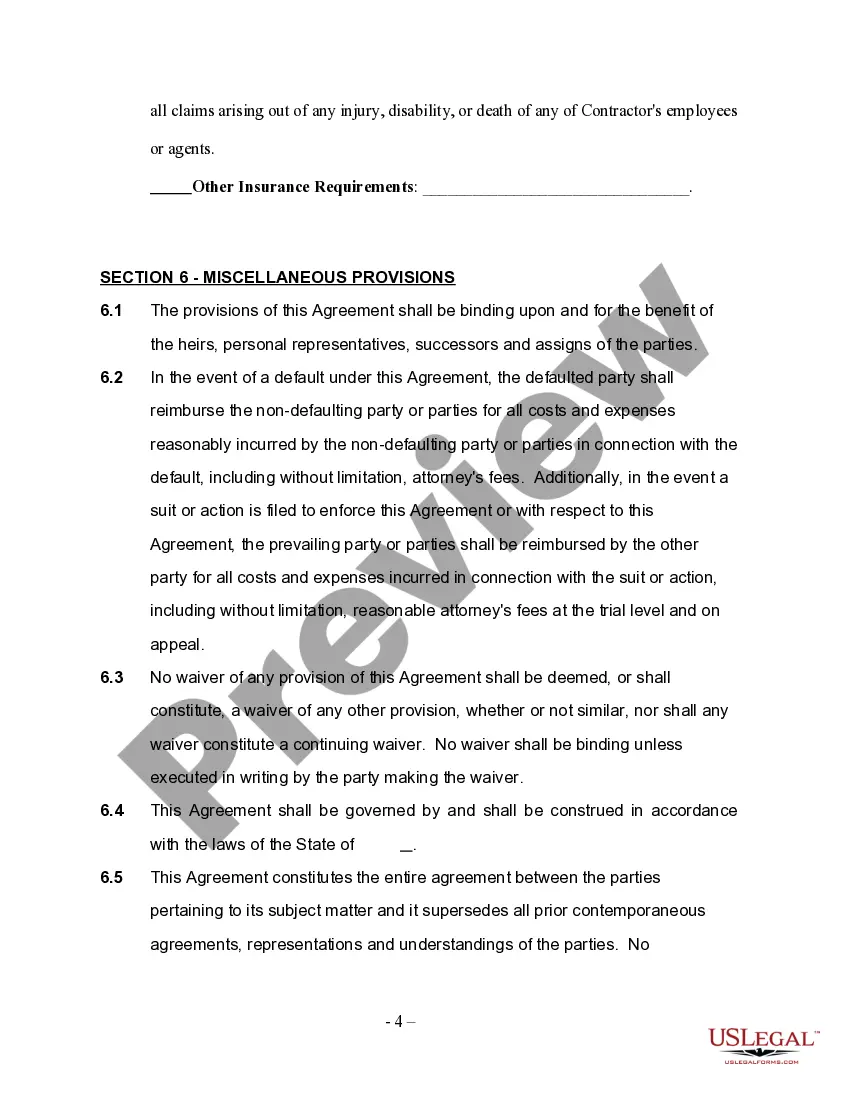
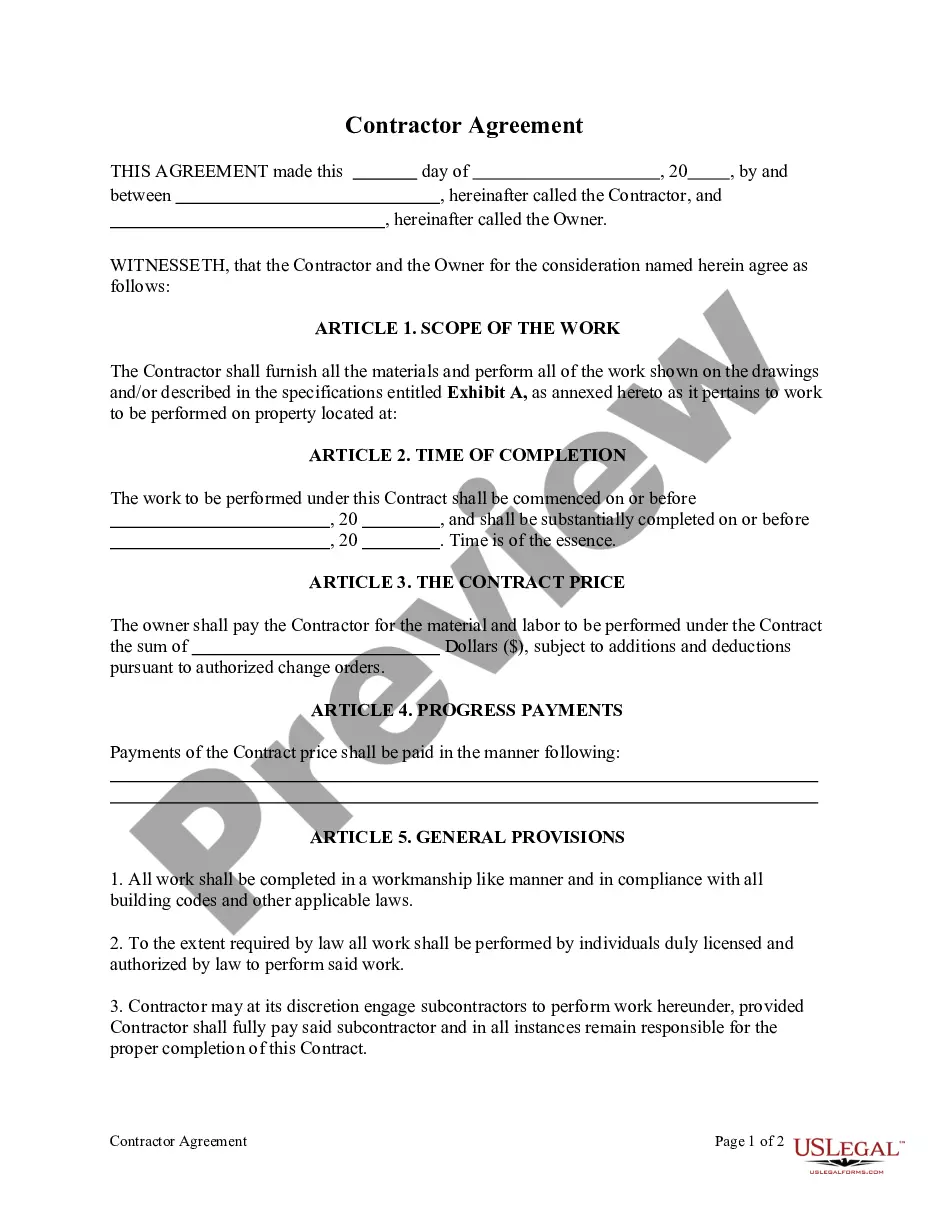
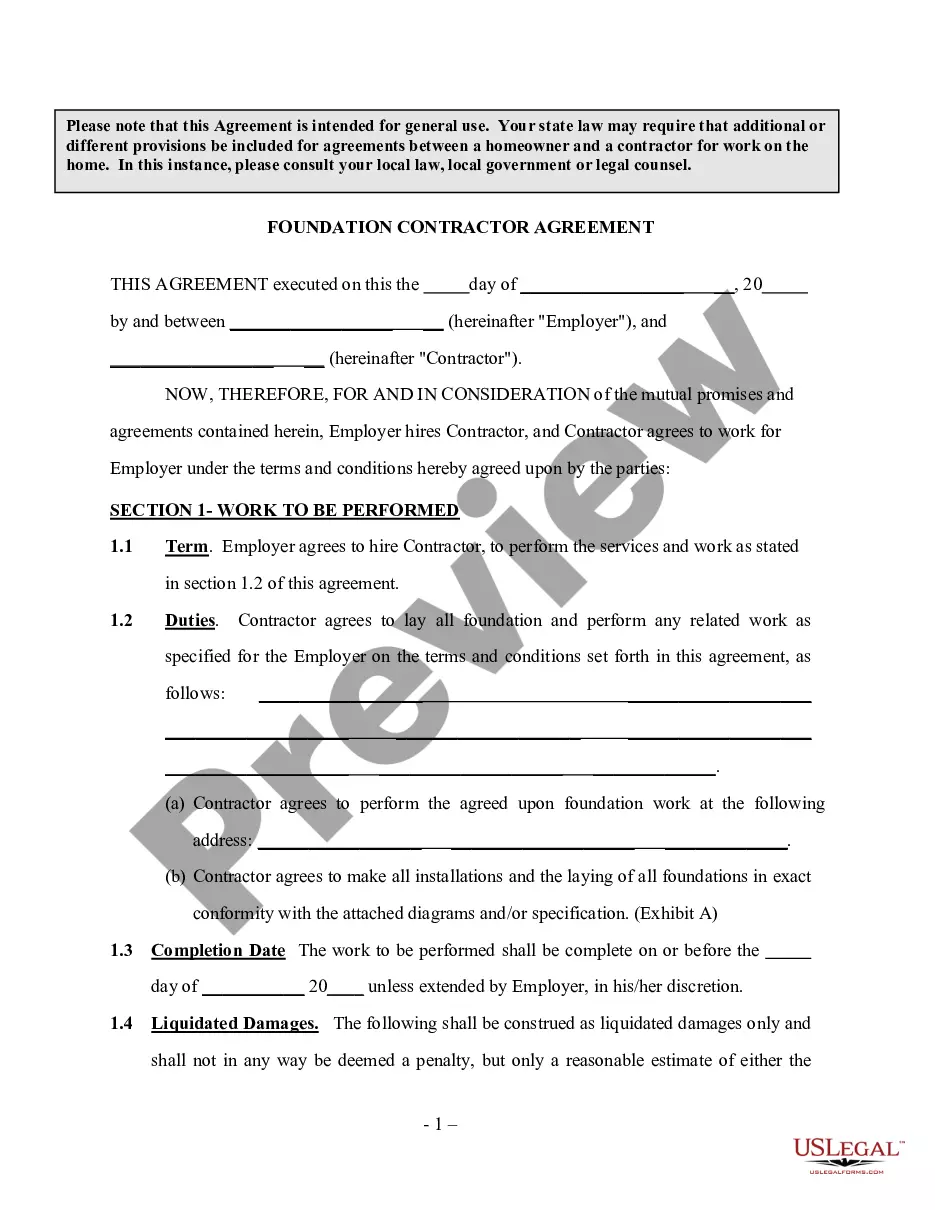
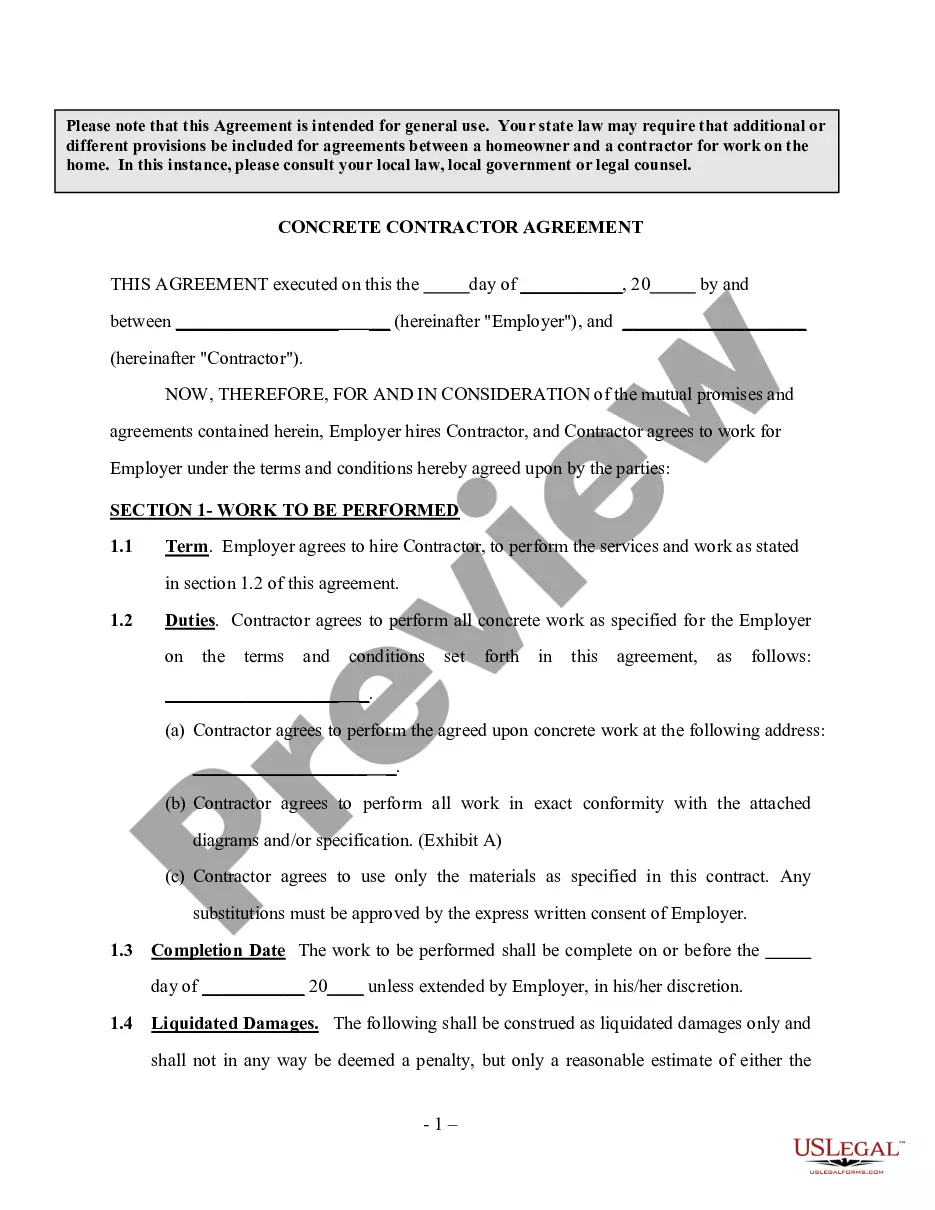
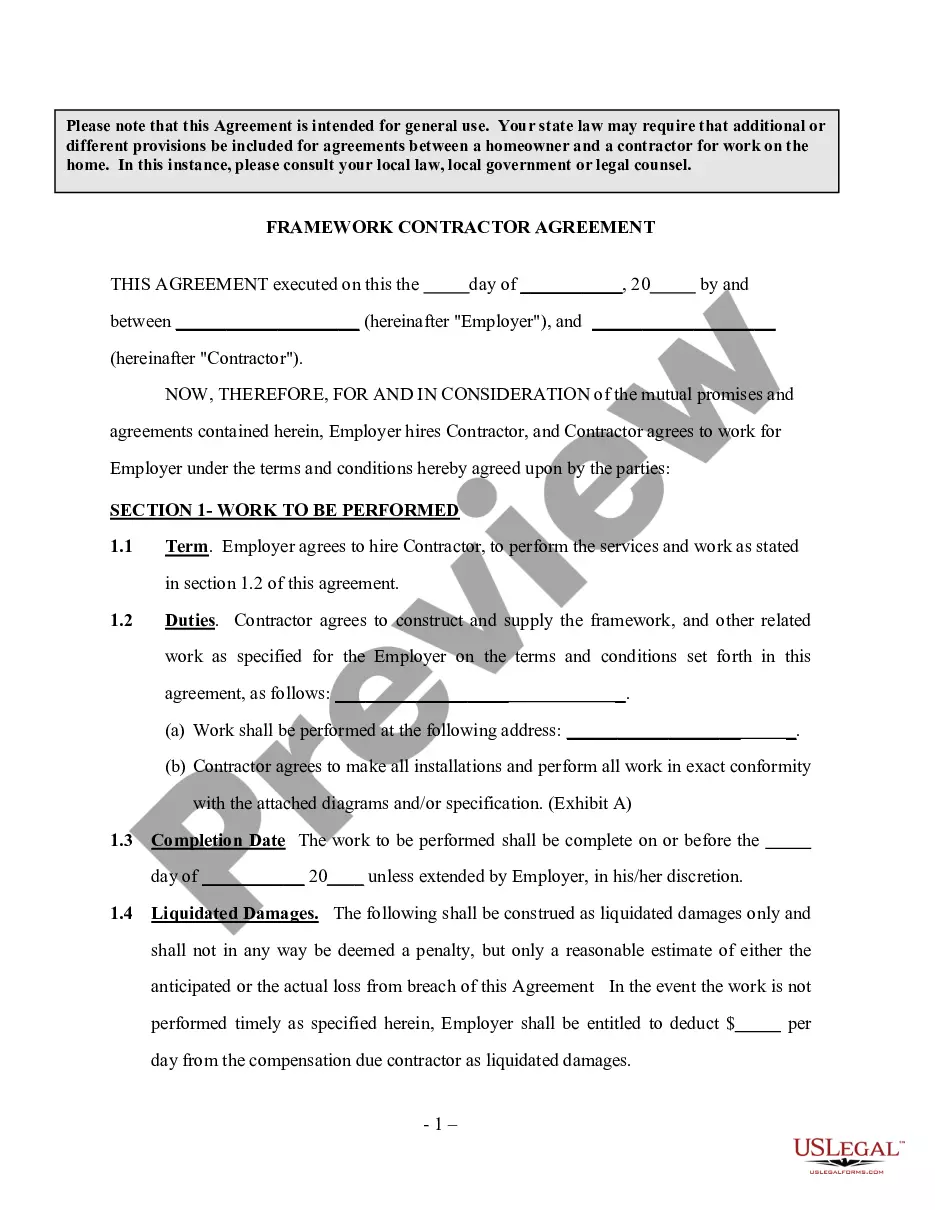
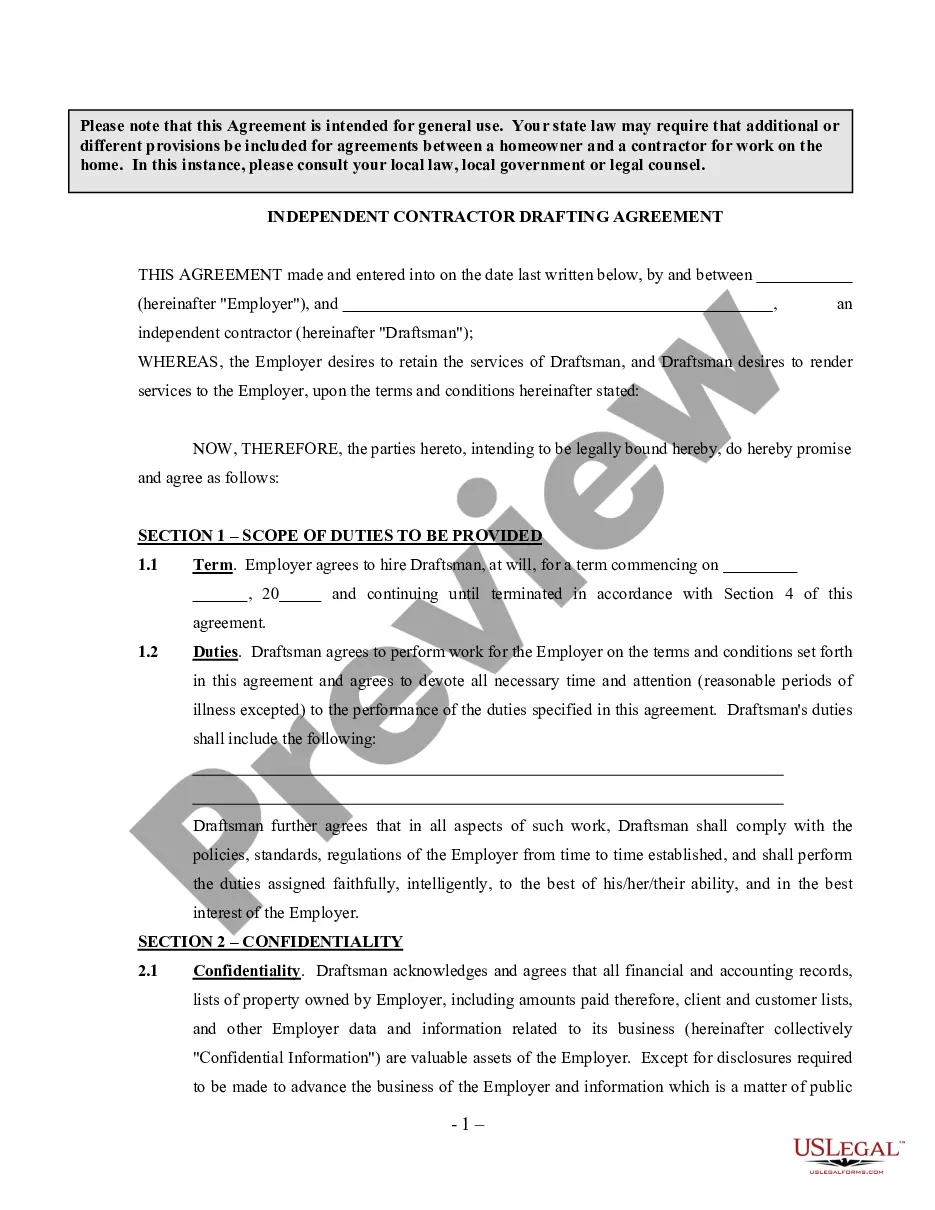
Get your form ready online
Our built-in tools help you complete, sign, share, and store your documents in one place.
Built-in online Word editor
Make edits, fill in missing information, and update formatting in US Legal Forms—just like you would in MS Word.
Export easily
Download a copy, print it, send it by email, or mail it via USPS—whatever works best for your next step.
E-sign your document
Sign and collect signatures with our SignNow integration. Send to multiple recipients, set reminders, and more. Go Premium to unlock E-Sign.
Notarize online 24/7
If this form requires notarization, complete it online through a secure video call—no need to meet a notary in person or wait for an appointment.
Store your document securely
We protect your documents and personal data by following strict security and privacy standards.

Make edits, fill in missing information, and update formatting in US Legal Forms—just like you would in MS Word.

Download a copy, print it, send it by email, or mail it via USPS—whatever works best for your next step.

Sign and collect signatures with our SignNow integration. Send to multiple recipients, set reminders, and more. Go Premium to unlock E-Sign.

If this form requires notarization, complete it online through a secure video call—no need to meet a notary in person or wait for an appointment.

We protect your documents and personal data by following strict security and privacy standards.
Looking for another form?
How to fill out Industrial Contractor Agreement - Self-Employed?
US Legal Forms - one of the most prominent collections of legal documents in the USA - offers a vast selection of legal document templates you can download or print. By using the website, you can discover thousands of forms for business and personal use, organized by categories, states, or keywords. You can find the most recent forms such as the Virginia Industrial Contractor Agreement - Self-Employed in moments.
If you already have a membership, Log In and obtain the Virginia Industrial Contractor Agreement - Self-Employed from the US Legal Forms library. The Download option will appear on every form you view. You can access all previously downloaded forms in the My documents tab of your account.
To use US Legal Forms for the first time, here are simple instructions to get started: Ensure you have chosen the correct form for your city/state. Click on the Review option to examine the form's content. Read the form description to confirm that you have selected the right form. If the form does not meet your requirements, use the Lookup field at the top of the screen to find one that does. If you are satisfied with the form, confirm your choice by clicking the Purchase now option. Then, select the pricing plan you prefer and provide your credentials to register for an account. Process the transaction. Use your Visa or Mastercard or PayPal account to complete the transaction. Choose the format and download the form to your device. Make adjustments. Fill out, modify, and print and sign the downloaded Virginia Industrial Contractor Agreement - Self-Employed.
- Every template you added to your account has no expiration date and belongs to you forever.
- So, if you wish to download or print another copy, simply go to the My documents section and click on the form you need.
- Access the Virginia Industrial Contractor Agreement - Self-Employed with US Legal Forms, the most extensive library of legal document templates.
- Utilize thousands of professional and state-specific templates that meet your business or personal needs and requirements.
Form popularity
FAQ
The new federal rule aims to provide clarity on how independent contractors are classified across the United States. It emphasizes factors such as control over work and the relationship between the worker and the employer. For those engaged in a Virginia Industrial Contractor Agreement - Self-Employed, keeping up with these developments is vital to maintain compliance and benefit from the rights associated with independent contractor status.
Starting July 1st, 2025, Virginia will implement new laws that affect independent contractors and businesses in various ways. These may include changes in tax classifications and protections for self-employed workers. Understanding these updates is crucial for anyone working under a Virginia Industrial Contractor Agreement - Self-Employed to stay compliant and informed as the legal landscape evolves.
employed contract should outline essential details such as the scope of work, payment terms, and deadlines. Additionally, it should clarify the independent status to establish expectations between the contractor and the client. Using a Virginia Industrial Contractor Agreement SelfEmployed can help ensure that all key components are covered, leading to a clearer and more effective business relationship.
The new independent contractor law in Virginia shifts the classification criteria, making it easier for workers to be classified as independent contractors. This change impacts taxation and benefits, allowing more flexibility for self-employed individuals. For those operating under a Virginia Industrial Contractor Agreement - Self-Employed, it’s important to understand these new rules for successful business operations.
In Virginia, you can work on projects valued at $1,000 or less without needing a contractor license. This regulation allows many independent contractors to engage in small jobs without the complexities of licensure. However, for larger projects, securing a Virginia Industrial Contractor Agreement - Self-Employed is essential to ensure compliance and protect your business interests.
Yes, an independent contractor operates as a self-employed individual. This means they work for themselves, providing services rather than being an employee of a company. When you enter into a Virginia Industrial Contractor Agreement - Self-Employed, you establish your independent status and define your working relationship.
Both terms imply that you work for yourself, but 'independent contractor' is more specific to particular contractual relationships and work arrangements. Using 'independent contractor' in the context of a Virginia Industrial Contractor Agreement - Self-Employed can offer clarity to clients and partners about your business model. Knowing which term to use helps communicate your role clearly within different business contexts.
Being self-employed means you work for yourself rather than for an employer. You earn income by providing services or selling products independently. The Virginia Industrial Contractor Agreement - Self-Employed supports this definition by outlining your contractual obligations and rights, reinforcing your status as a self-employed individual.
To prove you are an independent contractor, you can present various documents such as your business license, tax returns, and contracts like the Virginia Industrial Contractor Agreement - Self-Employed. These documents show that you engage in business activities independently and outline the nature of your work relationships. Additionally, maintaining clear records of your projects and communications can help establish your status.
Yes, an independent contractor is considered self-employed. This means they operate their own business and are responsible for managing their income, taxes, and expenses. By entering into a Virginia Industrial Contractor Agreement - Self-Employed, you clarify your status as an independent contractor, making your responsibilities and rights clear.