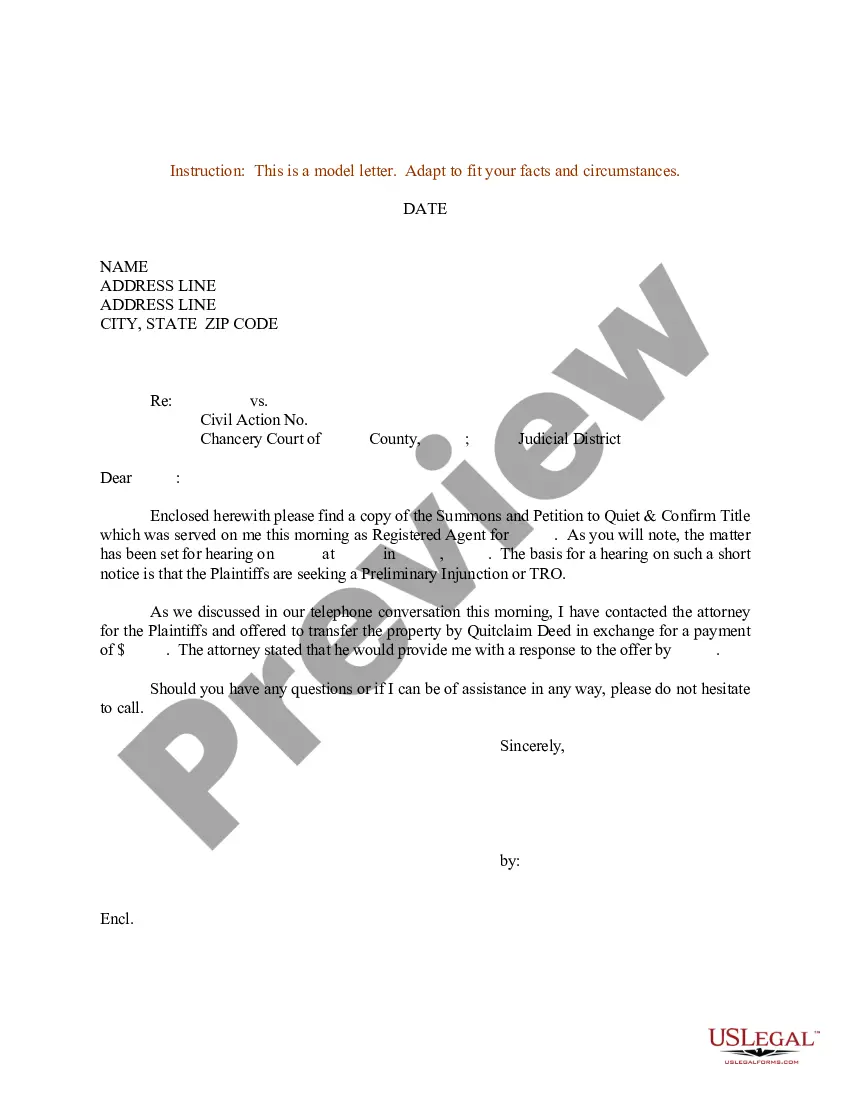
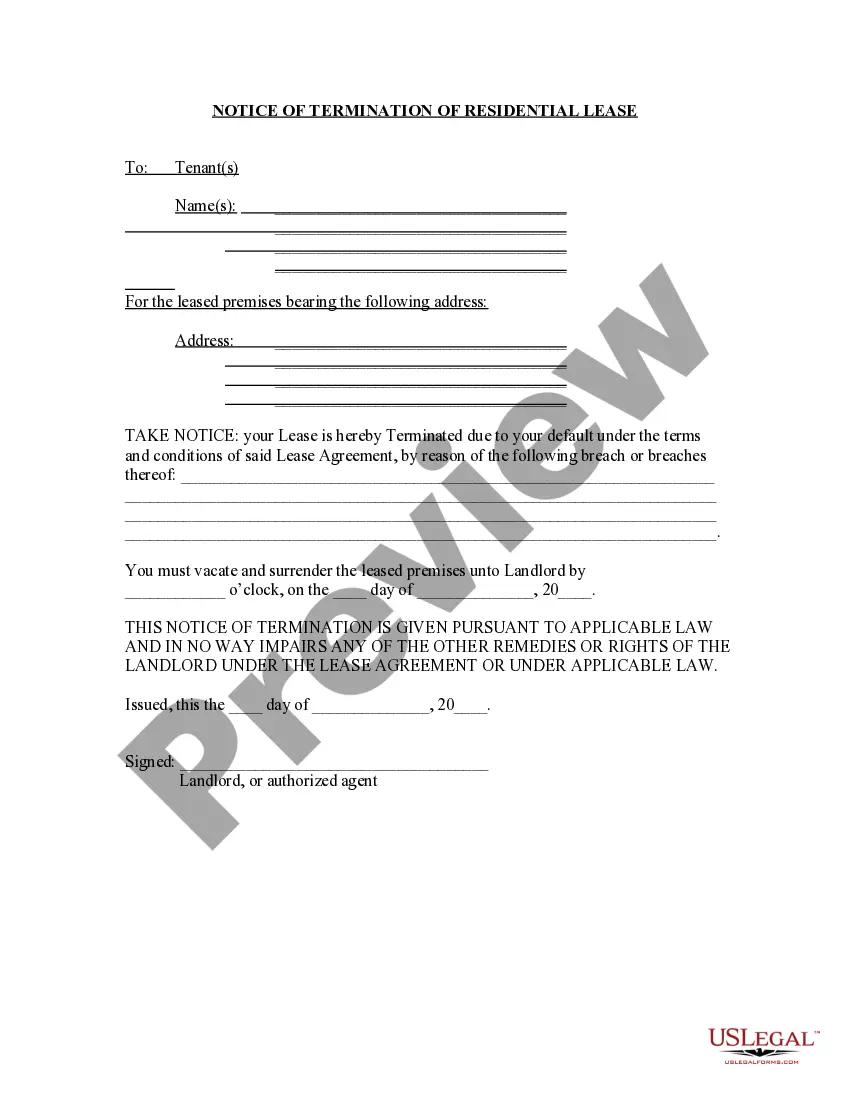
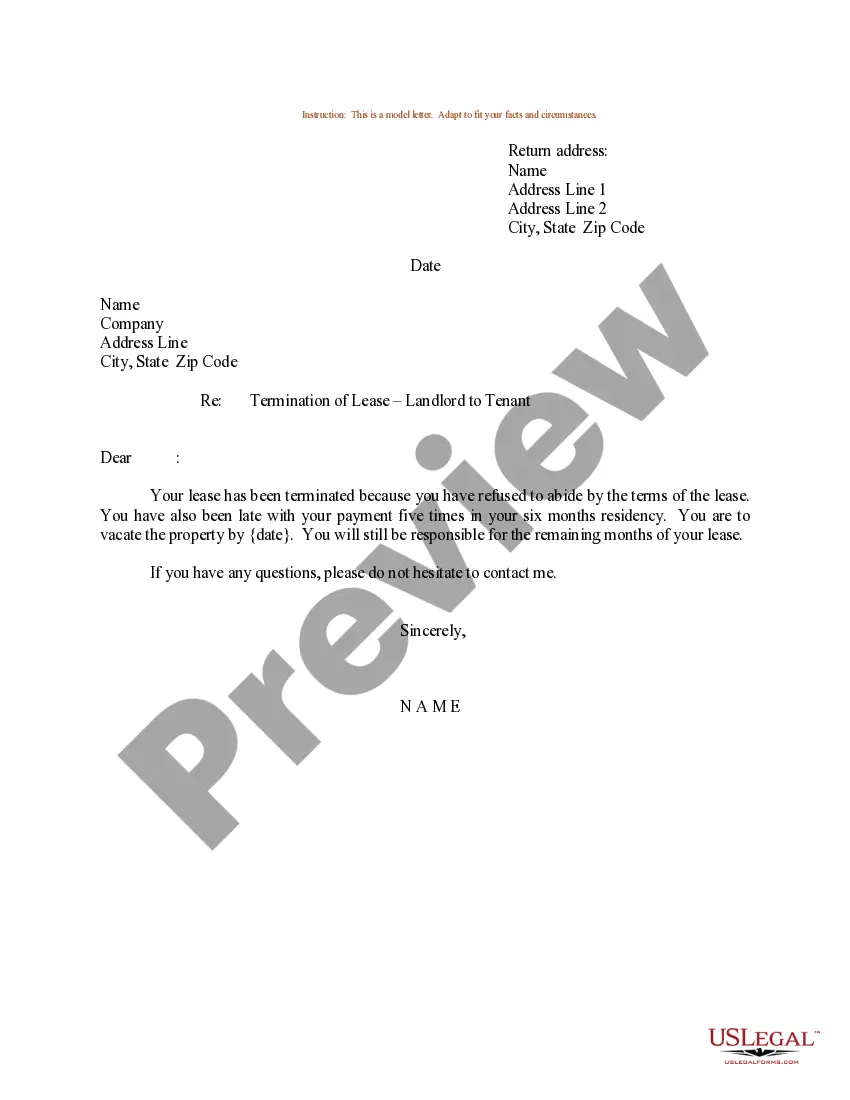
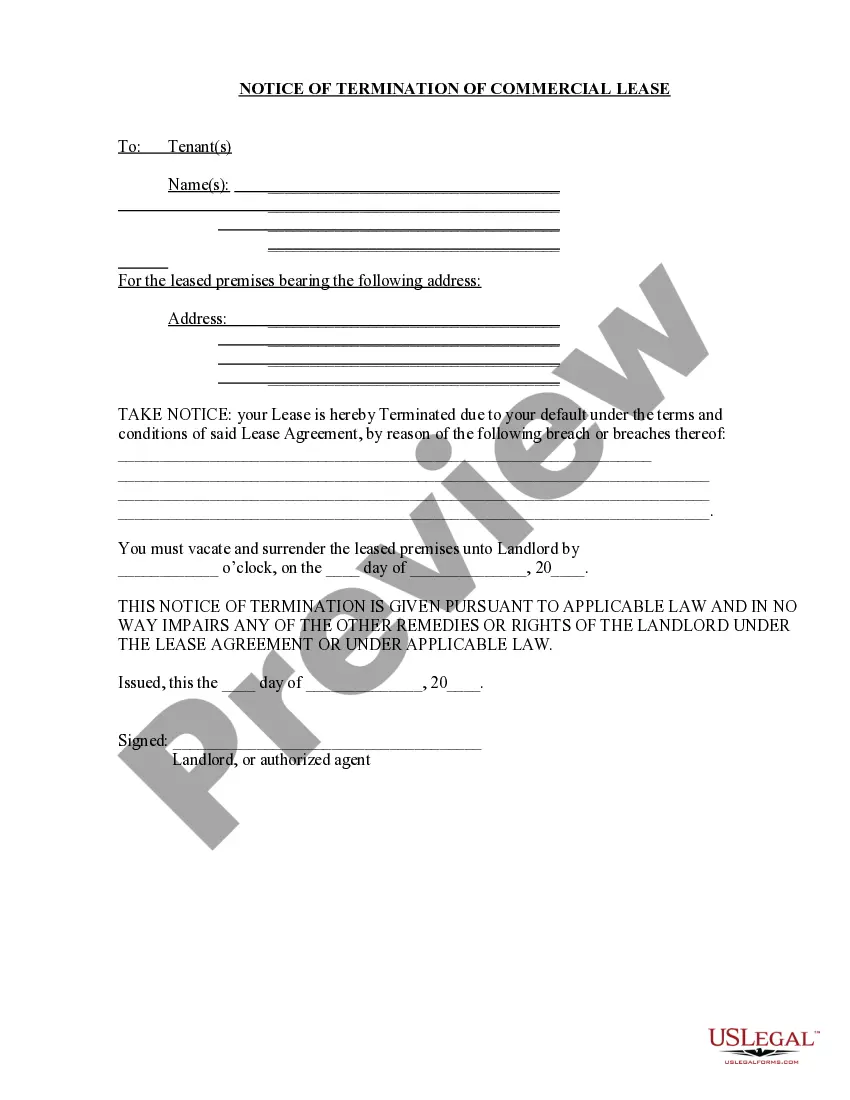
Virginia Lease Termination Letter for Landlord
Description

Get your form ready online
Our built-in tools help you complete, sign, share, and store your documents in one place.
Make edits, fill in missing information, and update formatting in US Legal Forms—just like you would in MS Word.
Download a copy, print it, send it by email, or mail it via USPS—whatever works best for your next step.
Sign and collect signatures with our SignNow integration. Send to multiple recipients, set reminders, and more. Go Premium to unlock E-Sign.
If this form requires notarization, complete it online through a secure video call—no need to meet a notary in person or wait for an appointment.
We protect your documents and personal data by following strict security and privacy standards.

Make edits, fill in missing information, and update formatting in US Legal Forms—just like you would in MS Word.

Download a copy, print it, send it by email, or mail it via USPS—whatever works best for your next step.

Sign and collect signatures with our SignNow integration. Send to multiple recipients, set reminders, and more. Go Premium to unlock E-Sign.

If this form requires notarization, complete it online through a secure video call—no need to meet a notary in person or wait for an appointment.

We protect your documents and personal data by following strict security and privacy standards.
Looking for another form?
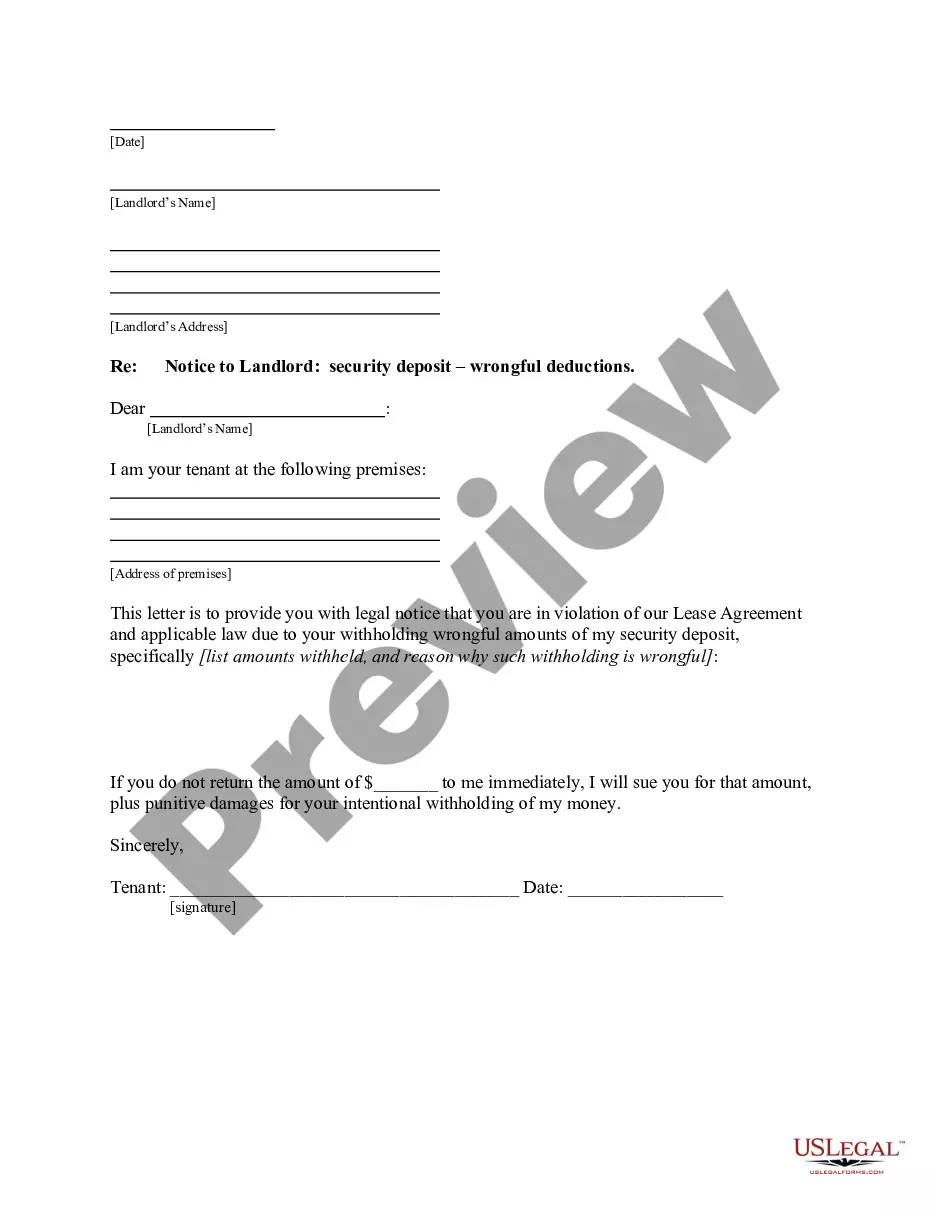
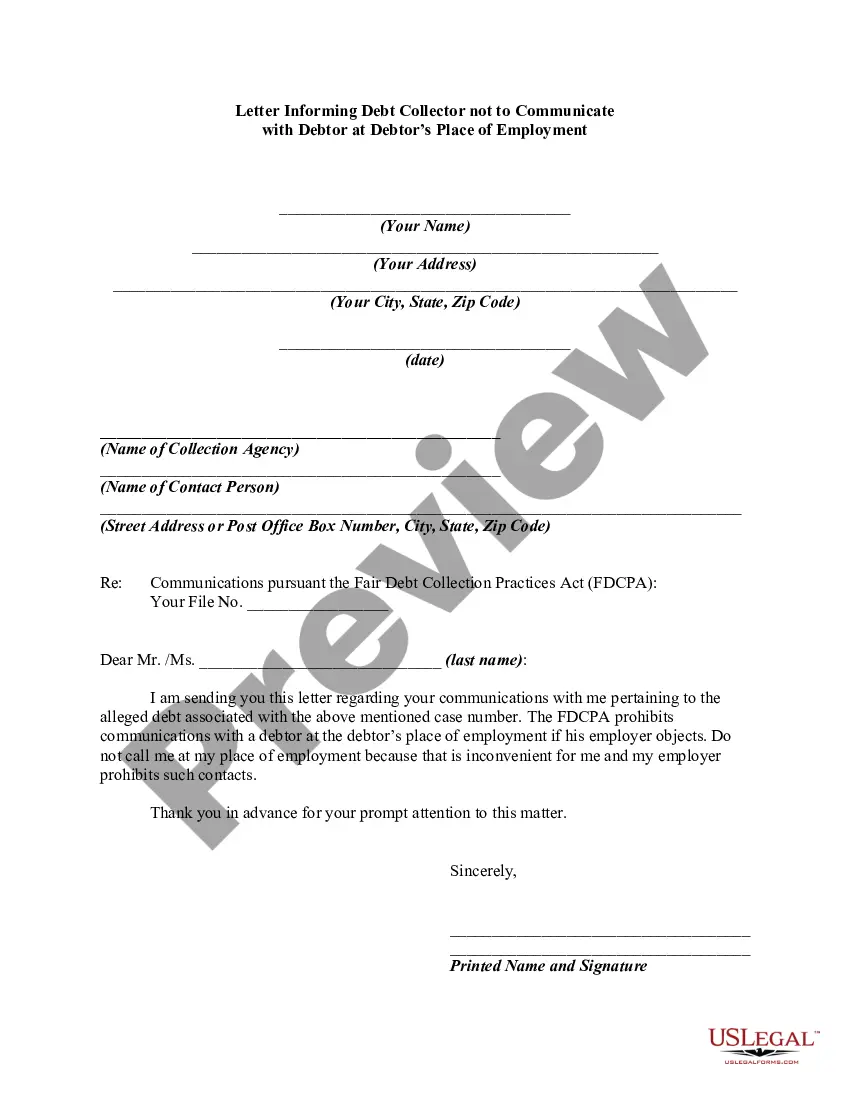
How to fill out Lease Termination Letter For Landlord?
US Legal Forms - one of the most prominent collections of legal documents in the United States - offers a vast selection of legal document templates that you can download or print.
By utilizing the website, you can discover thousands of forms for business and personal purposes, organized by categories, states, or keywords.
You can find the latest versions of forms such as the Virginia Lease Termination Letter for Landlord in moments.
If the form does not meet your requirements, utilize the Search field at the top of the screen to find the one that does.
Once you are satisfied with the form, confirm your selection by clicking the Get now button. Then, select your preferred payment method and provide your information to register for an account.
- If you already possess a membership, Log In to download the Virginia Lease Termination Letter for Landlord from the US Legal Forms catalog.
- The Acquire button will appear on every document you view.
- You have access to all previously saved forms from the My documents tab of your account.
- If you wish to use US Legal Forms for the first time, the following are simple instructions to help you get started.
- Ensure you have selected the correct form for your locality/county.
- Click the Review button to evaluate the content of the form.
Form popularity
FAQ
'Apply for rent relief': Governor signs bill extending eviction protections in Virginia. RICHMOND, Va. (WWBT) - As the CDC eviction moratorium has been extended until October 2021, Governor Ralph Northam signed a budget bill extending eviction protection until June 30, 2022.
Can I Terminate My Tenancy Agreement Early? Yes, you can. Either the landlord or tenant must give an advance notice (depending on the clause in the Tenancy Agreement).
The landlord or the tenant may terminate a month-to-month tenancy by serving a written notice on the other at least 30 days prior to the next rent due date, unless the rental agreement provides for a different notice period. The landlord and the tenant may agree in writing to an early termination of a rental agreement.
Notice Requirements for Virginia Landlords A landlord can simply give you a written notice to move, allowing you 30 days as required by Virginia law and specifying the date on which your tenancy will end. (The rental agreement may provide for a different notice period.)
The national CDC eviction moratorium ended on August 26, 2021. Please reach out to legal services if you are worried about eviction. Virginia renters have special protection against evictions until June 30, 2022.
In Virginia, landlords can evict tenants for a lease violation. The landlord must give tenants a 30-Day Notice to Comply, which provides them with 21 days to fix the issue. Should the tenant be unable to resolve the issue within 21 days, the tenant has the remaining 9 days to vacate the rental property.
Evicting a tenant in Virginia can take around two to four months depending on the type of eviction being filed. If tenants request a jury trial, the process can take even longer (read more). Introduction. There are many legal reasons why a landlord might want to evict a tenant.
Also, you must be given 90 days notice if there is no lease, or if there is a lease with fewer than 90 days remaining, or if you have a month-to-month lease. you should not withhold rent.
Va. 2011). 1. Other than active duty military and domestic violence victims discussed infra unless the landlord has violated the lease, tenants have no legal right to end a lease early, even for compelling reasons such as age, disability, inability to continue to live independently or job relocation.
Generally, a landlord may terminate a lease without reason at the expiration of the lease term. That means your landlord is under no obligation to renew your lease or allow you to stay in the property for additional time unless you are able to invoke an anti-retaliation law.