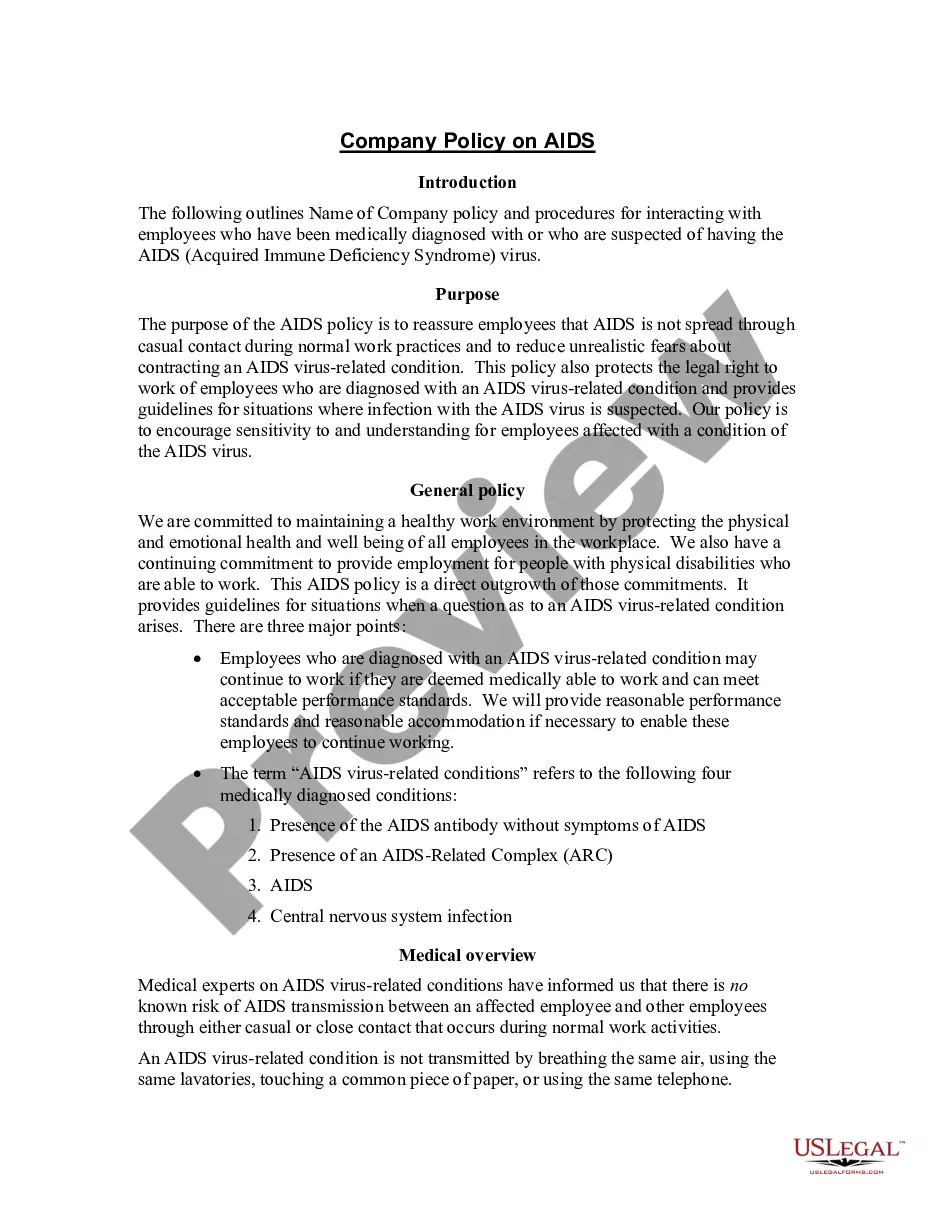
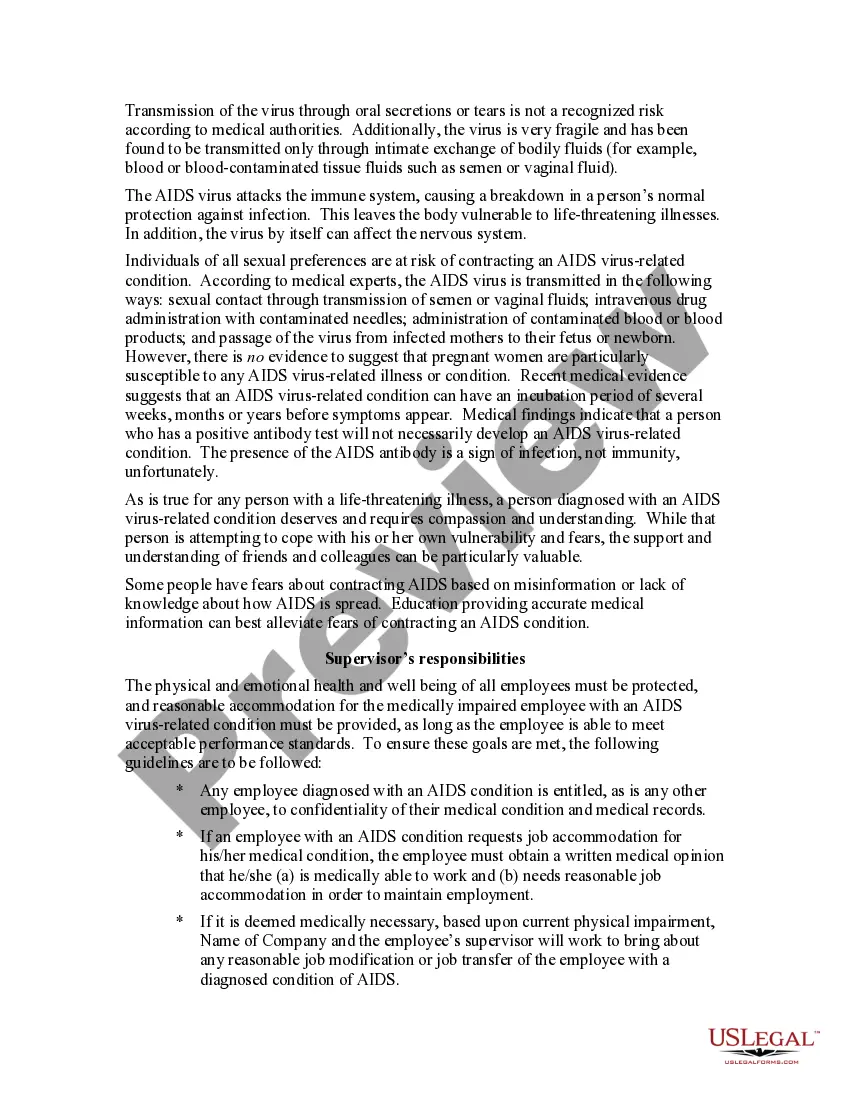
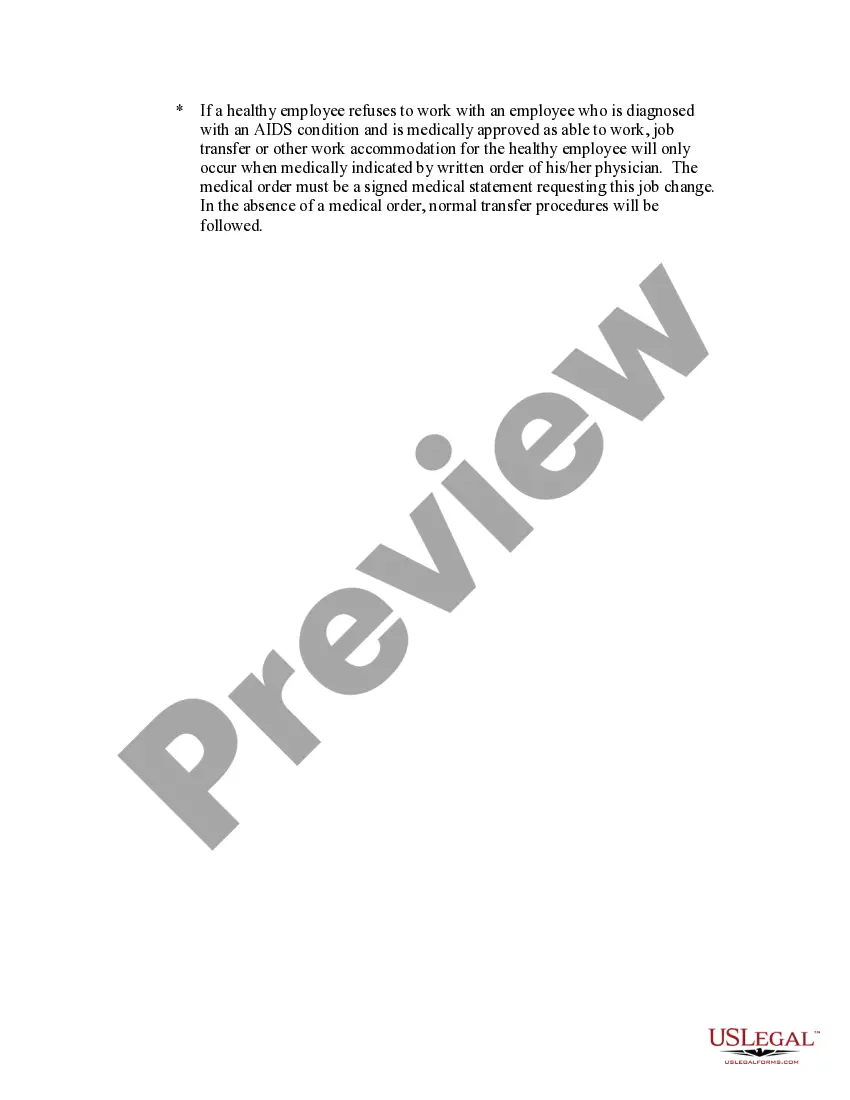
Virginia Company Policy on AIDS
Description
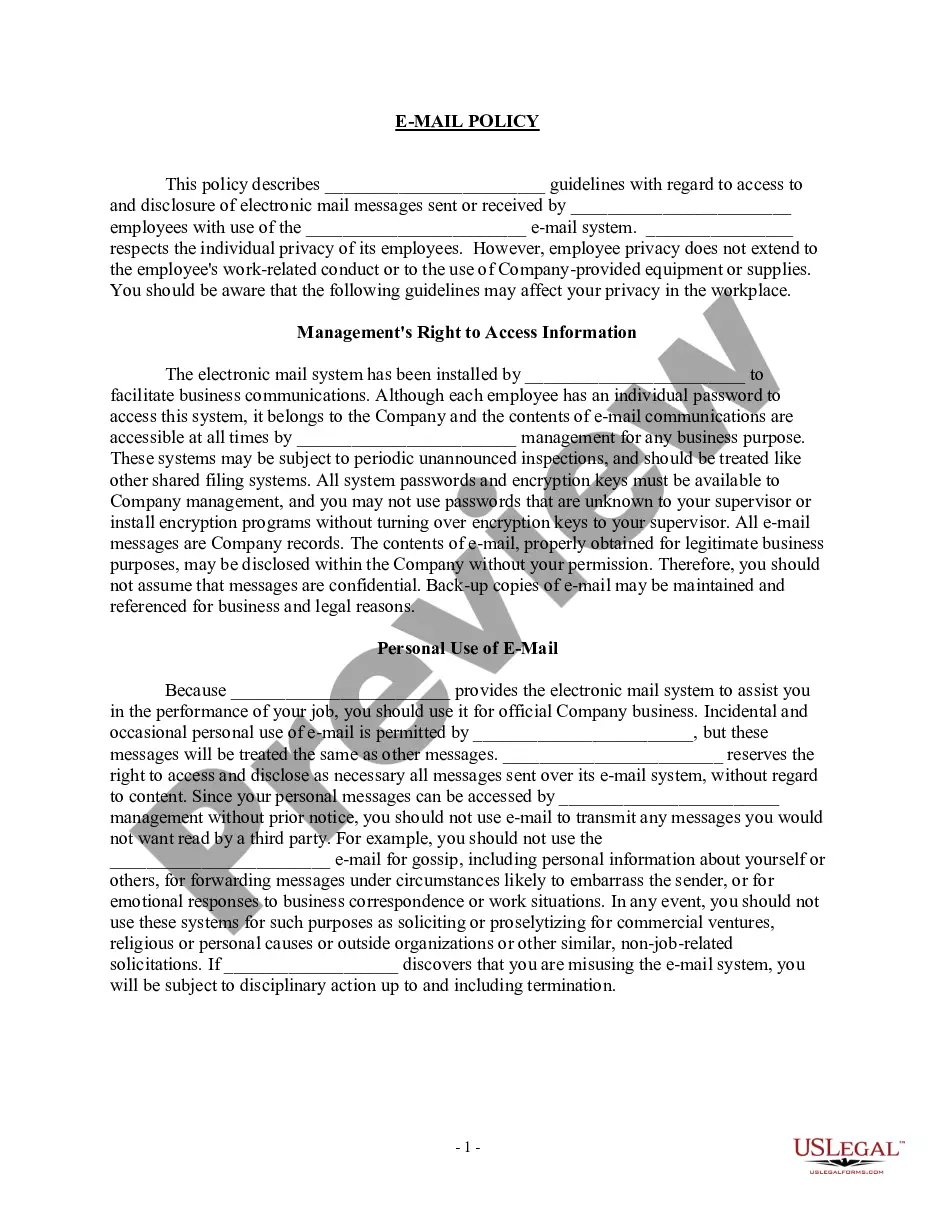
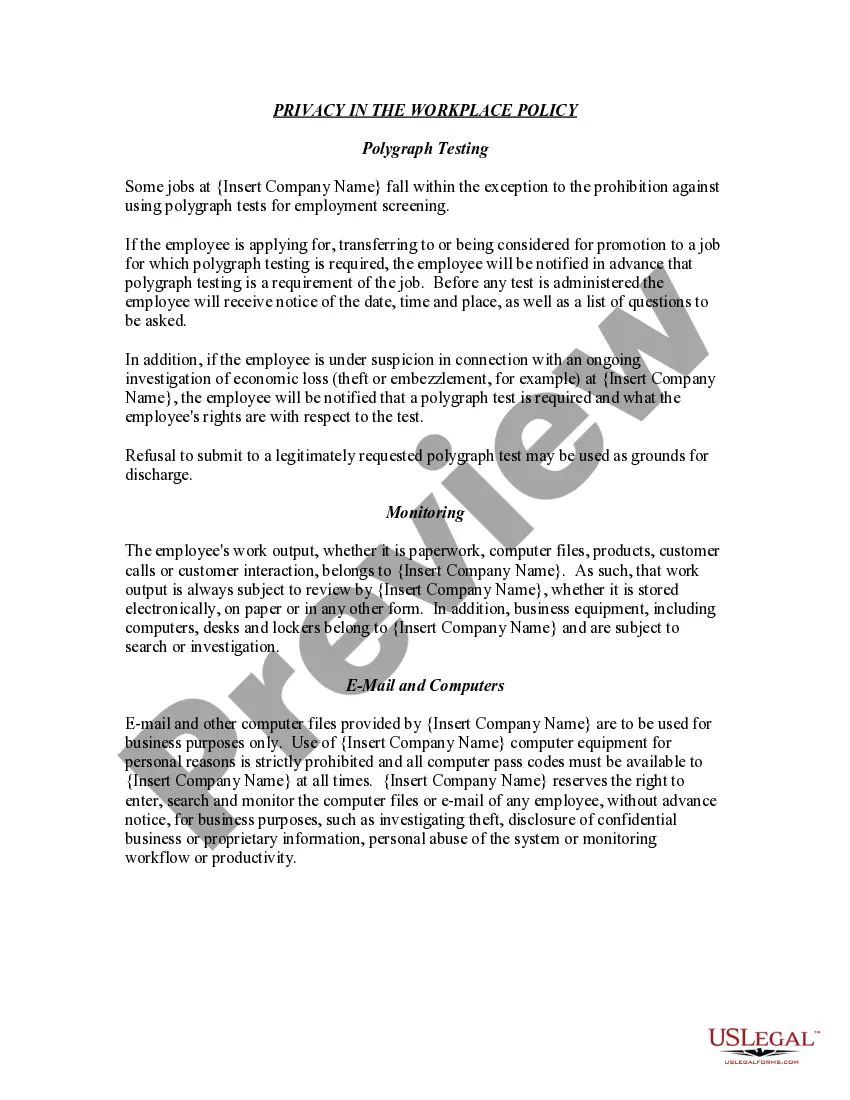



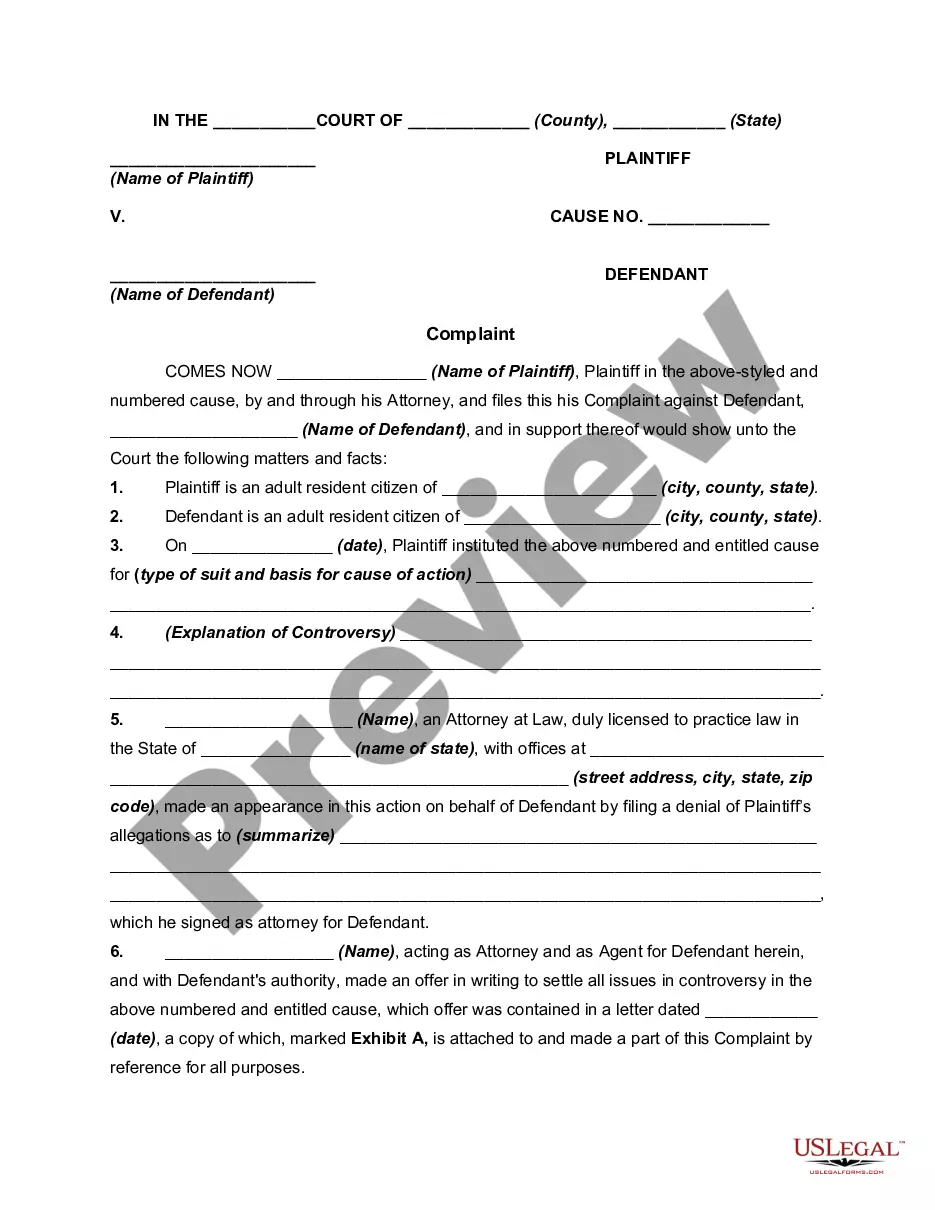
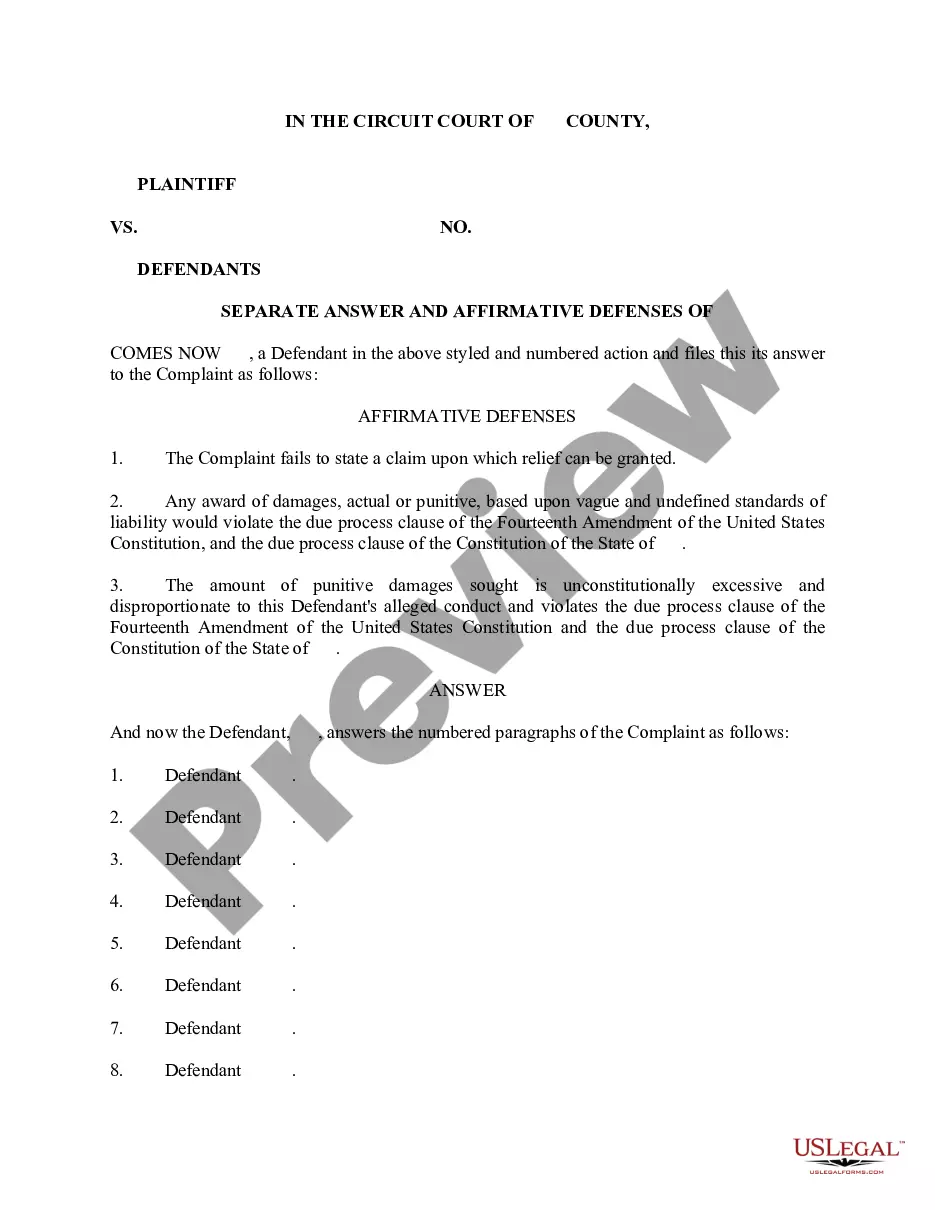
How to fill out Company Policy On AIDS?
If you aim to compile, acquire, or print authentic document templates, utilize US Legal Forms, the largest selection of authentic forms, available online.
Employ the website's user-friendly and efficient search to find the documents you need.
Various templates for business and personal purposes are categorized by types and states, or keywords.
Step 4. Once you have located the form you want, click the Get now option. Select your desired pricing plan and enter your details to register for an account.
Step 5. Complete the transaction. You can use your Visa or Mastercard or PayPal account to finalize the purchase.
- Utilize US Legal Forms to retrieve the Virginia Company Policy on AIDS in just a few clicks.
- If you are already a US Legal Forms user, Log In to your account and click the Download option to obtain the Virginia Company Policy on AIDS.
- You can also access forms you have previously acquired in the My documents section of your account.
- If this is your first time using US Legal Forms, follow the steps outlined below.
- Step 1. Ensure you have chosen the form for the correct city/region.
- Step 2. Use the Review option to examine the content of the form. Remember to read through the summary.
- Step 3. If you are not satisfied with the form, use the Search field at the top of the screen to find alternative versions of the legal form template.
Form popularity
FAQ
Avoid sex or use condoms each time you have sex. Do not shoot drugs. If you do, do not share needles or syringes. You can get new, clean needles or syringes at some drug stores or through a syringe exchange program.
Employers are not allowed to discriminate against you simply because you have HIV infection. This includes firing you, rejecting you for a job or promotion, and forcing you to take leave.
You have no legal obligation to tell your employer you have HIV or AIDS. If you do tell your employer, you may be discriminated against. Under the Americans with Disabilities Act and other laws, people with HIV or AIDS may be termed disabled and entitled to get reasonable accommodation at work.
HIV and STD Criminalization Laws 2021In 12 states, laws require people with HIV who are aware of their status to disclose their status to sex partners, and 4 states require disclosure to needle-sharing partners. The maximum sentence length for violating an HIV-specific statute is also a matter of state law.
Under federal law, employers may not fire or refuse to hire someone with HIV or another disability if the person can perform essential functions of the job. This assures that the person will not be considered unqualified simply because of his or her inability to perform marginal or incidental job functions.
You have no legal obligation to tell your employer you have HIV or AIDS. If you do tell your employer, you may be discriminated against. Under the Americans with Disabilities Act and other laws, people with HIV or AIDS may be termed disabled and entitled to get reasonable accommodation at work.
The reality is, people with HIV can be in relationships, have sex, and live normal lives by taking a few precautions. Although there's no cure for HIV, there are medicines that help people with HIV live longer, healthier lives.
Employers are not allowed to discriminate against you simply because you have HIV infection. This includes firing you, rejecting you for a job or promotion, and forcing you to take leave.
With proper care and treatment, many people living with HIV lead normal, healthy lives, including having a job. Most people living with HIV can continue working at their current jobs or look for a new job in their chosen field.
Q: Are people with HIV or AIDS protected by the ADA? A: Yes. An individual is considered to have a "disability" if he or she has a physical or mental impairment that substantially limits one or more major life activities, has a record of such an impairment, or is regarded as having such an impairment.