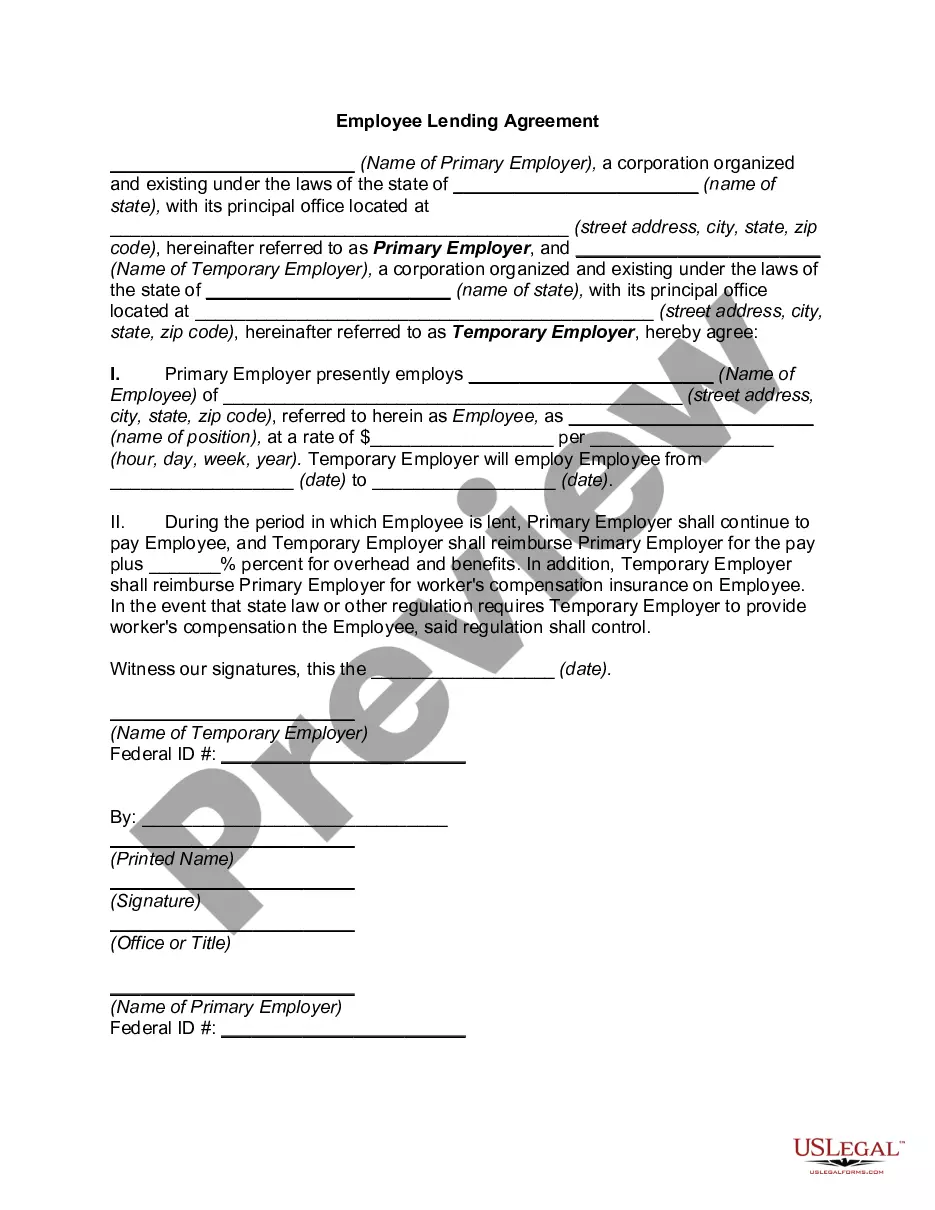
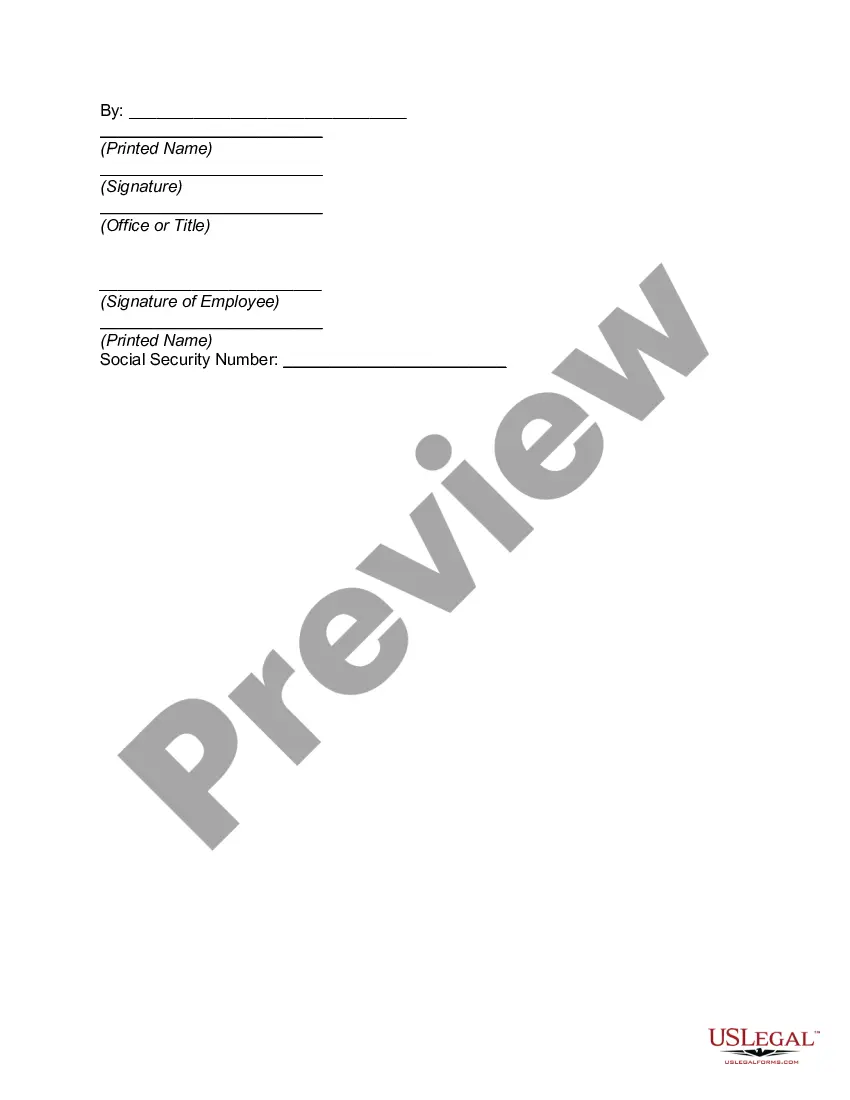
Virginia Employee Lending Agreement
Description

Get your form ready online
Our built-in tools help you complete, sign, share, and store your documents in one place.
Make edits, fill in missing information, and update formatting in US Legal Forms—just like you would in MS Word.
Download a copy, print it, send it by email, or mail it via USPS—whatever works best for your next step.
Sign and collect signatures with our SignNow integration. Send to multiple recipients, set reminders, and more. Go Premium to unlock E-Sign.
If this form requires notarization, complete it online through a secure video call—no need to meet a notary in person or wait for an appointment.
We protect your documents and personal data by following strict security and privacy standards.

Make edits, fill in missing information, and update formatting in US Legal Forms—just like you would in MS Word.

Download a copy, print it, send it by email, or mail it via USPS—whatever works best for your next step.

Sign and collect signatures with our SignNow integration. Send to multiple recipients, set reminders, and more. Go Premium to unlock E-Sign.

If this form requires notarization, complete it online through a secure video call—no need to meet a notary in person or wait for an appointment.

We protect your documents and personal data by following strict security and privacy standards.
Looking for another form?


How to fill out Employee Lending Agreement?
You can dedicate multiple hours online trying to locate the valid document template that complies with the federal and state requirements you seek.
US Legal Forms offers numerous valid forms that can be reviewed by experts.
You can easily download or print the Virginia Employee Lending Agreement from the service.
To find another version of your form, use the Search field to locate the template that fits your needs and requirements.
- If you possess a US Legal Forms account, you can sign in and click the Download button.
- Subsequently, you can fill out, modify, print, or sign the Virginia Employee Lending Agreement.
- Every legal document template you acquire is your own permanently.
- To get another copy of the downloaded form, navigate to the My documents tab and click the corresponding button.
- If you are using the US Legal Forms website for the first time, follow the straightforward instructions below.
- First, make sure that you have selected the correct document template for the region/area of your interest.
- Check the form description to ensure you have chosen the right template.
Form popularity
FAQ
Depending on the value of the property at issue, an employer may be able to file a small claims action against a former employee who won't return its property. Also, in some circumstances you may be able to put an employee on an unpaid suspension pending the return of property.
As such, if you do not promptly return their property, your former employer could have grounds to file a civil lawsuit against you. In some extreme cases, your former employer may also take criminal action in order to ensure the prompt return of company property, such as a company vehicle.
If the employee terminates and does not return the property, you may be tempted to hold back their final pay until they do return the item. However, withholding the employee's final paycheck is against the law.
Can employers take back wages from overpaid employees? Both federal legislation like the Fair Labor Standards Act (FLSA) and state labor and employment laws give employers the right to recover an overpayment in full.
If a state has no statute or regulation that specifically prohibits overpayment recoupment, some state wage/hour or employment standards agencies interpret that to mean that overpayment recoupment is allowed, even though the state has laws that otherwise limit or prohibit deductions. For example, in Virginia,
No employer shall withhold any part of the wages or salaries of any employee except for payroll, wage or withholding taxes or in accordance with law, without the written and signed authorization of the employee.
There is no Virginia statute that requires employers to pay a departing employee for accrued vacation or other leave time.
No. An employer cannot deduct from your wages to cover mistakes, shortages, damages, or other losses (except for taxes).
An employer withholds a portion of an employee's earned wages to cover cash register shortages, breakage, etc. In each situation, the deductions are not allowable if the employee was required to give blanket authorization for the deduction as a condition of employment.
If an employee has quit while in possession of company property and is due a final paycheck, wages may be withheld only when the employer is authorized to do so by law, required to do so by a court or has written authorization from the employee for the deduction.
