Virginia Confidentiality and Noncompetition Agreement with Mechanic
Description
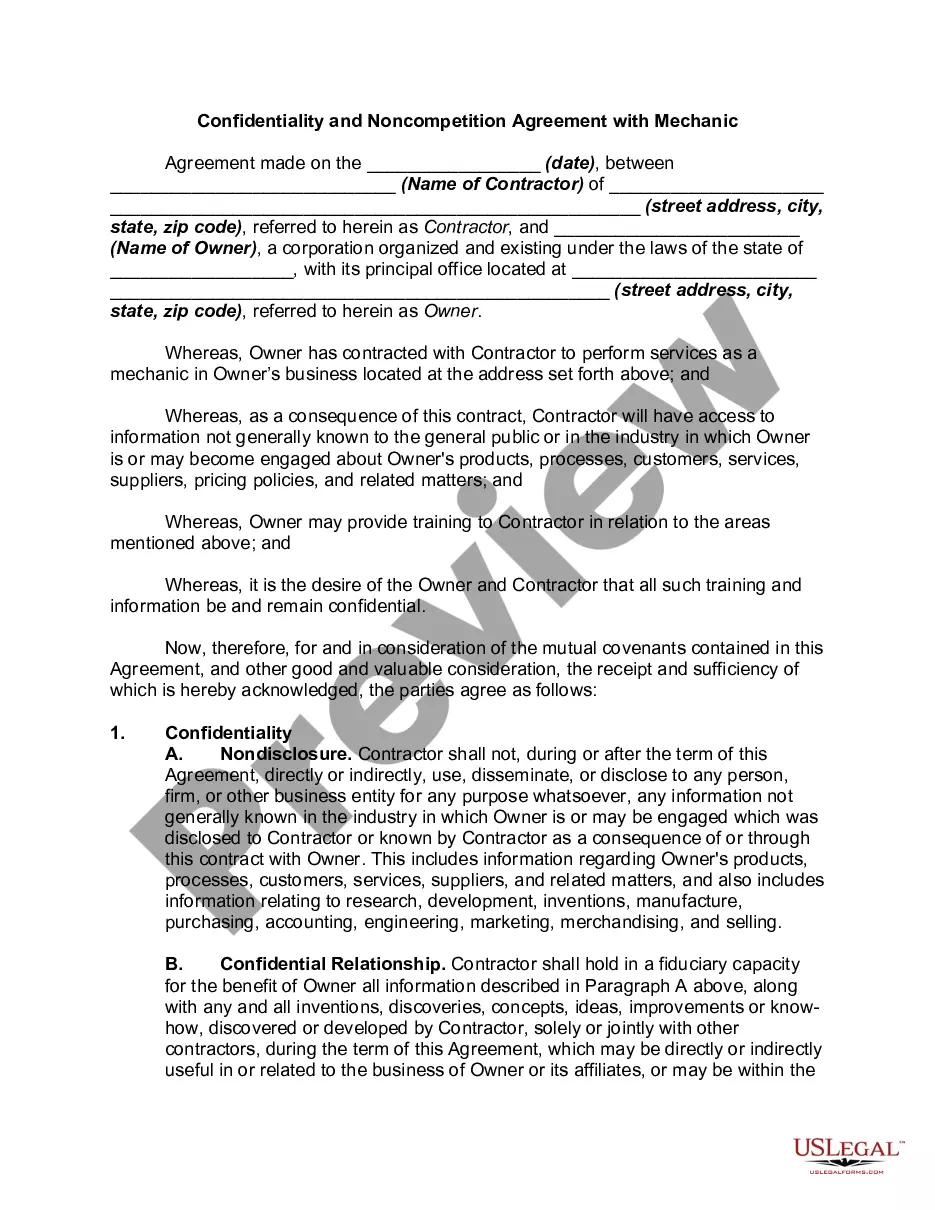
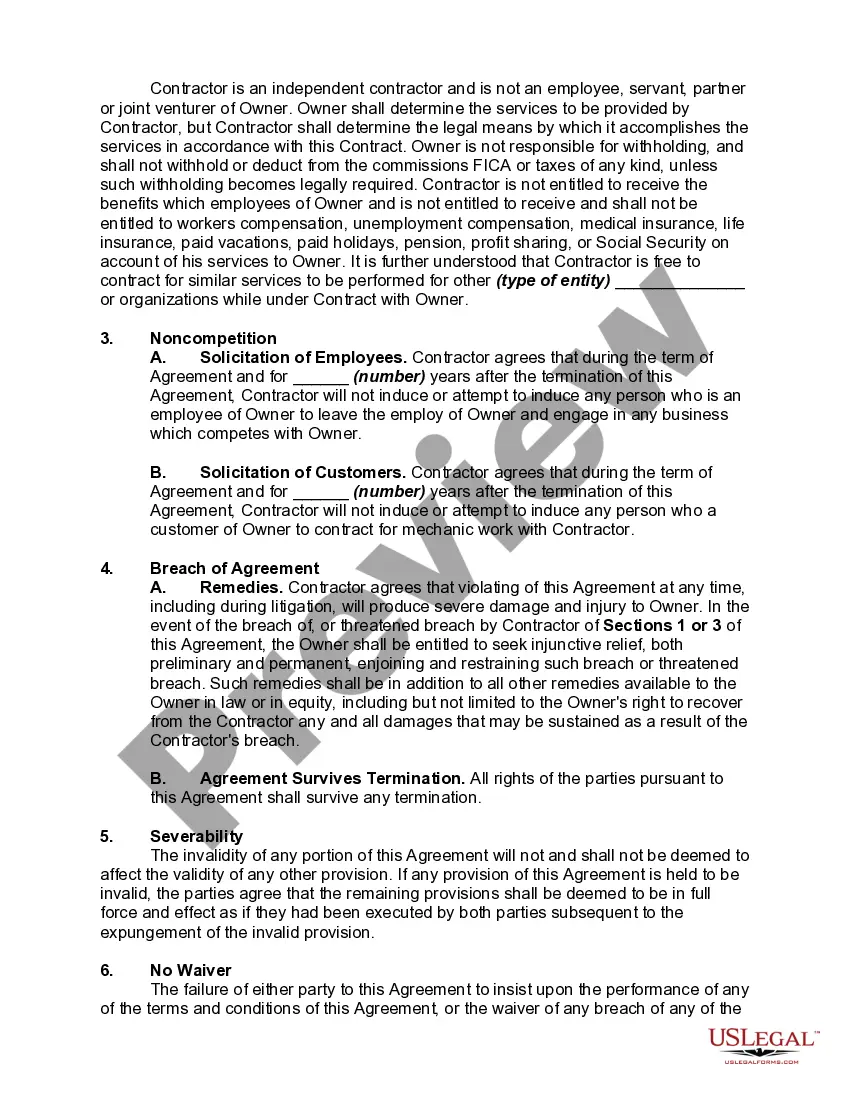
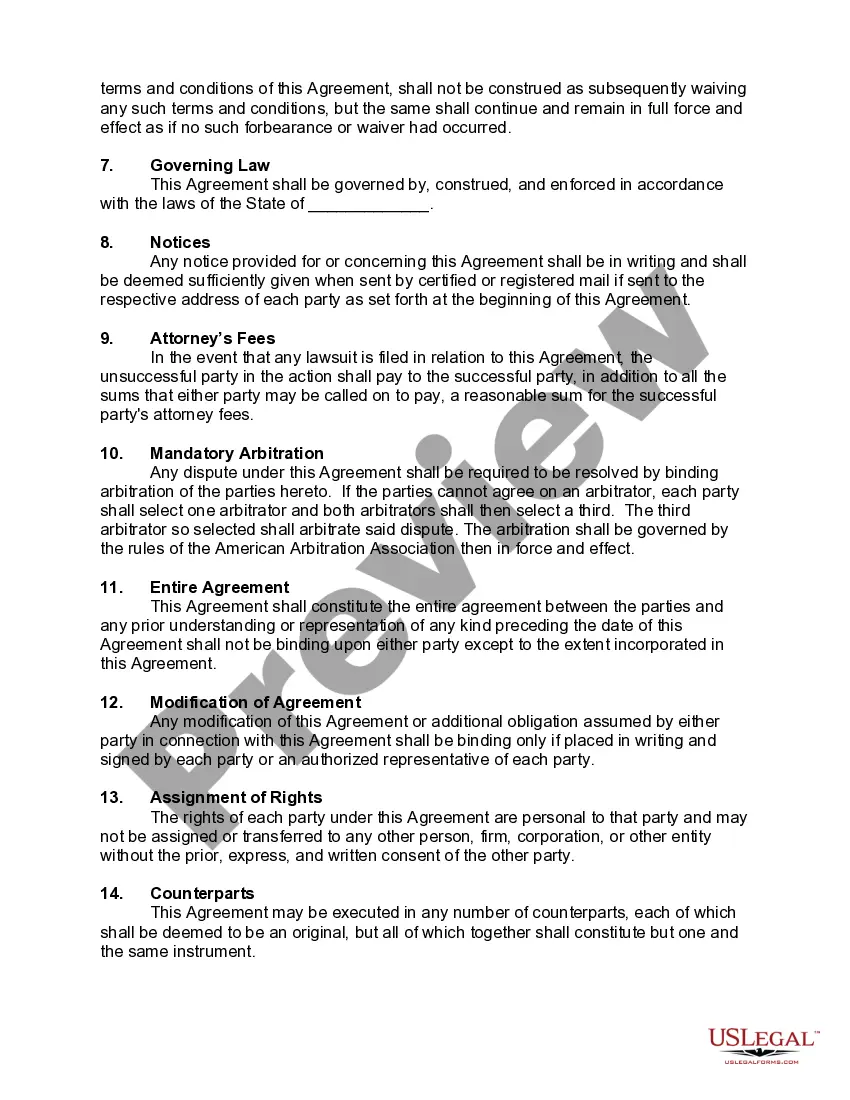
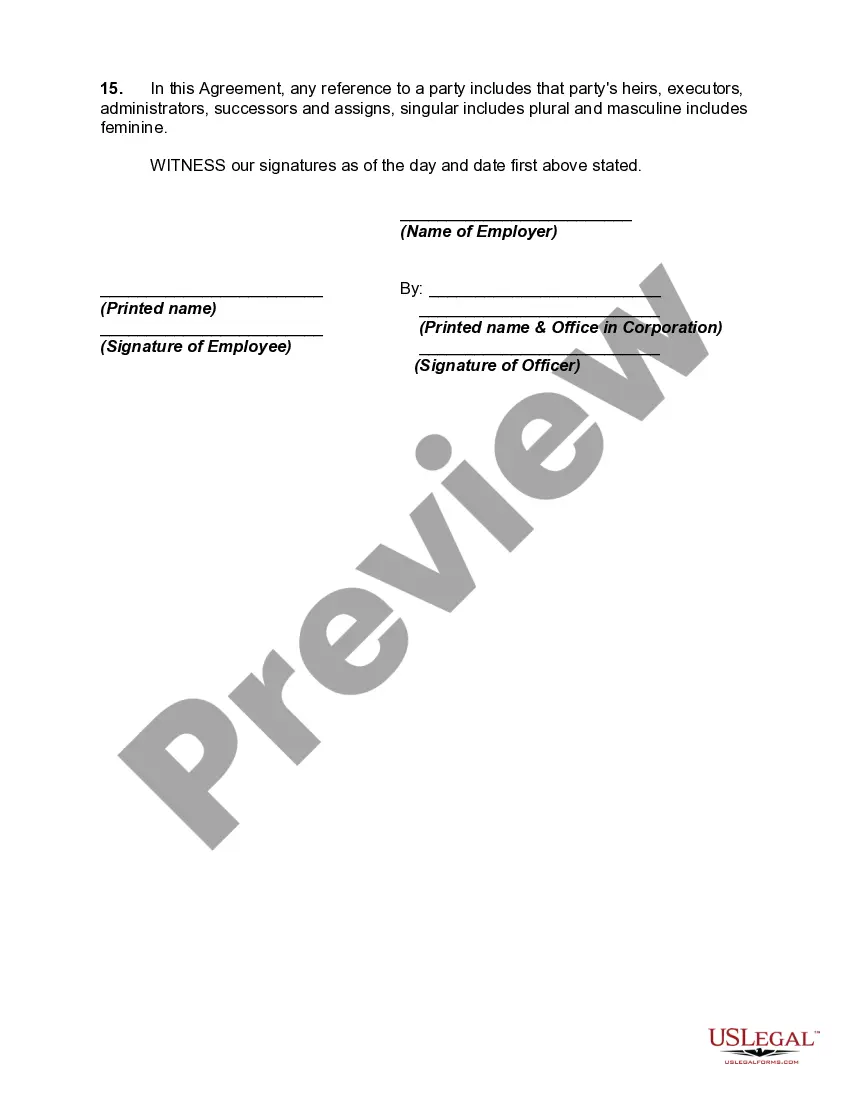

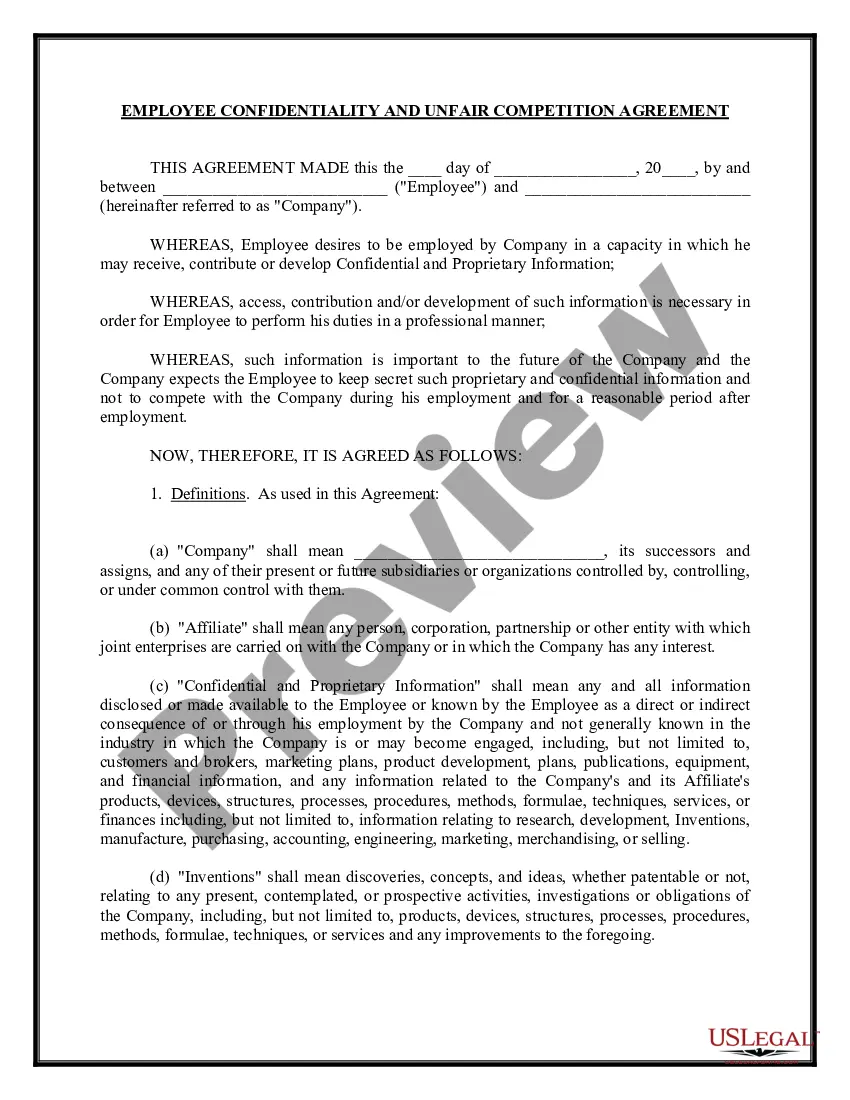
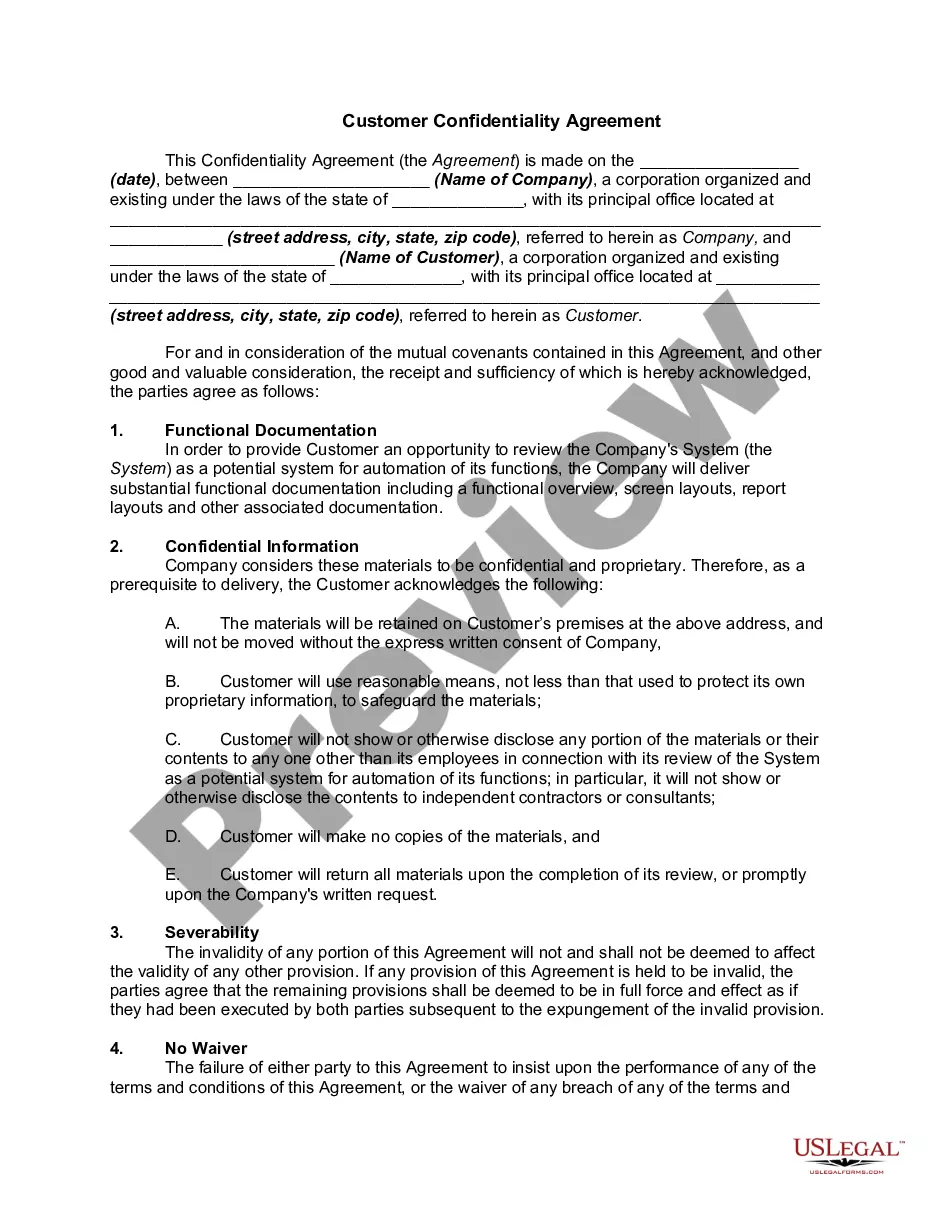
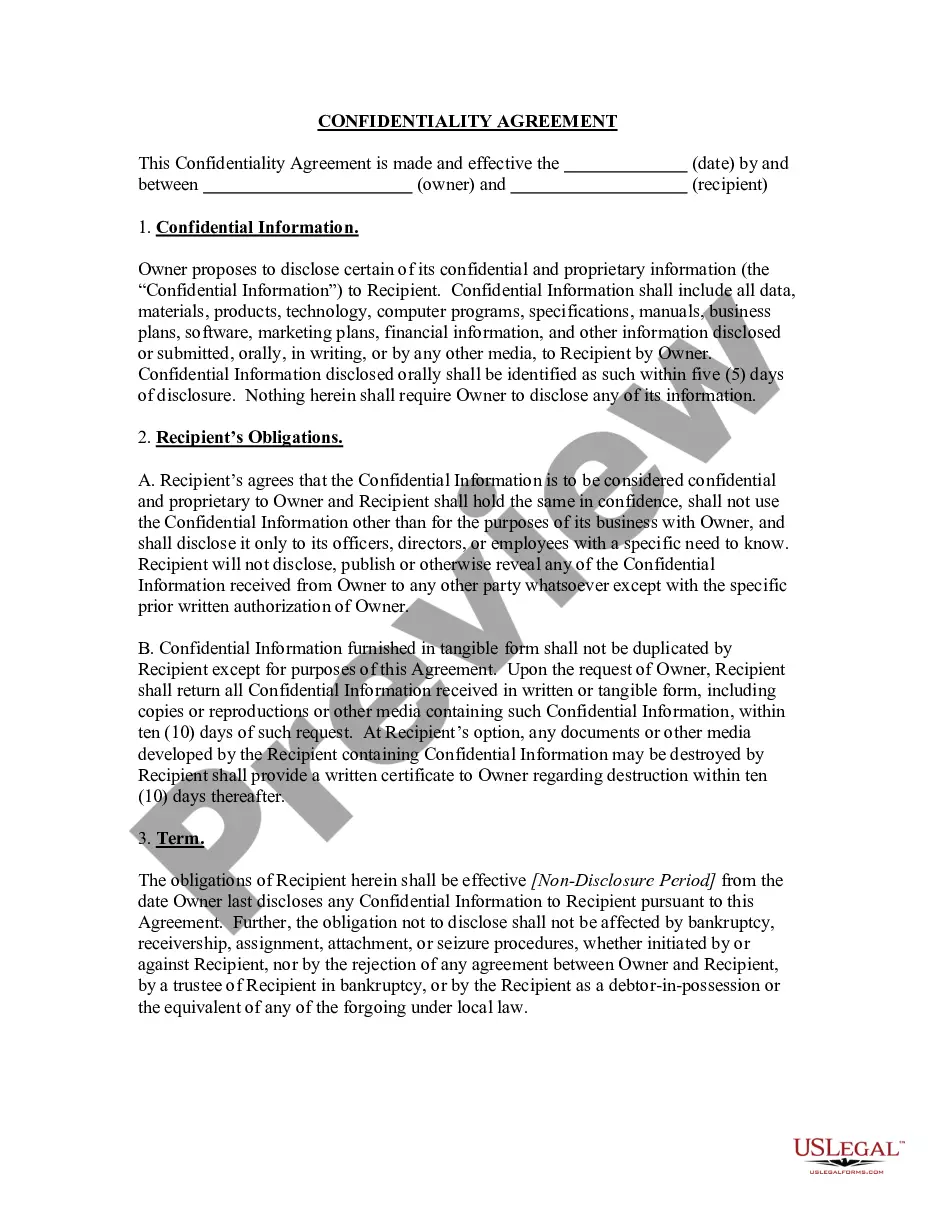
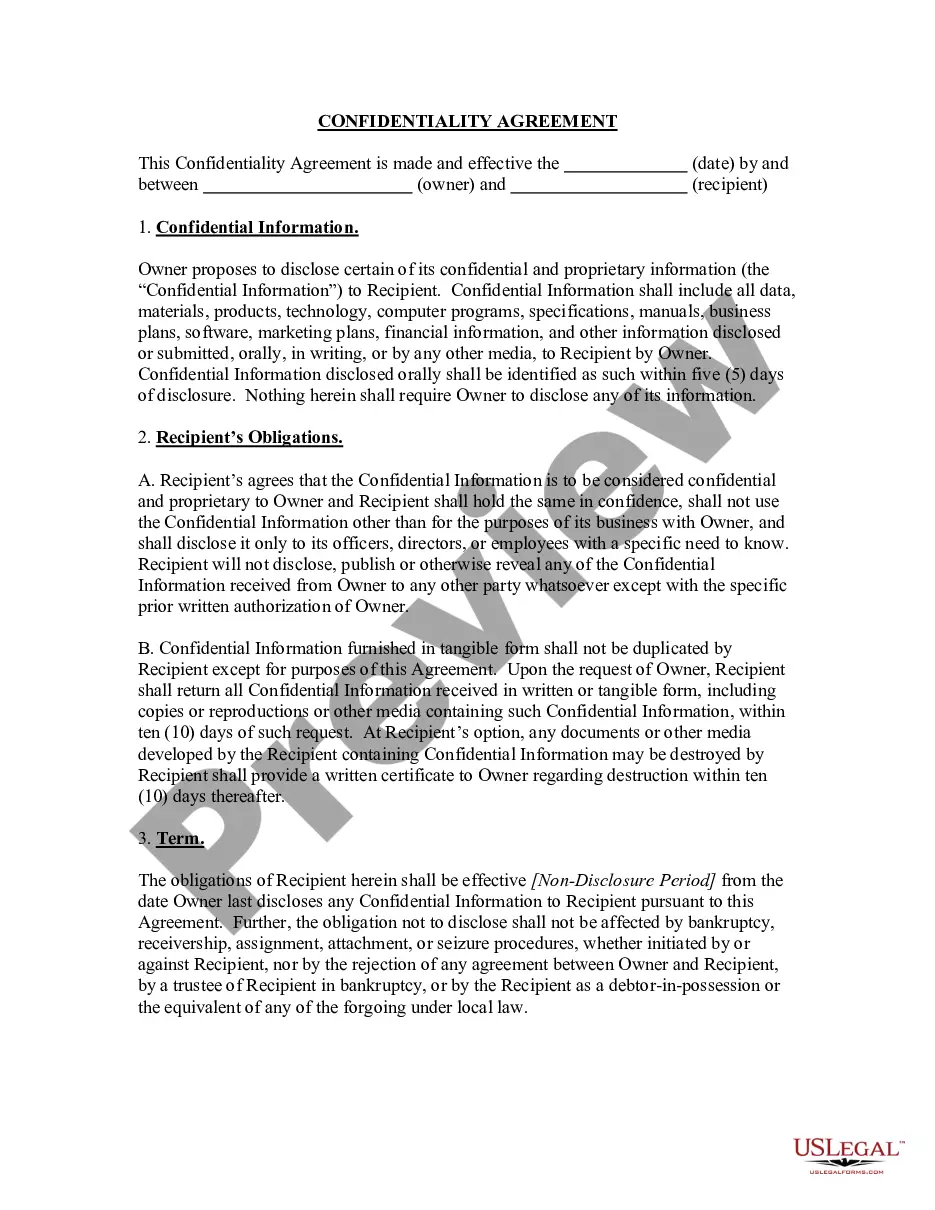
How to fill out Confidentiality And Noncompetition Agreement With Mechanic?
US Legal Forms - one of the largest collections of legal templates in the United States - provides a variety of legal document templates that you can download or print.
Utilizing the website, you can access thousands of forms for business and personal purposes, organized by categories, states, or keywords. You can obtain the latest versions of forms such as the Virginia Confidentiality and Noncompetition Agreement with Mechanic in just minutes.
If you already have a subscription, Log In and download the Virginia Confidentiality and Noncompetition Agreement with Mechanic from the US Legal Forms library. The Download button will appear on each template you view. You can find all previously downloaded forms within the My documents tab of your account.
Complete the transaction. Use your credit card or PayPal account to finalize the payment.
Select the format and download the form onto your device. Edit. Fill out, modify, print, and sign the downloaded Virginia Confidentiality and Noncompetition Agreement with Mechanic. Each template you save to your account has no expiration date and is yours indefinitely. Therefore, if you wish to download or print another copy, simply navigate to the My documents section and click on the form you need. Access the Virginia Confidentiality and Noncompetition Agreement with Mechanic using US Legal Forms, the most extensive resource for legal document templates. Employ a vast array of professional and state-specific templates that cater to your business or personal needs and requirements.
- Ensure you have selected the correct template for your region/area.
- Click the Preview button to review the form's content.
- Check the form description to verify that you have selected the right template.
- If the form does not meet your requirements, use the Search box at the top of the page to find one that does.
- Once you are satisfied with the form, confirm your decision by clicking the Get now button.
- Then, choose the pricing plan you prefer and provide your details to register for an account.
Form popularity
FAQ
Yes, noncompete agreements are enforceable in Virginia under specific conditions. These agreements must be reasonable in scope and duration to be valid. Additionally, the Virginia Confidentiality and Noncompetition Agreement with Mechanic typically requires consideration or a benefit to the employee in exchange for signing the agreement. If you're looking for guidance on creating or understanding these agreements, USLegalForms offers useful resources and templates tailored to your needs.
To write up a non-compete agreement, start by identifying the specific interests you aim to protect, then detail the obligations of the employee. Include clauses that clarify the duration and geographic area in which the restrictions apply. Utilizing resources like the Virginia Confidentiality and Noncompetition Agreement with Mechanic from uslegalforms can provide effective templates and guidance to ensure your agreement is both comprehensive and enforceable.
Writing a non-compete agreement involves outlining the terms clearly, including the scope of the restriction, duration, and geographic limits. It is essential to balance protecting the business while not overly restricting the employee's future job opportunities. Using a well-structured Virginia Confidentiality and Noncompetition Agreement with Mechanic template can simplify creating an agreement that meets legal standards and serves both parties’ interests.
To challenge a non-compete agreement in Virginia, an employee can demonstrate that the agreement is overly broad, unreasonable, or not necessary to protect legitimate business interests. Also, they can argue that the business did not provide adequate consideration for the non-compete terms. Understanding the nuances of the Virginia Confidentiality and Noncompetition Agreement with Mechanic is vital when considering a legal dispute, and consulting legal professionals may offer further clarity.
Yes, Virginia does recognize non-compete agreements, but they must meet specific legal requirements to be enforceable. These agreements must be reasonable in scope, duration, and geographic area. Thus, when drafting a Virginia Confidentiality and Noncompetition Agreement with Mechanic, it’s essential to ensure that the terms align with state laws to protect both parties effectively.
A confidentiality agreement focuses on protecting sensitive information from being shared with third parties. In contrast, a non-compete agreement restricts an employee's ability to work in a similar field after leaving a company. Both agreements play crucial roles in the Virginia Confidentiality and Noncompetition Agreement with Mechanic by safeguarding business interests and trade secrets, ensuring that businesses can thrive without the fear of losing proprietary information.
Exceptions to a non-solicitation agreement can include situations where the individual does not use proprietary information or trade secrets to further their new business endeavors. Another common exception is if the original employer terminates the employee without cause. Understanding the nuances of your Virginia Confidentiality and Noncompetition Agreement with Mechanic can help clarify these exceptions and guide your actions.
Several factors can void a non-solicitation agreement in Virginia. If the terms are overly broad, ambiguous, or if they lack consideration, they may be deemed unenforceable. Additionally, if the agreement violates public policy or is based on illegal conduct, it can be invalidated. Ensuring your Virginia Confidentiality and Noncompetition Agreement with Mechanic is clear and reasonable can help prevent such issues.
Violating a non-solicitation agreement typically occurs when you actively solicit clients or employees of your former employer, in direct contravention of the terms outlined in the agreement. Engaging in activities that support such solicitation can also constitute a violation. If you find yourself in this situation, understanding the exact terms of your Virginia Confidentiality and Noncompetition Agreement with Mechanic is essential to avoid legal repercussions.
solicitation agreement can be quite binding in Virginia, particularly if it meets specific legal criteria. These agreements must be reasonable in scope and duration to be enforceable. It's important to understand that a welldrafted Virginia Confidentiality and Noncompetition Agreement with Mechanic carries significant weight in court, so you should always take them seriously.