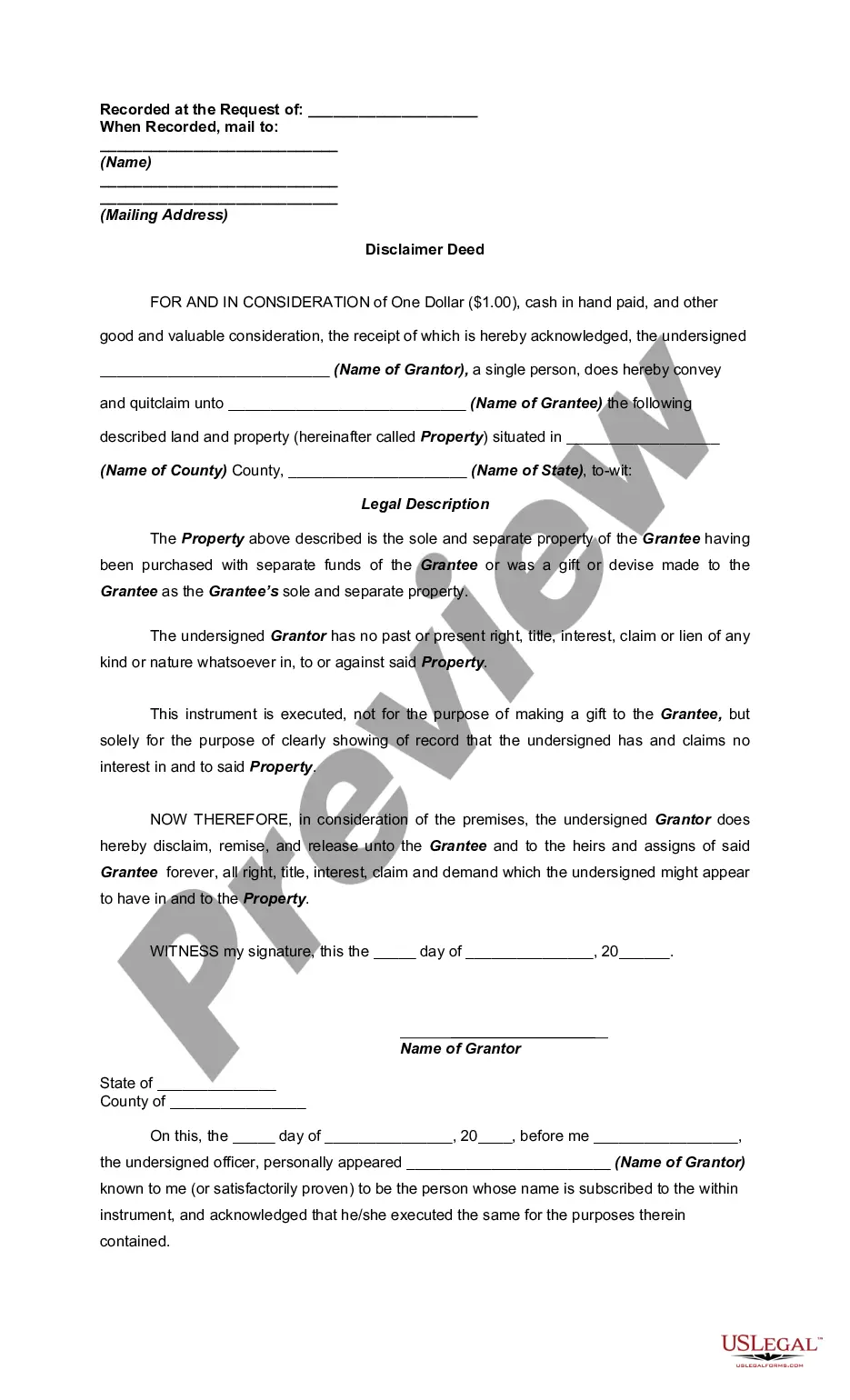
A disclaimer deed is a deed in which a spouse disclaims any interest in the real property acquired by the other spouse. A mortgage company often asks a borrower to sign a disclaimer deed so that his spouse not having her name on the loan, cannot claim any interest in the property.
Virginia Disclaimer Deed
State:
Multi-State
Category:
Control #:
US-01994BG
Format:
Word;
Rich Text
69 downloads
Description
Free preview


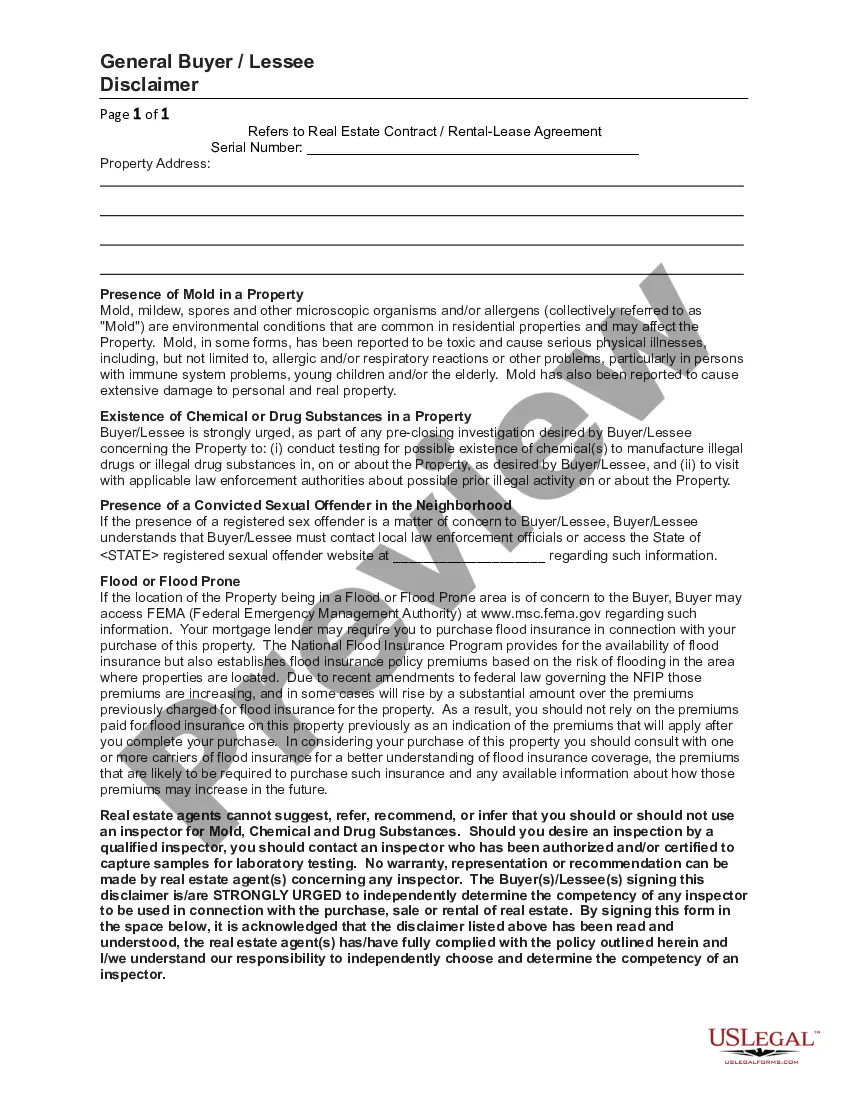
Get your form ready online
Our built-in tools help you complete, sign, share, and store your documents in one place.
Built-in online Word editor
Make edits, fill in missing information, and update formatting in US Legal Forms—just like you would in MS Word.
Export easily
Download a copy, print it, send it by email, or mail it via USPS—whatever works best for your next step.
E-sign your document
Sign and collect signatures with our SignNow integration. Send to multiple recipients, set reminders, and more. Go Premium to unlock E-Sign.
Notarize online 24/7
If this form requires notarization, complete it online through a secure video call—no need to meet a notary in person or wait for an appointment.
Store your document securely
We protect your documents and personal data by following strict security and privacy standards.

Make edits, fill in missing information, and update formatting in US Legal Forms—just like you would in MS Word.

Download a copy, print it, send it by email, or mail it via USPS—whatever works best for your next step.

Sign and collect signatures with our SignNow integration. Send to multiple recipients, set reminders, and more. Go Premium to unlock E-Sign.

If this form requires notarization, complete it online through a secure video call—no need to meet a notary in person or wait for an appointment.

We protect your documents and personal data by following strict security and privacy standards.
Looking for another form?
How to fill out Disclaimer Deed?
You can spend hours online attempting to locate the valid document template that satisfies the federal and state criteria you need.
US Legal Forms provides a vast array of valid forms that can be reviewed by experts.
You can conveniently download or print the Virginia Disclaimer Deed using my assistance.
If available, use the Preview button to view the document template as well. To find another version of the form, use the Search field to locate the template that meets your needs and specifications. Once you have found the template you need, click Buy now to proceed. Select the pricing plan you prefer, enter your information, and sign up for an account on US Legal Forms. Complete the transaction. You can use your credit card or PayPal account to pay for the valid form. Choose the format of the document and download it to your device. Make modifications to your document if possible. You can fill out, alter, sign, and print the Virginia Disclaimer Deed. Obtain and print a multitude of document templates using the US Legal Forms site, which offers the largest selection of valid forms. Utilize professional and state-specific templates to address your business or personal needs.
- If you possess a US Legal Forms account, you can Log In and then click the Obtain button.
- Subsequently, you can fill out, modify, print, or sign the Virginia Disclaimer Deed.
- Each valid document template you purchase is yours forever.
- To get an additional copy of the purchased form, navigate to the My documents tab and click the appropriate button.
- If you are using the US Legal Forms site for the first time, follow the simple instructions below.
- First, make sure you have selected the correct document template for the county/area of your choice.
- Review the form details to ensure you have chosen the correct form.
Form popularity
FAQ
A disclaimer deed allows an individual to formally decline ownership of a property, preventing them from inheriting or accepting it. In Virginia, executing a Virginia Disclaimer Deed can help avoid potential tax implications and legal complications associated with property ownership. This document ensures that the individual's intentions are clear and legally recognized.
A disclaimer works with an estate by allowing beneficiaries to refuse inheritance of property or assets. When a Virginia Disclaimer Deed is executed, it indicates that the disclaiming party does not want their share, which can then pass to other beneficiaries as specified in the will or state law. This process can simplify estate administration and ensure that assets are managed according to the decedent’s wishes.
The purpose of a disclaimer is to provide a clear and formal way for a person to refuse ownership or interest in a property. In the context of a Virginia Disclaimer Deed, it helps to clarify the intentions of the parties involved and reduces the risk of future legal disputes. This clarity can be essential for effective estate planning and property management.
Individuals may choose to disclaim property for various reasons, such as avoiding tax liabilities, managing debts, or simply not wanting the responsibility of ownership. A Virginia Disclaimer Deed allows them to formally refuse property without the complications of legal disputes. This can be particularly helpful in situations where inheriting property may not be in one’s best interest.
For a deed to be considered valid in Virginia, it must include specific elements such as the names of the parties involved, a clear description of the property, and the signature of the grantor. Furthermore, a Virginia Disclaimer Deed must be notarized and recorded with the appropriate county office. By meeting these criteria, the deed can effectively convey the intended legal rights.
A disclaimer deed is a legal document that allows an individual to refuse or relinquish their interest in a property. In the context of a Virginia Disclaimer Deed, this means that the person is formally stating they do not wish to inherit or accept ownership of the property. This can be particularly useful in estate planning, helping to clarify property ownership and prevent disputes.
Yes, disclaimers can hold up in court, provided they meet all legal requirements. A Virginia Disclaimer Deed must be executed correctly and adhere to state laws. Courts generally recognize valid disclaimers that follow these guidelines, ensuring that the intent of the parties involved is honored.
Filing a Virginia Disclaimer Deed involves several key steps. First, you need to obtain the disclaimer form, which is typically available through your local county clerk's office or online on platforms like US Legal Forms. After completing the form with accurate information, you should file it with the appropriate county office where the property is located. This process ensures that your intent to disclaim any interest in the property is legally recognized and recorded.
An example of a disclaimer of estate is a situation where an individual refuses an inheritance of property, such as a house, that they do not wish to manage or maintain. In this case, the individual would execute a Virginia Disclaimer Deed to formally reject the property. By doing so, the property would then pass to the next eligible heir, ensuring that the estate is handled according to the decedent’s wishes. USLegalForms provides templates to simplify this process for you.
To disclaim an inheritance in Virginia, you must file a Virginia Disclaimer Deed. First, you need to prepare a written disclaimer that clearly states your intention to refuse the inheritance. This document must be signed and dated, and it should be filed with the probate court where the estate is administered. Using a reliable service like USLegalForms can help you create the necessary documents quickly and correctly.