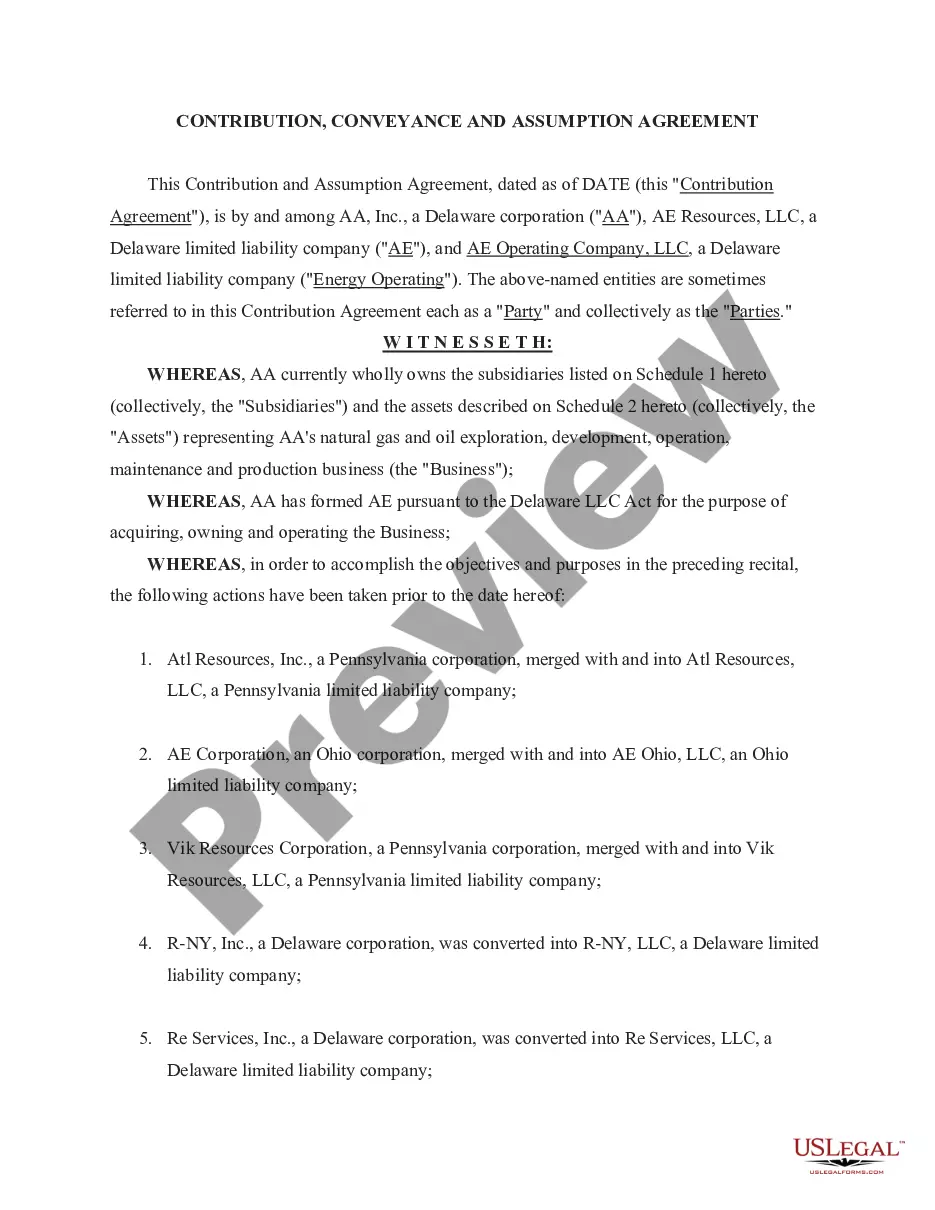
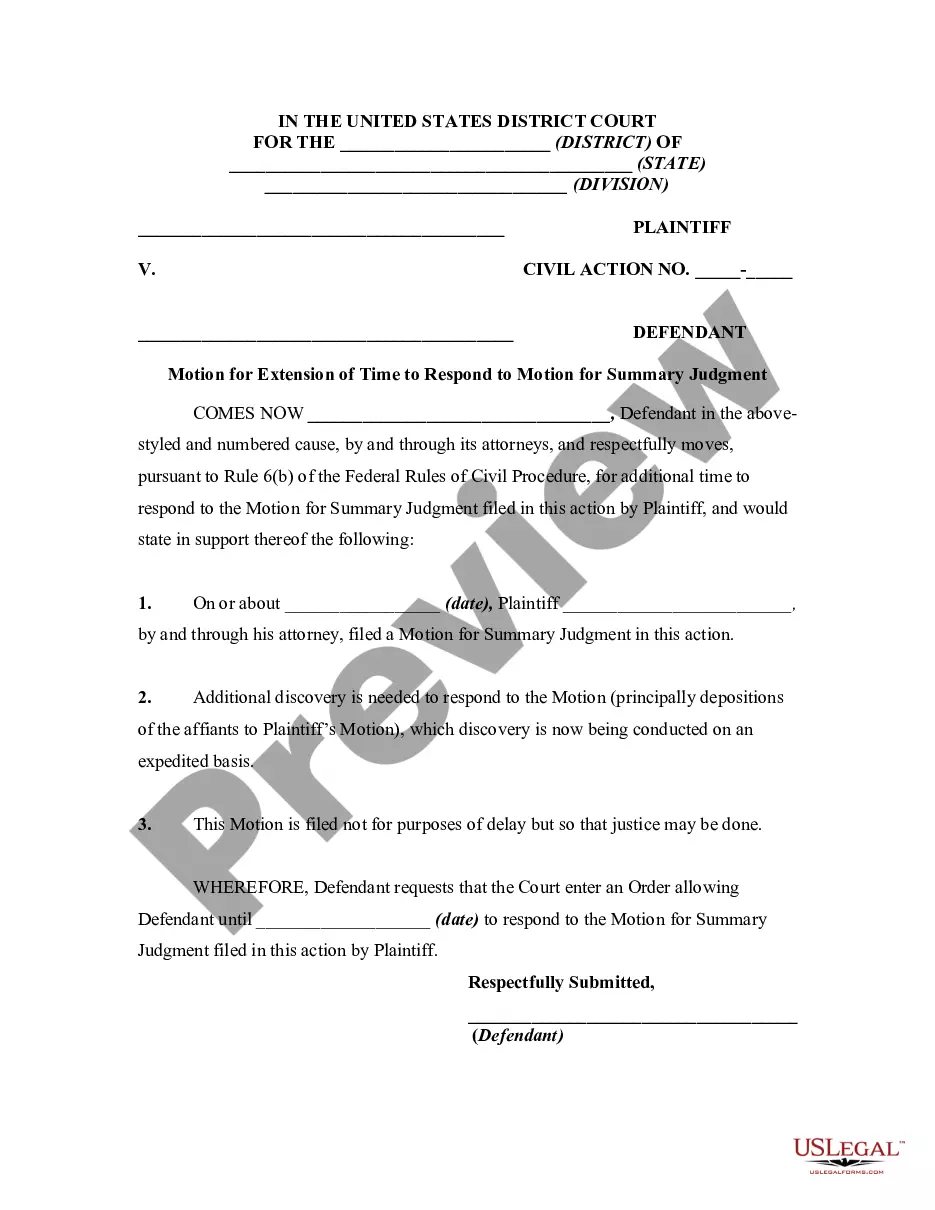
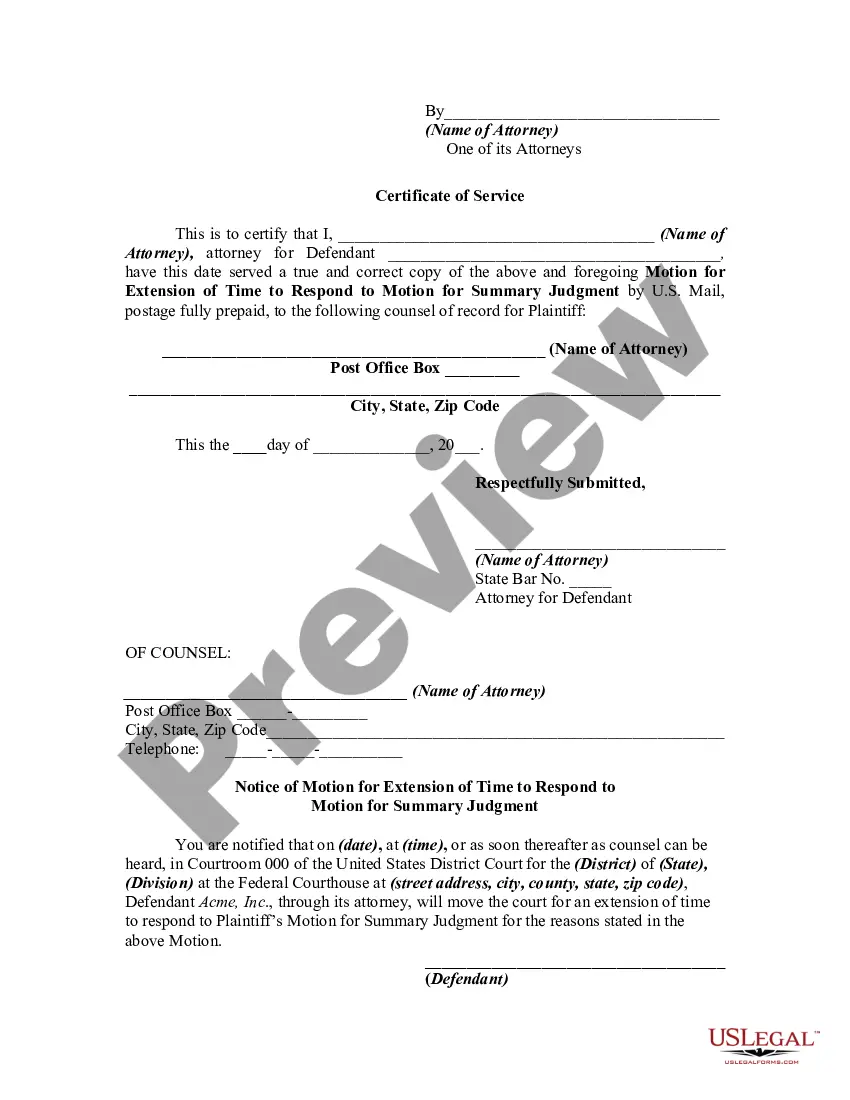
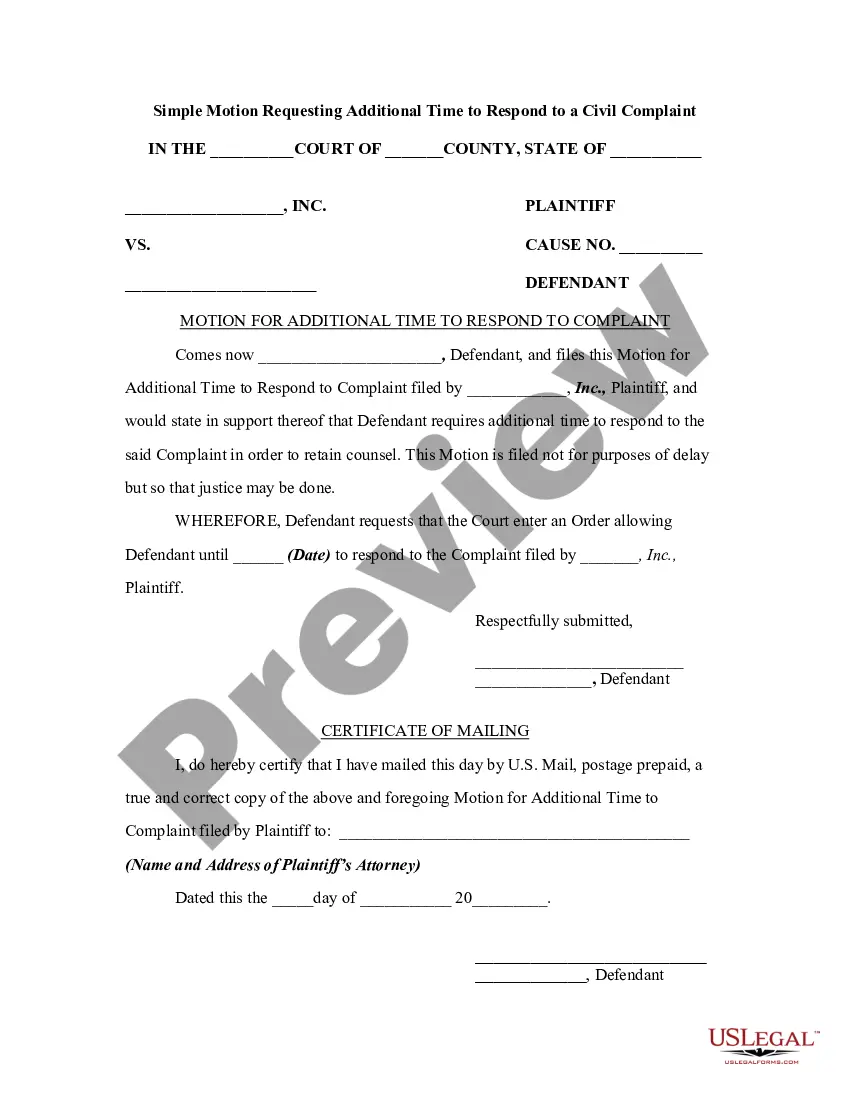
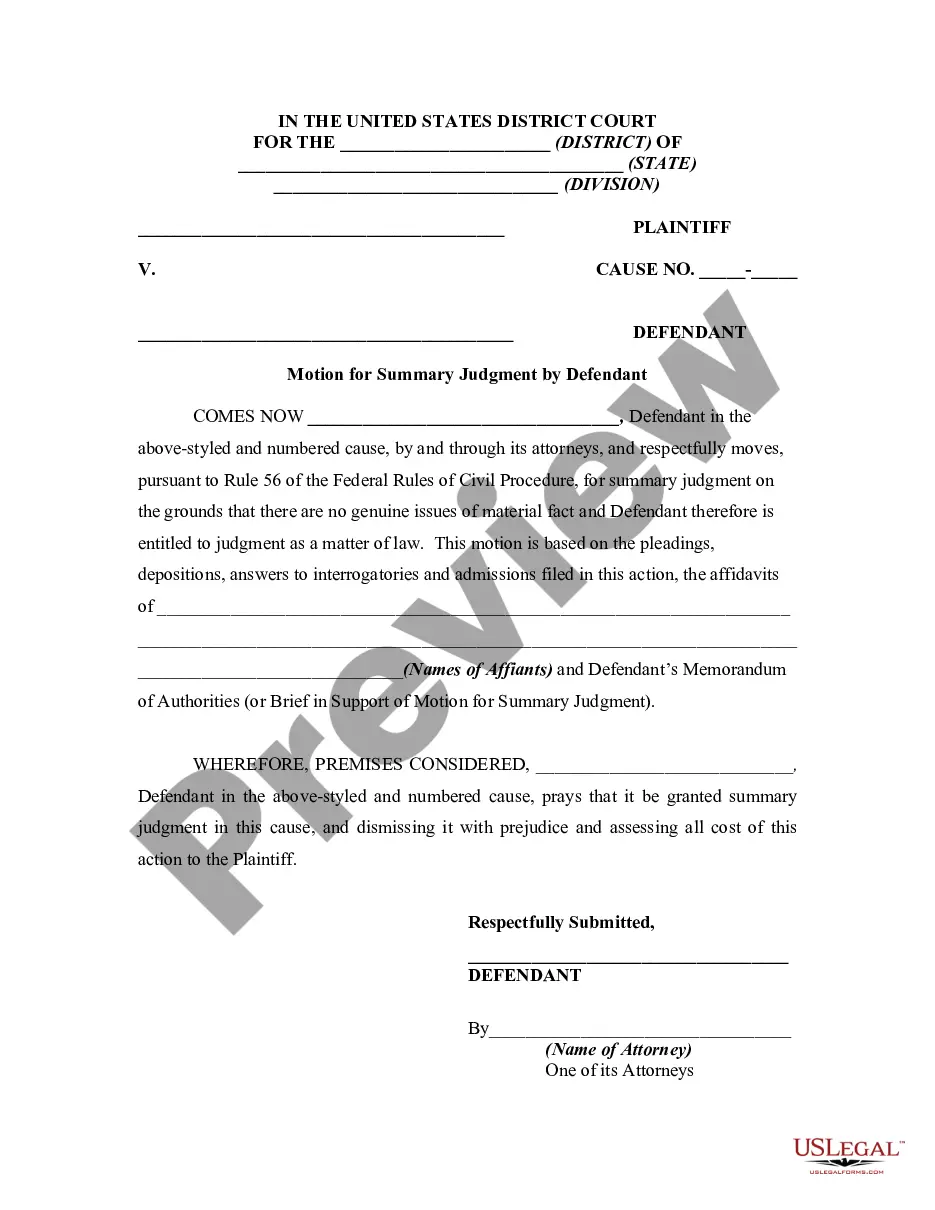
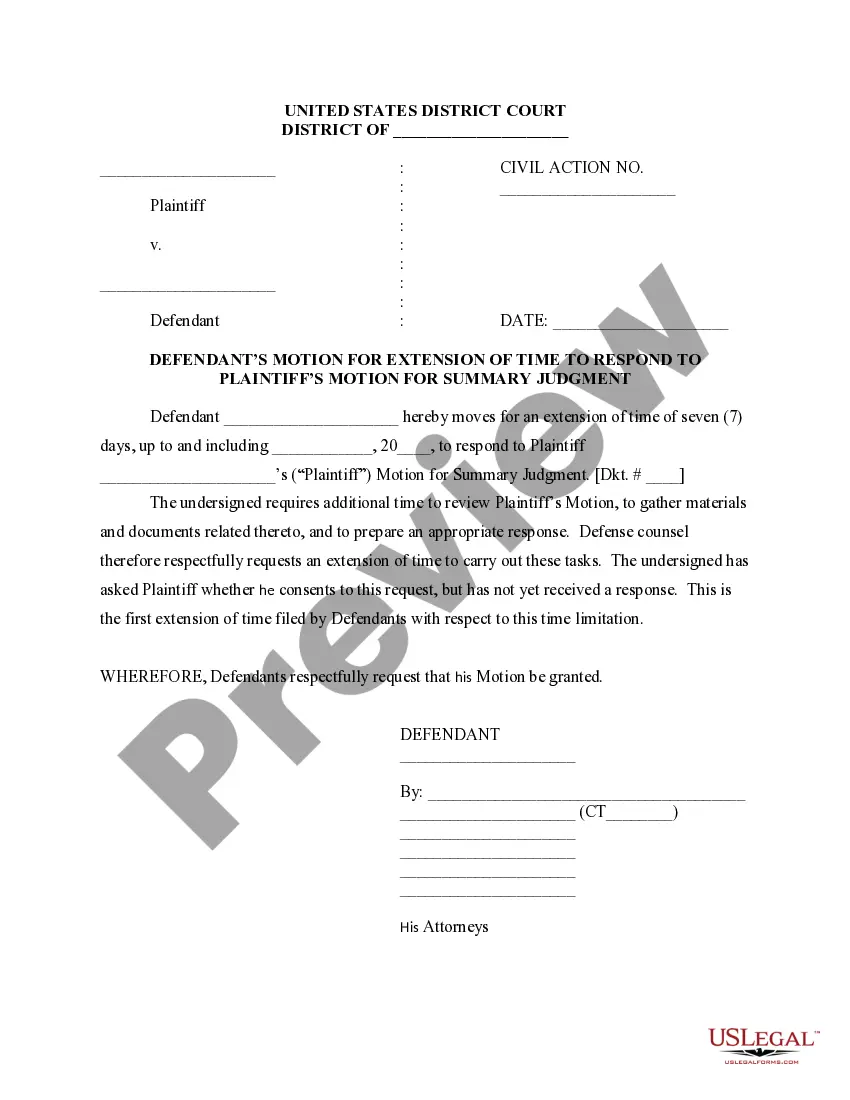
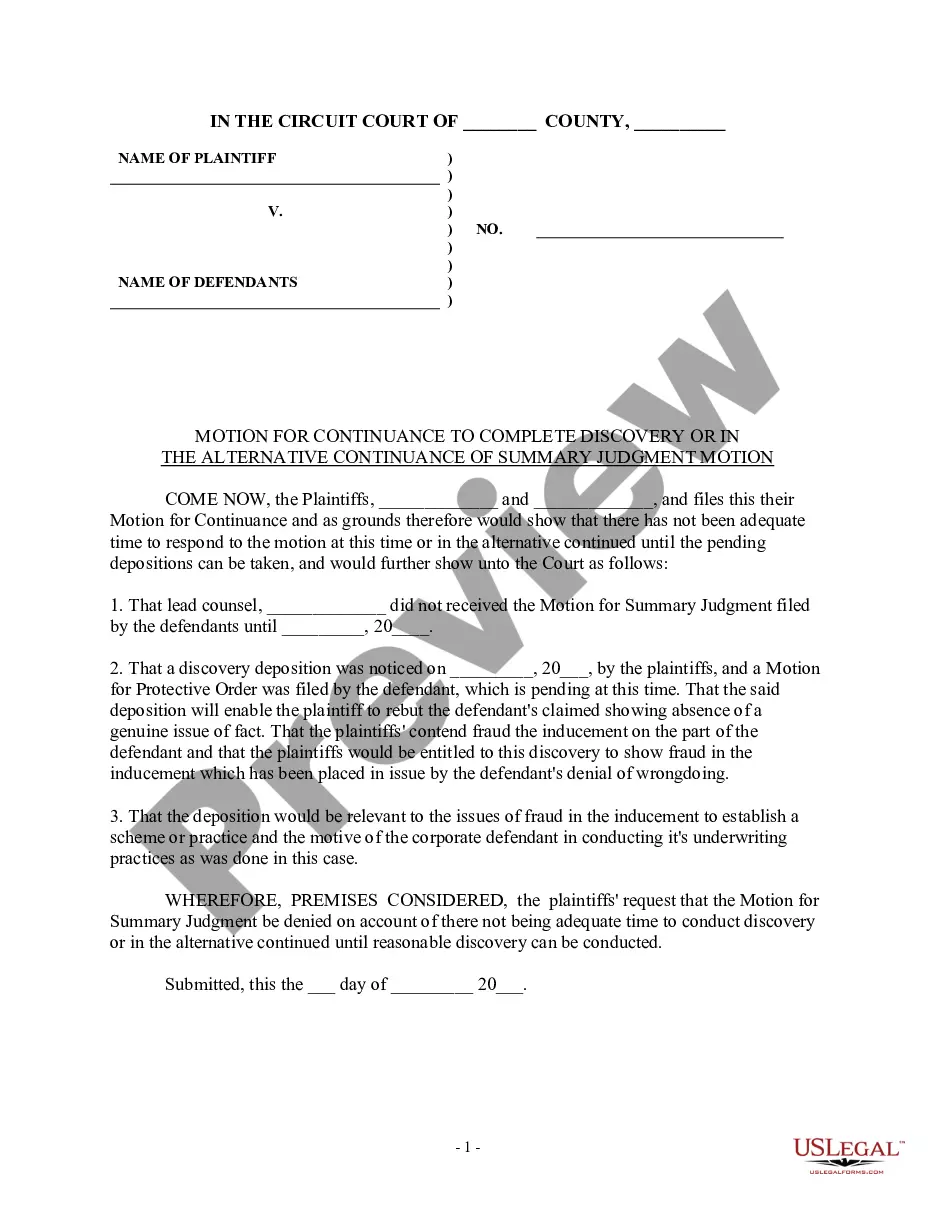
This form is a generic motion requesting additional time to respond to a motion for summary judgment.
Virginia Motion Requesting Additional Time to Respond to Motion for Summary Judgment with Notice of Motion
Category:
State:
Multi-State
Control #:
US-00919BG
Format:
Word;
Rich Text
Instant download
Description
Free preview

Get your form ready online
Our built-in tools help you complete, sign, share, and store your documents in one place.
Built-in online Word editor
Make edits, fill in missing information, and update formatting in US Legal Forms—just like you would in MS Word.
Export easily
Download a copy, print it, send it by email, or mail it via USPS—whatever works best for your next step.
E-sign your document
Sign and collect signatures with our SignNow integration. Send to multiple recipients, set reminders, and more. Go Premium to unlock E-Sign.
Notarize online 24/7
If this form requires notarization, complete it online through a secure video call—no need to meet a notary in person or wait for an appointment.
Store your document securely
We protect your documents and personal data by following strict security and privacy standards.

Make edits, fill in missing information, and update formatting in US Legal Forms—just like you would in MS Word.

Download a copy, print it, send it by email, or mail it via USPS—whatever works best for your next step.

Sign and collect signatures with our SignNow integration. Send to multiple recipients, set reminders, and more. Go Premium to unlock E-Sign.

If this form requires notarization, complete it online through a secure video call—no need to meet a notary in person or wait for an appointment.

We protect your documents and personal data by following strict security and privacy standards.
Looking for another form?

How to fill out Motion Requesting Additional Time To Respond To Motion For Summary Judgment With Notice Of Motion?
Selecting the appropriate legal document format may prove to be challenging. Naturally, there is an assortment of templates available online, but how can you secure the legal form you require? Utilize the US Legal Forms website. The service offers a vast array of templates, such as the Virginia Motion Requesting Additional Time to Respond to Motion for Summary Judgment with Notice of Motion, which can be utilized for both business and personal purposes. All forms are reviewed by professionals and comply with state and federal regulations.
If you are already registered, Log In to your account and click the Obtain button to access the Virginia Motion Requesting Additional Time to Respond to Motion for Summary Judgment with Notice of Motion. Use your account to view the legal forms you have previously purchased. Visit the My documents section of your account and obtain another copy of the document you need.
If you are a new user of US Legal Forms, here are simple instructions for you to follow: First, ensure you have selected the correct form for your city/region. You can review the form using the Review button and check the form details to confirm it is indeed the right one for you. If the form does not meet your needs, utilize the Search field to find the appropriate form. Once you are certain the form is suitable, click on the Buy now button to acquire the form. Select your preferred payment method and enter the necessary information. Create your account and complete the purchase using your PayPal account or credit card. Choose the document format and download the legal document template for your use. Fill out, modify, print, and sign the acquired Virginia Motion Requesting Additional Time to Respond to Motion for Summary Judgment with Notice of Motion.
US Legal Forms is undoubtedly the largest collection of legal forms where you can find various document templates. Take advantage of the service to acquire professionally crafted documents that adhere to state regulations.
- Selecting the appropriate legal document format may prove to be challenging.
- Naturally, there is an assortment of templates available online.
- Utilize the US Legal Forms website.
- The service offers a vast array of templates.
- All forms are reviewed by professionals.
- If you are already registered, Log In to your account.
Form popularity
FAQ
Clerical mistakes. Clerical mistakes in all judgments or other parts of the record and errors therein arising from oversight or from an inadvertent omission may be corrected by the court at any time on its own initiative or upon the motion of any party and after such notice, as the court may order.
Judgment is a void judgment if court that rendered judgment lacked jurisdiction of. the subject matter, or of the parties, or acted in a manner inconsistent with due. process, Fed. Rules Civ.
Summary Judgment. Any party may make a motion for summary judgment at any time after the parties are at issue, except in an action for divorce or for annulment of marriage.
When a case, civil or criminal, is tried by a jury and a party objects to the judgment or action of the court in granting or refusing to grant a new trial on a motion to set aside the verdict of a jury on the ground that it is contrary to the evidence, or when a case is decided by a court without the intervention of a ...
B. Clerical mistakes. Clerical mistakes in all judgments or other parts of the record and errors therein arising from oversight or from an inadvertent omission may be corrected by the court at any time on its own initiative or upon the motion of any party and after such notice, as the court may order.
"However, if the judgment is void, it may be attacked in any court at any time. A void judgment is one that has been procured by fraud or entered by a court that lacked either subject matter or personal jurisdiction." Key Bank & Tr. v. Myers, 49 Va.
Rule . Motion for Summary Judgment. Summary judgment, interlocutory in nature, may be entered as to the undisputed portion of a contested claim or on the issue of liability alone although there is a genuine issue as to the amount of damages.
At any time after commencement of the action a defending party, as a third-party plaintiff, may file and serve a third-party complaint upon a person not a party to the action who is or may be liable to the third- party plaintiff for all or part of the plaintiff's claim against the third-party plaintiff.