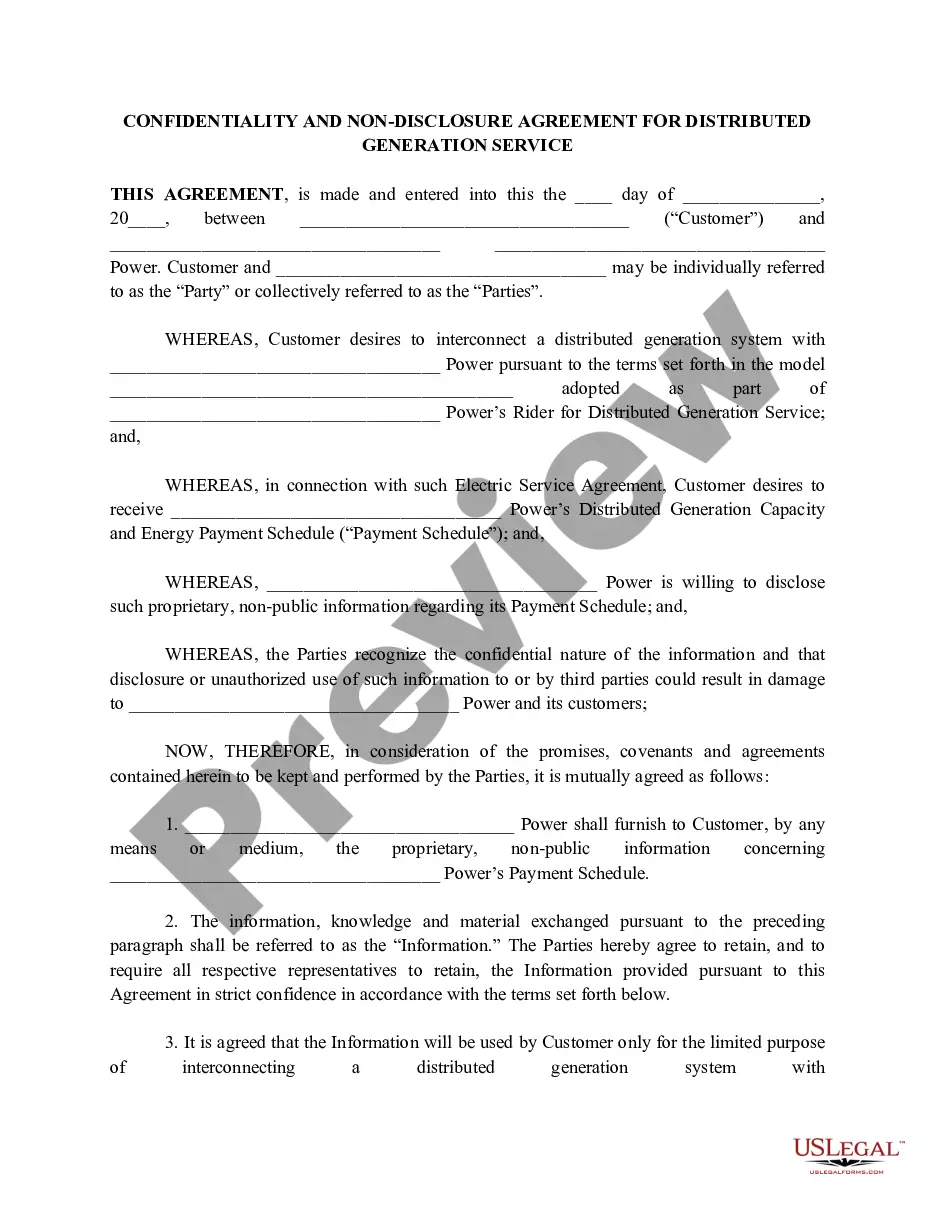
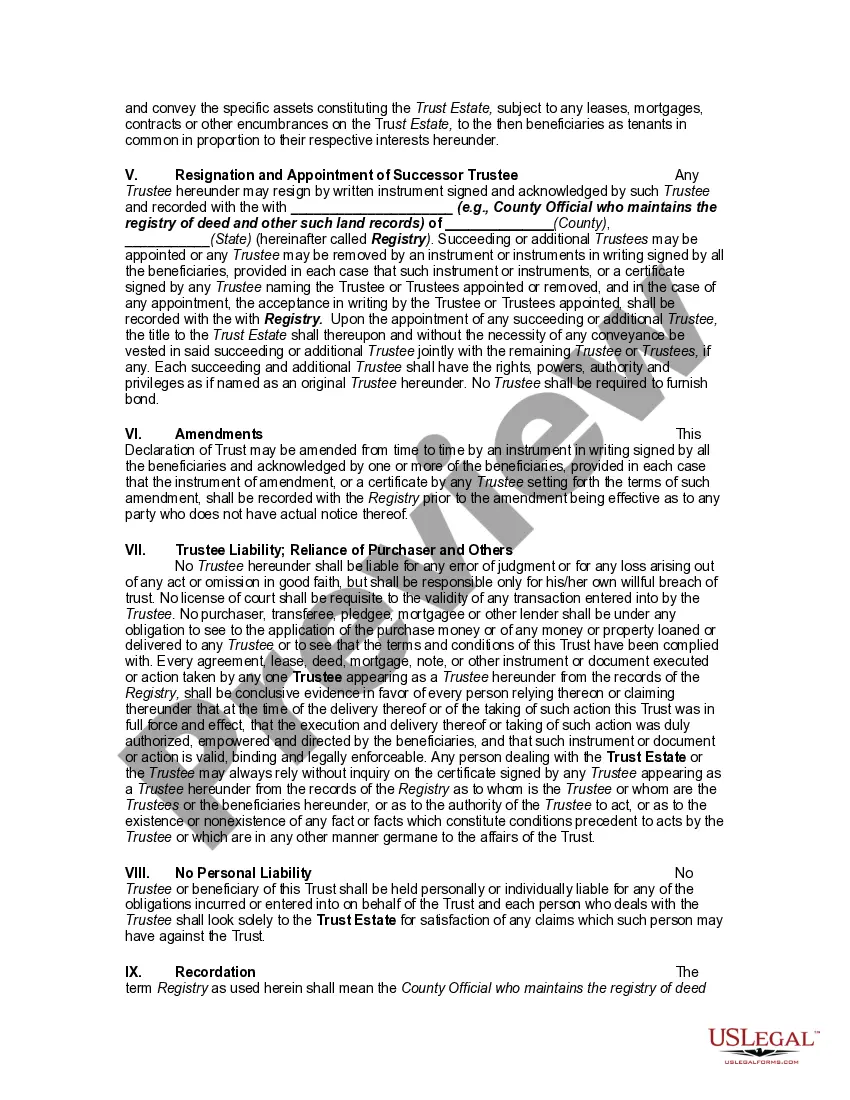
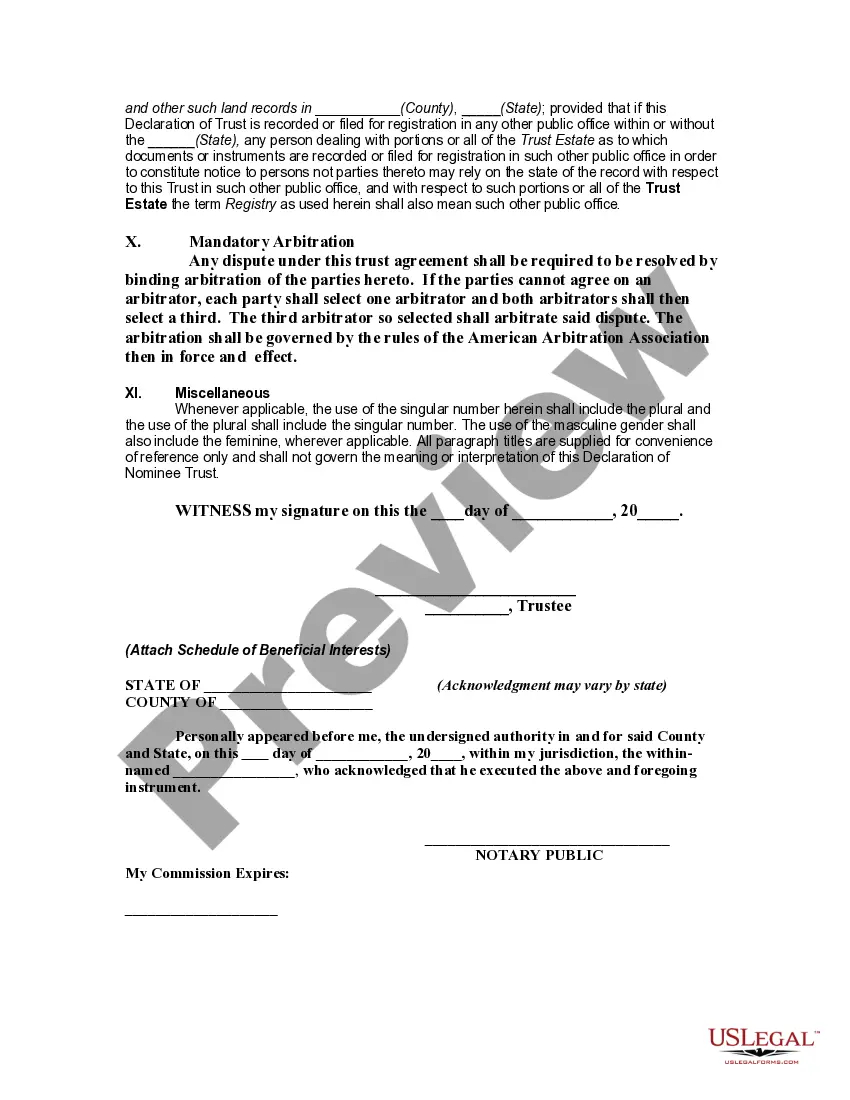
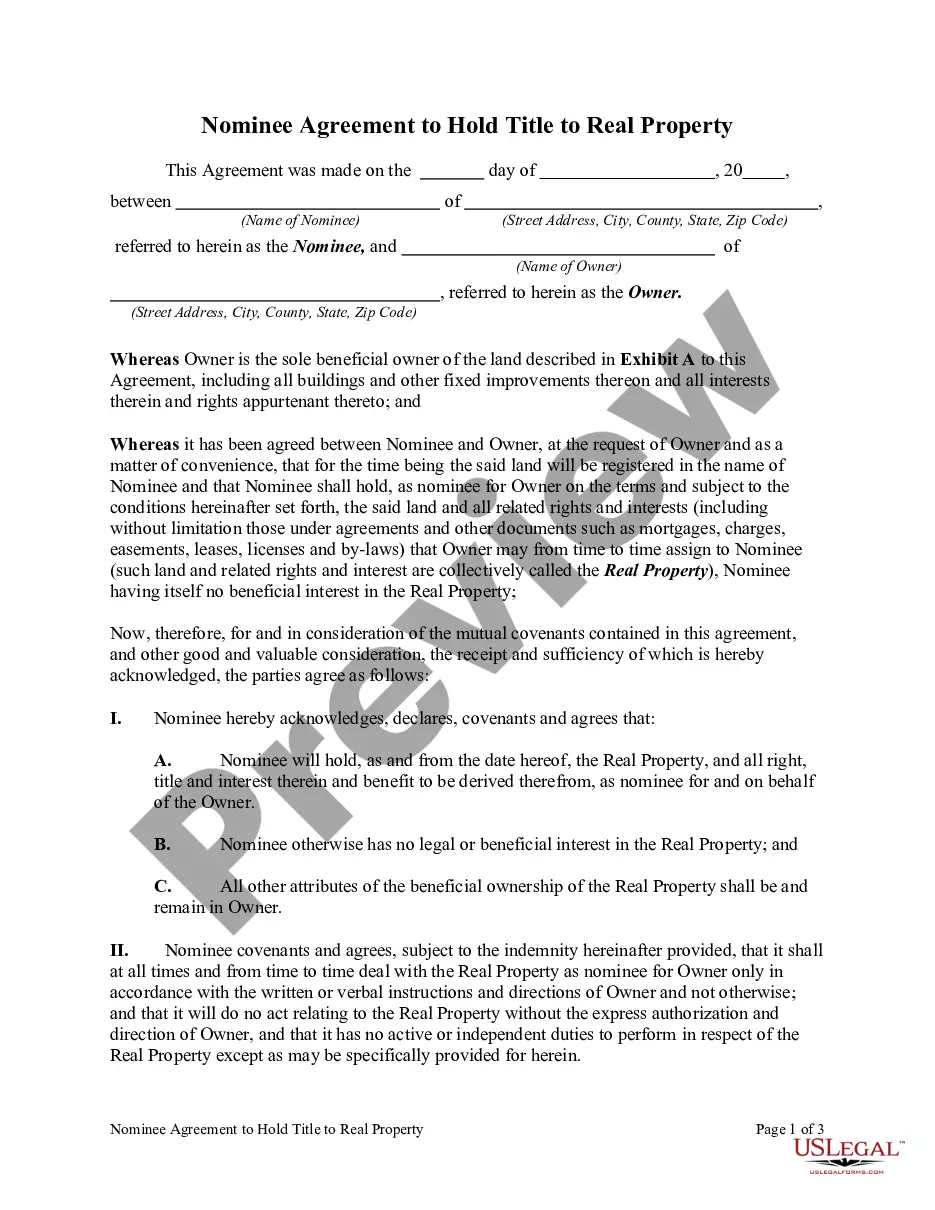
A nominee trust is a trust in which the trustee holds legal title to the trust property for the trust's beneficiaries, but the beneficiaries exercise the controlling powers, and the actions that the trustees may take on their own are very limited. Such trusts are a common device for holding title to real estate, and afford certain tax advantages. A nominee trust is not a trust in the strict classical sense, because of the trustee-beneficiary relationship. Despite a nominee trust's nontraditional relationship between trustee and beneficiary, such a trust must still adhere to the rule that no trust exists when the same individual is the sole settlor, sole trustee, and sole beneficiary. The trustees of a nominee trust act at the direction of the beneficiaries.
Virginia Nominee Trust
Description
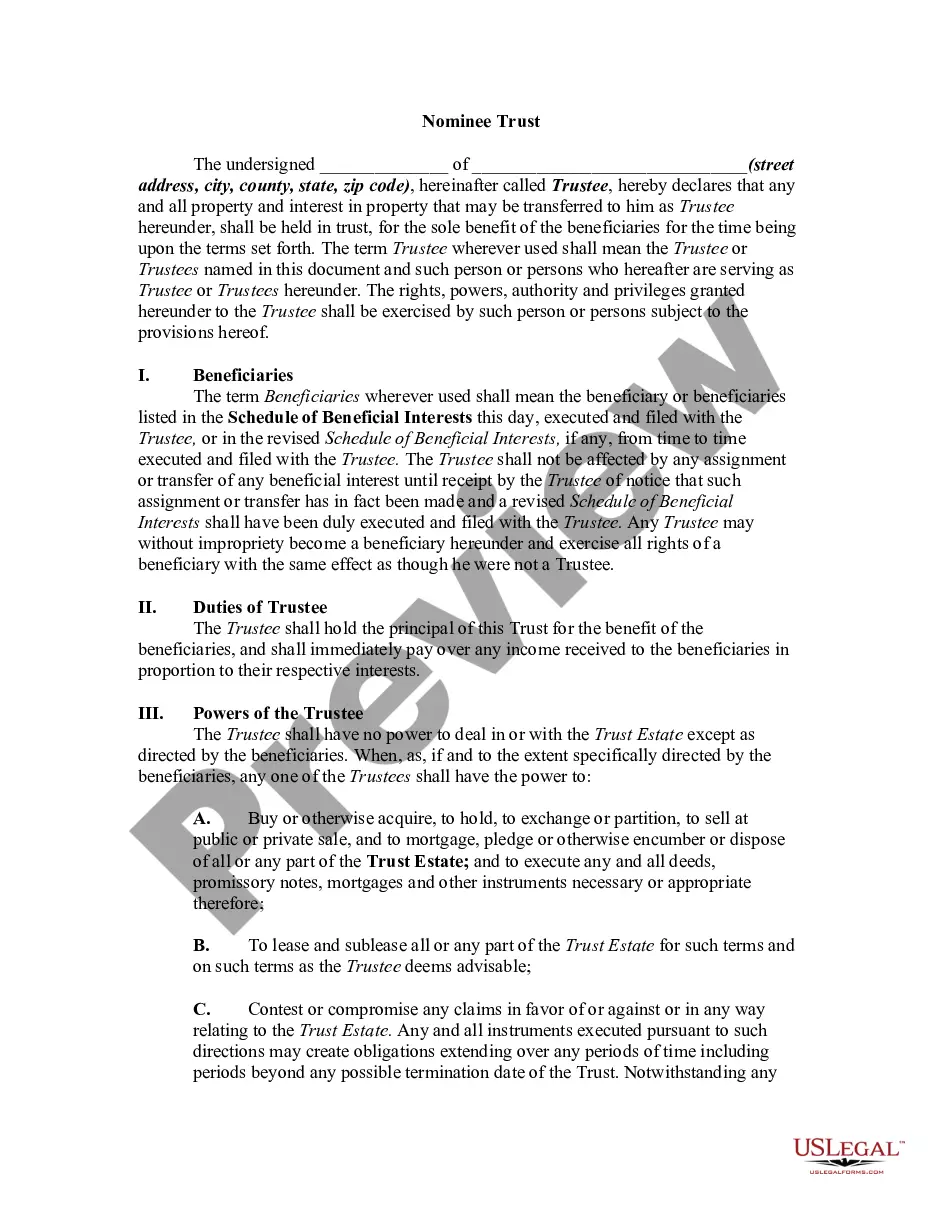

Get your form ready online
Our built-in tools help you complete, sign, share, and store your documents in one place.
Make edits, fill in missing information, and update formatting in US Legal Forms—just like you would in MS Word.
Download a copy, print it, send it by email, or mail it via USPS—whatever works best for your next step.
Sign and collect signatures with our SignNow integration. Send to multiple recipients, set reminders, and more. Go Premium to unlock E-Sign.
If this form requires notarization, complete it online through a secure video call—no need to meet a notary in person or wait for an appointment.
We protect your documents and personal data by following strict security and privacy standards.

Make edits, fill in missing information, and update formatting in US Legal Forms—just like you would in MS Word.

Download a copy, print it, send it by email, or mail it via USPS—whatever works best for your next step.

Sign and collect signatures with our SignNow integration. Send to multiple recipients, set reminders, and more. Go Premium to unlock E-Sign.

If this form requires notarization, complete it online through a secure video call—no need to meet a notary in person or wait for an appointment.

We protect your documents and personal data by following strict security and privacy standards.
Looking for another form?



How to fill out Nominee Trust?
Selecting the appropriate legal document format can be a challenge.
Naturally, there are numerous templates accessible online, but how can you locate the legal form you require.
Utilize the US Legal Forms website. The service offers thousands of templates, including the Virginia Nominee Trust, which can be used for both business and personal purposes.
If the form does not meet your needs, use the Search field to find the right form. Once you are confident that the form is suitable, click the Buy now button to purchase the form. Choose the payment plan you want and provide the required information. Create your account and pay for the order using your PayPal account or credit card. Select the file format and download the legal document format to your device. Complete, edit, print, and sign the acquired Virginia Nominee Trust. US Legal Forms is the largest repository of legal forms where you can discover a variety of document templates. Use the service to download professionally crafted documents that adhere to state requirements.
- All documents are reviewed by experts and comply with state and federal regulations.
- If you are already registered, Log In to your account and click the Download button to retrieve the Virginia Nominee Trust.
- Use your account to browse through the legal forms you have previously acquired.
- Visit the My documents section of your account and obtain another copy of the document you need.
- If you are a new user of US Legal Forms, here are straightforward instructions to follow.
- First, ensure you have selected the correct form for your city/state. You can review the form using the Review button and read the form description to confirm it is the right one for you.
Form popularity
FAQ
"Qualified beneficiary" means a beneficiary who, on the date the beneficiary's qualification is determined, (i) is a distributee or permissible distributee of trust income or principal; (ii) would be a distributee or permissible distributee of trust income or principal if the interests of the distributees described in ...
Anyone can make a trust in Virginia as long as they follow the requirements as listed in the statute. The settlor must have the proper mental capacity and must intend to create the trust. Furthermore, the settlor must name a beneficiary for the trust and a trustee to manage it.
A qualified beneficiary is a limited subset of all trust beneficiaries. In effect, the class is limited to living persons who are (a) current beneficiaries, (b) intermediate beneficiaries, and (c) first line remainder beneficiaries, whether vested or contingent.
Duty to inform and report. A. A trustee shall keep the qualified beneficiaries of the trust reasonably informed about the administration of the trust and of the material facts necessary for them to protect their interests.
Any individual who has control over the trust. Who is the Ultimate Beneficial Owner? The term Ultimate Beneficial Owner (UBO) is applied to individuals or entities who meet the beneficial owner definition and their ownership or voting rights are greater than 25%.
A beneficiary of trust is the individual or group of individuals for whom a trust was created. The person who creates a trust also determines the trust beneficiary and appoints a trustee to manage the trust in the beneficiary's best interests.
Trust beneficiaries are typically entitled to a copy of the trust upon request. If not provided voluntarily by the trustee, beneficiaries can formally request it in writing. If the trustee still refuses, legal action might be necessary to obtain the document. Always consult with an attorney for guidance.
A will typically goes into probate after the testator dies, while a trust does not. A will is a set of instructions for after death, and a living trust is an account that is funded by a person's assets while they're alive.