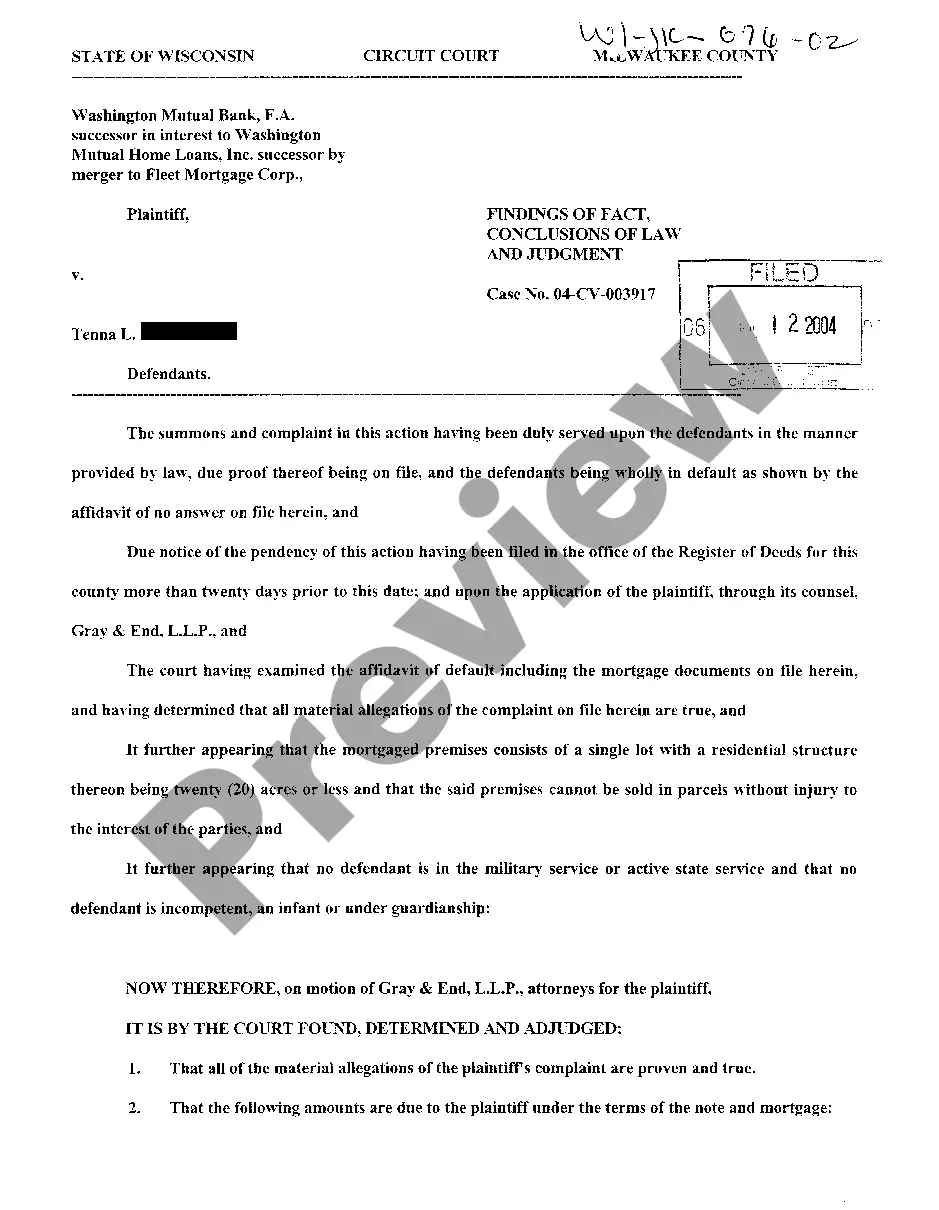
Amendment to Oil and Gas Lease to Change Depository
Overview of this form
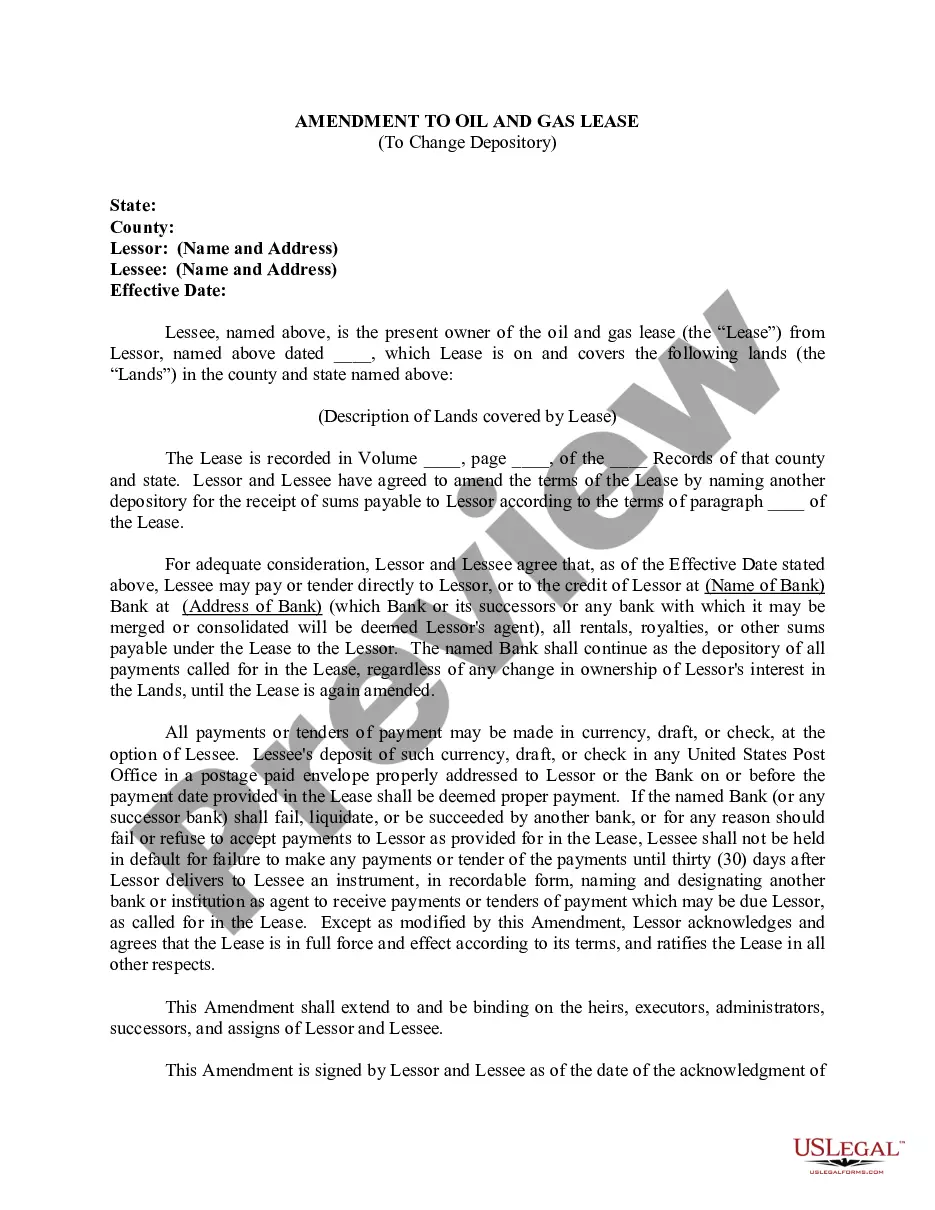
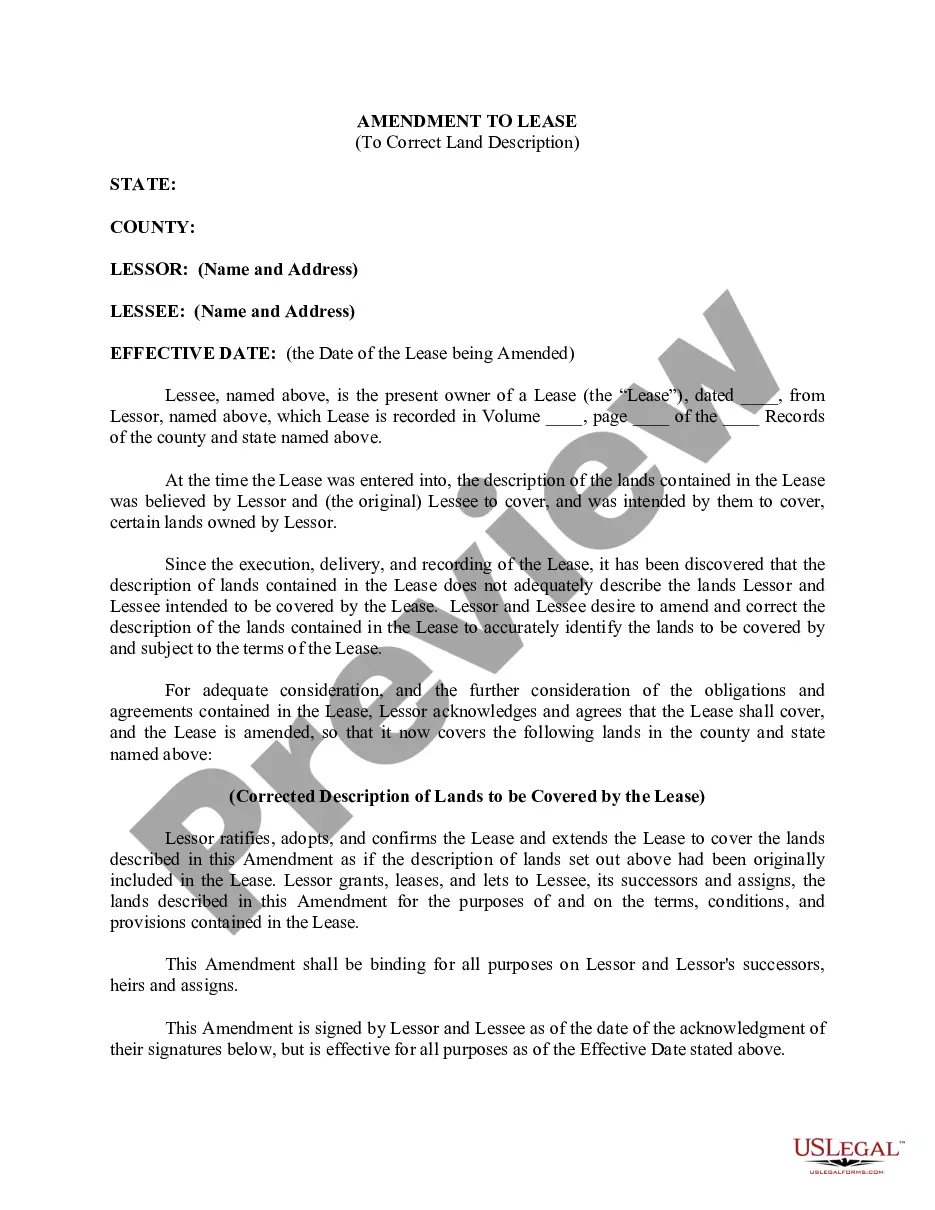
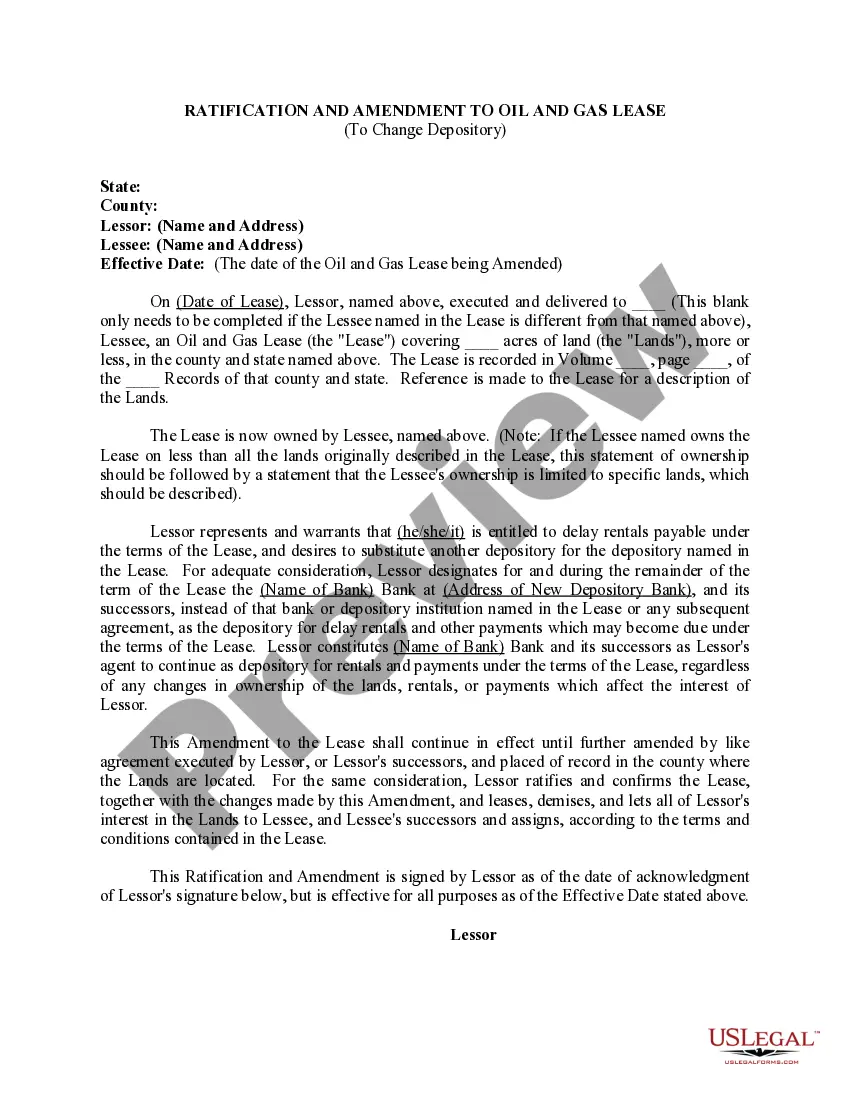
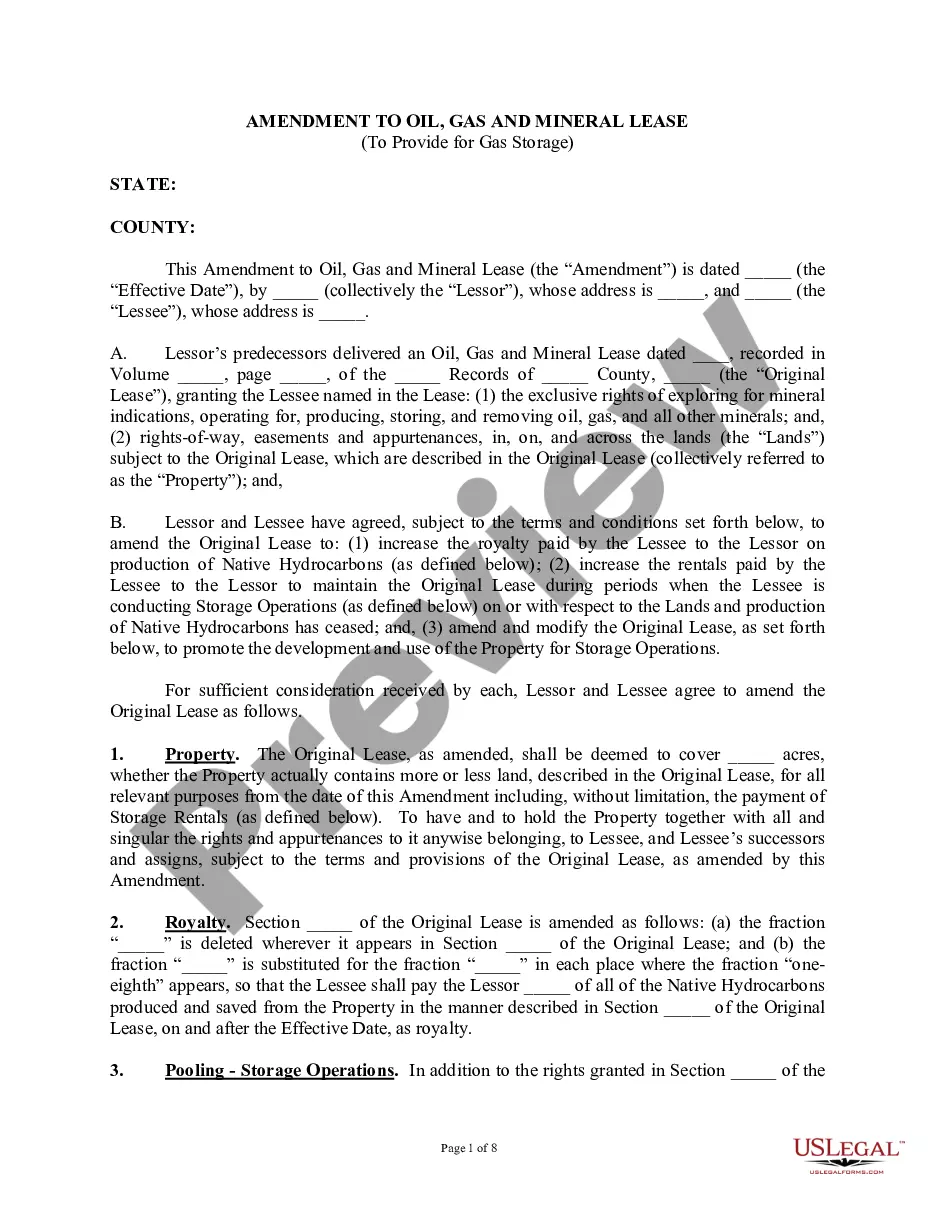
The Amendment to Oil and Gas Lease to Change Depository is a legal document used when there is a need to change the designated depository for payments due to the lessor under an existing oil and gas lease. This amendment is distinct from other lease forms as it specifically addresses the requirements and processes pertaining to the change of payment location, ensuring that both parties maintain clarity and agreement on payment procedures.
Form components explained
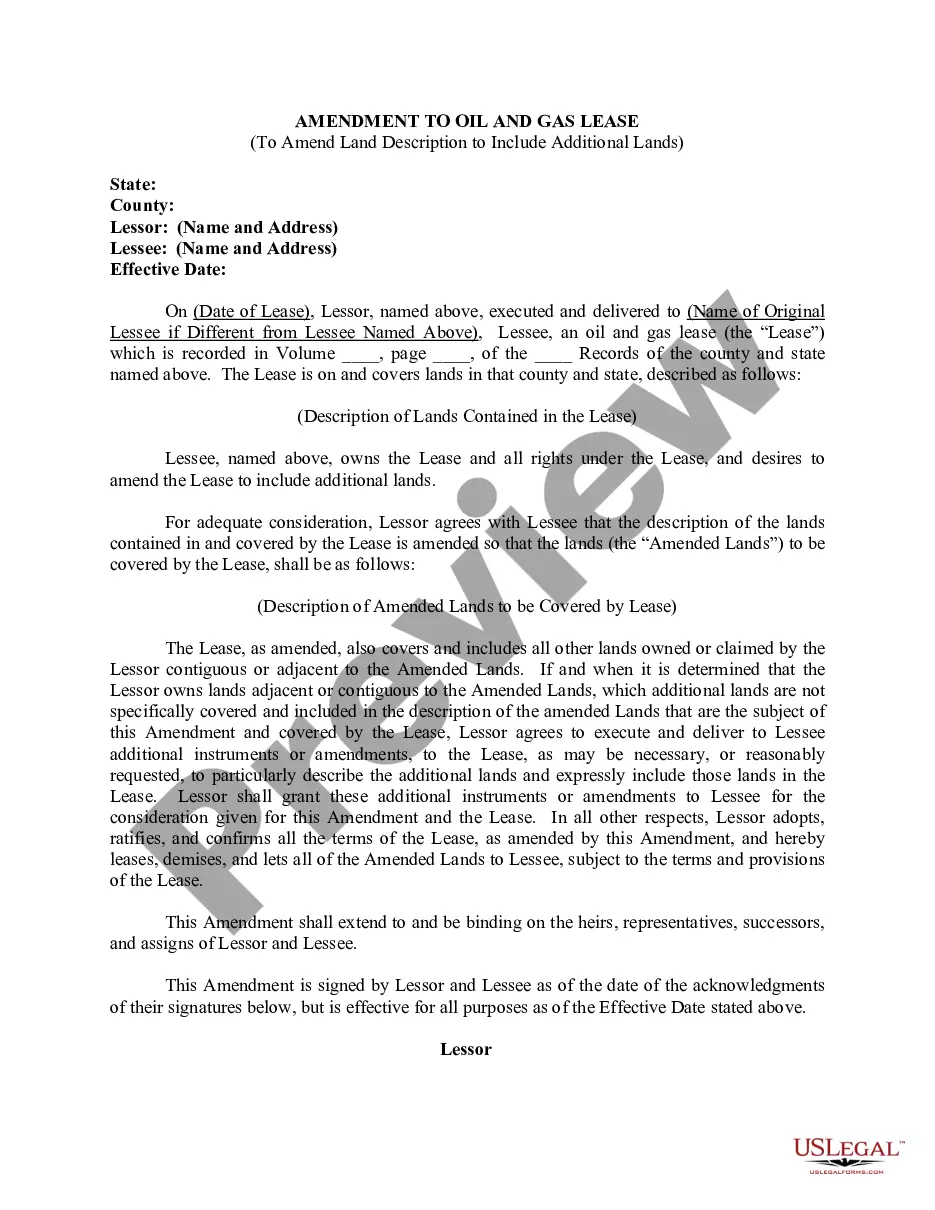
- Identification of the parties: Lessor and Lessee, including their names and addresses.
- Effective date: The date when the amendment will take effect.
- Details of the original lease: Date of the original lease and description of the land covered.
- New depository information: Name and address of the new bank acting as the depository for payments.
- Modification clause: Agreement that the lease remains in force except for the changes made by this amendment.
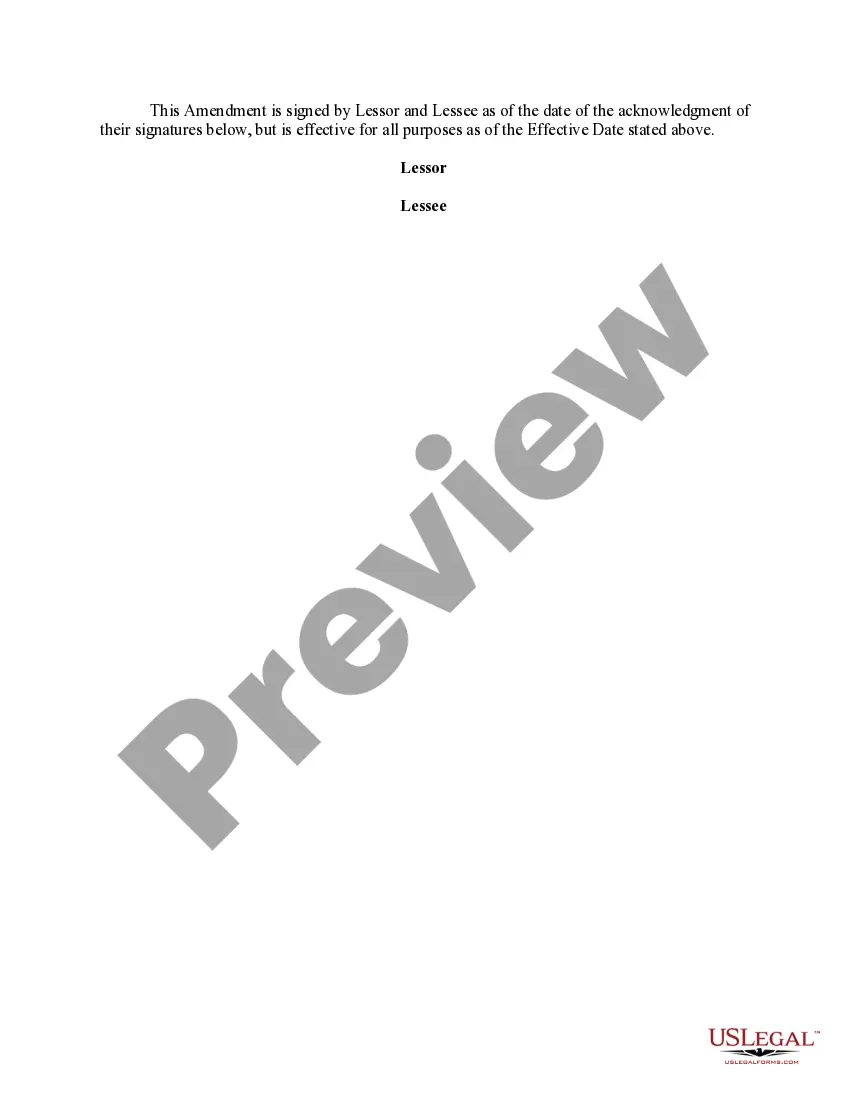
- Signatures: Signatures of both Lessor and Lessee to acknowledge the agreement.
When this form is needed
This form is necessary in situations where the original bank or financial institution designated in the oil and gas lease is no longer suitable or available to receive payments. For example, if the financial institution closes, merges with another bank, or if the parties decide to change the deposit location for convenience, this amendment will officially document the change.
Who needs this form
- Property owners (Lessor) who have entered into an oil and gas lease and need to update their depository information.
- Lessees (companies or individuals leasing the land) responsible for making payments under the lease.
- Attorneys and legal representatives managing oil and gas contracts on behalf of clients.
How to complete this form
- Identify the parties: Enter the full names and addresses of the Lessor and Lessee.
- Specify the effective date: Fill in the date when the change will take effect.
- Provide details of the original lease: Include the date of the original lease and description of the land.
- Enter new depository information: Write the name and address of the new bank that will receive payments.
- Obtain signatures: Have both parties sign and date the amendment to validate the document.
Notarization requirements for this form
This form usually doesn’t need to be notarized. However, local laws or specific transactions may require it. Our online notarization service, powered by Notarize, lets you complete it remotely through a secure video session, available 24/7.
Get your form ready online
Our built-in tools help you complete, sign, share, and store your documents in one place.
Make edits, fill in missing information, and update formatting in US Legal Forms—just like you would in MS Word.
Download a copy, print it, send it by email, or mail it via USPS—whatever works best for your next step.
Sign and collect signatures with our SignNow integration. Send to multiple recipients, set reminders, and more. Go Premium to unlock E-Sign.
If this form requires notarization, complete it online through a secure video call—no need to meet a notary in person or wait for an appointment.
We protect your documents and personal data by following strict security and privacy standards.

Make edits, fill in missing information, and update formatting in US Legal Forms—just like you would in MS Word.

Download a copy, print it, send it by email, or mail it via USPS—whatever works best for your next step.

Sign and collect signatures with our SignNow integration. Send to multiple recipients, set reminders, and more. Go Premium to unlock E-Sign.

If this form requires notarization, complete it online through a secure video call—no need to meet a notary in person or wait for an appointment.

We protect your documents and personal data by following strict security and privacy standards.
Common mistakes to avoid
- Failing to specify the effective date clearly.
- Not including the complete names and addresses of both parties.
- Omitting details about the original lease such as its date and land description.
- Not securing signatures from both Lessor and Lessee after completion of the form.
Why complete this form online
- Convenient access: Download the form anytime from the comfort of your home.
- Editability: Fill out the form digitally to ensure clarity and prevent errors.
- Legal reliability: The form is drafted by licensed attorneys, ensuring it meets legal standards.
Summary of main points
- The Amendment to Oil and Gas Lease to Change Depository allows for the official change of payment location in an existing lease.
- Properly completing this form ensures that both parties are on the same page regarding payment information.
- Always double-check for accuracy and completeness to avoid complications in the future.
Looking for another form?
Form popularity
FAQ
To ratify a lease means that the landowner and oil & gas producer, as current lessor and lessee of the land, agree (or re-agree) to the terms of the existing lease.In all likelihood, the lessee (usually the current producer) believes that you have legitimate grounds to break the existing lease.
A Division Order is an instrument which sets forth the proportional ownership in produced hydrocarbons, including crude oil, natural gas, and NGL's.A Division Order is generally received by a mineral rights owner through the mail within 3 to 4 months after well completion.
Oil and gas lease is an agreement between a mineral owner (lessor) and a company (lessee) in which the owner grants the company the right to explore, drill and produce oil, gas, and other minerals below the surface of the earth.
(Oil & Gas) This form is a memorandum of lease that summarizes an oil and gas lease without disclosing confidential information contained in the lease itself. It is filed in the county in which the leased property is located to put third parties on notice that a lease exists.
Landowners who are considering purchasing, or have already purchased a property can search their county Register of Deeds registry to determine if an oil and gas lease is recorded.A search of the public records at the county register of deeds office is necessary.
Not necessarily. Where your royalty is based on volume of production and your lease is for a period of years and as much longer as oil and gas is produced, or similar language is contained in your lease, your lease may not automatically expire at the end of its primary term.
A stipulation of interest is a contract that consists of mutual conveyances, and therefore, it must conform to the requirements of both a contract and conveyance.This requires the affiant to state all facts necessary to establish inheritance of a decedent's real estate as well as proportional interest.
Step 1: Divide the property's basis for depletion by the total recoverable units, which results in a rate per unit. Step 2: Multiply the rate per unit by the units sold during the tax year to arrive at the cost depletion deduction.
I.R.C. § 613A(d)(5) specifically provides that a percentage depletion deduction for income from oil and gas wells does not apply to any lease bonus, advance royalty, or other amount payable without regard to production from property.