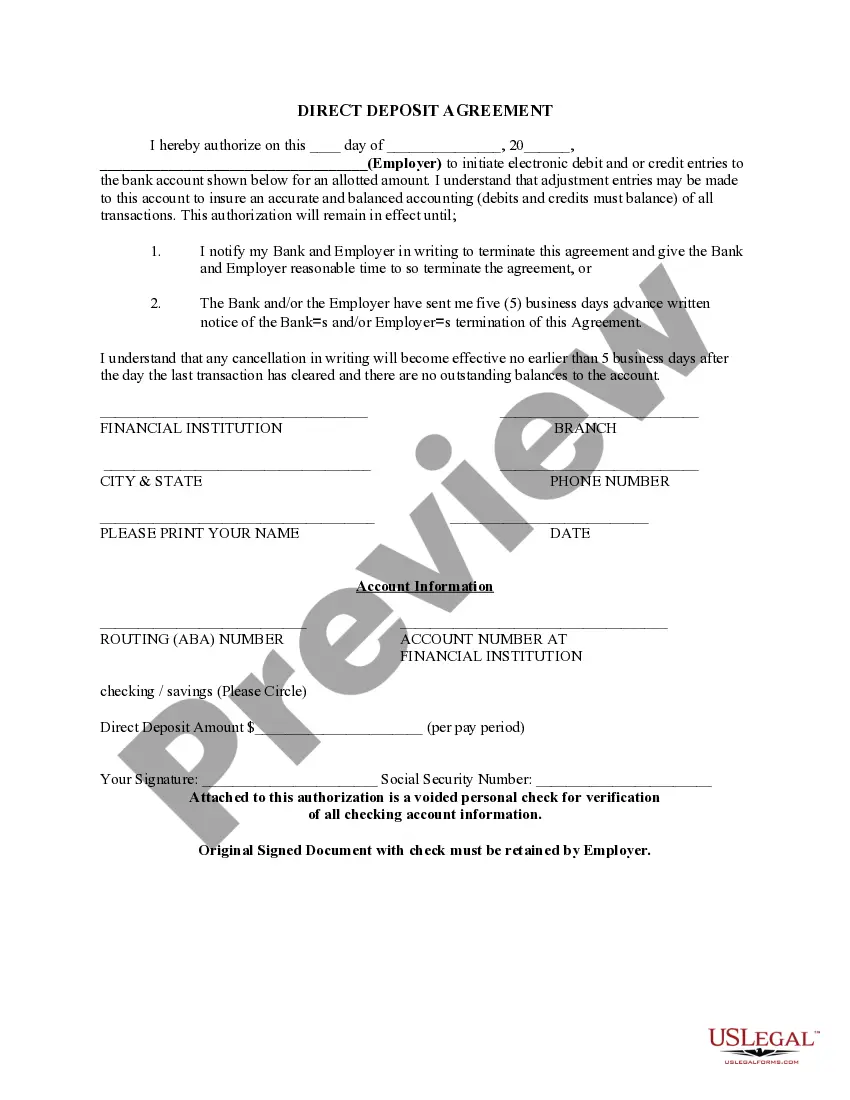
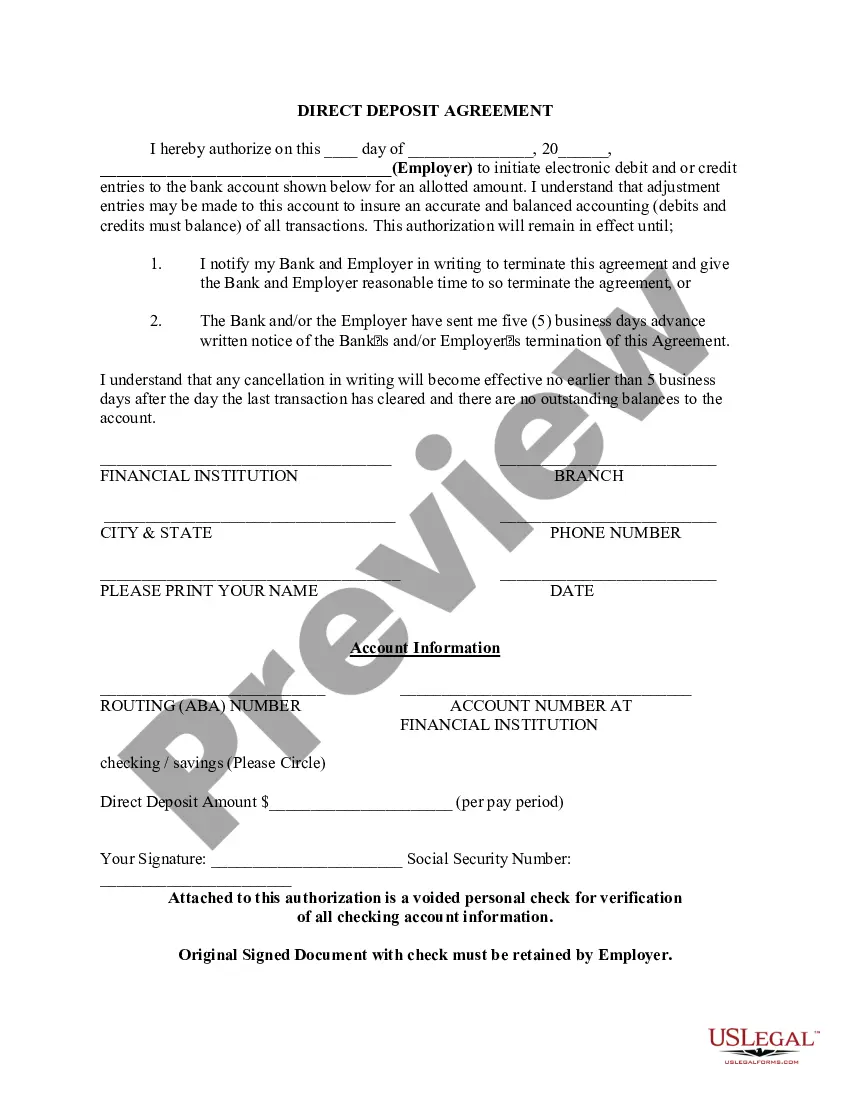
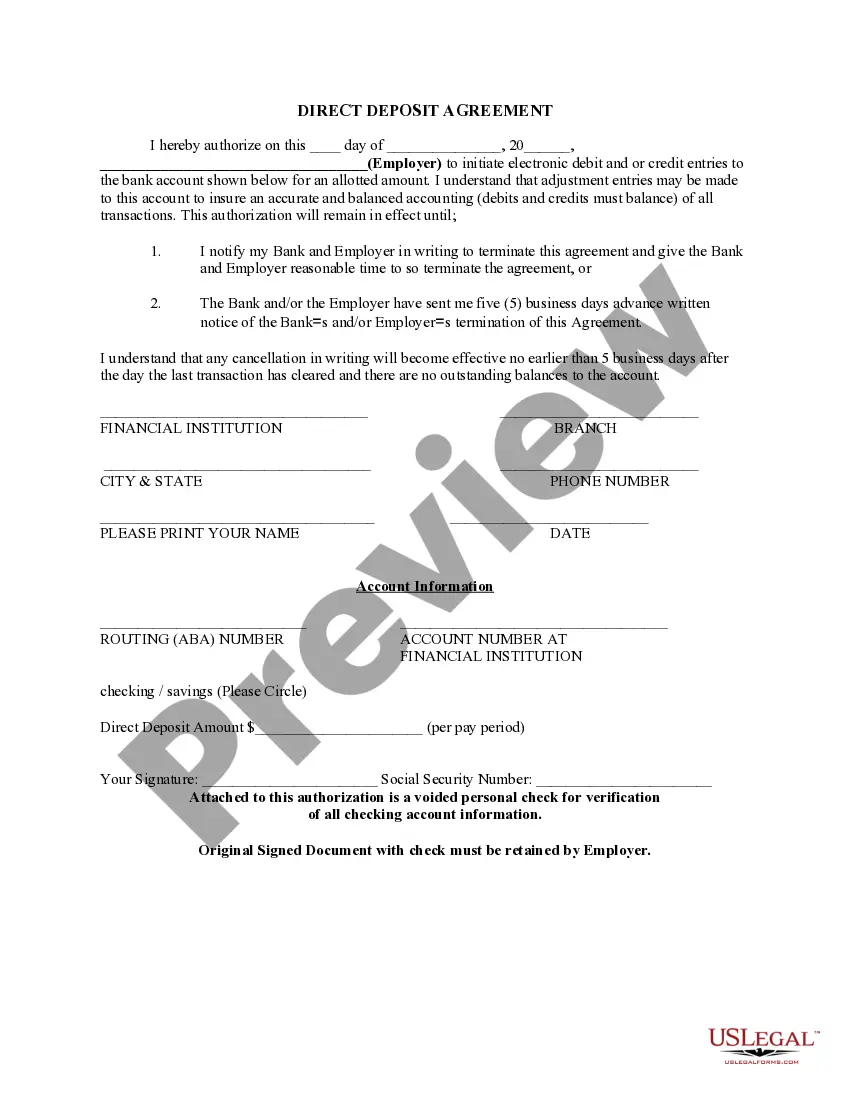
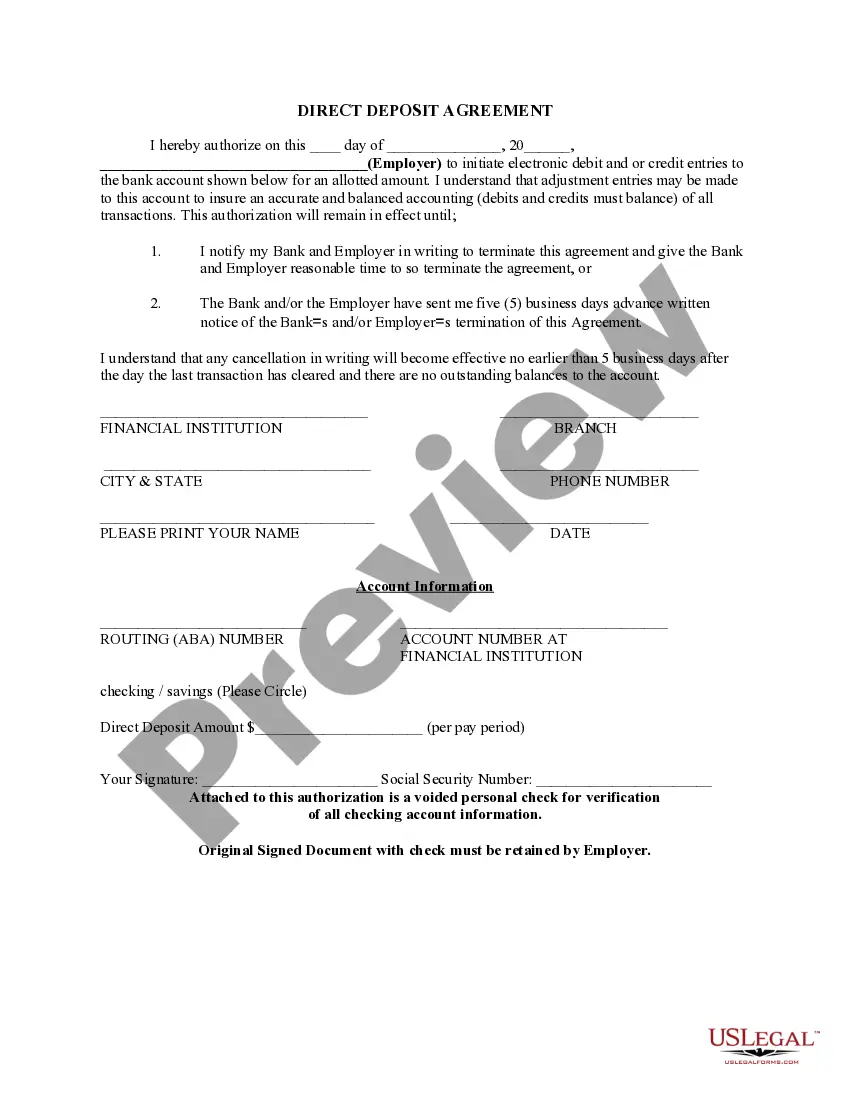
Direct deposit is a process where someone who is going to be paid on a recurring basis, such as an employee, or a recipient of a government entitlement or benefit program such as social security, is sent the payment owed to them into their checking or savings account. The reasons for doing this include:
- Instant access to the funds via an ATM or check card;
- A check can be lost or stolen anywhere between the sender and the intended payee;
- Payments made electronically can be less expensive to the payor.
Direct deposit eliminates mailing delays and alleviates the need to go somewhere to cash or deposit your check.
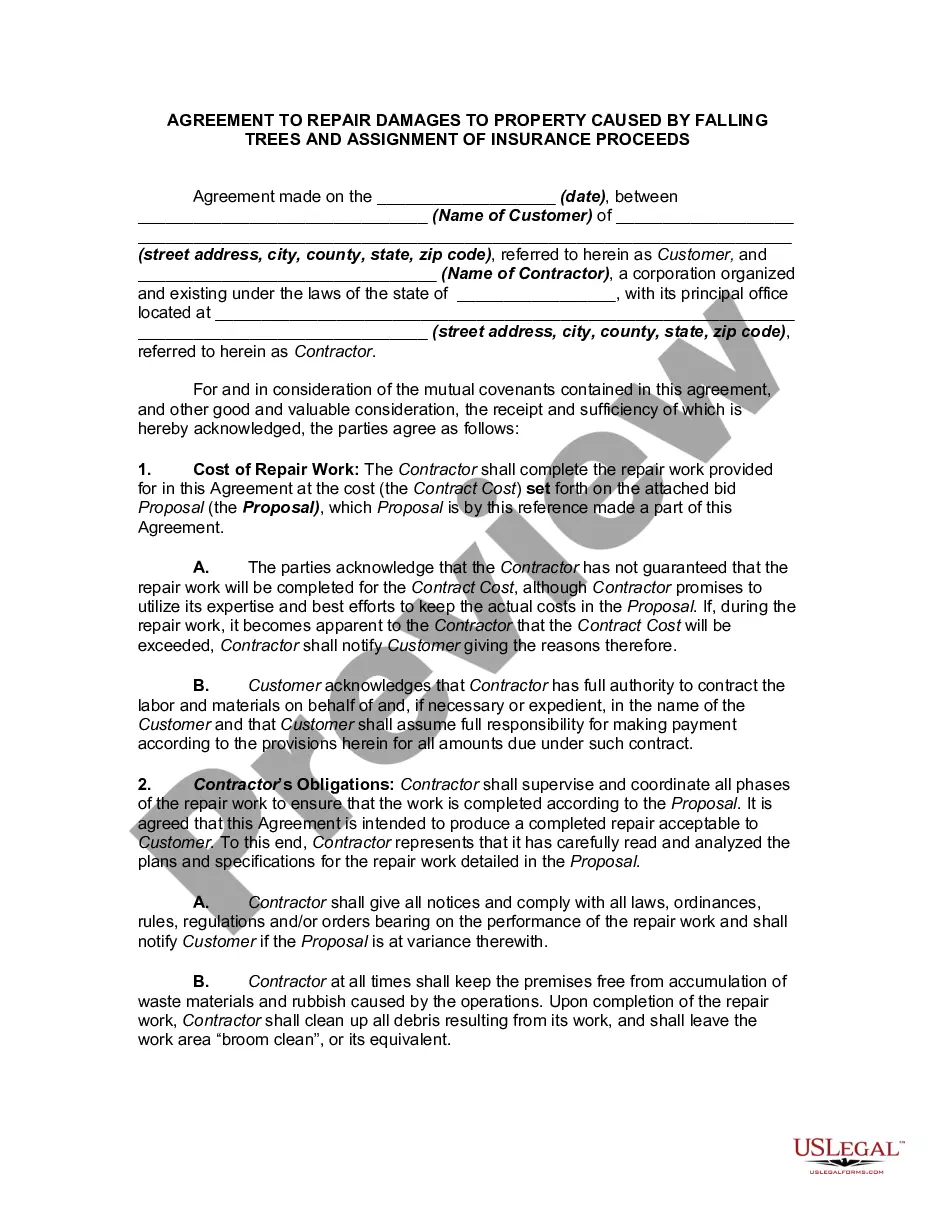
Virginia Direct Deposit Agreement
Category:
State:
Multi-State
Control #:
US-00416BG
Format:
Word;
Rich Text
Instant download
Description
Get your form ready online
Our built-in tools help you complete, sign, share, and store your documents in one place.
Built-in online Word editor
Make edits, fill in missing information, and update formatting in US Legal Forms—just like you would in MS Word.
Export easily
Download a copy, print it, send it by email, or mail it via USPS—whatever works best for your next step.
E-sign your document
Sign and collect signatures with our SignNow integration. Send to multiple recipients, set reminders, and more. Go Premium to unlock E-Sign.
Notarize online 24/7
If this form requires notarization, complete it online through a secure video call—no need to meet a notary in person or wait for an appointment.
Store your document securely
We protect your documents and personal data by following strict security and privacy standards.

Make edits, fill in missing information, and update formatting in US Legal Forms—just like you would in MS Word.

Download a copy, print it, send it by email, or mail it via USPS—whatever works best for your next step.

Sign and collect signatures with our SignNow integration. Send to multiple recipients, set reminders, and more. Go Premium to unlock E-Sign.

If this form requires notarization, complete it online through a secure video call—no need to meet a notary in person or wait for an appointment.

We protect your documents and personal data by following strict security and privacy standards.
Looking for another form?




How to fill out Direct Deposit Agreement?
Finding the appropriate authorized document template can be a challenge. Clearly, there are numerous templates available online, but how do you obtain the official form you require? Utilize the US Legal Forms website. This service offers a multitude of templates, including the Virginia Direct Deposit Agreement, suitable for both business and personal needs. All the forms are reviewed by professionals and comply with state and federal regulations.
If you are already registered, Log In to your account and click on the Download button to retrieve the Virginia Direct Deposit Agreement. Use your account to browse through the legal forms you have previously purchased. Navigate to the My documents section of your account and download another copy of the document you require.
If you are a new user of US Legal Forms, here are some simple steps for you to follow: First, ensure you have selected the correct template for your city/county. You can preview the form using the Review option and examine the form outline to verify it is suitable for you. If the document doesn't meet your requirements, utilize the Search field to find the right form. Once you are certain that the form is appropriate, click the Get now button to acquire the document. Select your desired payment method and input the necessary information. Create your account and pay for your purchase using your PayPal account or credit card. Choose the document format and download the legal document template to your device. Complete, edit, print, and sign the acquired Virginia Direct Deposit Agreement.
- US Legal Forms is the largest repository of legal forms where you can find various document templates.
- Utilize the service to obtain professionally crafted documents that adhere to state requirements.
- Access a wide range of templates for personal and business purposes.
- All forms are vetted by experts to ensure legal compliance.
- Streamline your search for the right legal document.
- Download and manage your legal forms efficiently.
Form popularity
FAQ
Because the check is currently payable to you, you'll need to ensure that the third party and their bank can accept a signed-over check, also known as a third-party check, and endorse the check by signing the back of it.
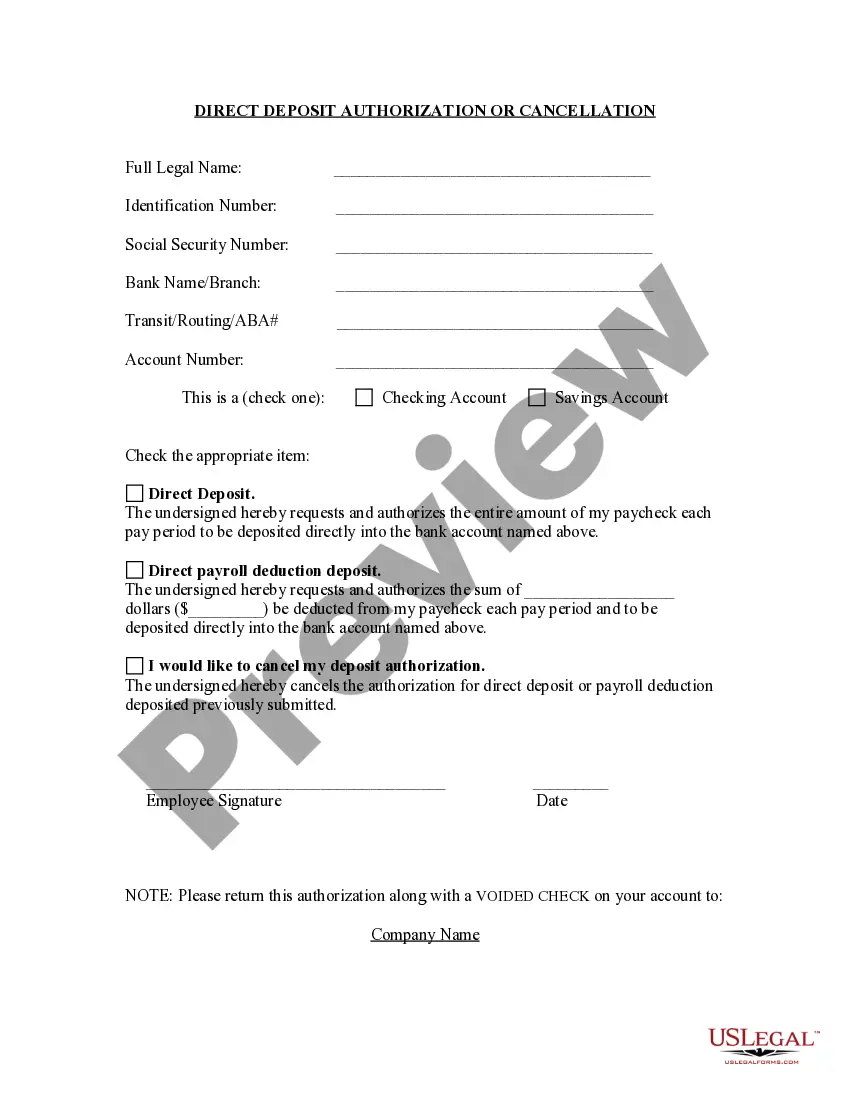
What is a Direct Deposit Authorization Form? Direct deposit authorization forms authorize employers to send money directly into an individual's bank account. In times past, employers would print out and distribute physical checks on pay day for each employee to deposit into their bank accounts themselves.
Direct deposit from a third-party payment serviceTo set up direct deposits on a third-party payment platform, you need to submit your bank account and routing number. Sometimes, the service will attempt a tiny charge to confirm that the bank account information is accurate.
A bank deposit agreement, also called a Bank Investment Contract (BIC), is an agreement between a bank and an investor where the bank provides a guaranteed rate of return in exchange for keeping a deposit for a fixed amount of time (usually several months to several years).
No. To set up direct deposit, you need to give your employer your bank account and routing numberand typically, you don't have the right to give out somebody else's bank account information.
Payroll payments are an example of direct deposits. Employers can send funds to their employees' bank accounts on payday without delay or the risk of losing checks in the mail. Recipients also benefit from direct deposits, as the money is automatically added to their account balance with no action required.
Complete a direct deposit form yourselfDownload the form (PDF)Locate your 9-digit routing and account number - here's how to find them.Fill in your other personal information.Give the completed form to your employer.
No employer can require an employee to use direct deposit at a specific bank. Employers aren't allowed to charge employees a fee based on payment method. Employees must have access to their pay stubs.
Yes, you may dispute the transaction as you would any other. Contact your bank for their specific procedures.
The Electronic Fund Transfer Act (EFTA) protects employers and employees who use features like direct deposit. Under federal law, employers can require employees to receive their wages via direct deposit.