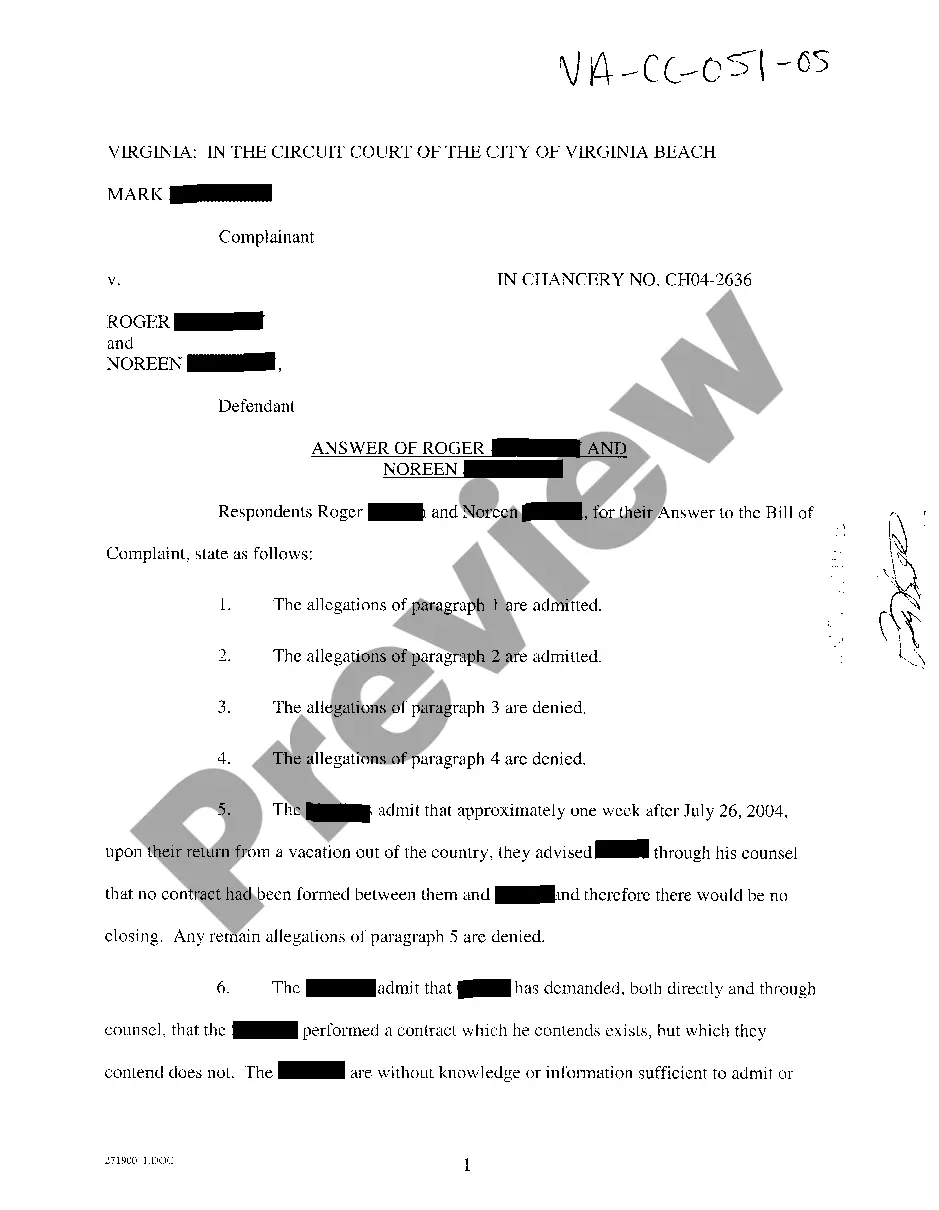
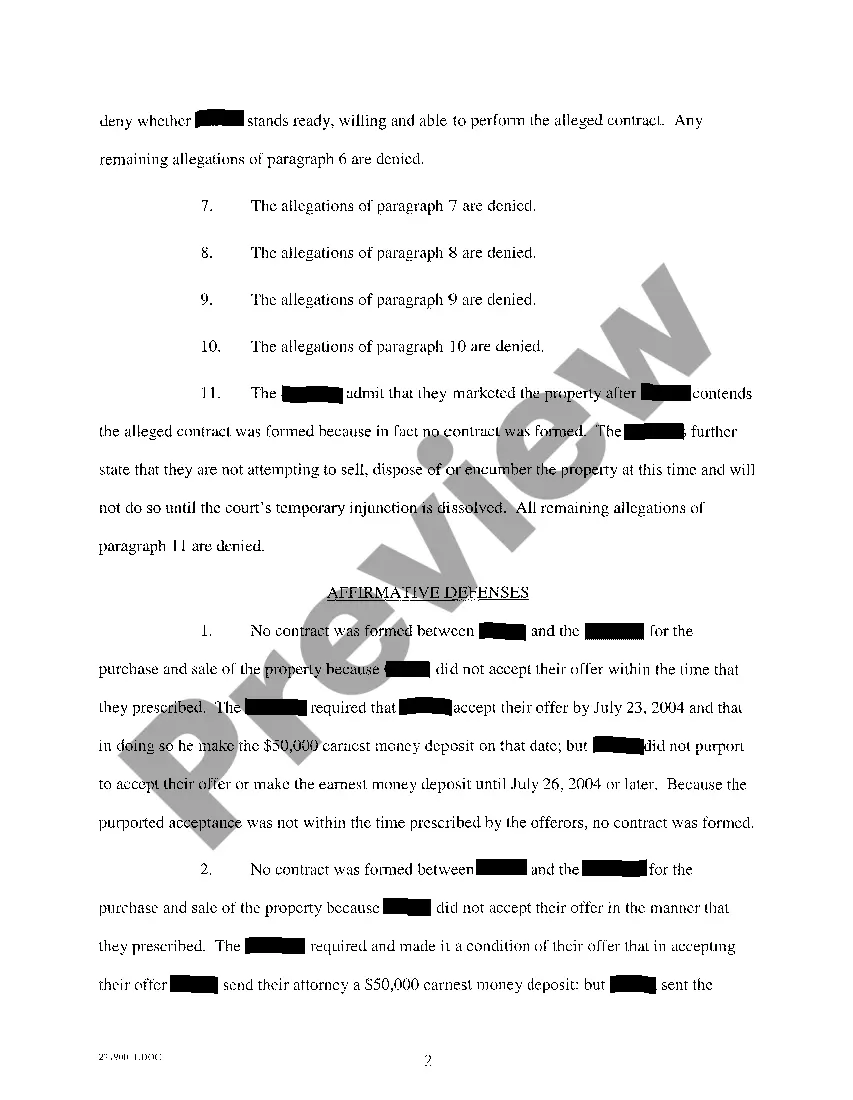
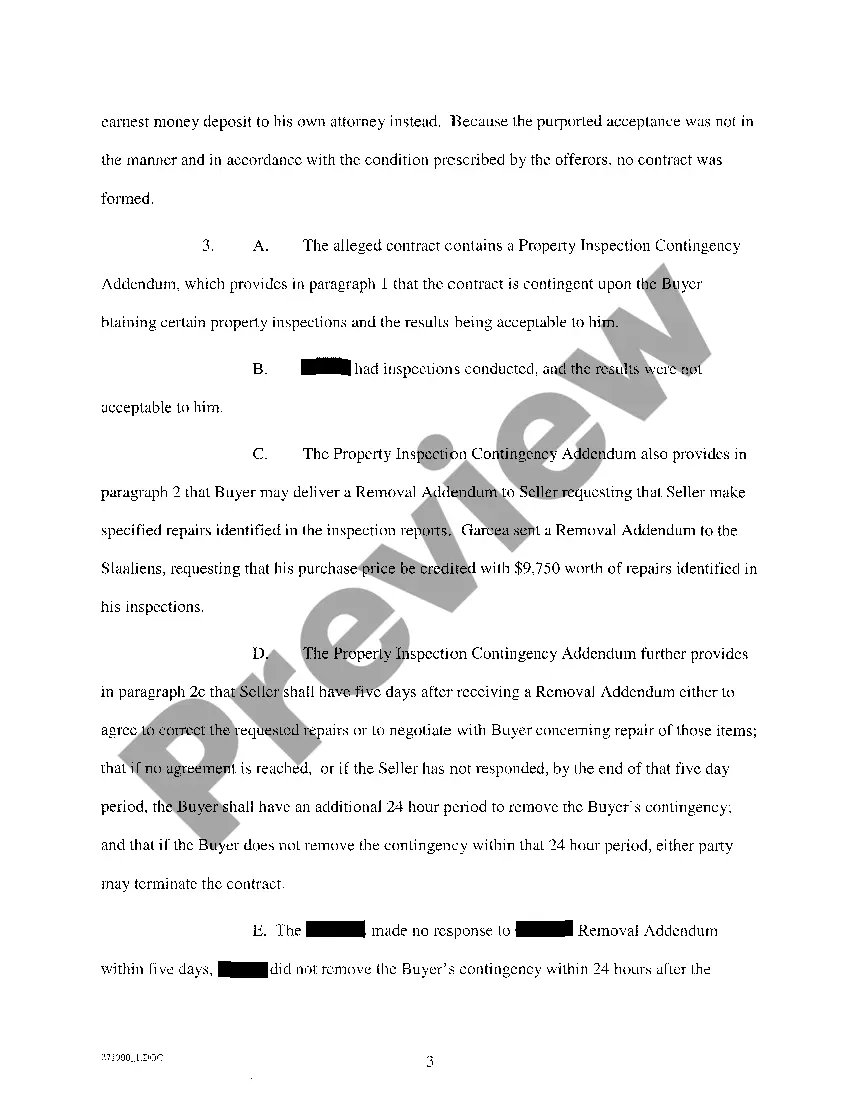
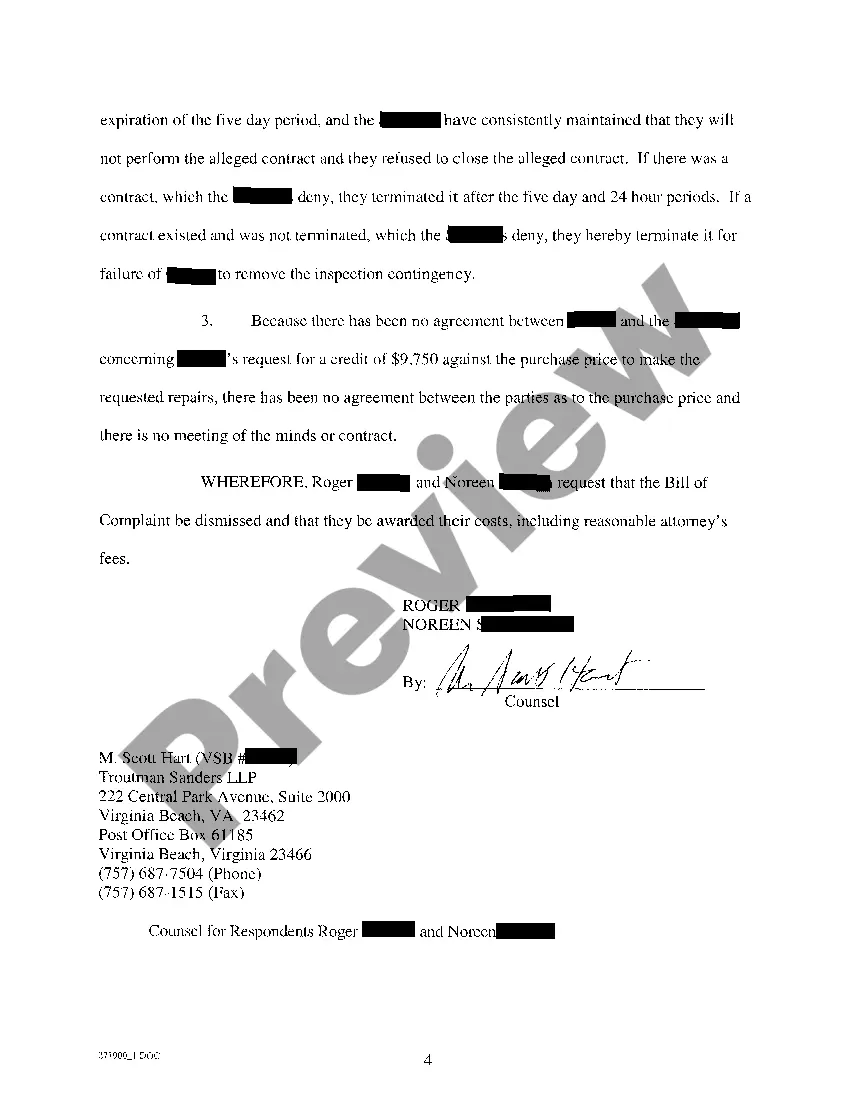
Virginia Answer to Complaint for Specific Performance
Does this document require notarization?
Notarization is generally not required for this form. However, certain states or situations might demand it. You can complete notarization online through US Legal Forms, powered by Notarize, using a verified video call available anytime.




Form popularity
FAQ
A defense asserting that even if all the factual allegations in a complaint are true, they are insufficient to establish a valid cause of action. The precise basis for a demurrer can vary, with some examples being a failure to state a claim or an allegedly unconstitutional statute.
Be brief. Answer the allegations in the complaint with one or two sentences. Again remember that the statements you make in your answer can be used as admissions against you. Your response to the allegations in the complaint may admit part of the statement in the specific paragraph and deny part.
There is no obligation to respond to alleged affirmative defenses....they can be contested at trial or summary judgment.
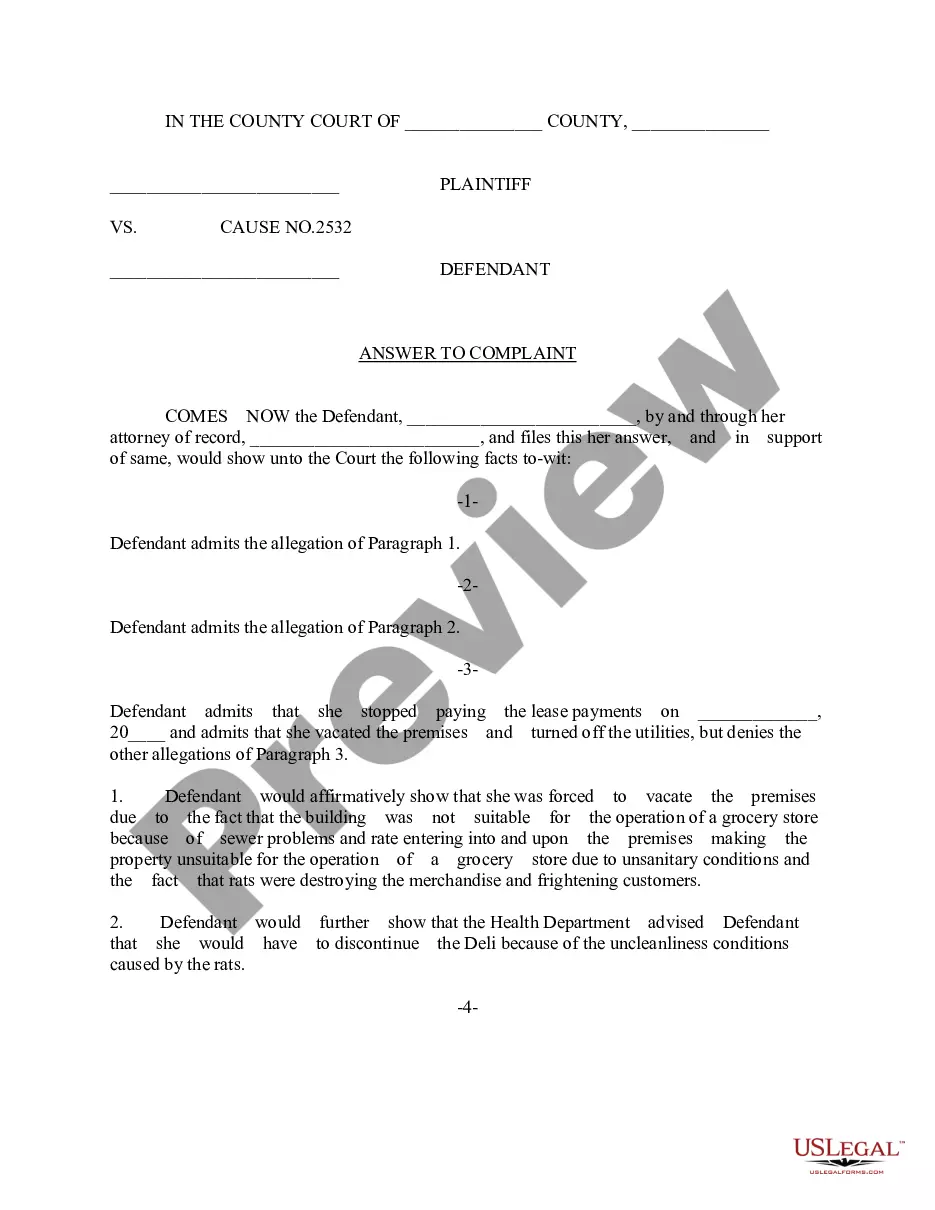
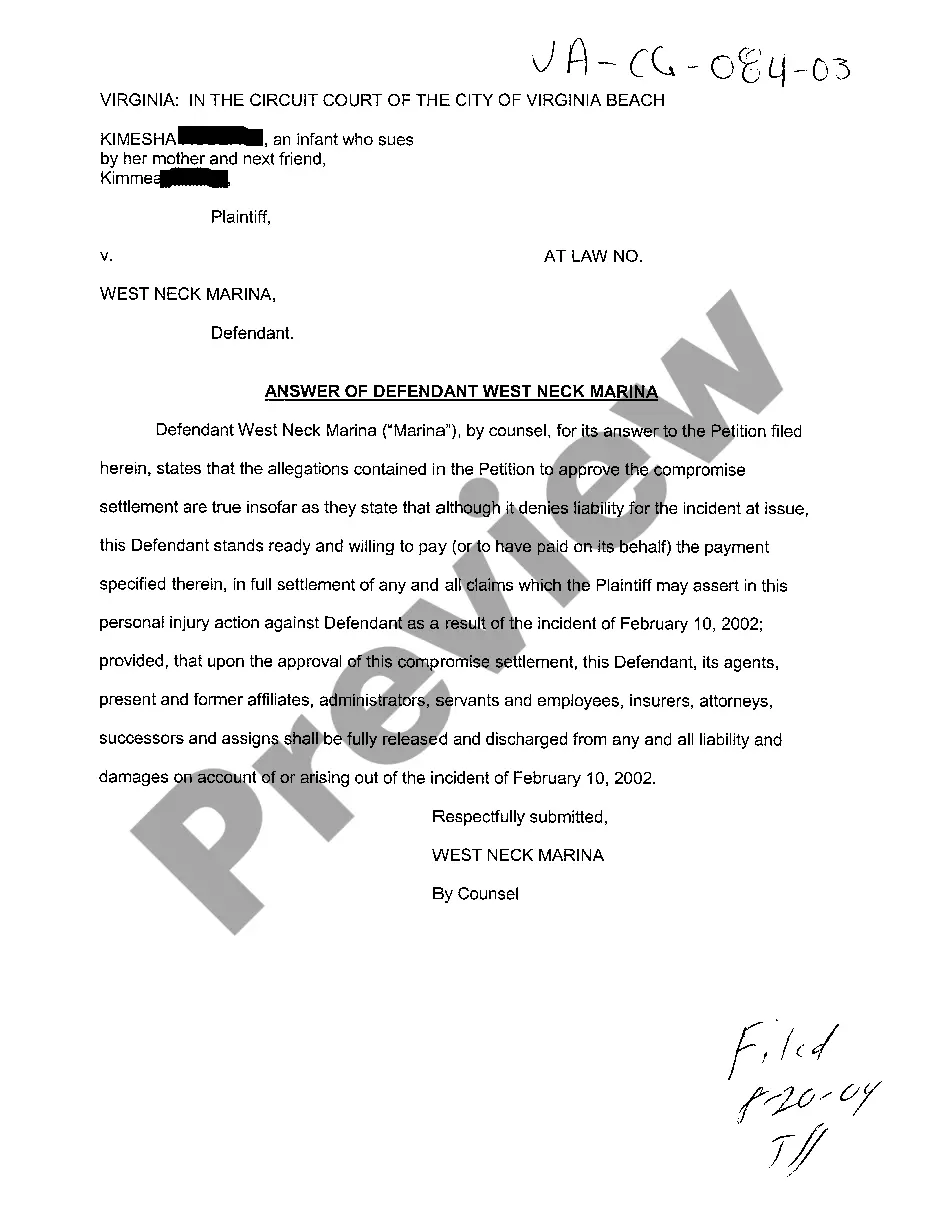
The Answer. The defendant's response to a complaint is called the answer. The answer contains the defendant's version of the events leading to the lawsuit and may be based on the contents of the complaint. The filing of the answer is one option that the defendant has in deciding how to respond to the complaint.
Demurrer; form; grounds to be stated; amendment. A. In any suit in equity or action at law, the contention that a pleading does not state a cause of action or that such pleading fails to state facts upon which the relief demanded can be granted may be made by demurrer.
Each court has different rules about how long you have to respond to this motion, but usually you will have at least two or three weeks to file an opposition to the defendant's motion to dismiss.
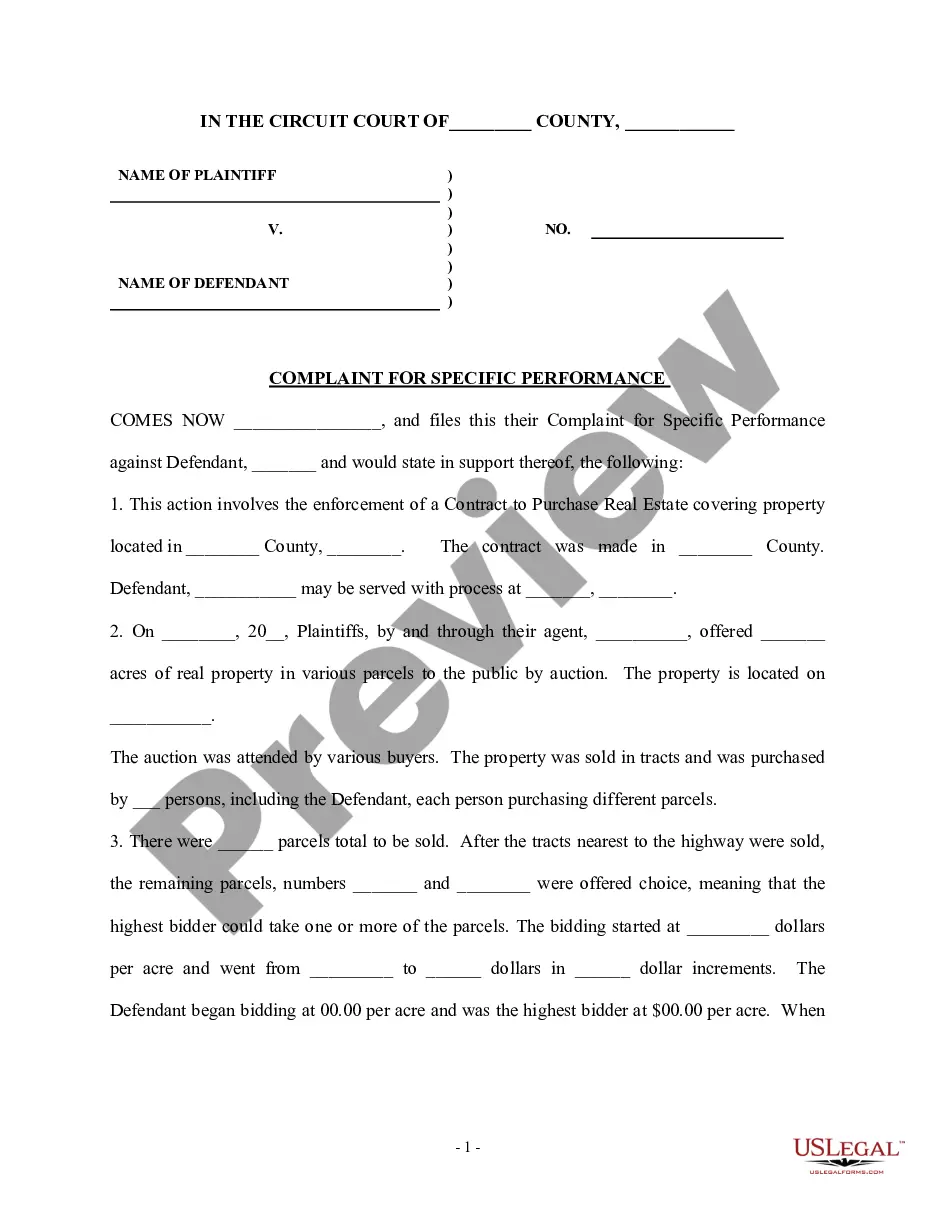
A defendant may respond in an answer that admits or denies each of the plaintiff's allegations in the complaint. The answer will list defenses and counter-claims or cross-claims against the plaintiff or other defendants. The answer will state whether the defendant wants a jury trial. The case will then continue.
If you don't file a response 30 days after you were served, the Plaintiff can file a form called Request for Default.The Plaintiff will win the case. Then, the Plaintiff can enforce the judgment against you. This can mean getting money from you by garnishing your paycheck or putting a lien on your house or car.
The plaintiff must give you responses to your request for admissions within 30 days. You do not need to do anything if you do not get a response. The plaintiff has 30 days to deny or object to the statements.