Utah Revocation of Transfer on Death Deed - Beneficiary Deed for One Grantor
What this document covers
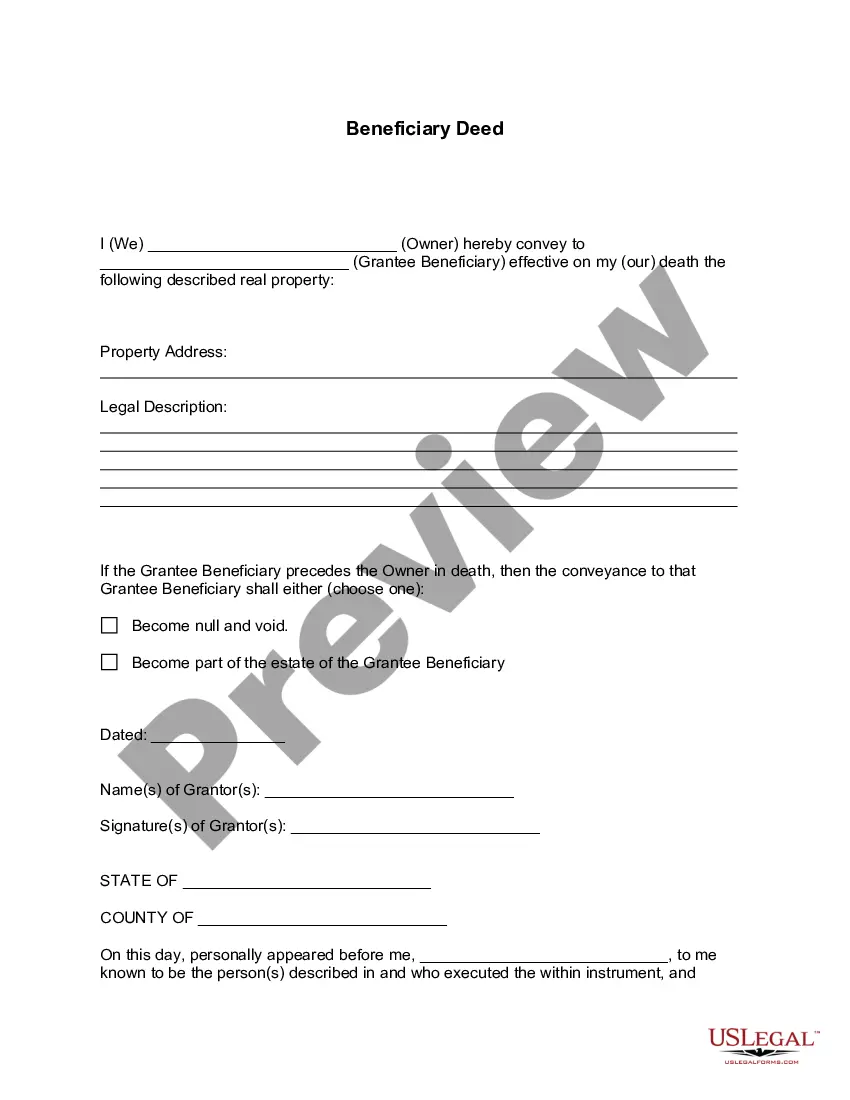
The Revocation of Transfer on Death Deed - Beneficiary Deed for One Grantor is a legal form used to cancel a previously executed transfer on death deed. This form allows a property owner to revoke their prior designation of a beneficiary for their real estate. Unlike a new transfer on death deed, which designates a beneficiary for the property's transfer upon the owner's death, this revocation form allows the owner to remove that designation while they are still alive. Proper execution and recording of this form are necessary to ensure legal effectiveness.
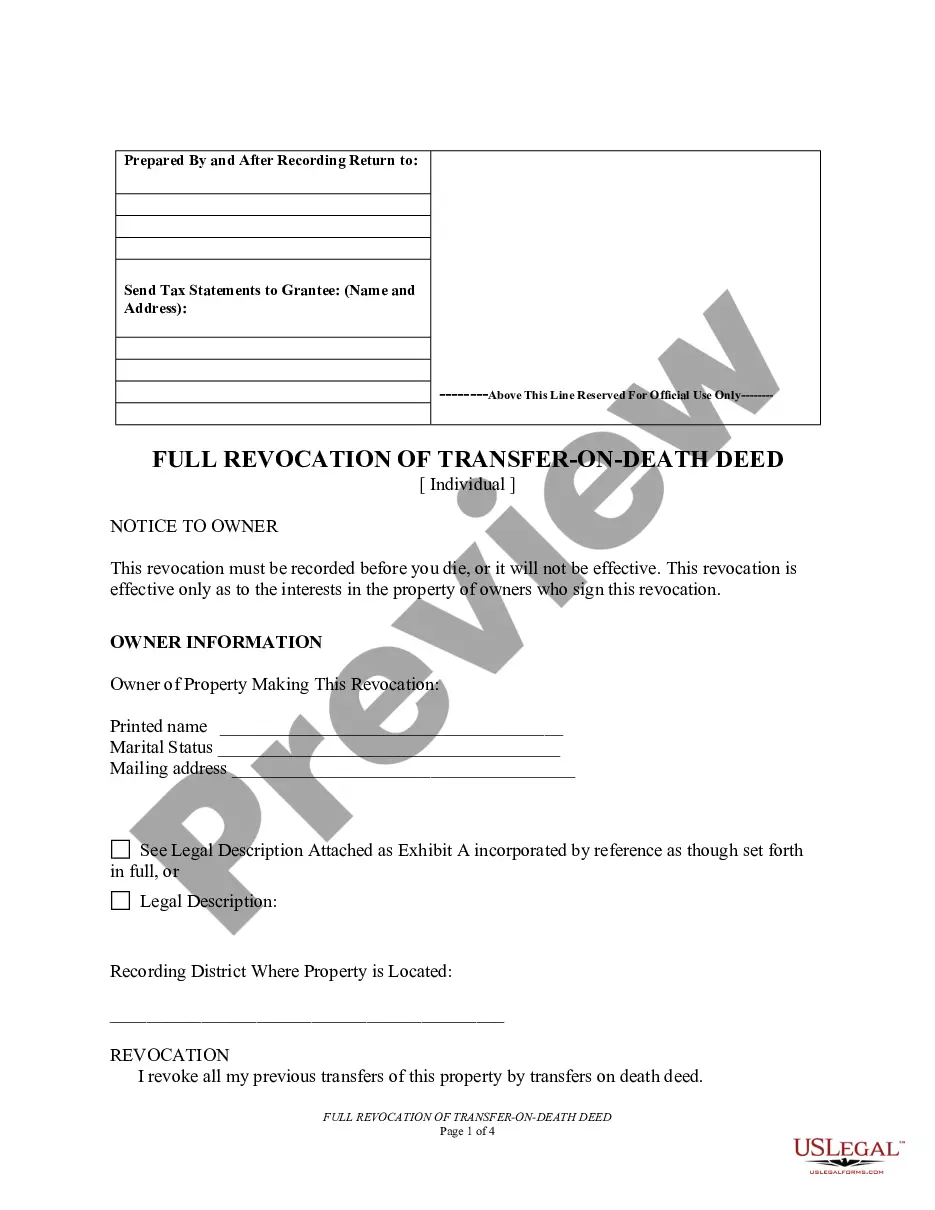
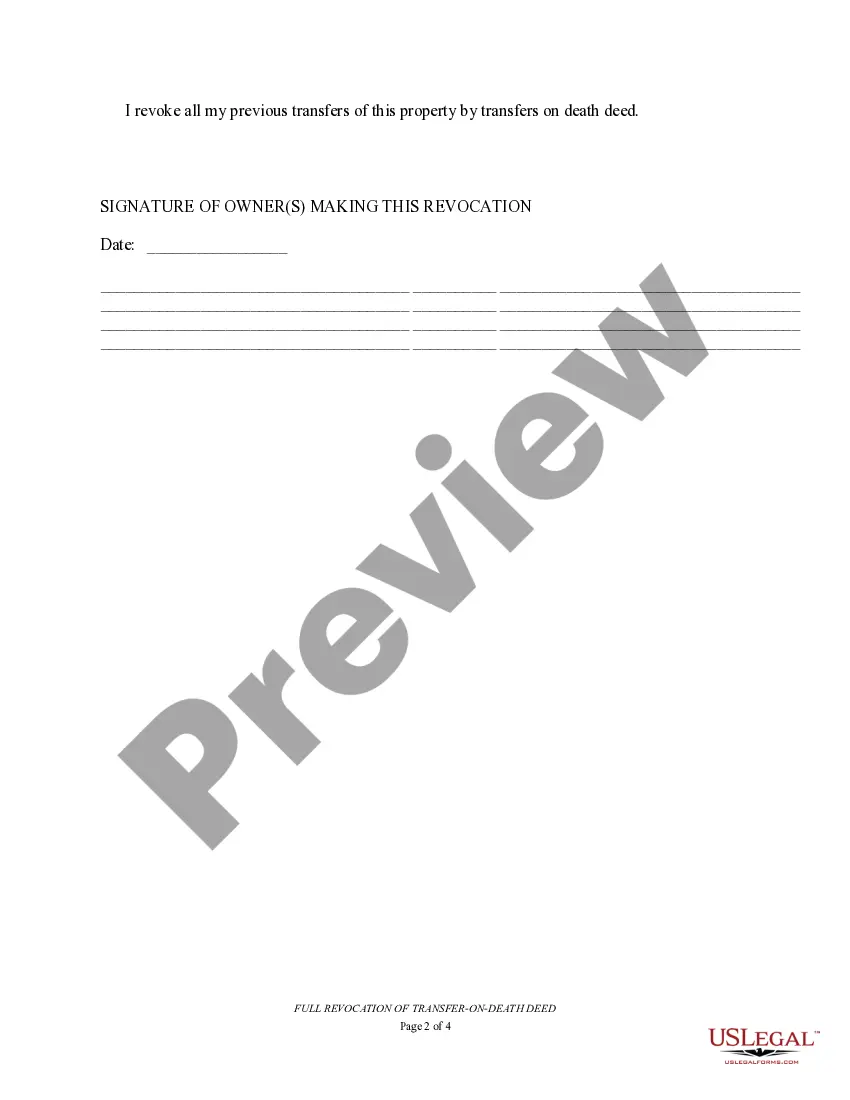
Form components explained
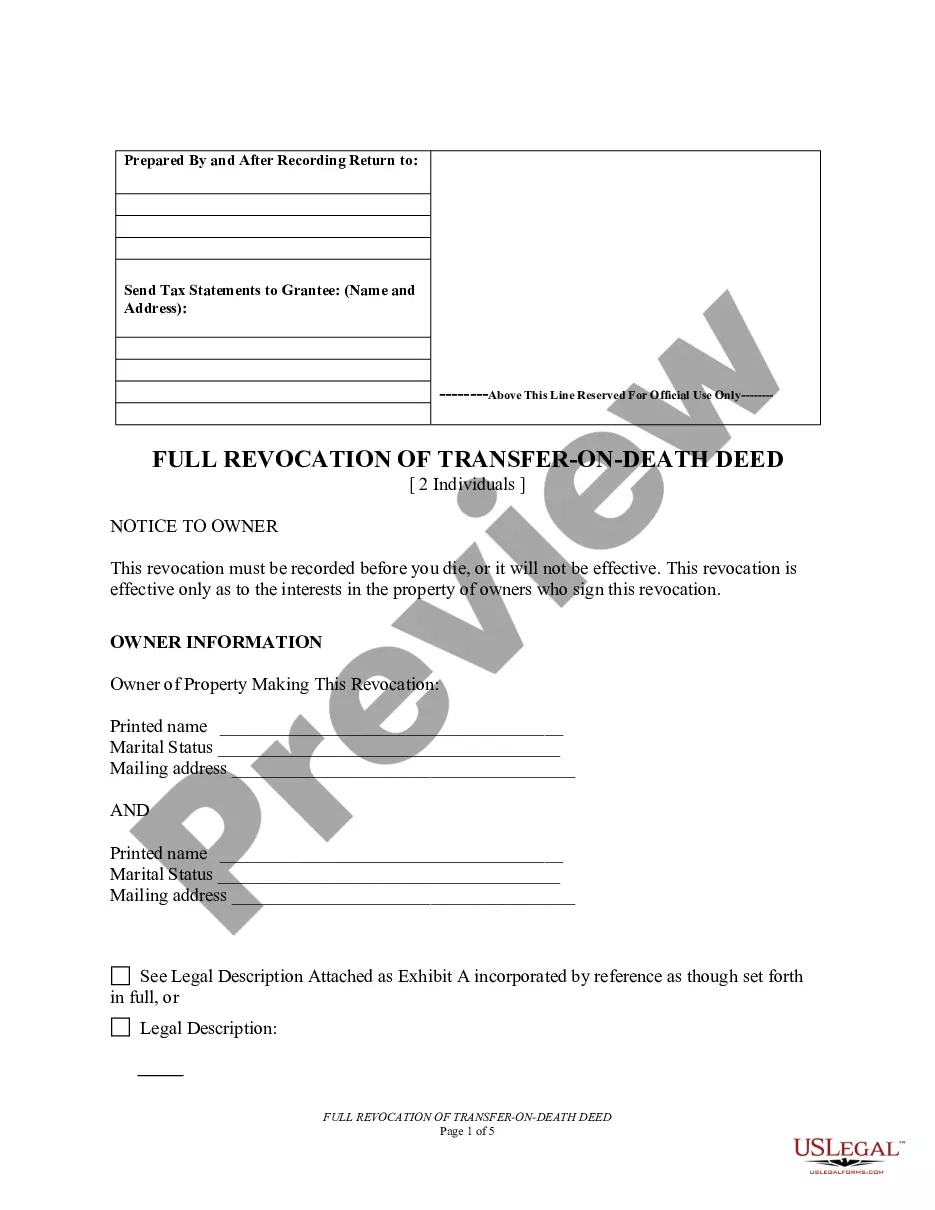
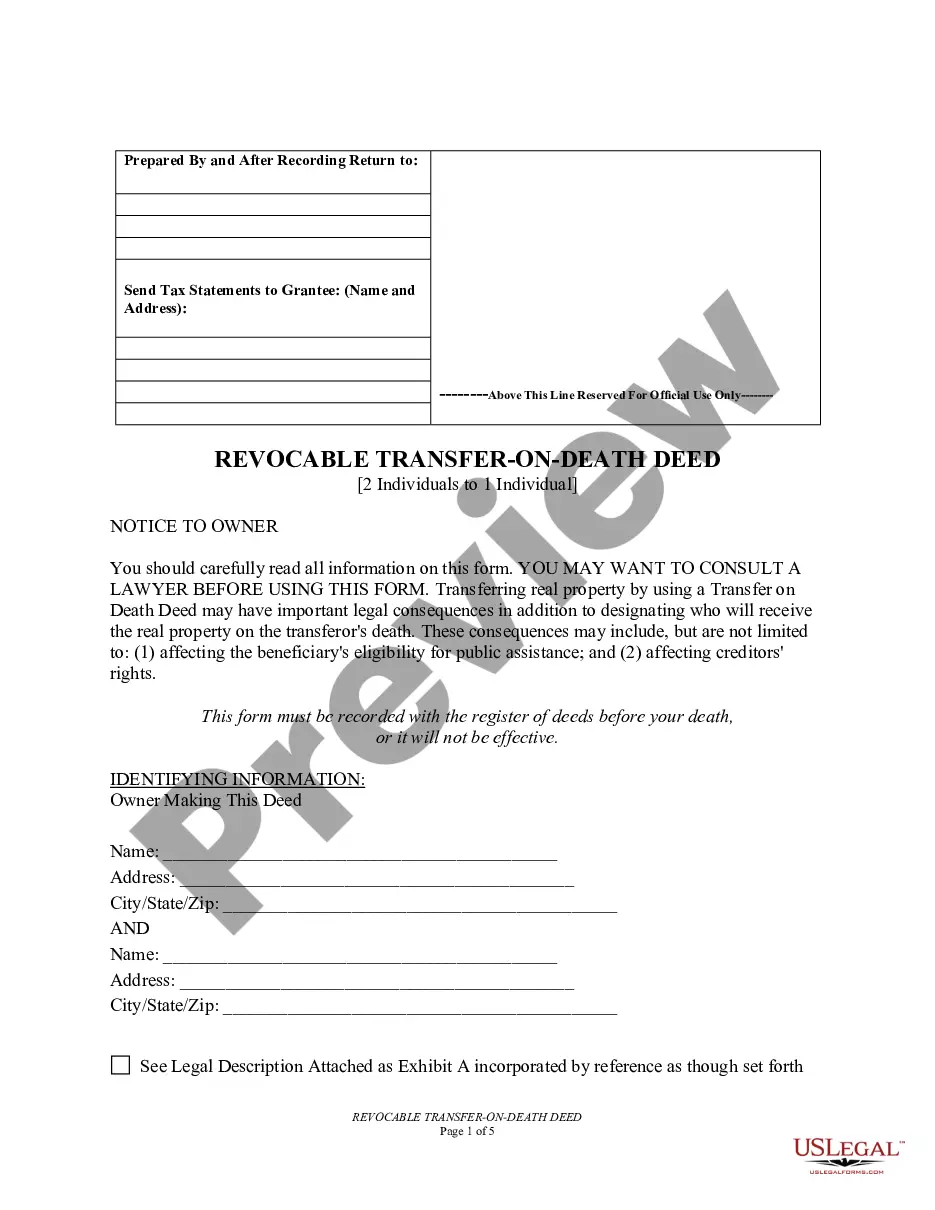
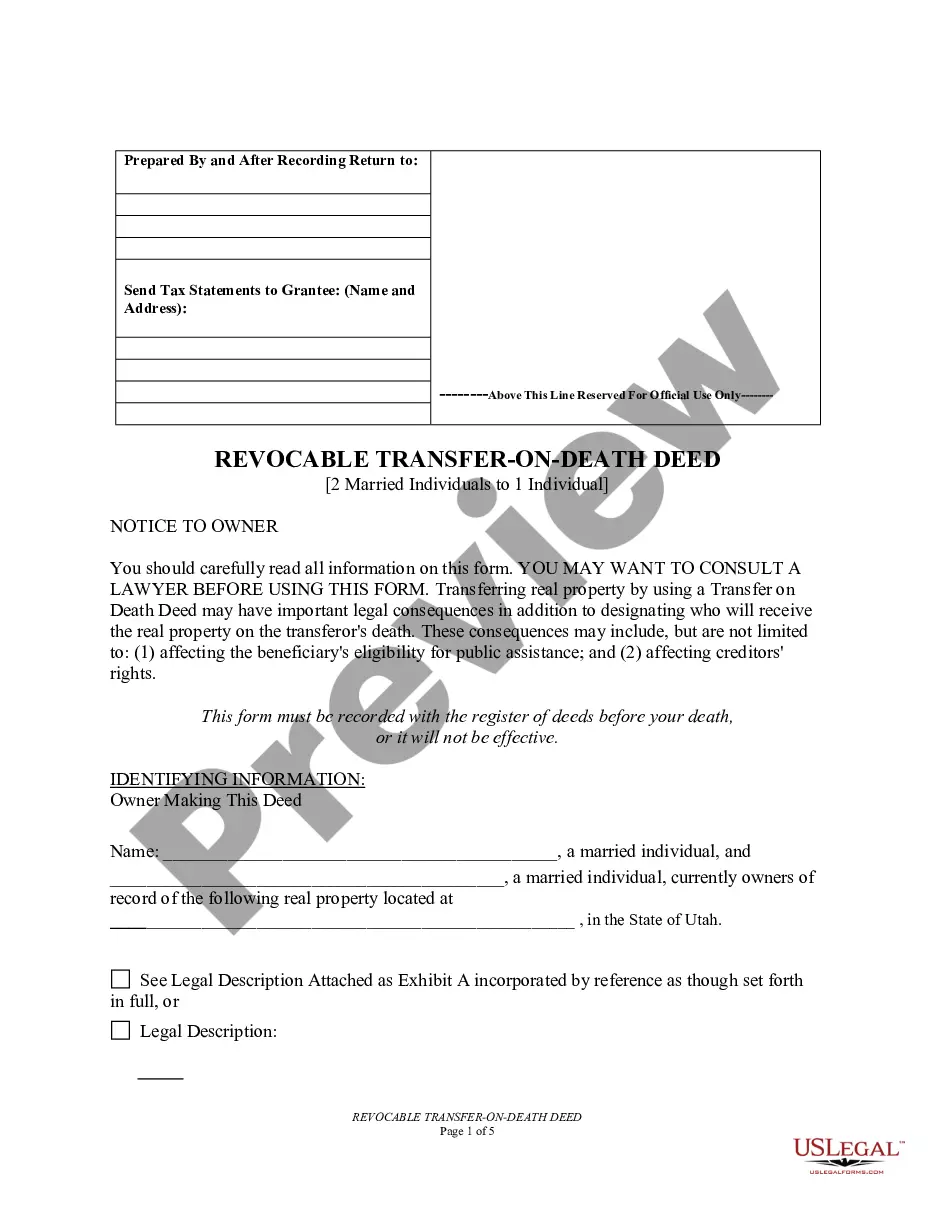
- Owner information section for the property revoking the beneficiary deed.
- Clear statement of revocation of all previous transfers of the property by deed.
- Signature lines for the owner or owners revoking the deed.
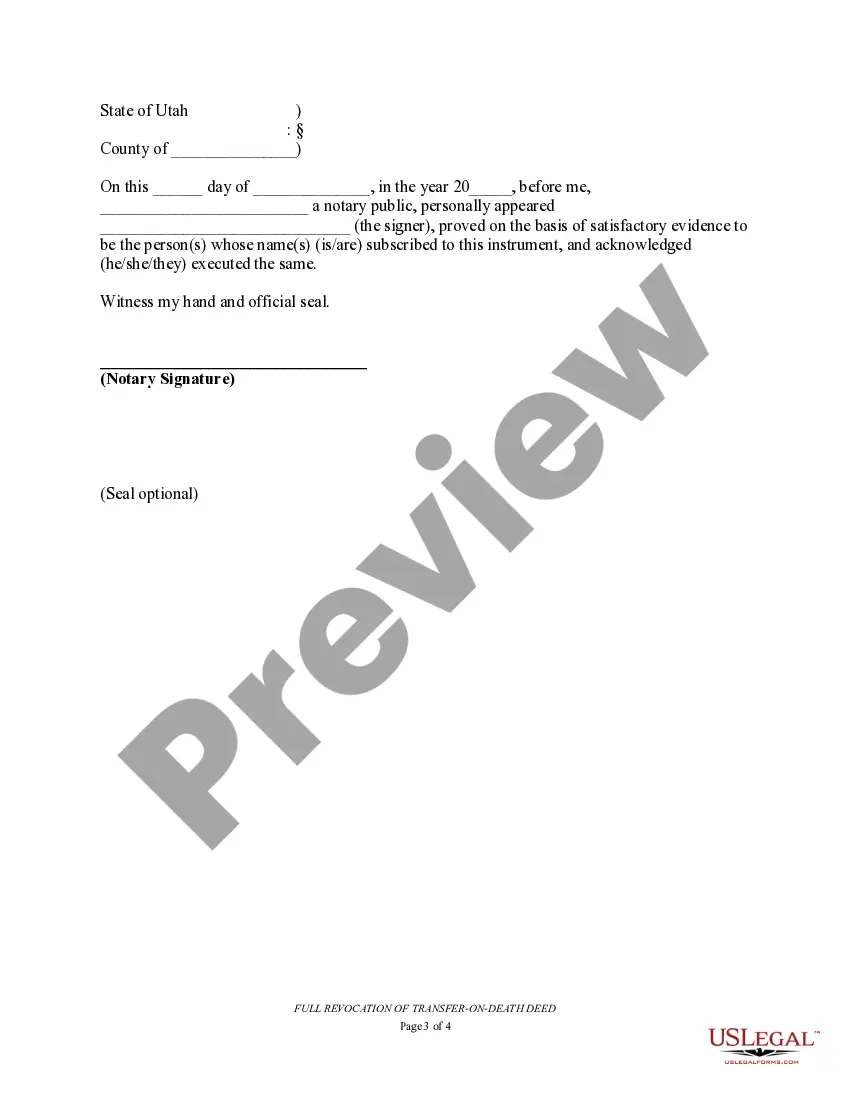
- Notarization section to affirm the authenticity of the signature.
- Legal description of the property involved, either attached or incorporated by reference.

When to use this document
This form is necessary when a property owner decides to change their arrangement regarding who will inherit their property upon their death. It may be used if the owner wishes to name a new beneficiary or revert the property to their estate without a specified beneficiary. The revocation must be recorded before the owner's death to be legally valid.
Who this form is for
This form is intended for:
- Property owners who have previously executed a transfer on death deed.
- Individuals looking to update or change their beneficiary designation.
- Those seeking to revert their property to their estate for future distribution without a designated beneficiary.
How to complete this form
To complete the Revocation of Transfer on Death Deed, follow these steps:
- Fill in the owner's personal information, including name, marital status, and mailing address.
- Specify the legal description of the property being revoked, referring to Exhibit A if needed.
- Clearly state the intention to revoke all previous transfers by signing the revocation statement.
- Sign and date the form in the presence of a notary public.
- Ensure the completed form is recorded in the county recorder's office where the property is located.
Does this document require notarization?
Yes, this form must be notarized to be legally valid. The signature of the property owner must be acknowledged in the presence of a notary public, ensuring that the form is properly executed. US Legal Forms offers integrated online notarization, available twenty-four hours a day, allowing for secure video calls and legal verification without the need for travel.
Get your form ready online
Our built-in tools help you complete, sign, share, and store your documents in one place.
Make edits, fill in missing information, and update formatting in US Legal Forms—just like you would in MS Word.
Download a copy, print it, send it by email, or mail it via USPS—whatever works best for your next step.
Sign and collect signatures with our SignNow integration. Send to multiple recipients, set reminders, and more. Go Premium to unlock E-Sign.
If this form requires notarization, complete it online through a secure video call—no need to meet a notary in person or wait for an appointment.
We protect your documents and personal data by following strict security and privacy standards.

Make edits, fill in missing information, and update formatting in US Legal Forms—just like you would in MS Word.

Download a copy, print it, send it by email, or mail it via USPS—whatever works best for your next step.

Sign and collect signatures with our SignNow integration. Send to multiple recipients, set reminders, and more. Go Premium to unlock E-Sign.

If this form requires notarization, complete it online through a secure video call—no need to meet a notary in person or wait for an appointment.

We protect your documents and personal data by following strict security and privacy standards.
Common mistakes to avoid
- Failing to record the revocation before the owner's death.
- Not providing a complete legal description of the property.
- Omitting a signature or date on the revocation.
- Not having the document notarized before recording (if required by state law).
Benefits of completing this form online
- Convenience of downloading and filling out the form from home.
- Editable form that can be customized easily before printing.
- Reliability of attorney-drafted templates ensuring legal compliance.
What to keep in mind
- The revocation must be executed and recorded before the owner's death to be effective.
- It allows for the removal of a designated beneficiary from a previously executed transfer on death deed.
- Users should ensure compliance with local laws when completing and submitting this form.