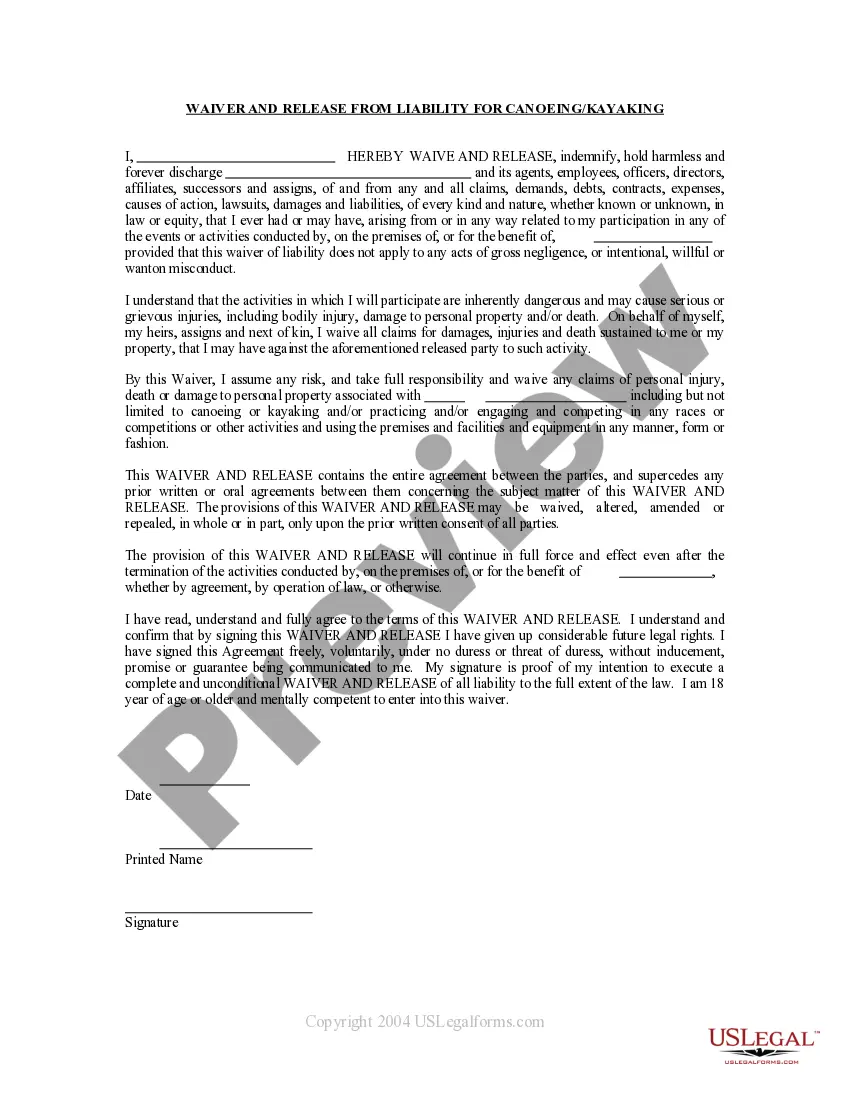
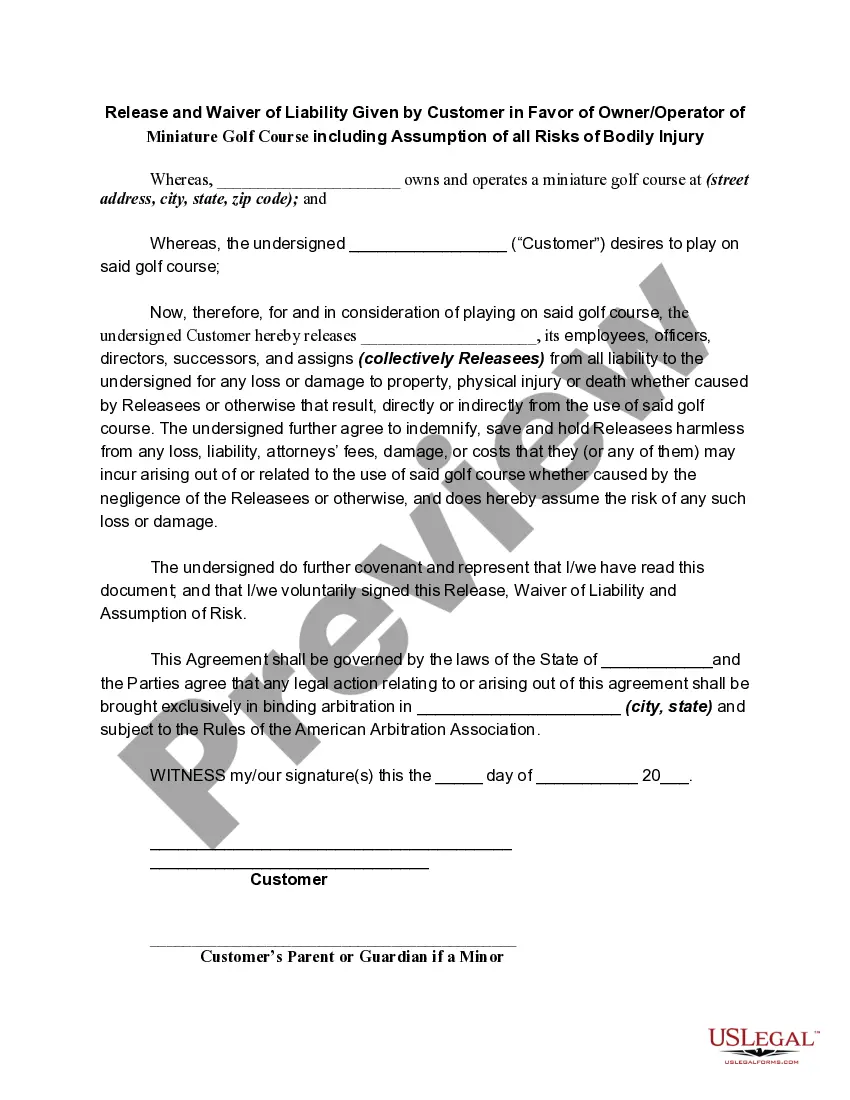
This form allows an adult to release a canoeing/kayaking facility from liability for injuries which may be incurred while on the premises, taking part in activities, etc.
Utah Waiver and Release From Liability For Adult for Canoeing - Kayaking
Category:
State:
Multi-State
Control #:
US-WAV-43A
Format:
Word;
Rich Text
Instant download
Description
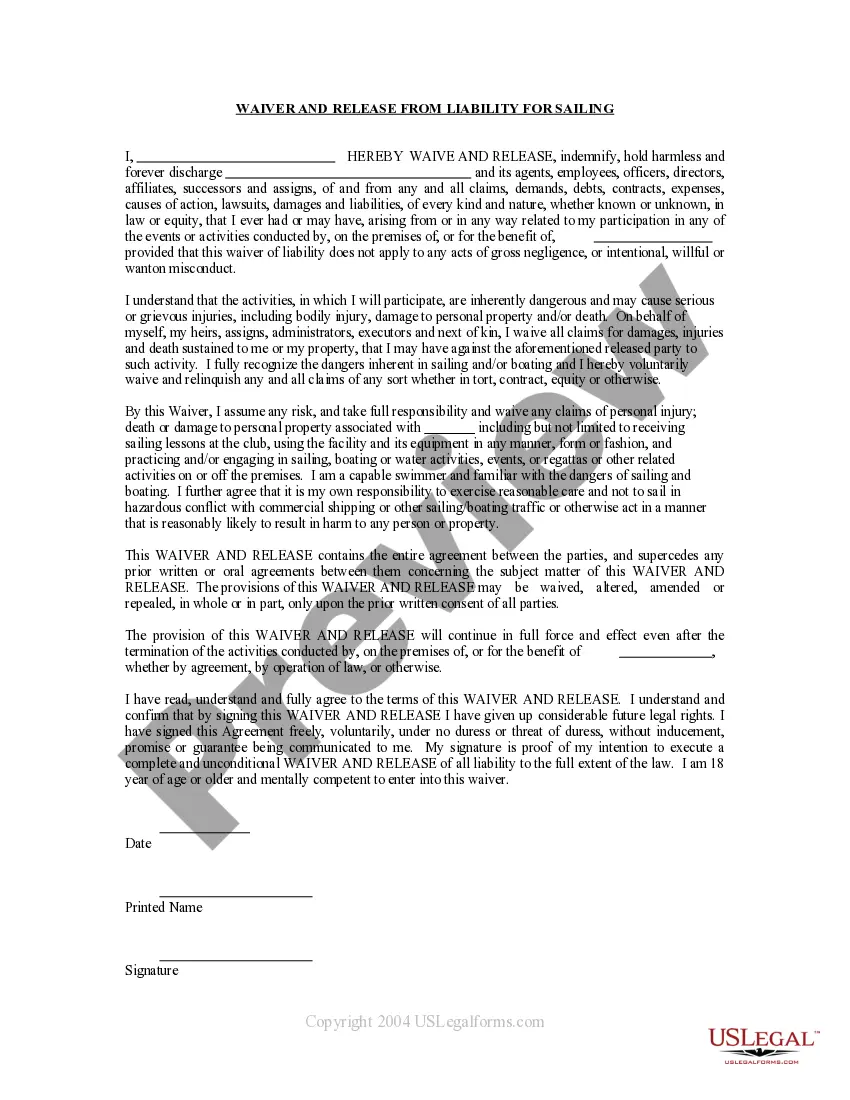
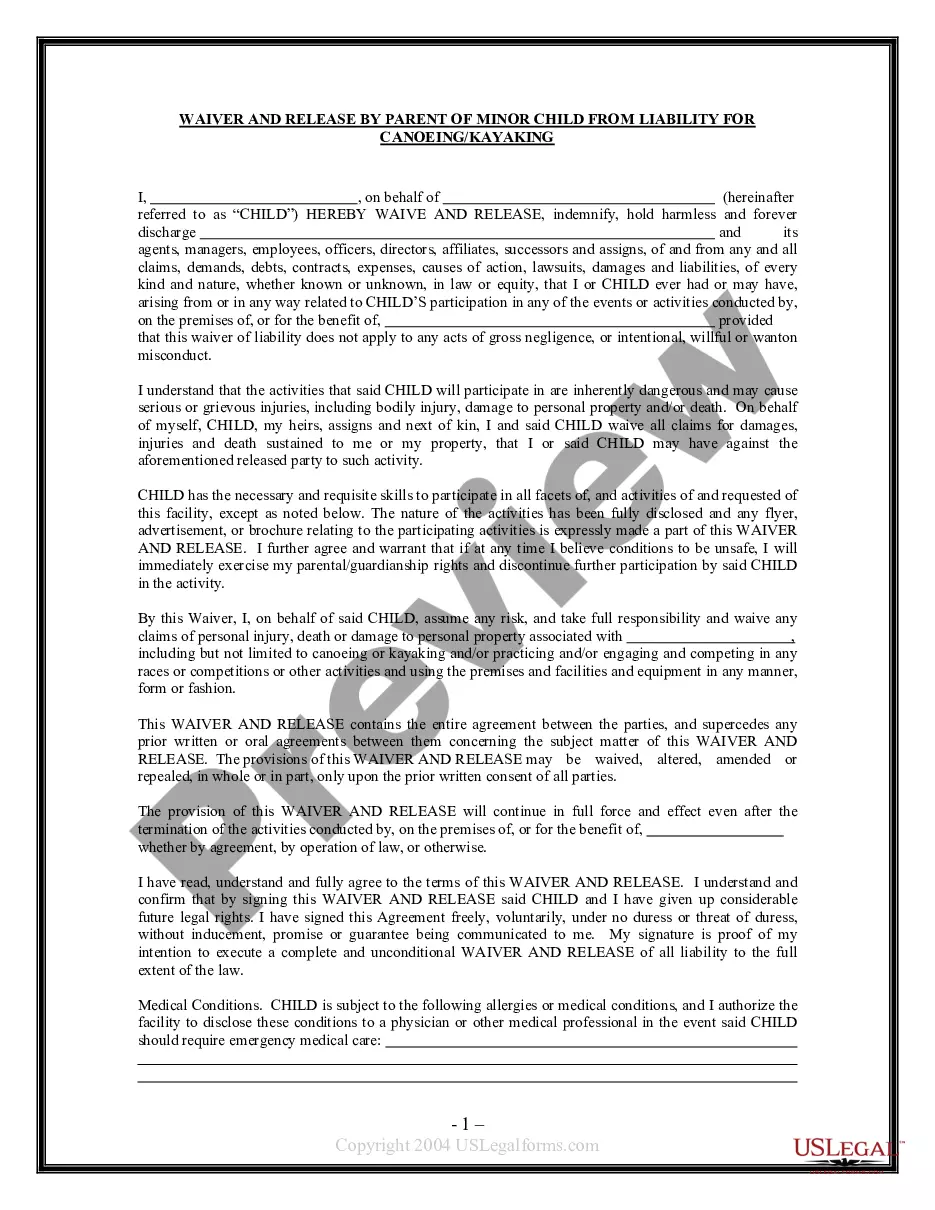
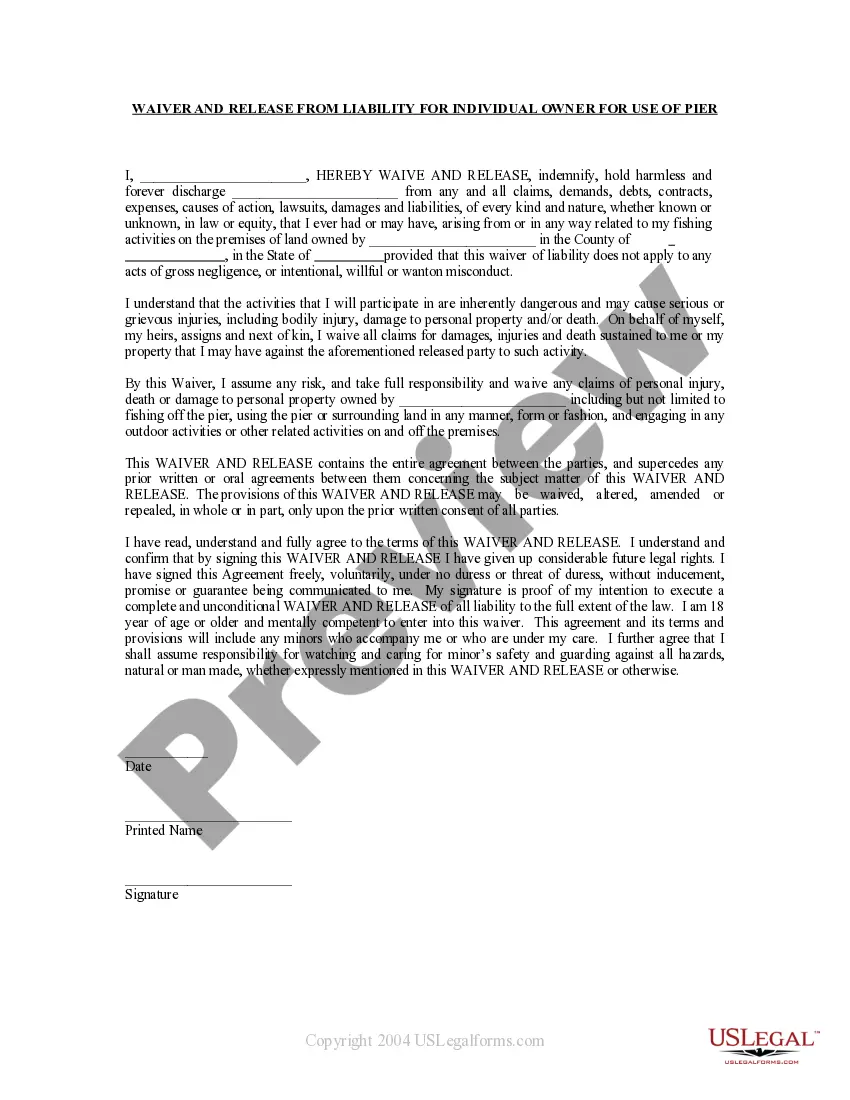
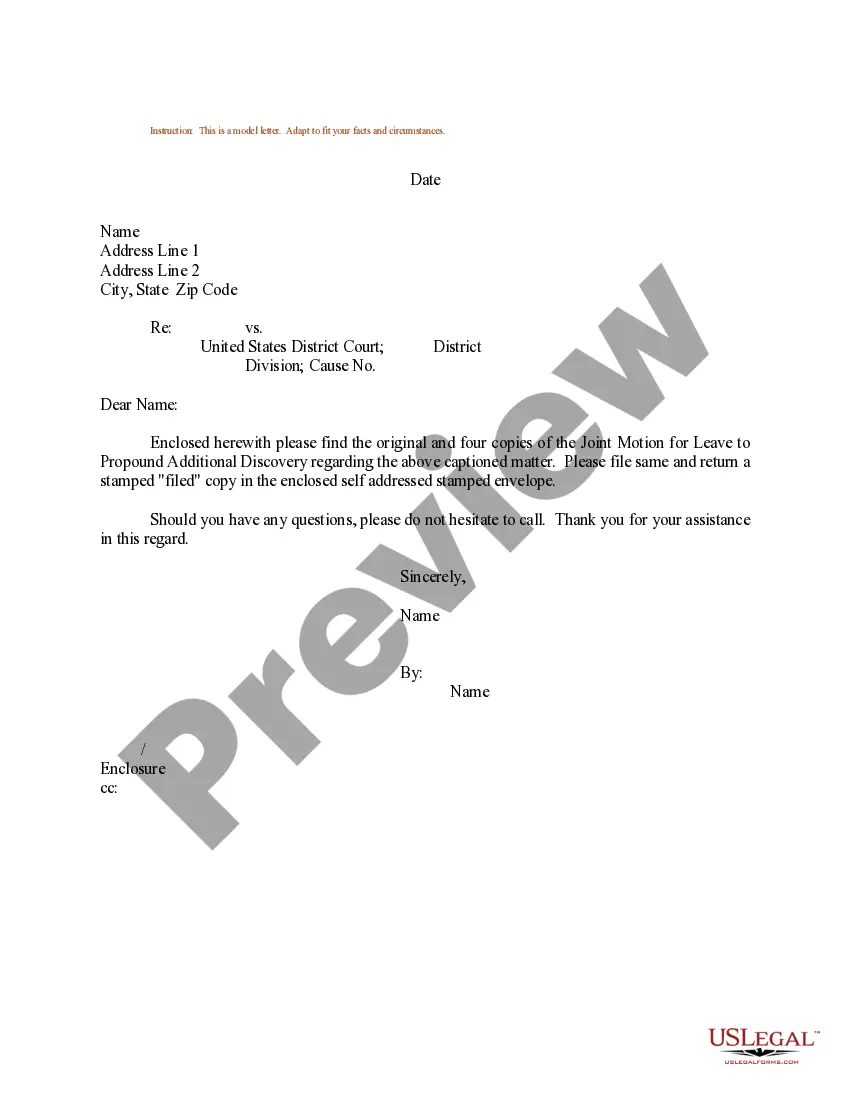
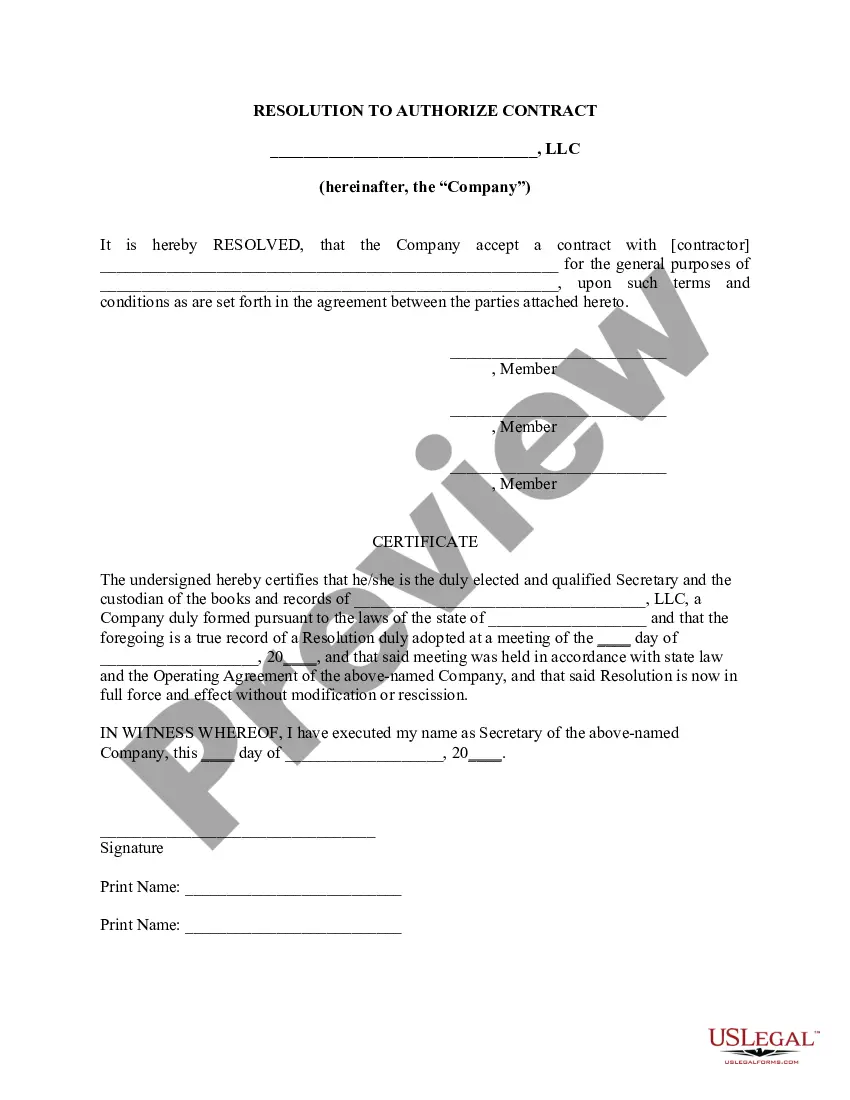
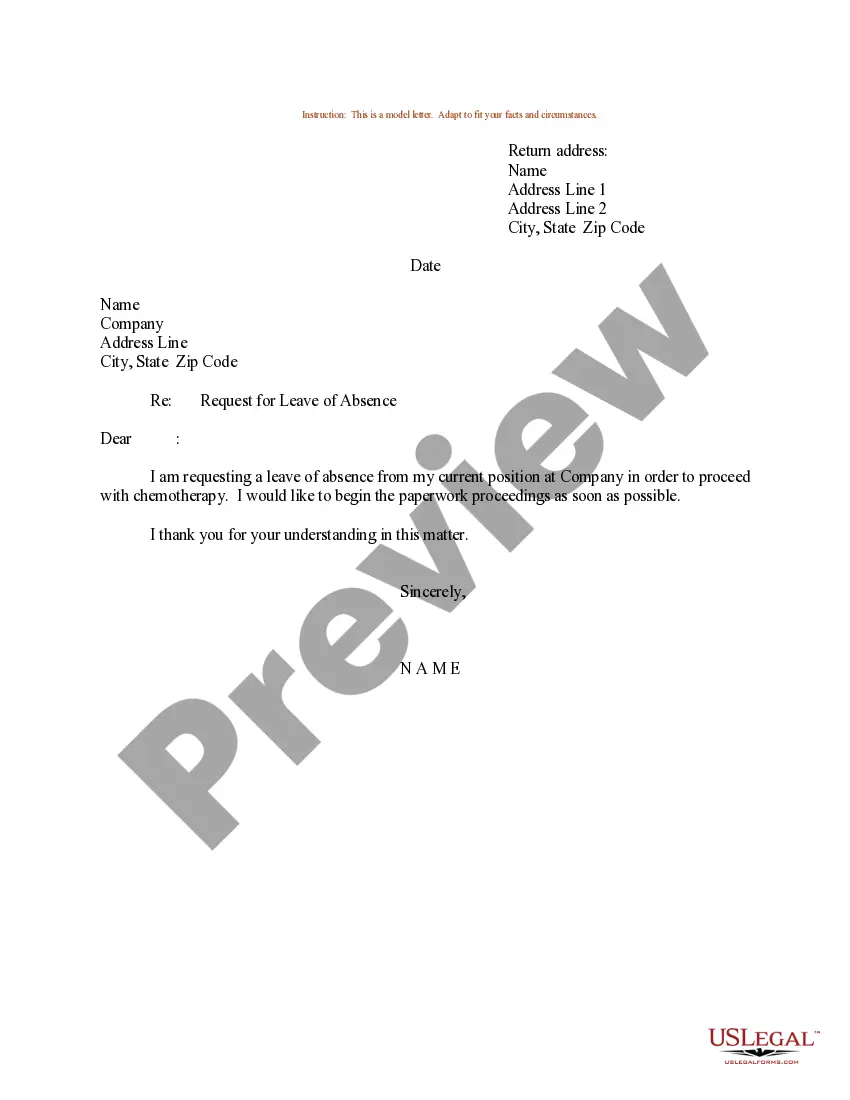
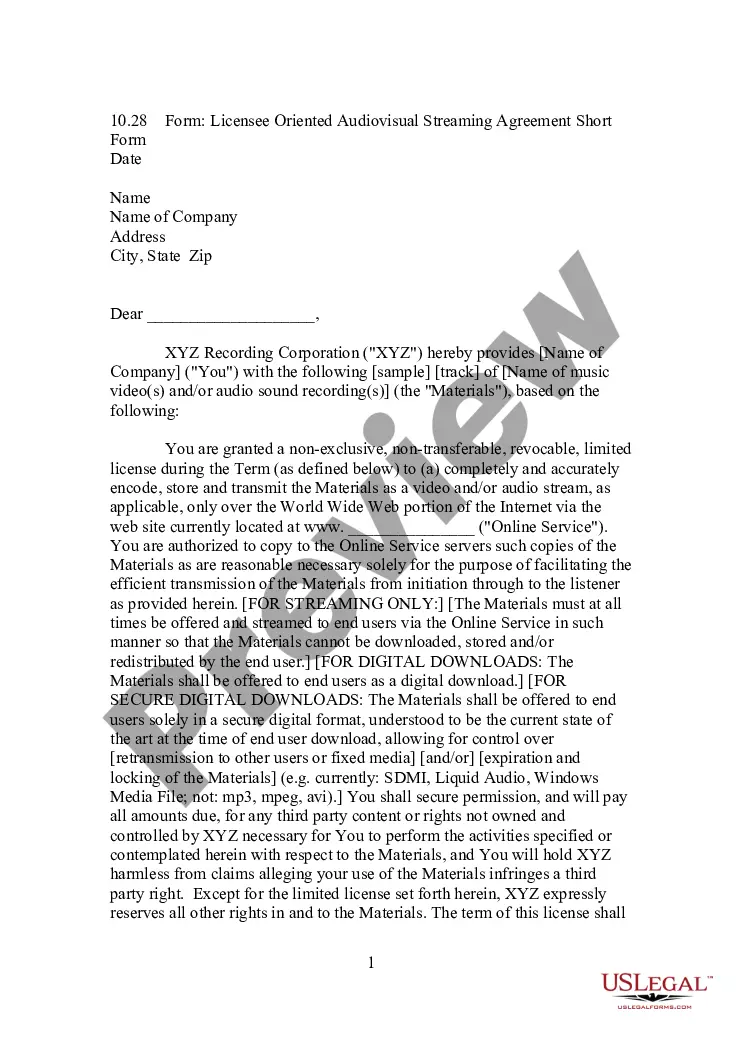
How to fill out Waiver And Release From Liability For Adult For Canoeing - Kayaking?
US Legal Forms - one of the largest collections of legal documents in the United States - offers a variety of legal form templates that you can download or print. On the website, you can find thousands of forms for business and personal purposes, organized by categories, states, or keywords. You can access the latest versions of forms like the Utah Waiver and Release From Liability For Adult for Canoeing - Kayaking in moments.
If you have a subscription, Log In and download the Utah Waiver and Release From Liability For Adult for Canoeing - Kayaking from the US Legal Forms catalog. The Download button will appear on every form you view. You can access all previously saved forms in the My documents section of your account.
If you are using US Legal Forms for the first time, here are simple instructions to help you get started: Ensure you have selected the correct form for your city/county. Click on the Preview button to review the form's content. Read the form description to confirm that you have chosen the appropriate form. If the form does not meet your needs, use the Search field at the top of the page to find one that does.
Access the Utah Waiver and Release From Liability For Adult for Canoeing - Kayaking through US Legal Forms, one of the most extensive collections of legal document templates. Utilize a vast array of professional and state-specific templates that meet your business or personal needs and requirements.
- If you are satisfied with the form, confirm your choice by clicking the Get now button.
- Then, choose the payment plan you prefer and provide your details to register for an account.
- Process the transaction. Use your credit card or PayPal account to complete the transaction.
- Select the format and download the form to your device.
- Make edits. Fill out, modify, and print and sign the saved Utah Waiver and Release From Liability For Adult for Canoeing - Kayaking.
- Every template you added to your account has no expiration date and is yours forever. Therefore, to download or print another copy, just visit the My documents section and click on the form you need.
Form popularity
FAQ
A release of liability form in Utah is a legal document that protects individuals or organizations from being held liable for injuries or damages that occur during activities like canoeing or kayaking. This form, specifically the Utah Waiver and Release From Liability For Adult for Canoeing - Kayaking, outlines the risks involved and ensures participants acknowledge them. By signing this form, participants agree not to hold the providers responsible for any accidents. It's a vital tool for outdoor activities, promoting safety and informed consent.
To request a penalty waiver in Utah, you need to submit a formal application to the appropriate authority. This process often involves filling out specific forms and providing documentation that supports your request. Using the Utah Waiver and Release From Liability For Adult for Canoeing - Kayaking can also streamline this process, as it helps clarify the circumstances surrounding your request. Always check the local guidelines to ensure you meet all requirements.
Generally, a liability waiver document is a legally binding agreement that relinquishes the right of one party to pursue legal remedy for injuries accrued on the property, regardless of fault involved.
A release of liability, also known as a liability waiver or a hold harmless agreement, is a contract in which one party agrees not to hold another party liable for damages or injury. These contracts are common in fields that involve some risk to property, finances, or health.
Liability waivers are enforceable in California solely to the extent they shift to the customer the risk of ordinary negligence. Under California law, a liability waiver cannot excuse an injury caused by a defendant's gross negligence, recklessness or intentionally wrongful act.
Liability waivers are enforceable in California solely to the extent they shift to the customer the risk of ordinary negligence. Under California law, a liability waiver cannot excuse an injury caused by a defendant's gross negligence, recklessness or intentionally wrongful act.
Utah Supreme Court Reaffirms: Parental Waivers Are Not Enforceable in Utah.
To sum it up, customers can still sue business owners even when they've signed a waiver to use the business.
Liability waivers are enforceable in California solely to the extent they shift to the customer the risk of ordinary negligence. Under California law, a liability waiver cannot excuse an injury caused by a defendant's gross negligence, recklessness or intentionally wrongful act.
In general, a liability waiver in Utah only protects a defendant from liability for injuries related to ordinary negligence. This is a general breach of the duty of care. It does not protect from gross negligence or malicious intent to harm.