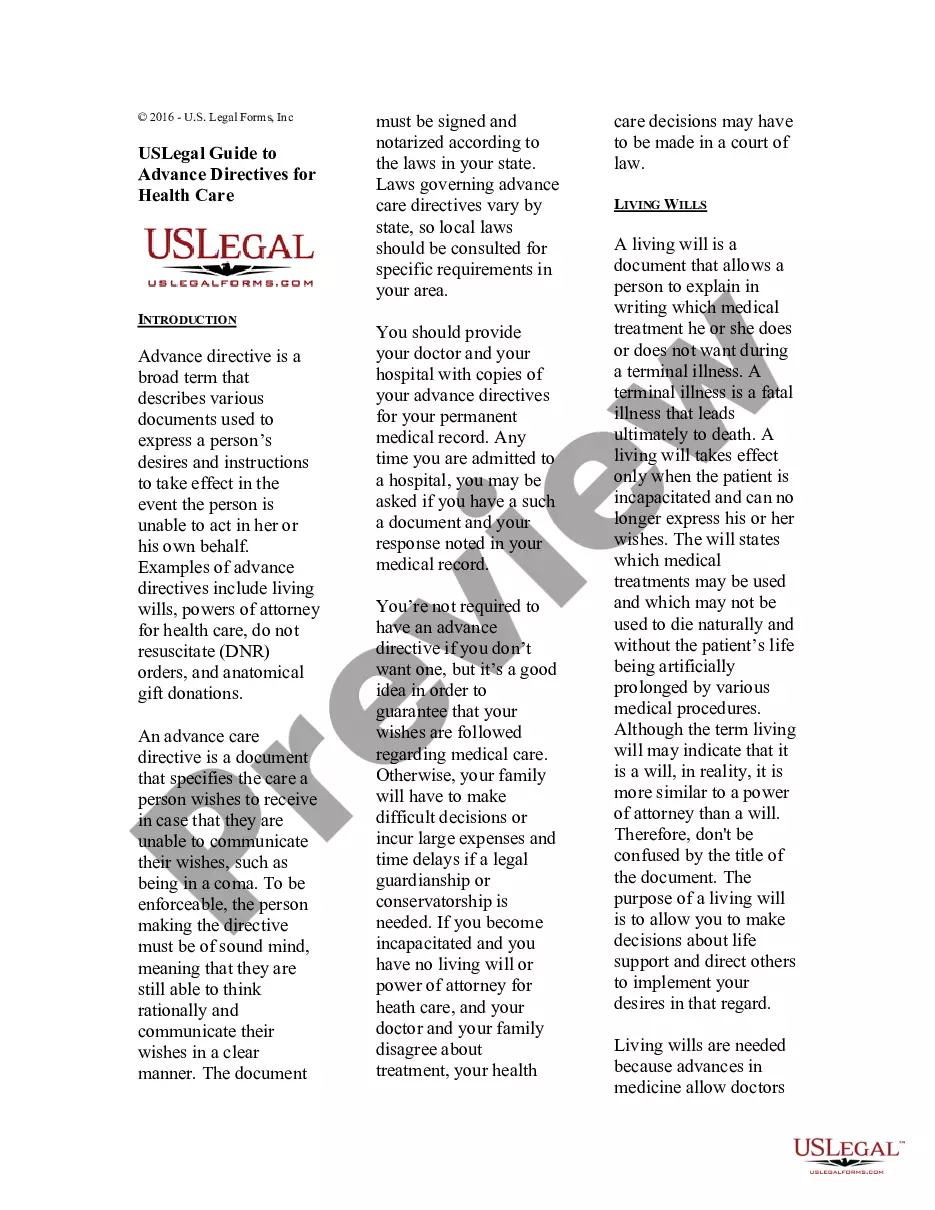
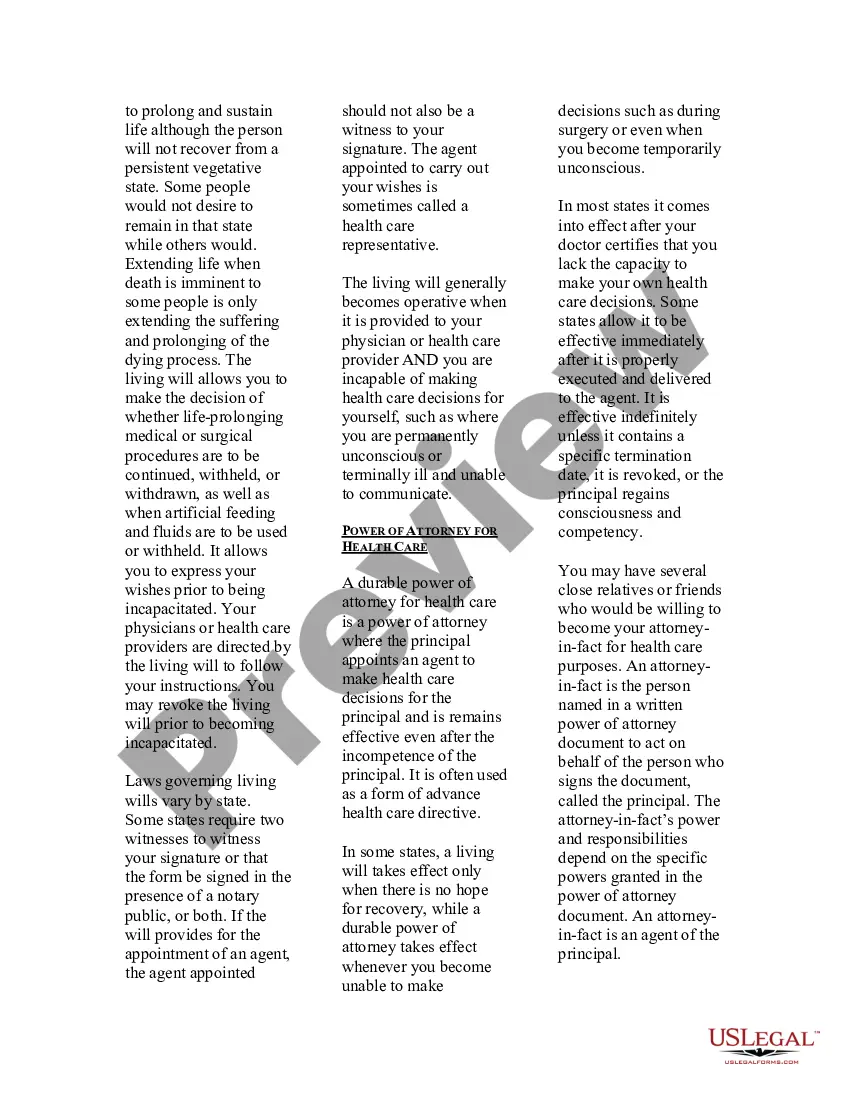
Utah USLegal Guide to Advance Directives for Health Care
Description
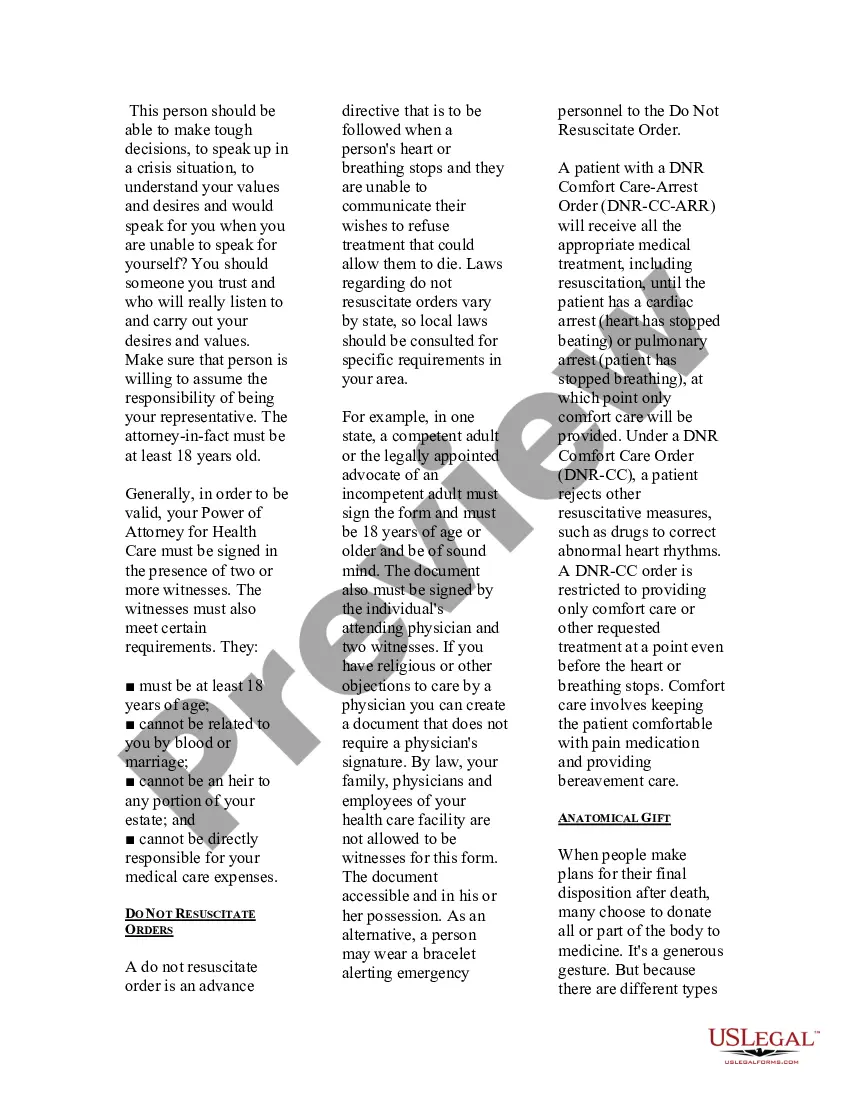
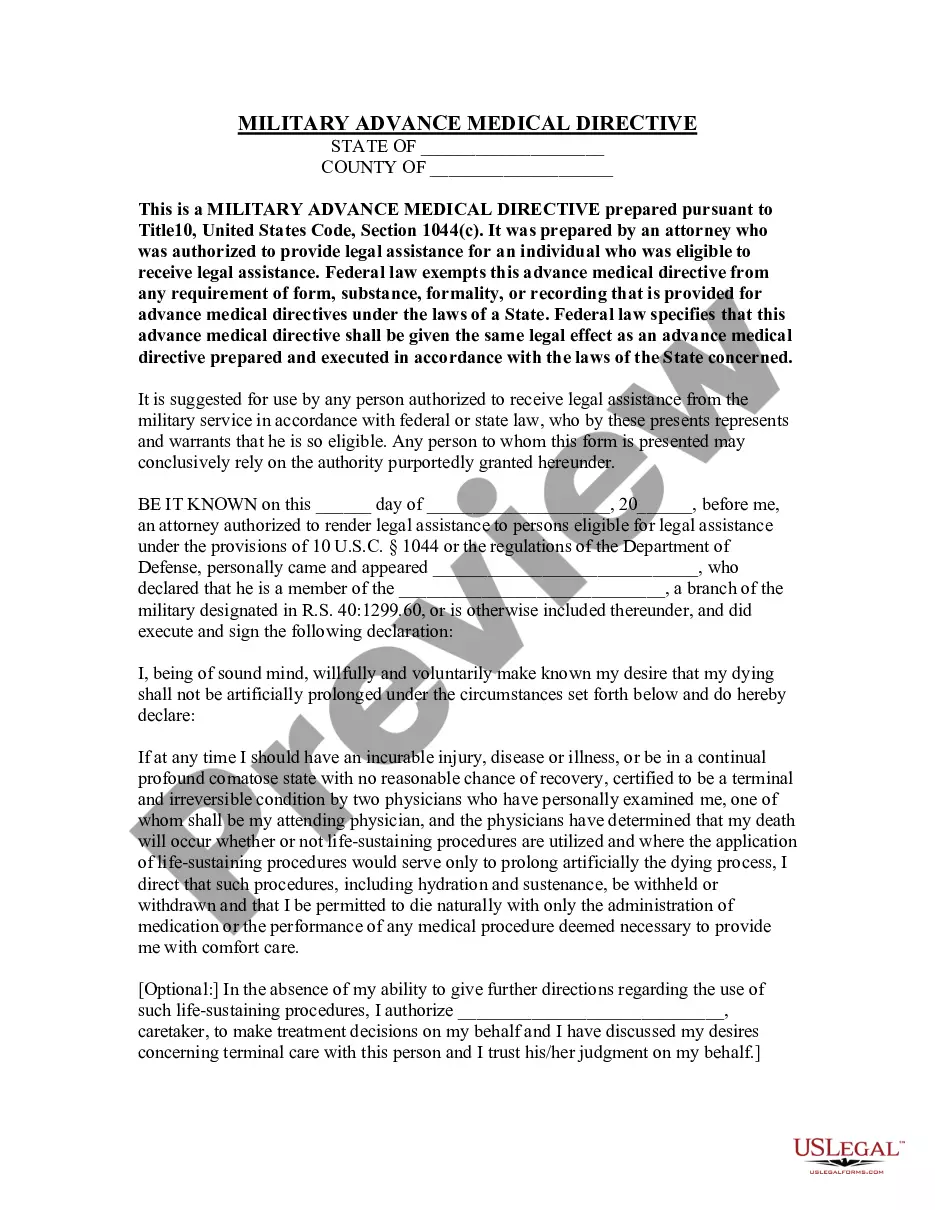
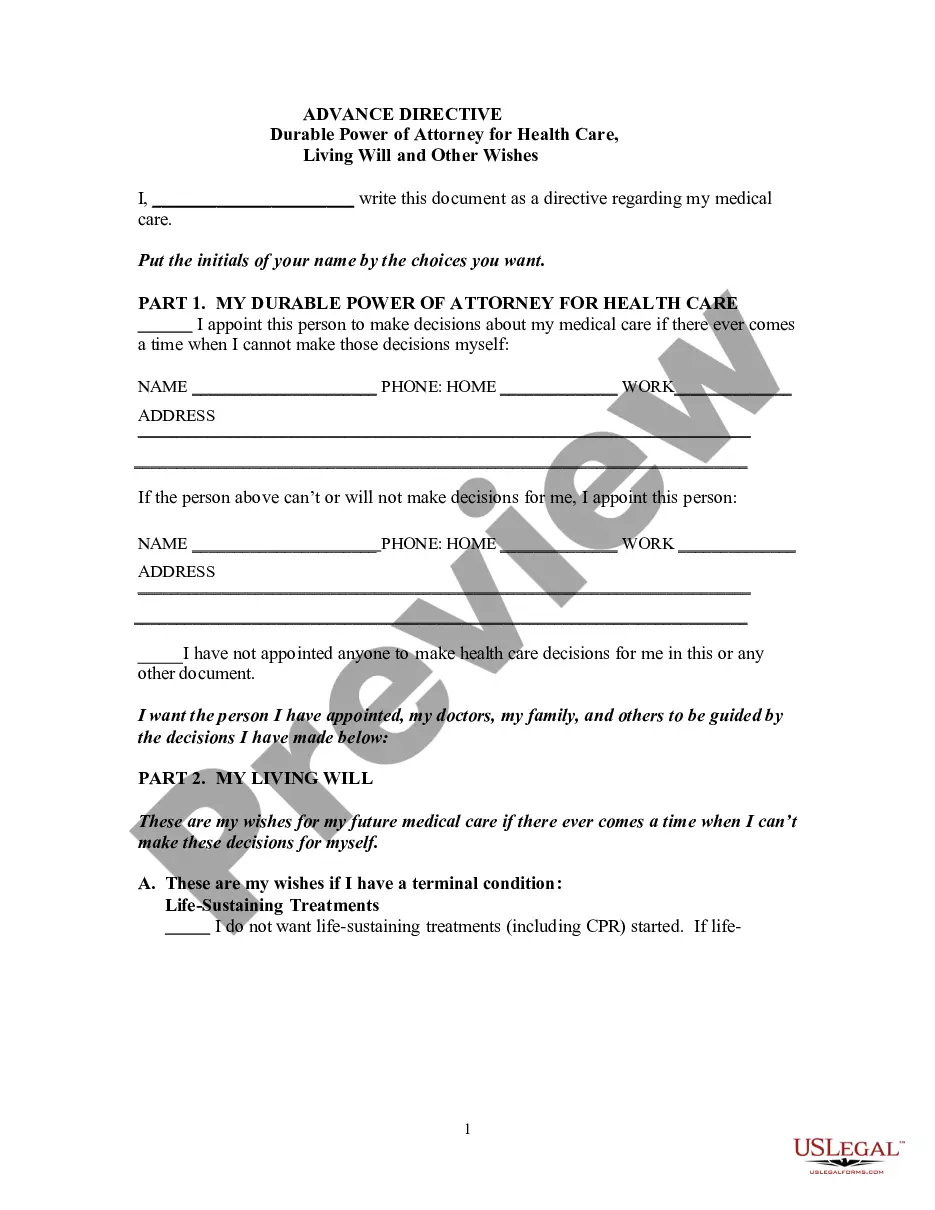
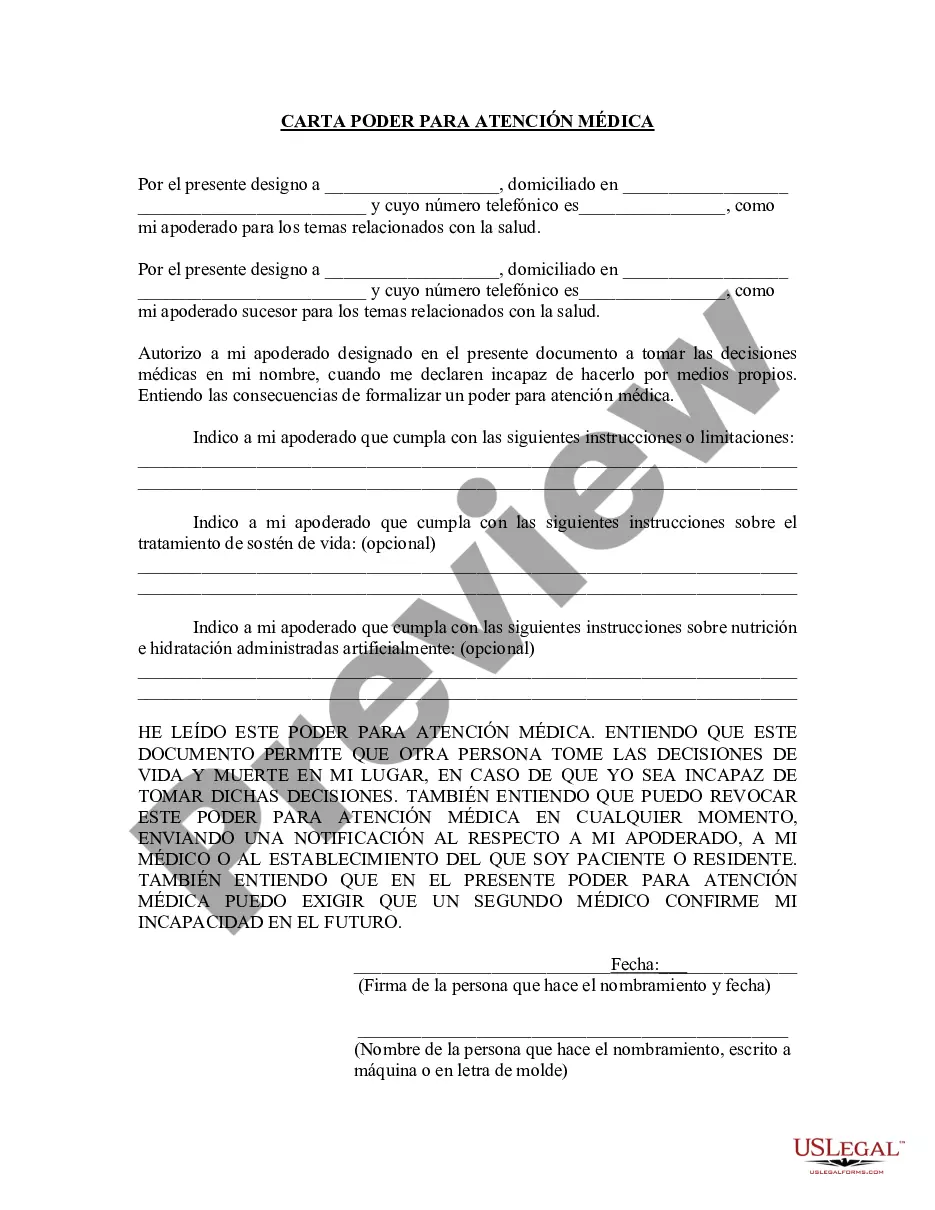
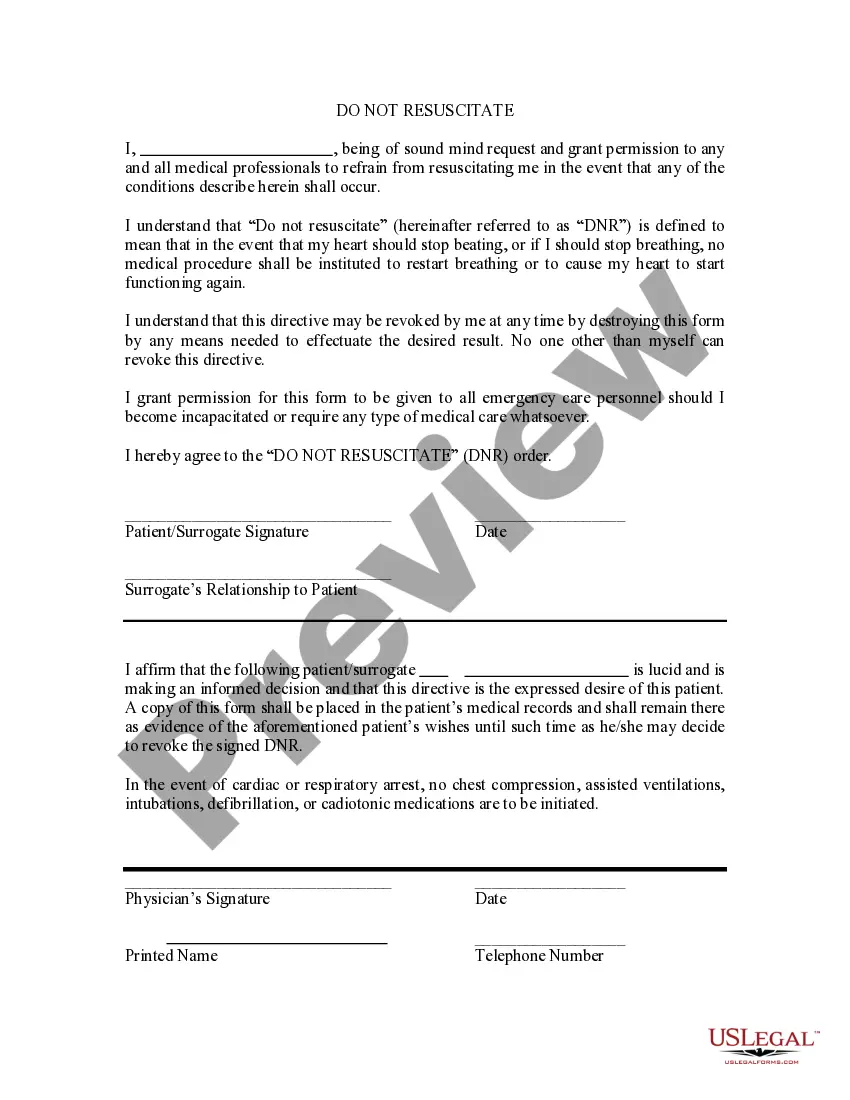
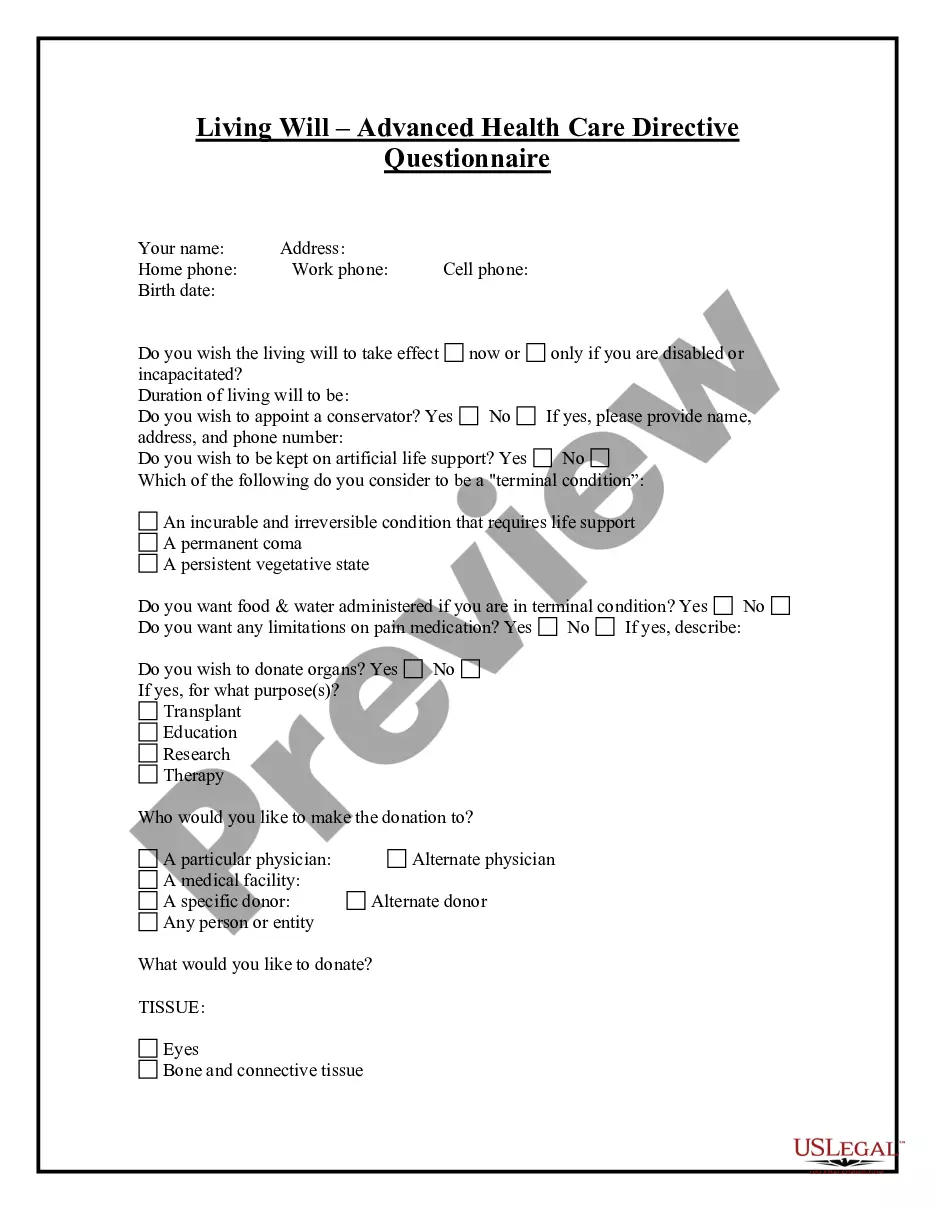

How to fill out USLegal Guide To Advance Directives For Health Care?
Are you presently in a scenario where you require documentation for potential business or particular reasons almost every day.
There are numerous legal document templates accessible online, but locating reliable ones can be challenging.
US Legal Forms provides a wide variety of form templates, including the Utah USLegal Guide to Advance Directives for Health Care, designed to meet federal and state requirements.
Once you find the right form, click Purchase now.
Choose the pricing plan you want, fill in the necessary information to create your account, and complete the purchase using your PayPal or credit card.
- If you are already familiar with the US Legal Forms website and have an account, simply sign in.
- After that, you can download the Utah USLegal Guide to Advance Directives for Health Care template.
- If you do not have an account and wish to start using US Legal Forms, follow these steps.
- Find the form you need and ensure it is for the correct city/state.
- Use the Review button to examine the form.
- Check the details to confirm that you have selected the correct form.
- If the form is not what you're looking for, utilize the Search field to find the form that meets your requirements.
Form popularity
FAQ
The Utah USLegal Guide to Advance Directives for Health Care suggests several important guidelines to follow. First, ensure your advance directive is clearly drafted and legally binding in your state. Second, communicate your wishes to your healthcare providers and loved ones so everyone understands your preferences. Lastly, review and update your directives regularly to reflect any changes in your health status or personal desires. Following these guidelines can greatly enhance the effectiveness of your advance directives.
The terms 'health care directive' and 'advance directive' often overlap, but they have subtle distinctions. The Utah USLegal Guide to Advance Directives for Health Care clarifies that a health care directive is a specific type of advance directive focused entirely on medical decisions. In contrast, advance directives may encompass a broader range of instructions. This distinction is important for ensuring your healthcare wishes are clearly communicated to your healthcare providers.
According to the Utah USLegal Guide to Advance Directives for Health Care, patients can use a living will, a durable power of attorney for healthcare, and a do-not-resuscitate (DNR) order. Each of these directives serves a specific purpose in healthcare decision-making. For example, a living will specifies treatments you want or do not want, while a DNR order communicates your wishes regarding resuscitation. Employing these directives can provide peace of mind to both you and your loved ones.
The Utah USLegal Guide to Advance Directives for Health Care identifies three key parts of an advance directive: the living will, the health care power of attorney, and any additional instructions you may want to include. Each part plays a vital role in expressing your medical care preferences. Together, they work to ensure legal clarity in healthcare decisions. This comprehensive approach empowers you and your chosen representative in critical situations.
In the context of the Utah USLegal Guide to Advance Directives for Health Care, the most common advance directives include a living will, a health care power of attorney, and a do-not-resuscitate (DNR) order. A living will outlines your wishes regarding medical treatment when you are unable to communicate. The health care power of attorney designates someone to make decisions on your behalf. Understanding these documents is crucial for ensuring your healthcare preferences are honored.
Some common pitfalls of advance directives include failing to communicate your wishes clearly or not updating the document as your preferences change. Additionally, not discussing your directives with family members can lead to confusion during critical times. By using the Utah USLegal Guide to Advance Directives for Health Care, you can avoid these issues and ensure your directives are comprehensive and understood.
In Utah, an advance directive does not need to be notarized to be valid; it simply requires your signature and the signature of one witness. However, ensuring compliance with legal requirements is essential for the directive to be honored. The Utah USLegal Guide to Advance Directives for Health Care provides information so you can easily meet the necessary criteria.
The three main types of advance directives are living wills, health care proxies, and do-not-resuscitate (DNR) orders. A living will details your preferences for medical treatment, a health care proxy designates someone to make decisions on your behalf, and a DNR order specifies your wishes if you face life-threatening situations. The Utah USLegal Guide to Advance Directives for Health Care outlines these directives so you can make informed choices.
In Maine, an advance directive does not need to be notarized to be valid. However, it must be signed by two witnesses who can attest to your identity. The Utah USLegal Guide to Advance Directives for Health Care can help you understand the requirements specific to each state, ensuring your document meets legal standards.
Yes, you can fill out an advance directive online. The Utah USLegal Guide to Advance Directives for Health Care offers easy access to templates and forms you can customize. Completing your directive online simplifies the process, enabling you to ensure your wishes are documented clearly and accurately.