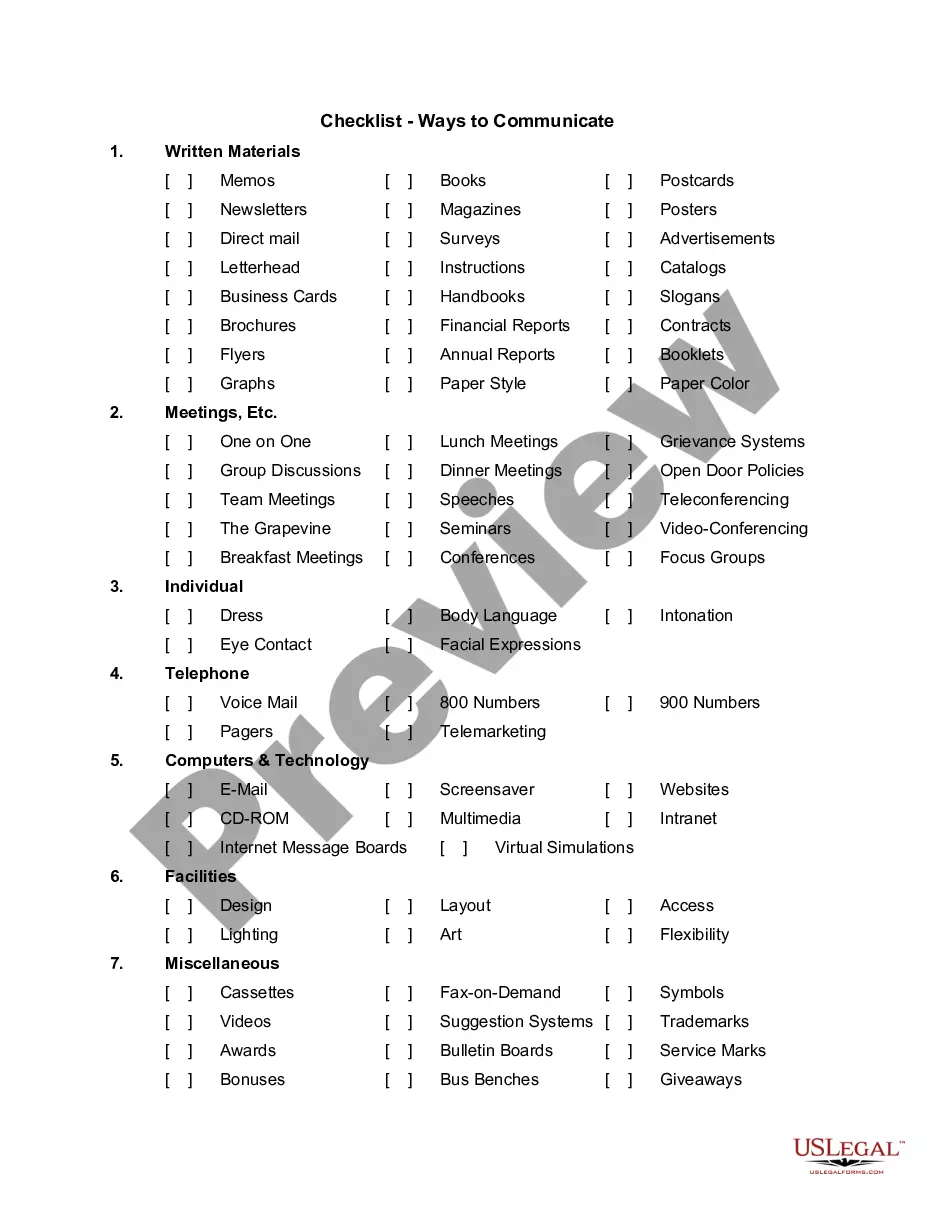
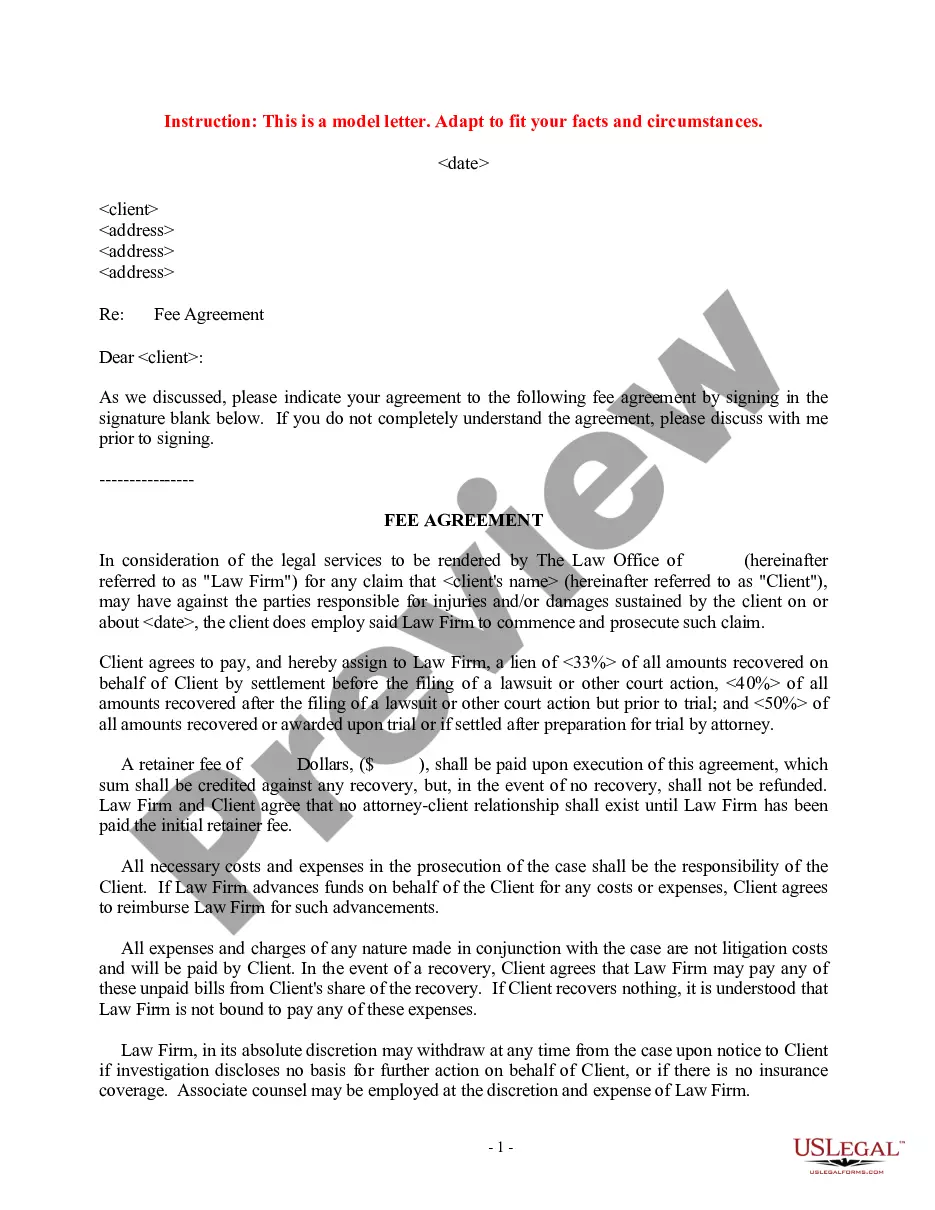
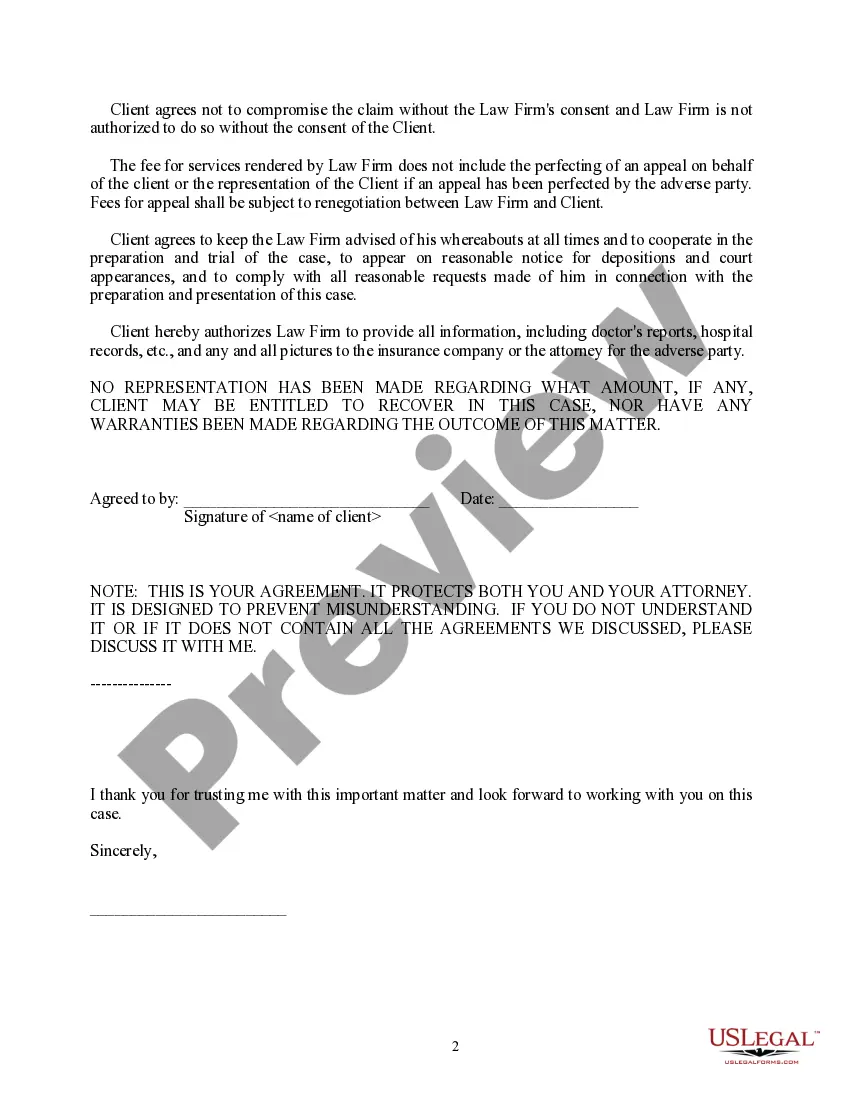
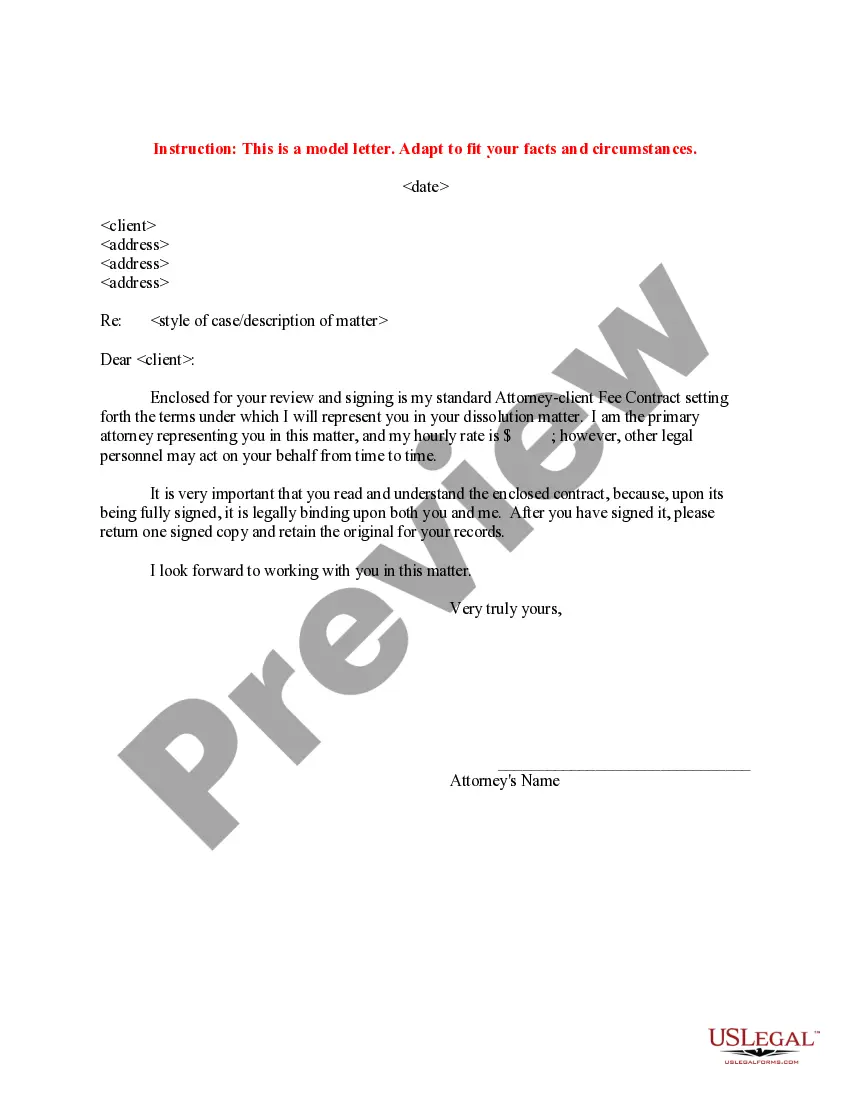
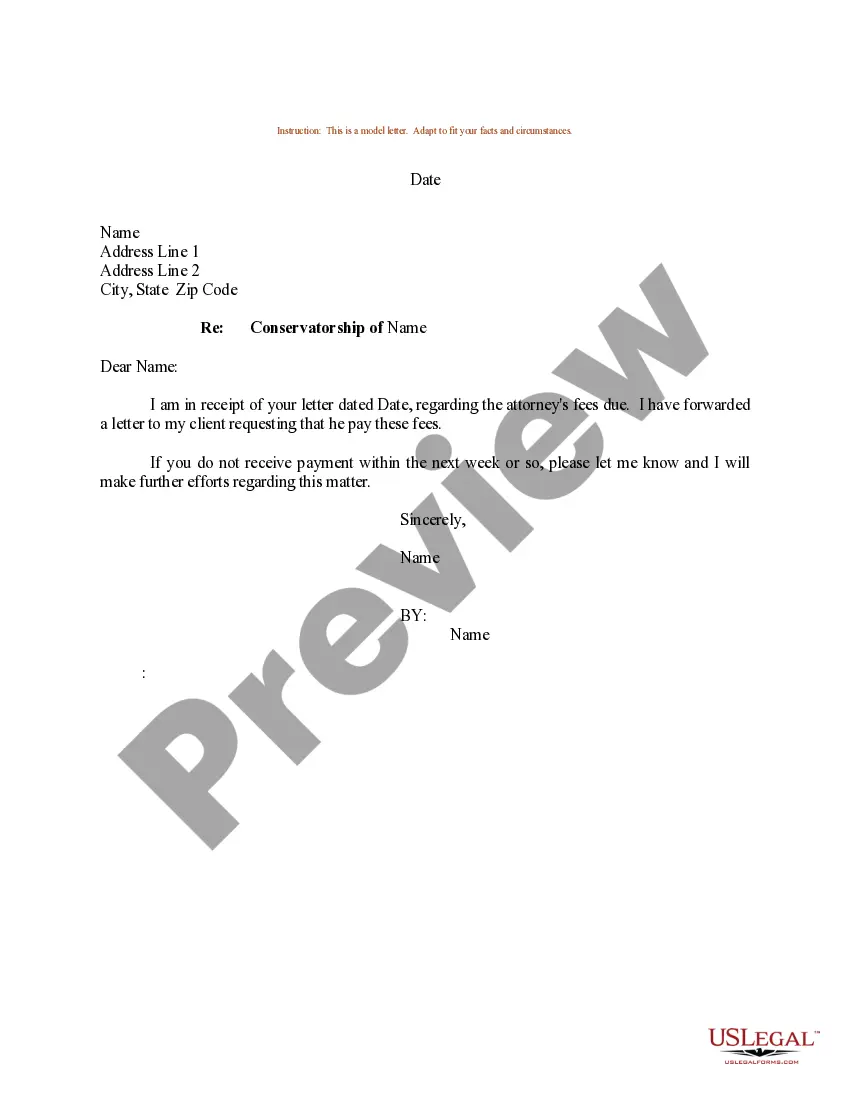
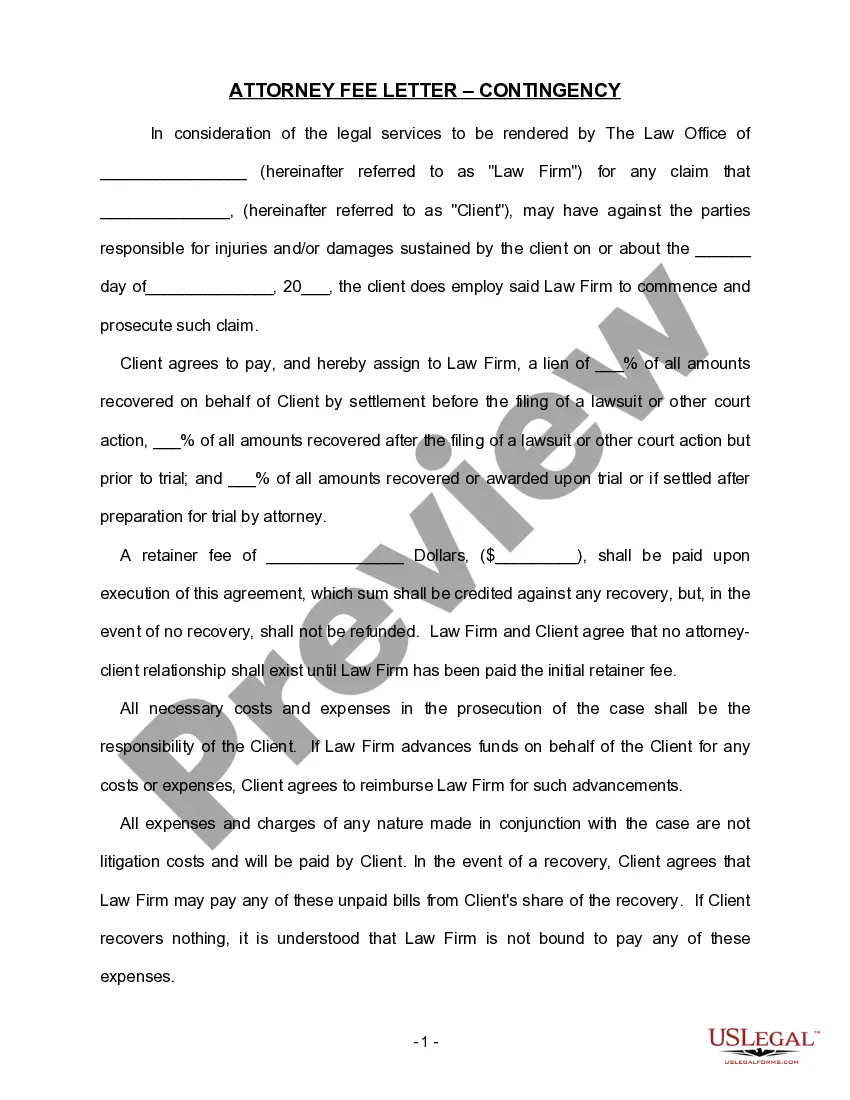
Utah Attorney Fee Letter - Contingency Agreement
Description


Get your form ready online
Our built-in tools help you complete, sign, share, and store your documents in one place.
Make edits, fill in missing information, and update formatting in US Legal Forms—just like you would in MS Word.
Download a copy, print it, send it by email, or mail it via USPS—whatever works best for your next step.
Sign and collect signatures with our SignNow integration. Send to multiple recipients, set reminders, and more. Go Premium to unlock E-Sign.
If this form requires notarization, complete it online through a secure video call—no need to meet a notary in person or wait for an appointment.
We protect your documents and personal data by following strict security and privacy standards.

Make edits, fill in missing information, and update formatting in US Legal Forms—just like you would in MS Word.

Download a copy, print it, send it by email, or mail it via USPS—whatever works best for your next step.

Sign and collect signatures with our SignNow integration. Send to multiple recipients, set reminders, and more. Go Premium to unlock E-Sign.

If this form requires notarization, complete it online through a secure video call—no need to meet a notary in person or wait for an appointment.

We protect your documents and personal data by following strict security and privacy standards.
Looking for another form?

How to fill out Attorney Fee Letter - Contingency Agreement?
You can devote hrs on the Internet attempting to find the authorized file design that fits the federal and state demands you want. US Legal Forms supplies thousands of authorized kinds that are analyzed by experts. You can actually acquire or produce the Utah Attorney Fee Letter - Contingency Agreement from the assistance.
If you already possess a US Legal Forms profile, you may log in and click on the Obtain button. Afterward, you may full, change, produce, or sign the Utah Attorney Fee Letter - Contingency Agreement. Every authorized file design you purchase is your own eternally. To acquire another copy associated with a obtained form, go to the My Forms tab and click on the corresponding button.
If you are using the US Legal Forms internet site for the first time, adhere to the basic directions below:
- Very first, make certain you have selected the proper file design for your county/area of your liking. Browse the form outline to make sure you have picked out the right form. If offered, take advantage of the Preview button to search with the file design too.
- If you want to get another variation of your form, take advantage of the Search field to discover the design that fits your needs and demands.
- Once you have found the design you desire, click Acquire now to continue.
- Find the prices program you desire, type your credentials, and sign up for an account on US Legal Forms.
- Full the financial transaction. You can utilize your credit card or PayPal profile to pay for the authorized form.
- Find the formatting of your file and acquire it to your product.
- Make adjustments to your file if necessary. You can full, change and sign and produce Utah Attorney Fee Letter - Contingency Agreement.
Obtain and produce thousands of file layouts using the US Legal Forms web site, that offers the greatest collection of authorized kinds. Use expert and status-certain layouts to deal with your organization or specific requirements.
Form popularity
FAQ
In a contingent fee arrangement, the lawyer agrees to accept a fixed percentage (often one-third to 40 percent) of the recovery, which is the amount finally paid to the client. If you win the case, the lawyer's fee comes out of the money awarded to you.
That said, the most common lawyer contingency fee average ends up being 33%, or ? of the total earnings of a case, but can go up to 40% (in some jurisdictions) as the complexity and risk involved in taking the case increases.
In the United States, lawyers are unable to use contingency fees for criminal cases, divorce and family law cases, and domestic relations cases, with similar rules in Canada. With criminal cases, there is usually no financial recovery, so using a contingency agreement to cover payment would be useless.
A lawyer generally charges around a third of the settlement amount. However, the contingency fee percentage can range between 20 to 50 percent, depending on the case they are handling.
You and your lawyer will negotiate the percentage of the contingency fee before you engage them to represent you. The typical contingency fee is anywhere between 33% and 40% of your award. In New York, contingency fees can't exceed 33%. Several factors could impact the amount of the fee.
Is There a Contingency Fee Percentage Limit in California? In California, you will usually not see a contingency fee over 40% for most law firms.
Hourly rates in California Lawyers in California typically charge between $178 and $509 per hour, with the average being $344. For comparison, District of Columbia has the highest average hourly rate at $392 while West Virginia has the lowest average hourly rate at $162.
US OGE. The term ?contingency fee? refers to a type of fee arrangement in a case in which an attorney or firm agrees that the payment of legal fees will be contingent upon the successful outcome of the case.