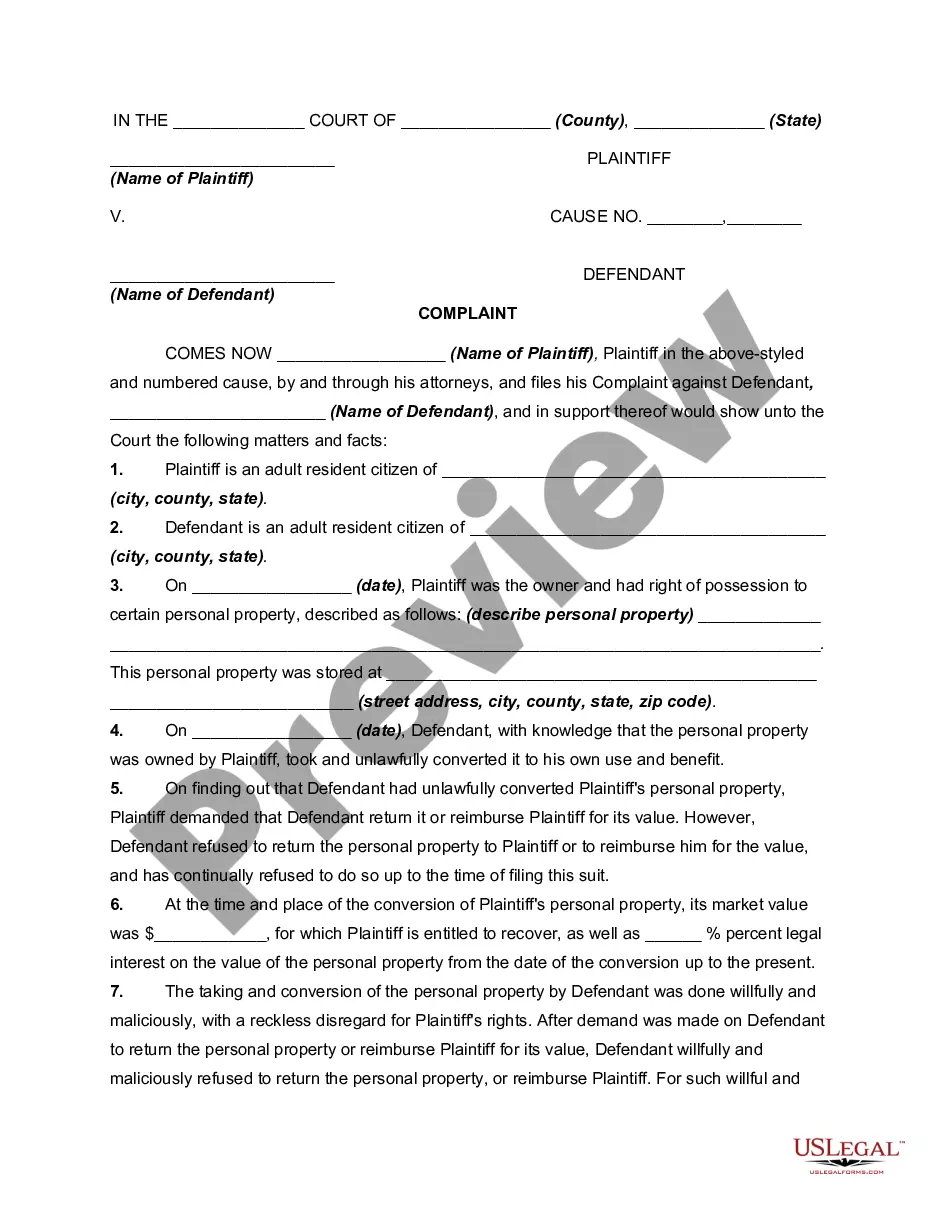
Utah Complaint for Conversion Seeking Punitive Damages

State:
Multi-State
Control #:
US-02074BG
Format:
Word; 
Rich Text
Instant download

Description

Conversion occurs when someone wrongfully uses property of another for their own purposes or alters or destroys it. In an action for conversion, the taking of the property may be lawful, but the retaining of the property is unlawful. To succeed in the action, the plaintiff must generally prove that he or she demanded the property returned and the defendant refused to do so.


Punitive damages are damages awarded in a lawsuit as a punishment and example to deter others from malicious, evil or particularly fraudulent acts. Plaintiff has the burden of proving that punitive damages should be awarded, and the amount, by a preponderance of the evidence. In order to succeed, the plaintiff must prove that the defendant's conduct was malicious, or in reckless disregard of plaintiff's rights.


The following form is a complaint that adopts the notice pleadings format of the Federal Rules of Civil Procedure, which have been adopted by most states in one form or another.

Free preview
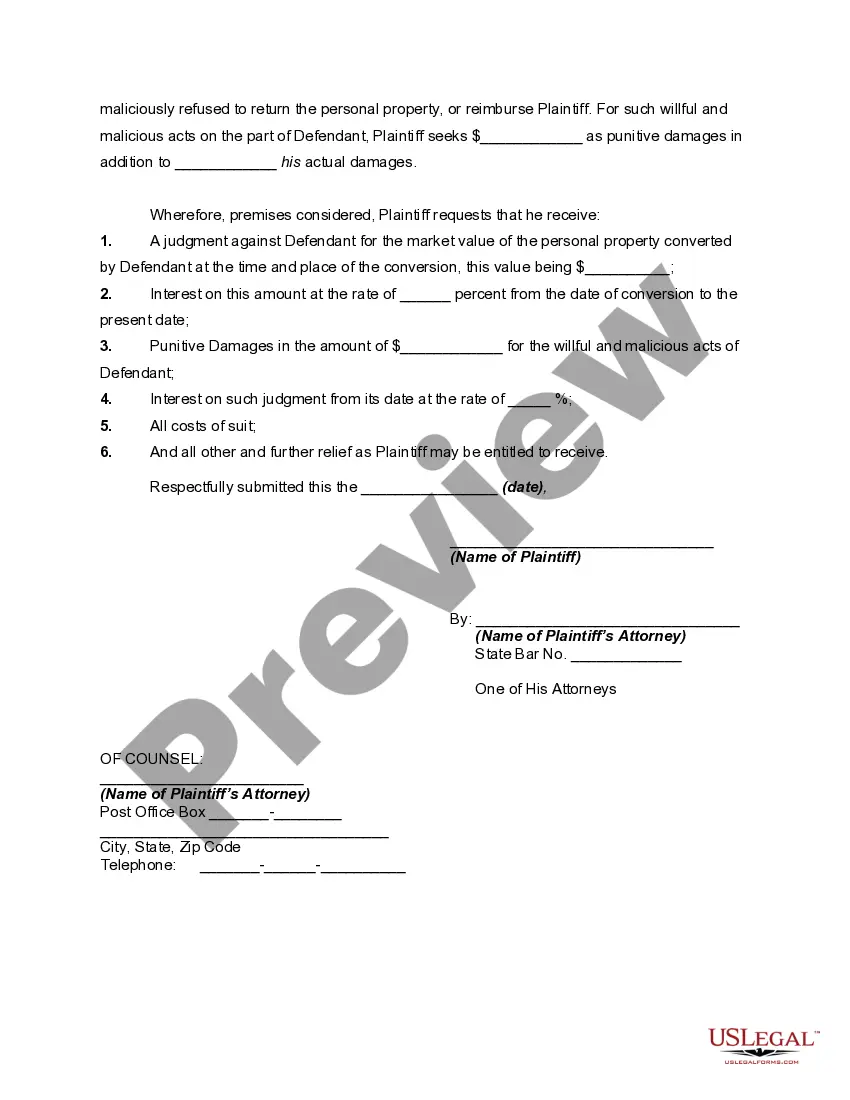
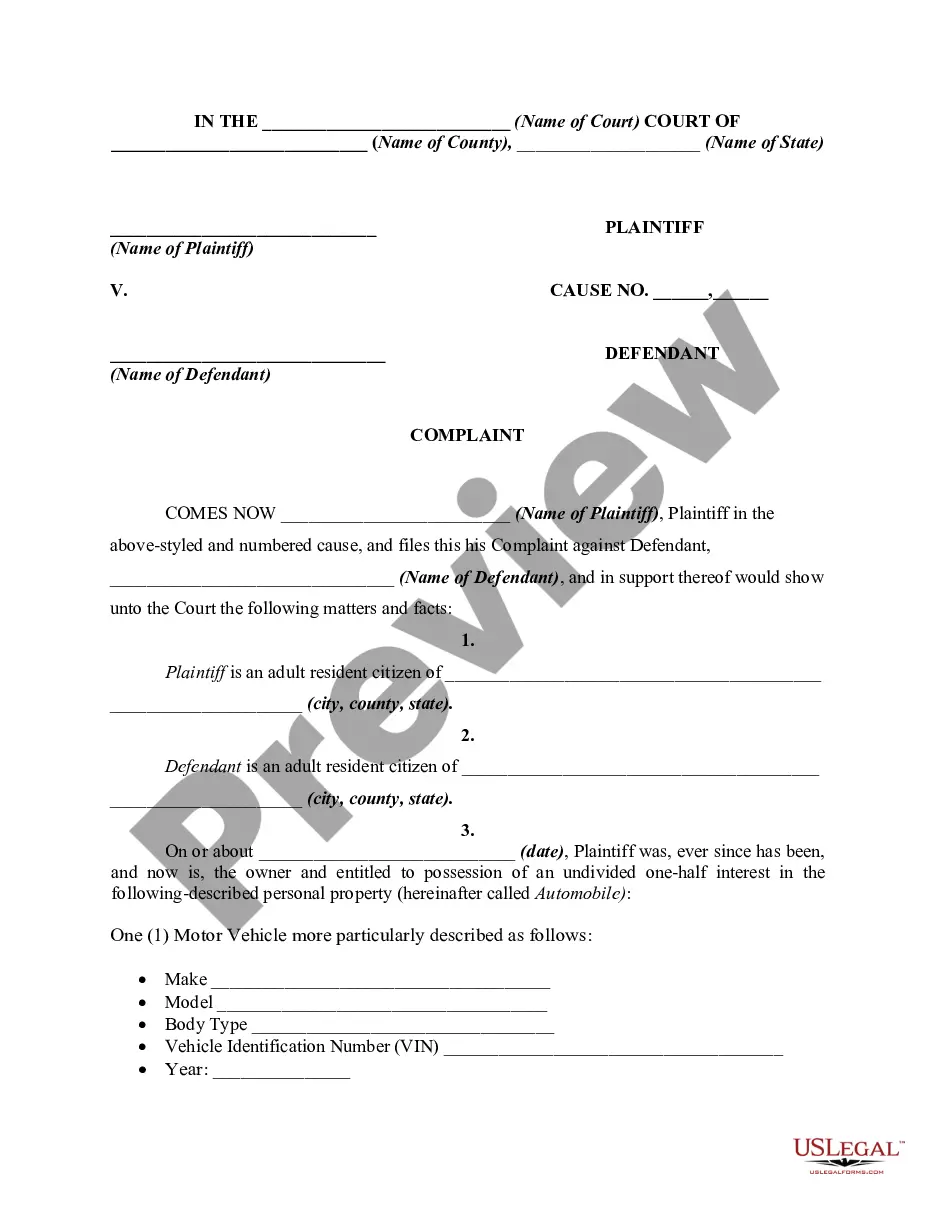
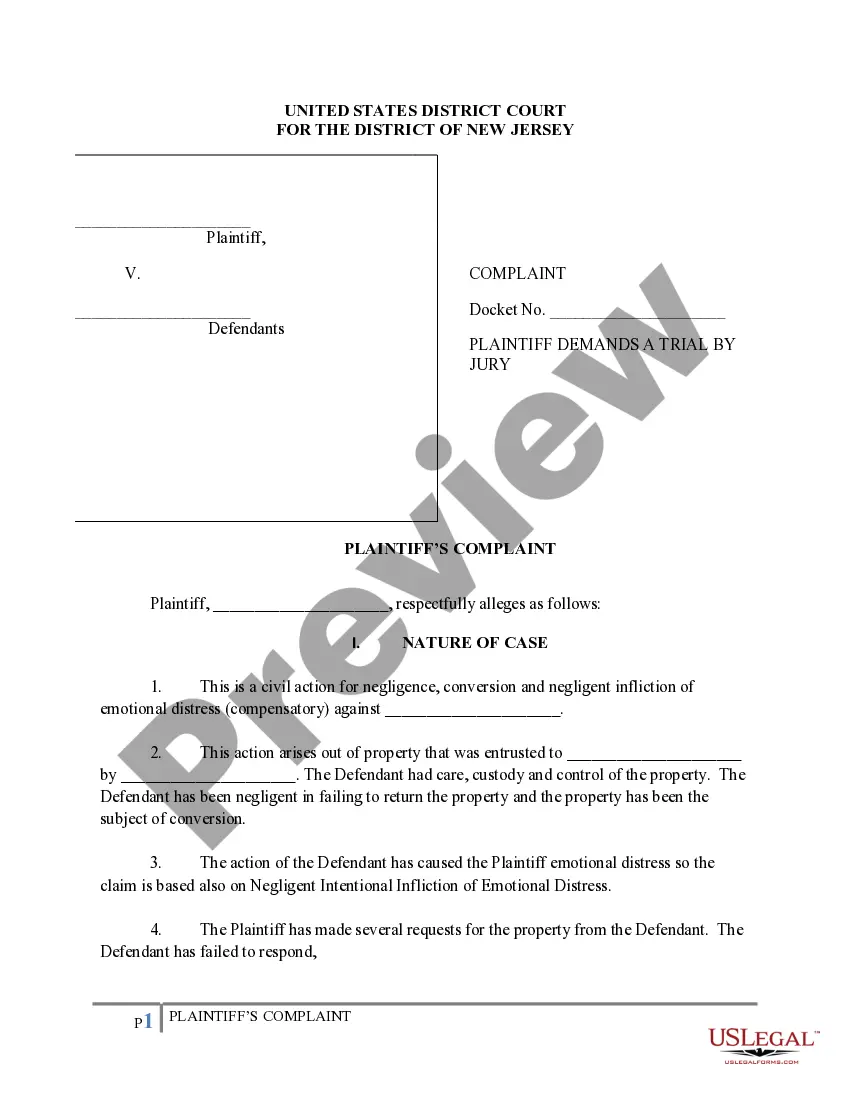
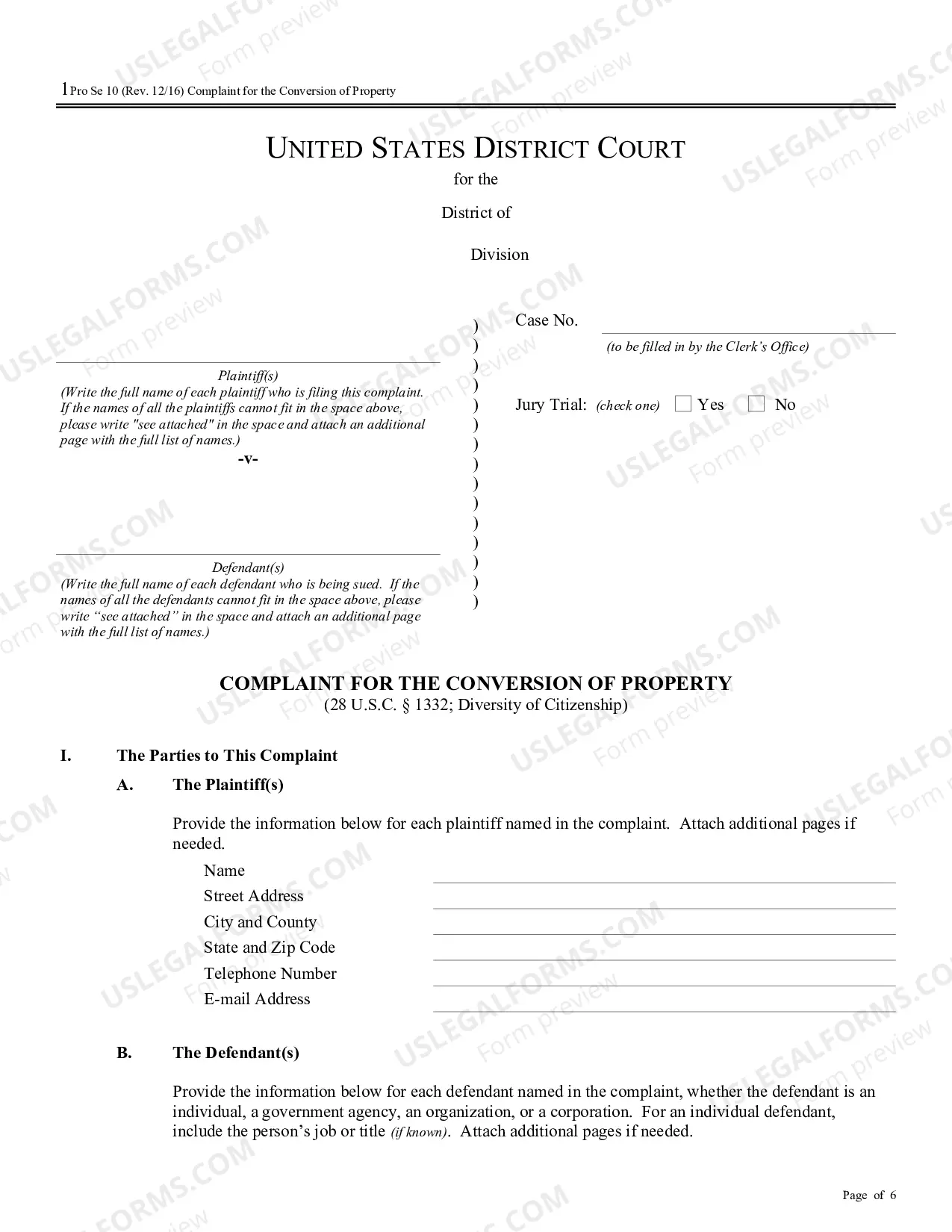
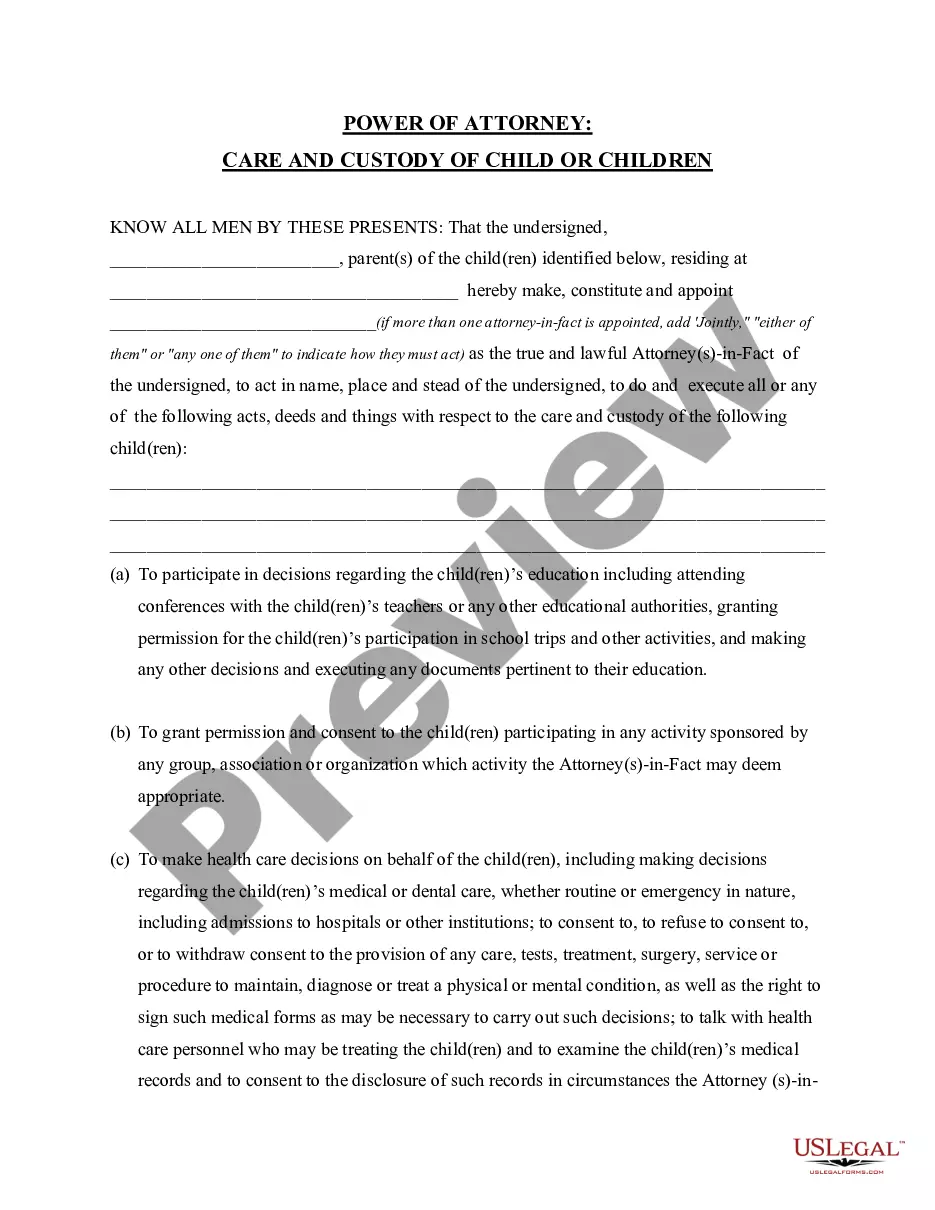
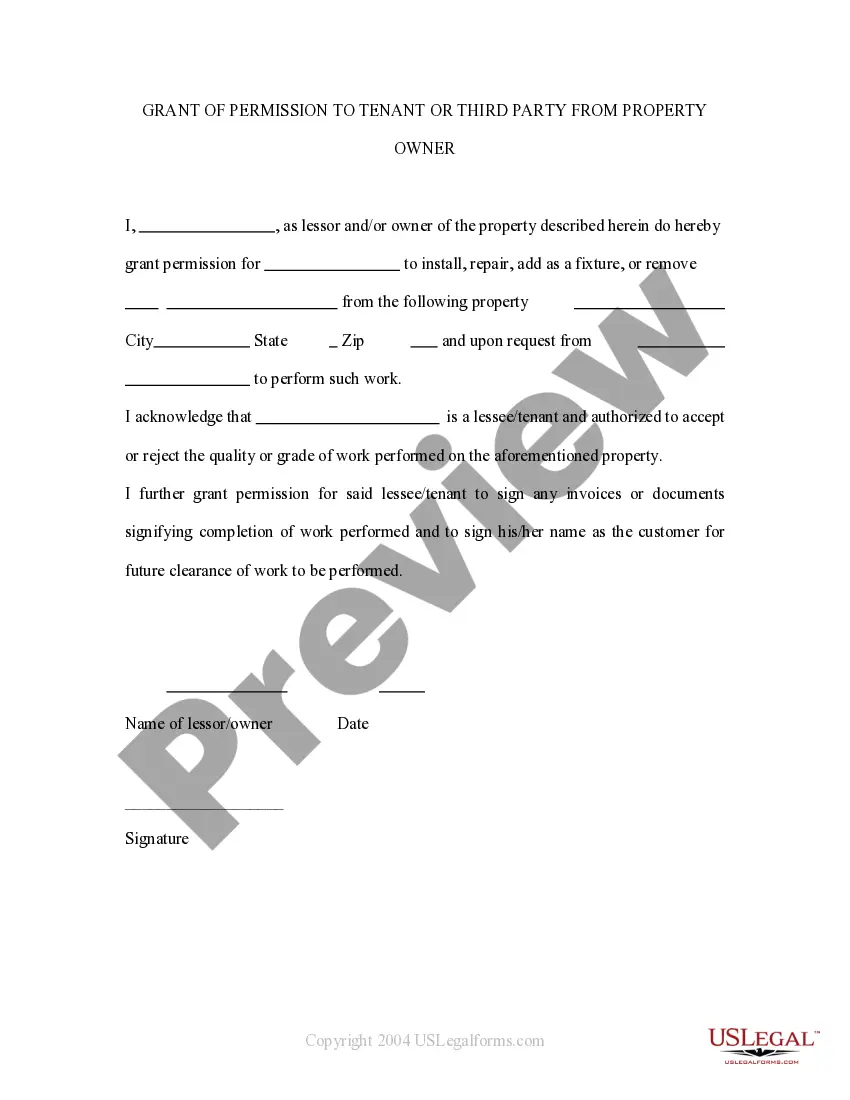
  • Preview Complaint for Conversion Seeking Punitive Damages
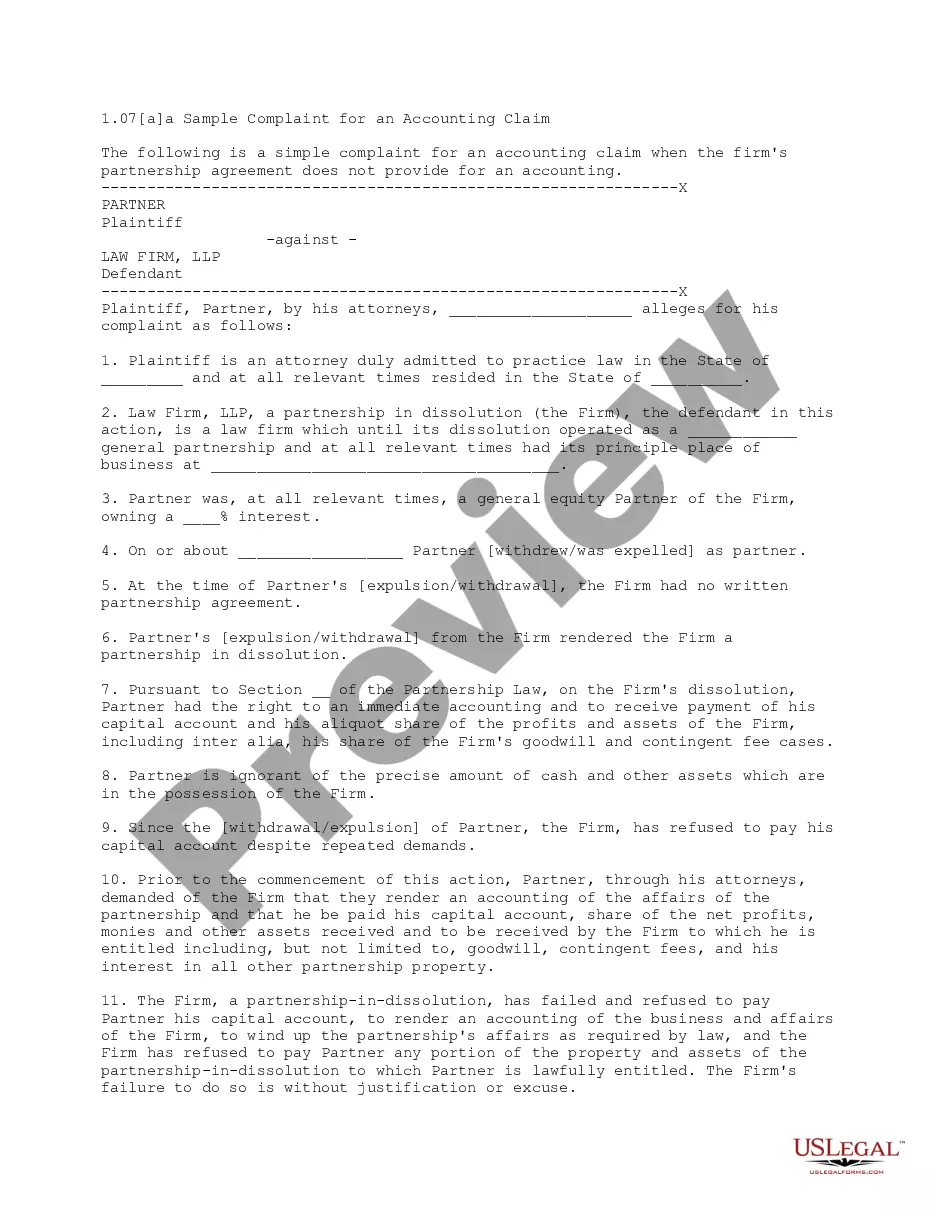
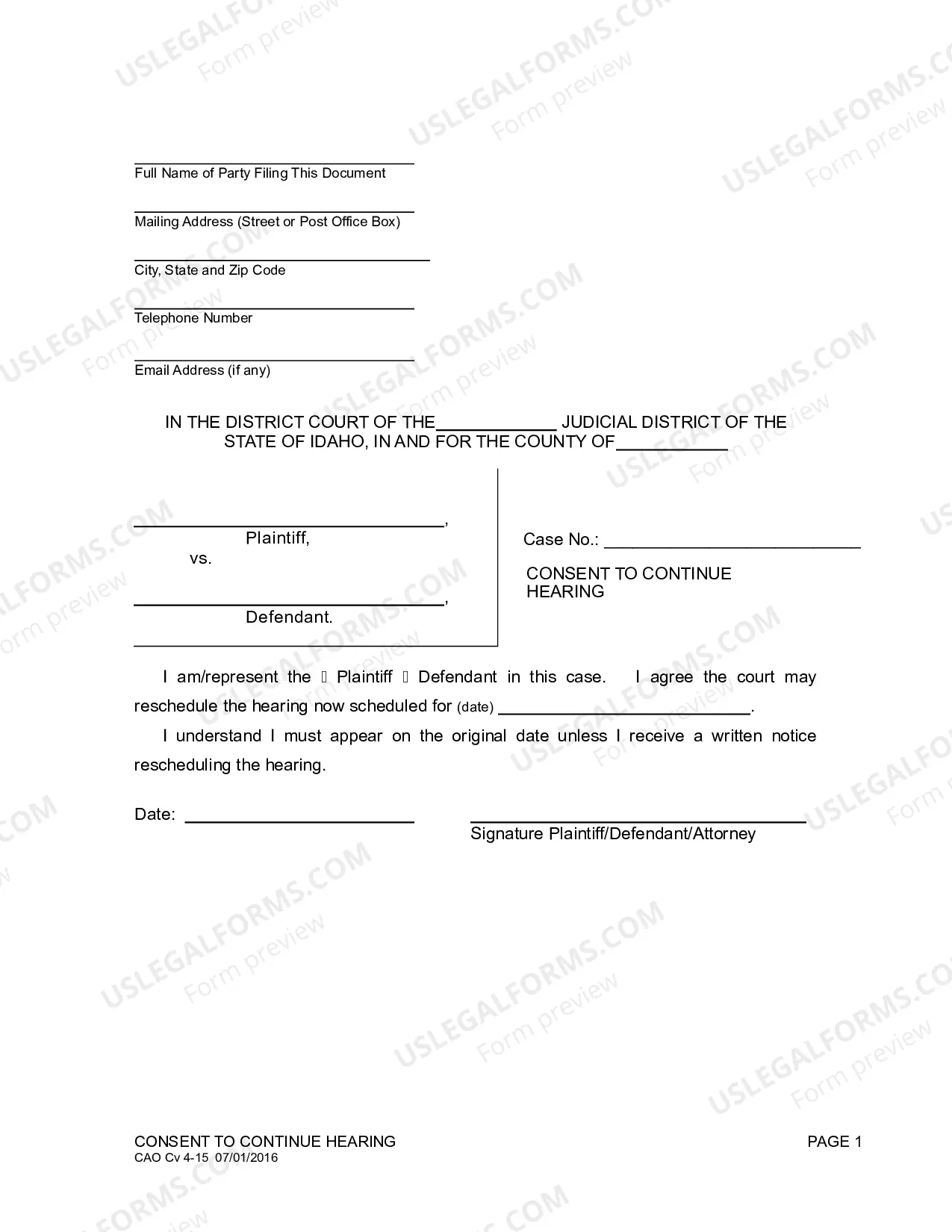
  • Preview Complaint for Conversion Seeking Punitive Damages
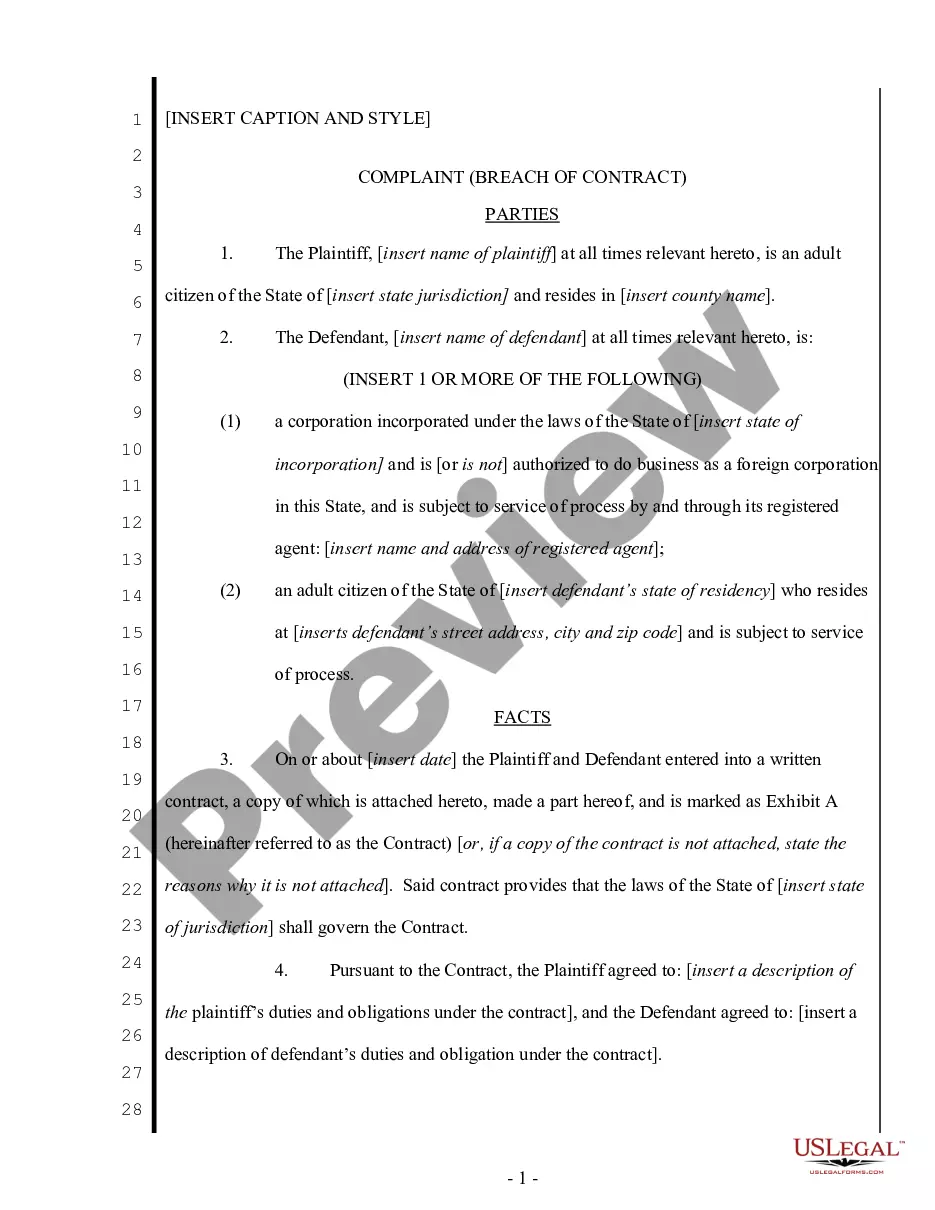
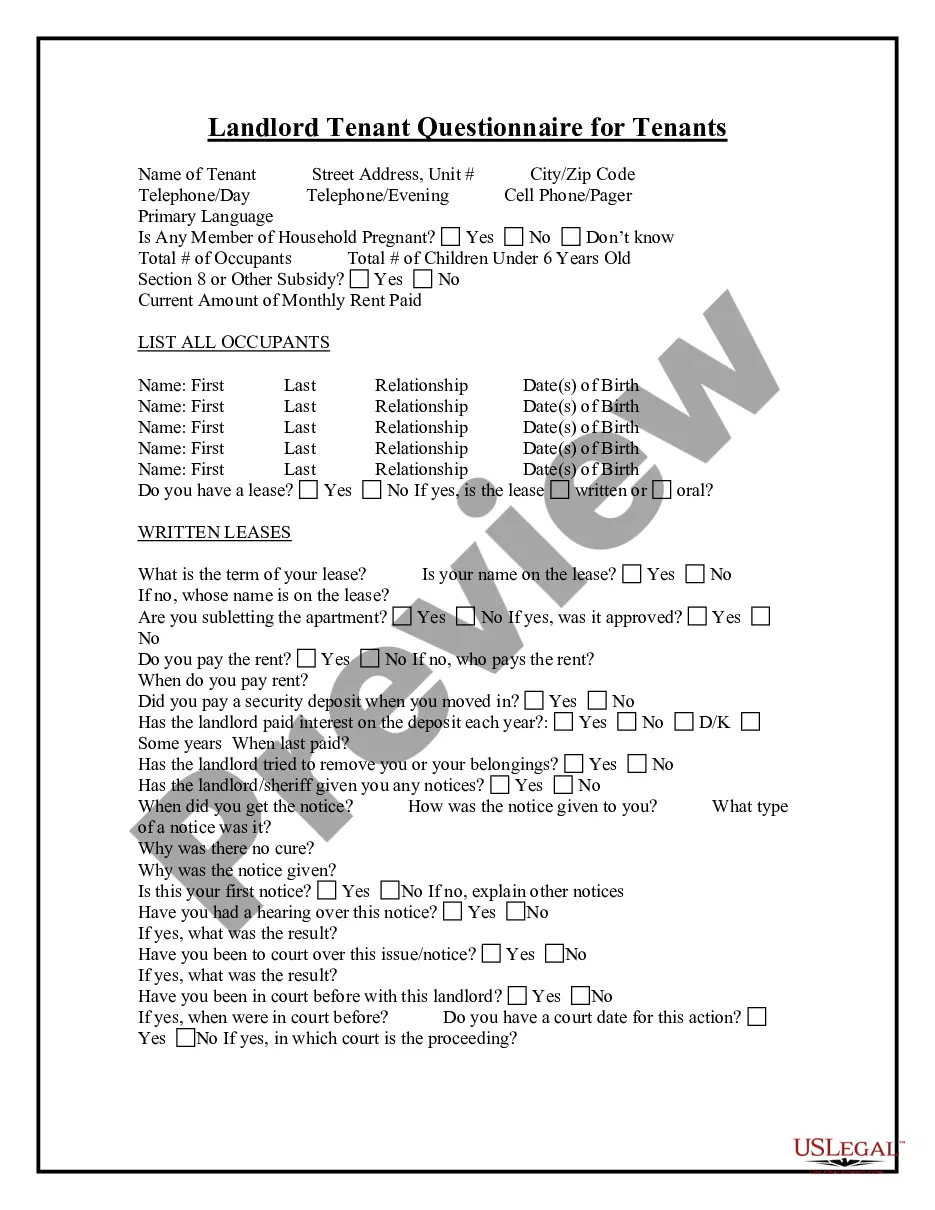
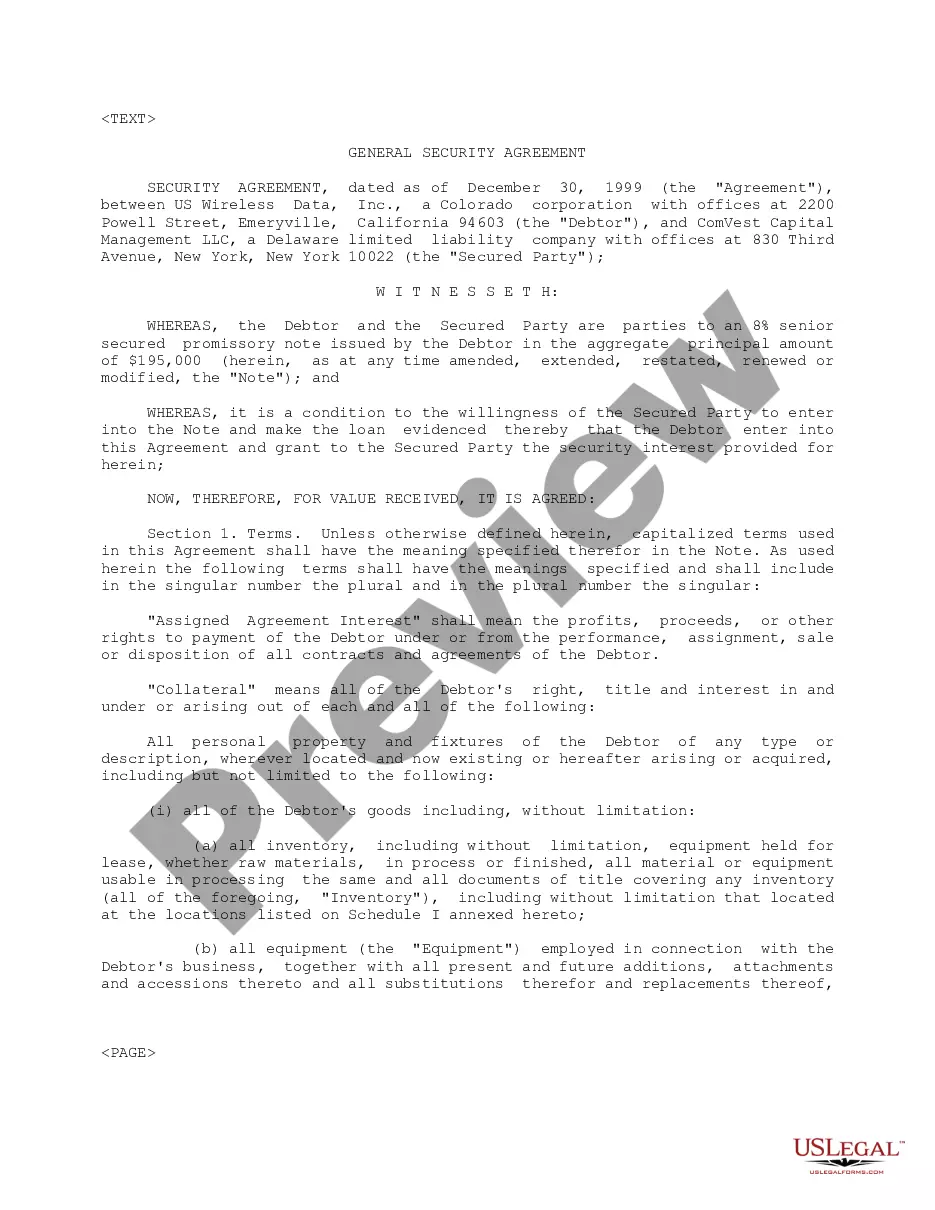
  • Preview Complaint for Conversion Seeking Punitive Damages

How to fill out Complaint For Conversion Seeking Punitive Damages?

US Legal Forms - one of the largest collections of legal documents in the United States - offers a vast selection of legal document templates that you can download or print. Through the website, you can find thousands of forms for business and personal purposes, organized by categories, states, or keywords. You can locate the most recent versions of forms like the Utah Complaint for Conversion Seeking Punitive Damages in just a few minutes.

If you have a monthly subscription, Log In and download the Utah Complaint for Conversion Seeking Punitive Damages from your US Legal Forms library. The Download button will be visible on every form you view. You have access to all previously downloaded forms in the My documents section of your account.

To use US Legal Forms for the first time, here are simple steps to get started: Make sure you have chosen the correct form for your city/state. Click on the Review button to examine the content of the form. Read the form description to ensure you have selected the correct form. If the form does not meet your needs, use the Search box at the top of the screen to find one that does. If you are satisfied with the form, confirm your choice by clicking the Get now button. Then, select your preferred pricing plan and provide your credentials to register for an account. Complete the transaction. Use your Visa or Mastercard or PayPal account to finalize the purchase. Choose the format and download the form onto your device. Make modifications. Fill, edit, print, and sign the downloaded Utah Complaint for Conversion Seeking Punitive Damages. Every template you add to your account does not have an expiration date and is yours permanently. Therefore, if you wish to download or print another copy, simply go to the My documents section and click on the form you need.

US Legal Forms provides a comprehensive solution for individuals and businesses seeking legal documentation.

With a user-friendly interface and a wide variety of templates, you can quickly find and manage the forms you need.

  1. Access the Utah Complaint for Conversion Seeking Punitive Damages with US Legal Forms, the most extensive collection of legal document templates.
  2. Utilize thousands of professional and state-specific templates that cater to your business or personal needs and requirements.
  3. Easily navigate the site to find the forms you require.
  4. Enjoy the flexibility of having your documents available indefinitely.
  5. Receive updates and new versions of forms as they become available.
  6. Experience user-friendly features that streamline the document acquisition process.
Form popularity

FAQ

The Supreme Court has repeatedly struck down excessive punitive damages awards as arbitrary deprivations of property without due process of law. In State Farm Mutual Automobile Insurance Co. v.

The right to a punitive damages award in California is strictly statutory. Civil Code section 3294 provides that a plaintiff can obtain punitive damages when it is proven by clear and convincing evidence that the defendant has been guilty of oppression, fraud or malice.

(3) 2028. In determining the amount of punitive damages, you may award punitive damages for the purpose of punishing [name of defendant] only for [harm] [attempted harm] [damage] to [name of plaintiff]. You may not award punitive damages for the purpose of punishing harm or attempted harm to other people.

Punitive damages are considered punishment and are typically awarded at the court's discretion when the defendant's behavior is found to be especially harmful. Punitive damages are normally not awarded in the context of a breach of contract claim. See e.g. O'Gilvie Minors v.

The exact measure of compensation due to a plaintiff whose goods have been wrongfully converted may be merely nominal if the wrong is technical and the defendant can return the goods; it may be limited to the actual damage where the goods can be returned, but the wrong is substantial; but in ordinary cases it is the ...

One of their central criticisms goes to the idea of punitive damages as "quasi-criminal" punishments. Noting that proponents talk of retribution and deterrence, these critics argue that it is unfair to impose these "criminal" fines on defendants who do not have the usual safeguards of criminal procedure.

Large punitive damages awards may implicate federal constitutional standards. Defendants frequently challenge these damage awards in appellate courts as excessive under the Fourteenth Amendment's Due Process Clause, both substantively and procedurally (more on this below).

That the applicable punitive damages statute could not have given notice that the conduct was prohibited) or through the lens of the common law (in the sense that the defendant's conduct could not be deemed objectively unreasonable), the Constitution prohibits the imposition of punishment under such circumstances.

Trusted and secure by over 3 million people of the world’s leading companies

Utah Complaint for Conversion Seeking Punitive Damages