Utah Requests for Production of Documents and Things
Description

Get your form ready online
Our built-in tools help you complete, sign, share, and store your documents in one place.
Make edits, fill in missing information, and update formatting in US Legal Forms—just like you would in MS Word.
Download a copy, print it, send it by email, or mail it via USPS—whatever works best for your next step.
Sign and collect signatures with our SignNow integration. Send to multiple recipients, set reminders, and more. Go Premium to unlock E-Sign.
If this form requires notarization, complete it online through a secure video call—no need to meet a notary in person or wait for an appointment.
We protect your documents and personal data by following strict security and privacy standards.

Make edits, fill in missing information, and update formatting in US Legal Forms—just like you would in MS Word.

Download a copy, print it, send it by email, or mail it via USPS—whatever works best for your next step.

Sign and collect signatures with our SignNow integration. Send to multiple recipients, set reminders, and more. Go Premium to unlock E-Sign.

If this form requires notarization, complete it online through a secure video call—no need to meet a notary in person or wait for an appointment.

We protect your documents and personal data by following strict security and privacy standards.
Looking for another form?
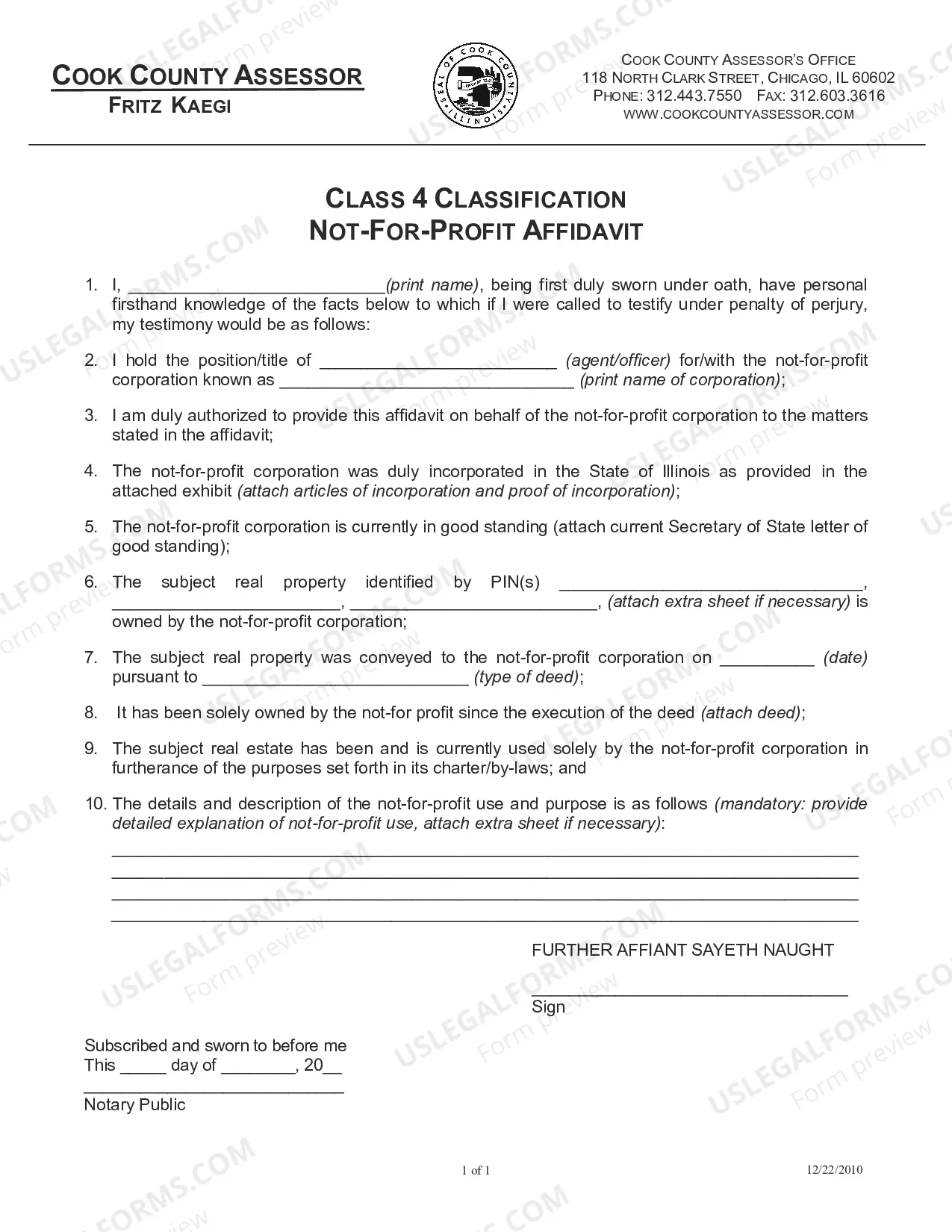
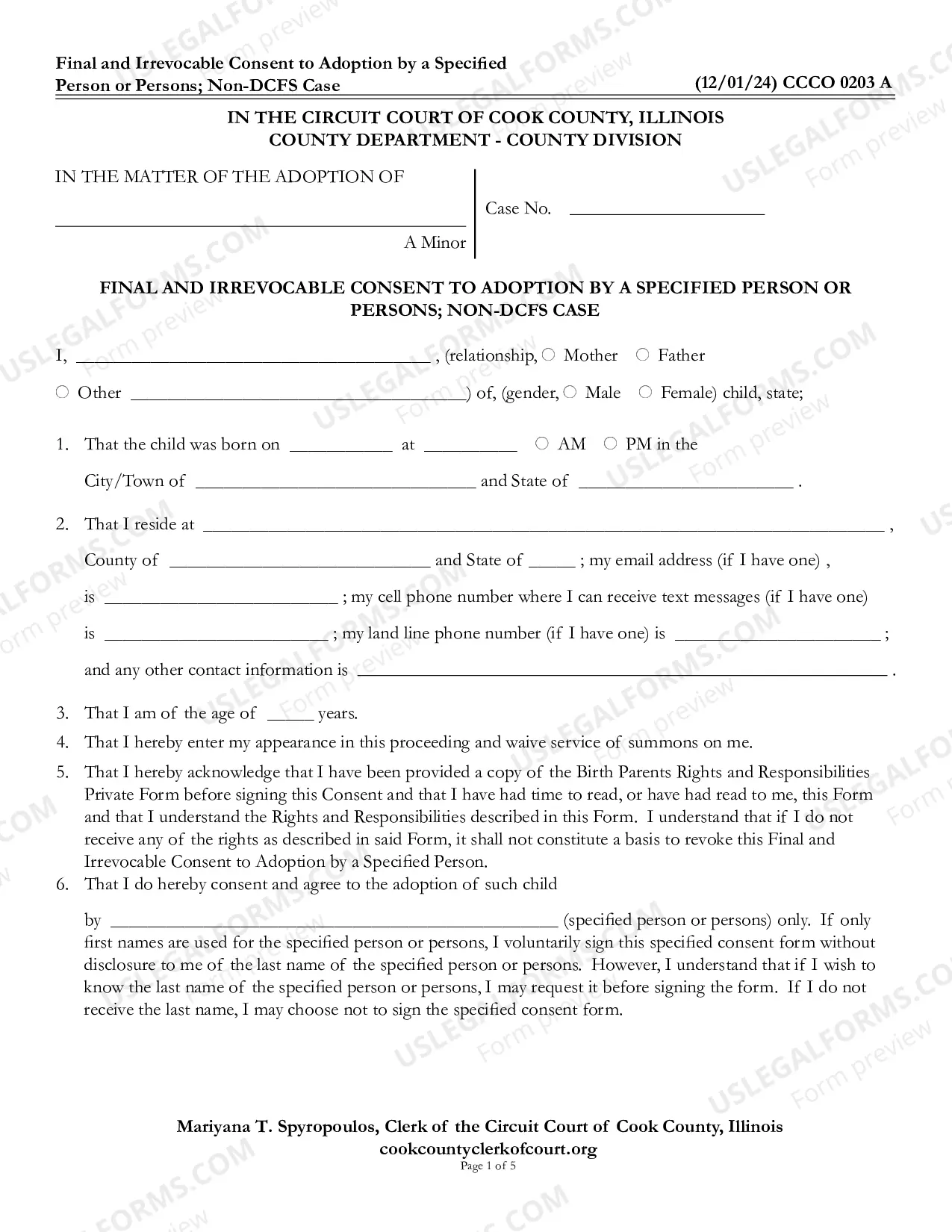
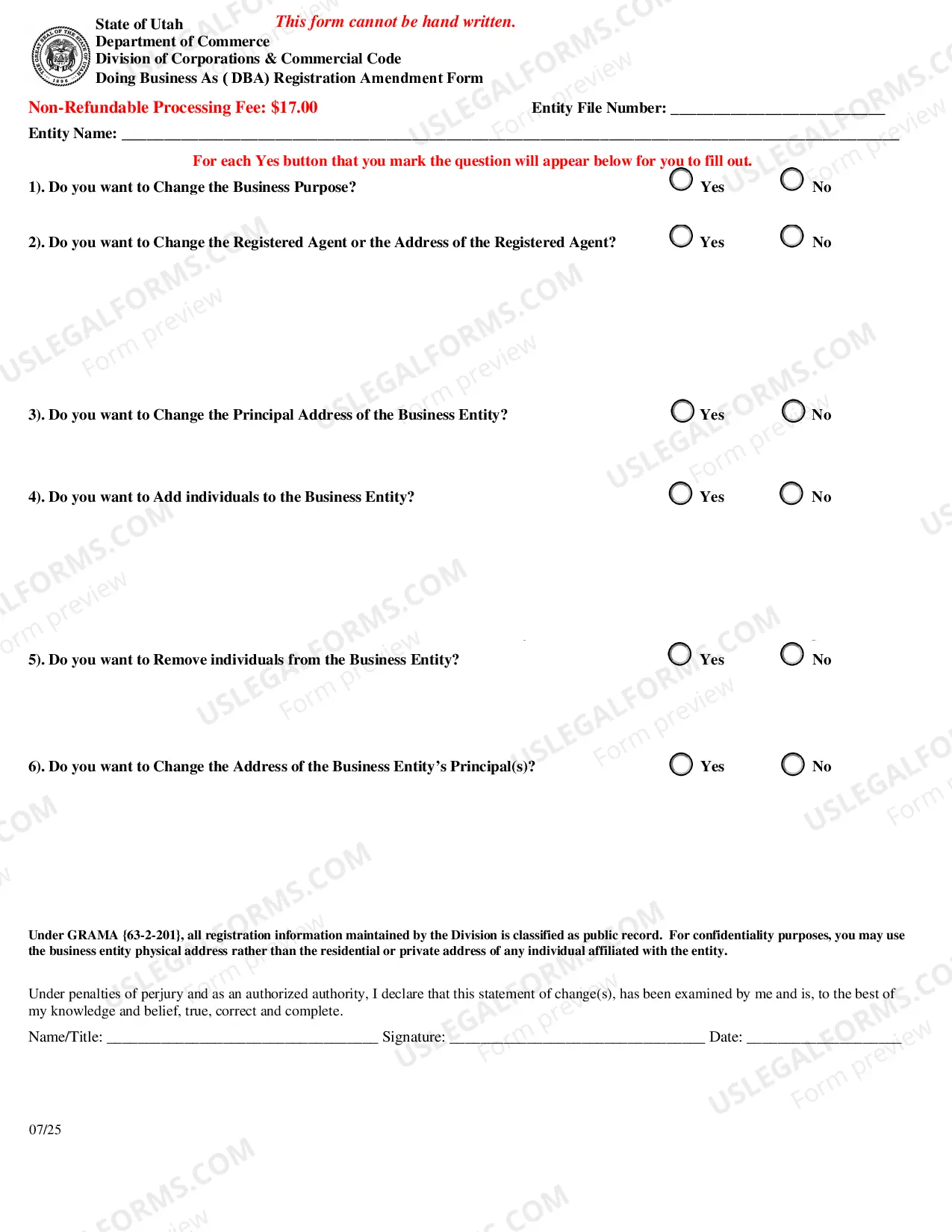

How to fill out Requests For Production Of Documents And Things?
If you need to aggregate, retrieve, or print legal document templates, utilize US Legal Forms, the most extensive collection of legal forms available online. Take advantage of the site's straightforward and user-friendly search to find the documents you require. Various templates for business and personal purposes are categorized by types and titles, or keywords. Use US Legal Forms to acquire the Utah Requests for Production of Documents and Things with just a few clicks.
If you are already a US Legal Forms user, Log In to your account and then click the Obtain button to access the Utah Requests for Production of Documents and Things. You can also retrieve forms you previously saved from the My documents section of your account.
If you are using US Legal Forms for the first time, follow the instructions outlined below: Step 1. Ensure you have selected the form for the correct city/state. Step 2. Utilize the Review feature to examine the form's details. Remember to read the description. Step 3. If you are not satisfied with the form, use the Search area at the top of the screen to find alternative versions of the legal form template. Step 4. Once you have located the form you want, click the Get now button. Choose the pricing plan you prefer and enter your information to register for an account. Step 5. Process the transaction. You may use your credit card or PayPal account to complete the transaction. Step 6. Select the format of the legal form and download it to your device. Step 7. Complete, modify, and print or sign the Utah Requests for Production of Documents and Things.
Avoid altering or removing any HTML tags. Only synonymize plain text outside of the HTML tags.
- Every legal document template you acquire is yours indefinitely.
- You have access to every form you saved in your account.
- Click the My documents section and choose a form to print or download again.
- Complete and download, and print the Utah Requests for Production of Documents and Things with US Legal Forms.
- There are numerous professional and state-specific forms you can utilize for your business or personal needs.
Form popularity
FAQ
Rule 34(b) provides that a party must produce documents as they are kept in the usual course of business or must organize and label them to correspond with the categories in the discovery request.
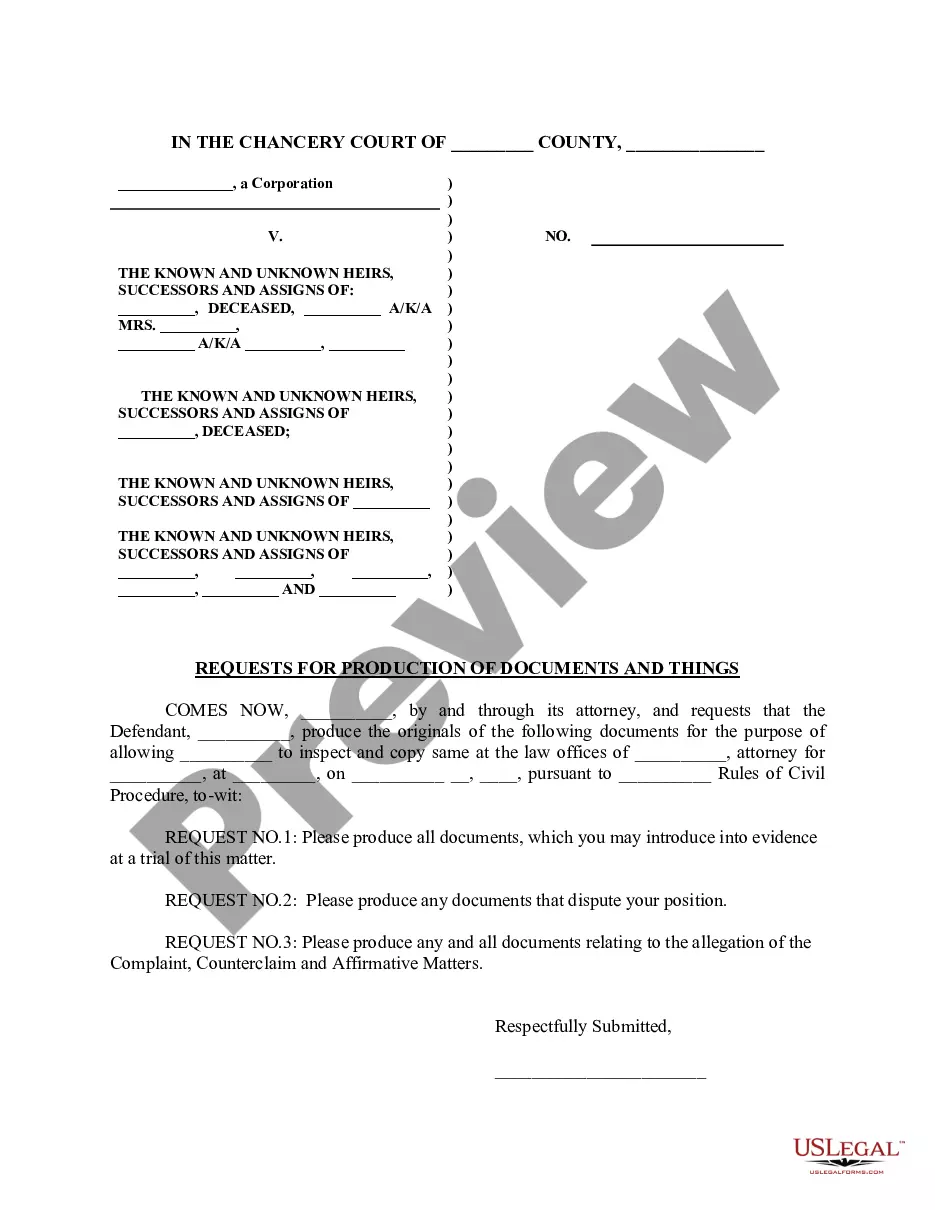
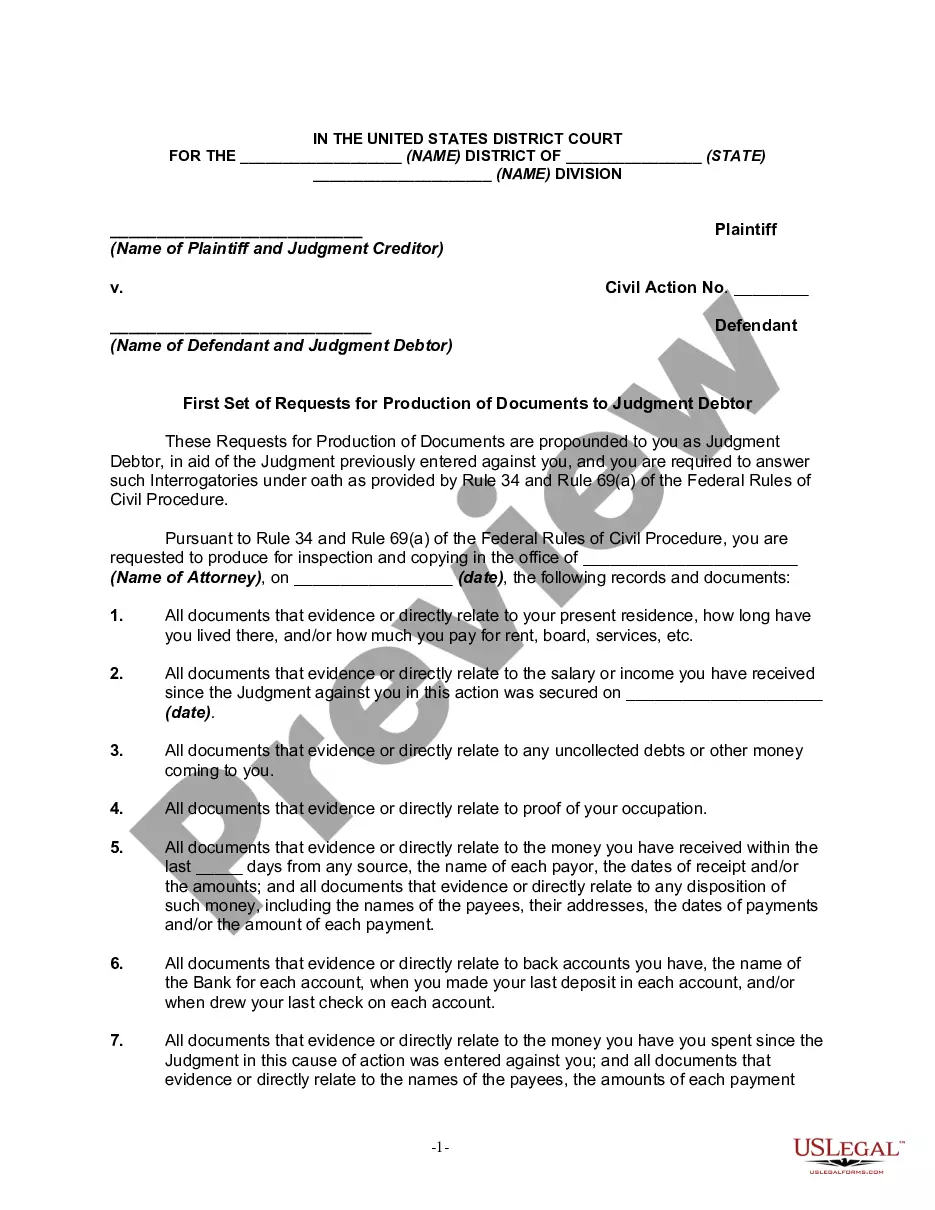
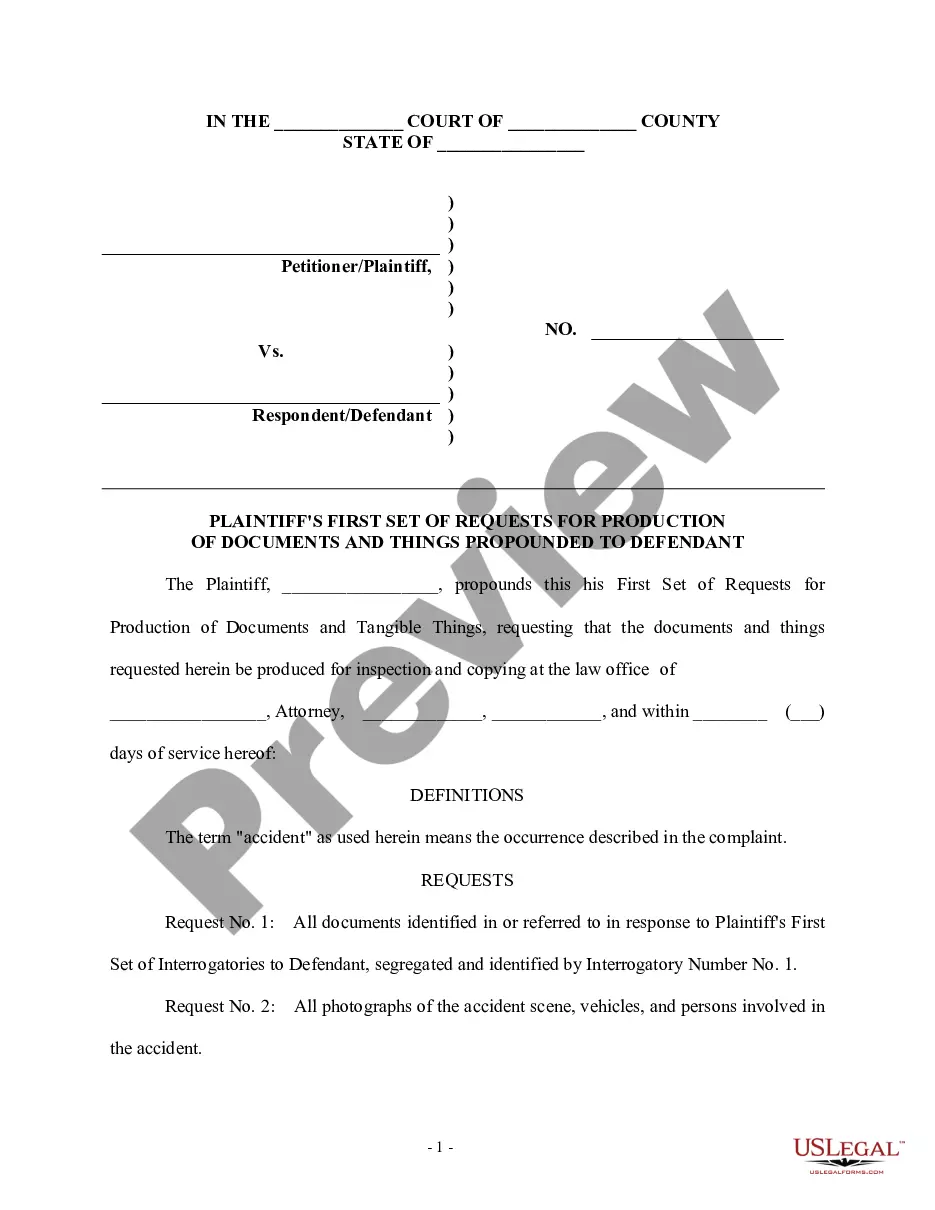
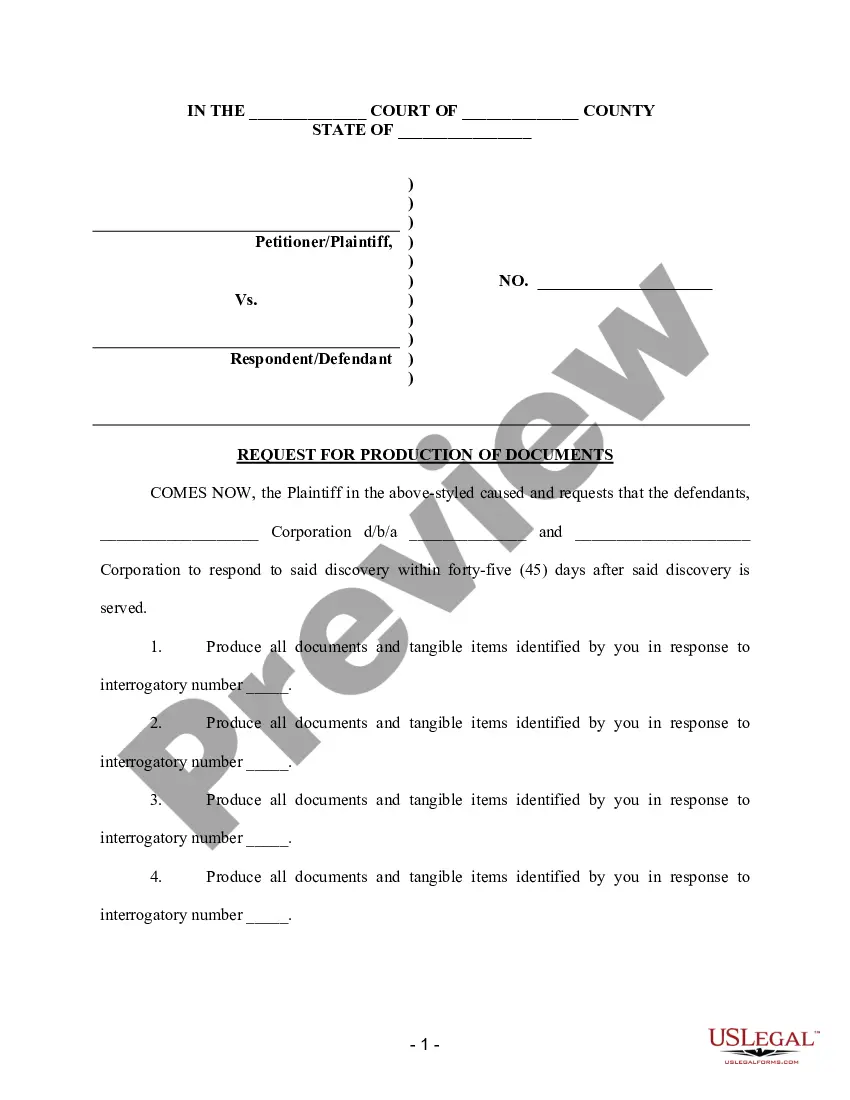
What Is a Request for Production of Documents? A request for production is a discovery device used to gain access to documents, electronic data, and physical items held by an opposing party in a legal matter. The aim is to gain insight into any relevant evidence that the opposing party holds.
Rule 26(d). If a party fails to disclose or to supplement timely its discovery responses, that party cannot use the undisclosed witness, document, or material at any hearing or trial, absent proof that non-disclosure was harmless or justified by good cause.
403. The court may exclude relevant evidence if its probative value is substantially outweighed by a danger of one or more of the following: unfair prejudice, confusing the issues, misleading the jury, undue delay, wasting time, or needlessly presenting cumulative evidence.
Any party may serve on any other party a request (1) to produce and permit the party making the request, or someone acting on the requestor's behalf, to inspect and copy, any designated documents (including writings, drawings, graphs, charts, photographs, phonorecords, and other data compilations from which information ...
Common objections to requests for production or inspection include: The request is overly broad or unduly burdensome. The propounding (requesting) party must include enough information to make the requested documents easily identifiable.
Rule 34(a) enables a party to produce and permit the requesting party or its representative to inspect, copy, sample, or test any designated documents or ESI?including drawings, writings, graphs, charts, sound recordings, photographs, images, and other data or data compilations.
(a)(1) Any party may serve on any other party a request to produce and permit the requesting party to inspect, copy, test or sample any designated discoverable documents, electronically stored information or tangible things (including writings, drawings, graphs, charts, photographs, sound recordings, images, and other ...