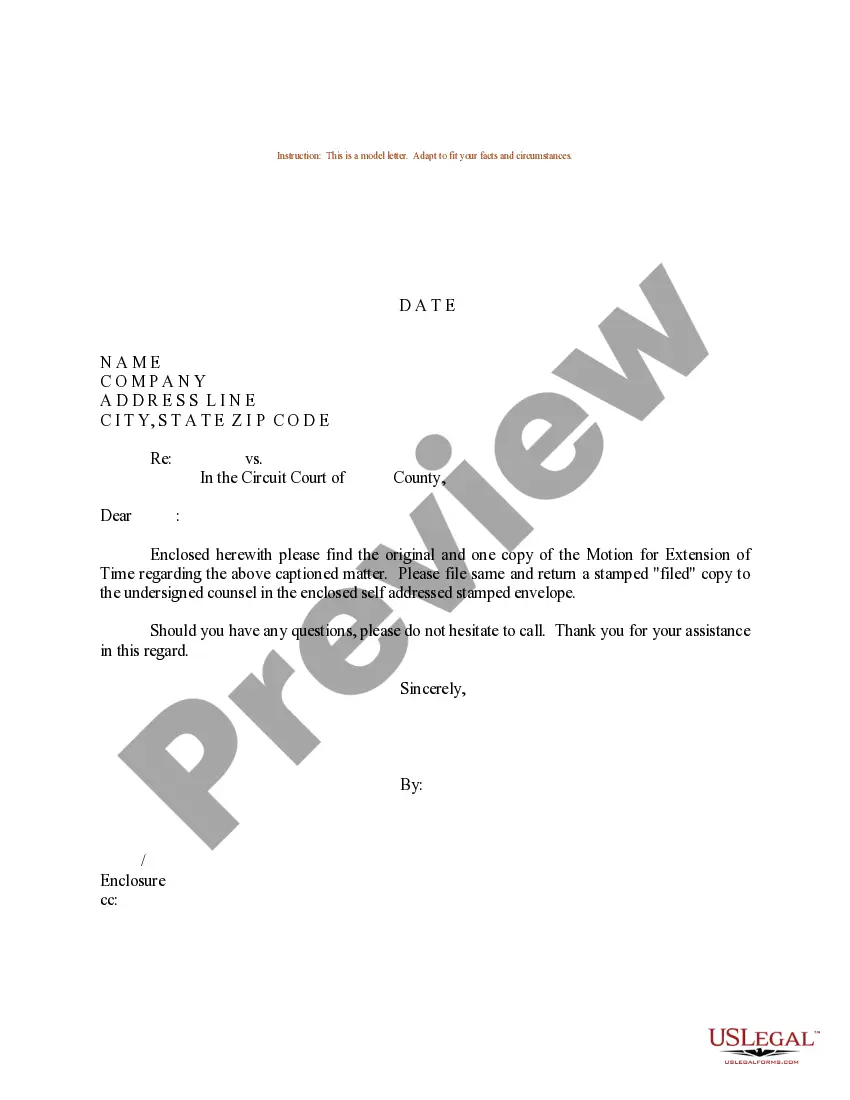
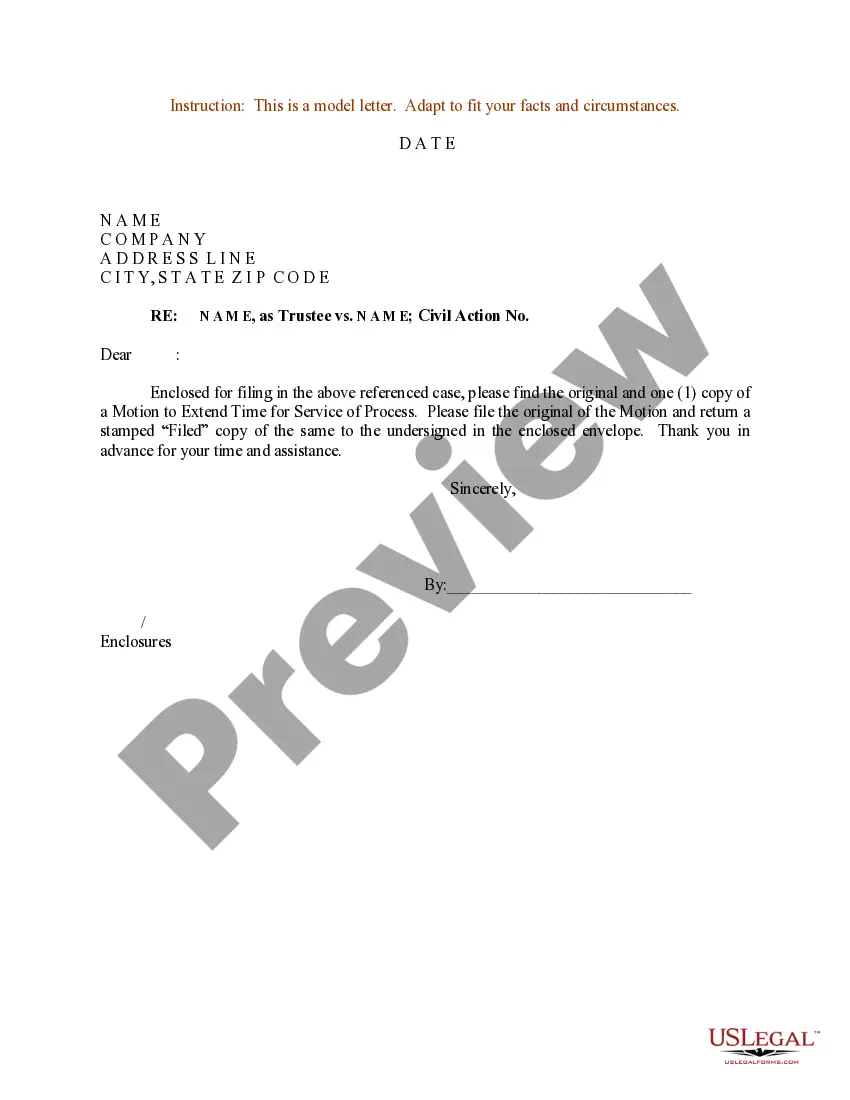
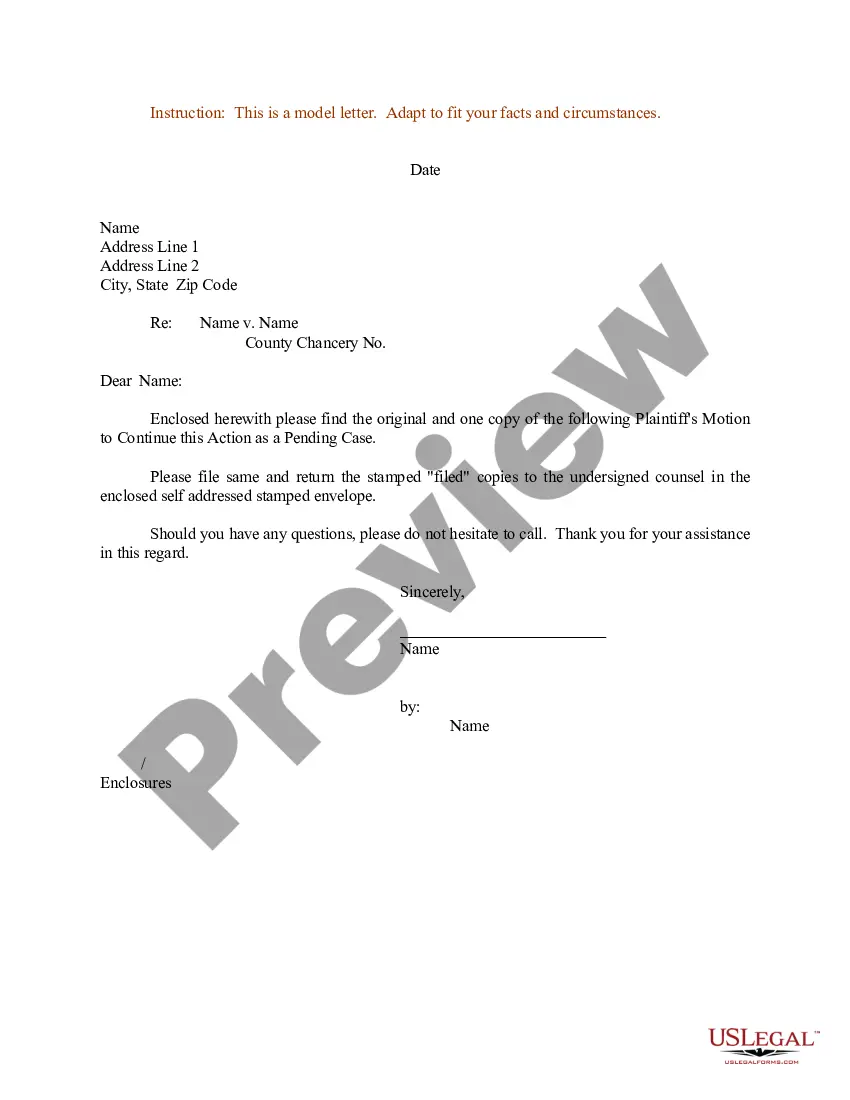
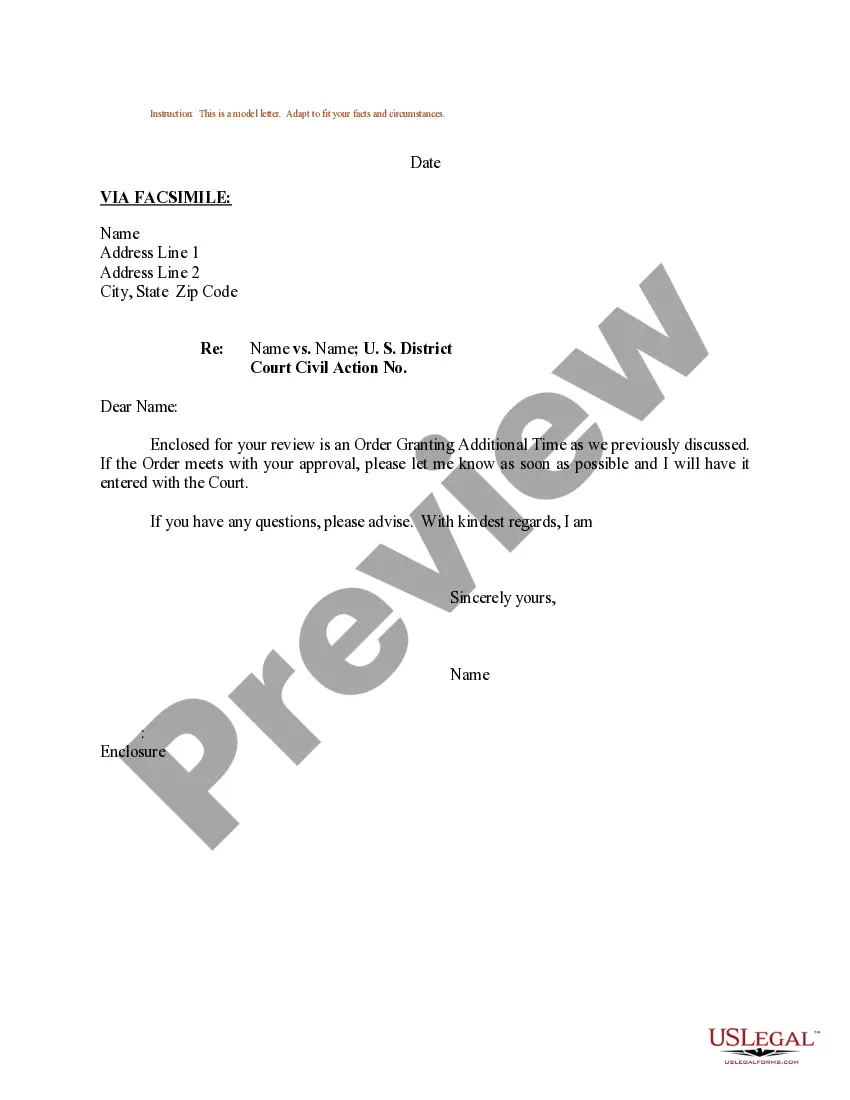
This form is a sample letter in Word format covering the subject matter of the title of the form.
Utah Sample Letter regarding Motion for Additional Time
State:
Multi-State
Category:
Control #:
US-0033LTR
Format:
Word;
Rich Text
67 downloads
Description

Get your form ready online
Our built-in tools help you complete, sign, share, and store your documents in one place.
Built-in online Word editor
Make edits, fill in missing information, and update formatting in US Legal Forms—just like you would in MS Word.
Export easily
Download a copy, print it, send it by email, or mail it via USPS—whatever works best for your next step.
E-sign your document
Sign and collect signatures with our SignNow integration. Send to multiple recipients, set reminders, and more. Go Premium to unlock E-Sign.
Notarize online 24/7
If this form requires notarization, complete it online through a secure video call—no need to meet a notary in person or wait for an appointment.
Store your document securely
We protect your documents and personal data by following strict security and privacy standards.

Make edits, fill in missing information, and update formatting in US Legal Forms—just like you would in MS Word.

Download a copy, print it, send it by email, or mail it via USPS—whatever works best for your next step.

Sign and collect signatures with our SignNow integration. Send to multiple recipients, set reminders, and more. Go Premium to unlock E-Sign.

If this form requires notarization, complete it online through a secure video call—no need to meet a notary in person or wait for an appointment.

We protect your documents and personal data by following strict security and privacy standards.
Looking for another form?
How to fill out Sample Letter Regarding Motion For Additional Time?
You can spend time online trying to find the appropriate legal document template that meets the federal and state requirements you need.
US Legal Forms offers thousands of legal forms that are reviewed by professionals.
You can easily download or print the Utah Sample Letter for Motion for Additional Time from their service.
If available, use the Review option to look at the document template as well. If you wish to obtain another version of the form, use the Search section to find the template that fits your needs. Once you have found the template you want, click Buy now to proceed. Choose the pricing plan you prefer, enter your information, and sign up for an account on US Legal Forms. Complete the transaction. You can use your credit card or PayPal account to pay for the legal form. Select the format of the document and download it to your device. Make changes to your document if necessary. You can complete, edit, sign, and print the Utah Sample Letter for Motion for Additional Time. Download and print thousands of document templates using the US Legal Forms website, which offers the largest collection of legal forms. Utilize professional and state-specific templates to address your business or personal needs.
- If you already possess a US Legal Forms account, you can Log In and click the Download option.
- Then, you can complete, modify, print, or sign the Utah Sample Letter for Motion for Additional Time.
- Every legal document template you purchase is yours forever.
- To obtain another copy of any purchased form, visit the My documents tab and click the respective option.
- If you're using the US Legal Forms site for the first time, follow the simple instructions below.
- First, ensure that you have selected the correct document template for your state/city of choice.
- Check the form description to ensure you have chosen the appropriate form.
Form popularity
FAQ
A motion for extension of time to file an answer is a request to the court for additional time to respond to a complaint or legal action. This motion is important when circumstances prevent timely filing, such as needing more time to gather information or prepare a response. Using a Utah Sample Letter regarding Motion for Additional Time can streamline the process, providing a clear and formal structure for your request to the court.
When writing a motion letter for court, begin with a clear title that identifies the type of motion you are filing. Clearly outline the facts, your legal arguments, and the specific relief you are seeking from the court. Incorporating a Utah Sample Letter regarding Motion for Additional Time can provide an effective framework, ensuring that your motion letter is professional, persuasive, and adheres to court requirements.
In Utah, a Rule 59 motion allows a party to request the court to alter or amend a judgment. This motion serves as a tool for correcting errors or presenting new evidence that was not available during the original trial. Understanding the nuances of this rule can be complex, but utilizing a Utah Sample Letter regarding Motion for Additional Time can assist in crafting a well-structured request if additional time is needed to file such motions.
To write a letter to a judge requesting an extension, start by addressing the judge properly and clearly stating your request. Include the reason for your request, and mention any relevant deadlines or circumstances that support your need for additional time. It’s helpful to reference and attach a Utah Sample Letter regarding Motion for Additional Time from a trusted source, like USLegalForms, to ensure your letter meets all necessary legal standards.
(a) Written motion required. An application to a court commissioner for an order must be by motion which, unless made during a hearing, must be made in ance with this rule. (1) A motion must be in writing and state succinctly and with particularity the relief sought and the grounds for the relief sought.
A party may obtain a stay of the enforcement of a judgment or order to pay money by providing a bond or other security, unless a stay is otherwise prohibited by law or these rules.
Utah Rule Civil Procedure 56 - Summary Judgment Under the Rule 56 of the Utah Rules of Civil Procedure, a motion for summary judgment is appropriate when there are no genuine issues of material fact.
Motions to compel disclosure or discovery. URCP 37. If a party does not respond to a discovery request, the party seeking discovery can file a motion asking the judge to compel discovery and impose sanctions.
A party may not make a motion in a memorandum opposing a motion or in a reply memorandum. A party who objects to evidence in another party's motion or memorandum may not move to strike that evidence. Instead, the party must include in the subsequent memorandum an objection to the evidence.
Rule 12(b) (6) permits the dismissal of a case "for failure of the pleading to state a claim upon which relief can be granted." Rule 8(a) sets out what a complaint must contain in order to state a claim for relief: "A pleading which sets forth a claim for relief * * * shall contain (1) a short and plain statement of ...
