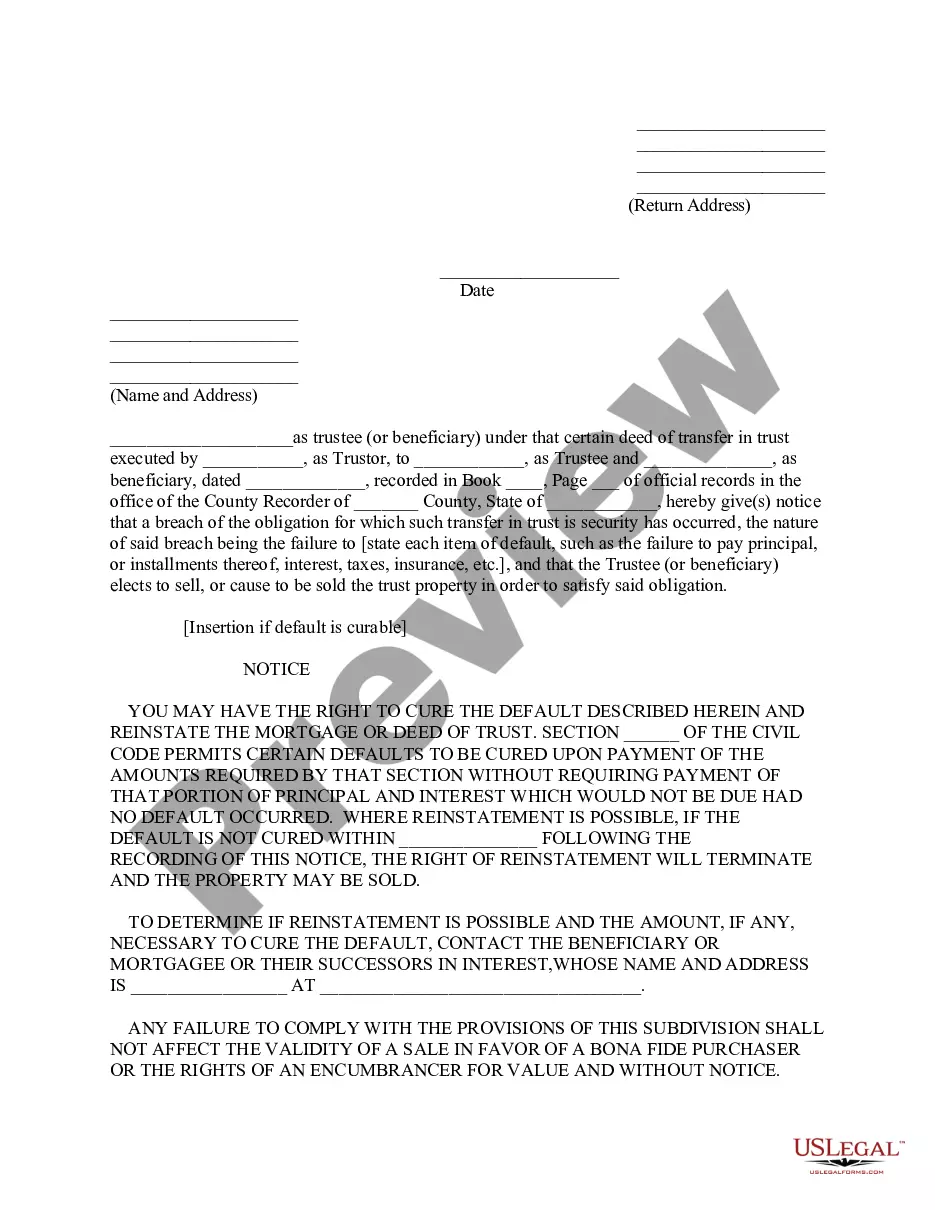
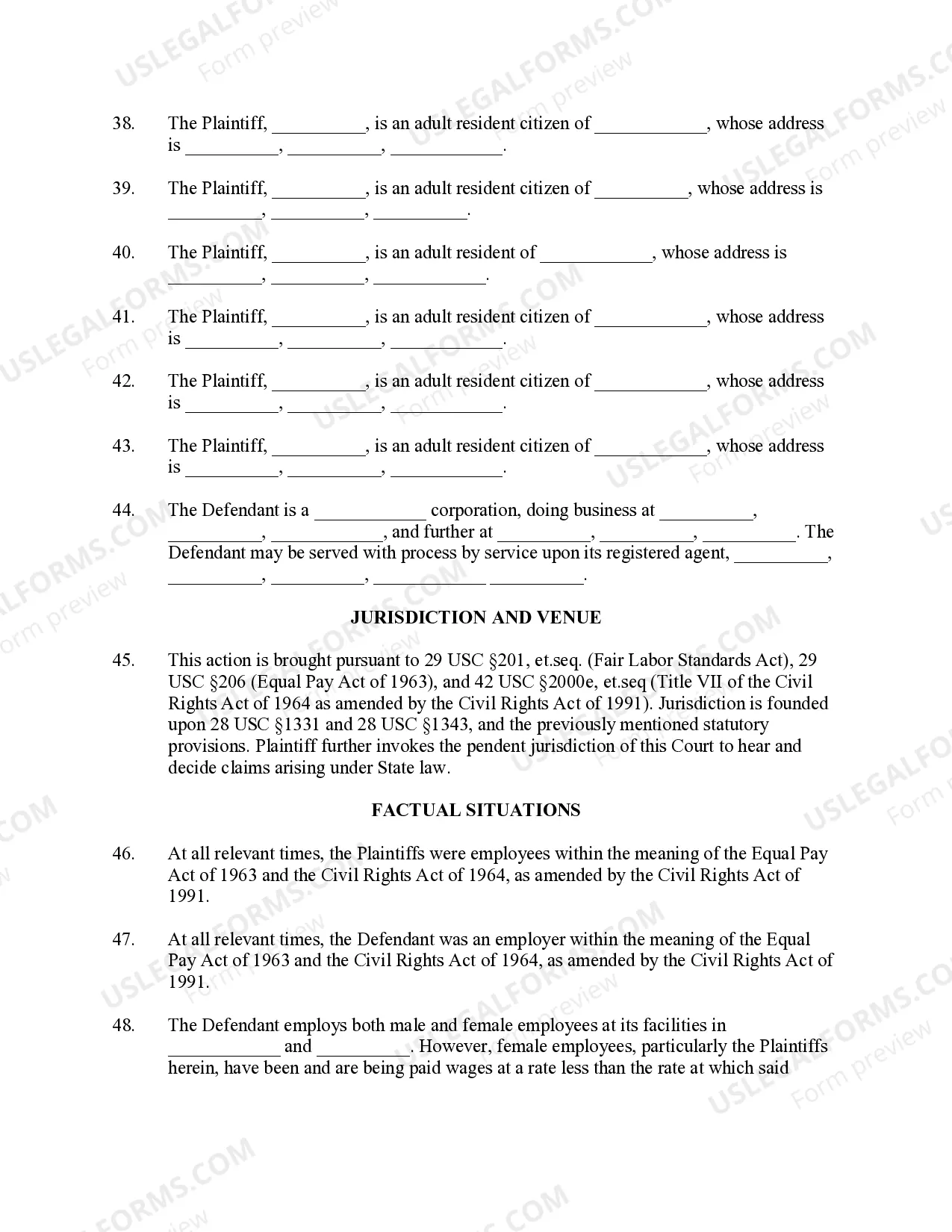
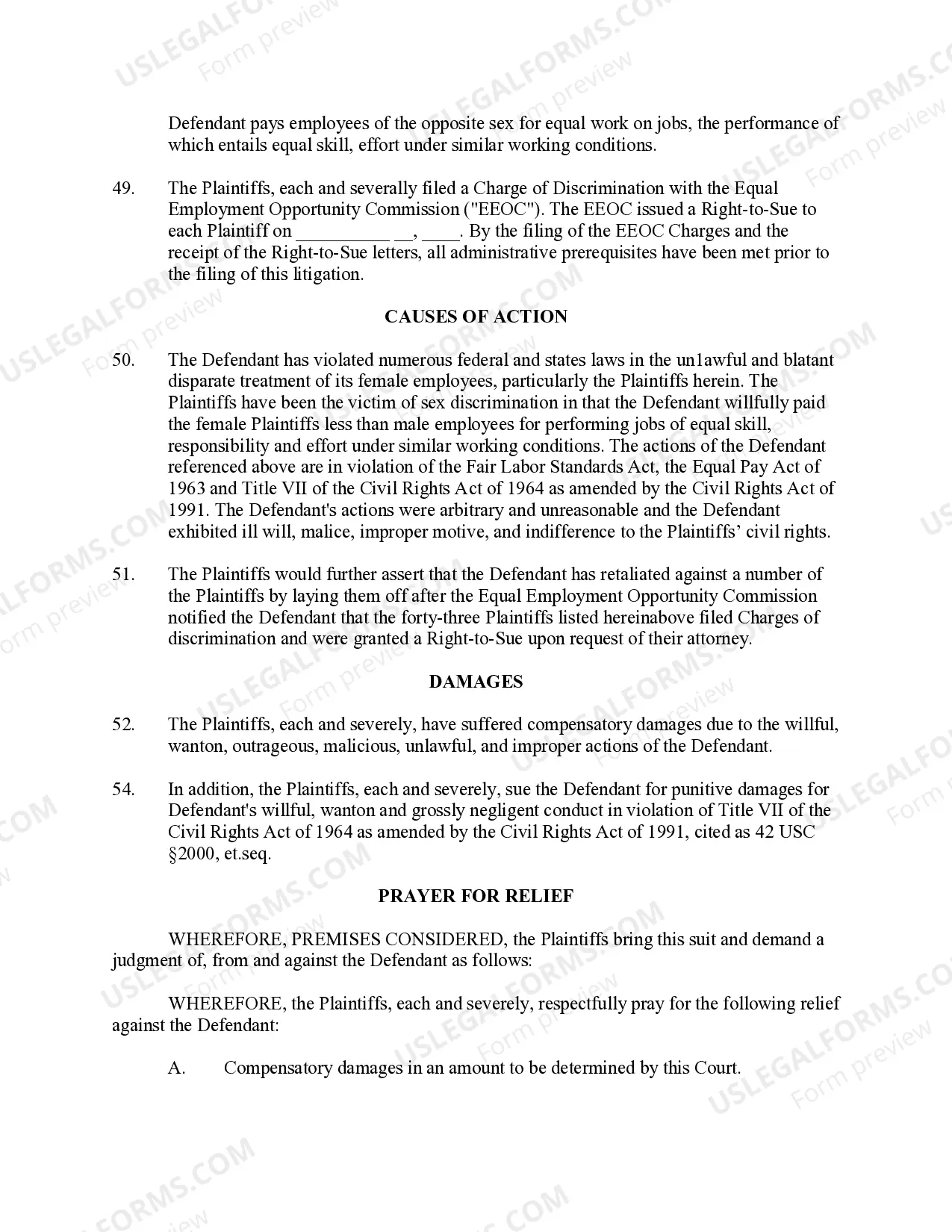
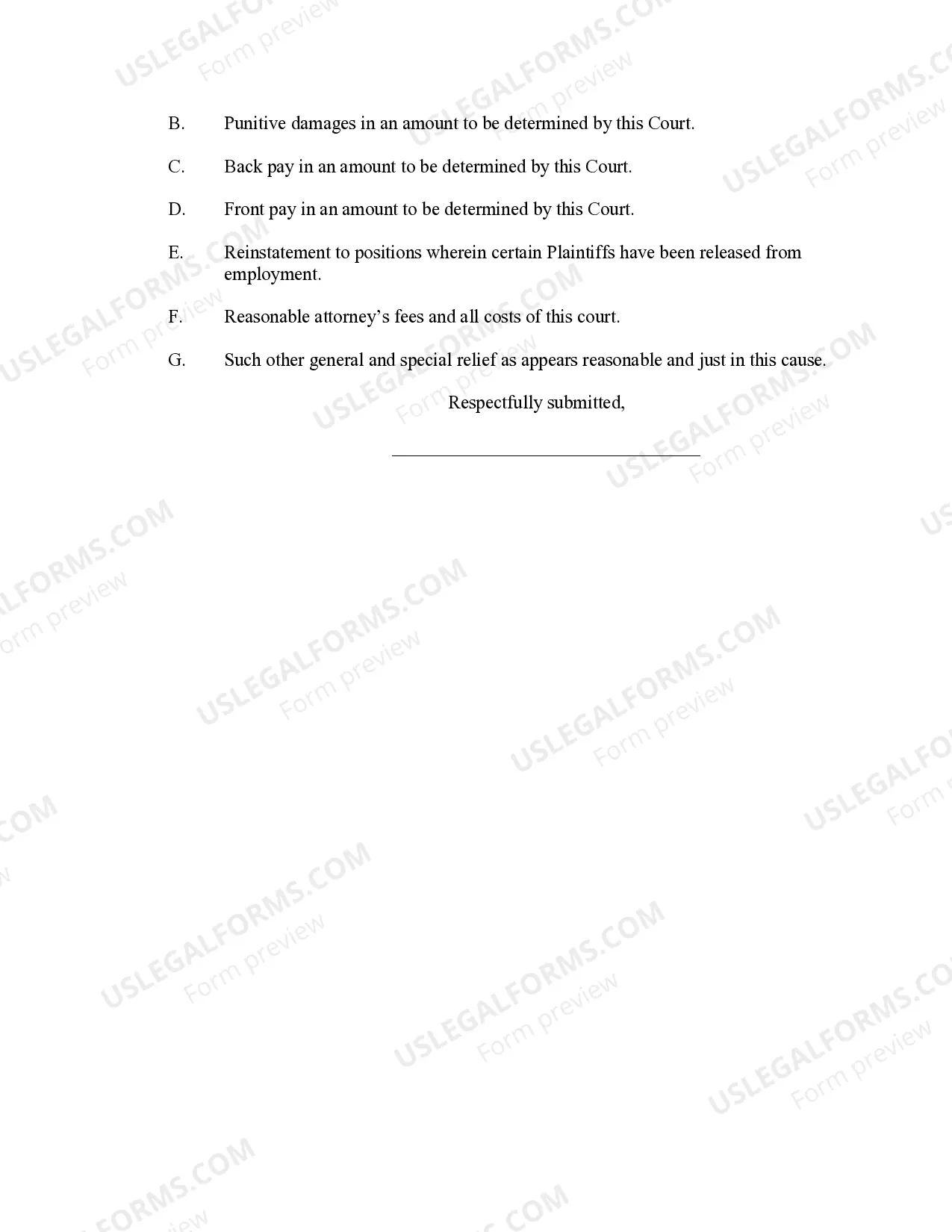
This is a Complaint pleading for use in litigation of the title matter. Adapt this form to comply with your facts and circumstances, and with your specific state law. Not recommended for use by non-attorneys.
Utah Complaint regarding FLSA Equal Pay Act Title VII Civil Rights Act - Jury Trial Demand
Instant download
Description
Free preview
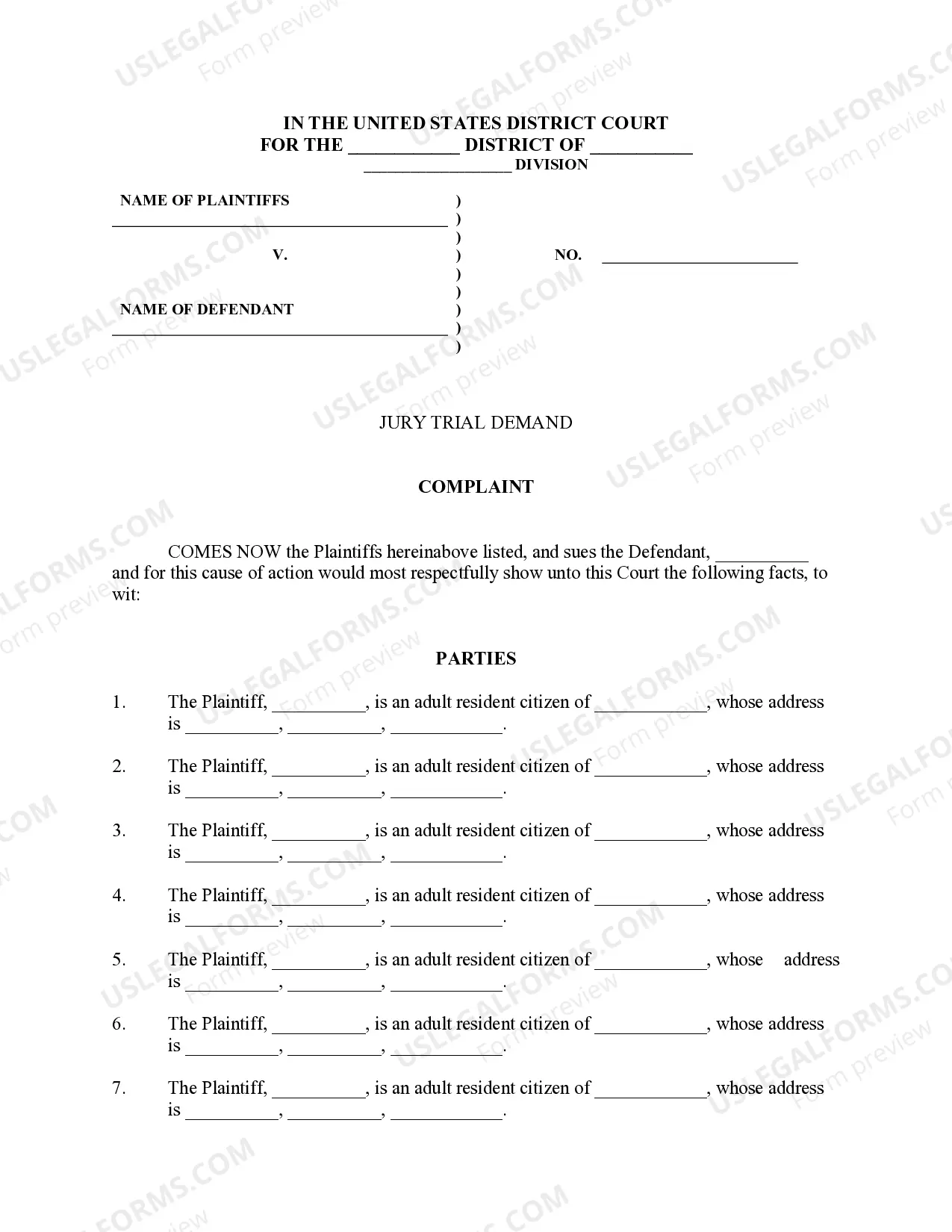




Get your form ready online
Our built-in tools help you complete, sign, share, and store your documents in one place.
Built-in online Word editor
Make edits, fill in missing information, and update formatting in US Legal Forms—just like you would in MS Word.
Export easily
Download a copy, print it, send it by email, or mail it via USPS—whatever works best for your next step.
E-sign your document
Sign and collect signatures with our SignNow integration. Send to multiple recipients, set reminders, and more. Go Premium to unlock E-Sign.
Notarize online 24/7
If this form requires notarization, complete it online through a secure video call—no need to meet a notary in person or wait for an appointment.
Store your document securely
We protect your documents and personal data by following strict security and privacy standards.

Make edits, fill in missing information, and update formatting in US Legal Forms—just like you would in MS Word.

Download a copy, print it, send it by email, or mail it via USPS—whatever works best for your next step.

Sign and collect signatures with our SignNow integration. Send to multiple recipients, set reminders, and more. Go Premium to unlock E-Sign.

If this form requires notarization, complete it online through a secure video call—no need to meet a notary in person or wait for an appointment.

We protect your documents and personal data by following strict security and privacy standards.
Looking for another form?


How to fill out Complaint Regarding FLSA Equal Pay Act Title VII Civil Rights Act - Jury Trial Demand?
Have you ever found yourself in a scenario where you need documents for either an organization or individual almost every working day.
There are numerous legal document templates accessible online, but finding ones you can trust is challenging.
US Legal Forms provides a vast array of template forms, including the Utah Complaint regarding FLSA Equal Pay Act Title VII Civil Rights Act - Jury Trial Demand, which are designed to comply with both state and federal regulations.
Utilize US Legal Forms, the most extensive collection of legal forms, to save time and avoid errors.
The service offers professionally crafted legal document templates that can be used for various purposes. Create an account on US Legal Forms and begin making your life a bit easier.
- If you are already familiar with the US Legal Forms website and have an account, simply Log In.
- Then, you can download the Utah Complaint regarding FLSA Equal Pay Act Title VII Civil Rights Act - Jury Trial Demand template.
- If you do not have an account and wish to start using US Legal Forms, follow these instructions.
- Locate the form you need and ensure it is for the correct city/region.
- Utilize the Review button to examine the document.
- Read the description to confirm you have chosen the right form.
- If the form is not what you are looking for, use the Search field to find the document that fits your needs and requirements.
- Once you locate the correct form, click Purchase now.
- Select the pricing plan you want, provide the necessary information to create your account, and pay for the transaction using your PayPal or Visa or Mastercard.
- Choose a convenient file format and download your copy.
- Access all the document templates you have purchased in the My documents section. You can obtain an additional copy of the Utah Complaint regarding FLSA Equal Pay Act Title VII Civil Rights Act - Jury Trial Demand at any time if needed. Just access the required form to download or print the document template.
Form popularity
FAQ
Under Title VII, you typically cannot sue individuals directly; instead, you would file a complaint against their employer. However, individuals may still be held liable in certain circumstances, such as when they act outside the scope of their job. If you believe you have a case, consider using a platform like uslegalforms to navigate the process of filing a Utah Complaint regarding FLSA Equal Pay Act Title VII Civil Rights Act - Jury Trial Demand.
Unfair treatment at work includes any actions that discriminate against an employee based on protected characteristics, such as race, gender, or religion. This can involve unequal pay, harassment, or denial of promotions and opportunities. If you encounter such issues, it is crucial to understand your rights and consider filing a Utah Complaint regarding FLSA Equal Pay Act Title VII Civil Rights Act - Jury Trial Demand for protection.
The pay equity law in Utah aims to eliminate wage disparities based on gender and other protected characteristics. This law requires employers to provide equal pay for equal work, ensuring that all employees receive fair compensation. If you believe you have experienced wage discrimination, you may file a Utah Complaint regarding FLSA Equal Pay Act Title VII Civil Rights Act - Jury Trial Demand to seek justice.
Discriminatory Policies in Violation of Title VII Disparate treatment involves intentional discrimination by an employer. For example, a football league with the policy that women may not hold any decision-making position with the league probably would violate Title VII's prohibition against sex discrimination.
Title VII, the ADEA, and the ADA prohibit compensation discrimination on the basis of race, color, religion, sex, national origin, age, or disability. Unlike the EPA, there is no requirement under Title VII, the ADEA, or the ADA that the jobs must be substantially equal.
Under Title VII, an employer may not discriminate with regard to any term, condition, or privilege of employment. Areas that may give rise to violations include recruiting, hiring, promoting, transferring, training, disciplining, discharging, assigning work, measuring performance, or providing benefits.
Title VII is a provision of the Civil Rights Act of 1964 which prohibits discrimination in virtually every employment circumstance on the basis of race, color, religion, gender, pregnancy, or national origin. In general, Title VII applies to employers with 15 or more employees.
If the EEOC determines that employers are in violation of anti-discrimination laws, employers may receive fines up to $50,000 for smaller companies or $300,000 for companies with more than 500 employees. This may also affect the company's brand reputation overall.
Equal Pay Act Skill. Measured by factors such as the experience, ability, education, and training required to perform the job. ... Effort. The amount of physical or mental exertion needed to perform the job. ... Responsibility. The degree of accountability required in performing the job. ... Working Conditions. ... Establishment.
It is illegal for an employer to discriminate against an employee in the payment of wages or employee benefits on the bases of race, color, religion, sex (including gender identity, sexual orientation, and pregnancy), national origin, age (40 or older), disability or genetic information.