Utah Substitution of Trustee
Overview of this form
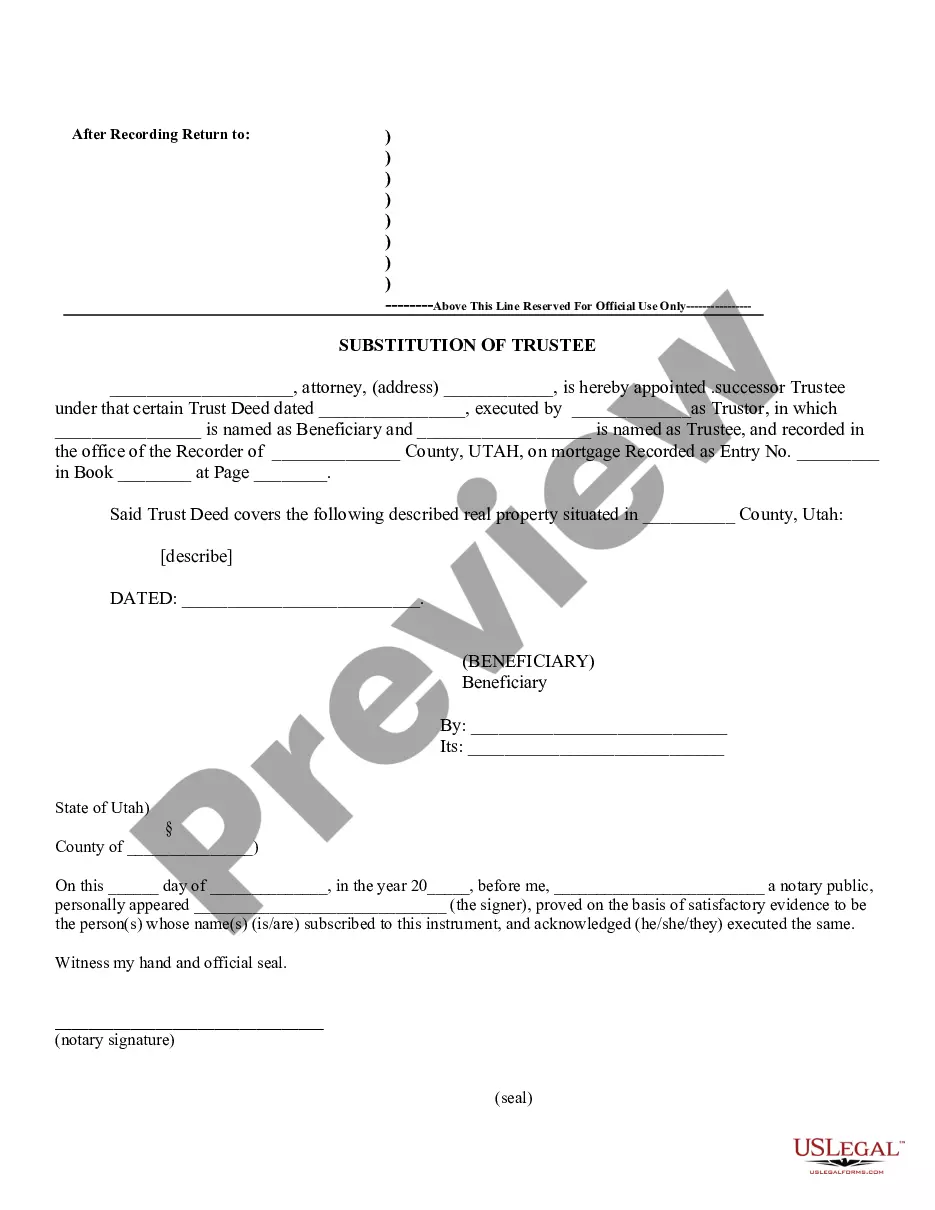
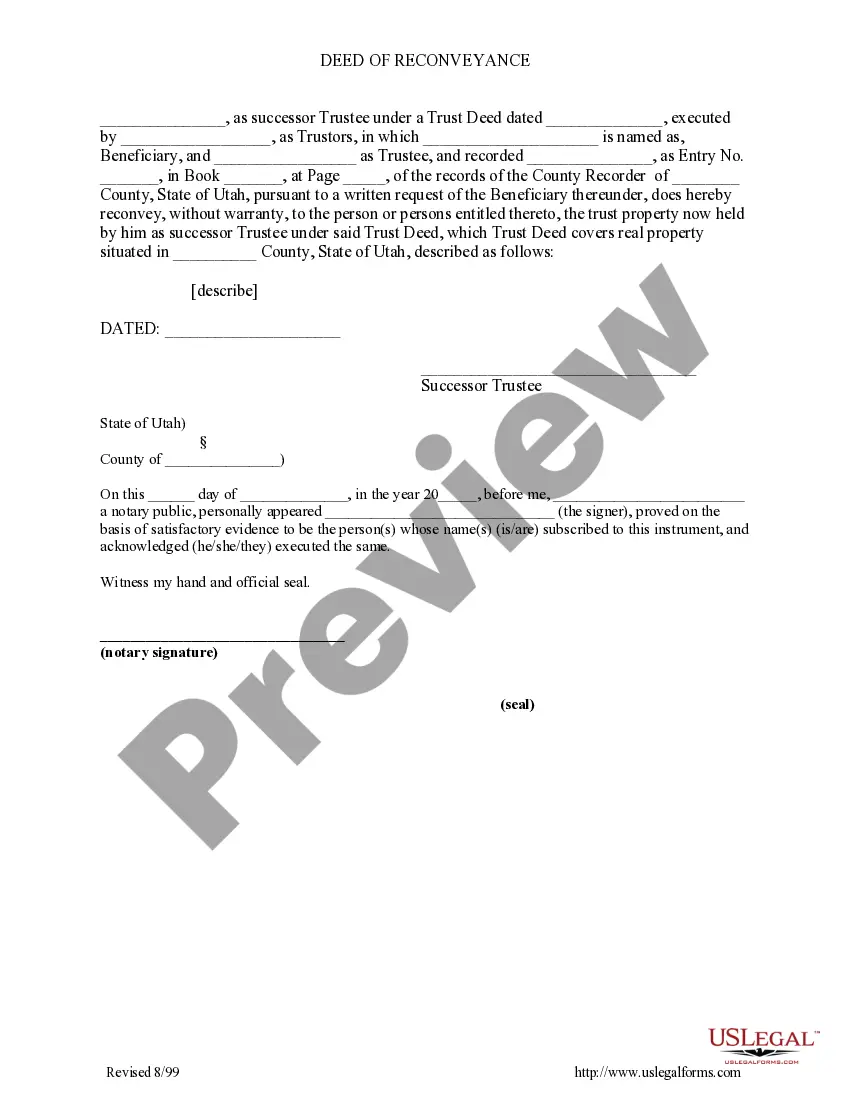
The Substitution of Trustee form is a legal document used to replace a trustee in a trust deed. This form is specifically tailored for use in Utah, ensuring that it adheres to local legal requirements regarding trusts. It enables the appointed successor trustee to assume the responsibilities of the original trustee, thereby facilitating the management and distribution of trust assets.
Main sections of this form
- Identification of the successor trustee, who replaces the outgoing trustee.
- Details of the original trust deed, including the date of execution and which parties are involved.
- Legal description of the real property covered by the trust.
- Notarization section for validating the signatures of involved parties.
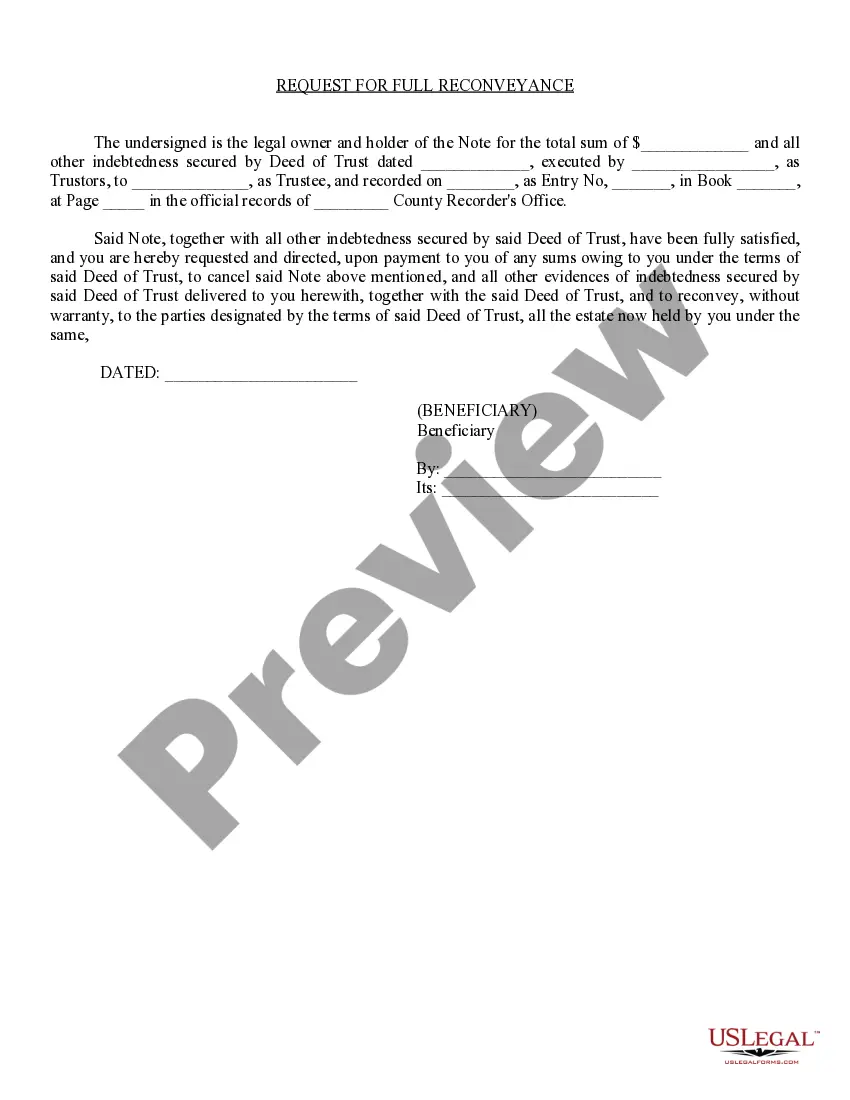
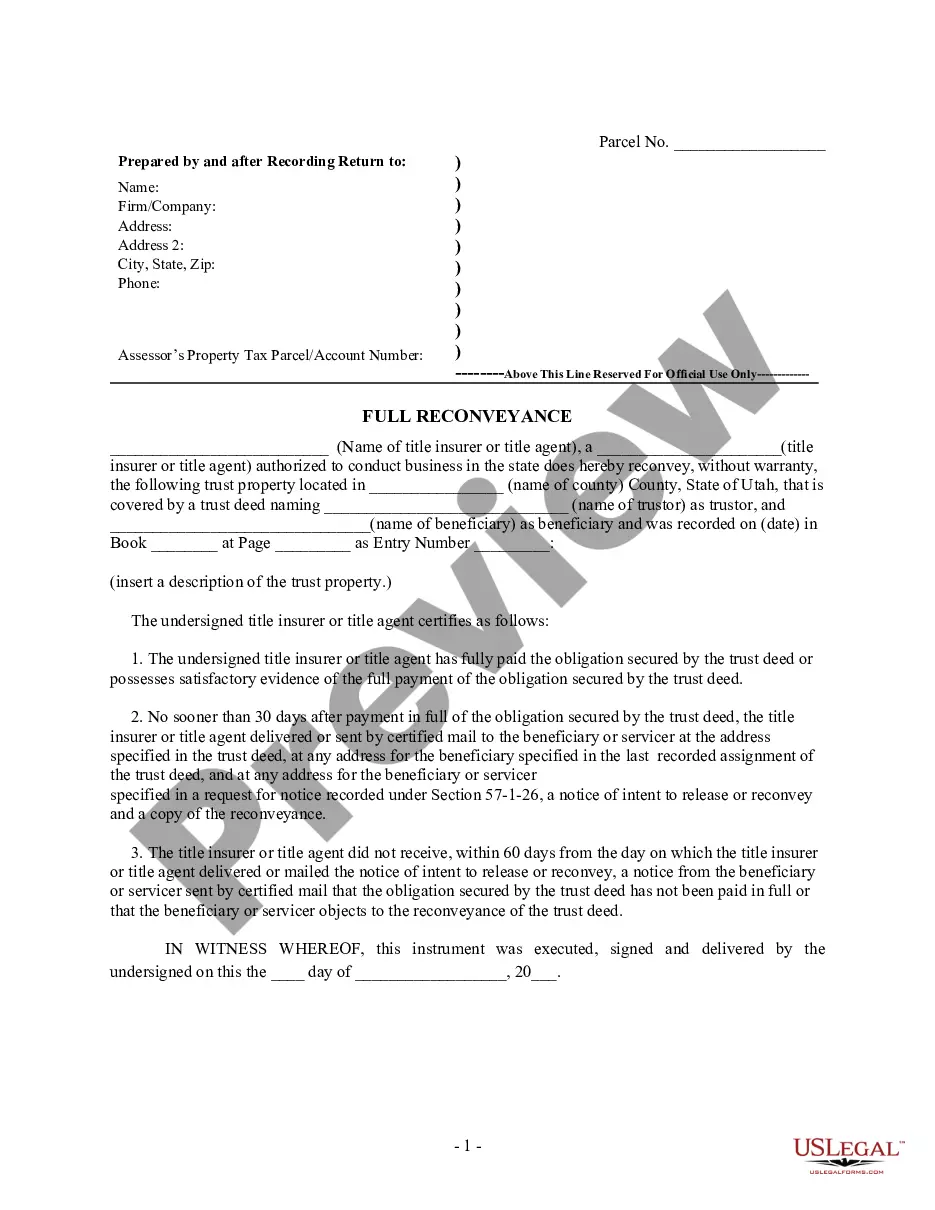
- A request for full reconveyance to officially transfer property back to the trustor or designated party.

When to use this form
This form should be used when a trustee can no longer fulfill their duties due to reasons like resignation, incapacity, or death. It is essential in situations where the management or distribution of trust assets is necessary and a new trustee must be appointed to continue these responsibilities. For any real estate transactions or trusts in Utah, this form is relevant.
Who can use this document
- Individuals or entities designated as the new trustee in a trust document.
- Beneficiaries of the trust who need to initiate the substitution process.
- Legal representatives managing a trust on behalf of the trustor or beneficiaries.
How to prepare this document
- Fill in the name and address of the new trustee.
- Provide details of the original trust deed, including the date and the names of the trustor and beneficiaries.
- Identify the property involved by including its legal description.
- Enter the date of the signing and have the new trustee sign the form.
- Ensure the form is notarized by a qualified notary public to validate the document.
Notarization requirements for this form
Yes, this form must be notarized to be legally valid. Notarization confirms the identities of the parties involved and ensures the integrity of the signed document. US Legal Forms offers integrated online notarization, allowing you to complete this process securely via video call, available 24/7.
Get your form ready online
Our built-in tools help you complete, sign, share, and store your documents in one place.
Make edits, fill in missing information, and update formatting in US Legal Forms—just like you would in MS Word.
Download a copy, print it, send it by email, or mail it via USPS—whatever works best for your next step.
Sign and collect signatures with our SignNow integration. Send to multiple recipients, set reminders, and more. Go Premium to unlock E-Sign.
If this form requires notarization, complete it online through a secure video call—no need to meet a notary in person or wait for an appointment.
We protect your documents and personal data by following strict security and privacy standards.

Make edits, fill in missing information, and update formatting in US Legal Forms—just like you would in MS Word.

Download a copy, print it, send it by email, or mail it via USPS—whatever works best for your next step.

Sign and collect signatures with our SignNow integration. Send to multiple recipients, set reminders, and more. Go Premium to unlock E-Sign.

If this form requires notarization, complete it online through a secure video call—no need to meet a notary in person or wait for an appointment.

We protect your documents and personal data by following strict security and privacy standards.
Typical mistakes to avoid
- Failing to include the legal description of the property.
- Not securing a notarization before submitting the form.
- Incorrectly filling in the details of the original trust deed.
- Omitting signatures from all required parties.
Why use this form online
- Immediate access to professionally drafted legal documents.
- Convenience of completing the form at your own pace.
- Editability allows for customization to fit specific needs.
- Reliability of using up-to-date legal templates that comply with state laws.
Looking for another form?
Form popularity
FAQ
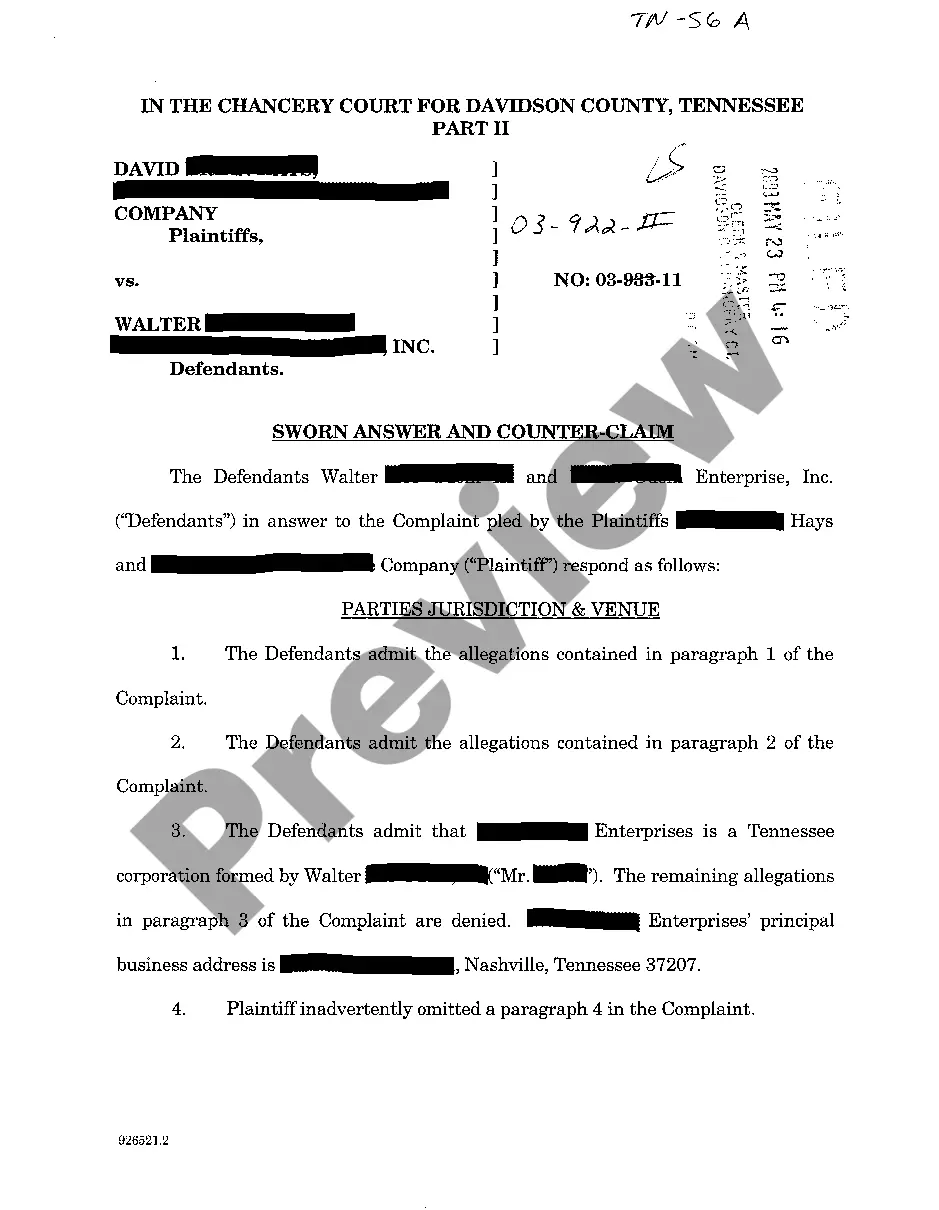
A substitution of trustee is a legal document that provides public notice regarding a foreclosure.A substitution of trustee under a trust deed is a legal document that allows the mortgage lender to change the person or business entity that will carry out the private trustee's foreclosure sale.
A mortgage holder issues a deed of reconveyance to indicate that the borrower has been released from the mortgage debt. The deed transfers the property title from the lender, also called the beneficiary, to the borrower. This document is most commonly used when a mortgage has been paid in full.
When a deed of trust/mortgage is paid in full, you can record a Full Reconveyance from the trustee stating publicly that the loan has been paid. The Full Reconveyance Form. is completed and signed by the trustee, whose signature must be notarized.
An action for reconveyance, on the other hand, is a legal and equitable remedy granted to the rightful owner of land which has been wrongfully or erroneously registered in the name of another for the purpose of compelling the latter to transfer or reconvey the land to him.
A mortgage holder issues a deed of reconveyance to indicate that the borrower has been released from the mortgage debt. The deed transfers the property title from the lender, also called the beneficiary, to the borrower. This document is most commonly used when a mortgage has been paid in full.
A mortgage holder issues a deed of reconveyance to indicate that the borrower has been released from the mortgage debt. The deed transfers the property title from the lender, also called the beneficiary, to the borrower. This document is most commonly used when a mortgage has been paid in full.
Reconveyance is the transfer of a title to the borrower after a mortgage has been fully paid.
A reconveyance is the official transfer of the property title after the mortgage has been paid in full. The processing time can vary based on the county in which the property is located and can take up to three months. You will need to contact your county for questions on their specific processing time.