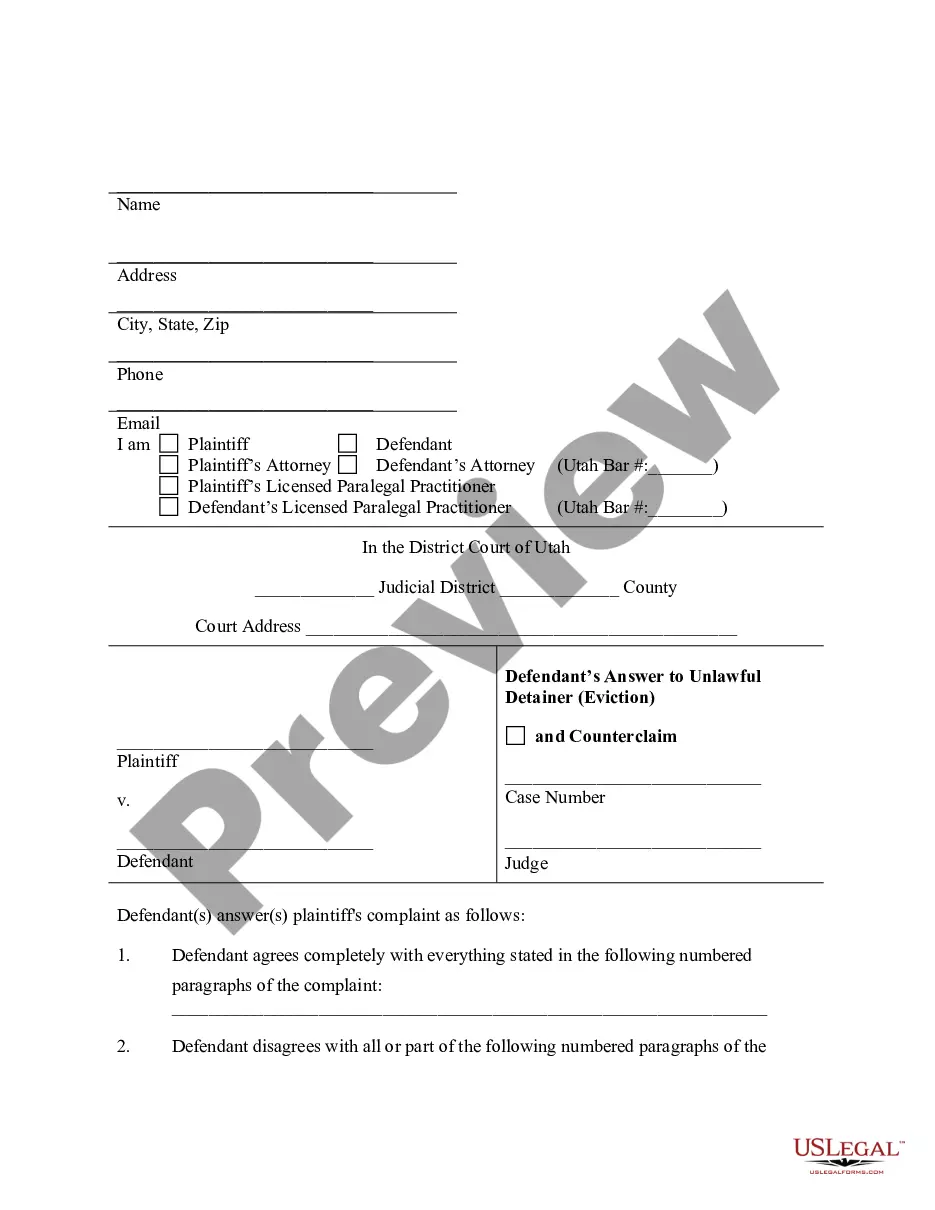
Utah Defendant's Answer to Unlawful Detainer
What is this form?
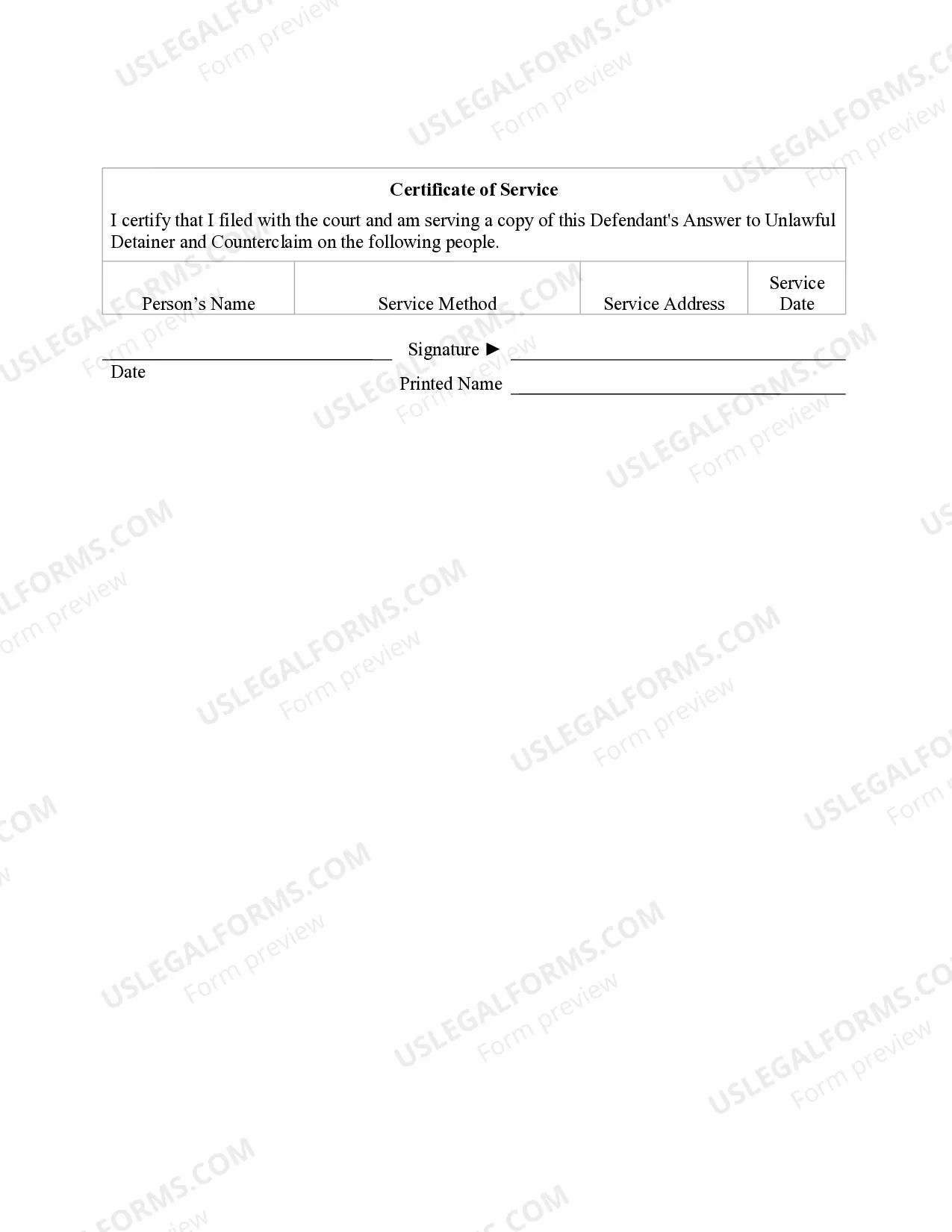
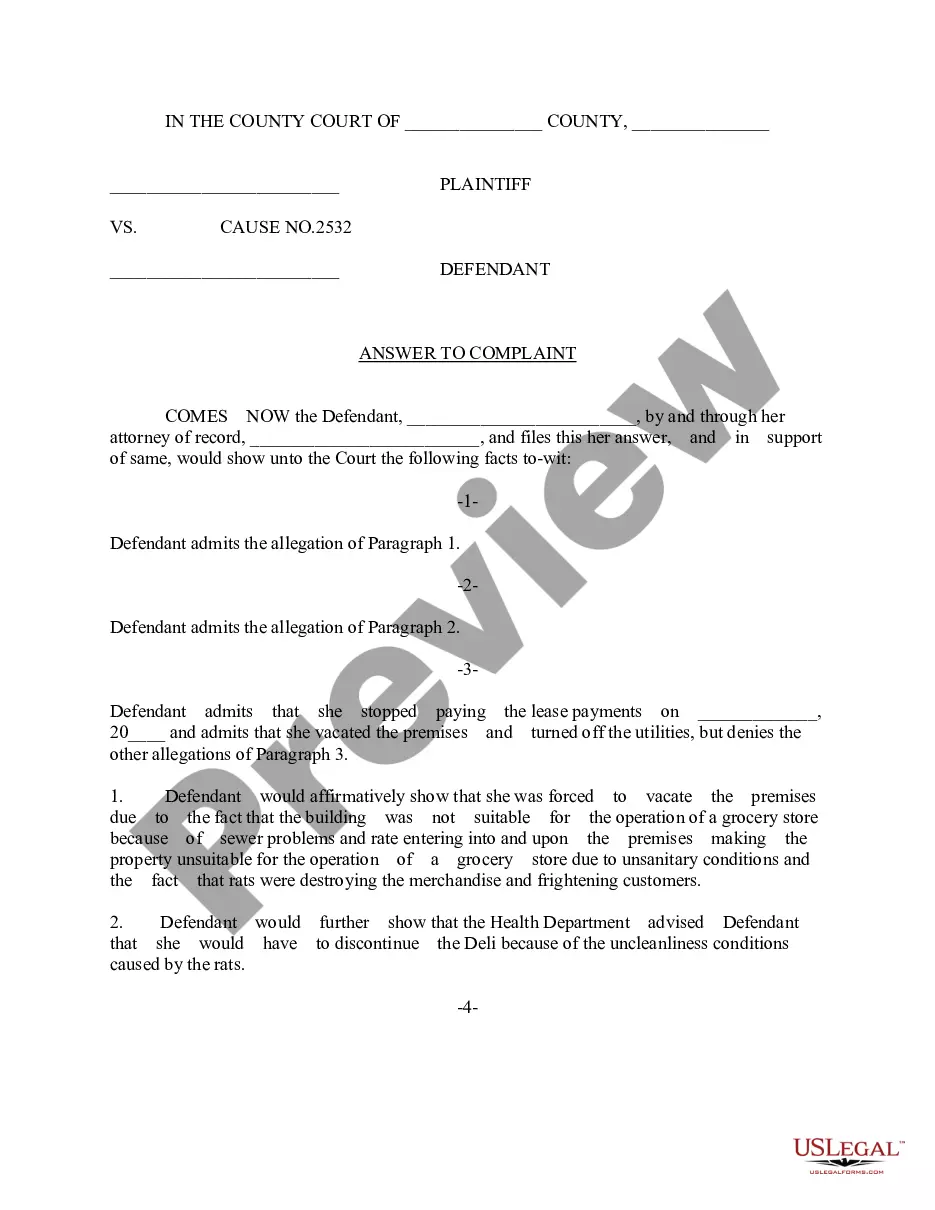
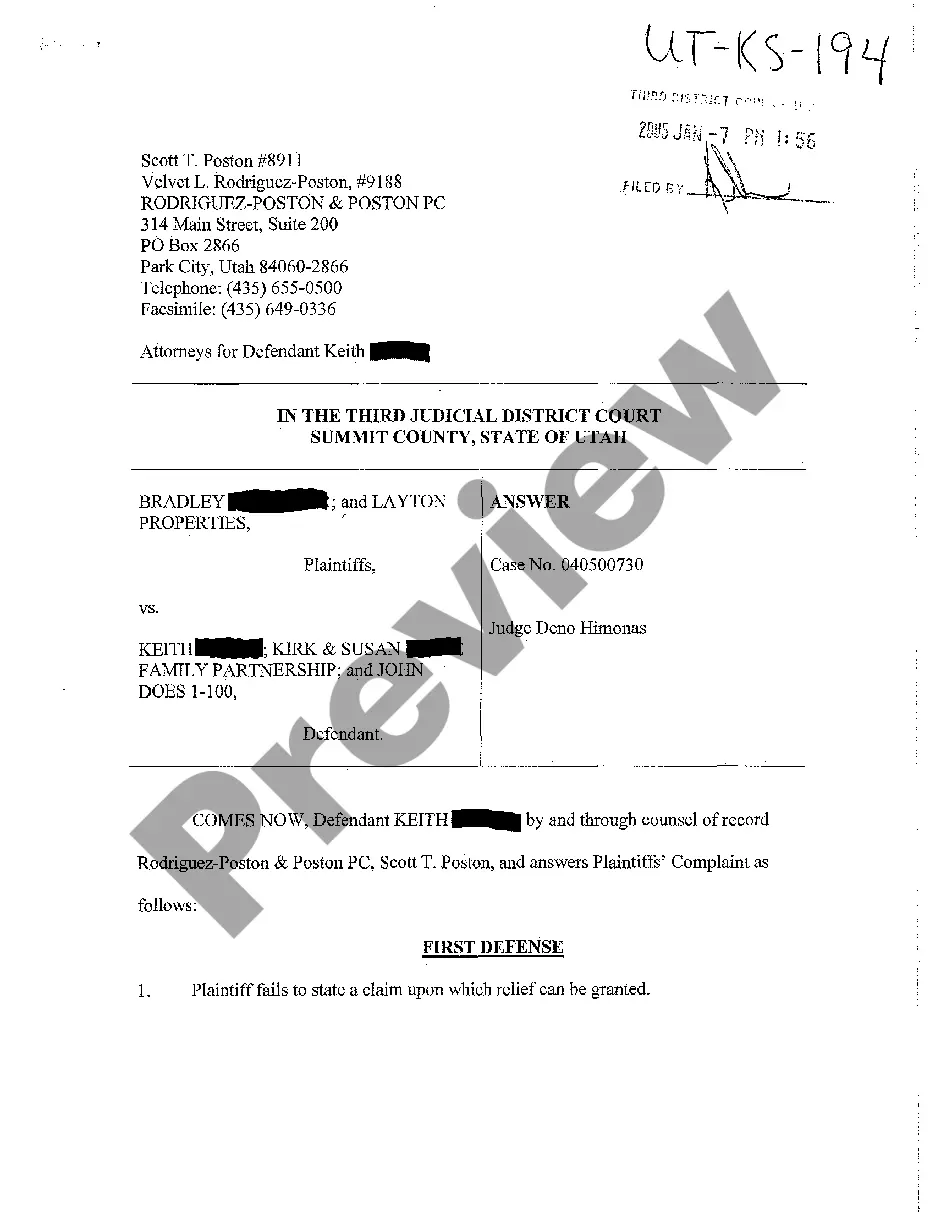
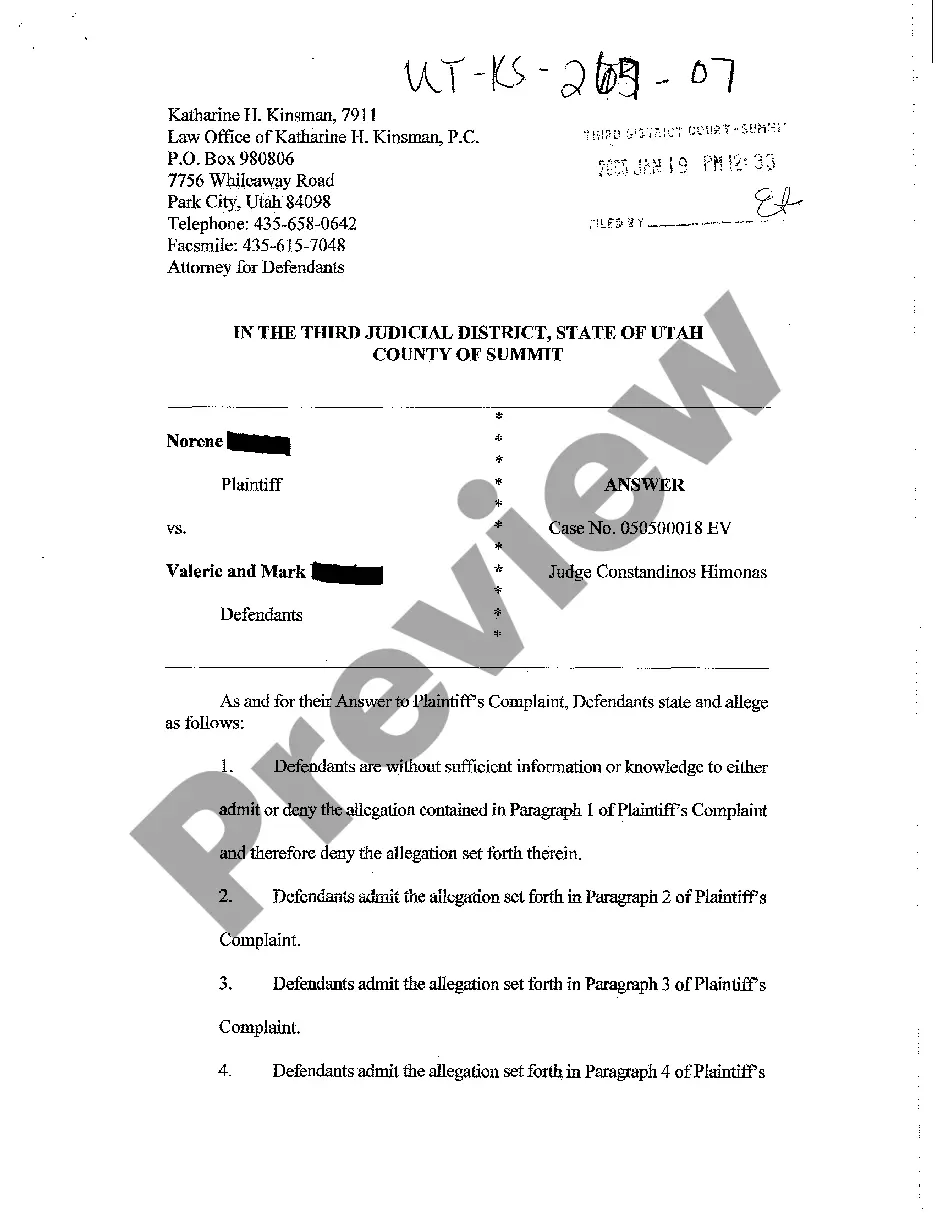
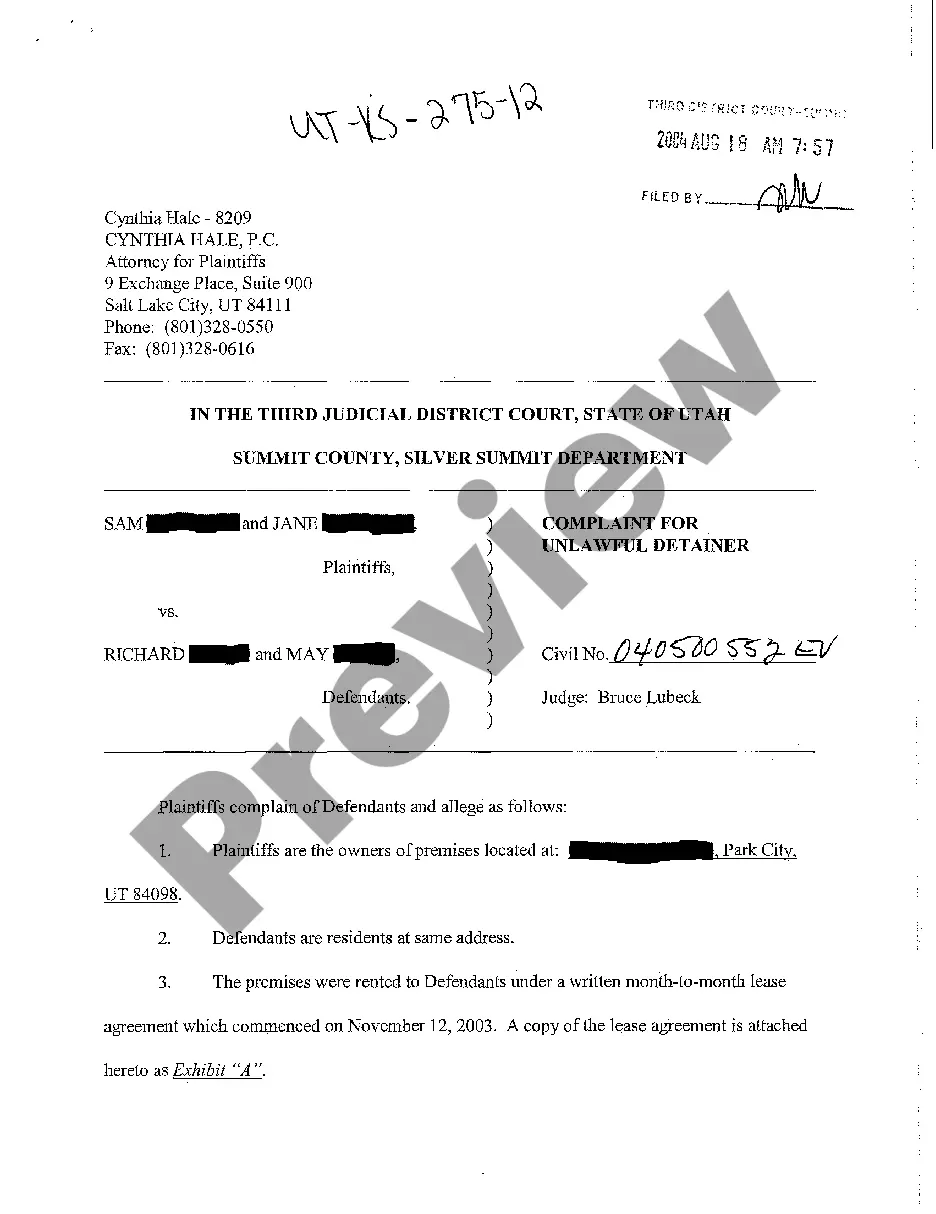
The Utah Defendant's Answer to Unlawful Detainer is a legal document used by a tenant to respond to an eviction claim made by a landlord. This form allows the tenant, referred to as the Defendant, to address false statements in the landlord's complaint and present any defenses against the eviction. Unlike other forms, the Defendant's Answer not only challenges the eviction but may also include a counterclaim against the landlord if applicable.
Form components explained
- Identification of parties: Sections for the Plaintiff (landlord) and Defendant (tenant) details.
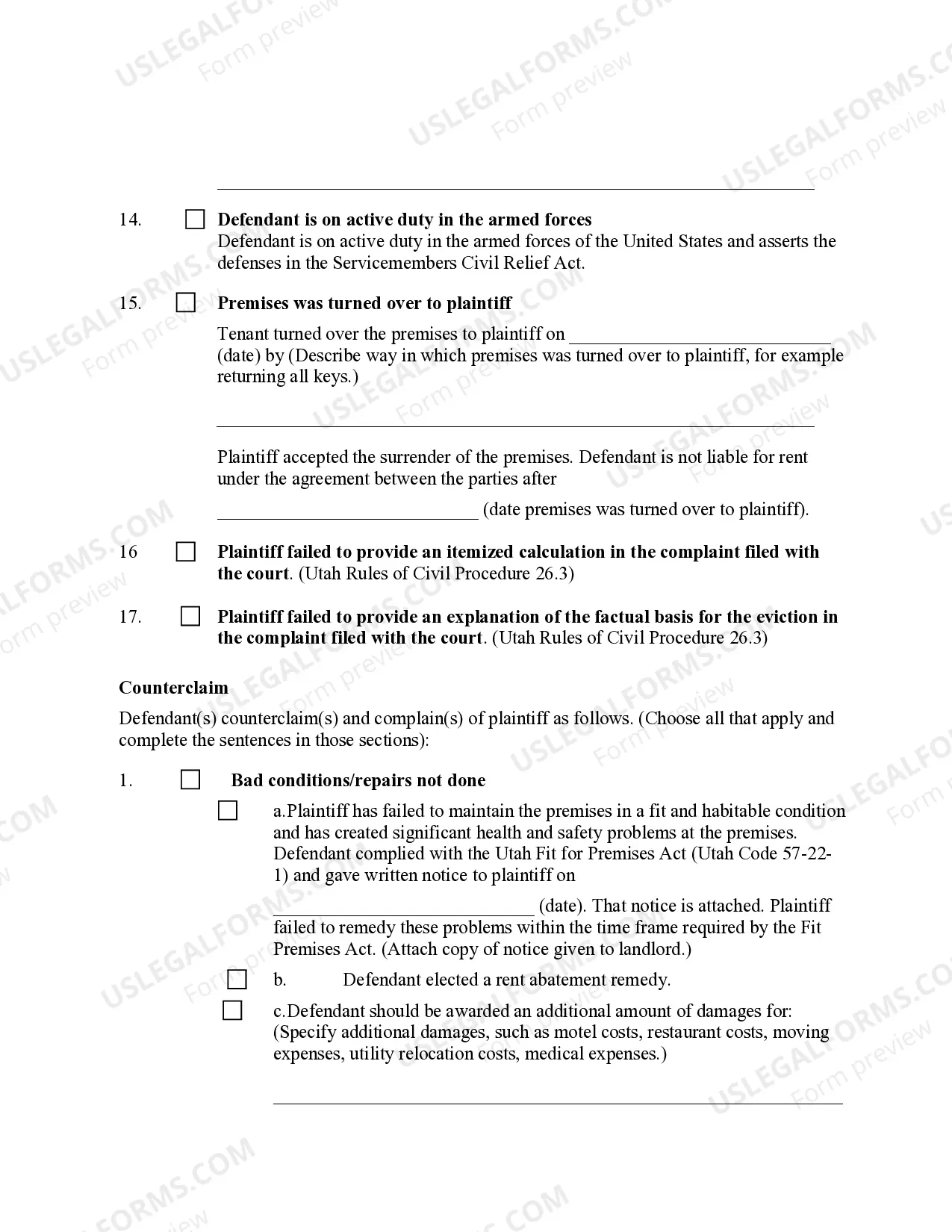
- Response to allegations: Areas for agreeing, disagreeing, or stating a lack of information regarding the complaint.
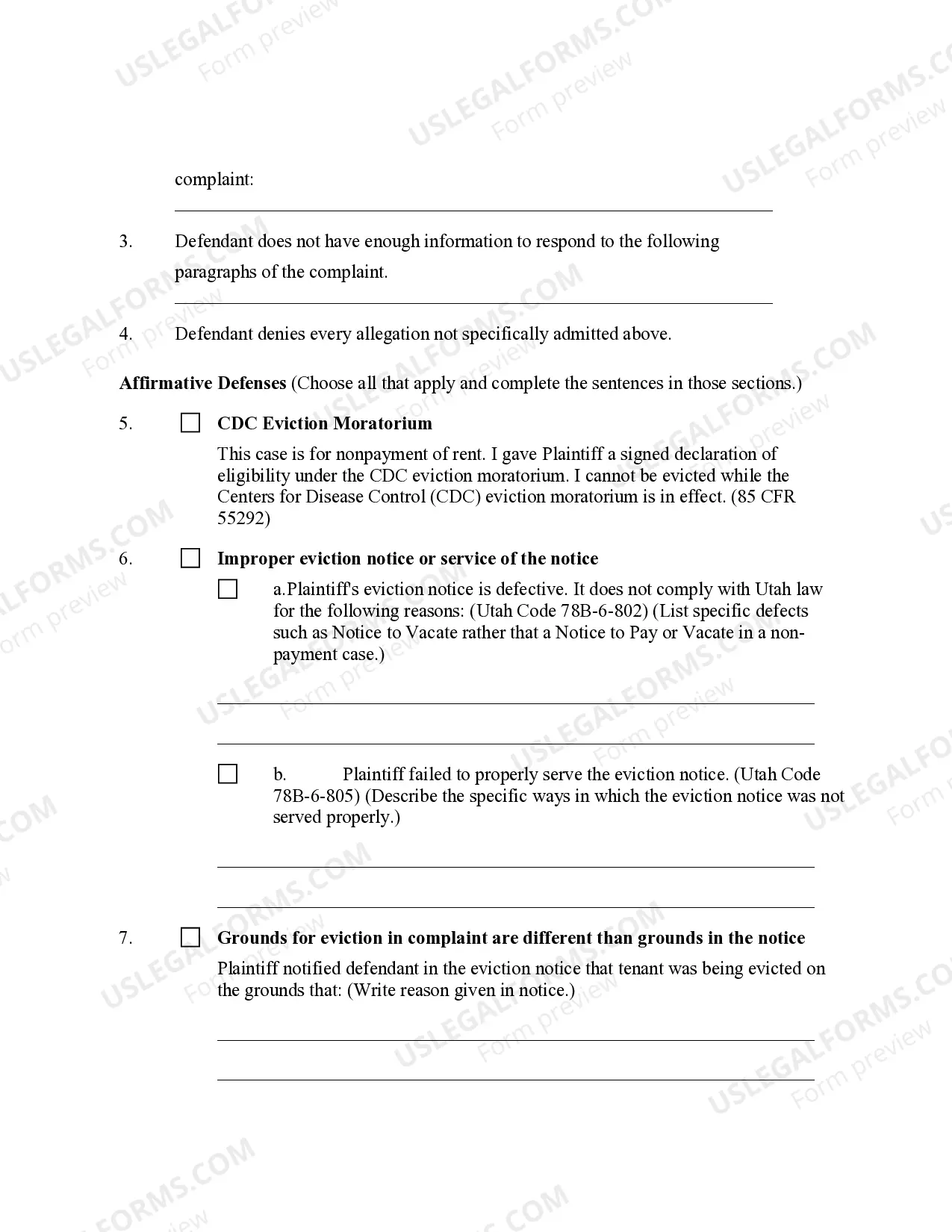
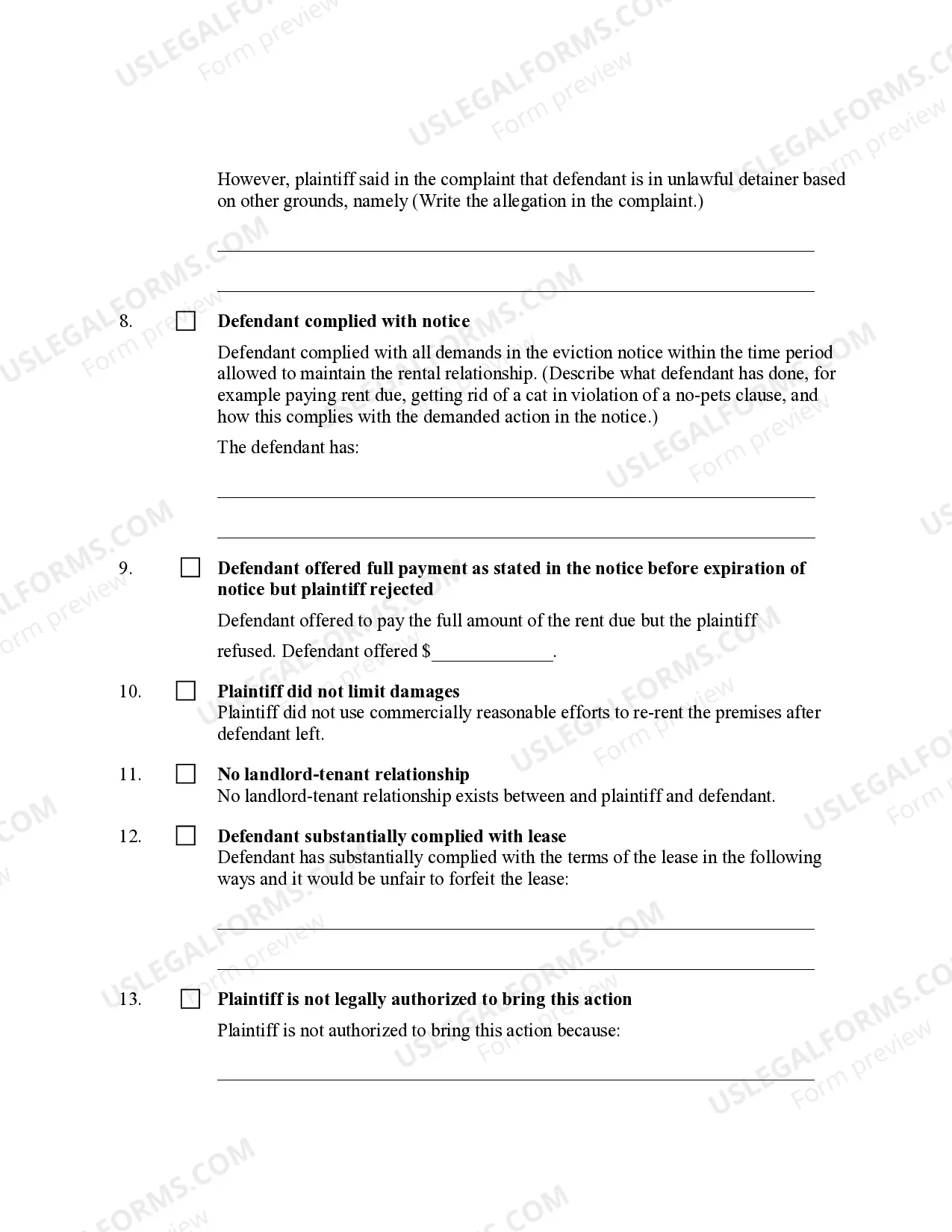
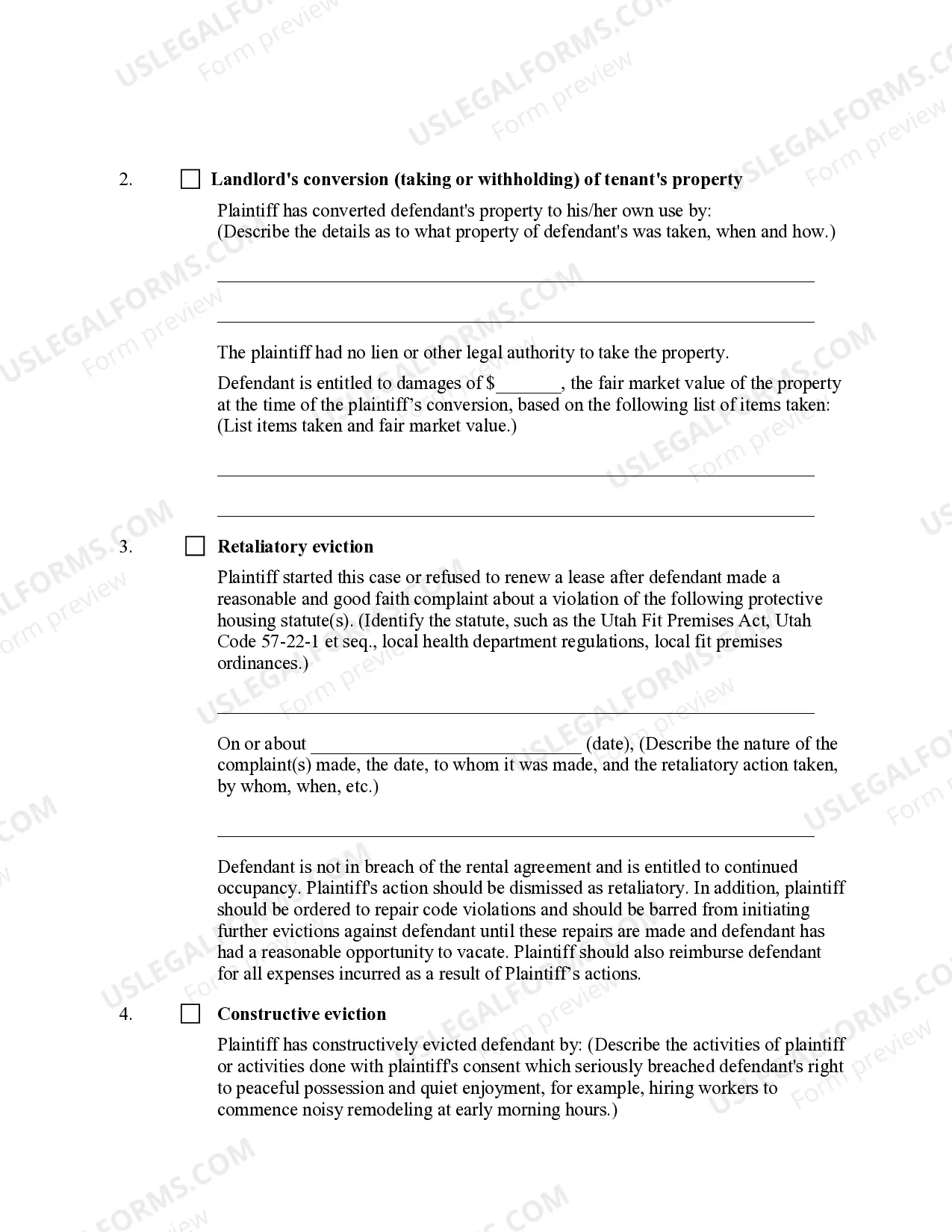
- Affirmative defenses: Multiple choices for defenses such as improper eviction notice, substantial compliance, or retaliatory eviction.
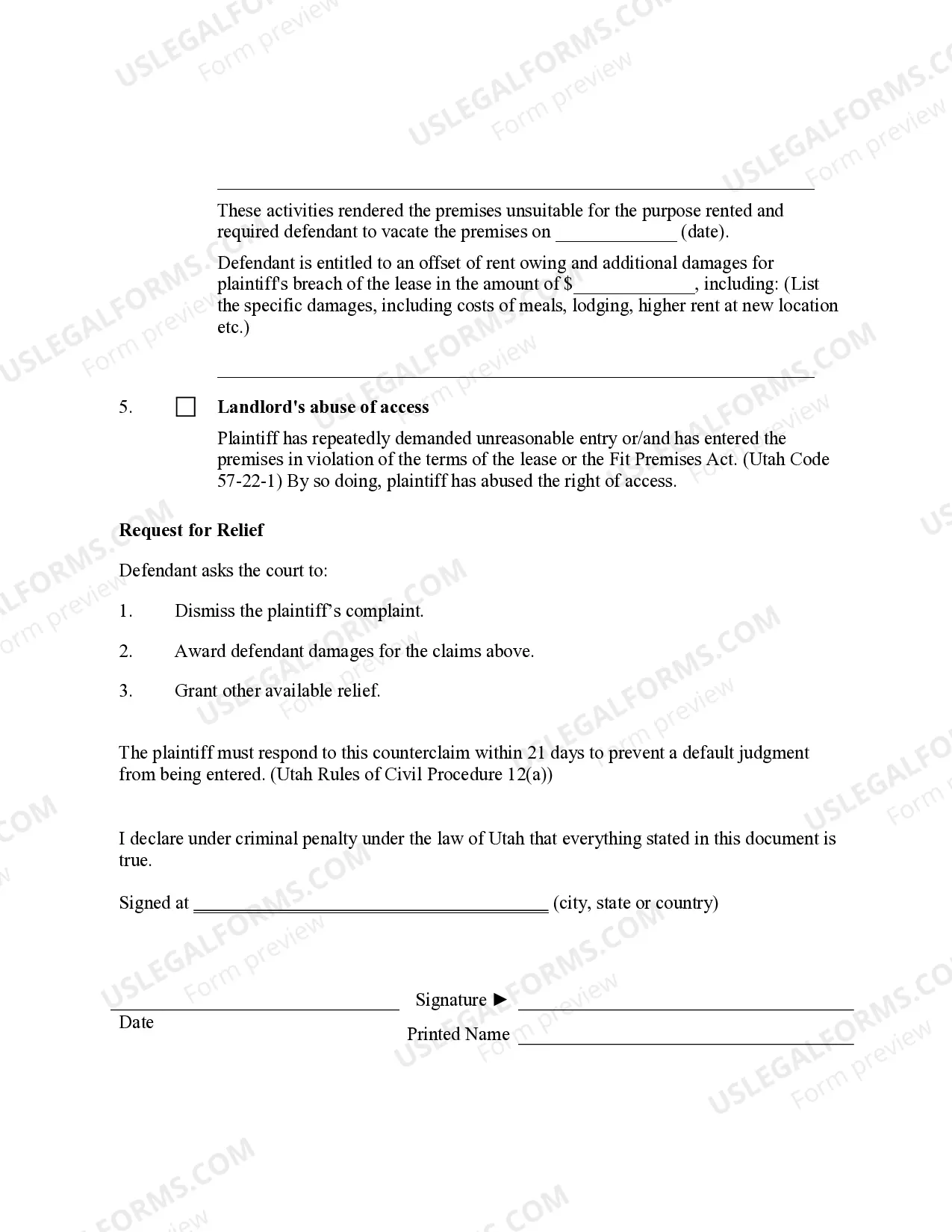
- Counterclaims: Options for the Defendant to claim damages due to bad conditions, conversion of property, or harassment by the landlord.
- Request for relief: Clearly states the Defendantâs demands from the court, including dismissal of the complaint.
When this form is needed
This form should be used when a tenant in Utah receives an unlawful detainer complaint from a landlord seeking to evict them. If the tenant wishes to contest the eviction and believe they have valid defenses or counterclaims, this is the appropriate legal document to file in response.
Who can use this document
- Tenants (Defendants) facing eviction proceedings in Utah.
- Individuals who have received an eviction notice from their landlord.
- Anyone needing to assert defenses or counterclaims against their landlordâs eviction action.
Completing this form step by step
- Fill in the personal information section, including names, addresses, and contact details for both the Defendant and any attorneys.
- Respond to the numbered paragraphs in the complaint by indicating whether you agree, disagree, or lack sufficient information.
- Select and complete the applicable affirmative defenses relevant to your situation.
- If applicable, complete any counterclaims detailing issues such as poor living conditions or property disputes.
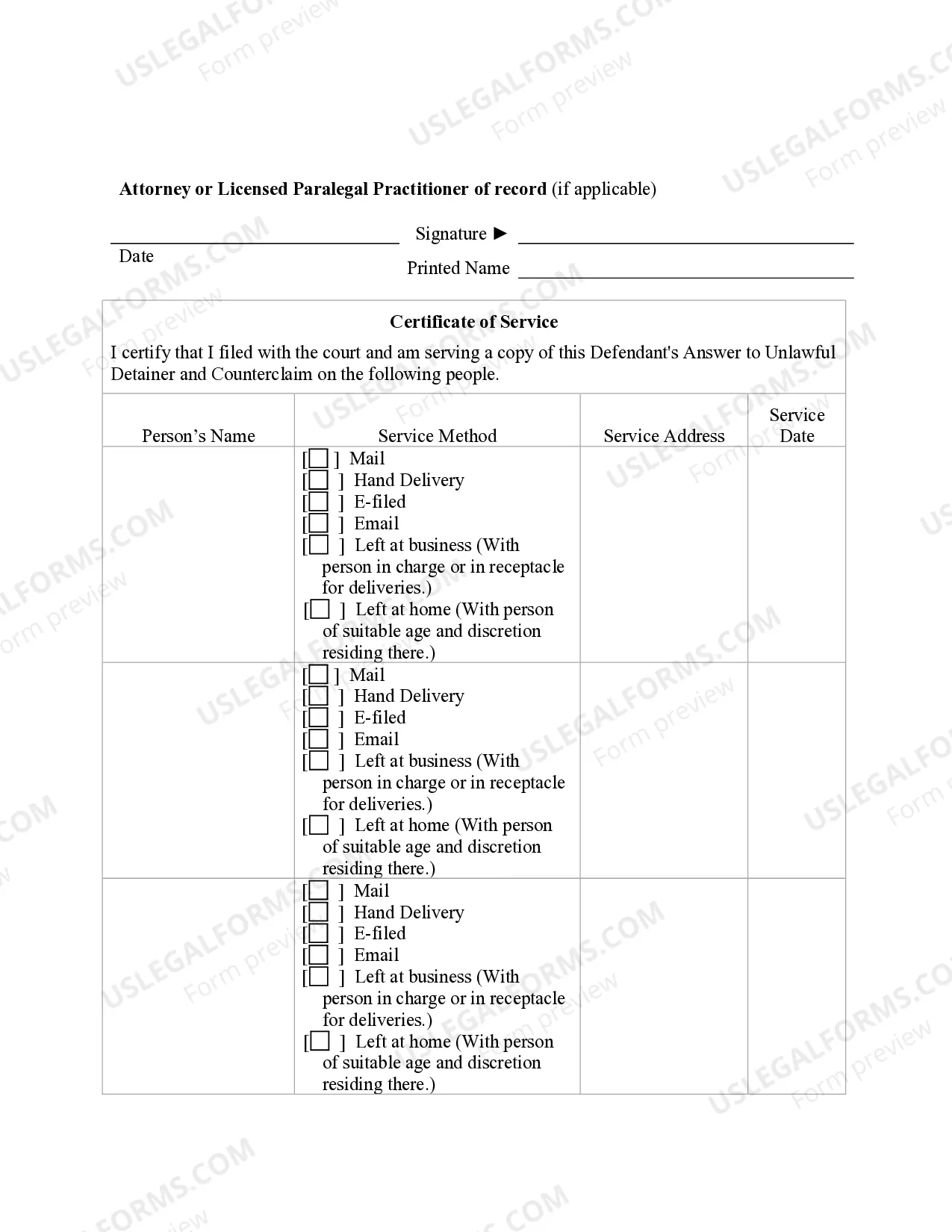
- Sign and date the form to certify that the information provided is accurate.
Does this form need to be notarized?
No, this form does not typically require notarization unless specified by local law. However, it is important to check if your specific circumstances or additional requirements necessitate notarization.
Get your form ready online
Our built-in tools help you complete, sign, share, and store your documents in one place.
Make edits, fill in missing information, and update formatting in US Legal Forms—just like you would in MS Word.
Download a copy, print it, send it by email, or mail it via USPS—whatever works best for your next step.
Sign and collect signatures with our SignNow integration. Send to multiple recipients, set reminders, and more. Go Premium to unlock E-Sign.
If this form requires notarization, complete it online through a secure video call—no need to meet a notary in person or wait for an appointment.
We protect your documents and personal data by following strict security and privacy standards.

Make edits, fill in missing information, and update formatting in US Legal Forms—just like you would in MS Word.

Download a copy, print it, send it by email, or mail it via USPS—whatever works best for your next step.

Sign and collect signatures with our SignNow integration. Send to multiple recipients, set reminders, and more. Go Premium to unlock E-Sign.

If this form requires notarization, complete it online through a secure video call—no need to meet a notary in person or wait for an appointment.

We protect your documents and personal data by following strict security and privacy standards.
Avoid these common issues
- Failing to respond to all numbered paragraphs in the complaint.
- Not providing adequate details for selected affirmative defenses or counterclaims.
- Missing signatures or dates that could render the form invalid.
Benefits of completing this form online
- Easy to access and complete from any device, ensuring convenience.
- Editable format allows you to fill in only relevant sections, saving time.
- Reliable templates drafted by licensed attorneys provide peace of mind.
Looking for another form?
Form popularity
FAQ
If your tenant does not file a response on time, on the 6th day you can file forms asking the judge to order the tenant to move out. This is called a default judgment. The tenant can file a response any time before you file to ask for a default judgment, so it's best to ask for one as early as you can.
A claim of right to possession may be filed at any time after service or posting of the writ of possession pursuant to subdivision (a) or (b) of Section 715.020, up to and including the time at which the levying officer returns to effect the eviction of those named in the judgment of possession.
Generally, the eviction process in Utah takes just a matter of days or weeks from the time the landlord files the lawsuit to the time the tenant is out of the property. 11 to 28 days is common, provided that the process has been followed correctly. If the tenant contests the eviction, it could take longer.
Code of Civil Procedure 415.46 The requirements for a prejudgment claim to right of possession are codified in Code of Civil Procedure section 415.46. Under section 415.46, services of process of a prejudgment claim to right of possession must be effected by a marshal, sheriff, or registered process server.
5) Given by a landlord to a person they're trying to evict when they don't know their name. It gives the person a chance to add themselves to the eviction court case at the beginning to say why they shouldn't be evicted.
The landlord does not have to have a reason for wanting the tenant to vacate. The notice must be served at least 15 calendar days before the end of the rental period. Otherwise, the tenant can stay until the end of the next rental period.
Simply put, the Motion to Stay the Writ of Possession is a document filed with the court asking the judge to ?stay? or ?stop? the sheriff from executing the Writ of Possession and removing the resident. It can be a typed or handwritten document filed by the resident or the resident's attorney if one is retained.
FAQs About a Writ of Possession in California In California, a writ of possession can expire 180 days after a court issues it. If a property owner would like to use a writ of possession in California, they must use it before it expires.