Utah Quitclaim Deed from Husband to Himself and Wife
Understanding this form
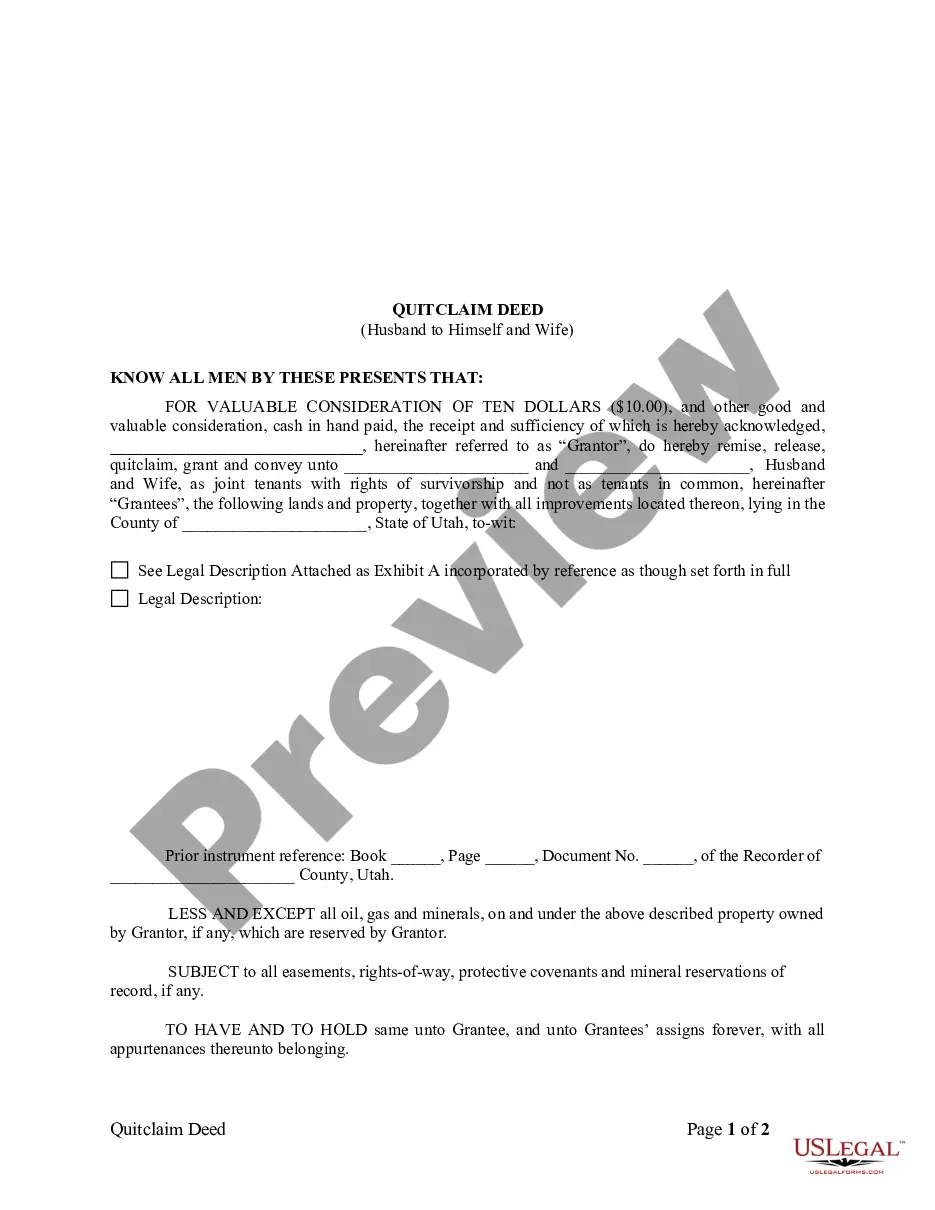
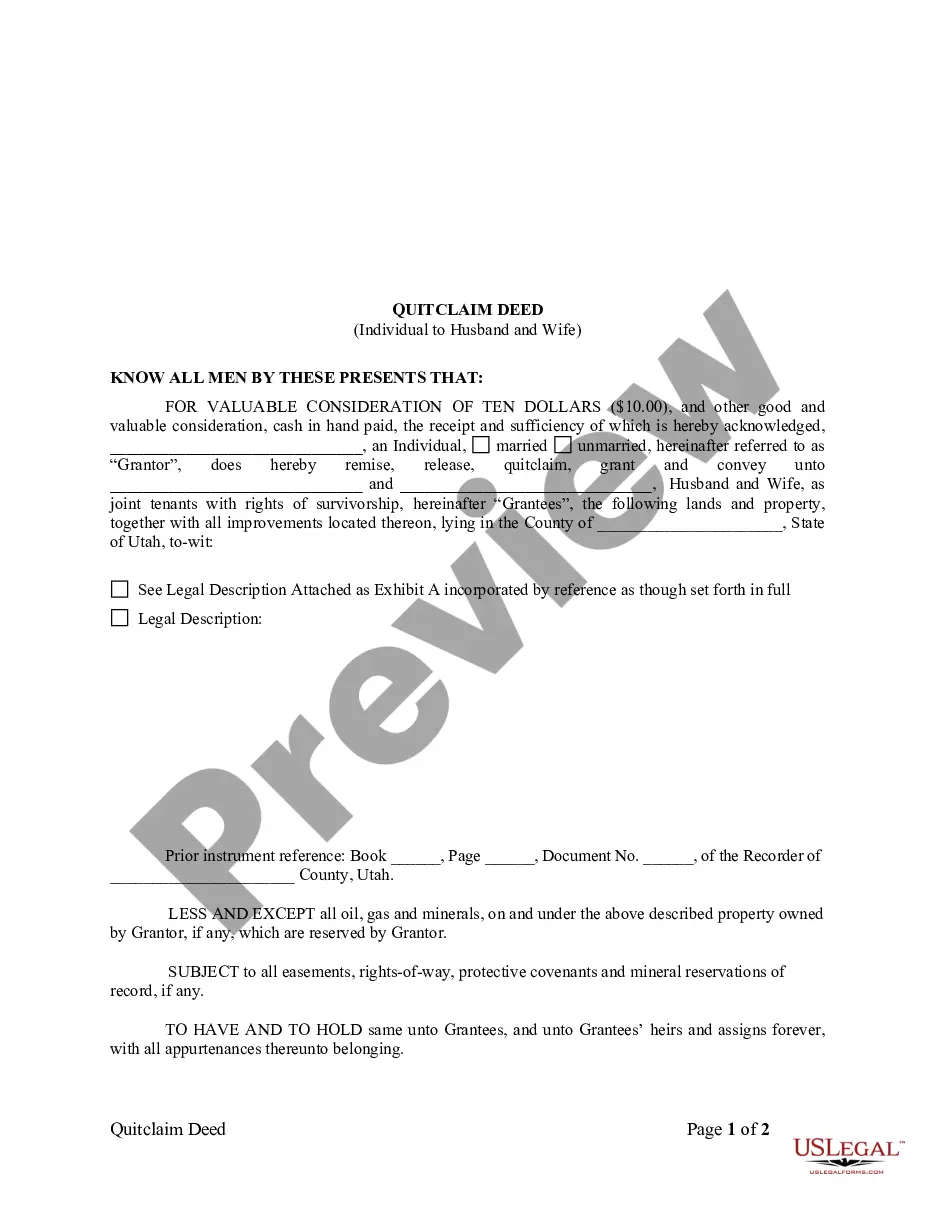
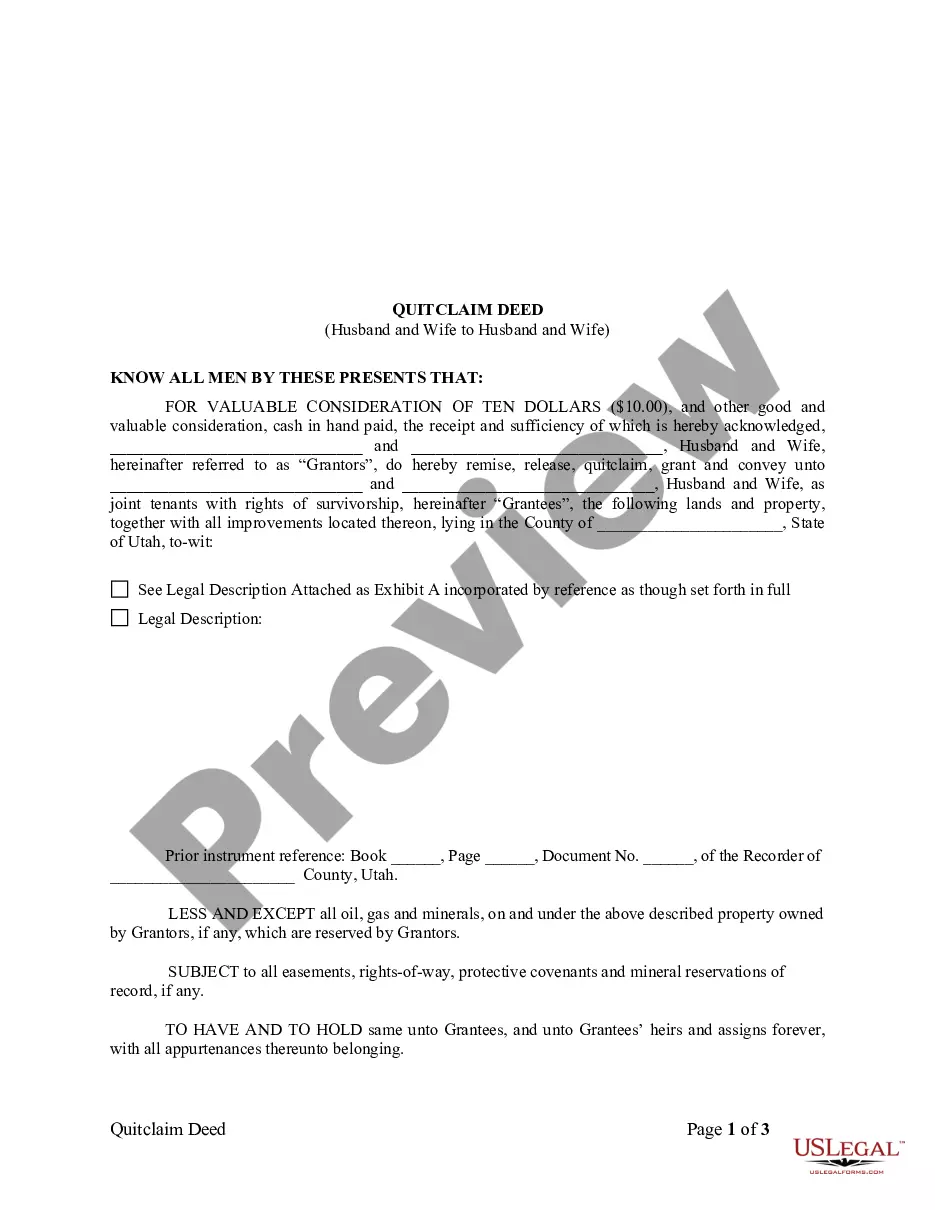
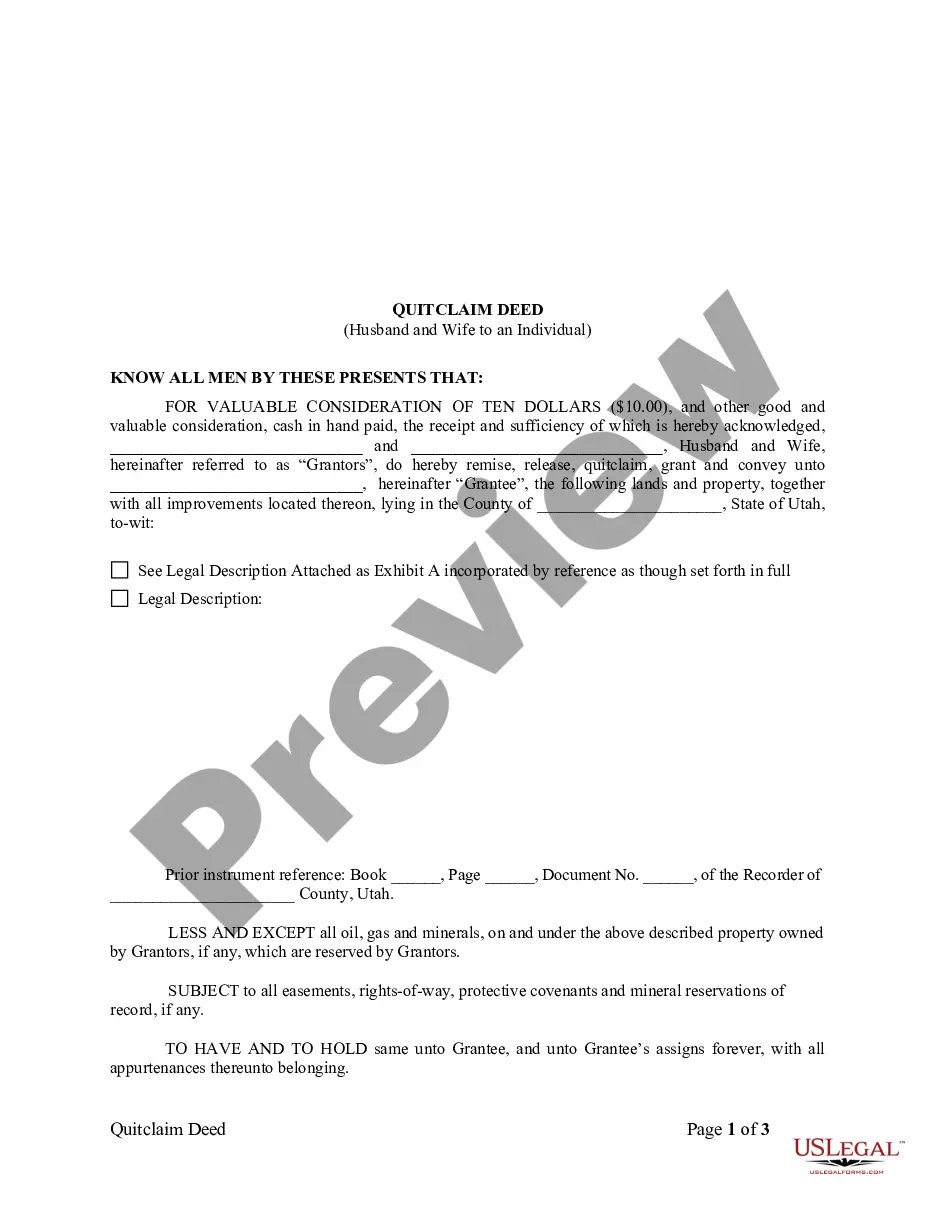
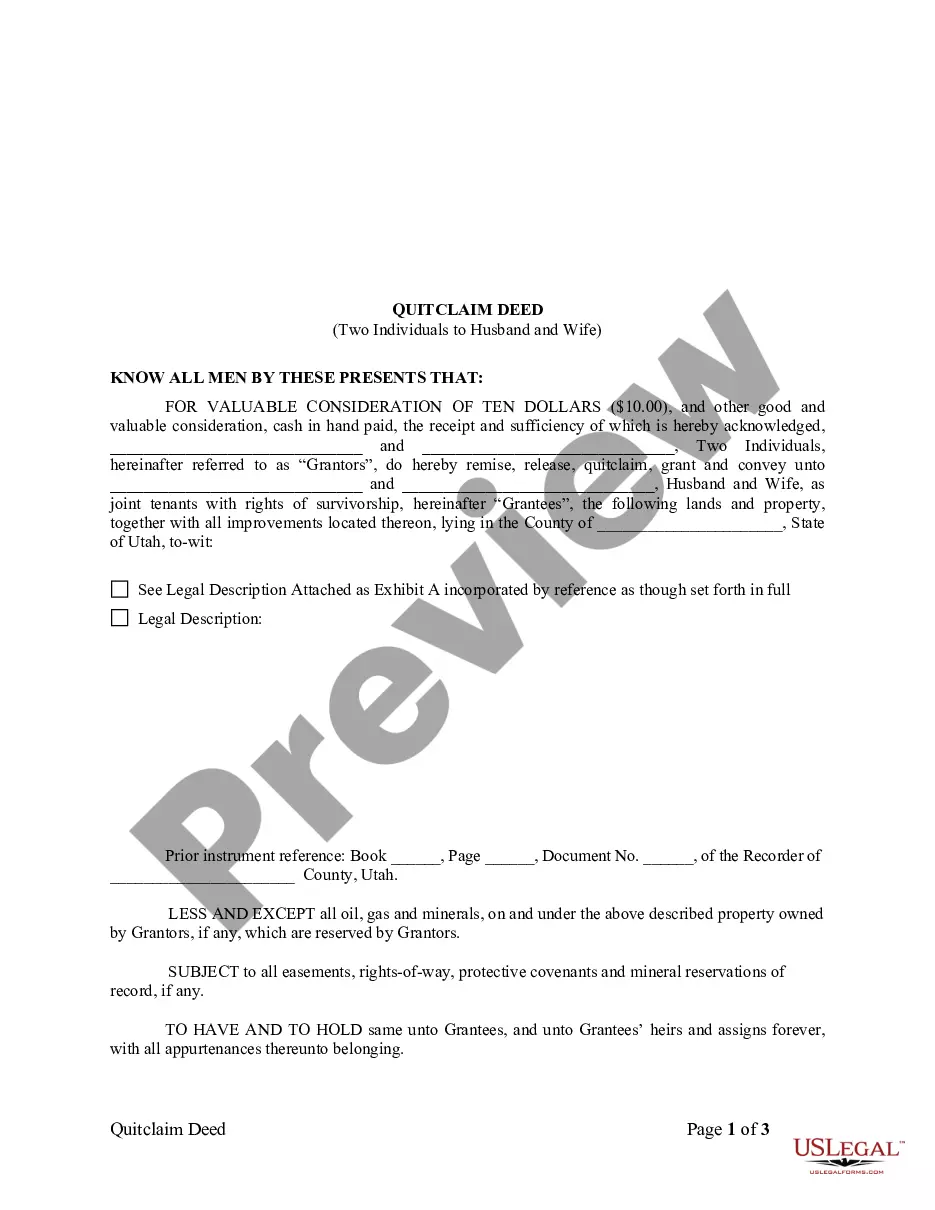
The Quitclaim Deed from Husband to Himself and Wife is a legal document used to transfer ownership of property from the husband to both himself and his wife. This type of deed allows for the transfer of property without any warranties about the property's title, making it distinct from other types of deeds. It is particularly useful in joint property ownership situations where one spouse wishes to formally convey their share to both parties as co-owners. This document complies with all relevant state laws, ensuring its validity and enforceability.
Main sections of this form
- Grantor: The husband transferring ownership of the property.
- Grantees: Both the husband and wife, receiving joint ownership.
- Property description: Detailed description of the property being transferred.
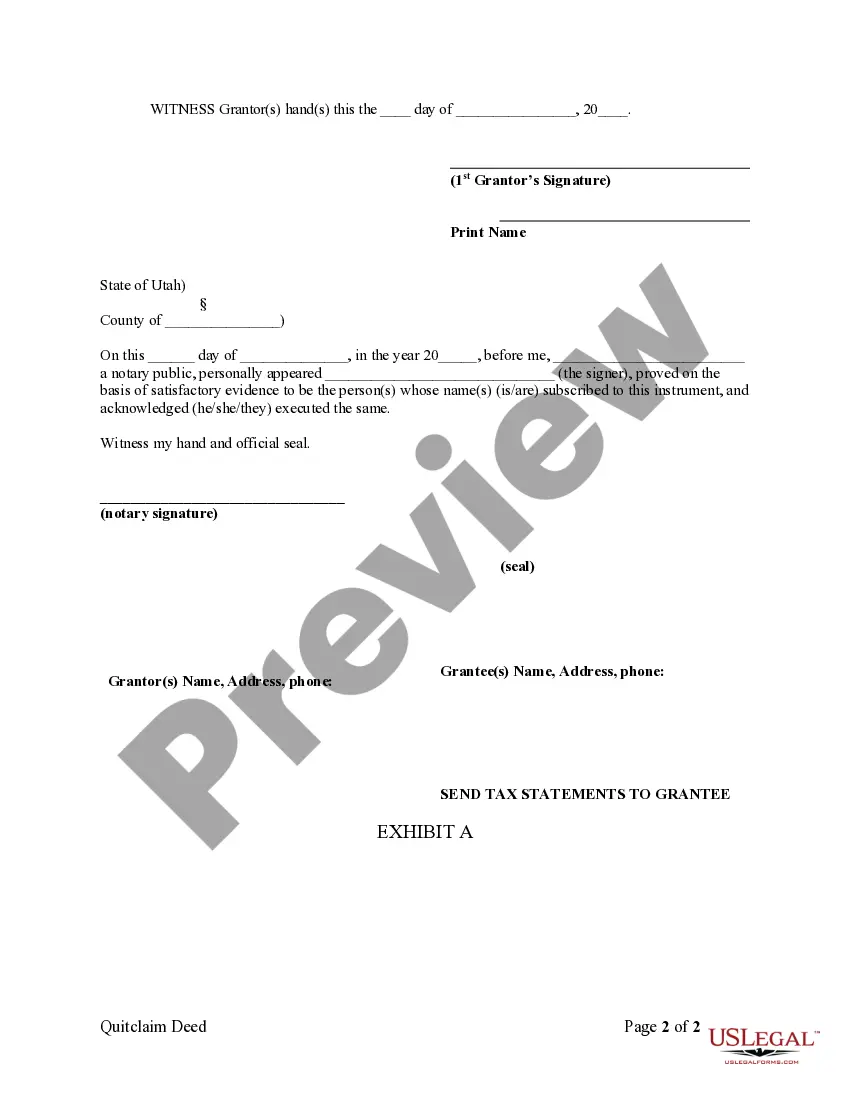
- Date of execution: The date on which the deed is signed.
- Signatures: Required signatures of the grantor and witnesses, if applicable.


Situations where this form applies
This form is typically used when a husband wants to formally transfer his interest in a property to himself and his wife. It can be relevant in situations such as marriage, refinancing, estate planning, or simplifying property ownership. Additionally, it may be useful when a couple wishes to clarify their shared ownership of the property in legal terms.
Who can use this document
- Married couples who want to establish joint ownership of property.
- Individuals looking to clarify property titles within a marriage.
- Husbands who wish to transfer their interest in a property to include their wives.
- Couples involved in estate planning concerning the property they own together.
Steps to complete this form
- Identify the parties: Clearly state the names of the grantor and grantees.
- Specify the property: Include a detailed description of the property being transferred.
- Enter the date: Fill in the date on which the deed is being executed.
- Sign the document: The grantor must sign the deed, and if required, include signatures from witnesses.
- File the deed: Submit the completed deed to the county recorder or relevant local authority as required.
Is notarization required?
To make this form legally binding, it must be notarized. Our online notarization service, powered by Notarize, lets you verify and sign documents remotely through an encrypted video session.
Avoid these common issues
- Failing to provides a complete and accurate property description.
- Not including the date of execution.
- Omitting required signatures or witnesses.
- Neglecting to record the deed with local authorities.
Why use this form online
- Convenience: Complete and download your form at your own pace.
- Editability: Customize the form easily to fit your specific situation.
- Reliability: Access professionally drafted templates ensuring legal compliance.
Form popularity
FAQ
Fill out the quit claim deed form, which can be obtained online, or write your own using the form as a guide. The person giving up the interest in the property is the grantor, and the person receiving the interest is the grantee.
Step 1: Download a free Quit Claim Deed form online or pick up one from your local county recorder's office. Step 2: Completely fill in the names, addresses, and contact information of the seller and the buyer using black ink. Step 3: Include the full legal description of the property.
Quitclaim deeds are most often used to transfer property between family members.Examples include when an owner gets married and wants to add a spouse's name to the title or deed, or when the owners divorce and one spouse's name is removed from the title or deed.
To use a Quitclaim Deed to add someone to a property deed or title, you would need to create a Quitclaim Deed and list all of the current owners in the grantor section. In the grantee section, you would list all of the current owners as well as the person you would like to add.
The drawback, quite simply, is that quitclaim deeds offer the grantee/recipient no protection or guarantees whatsoever about the property or their ownership of it. Maybe the grantor did not own the property at all, or maybe they only had partial ownership.
But you might be wondering if an owner can transfer a deed to another person without a real estate lawyer. The answer is yes. Parties to a transaction are always free to prepare their own deeds.A quitclaim deed, for example, is far simpler than a warranty deed.
A Quitclaim Deed must be notarized by a notary public or attorney in order to be valid.Consideration in a Quitclaim Deed is what the Grantee will pay to the Grantor for the interest in the property.
A person who signs a quitclaim deed to transfer property they do not own results in no title at all being transferred since there is no actual ownership interest. The quitclaim deed only transfers the type of title you own.