Letter of Attornment
What is this form?
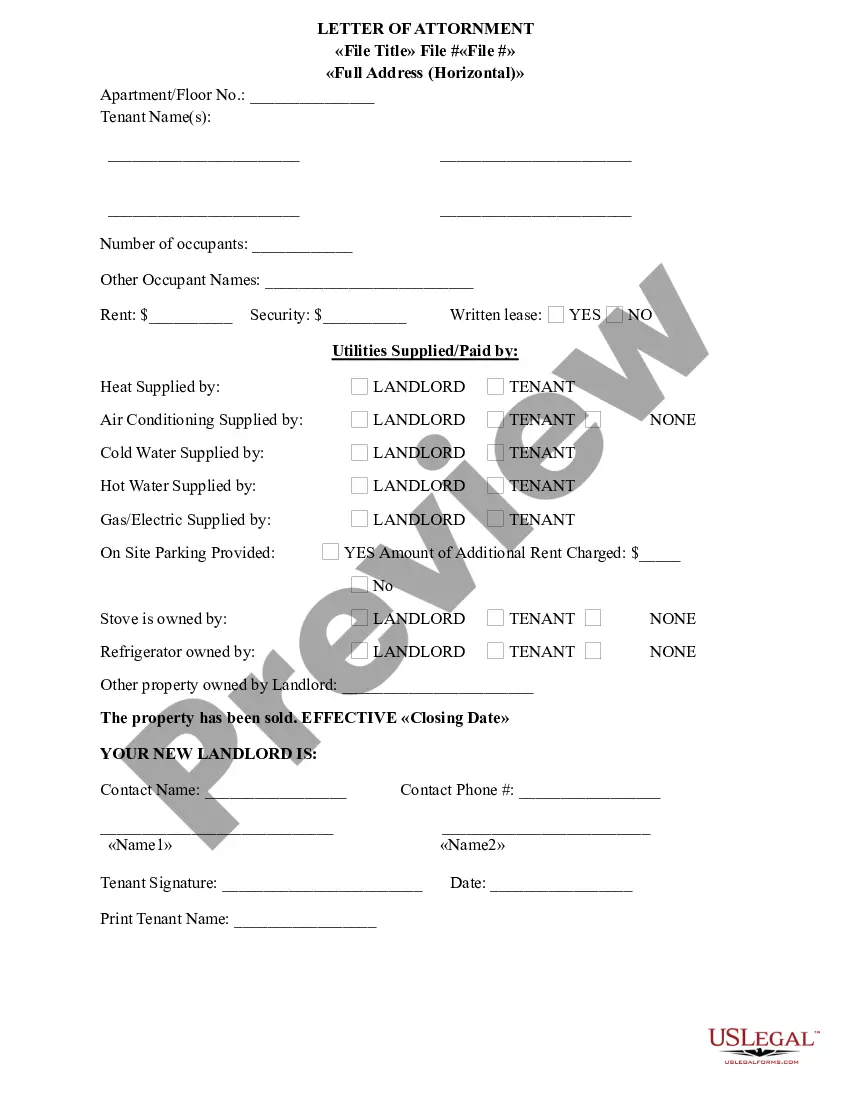
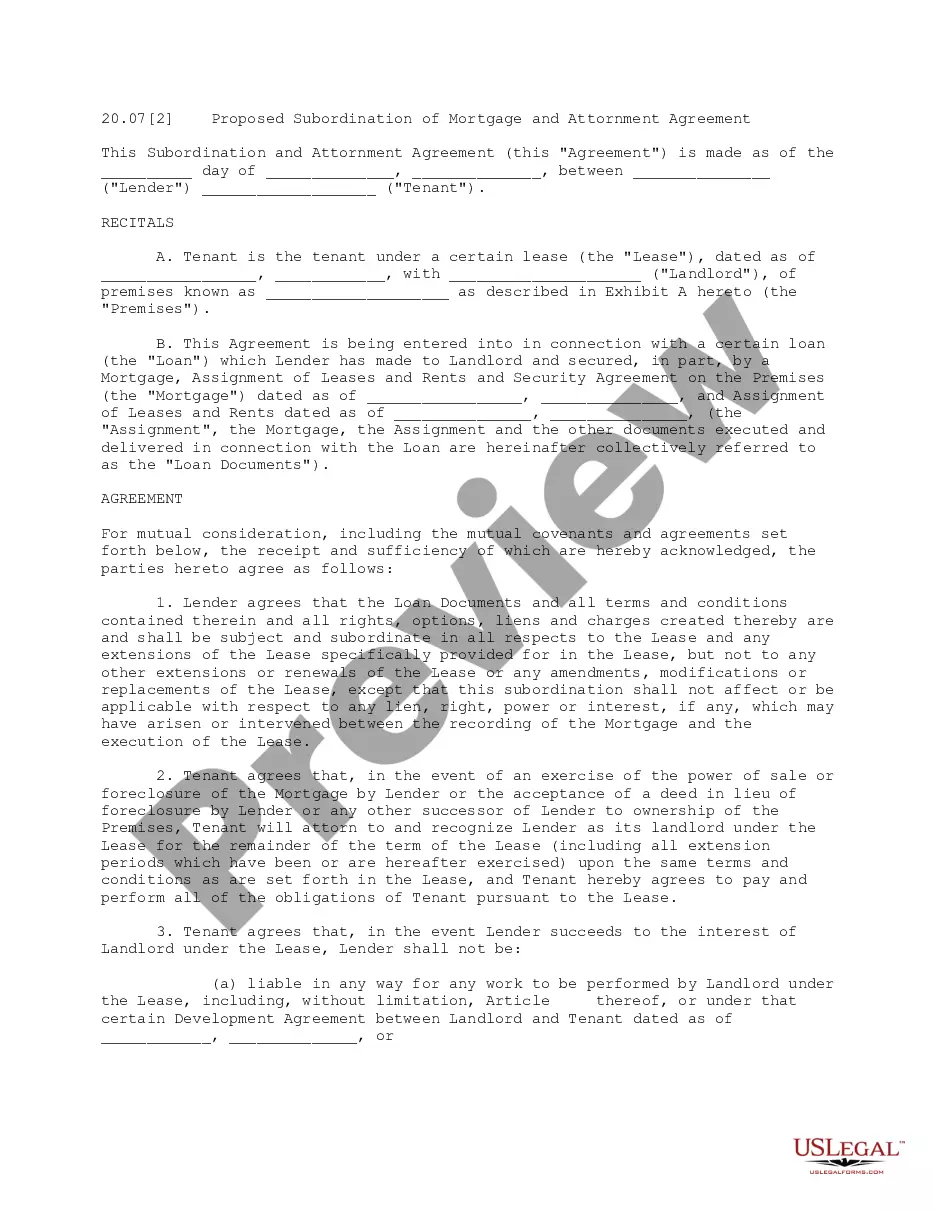
The Letter of Attornment is a legal document used by a grantor to inform a tenant that the property they are renting has been sold. This letter directs the tenant to pay rent to the new owner, known as the grantee. Unlike other rental agreements, this form specifically addresses the change in ownership and is important for ensuring that rent payments are correctly transferred to the new landlord. It may be customized to meet the specific needs of the parties involved.
Form components explained
- Full address of the property, including apartment or floor number.
- Tenant names and the number of occupants living at the property.
- Details regarding rent, security deposit, and provisions in the written lease.
- Information on utilities and maintenance responsibilities.
- Closing date of the property sale and details of the new landlord.
- Signatures of the tenant(s) to confirm acknowledgment.
When this form is needed
This form should be used when a property owner sells their property, and the tenant needs to be formally notified of the sale. It is essential in situations where the landlord changes, ensuring clear communication about whom the tenant should pay rent to moving forward. This document helps maintain a smooth transition in rental payments and responsibilities during property ownership changes.
Who this form is for
- Property owners or grantors who have sold a rental property.
- Tenants renting the property who need clear instructions on where to send future rent payments.
- Real estate agents facilitating the sale of rental properties.
How to prepare this document
- Identify the full address of the rental property, including any apartment or floor numbers.
- Enter the names of all tenants and specify the number of occupants.
- Provide details regarding the rent amount, security deposit, and if there is a written lease.
- Specify the utilities provided and maintenance responsibilities.
- Note the effective closing date of the sale and provide the new landlordâs contact information.
- Have all tenants sign the letter to confirm their acknowledgment of the change.
Does this document require notarization?
This form does not typically require notarization unless specified by local law. However, having it notarized can add an extra layer of authenticity and security. If you have questions about specific requirements, it is advisable to consult with a legal professional.
Get your form ready online
Our built-in tools help you complete, sign, share, and store your documents in one place.
Make edits, fill in missing information, and update formatting in US Legal Forms—just like you would in MS Word.
Download a copy, print it, send it by email, or mail it via USPS—whatever works best for your next step.
Sign and collect signatures with our SignNow integration. Send to multiple recipients, set reminders, and more. Go Premium to unlock E-Sign.
If this form requires notarization, complete it online through a secure video call—no need to meet a notary in person or wait for an appointment.
We protect your documents and personal data by following strict security and privacy standards.

Make edits, fill in missing information, and update formatting in US Legal Forms—just like you would in MS Word.

Download a copy, print it, send it by email, or mail it via USPS—whatever works best for your next step.

Sign and collect signatures with our SignNow integration. Send to multiple recipients, set reminders, and more. Go Premium to unlock E-Sign.

If this form requires notarization, complete it online through a secure video call—no need to meet a notary in person or wait for an appointment.

We protect your documents and personal data by following strict security and privacy standards.
Typical mistakes to avoid
- Failing to include all tenant names can lead to confusion about payment responsibilities.
- Not specifying the effective date of the property sale may cause delays in payment transitions.
- Inaccurate or incomplete property information can lead to disputes over rental obligations.
Benefits of completing this form online
- The form is easily customizable to suit different property and tenant situations.
- It can be downloaded and completed quickly, saving you time and effort.
- Access to a professionally drafted form ensures legal compliance and reduces the risk of errors.
Looking for another form?
Form popularity
FAQ
An LOI is a short written document signed by the landlord and tenant, which describes the basic terms of the lease. By signing an LOI, the landlord and tenant can make sure they agree to fundamental lease terms before taking the time and incurring the expense of preparing and negotiating a lease.
What is Attornment? Attornment is the agreement that a tenant consents to acknowledge a person who purchases an estate that the tenant has leased as his new landlord. Restated, when the owner of leased property sells the property to a third party, attornment is the transfer of authority as landlord to the purchaser.
What Is Attornment? Attornment is the act of granting authority or jurisdiction to a party even though no legal rights exist. It applies mainly to real estate transactions and may occur when a tenant acknowledges a new owner of the property as their new landlord.
What Is Attornment? Attornment is the act of granting authority or jurisdiction to a party even though no legal rights exist. It applies mainly to real estate transactions and may occur when a tenant acknowledges a new owner of the property as their new landlord.
A letter of attornment is a document that a landlord sends to their tenant, informing them that the property they are renting has been sold to a new owner. The letter directs the tenant to pay rent to the new owner instead of the previous landlord.