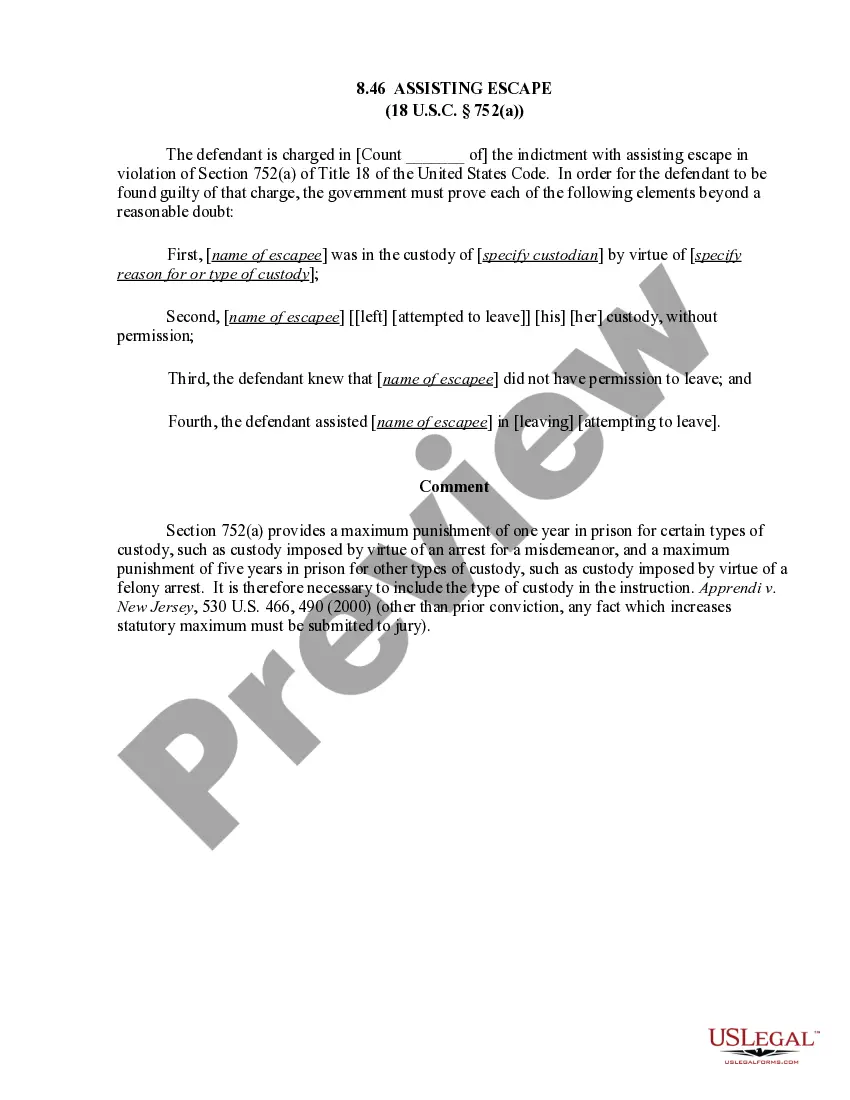
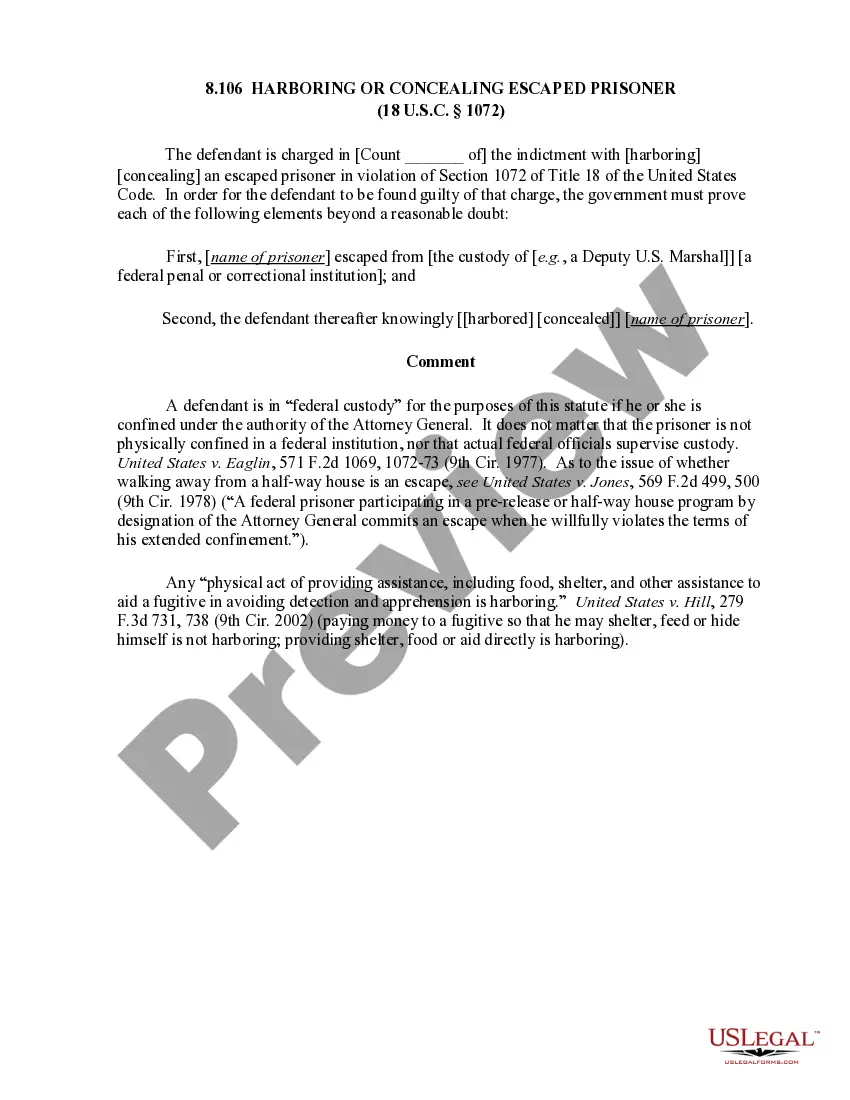
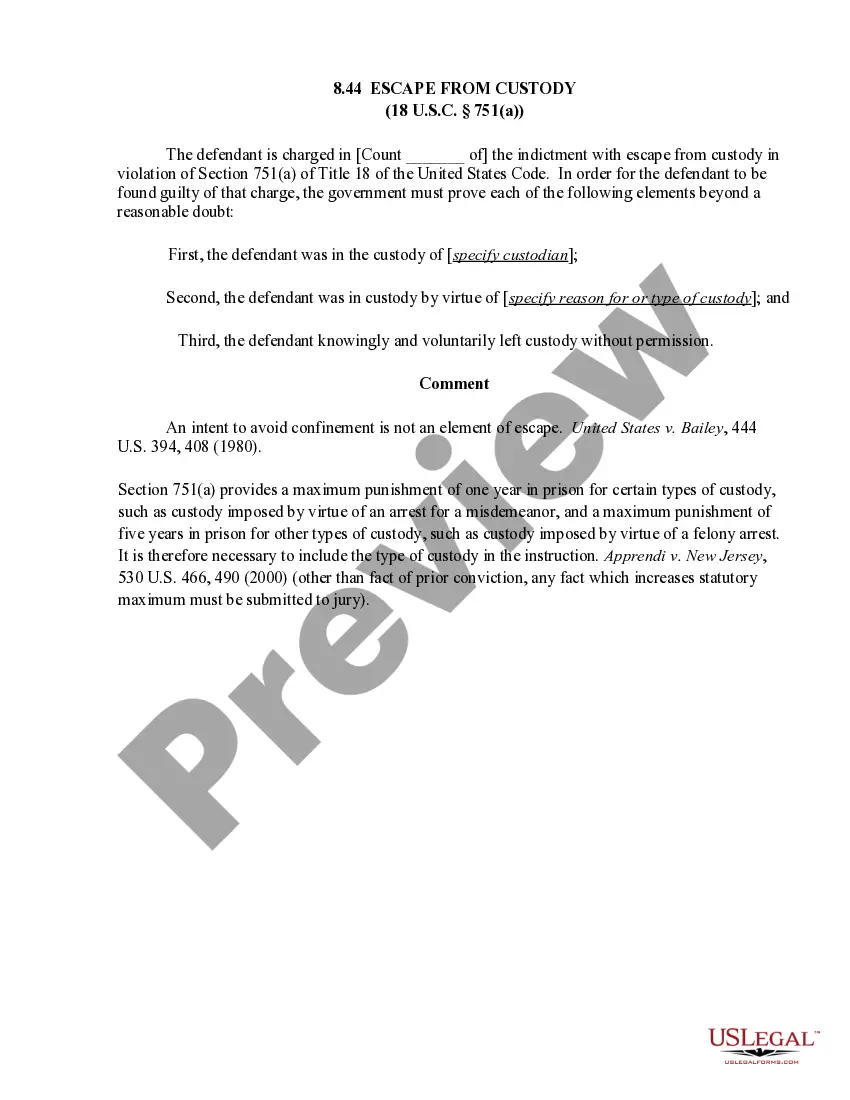
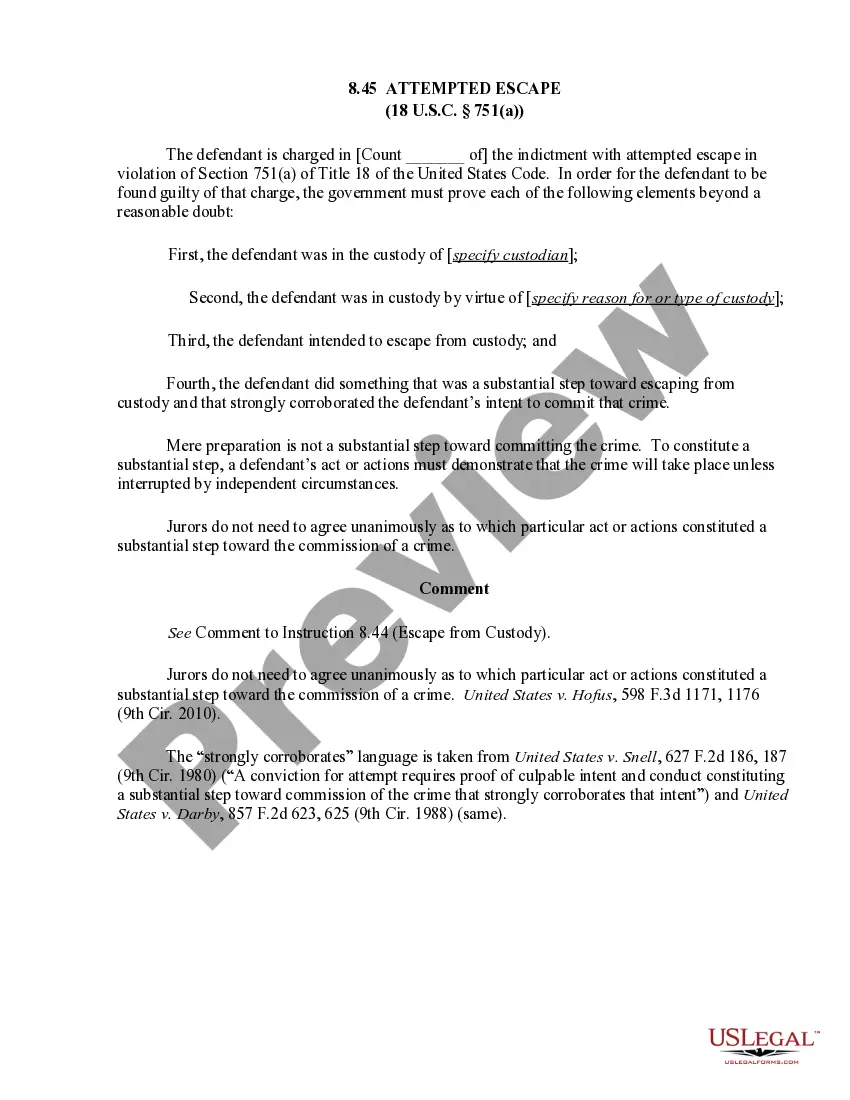
8.46 Assisting Escape (18 U.S.C. Sec. 752(a))
Does this document require notarization?
Notarization is not commonly needed for this form. However, certain documents or local rules may make it necessary. Our notarization service, powered by Notarize, allows you to finalize it securely online anytime, day or night.
Get your form ready online
Our built-in tools help you complete, sign, share, and store your documents in one place.
Make edits, fill in missing information, and update formatting in US Legal Forms—just like you would in MS Word.
Download a copy, print it, send it by email, or mail it via USPS—whatever works best for your next step.
Sign and collect signatures with our SignNow integration. Send to multiple recipients, set reminders, and more. Go Premium to unlock E-Sign.
If this form requires notarization, complete it online through a secure video call—no need to meet a notary in person or wait for an appointment.
We protect your documents and personal data by following strict security and privacy standards.

Make edits, fill in missing information, and update formatting in US Legal Forms—just like you would in MS Word.

Download a copy, print it, send it by email, or mail it via USPS—whatever works best for your next step.

Sign and collect signatures with our SignNow integration. Send to multiple recipients, set reminders, and more. Go Premium to unlock E-Sign.

If this form requires notarization, complete it online through a secure video call—no need to meet a notary in person or wait for an appointment.

We protect your documents and personal data by following strict security and privacy standards.
Looking for another form?

Form popularity
FAQ
(1) The escape involved no substantial risk of harm to the person or property of another. (2) The detaining authority knew or should have known there was no legal basis or authority for the detention. (C) Whoever violates this section is guilty of escape.
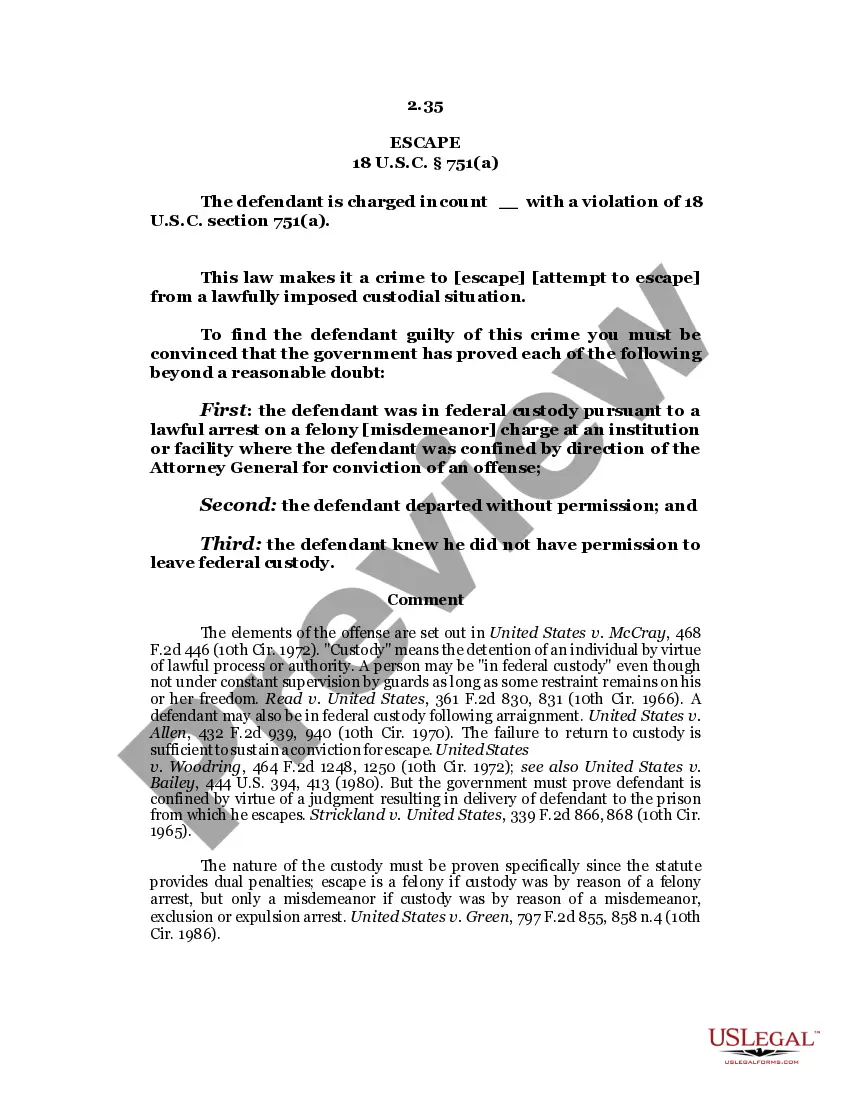
For example, 18 U.S. code section 751 stipulates that it is unlawful to escape, or to attempt to escape, from the custody of the Attorney General; an authorized representative of the Attorney General; or from any institution that the defendant was ordered by the Attorney General to be confined in.
Ohio imposes mandatory prison terms for a number of felonies, including aggravated murder, murder, assault on police officers, assault on a pregnant woman, repeat violent offenders, certain sex offenses, major drug offenses, felony domestic violence, brandishing a firearm, and many others.
18 U.S.C. § 752(a), together with 18 U.S.C. § 3571, set forth a penalty of up to five years imprisonment and/or a fine under Title 18, for a person who instigates, aids or assists the escape or attempt to escape; and. 18 U.S.C.
A felony of the 2nd degree in Ohio must be sentenced to probation or 2, 3, 4, 5, 6, 7, or 8 years in prison and a fine of up to $15,000. There is a presumption in favor of prison for a felony of the 1st degree. What factors are Judges required to consider in felony sentencing?
Escape from Lawful Custody occurs when a person escapes from the custody of a peace officer after they have been arrested or detained. This offense is typically charged during an arrest or for a person in a halfway house failing to return from their work release program.
Generally, a first-time misdemeanor charge will not result in a jail sentence. However, in the case of more serious misdemeanors, jail time may be on the table. Additionally, some first-degree misdemeanors carry mandatory minimum sentences.
Section 2921.35 Aiding escape or resistance to lawful authority. (A) No person, with purpose to promote or facilitate an escape or resistance to lawful authority, shall convey into a detention facility, or provide anyone confined therein with any instrument or thing which may be used for such purposes.