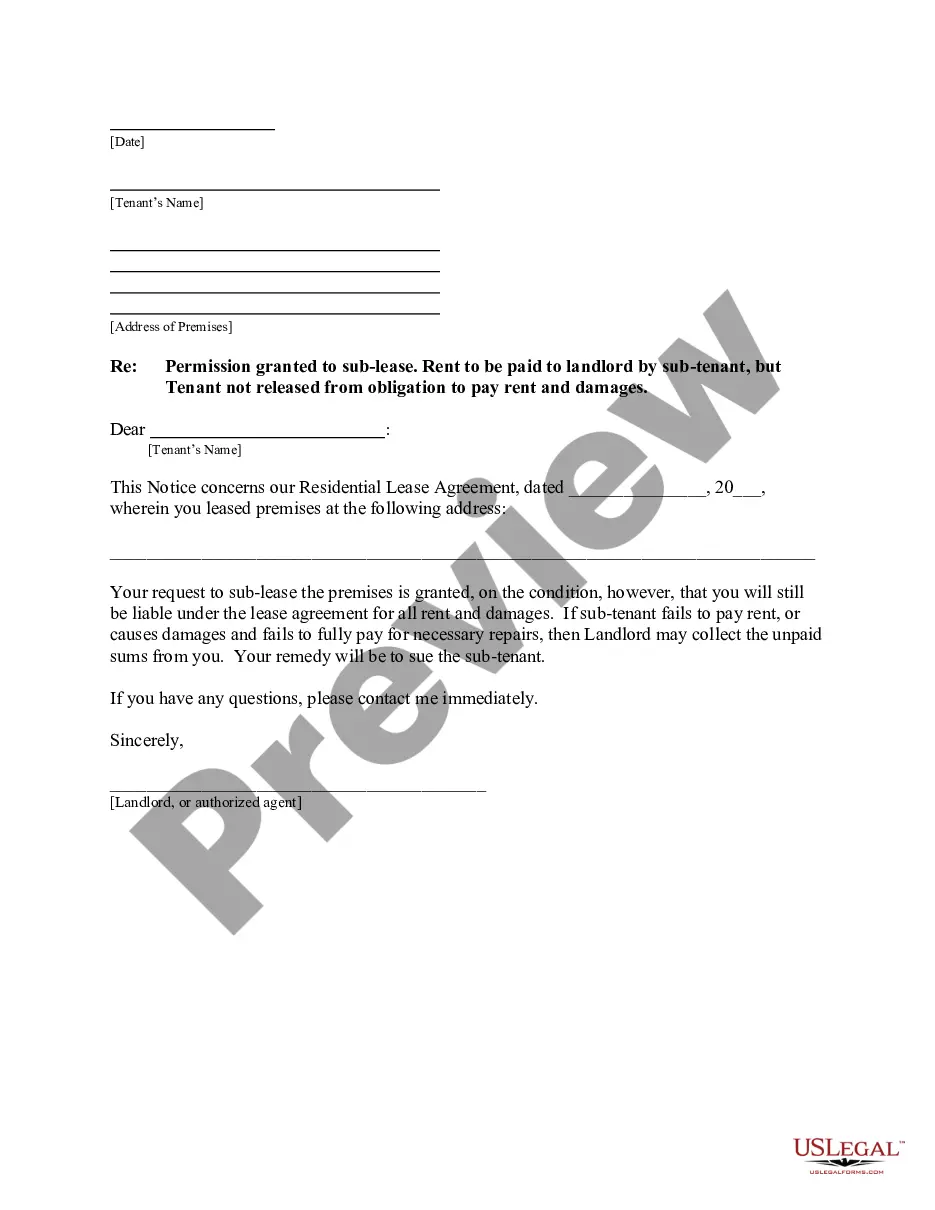
Computer Fraud: Trafficking in Passwords
Overview of this form
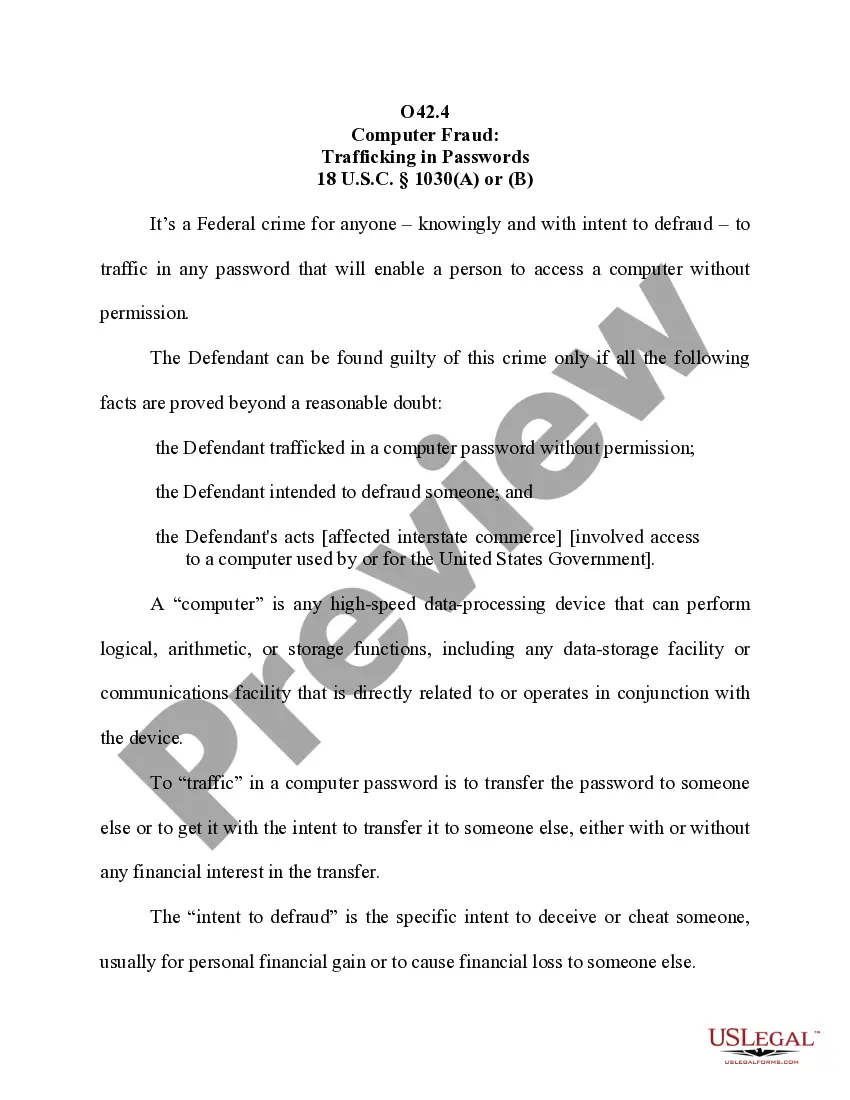
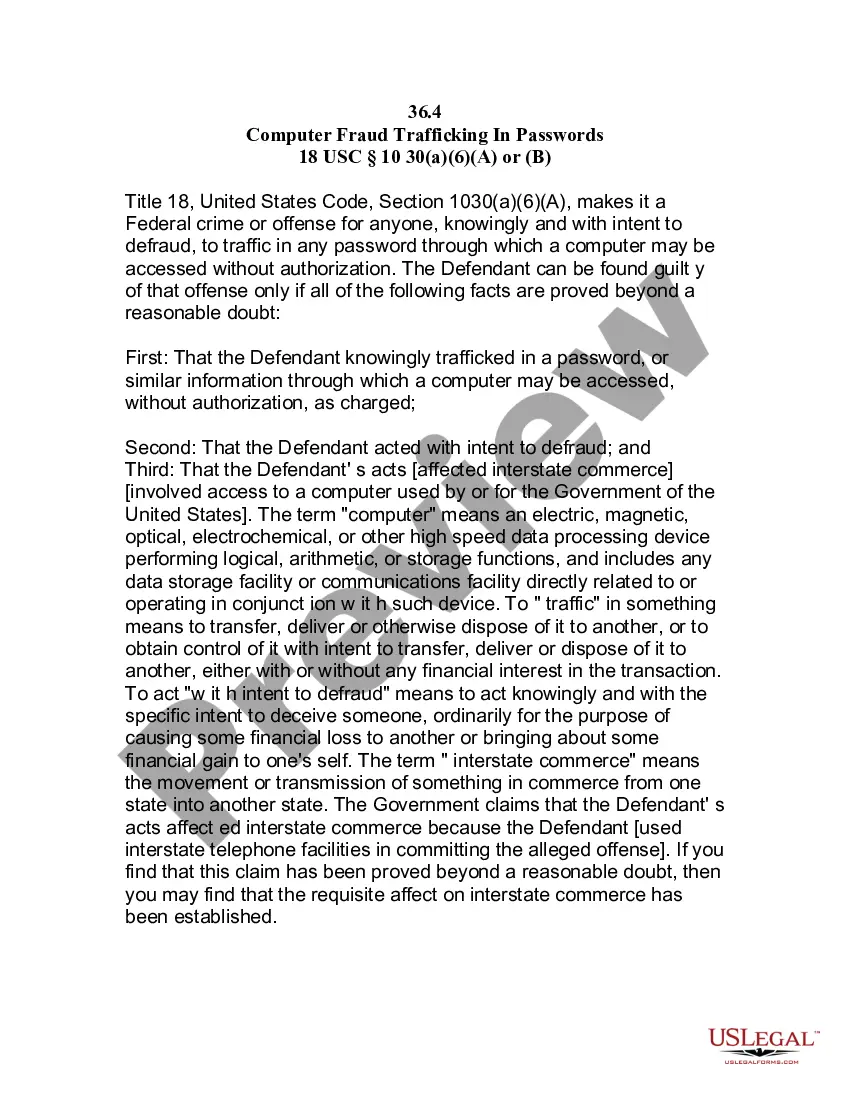
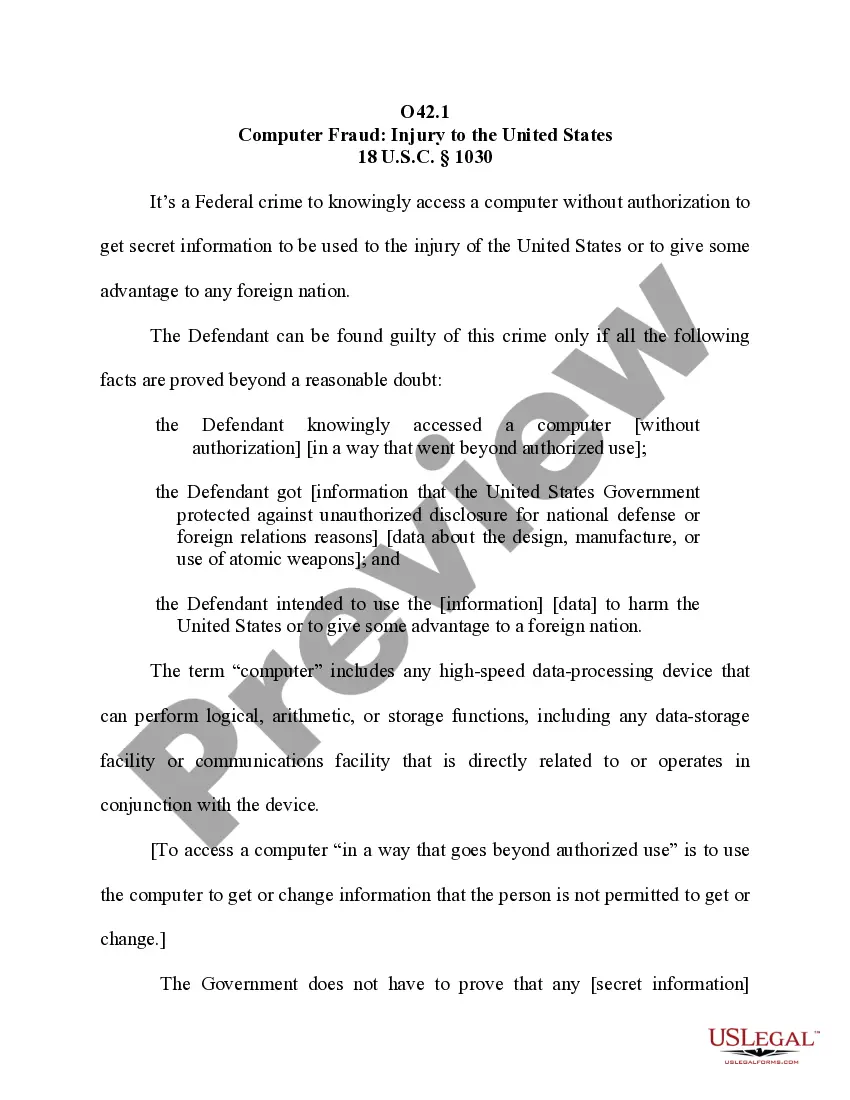
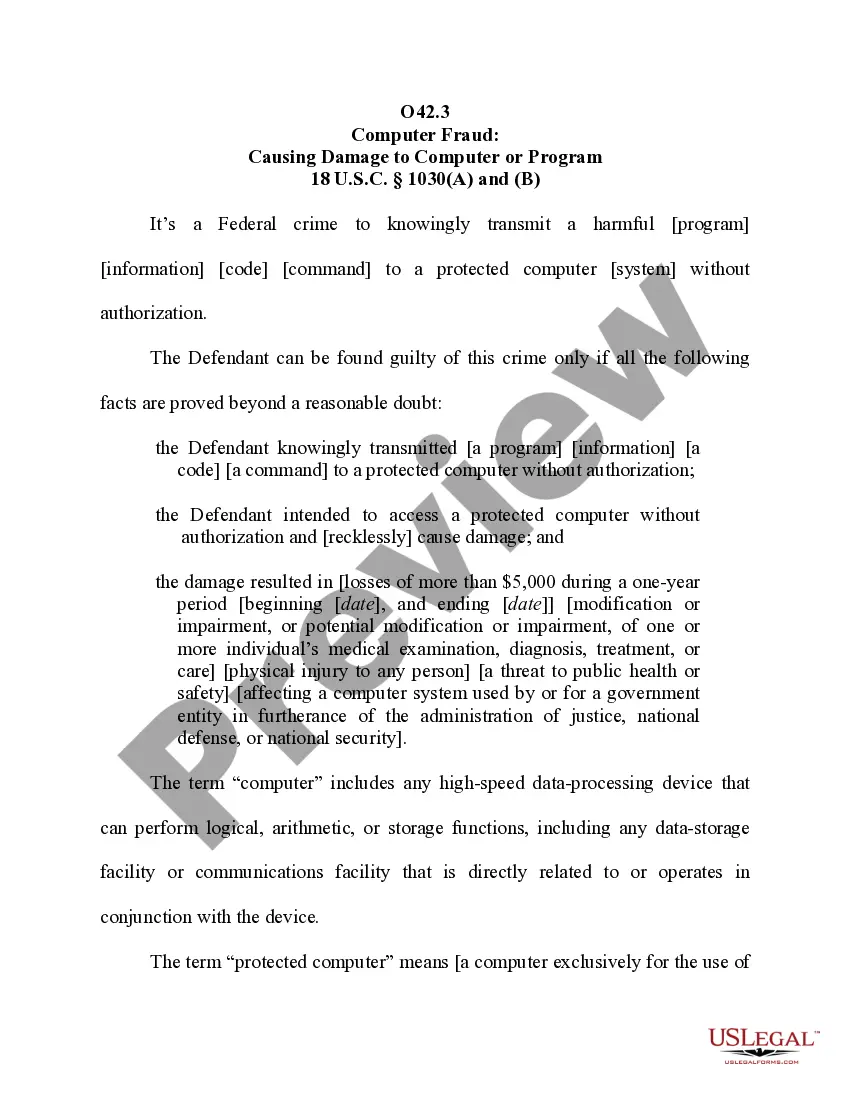
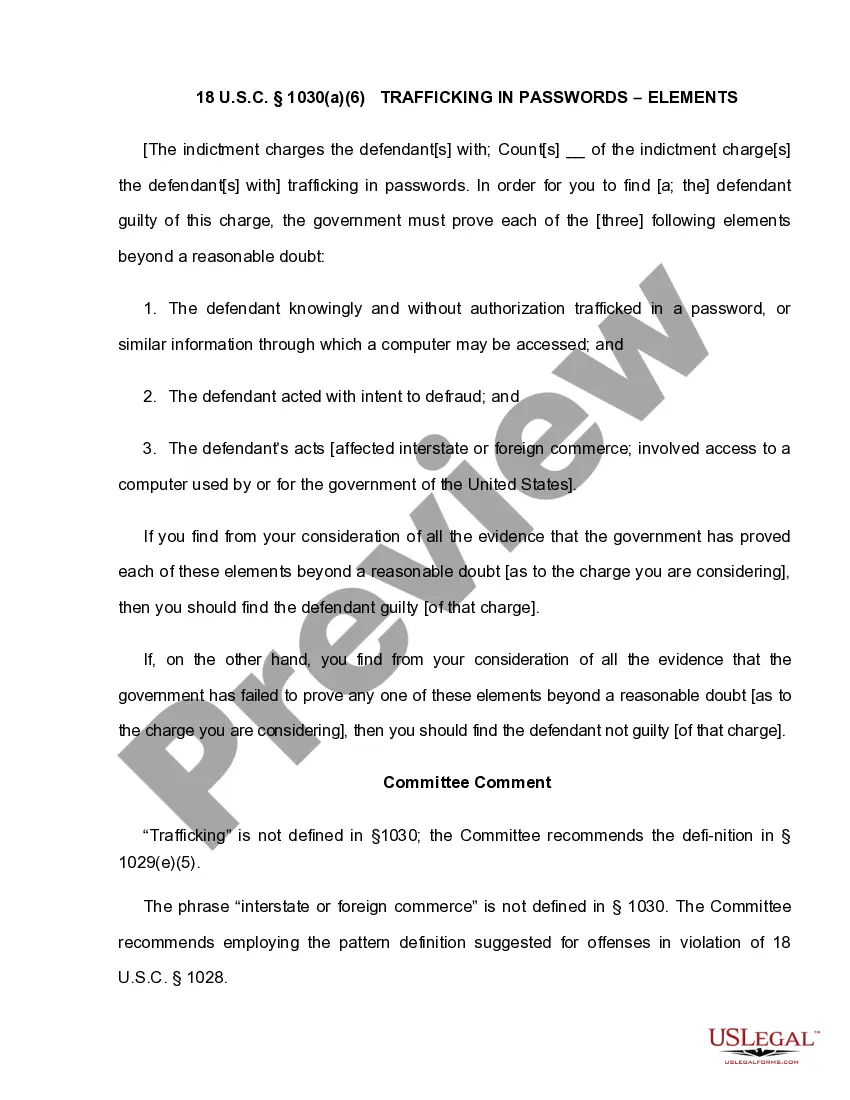
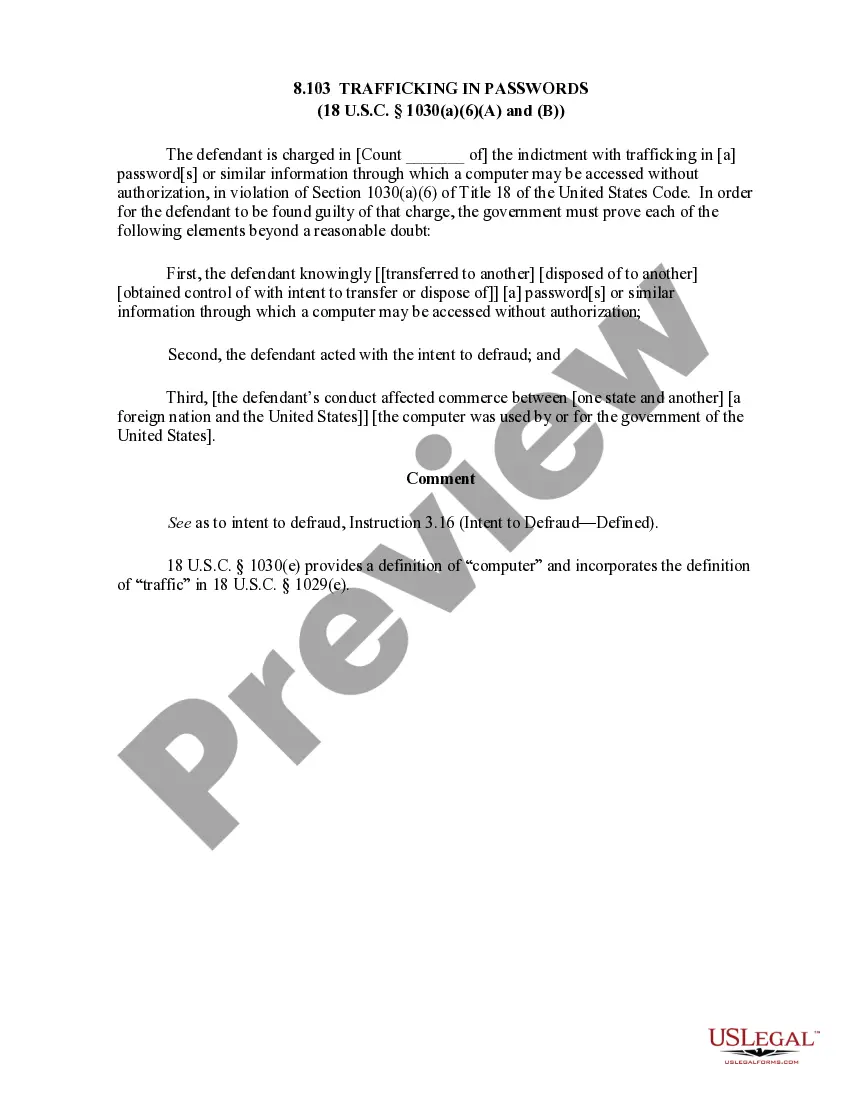
The Computer Fraud: Trafficking in Passwords form is a legal document based on the pattern jury instructions from the 11th Circuit Federal Court of Appeals. This form serves to clarify the elements required to prove computer fraud related to unauthorized password trafficking. It outlines that it is a federal crime to knowingly and intentionally traffic in computer passwords without permission, emphasizing the legal implications of such actions.
What’s included in this form
- Definition of trafficking: Transfer of a computer password without permission.
- Proof of intent: Requirement to demonstrate intention to defraud.
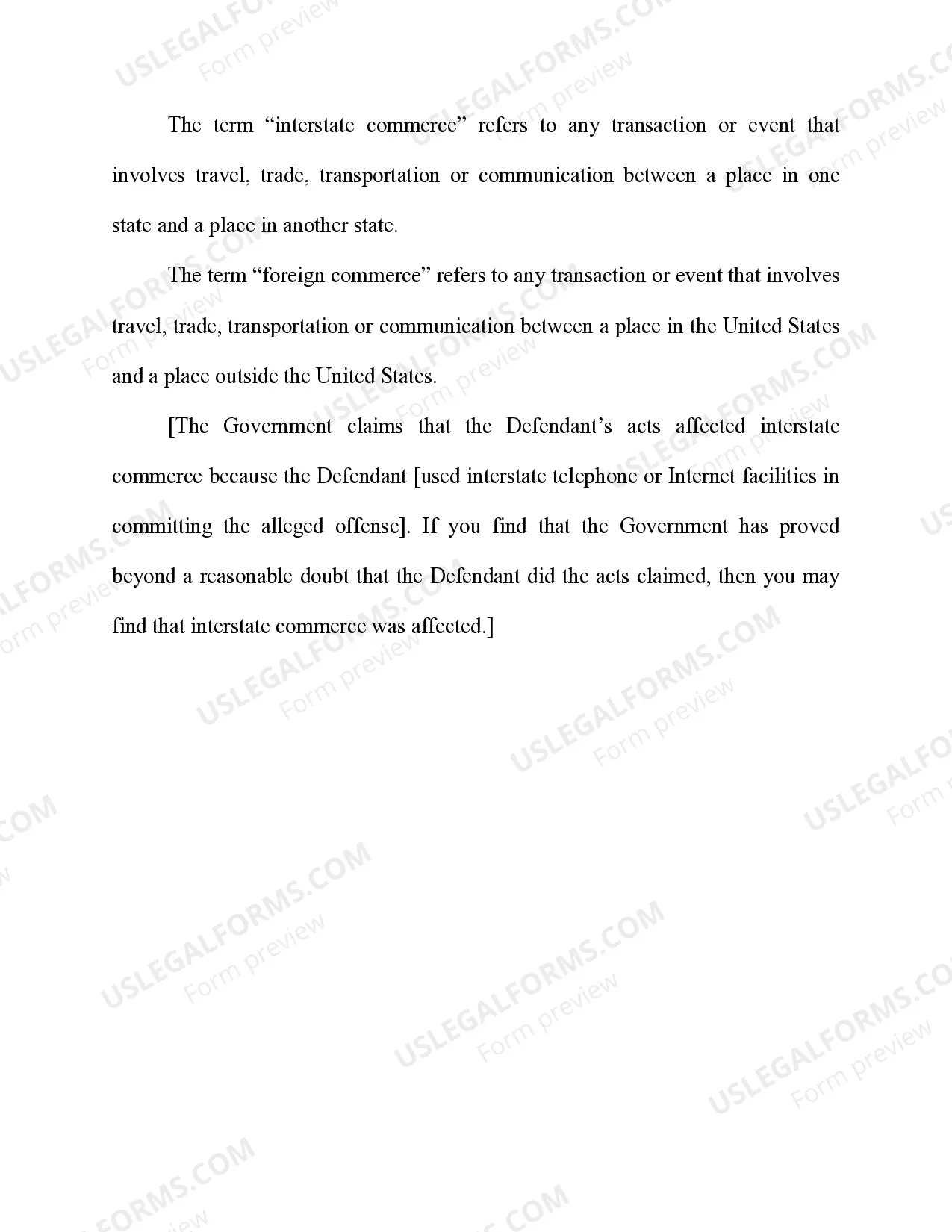
- Interstate commerce impact: Conditions under which interstate commerce is affected by the defendant's actions.
- Legal definitions: Clear explanation of terms like 'computer', 'traffic', 'interstate commerce', and 'foreign commerce'.
Situations where this form applies
This form should be used in cases involving allegations of computer fraud specifically related to the unauthorized trafficking of passwords. It can be applied in criminal prosecutions where a defendant is accused of knowingly transferring computer access credentials for fraudulent purposes.
Who needs this form
- Prosecutors handling computer fraud cases.
- Defense attorneys representing clients accused of password trafficking.
- Judges overseeing related criminal proceedings.
- Legal scholars studying computer fraud law.
How to complete this form
- Identify the defendant: Clearly state the name of the individual accused of trafficking in passwords.
- Detail the alleged actions: Describe the specific acts the defendant committed regarding password trafficking.
- Establish intent: Provide evidence or context to demonstrate the defendant's intent to defraud.
- Explain interstate commerce: Include information on how the defendant's actions affected interstate or foreign commerce, when applicable.
Does this form need to be notarized?
This form does not typically require notarization unless specified by local law. Ensure compliance with any local regulations when submitting to ensure it meets all necessary legal standards.
Get your form ready online
Our built-in tools help you complete, sign, share, and store your documents in one place.
Make edits, fill in missing information, and update formatting in US Legal Forms—just like you would in MS Word.
Download a copy, print it, send it by email, or mail it via USPS—whatever works best for your next step.
Sign and collect signatures with our SignNow integration. Send to multiple recipients, set reminders, and more. Go Premium to unlock E-Sign.
If this form requires notarization, complete it online through a secure video call—no need to meet a notary in person or wait for an appointment.
We protect your documents and personal data by following strict security and privacy standards.

Make edits, fill in missing information, and update formatting in US Legal Forms—just like you would in MS Word.

Download a copy, print it, send it by email, or mail it via USPS—whatever works best for your next step.

Sign and collect signatures with our SignNow integration. Send to multiple recipients, set reminders, and more. Go Premium to unlock E-Sign.

If this form requires notarization, complete it online through a secure video call—no need to meet a notary in person or wait for an appointment.

We protect your documents and personal data by following strict security and privacy standards.
Typical mistakes to avoid
- Failing to provide adequate proof of intent to defraud.
- Not clearly defining the actions taken regarding password trafficking.
- Overlooking the importance of establishing the impact on interstate commerce.
Why use this form online
- Convenient access: Download the form anytime from any device.
- Editability: Customize the form to fit specific case details easily.
- Reliability: Forms are drafted by licensed attorneys and in compliance with legal standards.
Legal use & context
- This form is enforceable in federal court as it adheres to U.S. Code Title 18, Section 1030.
- Violations can result in severe penalties, including imprisonment and fines.
- Understanding its use is crucial for legal professionals working in cybercrime law.
Quick recap
- The form addresses federal offenses associated with the illegal trafficking of computer passwords.
- It outlines essential elements for proving guilt, including intent and impact on commerce.
- Proper completion is vital for legal proceedings concerning computer fraud.
Looking for another form?
Form popularity
FAQ
Federal sentencing guidelines recommend a prison sentence of up to 20 years for those convicted of cyber crime offenses. If the offense results in the death of another person, then a defendant convicted of the crime could be sentenced to life in prison. This is irrespective of the type of cyber crime.
Some examples of this include the employee using the company's internet for their personal use, or the user using the company's computer to work on another business that the user has outside of his normal job. In these examples, work hours are being used for personal tasks.
Password trafficking refers to the act of sharing, selling or buying stolen passwords. Criminals can then use these illegally obtained passwords to gain access to the victim's bank account or his personal records.
The CFAA prohibits intentionally accessing a computer without authorization or in excess of authorization, but fails to define what ?without authorization? means. With harsh penalty schemes and malleable provisions, it has become a tool ripe for abuse and use against nearly every aspect of computer activity.
Types of computer fraud include: Distributing hoax emails. Accessing unauthorized computers. Engaging in data mining via spyware and malware. Hacking into computer systems to illegally access personal information, such as credit cards or Social Security numbers.
Cyber-bullying, hacking, identity theft, and even using a work PC for personal business are all examples of computer abuse. While not always enforced, acts that constitute computer abuse was codified in the 1984 Computer Fraud and Abuse Act (CFAA) which is enforceable at the federal level.
The Computer Fraud and Abuse Act (CFAA) was enacted in 1986, as an amendment to the first federal computer fraud law, to address hacking....Provisions of the Computer Fraud & Abuse Act. 18 U.S.C. § 1030. OffenseSectionSentenceTrafficking in Passwords(a)(6)1 yr (10)9 more rows
The Computer Fraud and Abuse Act of 1986 makes it a crime for anyone to access without authorization a computer or computer system used by a financial institution, US government agency, or any organization or individual involved in interstate or foreign commerce or communication.