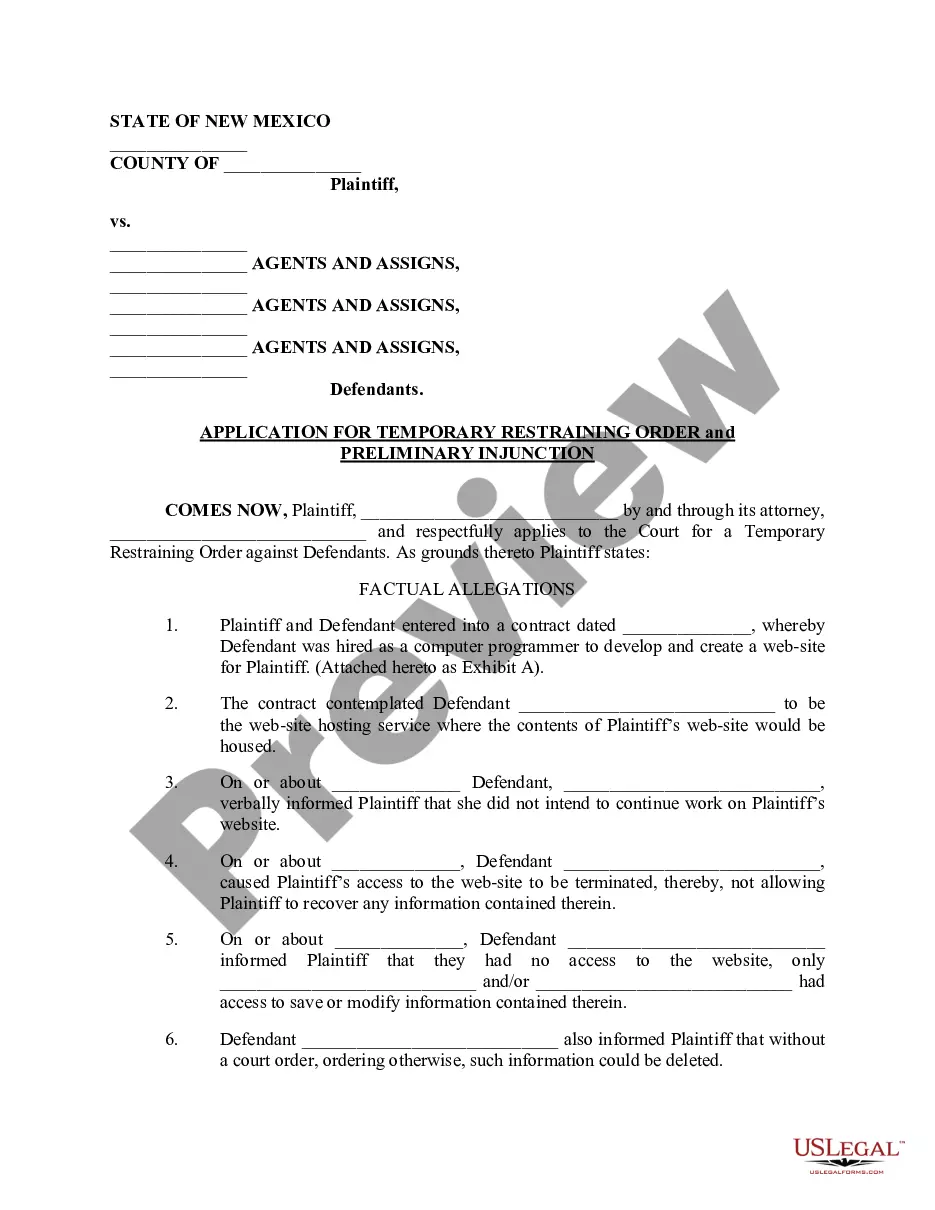
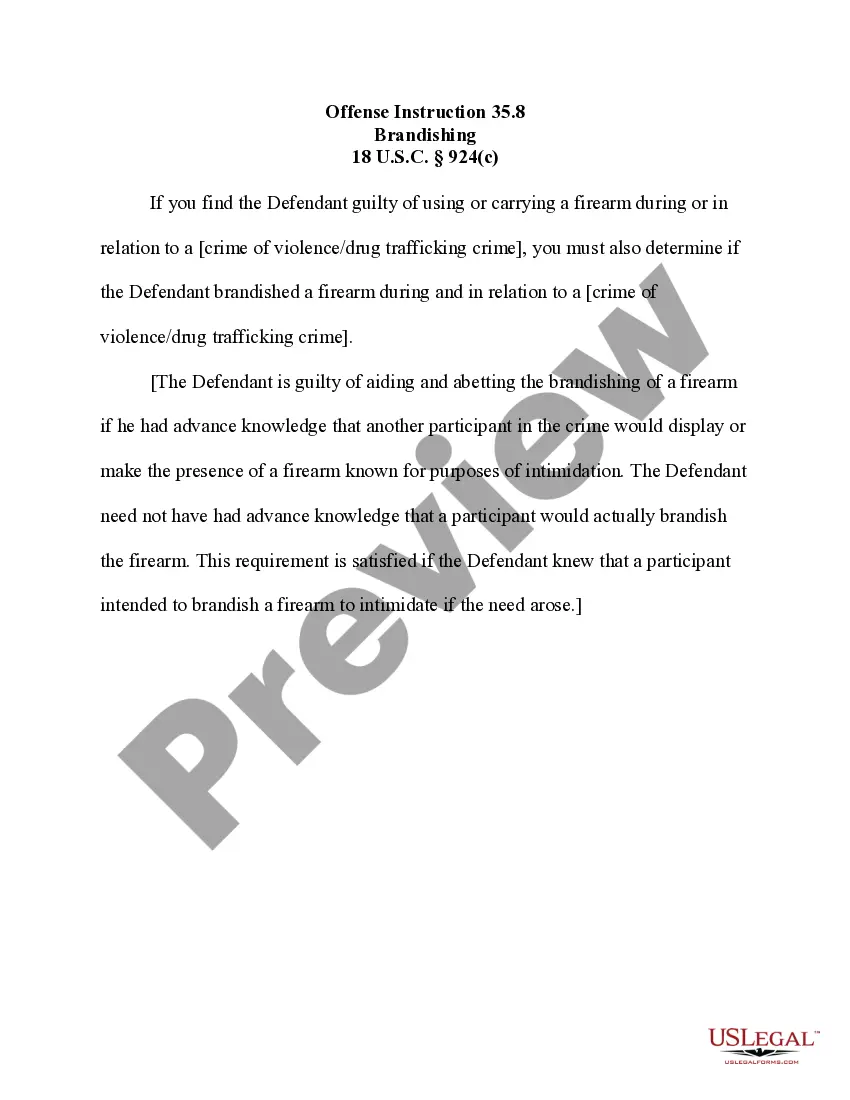
Offense Instruction 35.8 Brandishing
What is this form?
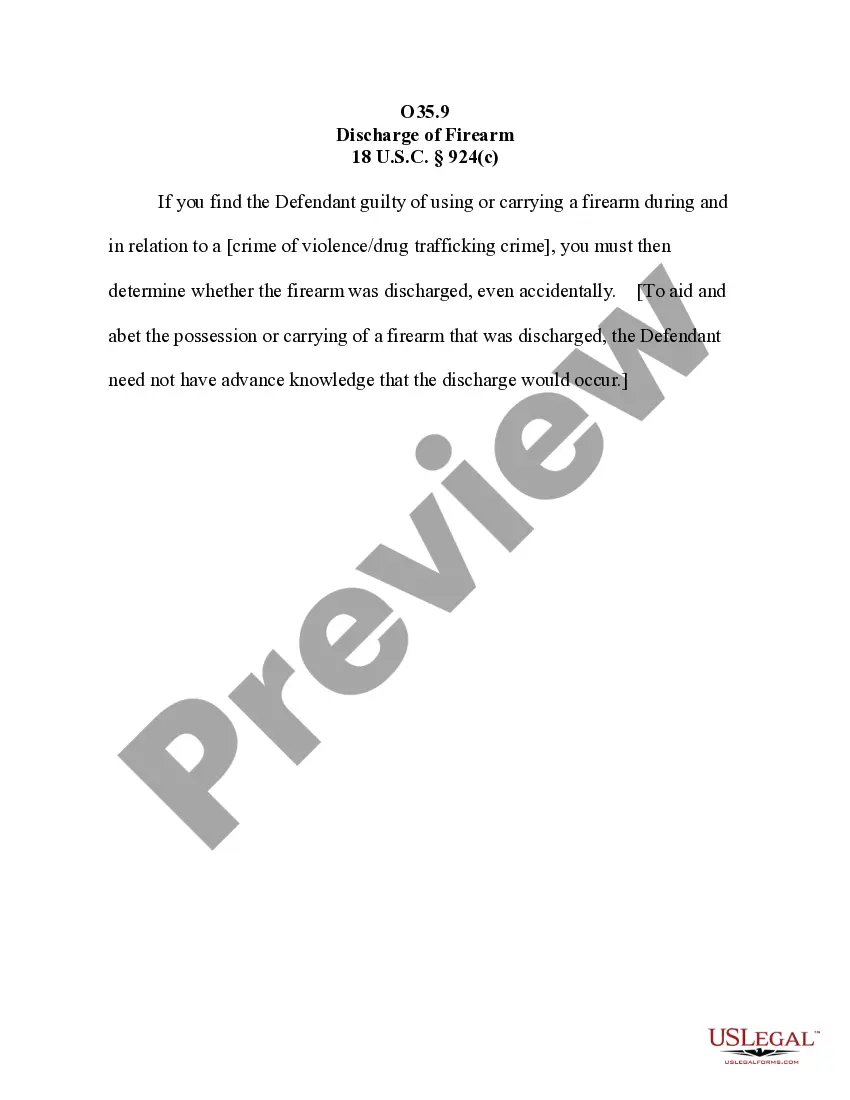
The Offense Instruction 35.8, also known as the Brandishing instruction, is a template from the Pattern Jury Instructions of the 11th Circuit Federal Court of Appeals. This legal form provides guidance for juries regarding the crime of brandishing a firearm in connection with another crime, such as a drug trafficking crime. It is essential for properly understanding the legal implications of firearm usage in relation to other offenses. This form is specifically designed to clarify the conditions under which a defendant may be found guilty of brandishing a firearm during a crime.
Key parts of this document
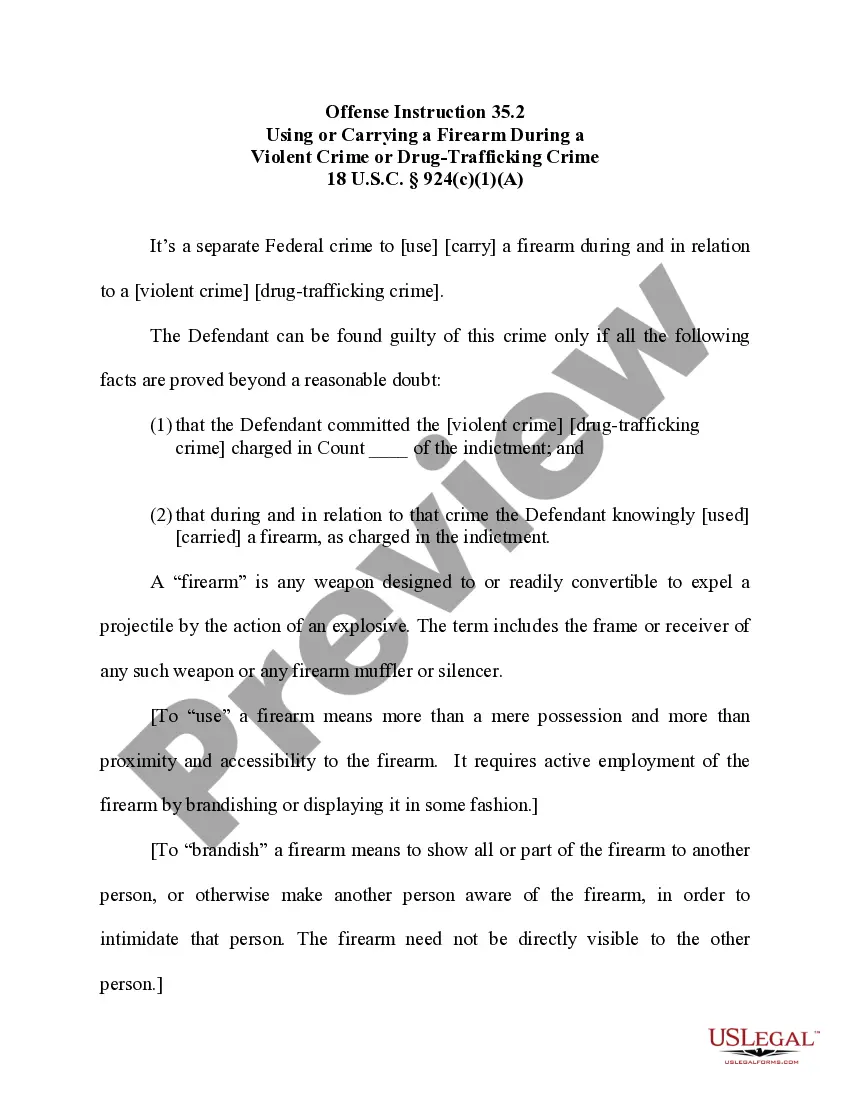
- Definition of brandishing and its connection to firearm use.
- Clarification of what constitutes "advance knowledge" regarding another participant's use of a firearm.
- Requirements for finding a defendant guilty of aiding and abetting brandishing.
- Contextual application of brandishing in relation to violent or drug trafficking crimes.
When to use this document
This form is utilized during criminal trials when the prosecution needs to prove that a defendant brandished a firearm while committing a crime such as drug trafficking or a violent crime. It is relevant in cases where the jury must determine the presence and intimidation effects of a firearm during the commission of an offense.
Who needs this form
- Legal professionals, including lawyers and judges involved in criminal trials.
- Jurors who are tasked with evaluating cases involving firearm brandishing.
- Defendants and their legal representatives who need to understand the implications of such charges.
How to prepare this document
- Review the definition of brandishing as it applies legally.
- Evaluate the evidence to determine if the defendant had advance knowledge of a firearm being brandished.
- Assess the relationship between the brandishing event and the primary crime.
- Deliberate on the circumstances surrounding the intent and intimidation of brandishing.
- Conclude with a clear verdict based on the instructions provided in the form.
Does this form need to be notarized?
In most cases, this form does not require notarization. However, some jurisdictions or signing circumstances might. US Legal Forms offers online notarization powered by Notarize, accessible 24/7 for a quick, remote process.
Get your form ready online
Our built-in tools help you complete, sign, share, and store your documents in one place.
Make edits, fill in missing information, and update formatting in US Legal Forms—just like you would in MS Word.
Download a copy, print it, send it by email, or mail it via USPS—whatever works best for your next step.
Sign and collect signatures with our SignNow integration. Send to multiple recipients, set reminders, and more. Go Premium to unlock E-Sign.
If this form requires notarization, complete it online through a secure video call—no need to meet a notary in person or wait for an appointment.
We protect your documents and personal data by following strict security and privacy standards.

Make edits, fill in missing information, and update formatting in US Legal Forms—just like you would in MS Word.

Download a copy, print it, send it by email, or mail it via USPS—whatever works best for your next step.

Sign and collect signatures with our SignNow integration. Send to multiple recipients, set reminders, and more. Go Premium to unlock E-Sign.

If this form requires notarization, complete it online through a secure video call—no need to meet a notary in person or wait for an appointment.

We protect your documents and personal data by following strict security and privacy standards.
Avoid these common issues
- Failing to understand the term "advance knowledge" and its implications.
- Confusing brandishing with simply carrying a firearm.
- Neglecting the context of intimidation regarding the firearm's display.
Benefits of completing this form online
- Convenient access to a clear, legally vetted instruction template.
- Easy download for immediate use in court cases.
- Editable format allowing customization for specific cases as needed.
Legal use & context
- This instruction is legally binding in jurisdictions governed by federal law.
- It serves as a crucial guideline for juries to properly assess firearm-related charges.
- Misinterpretations can lead to legal errors in jury deliberations.
Looking for another form?


Form popularity
FAQ
Ing to 10-20-Life sentencing guidelines, the mandatory minimum sentence for cases of aggravated assault crimes that involve possession of a firearm is 10 years imprisonment.
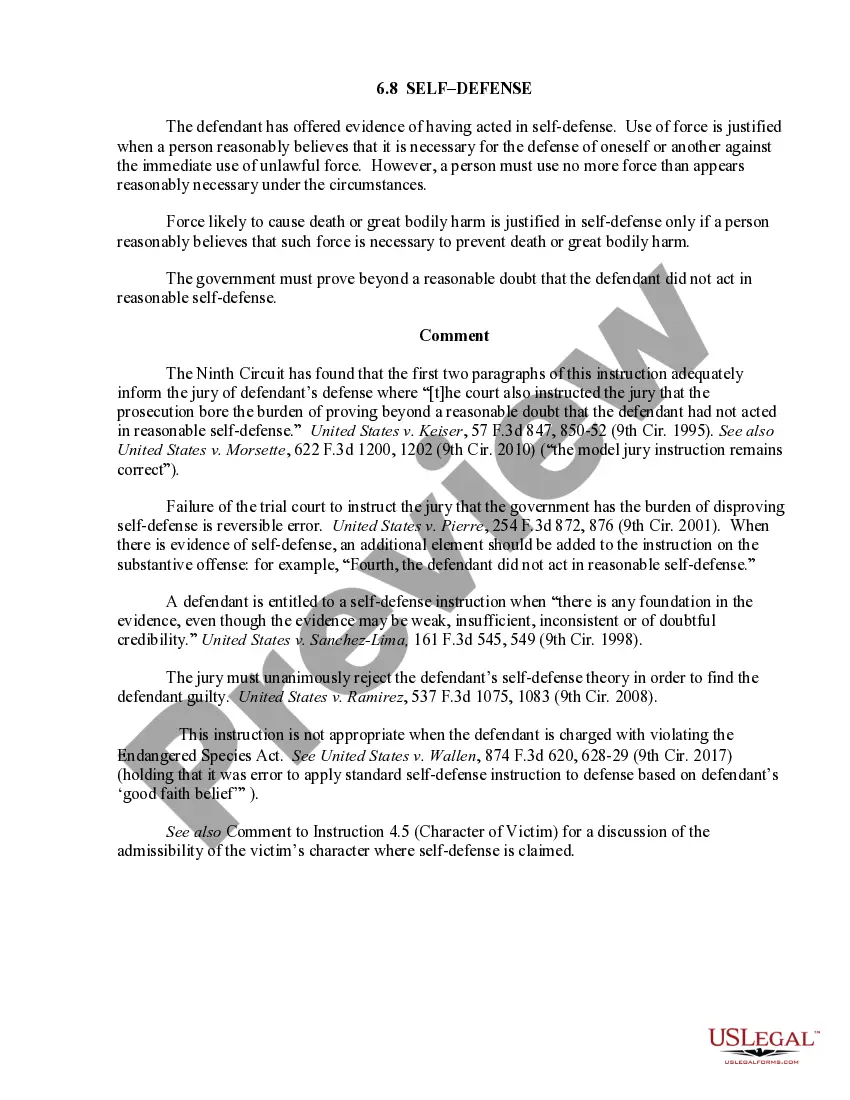
It is a crime to brandish a firearm or deadly weapon in a threatening manner or to use it in a fight, other than in lawful self-defense. Brandishing a firearm can result in serious consequences and criminal charges.
Brandishing a weapon involves exhibiting a weapon in a threatening manner. Assault with a deadly weapon involves an unlawful intent to commit a violent injury upon another person using a deadly weapon.
Brandishing a deadly weapon is a misdemeanor offense that is punishable by a minimum of 30 days and a maximum of six months in jail. If the deadly weapon is a firearm, the defendant faces a three to six month jail sentence.
In most states, ?brandishing? is not a legally defined term. In fact, only five states (Louisiana, Michigan, Mississippi, Virginia and West Virginia) currently have laws on the books that directly reference brandishing.
The offense of brandishing a firearm in public is a misdemeanor under Michigan law that may result in up to 90 days in jail and a fine of up to $100 upon conviction.
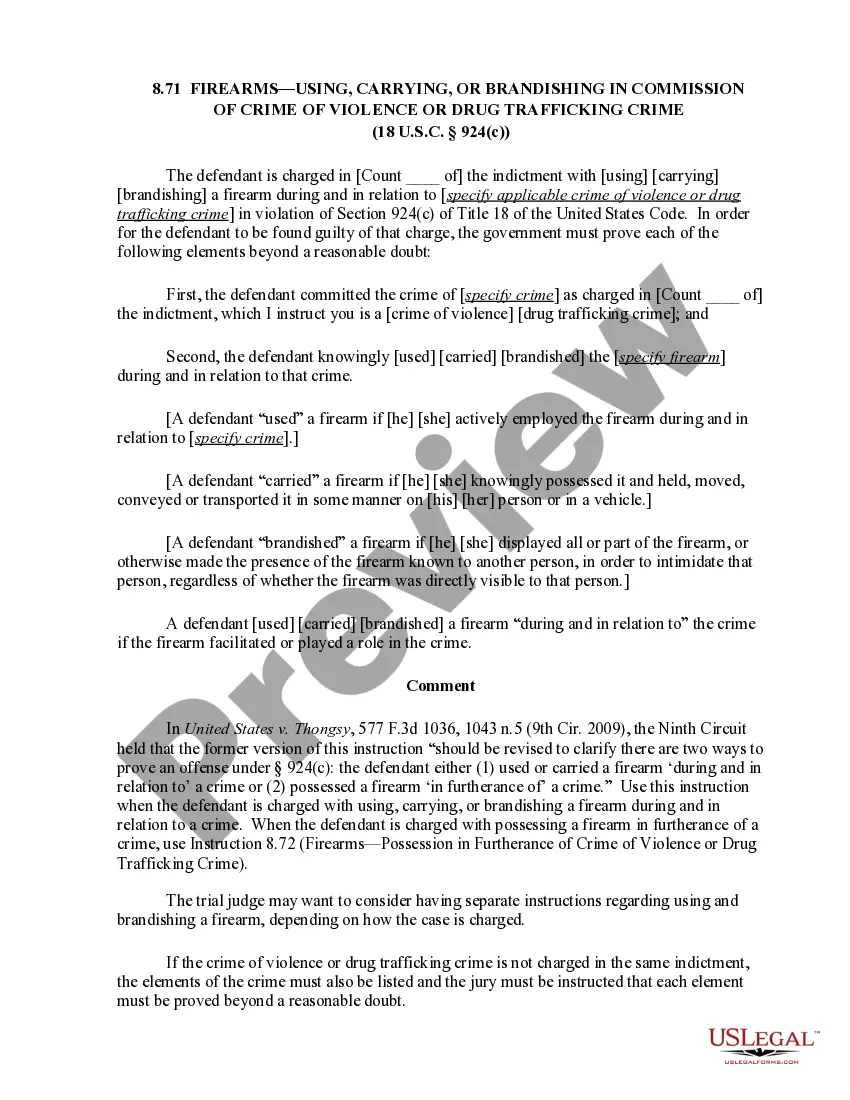
(4) For purposes of this subsection, the term ?brandish? means, with respect to a firearm, to display all or part of the firearm, or otherwise make the presence of the firearm known to another person, in order to intimidate that person, regardless of whether the firearm is directly visible to that person.
She brandished a stick at the dog. I could see that he was brandishing a knife.