Sample Employment Agreement MachOne Communications and Director Offices of the President
What is this form?
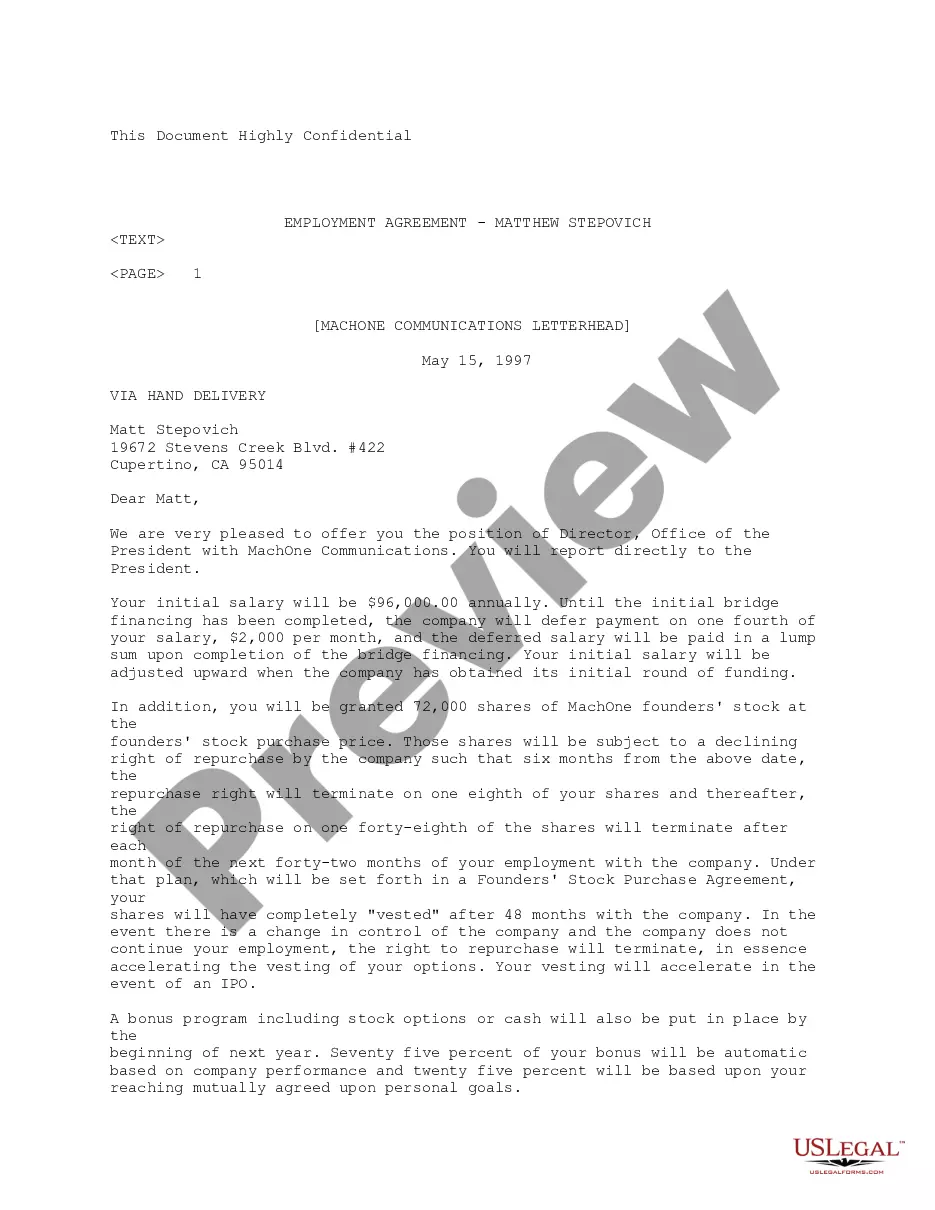
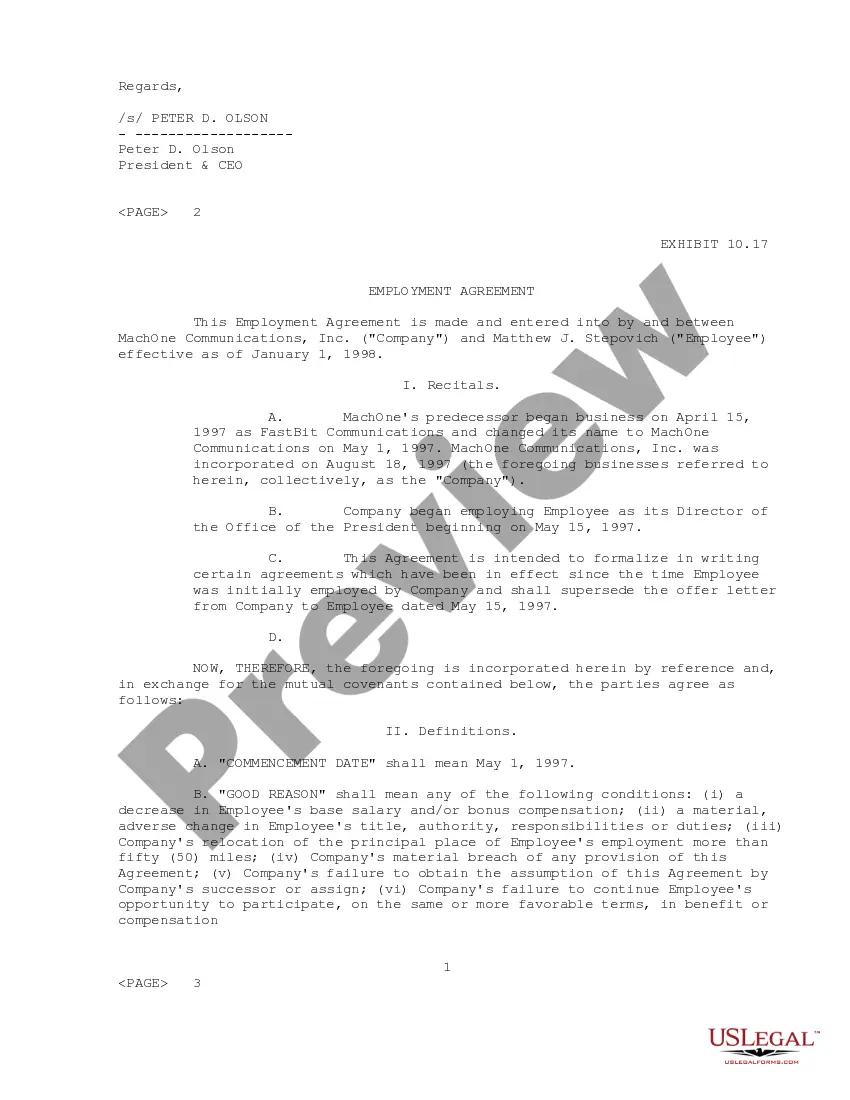
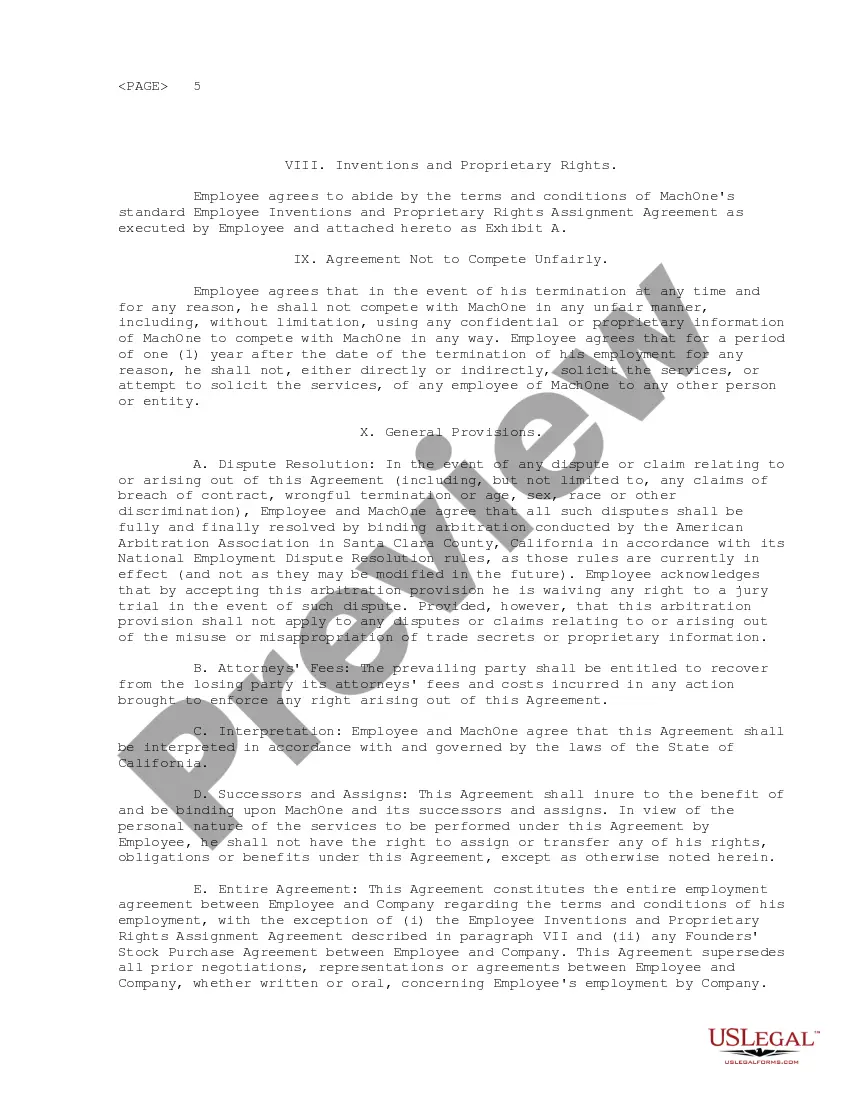
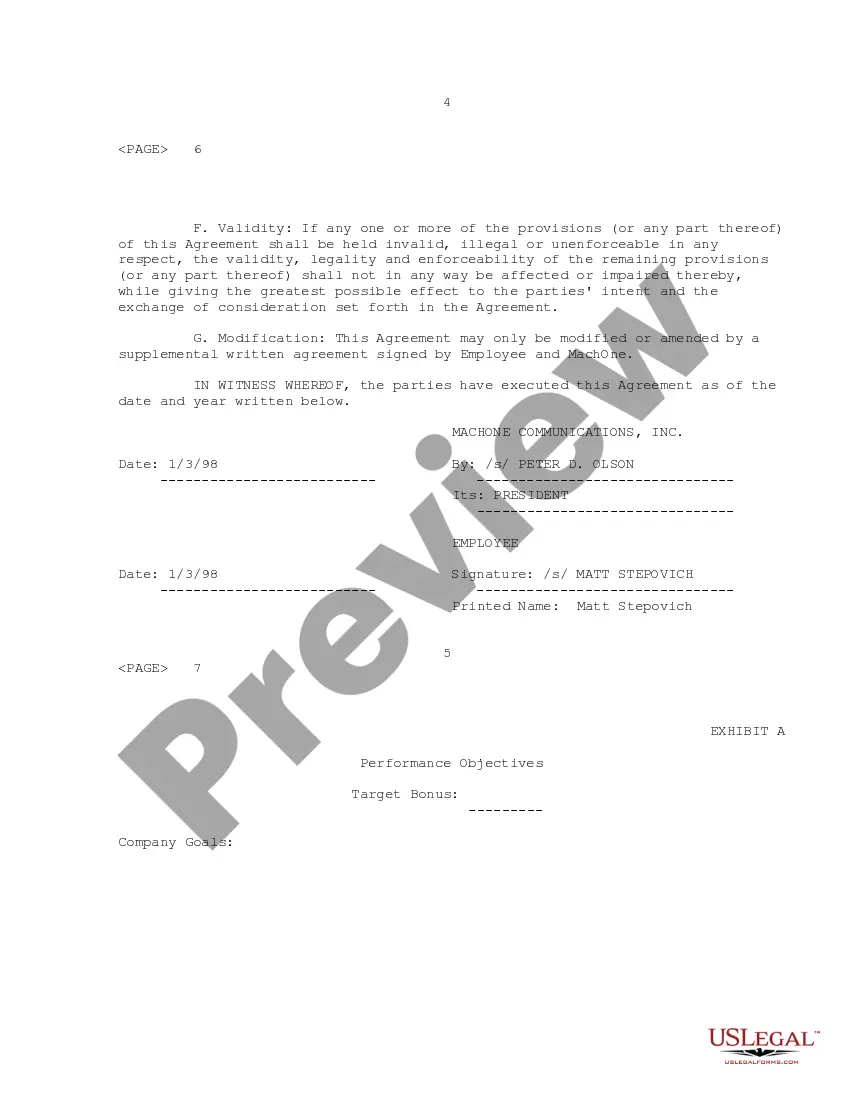
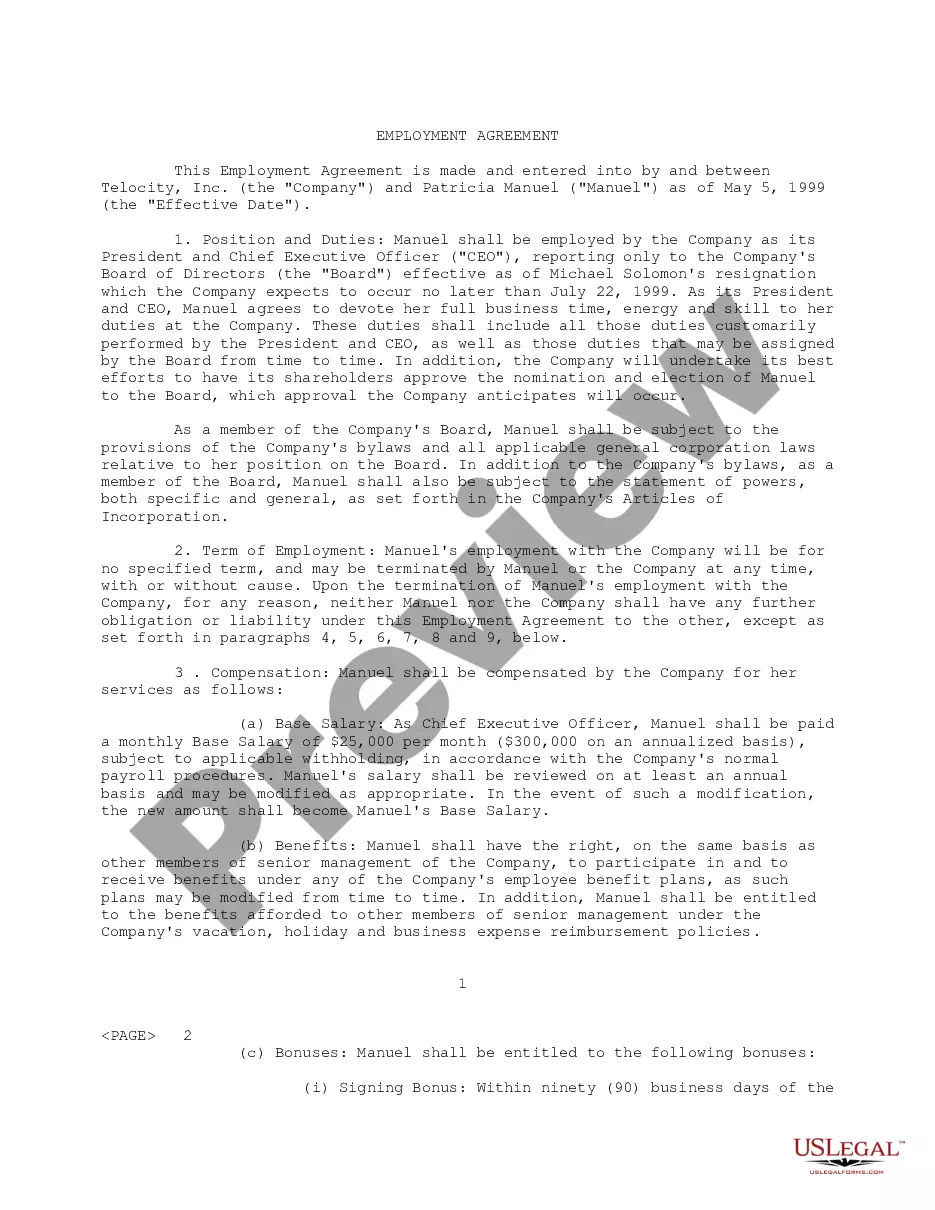
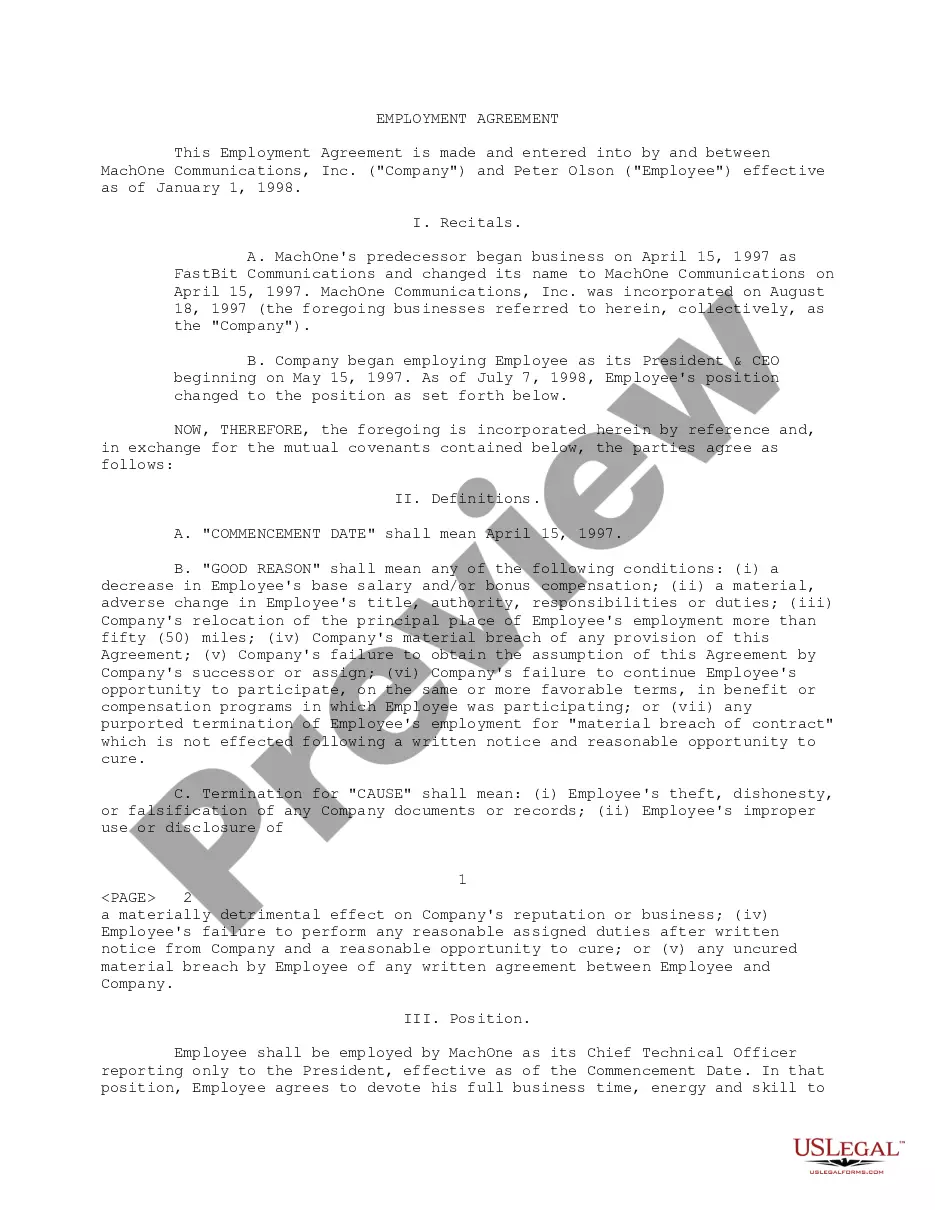
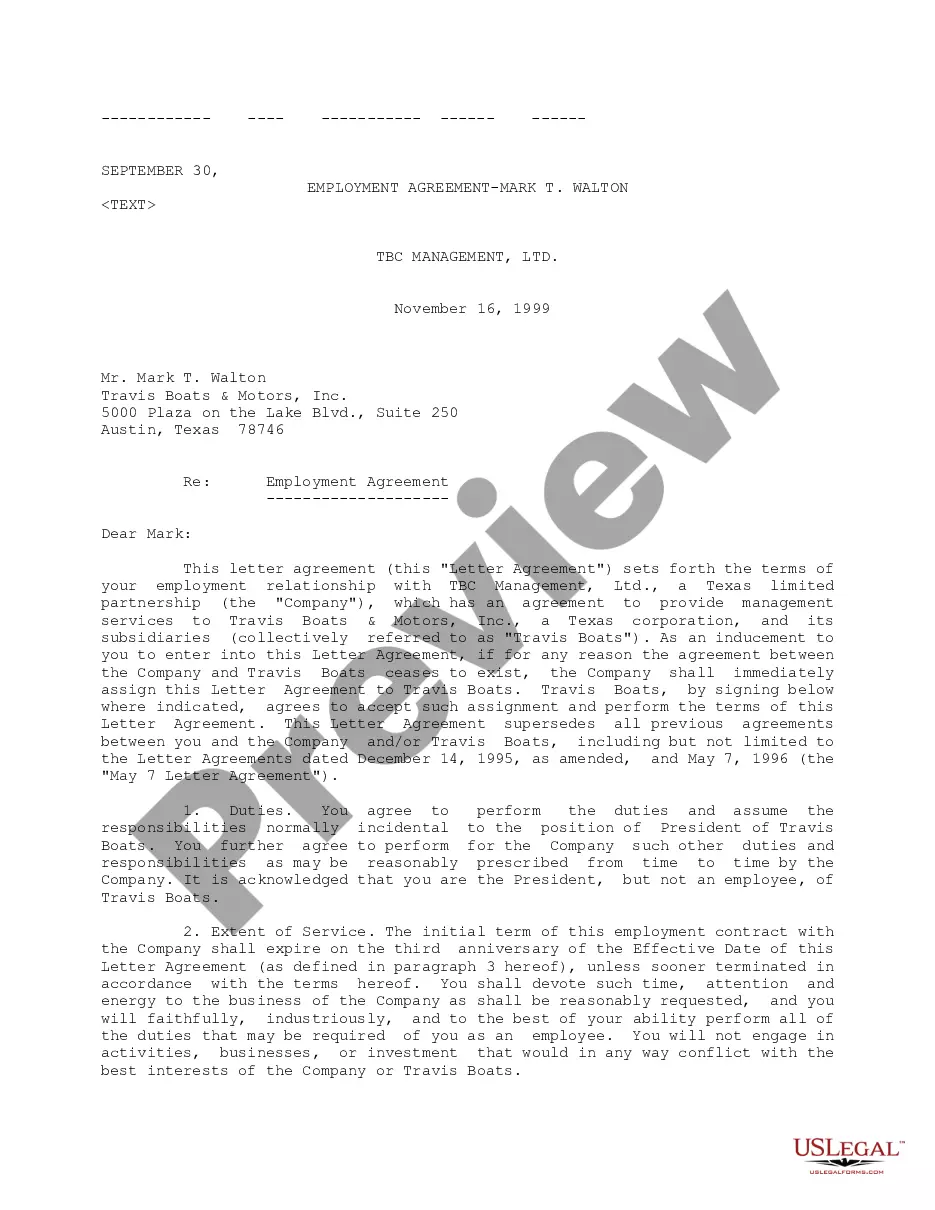
This Sample Employment Agreement serves as a formal contract between MachOne Communications and its employee, Matthew Stepovich, outlining the terms of employment for the position of Director, Offices of the President. This document is designed to clearly establish both parties' responsibilities, compensation, benefits, and conditions for termination, making it essential for both employers and employees to ensure mutual understanding and compliance with employment laws. Unlike generic templates, this agreement is drafted with specific details tailored to the unique situation and agreements made between the parties involved.
Key parts of this document
- Parties Involved: Identifies MachOne Communications as the employer and Matthew Stepovich as the employee.
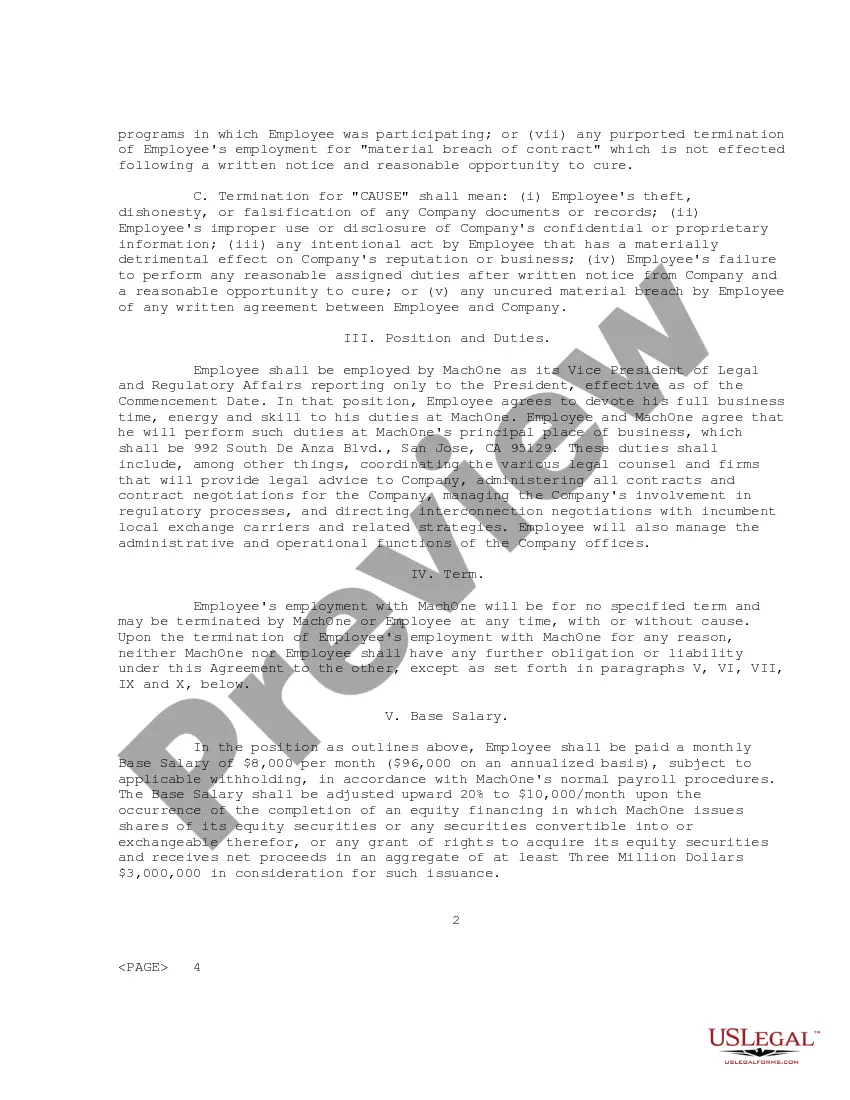
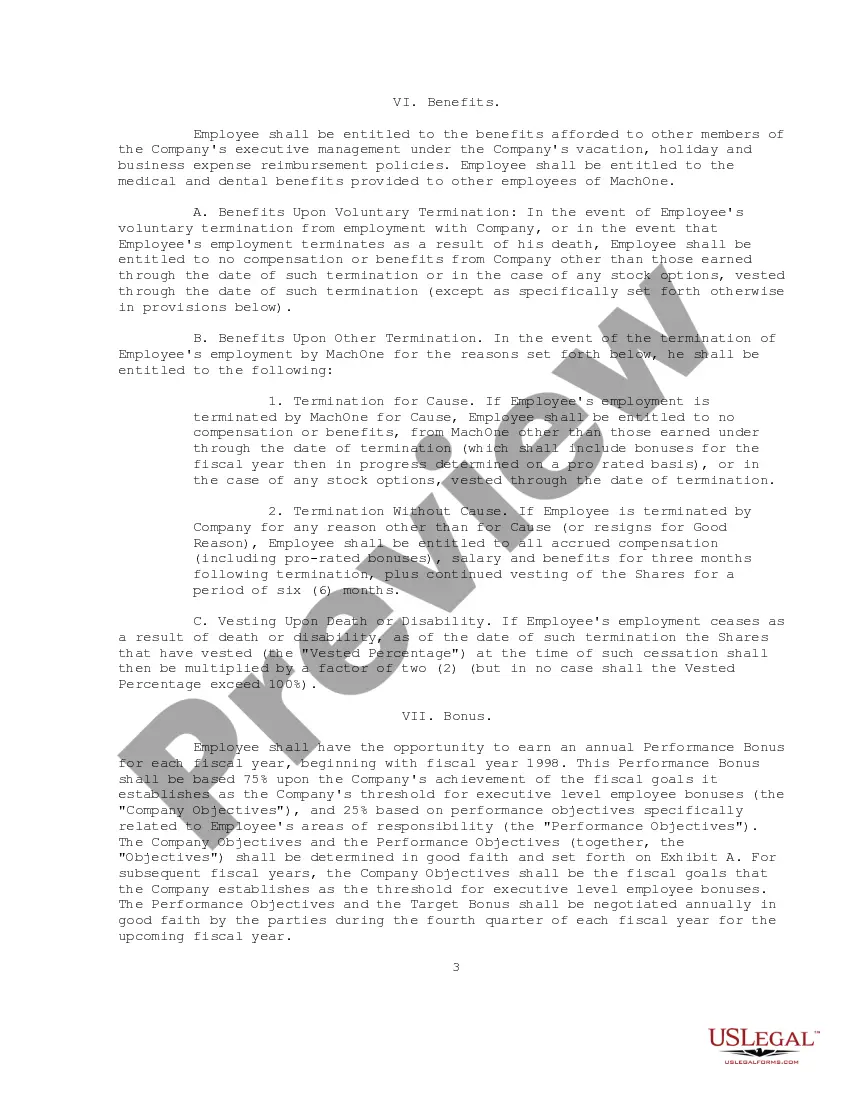
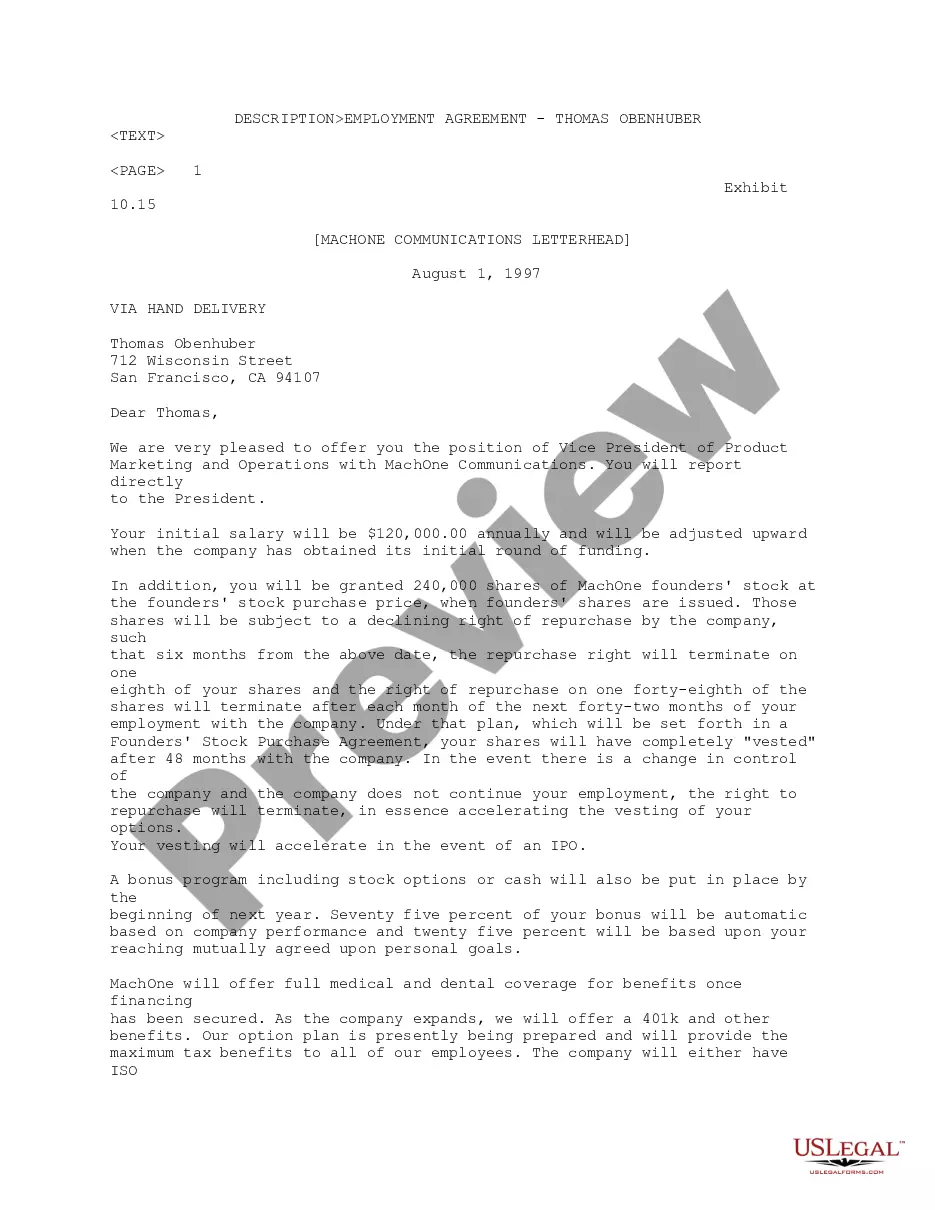
- Compensation: Details the initial salary, bonus structure, and equity shares awarded to the employee.
- Employment Duration: Clarifies that employment is for no specified term and can be terminated by either party.
- Benefits: Specifies medical, dental coverage, and potential retirement benefits.
- Termination Conditions: Outlines various conditions under which the agreement may be terminated, including termination for cause and without cause.
- Dispute Resolution: Provides procedures for resolving disputes, including arbitration requirements.
Common use cases
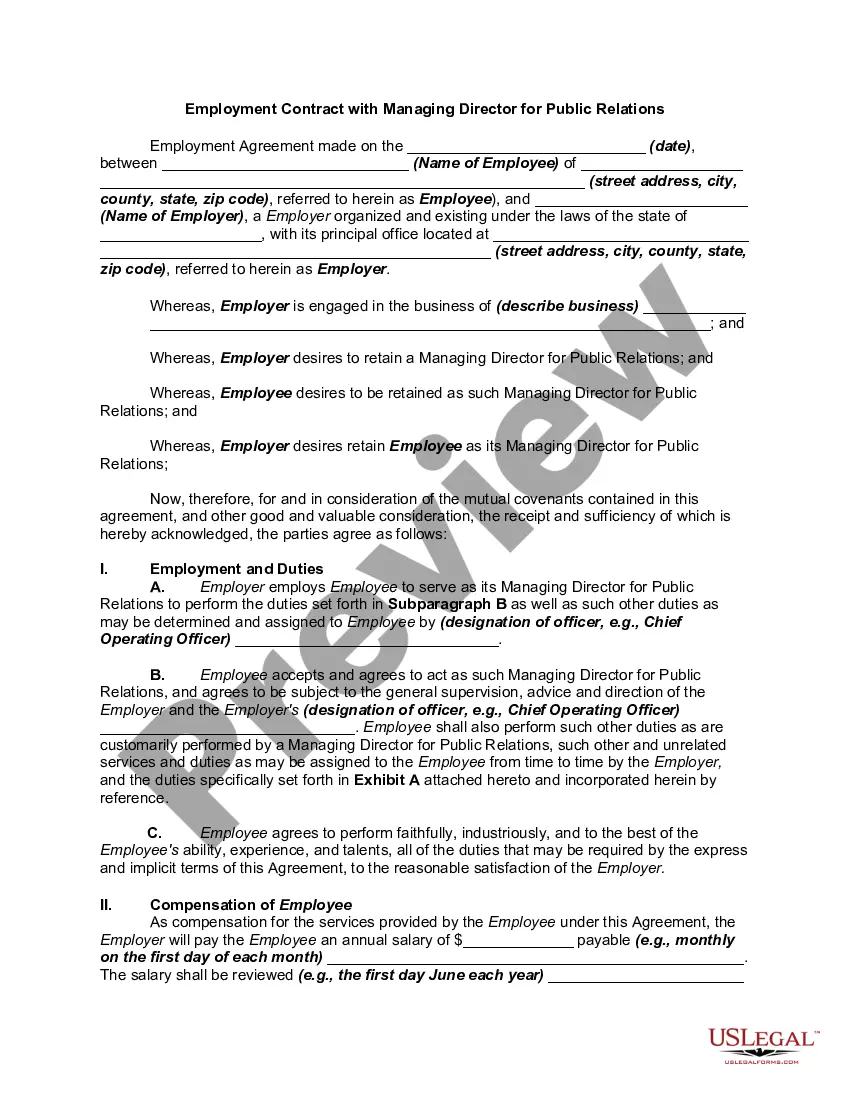
This form should be used when hiring an employee for a director-level position, particularly within a corporate environment where clear terms of employment, including compensation and benefits, must be established. It is ideal for organizations seeking to formalize the employment relationship with high-level executives, ensuring all parties have a transparent understanding of their rights and obligations.
Who can use this document
This Sample Employment Agreement is suitable for:
- Employers hiring executive-level employees to ensure a formalized employment relationship.
- Directors and senior management professionals who require an understanding of their employment terms.
- Legal departments and HR professionals looking to standardize employment agreements across the organization.
How to prepare this document
To complete this Sample Employment Agreement:
- Identify and include the correct names of the employer and the employee.
- Specify the position title, department, and reporting structure.
- Outline the salary, bonuses, and conditions for salary adjustments.
- Clearly define the benefits package, including health coverage and retirement plans.
- Detail the conditions and process for termination of employment.
- Both parties should review, sign, and date the agreement to ensure mutual consent.
Notarization requirements for this form
This form does not typically require notarization unless specified by local law. However, parties may choose to have the agreement notarized for added legal security.
Get your form ready online
Our built-in tools help you complete, sign, share, and store your documents in one place.
Make edits, fill in missing information, and update formatting in US Legal Forms—just like you would in MS Word.
Download a copy, print it, send it by email, or mail it via USPS—whatever works best for your next step.
Sign and collect signatures with our SignNow integration. Send to multiple recipients, set reminders, and more. Go Premium to unlock E-Sign.
If this form requires notarization, complete it online through a secure video call—no need to meet a notary in person or wait for an appointment.
We protect your documents and personal data by following strict security and privacy standards.

Make edits, fill in missing information, and update formatting in US Legal Forms—just like you would in MS Word.

Download a copy, print it, send it by email, or mail it via USPS—whatever works best for your next step.

Sign and collect signatures with our SignNow integration. Send to multiple recipients, set reminders, and more. Go Premium to unlock E-Sign.

If this form requires notarization, complete it online through a secure video call—no need to meet a notary in person or wait for an appointment.

We protect your documents and personal data by following strict security and privacy standards.
Common mistakes to avoid
- Failing to outline clear termination conditions, leading to potential misunderstandings.
- Neglecting to specify salary adjustments or bonuses in detail, which could lead to disputes.
- Not including a dispute resolution clause, which is important for addressing potential conflicts.
Why use this form online
- The form can be downloaded and customized to meet specific organizational needs.
- It's designed by licensed attorneys, ensuring compliance with relevant employment laws.
- Accessible and convenient to complete, enabling faster onboarding of new hires.
Looking for another form?


Form popularity
FAQ
Definition: Communications Materials include, but are not limited to, literature, newsletters, publications, signage, websites, advertisements, brochures, video, radio and public service announcements, press releases, press events advisories and all other related materials.
Identify the purpose of your communication. Identify your audience. Plan and design your message. Consider your resources. Plan for obstacles and emergencies. Strategize how you will connect with the media and others who can help you spread your message. Create an action plan.
Mailing a letter to a friend, sending an email to a co-worker, calling a friend on the telephone, having a discussion and sending a text message are each an example of communication.
Stakeholder or Audience (who) Message or Topic (what) Communicator (from whom) Schedule or Frequency (when / how often) Delivery Method (how) Status. Comments.
Examples that fall into the oral category are phone calls, video chats, and face-to-face conversation. Nonverbal communication strategies consist of mostly visual cues, such as body language, facial expressions, physical distance between communicators, or the tone of your voice.
Focus on the issue, not the person. Be genuine rather than manipulative. Empathize rather than remain detached. Be flexible towards others. Value yourself and your own experiences. Use affirming responses.
When communication occurs, it typically happens in one of three ways: verbal, nonverbal and visual. People very often take communication for granted. Communicators constantly exchange information, meaning people always seem to be either receiving or giving information.
Verbal. Verbal communication is the use of language to transfer information through speaking or sign language. Nonverbal. Nonverbal communication is the use of body language, gestures and facial expressions to convey information to others. Written. Visual.
Restriction- constraining the response or reaction within a set of categories. Turn-taking- recognizing when and how to speak because it is one's turn. Repair- overcoming communication breakdown to send more comprehensible messages. Termination- using verbal and nonverbal signals to end the interaction.