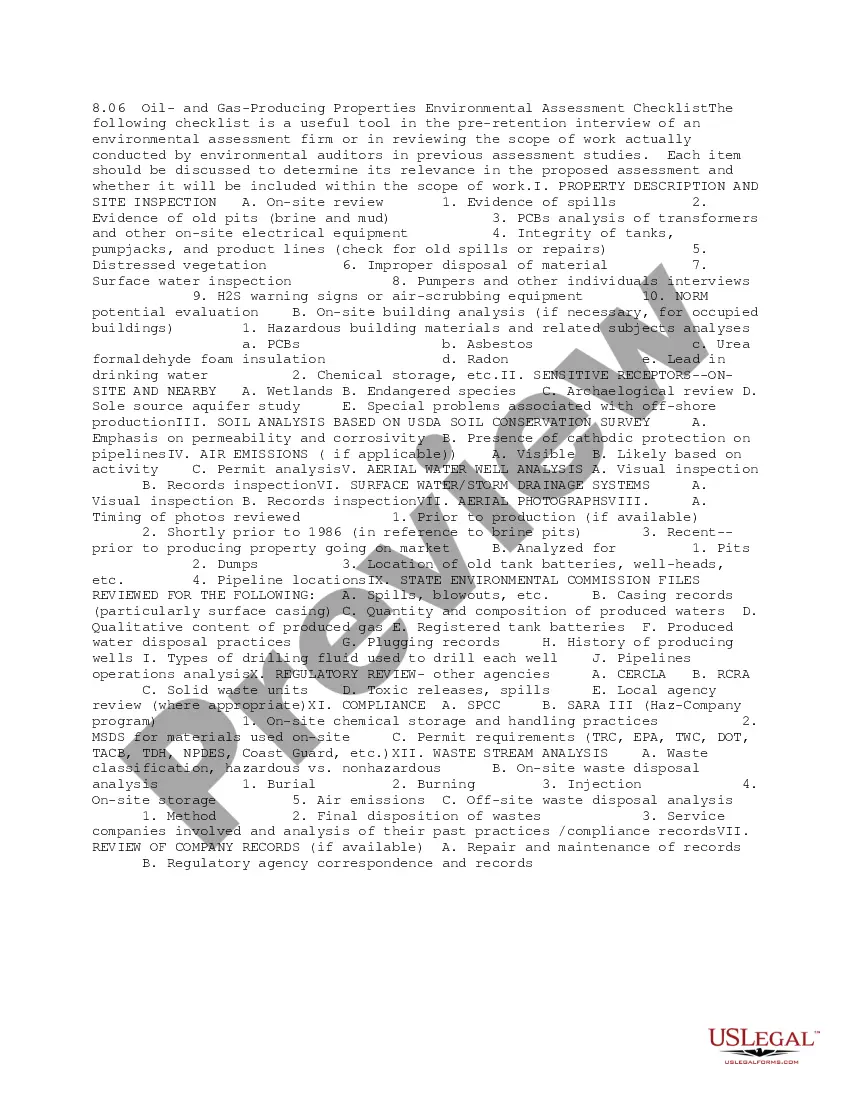
Oil and Gas Producing Properties Environmental Assessment Checklist
What is this form?
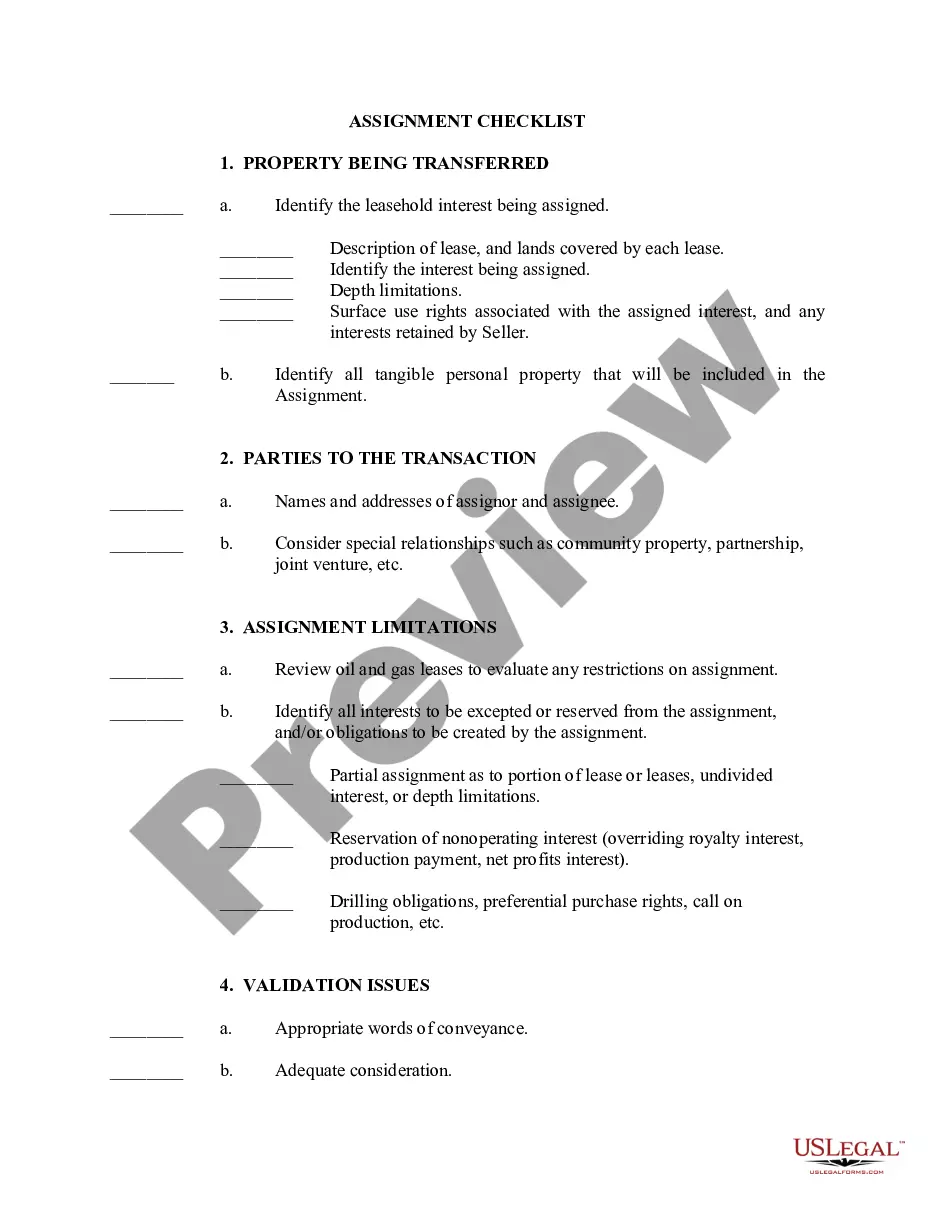
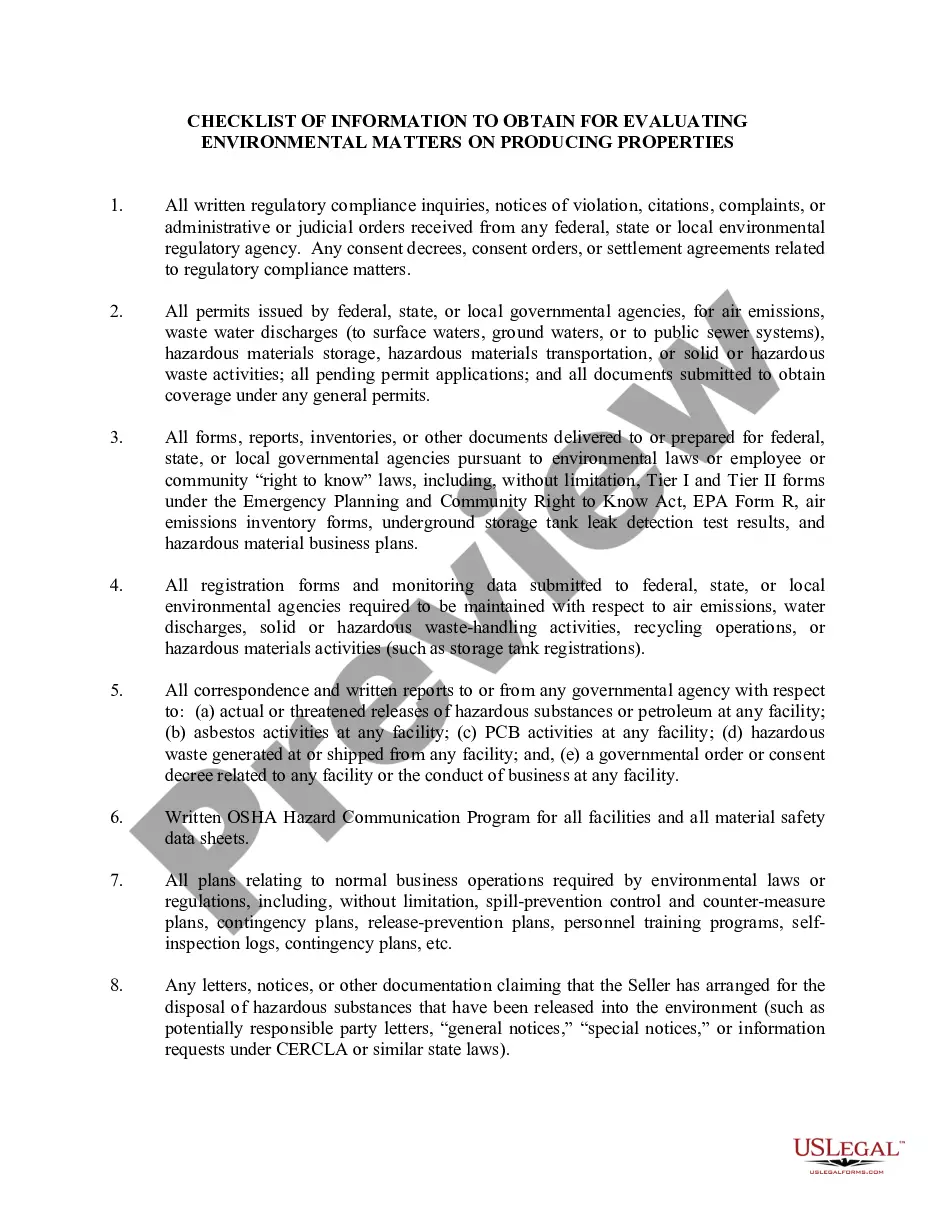
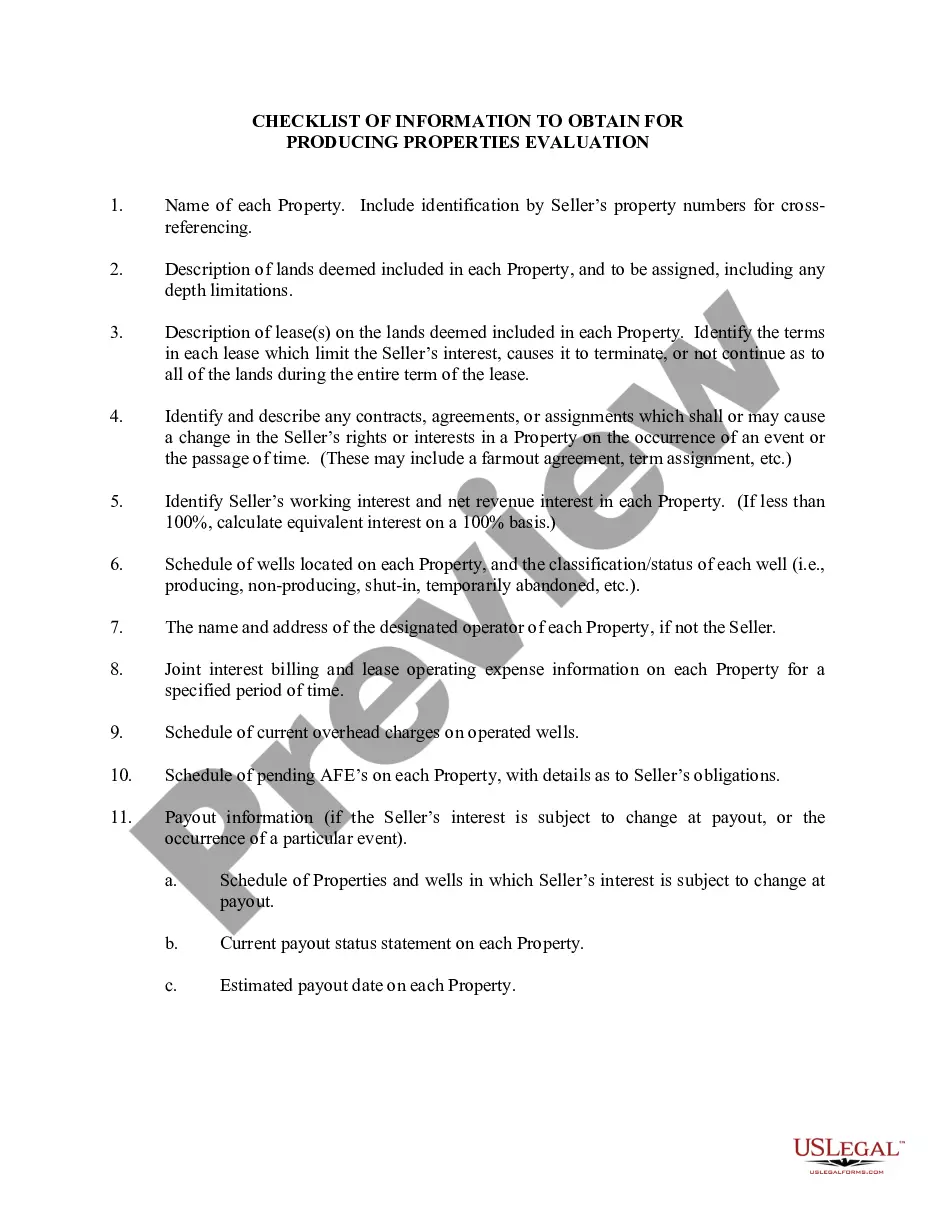
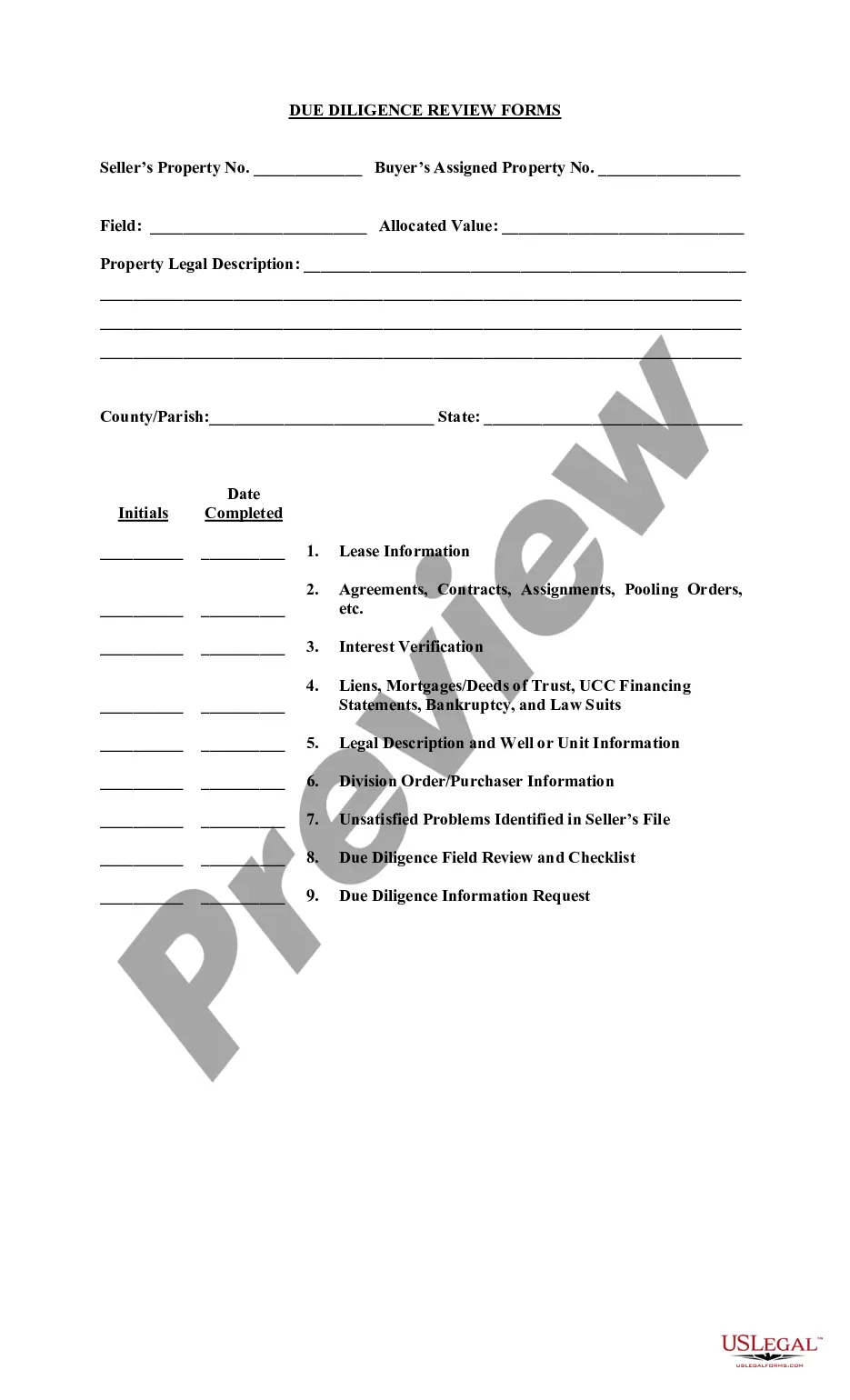
The Oil and Gas Producing Properties Environmental Assessment Checklist is a comprehensive due diligence tool designed to assist in the evaluation of environmental conditions related to oil and gas properties. This checklist helps in the pre-retention interview of environmental assessment firms and ensures thorough review of work completed by environmental auditors during previous assessments. It provides a structured approach to identifying potential environmental risks and requirements tied to oil and gas operations, differing from generic assessment tools by focusing specifically on the unique challenges of the oil and gas industry.
Key components of this form
- On-site review, including evidence of spills and tank integrity.
- Analysis of hazardous building materials, such as PCBs and asbestos.
- Evaluation of sensitive receptors nearby, like wetlands and endangered species.
- Soil and air emissions analysis to assess environmental impacts.
- Review of regulatory compliance and state environmental agency files.
- Assessment of waste streams and disposal methods.
When this form is needed
This form is essential when conducting environmental assessments for oil and gas properties. Use it during the initial stages of hiring an environmental assessment firm or when reviewing previously conducted assessments to ensure all relevant environmental factors are addressed. It is particularly useful when planning property transactions, obtaining permits, or complying with environmental regulations.
Who can use this document
- Environmental consultants and auditors responsible for assessing oil and gas properties.
- Operators and owners of oil and gas businesses seeking to evaluate their environmental compliance.
- Legal professionals assisting clients in environmental due diligence processes.
- Regulatory agencies reviewing compliance and environmental impact of oil and gas activities.
Completing this form step by step
- Gather property and site information relevant to the oil and gas operations.
- Conduct an on-site inspection, documenting any evidence of spills or environmental issues.
- Review each item in the checklist to determine its relevance to the specific assessment scope.
- Consult with environmental experts to analyze data and findings effectively.
- Complete and sign the checklist to formalize the assessment process and findings.
Notarization requirements for this form
Notarization is generally not required for this form. However, certain states or situations might demand it. You can complete notarization online through US Legal Forms, powered by Notarize, using a verified video call available anytime.
Get your form ready online
Our built-in tools help you complete, sign, share, and store your documents in one place.
Make edits, fill in missing information, and update formatting in US Legal Forms—just like you would in MS Word.
Download a copy, print it, send it by email, or mail it via USPS—whatever works best for your next step.
Sign and collect signatures with our SignNow integration. Send to multiple recipients, set reminders, and more. Go Premium to unlock E-Sign.
If this form requires notarization, complete it online through a secure video call—no need to meet a notary in person or wait for an appointment.
We protect your documents and personal data by following strict security and privacy standards.

Make edits, fill in missing information, and update formatting in US Legal Forms—just like you would in MS Word.

Download a copy, print it, send it by email, or mail it via USPS—whatever works best for your next step.

Sign and collect signatures with our SignNow integration. Send to multiple recipients, set reminders, and more. Go Premium to unlock E-Sign.

If this form requires notarization, complete it online through a secure video call—no need to meet a notary in person or wait for an appointment.

We protect your documents and personal data by following strict security and privacy standards.
Common mistakes
- Failing to conduct a thorough on-site review, leading to incomplete assessments.
- Neglecting to analyze historical data that may reveal past environmental issues.
- Overlooking necessary consultations with environmental experts before finalizing assessments.
Benefits of completing this form online
- Easy access to downloadable templates drafted by licensed attorneys.
- Ability to customize and fill out the form to meet specific assessment needs.
- Convenience of completing the checklist at your own pace from any location.
Legal use & context
- This checklist serves as an essential document for meeting regulatory compliance in environmental assessments.
- It aids in identifying potential liabilities associated with oil and gas properties, which can inform legal and operational decisions.
Looking for another form?

Form popularity
FAQ
Environmental effects, including. the significance of environmental effects. public comments. mitigation measures and follow-up program requirements. the purpose of the designated project. alternative means of carrying out the designated project.
Environmental assessment can be defined as identifying, estimating, and evaluating the environmental impacts of existing and proposed projects, by conducting environmental studies, to mitigate the relevant negative effects prior to making decisions and commitments.
Keep environmental assessment in perspective. Keep the assessment simple and concentrate on pertinent factors and data. Focus time and effort on the most relevant matters. Don't invest too much, nor too little, time on an assessment.
The Phase I ESA involves a review of records, a site inspecon, and interviews with owners, occupants, neighbors and local government officials.
Keep environmental assessment in perspective. Keep the assessment simple and concentrate on pertinent factors and data. Focus time and effort on the most relevant matters. Don't invest too much, nor too little, time on an assessment.
Performing a Phase 1 ESA is common practice in order to know whether a property is likely to contain any environmental issues, or recognized environmental conditions. Recognized environmental conditions include the presence, or likely presence, of hazardous materials or petroleum products due to a release or a
The Basic Assessment process entails an assessment of the description of the environmental attributes of the site and an investigation into issues and potential impacts. This is achieved by means of a Public Participation Process (PPP), which involves all Interested and Affected Parties (I&AP's).
The assessment methods are tools that permit us to measure the environmental impact of existent buildings and future constructions. The aim of these methods is to:Carry out a public comparative between buildings. Establish criteria and standards that are more exhaustive than those of the existing legislation.
Identifies potential or existing environmental contamination liabilities. A Phase I Environmental Site Assessment, commonly referred to as an ESA, or Phase I ESA, is completed to research the current and historical uses of a property as part of a commercial real estate transaction.