Confidentiality Agreement for Employment Purposes
Understanding this form
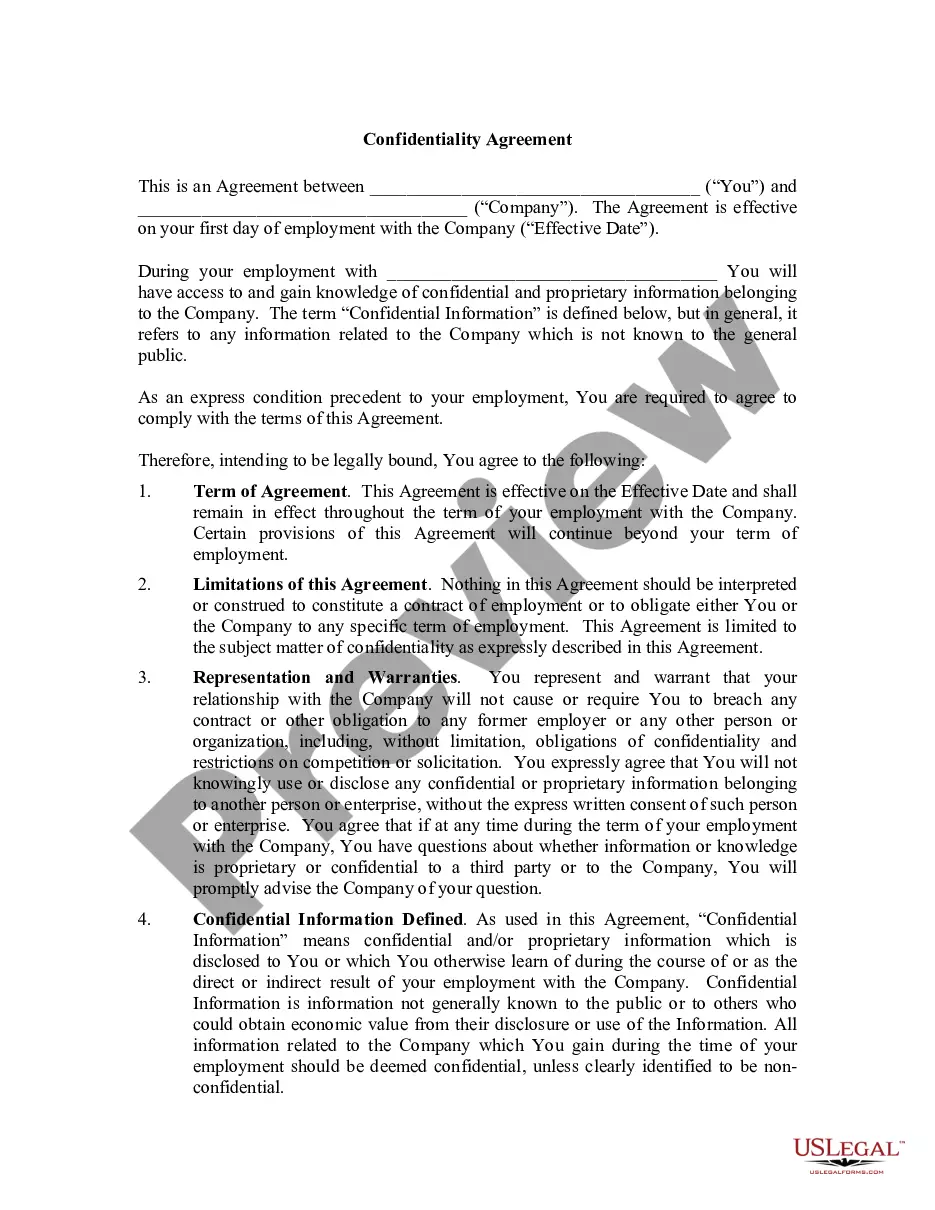
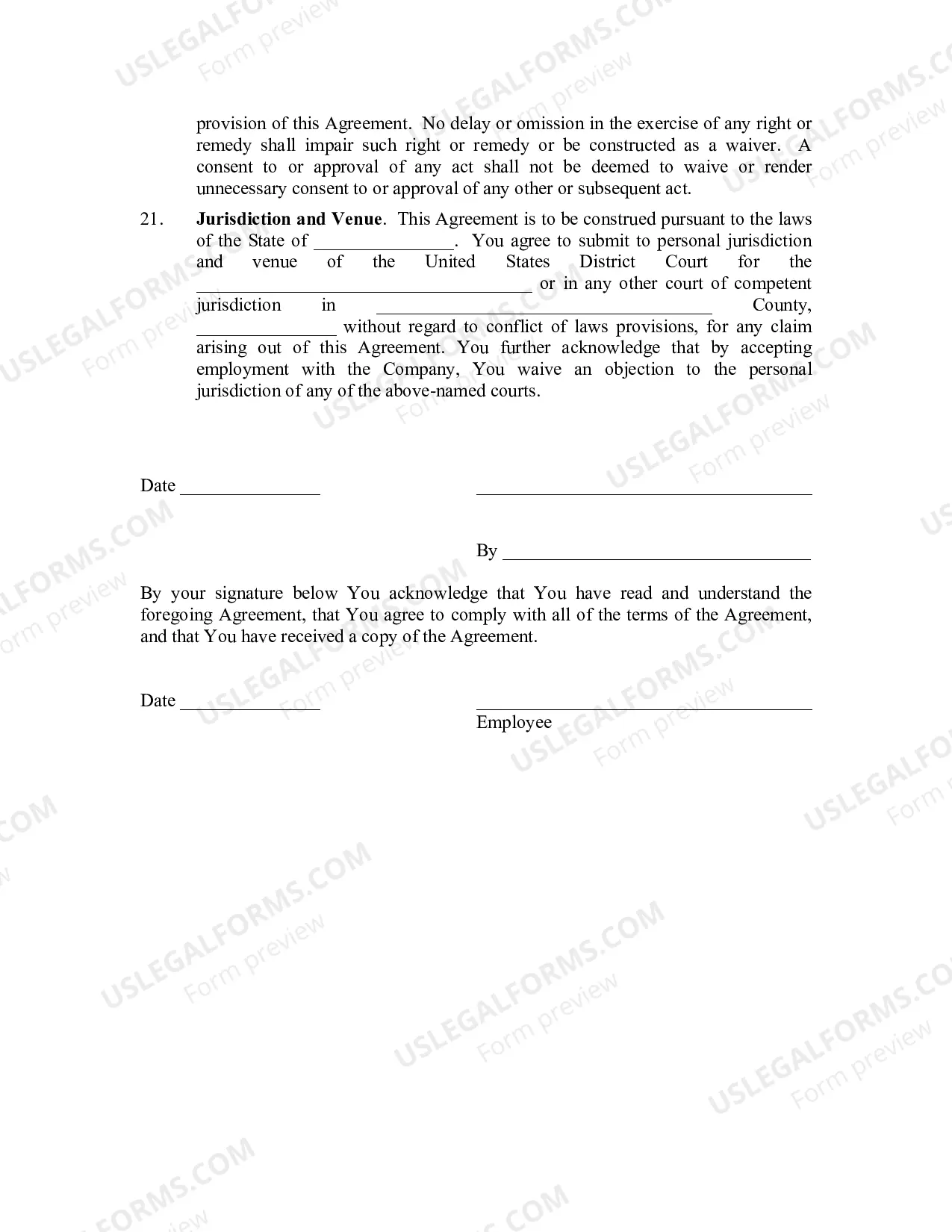
The Confidentiality Agreement for Employment Purposes is a legal document that establishes a mutual understanding between an employee and the employer regarding the handling of confidential information. This form ensures that any sensitive or proprietary information a new hire encounters during their employment is protected, distinguishing it from other employment-related agreements which may not include specific confidentiality clauses.
What’s included in this form
- Effective date and parties involved: Clearly identifies the employee and company.
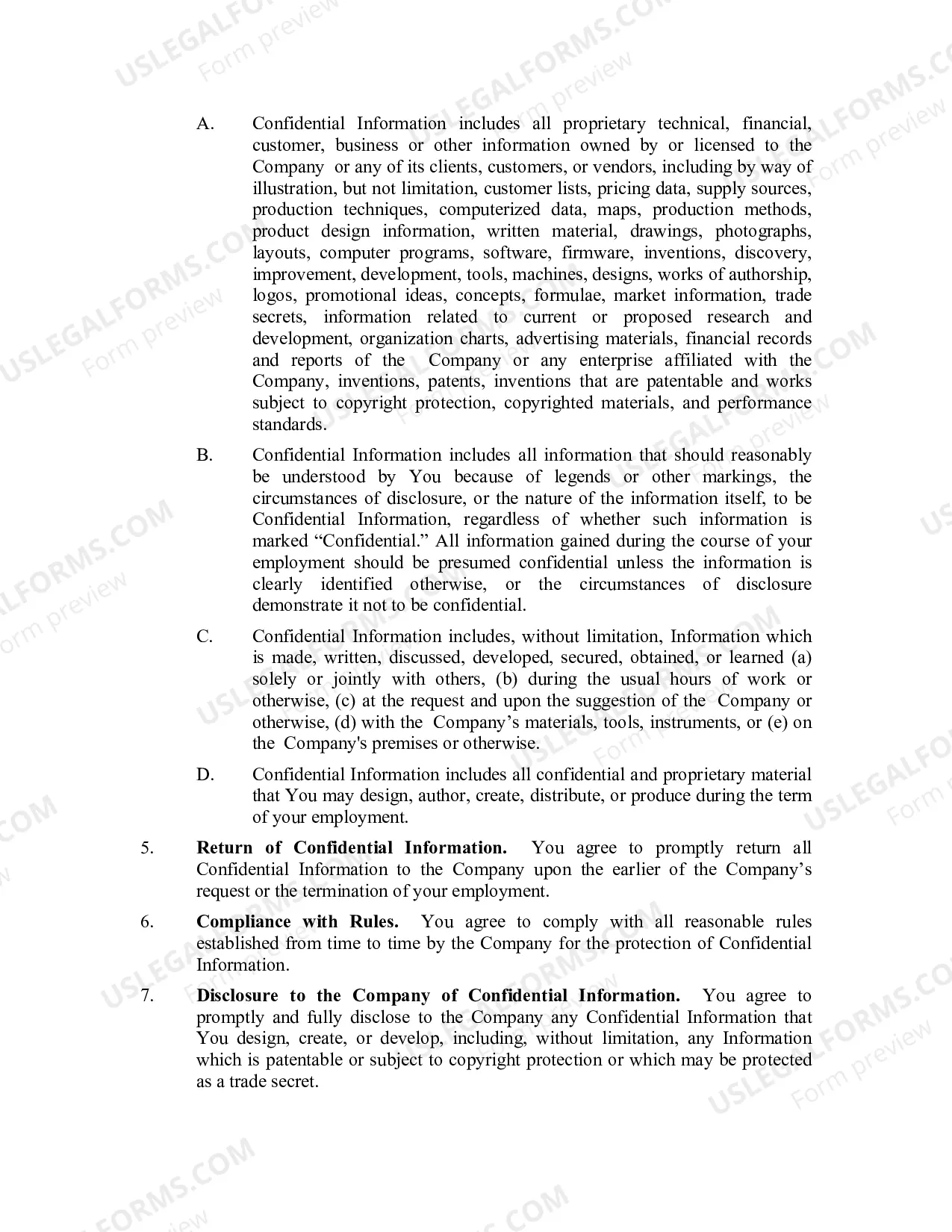
- Definition of Confidential Information: Outlines what constitutes confidential data.
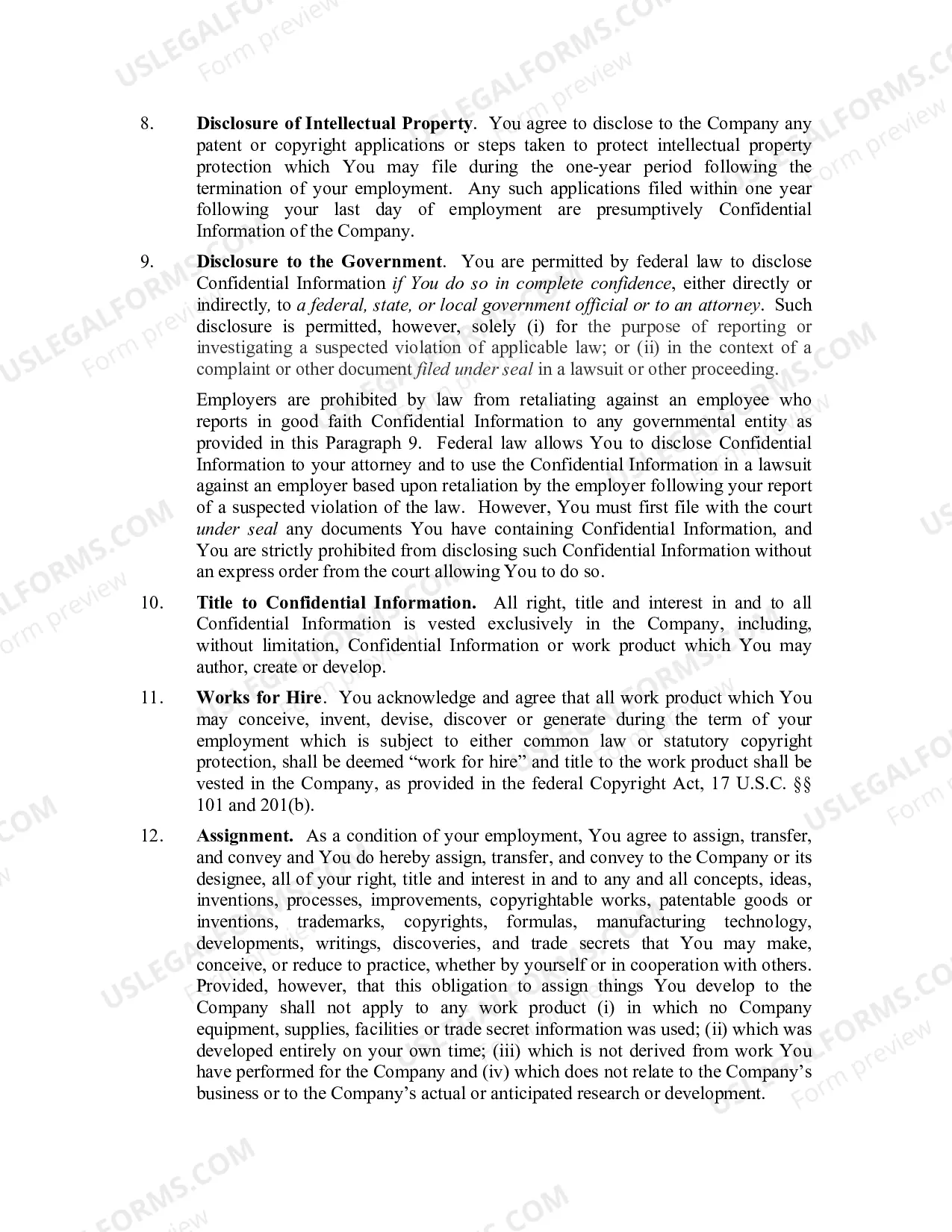
- Obligations: Details the employee's duties regarding the confidentiality of company data.
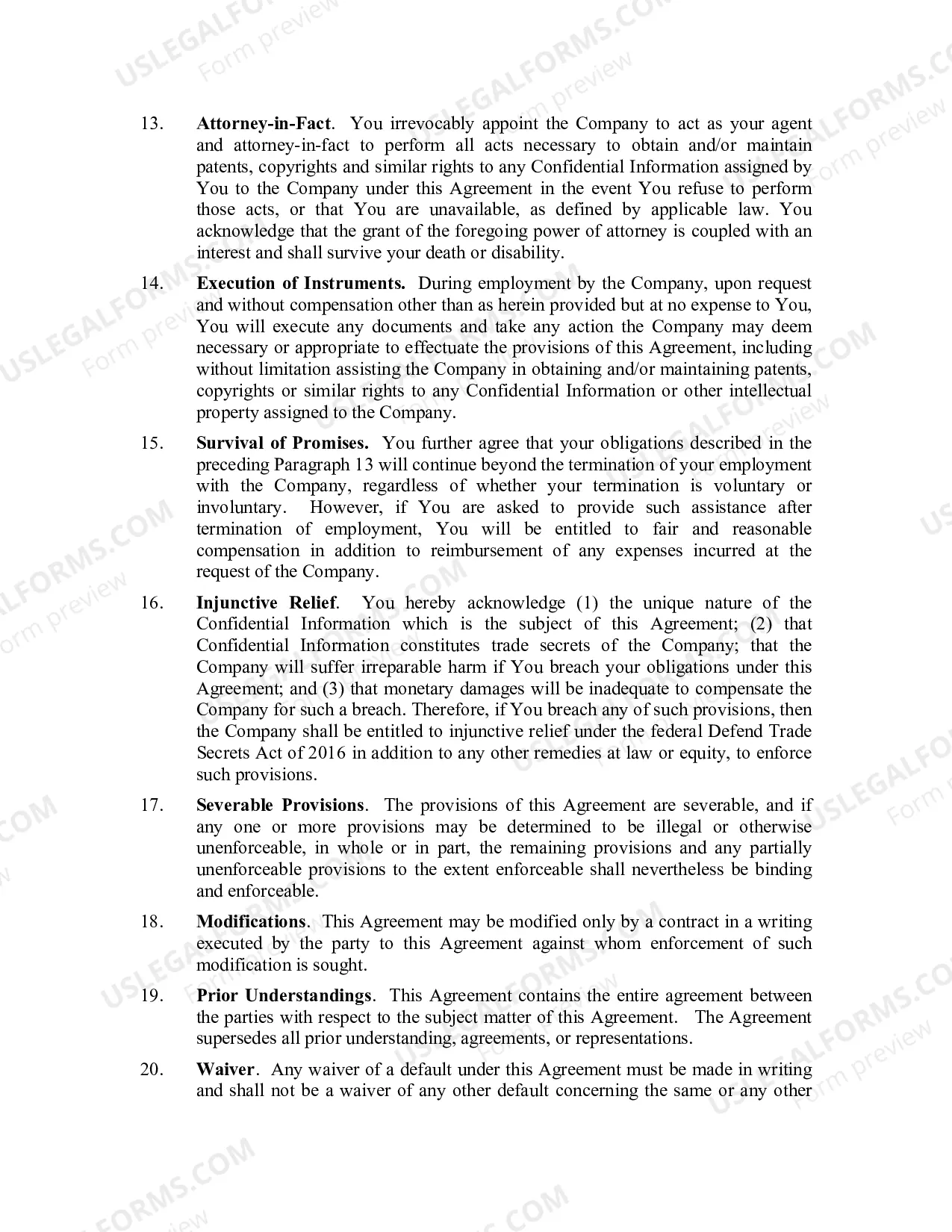
- Return and disclosure provisions: Explains the return of confidential materials upon employment termination.
- Legal remedies: States potential legal actions in case of breach of the agreement.
Situations where this form applies
This form should be utilized when initiating employment relationships that involve the sharing of sensitive company information. It's particularly important in fields such as technology, finance, and any industry where proprietary data gives a competitive edge. By using this agreement, companies can protect their intellectual property and maintain their business integrity.
Who can use this document
This Confidentiality Agreement is suitable for:
- Employers who want to protect sensitive information shared with new employees.
- Companies of all sizes, particularly those in competitive or information-sensitive industries.
- Human resources professionals responsible for drafting and enforcing company policies.
- Legal teams seeking to ensure compliance and protection of intellectual property.
Completing this form step by step
- Identify the parties: Fill in the employee's name and the company's name in the designated spaces.
- Specify the effective date: Enter the date when the agreement goes into effect, typically the first day of employment.
- Review the definitions: Read and understand the definition of "Confidential Information" to ensure clarity on what is considered confidential.
- Sign and date the agreement: Both parties should sign and date the document to make it legally binding.
- Keep a copy: Each party should retain a signed copy of the agreement for their records.
Does this form need to be notarized?
This form does not typically require notarization unless specified by local law. The agreement can be executed simply with signatures from both parties.
Get your form ready online
Our built-in tools help you complete, sign, share, and store your documents in one place.
Make edits, fill in missing information, and update formatting in US Legal Forms—just like you would in MS Word.
Download a copy, print it, send it by email, or mail it via USPS—whatever works best for your next step.
Sign and collect signatures with our SignNow integration. Send to multiple recipients, set reminders, and more. Go Premium to unlock E-Sign.
If this form requires notarization, complete it online through a secure video call—no need to meet a notary in person or wait for an appointment.
We protect your documents and personal data by following strict security and privacy standards.

Make edits, fill in missing information, and update formatting in US Legal Forms—just like you would in MS Word.

Download a copy, print it, send it by email, or mail it via USPS—whatever works best for your next step.

Sign and collect signatures with our SignNow integration. Send to multiple recipients, set reminders, and more. Go Premium to unlock E-Sign.

If this form requires notarization, complete it online through a secure video call—no need to meet a notary in person or wait for an appointment.

We protect your documents and personal data by following strict security and privacy standards.
Common mistakes
- Failing to define "Confidential Information" clearly, leading to ambiguity.
- Not signing or dating the agreement, which can make it unenforceable.
- Using outdated templates without considering current legal requirements.
Advantages of online completion
- Convenience of downloading and editing the form at your own pace.
- Access to templates drafted by licensed attorneys, ensuring compliance.
- Easy to store and share digitally with relevant parties.
Legal use & context
- This agreement helps protect the company's trade secrets and proprietary information.
- It establishes clear legal grounds for action in the event of a breach.
- Confidentiality agreements are enforceable in courts, provided they are reasonable and proportional in scope and duration.
Summary of main points
- The Confidentiality Agreement for Employment Purposes is essential for safeguarding sensitive business information.
- It should be used by employers in fields where confidentiality is critical.
- Parties must understand their obligations under the agreement for it to be effective.
Looking for another form?
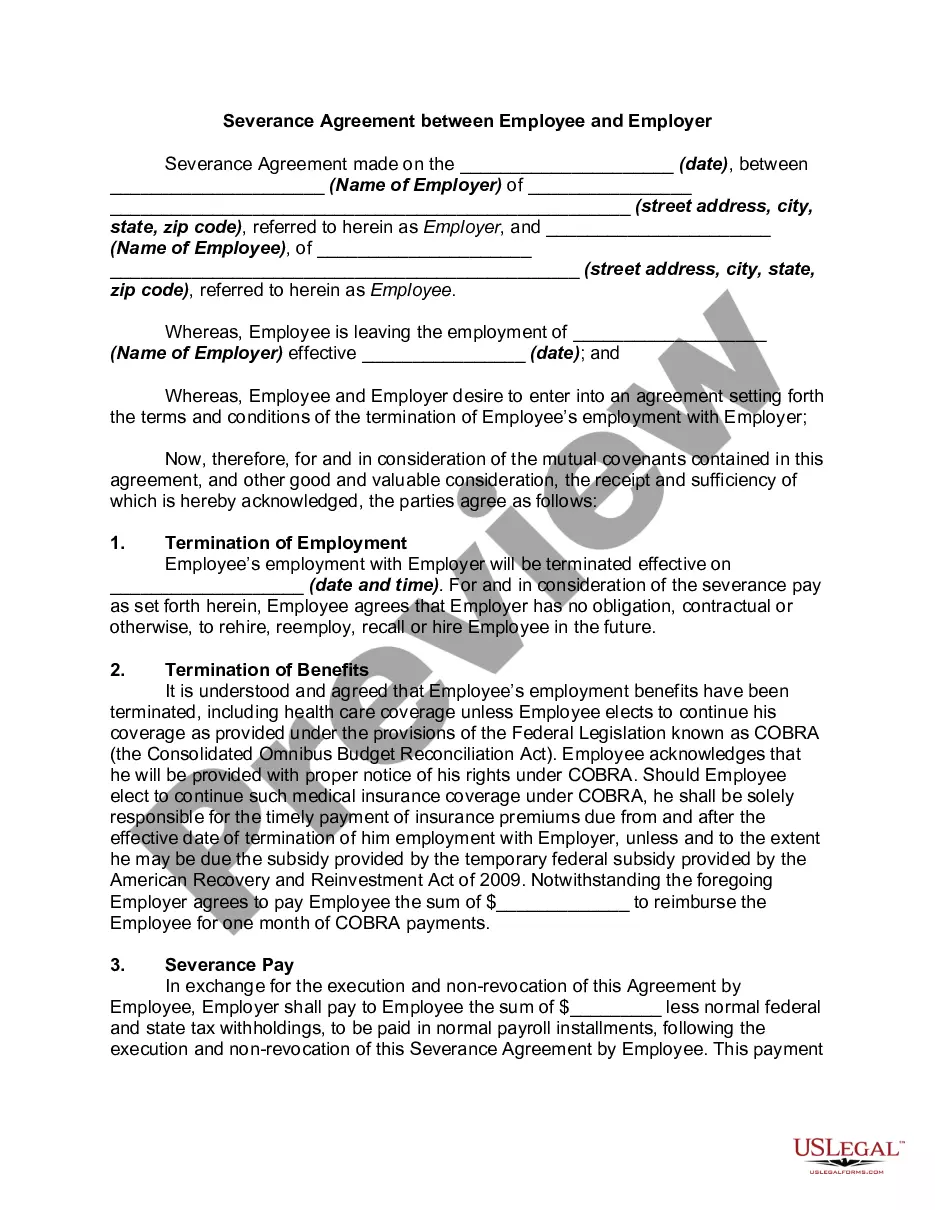
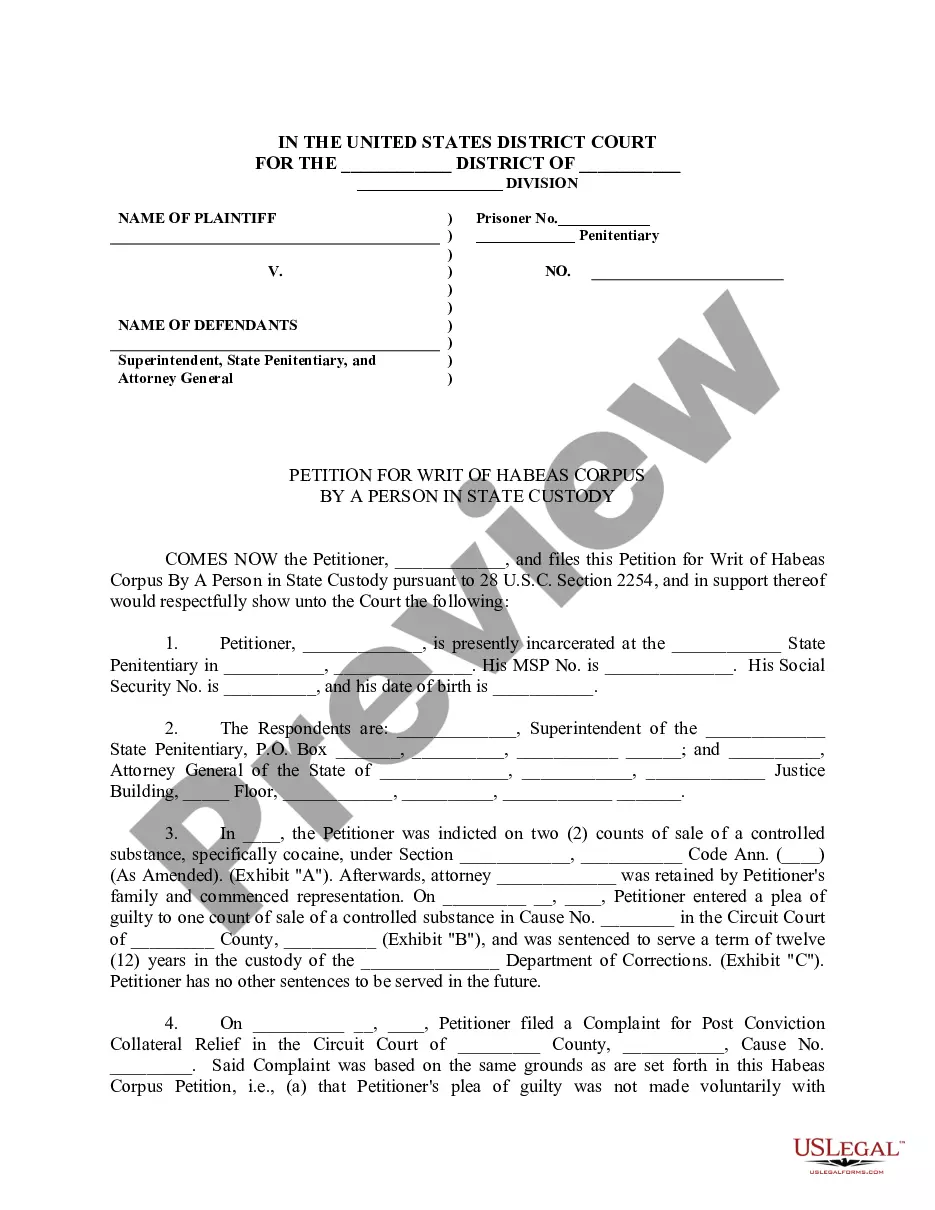
Form popularity
FAQ
Ingly, to protect the Confidential Information that will be disclosed during employment, the Employee agrees as follows: Employee will hold the Confidential Information received from Company Name in strict confidence and will exercise a reasonable degree of care to prevent disclosure to others.
The purpose of a confidentiality clause in an employment contract is to ensure that the employee does not share confidential information/business secrets with others, such as a competitor for instance. This obligation applies both during and after the termination of employment.
I acknowledge that all Information is strictly confidential and I agree that I shall not reveal to any person or entity, or use any Information at any time, except as expressly directed by firm, or as may be required by law.
An employee confidentiality agreement, or non-disclosure agreement or an ?NDA,? makes it crystal clear to an employee that he or she cannot under any circumstance, with the exception of prior written approval, disclose company secrets.
Employee agrees that he/she will never use any Confidential Information for his/her own benefit or for the benefit of any person or entity other than the Company, and will not permit or allow any Confidential Information to be used in competition with the Company.
As previously mentioned, in California, employment confidentiality agreements are considered to be enforceable when they contain specific information. Generally speaking, enforcing a confidentiality agreement is the same as enforcing any other sort of contract.
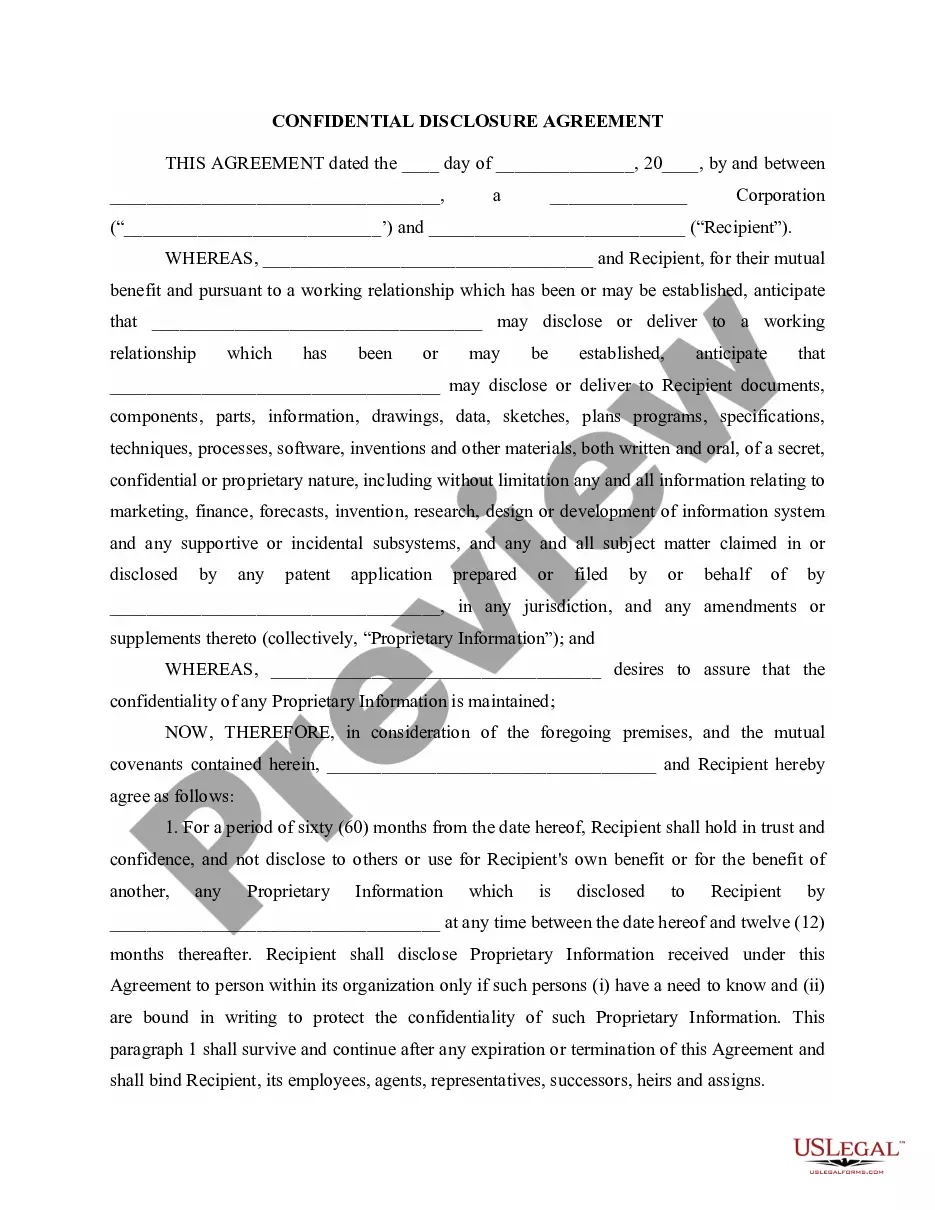
The agreement should identify the purpose to which the recipient can put the confidential information. All other uses of the confidential information should be prohibited. Sometimes a confidentiality agreement states that no rights are licensed by the confidentiality agreement. This is stating the obvious.
Here is a common example: CONFIDENTIALITY NOTICE: This message and any accompanying documents contain information belonging to the sender which may be confidential and legally privileged. This information is only for the use of the individual or entity to which it was intended.