Destroying, Altering, or Falsifying a Document in a Federal Investigation
About this form
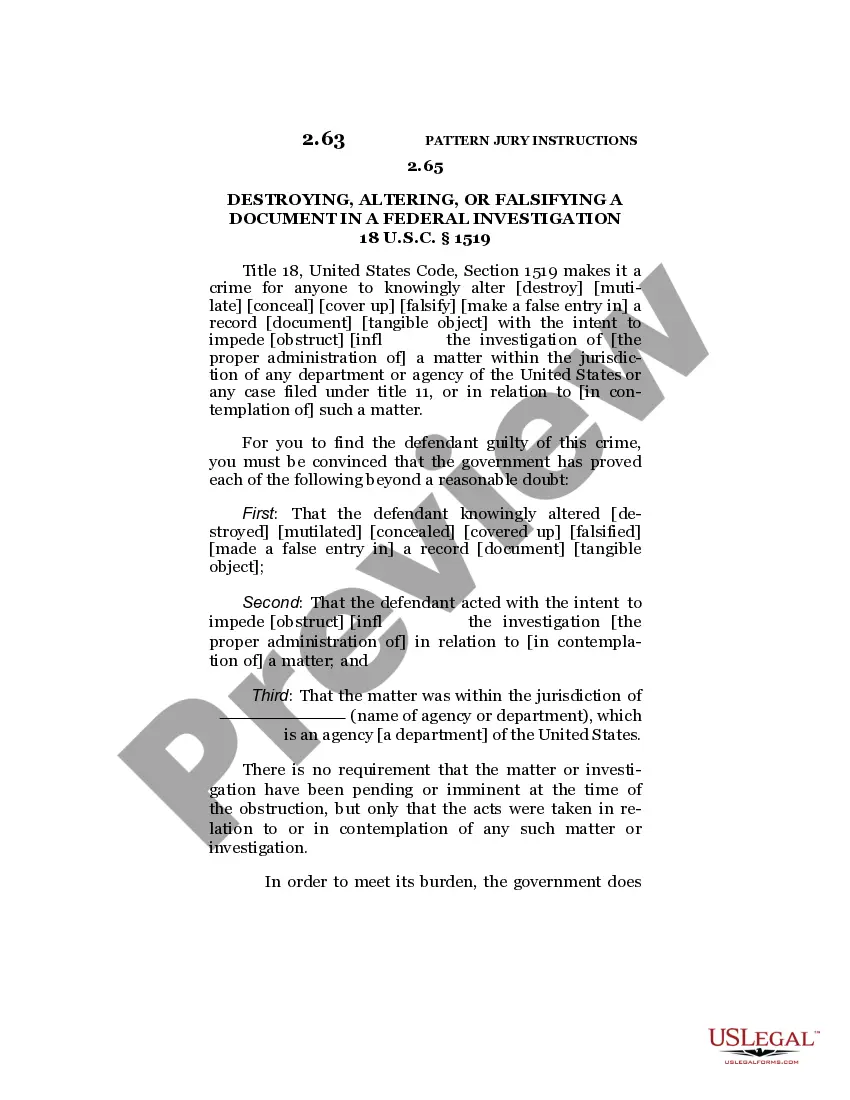
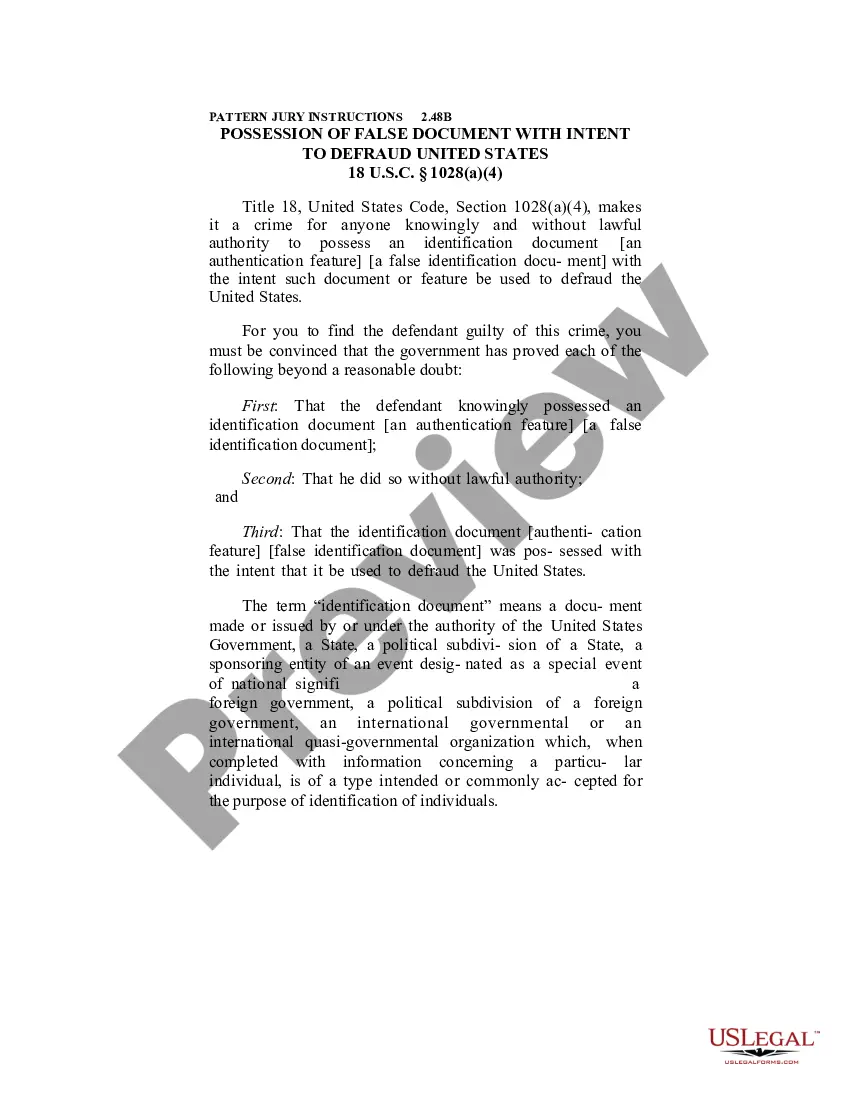
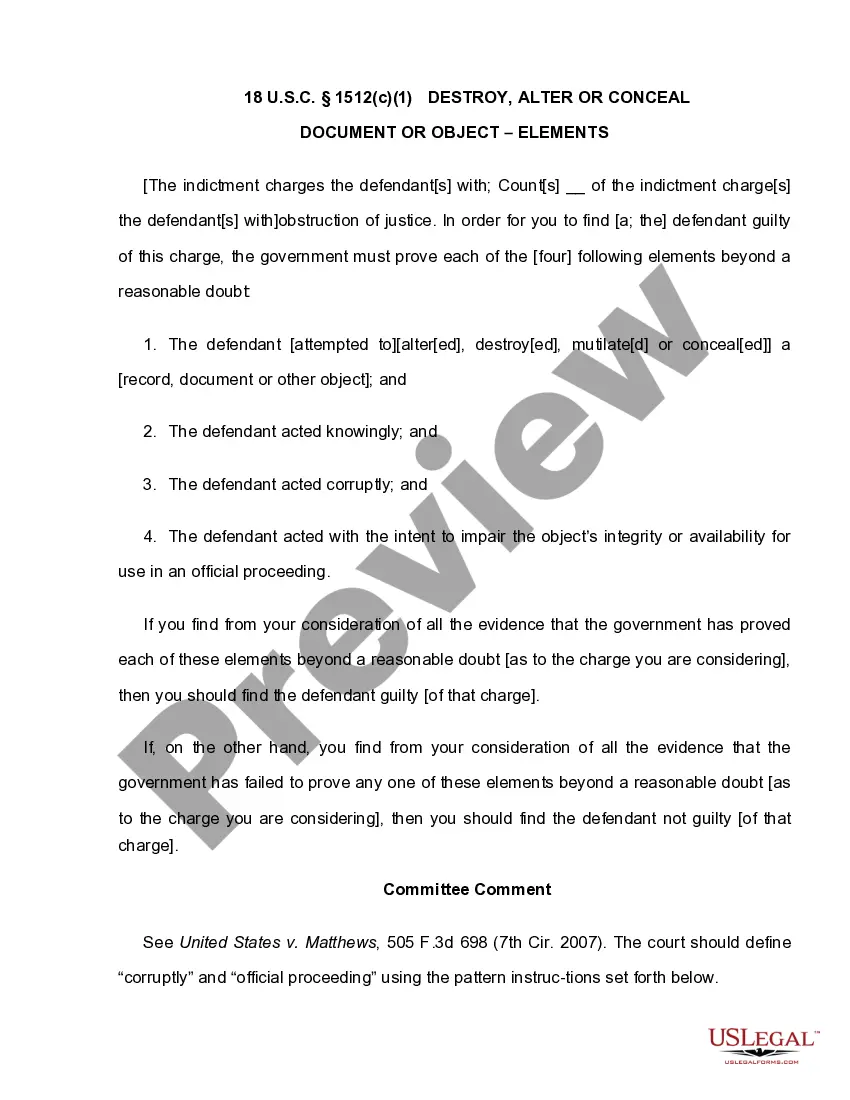
This form is known as the Destroying, Altering, or Falsifying a Document in a Federal Investigation form. It is designed to ensure that individuals understand the legal implications of modifying or destroying documents relevant to federal investigations. This form outlines the necessary legal standards and consequences of such actions under Title 18, United States Code, Section 1519, differentiating it from other forms related to document management or tampering. It provides clear guidance on what constitutes unlawful conduct in the context of federal inquiries.
Key components of this form
- Definition of unlawful acts related to federal investigations.
- Intent requirements for proving violations, including knowledge and purpose.
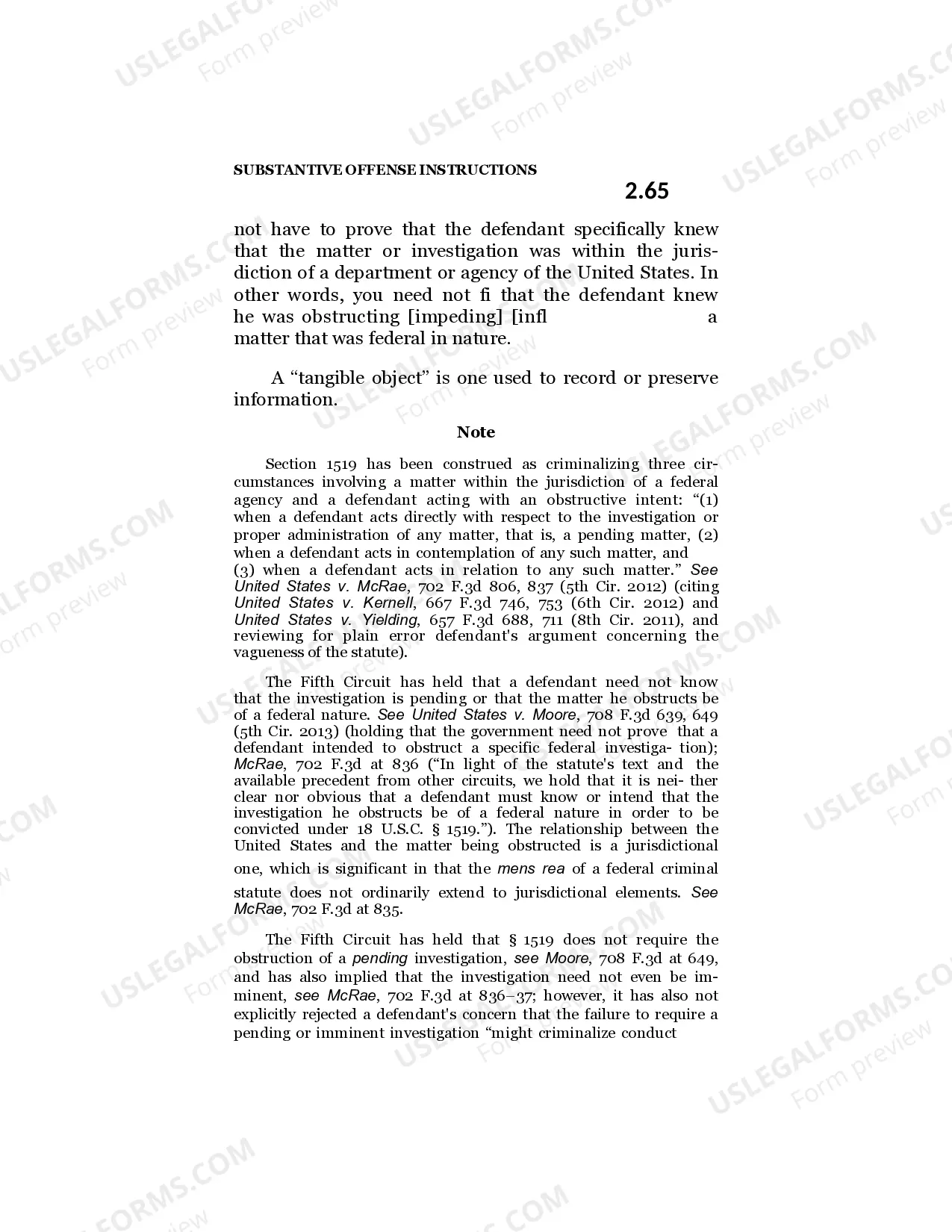
- Clarification of jurisdictional matters regarding federal agency investigations.
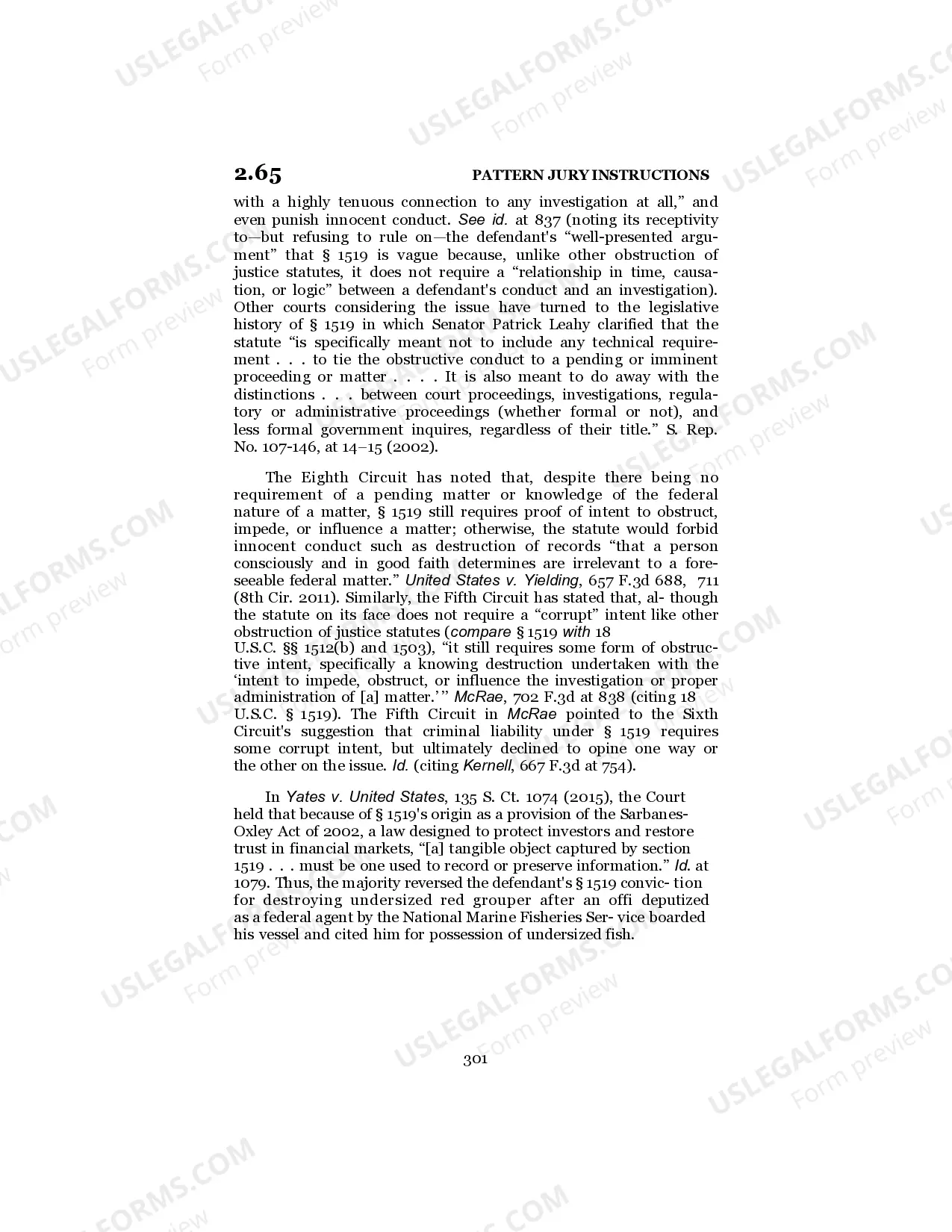
- Guidance on tangible objects and records covered under the statute.
- Explanation of case law related to the interpretation of the statute.
When this form is needed
This form should be used in any federal investigation where there is a concern about the alteration, destruction, or falsification of documents. Individuals may need to complete this form if they are involved in an inquiry by a federal agency, are cautioned about the legal consequences of document tampering, or want to ensure they comply with federal laws regarding document integrity. It is critical for anyone who might be questioned in an investigation to understand their rights and responsibilities regarding document handling.
Intended users of this form
- Individuals involved in or knowledgeable about a federal investigation.
- Legal representatives advising clients in federal matters.
- Persons at risk of being accused of document-related offenses during an investigation.
- Corporate entities faced with federal inquiries affecting their documentation practices.
How to prepare this document
- Review the allegations or inquiries related to federal investigations.
- Identify and describe any documents that may be relevant to the investigation.
- Clarify the intent behind any alterations or destruction of records.
- Ensure that all information provided is accurate and complete.
- Submit the completed form to the relevant authority or legal counsel as advised.
Does this document require notarization?
This form usually doesn’t need to be notarized. However, local laws or specific transactions may require it. Our online notarization service, powered by Notarize, lets you complete it remotely through a secure video session, available 24/7.
Get your form ready online
Our built-in tools help you complete, sign, share, and store your documents in one place.
Make edits, fill in missing information, and update formatting in US Legal Forms—just like you would in MS Word.
Download a copy, print it, send it by email, or mail it via USPS—whatever works best for your next step.
Sign and collect signatures with our SignNow integration. Send to multiple recipients, set reminders, and more. Go Premium to unlock E-Sign.
If this form requires notarization, complete it online through a secure video call—no need to meet a notary in person or wait for an appointment.
We protect your documents and personal data by following strict security and privacy standards.

Make edits, fill in missing information, and update formatting in US Legal Forms—just like you would in MS Word.

Download a copy, print it, send it by email, or mail it via USPS—whatever works best for your next step.

Sign and collect signatures with our SignNow integration. Send to multiple recipients, set reminders, and more. Go Premium to unlock E-Sign.

If this form requires notarization, complete it online through a secure video call—no need to meet a notary in person or wait for an appointment.

We protect your documents and personal data by following strict security and privacy standards.
Common mistakes
- Failing to understand the serious legal repercussions of document alteration.
- Not providing complete or accurate information about the documents involved.
- Assuming that federal laws do not apply to state-level documents.
- Ignoring the requirement for intent when completing the form.
Why use this form online
- Instant access to a legally vetted form, ensuring accuracy and compliance.
- The ability to fill out and edit the form online for convenience.
- Secure, organized storage options for your completed forms.
- Guidance from licensed attorneys to help clarify legal language and requirements.
Looking for another form?
Form popularity
FAQ
Typically a charge of Evidence Tampering in California is a misdemeanor, punishable by up to six months in county jail. A conviction of Evidence Tampering involving law enforcement officers is a felony punishable by two to five years in state prison.
The necessary measure of protection for government documents and records is provided by 18 U.S.C. § 2071. Section 2071(a) contains a broad prohibition against destruction of government records or attempts to destroy such records.
Under 18 U.S.C. Section 1519, federal obstruction of justice charges if someone alters or destroys a document, or any other ?tangible object,? with the intent of influencing or obstructing a federal investigation. Destroying evidence related to an investigation is punishable by up to twenty years in prison.
18 U.S. Code § 1519 - Destruction, alteration, or falsification of records in Federal investigations and bankruptcy U.S. Code US Law LII / Legal Information Institute. Go!
Destruction or Alteration of Recorded Information -- 18 U.S.C. § 152(8) 18 U.S.C. § 152(8) prohibits the concealment, obstruction, mutilation or falsification of recorded information -- i.e., books, documents, records, and papers-- before or after the filing of a bankruptcy petition.
California Penal Code Section 135 PC is the statute that defines the offense of destroying or concealing evidence. It's described as willfully destroying or concealing anything that is going to be produced for a criminal investigation, inquiry, or even a trial.
Ing to California Penal Code § 135 PC, it is a criminal offense to willfully destroy or conceal evidence that you are aware is relevant to a legal proceeding such as a trial, inquiry or investigation. Doing so is a misdemeanor punishable by a term of up to 6 months in county jail.
The ?anti-shredding provision? of the Act, 18 U.S.C. § 1519, imposes criminal penalties on anyone who ?knowingly alters, destroys, mutilates, conceals, covers up, falsifies, or makes a false entry in any record, document, or tangible object? with the intent to impede or obstruct an investigation.