Threats Against the President
About this form
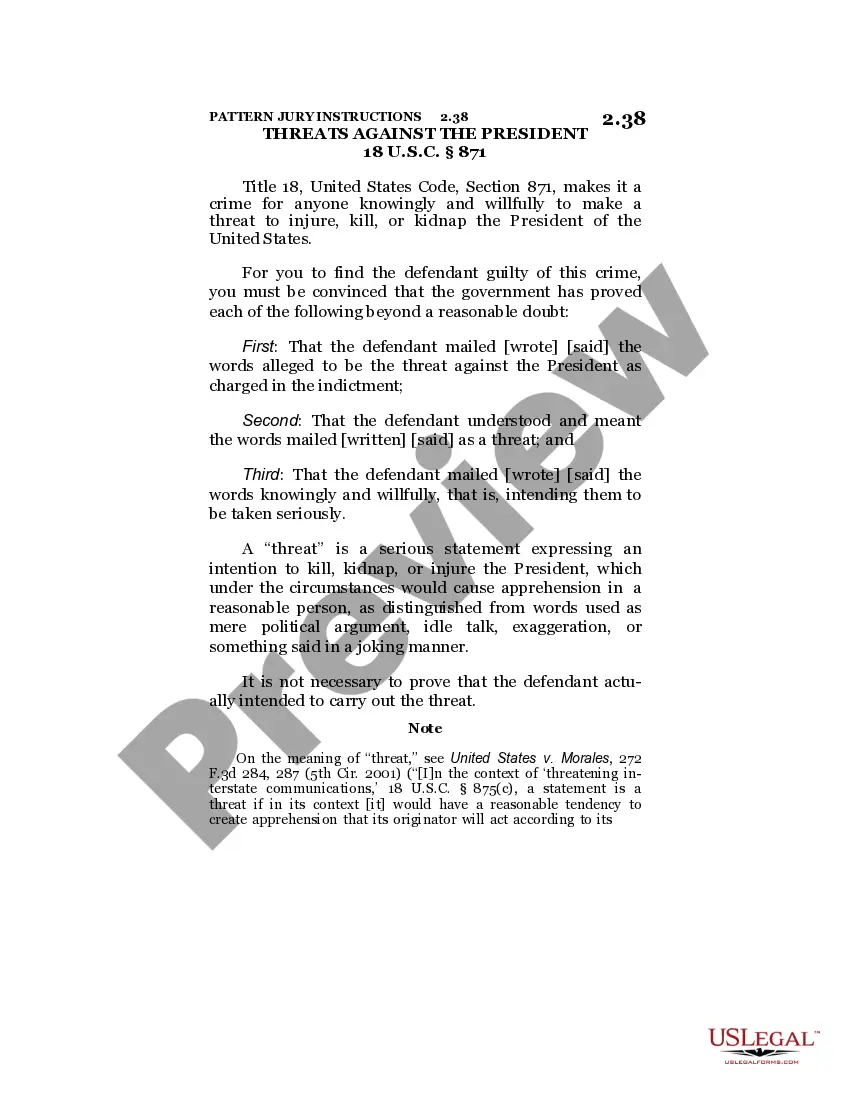
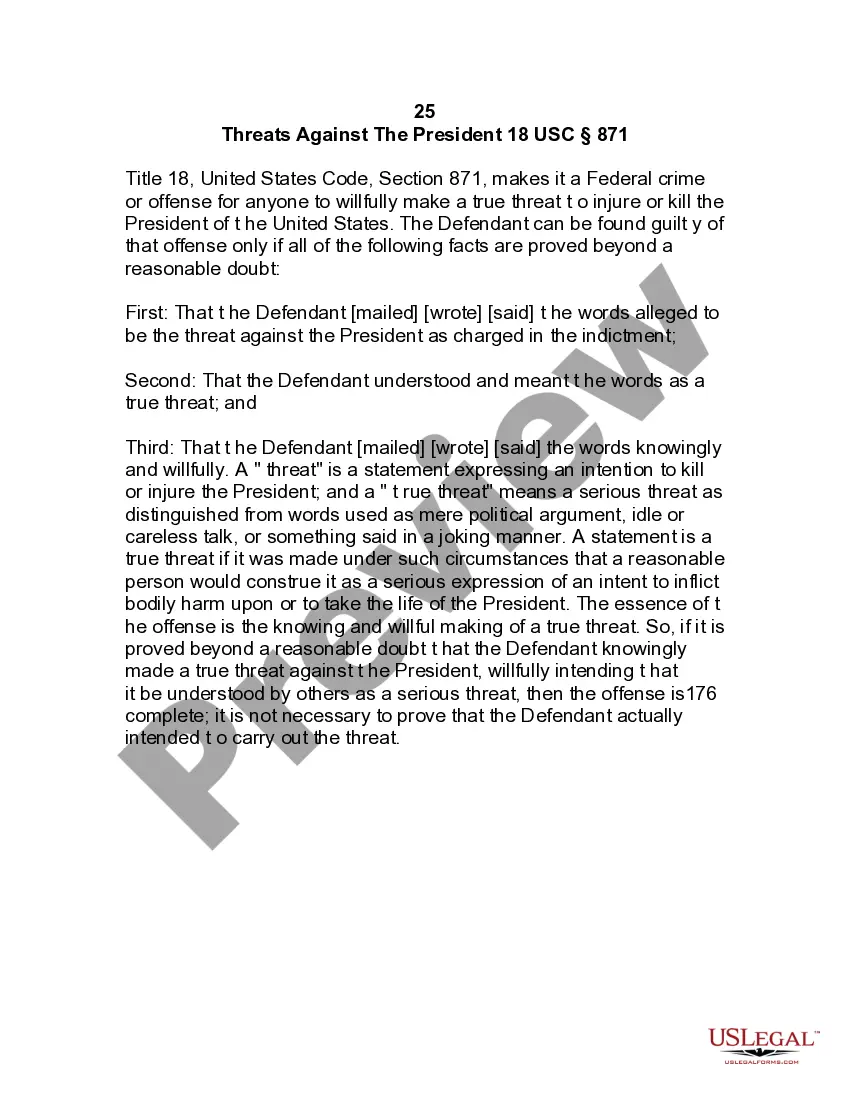
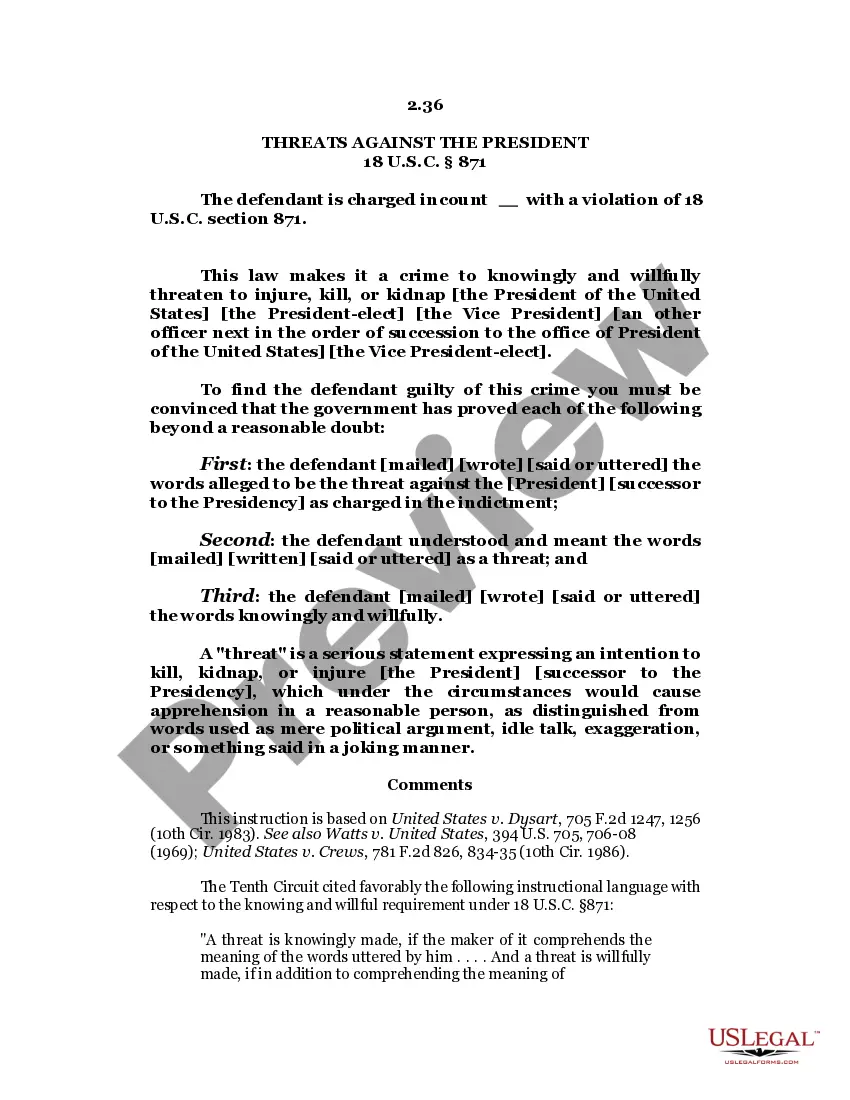
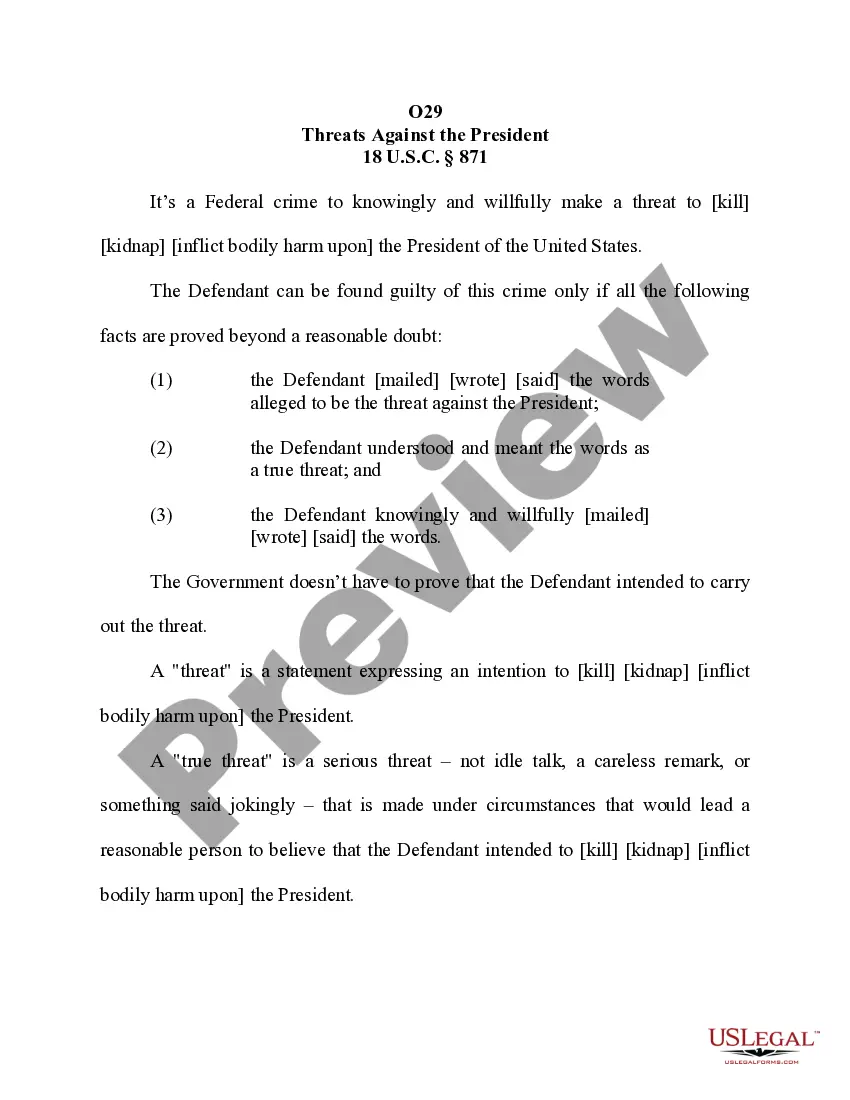
The Threats Against the President form is a legal document that outlines the offense of making threats against the President of the United States, as defined under Title 18, United States Code, Section 871. This form is not just a statement of intent; it represents a serious legal violation with significant consequences. Understanding this form is crucial to grasping the gravity of such threats and ensuring compliance with federal law.
Key parts of this document
- Definition of a threat and its legal implications.
- Elements the government must prove for a conviction.
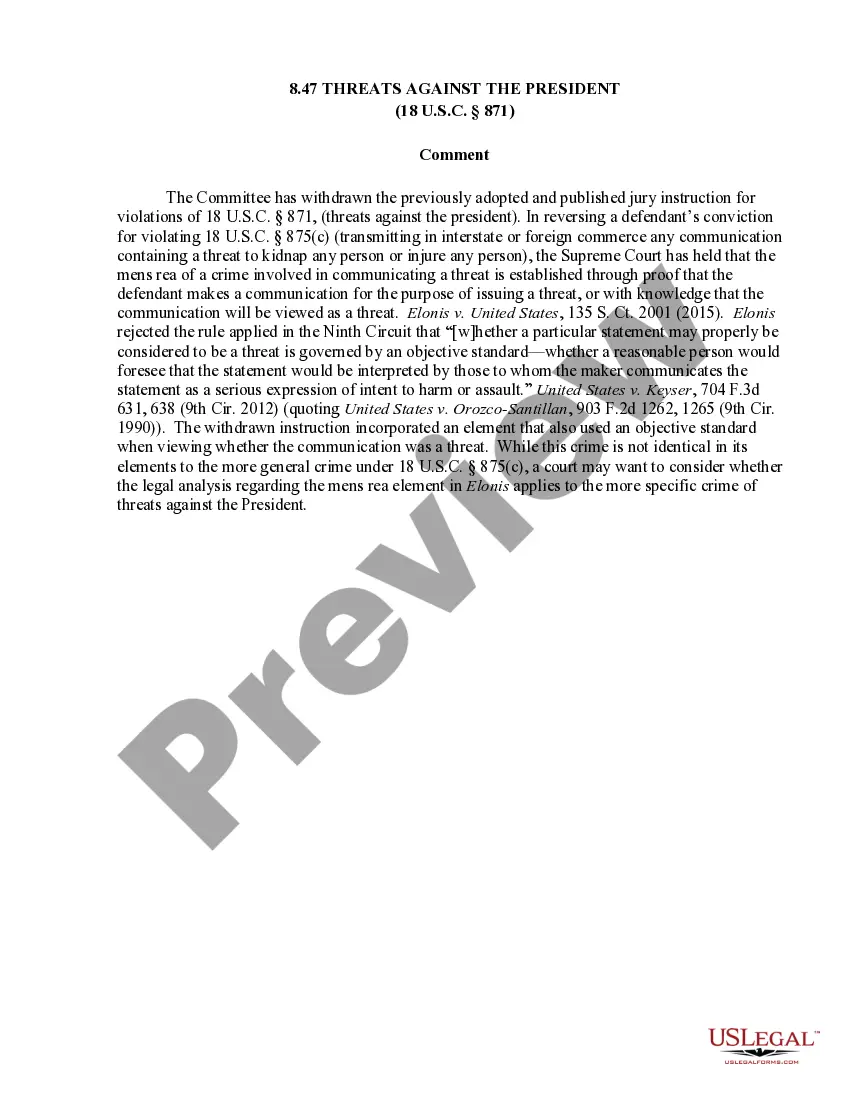
- Explanation of how intent is measured in the context of making threats.
- Clarification of what constitutes a serious statement versus political rhetoric.
When to use this document
This form is utilized in legal proceedings where an individual is charged with making threats against the President. It is relevant in cases involving criminal behavior that violates federal law regarding threats, providing necessary details for prosecution or defense.
Intended users of this form
- Attorneys representing clients accused of making threats against the President.
- Prosecutors involved in cases of threats against federal officials.
- Individuals seeking to understand the implications of threats they may have made.
How to complete this form
- Identify the defendant involved in the case.
- Specify the nature of the threat made against the President.
- Detail the circumstances surrounding the threat's communication (e.g., written, spoken).
- Include evidence demonstrating the intent behind the threat.
- Review the completed form to ensure clarity and accuracy before submission.
Notarization requirements for this form
Notarization is generally not required for this form. However, certain states or situations might demand it. You can complete notarization online through US Legal Forms, powered by Notarize, using a verified video call available anytime.
Get your form ready online
Our built-in tools help you complete, sign, share, and store your documents in one place.
Make edits, fill in missing information, and update formatting in US Legal Forms—just like you would in MS Word.
Download a copy, print it, send it by email, or mail it via USPS—whatever works best for your next step.
Sign and collect signatures with our SignNow integration. Send to multiple recipients, set reminders, and more. Go Premium to unlock E-Sign.
If this form requires notarization, complete it online through a secure video call—no need to meet a notary in person or wait for an appointment.
We protect your documents and personal data by following strict security and privacy standards.

Make edits, fill in missing information, and update formatting in US Legal Forms—just like you would in MS Word.

Download a copy, print it, send it by email, or mail it via USPS—whatever works best for your next step.

Sign and collect signatures with our SignNow integration. Send to multiple recipients, set reminders, and more. Go Premium to unlock E-Sign.

If this form requires notarization, complete it online through a secure video call—no need to meet a notary in person or wait for an appointment.

We protect your documents and personal data by following strict security and privacy standards.
Common mistakes
- Failing to establish clear intent behind the words used.
- Confusing political speech with actual threats.
- Omitting critical details about the communication method.
Why complete this form online
- Convenient access to downloadable legal templates.
- Editable format allows for tailored use in specific cases.
- Reliability from forms drafted by licensed attorneys.
Legal use & context
- This form outlines the federal legal framework for prosecuting threats against the President.
- Understanding this form is key for legal professionals handling cases involving serious criminal threats.
Summary of main points
- The form addresses federal law concerning threats against the President.
- It is crucial for legal practitioners involved in such cases.
- Clarity about intent is essential to differentiate between serious threats and political discourse.
Looking for another form?

Form popularity
FAQ
The purpose of this statute is to prohibit threats against former Presidents and other Secret Service protectees not covered by the Presidential threat statute, 18 U.S.C. § 871, or the protection of foreign officials statute, 18 U.S.C.
18 U.S. Code § 879 - Threats against former Presidents and certain other persons. a person protected by the Secret Service under section 3056(a)(6);
18 U.S. Code § 879 - Threats against former Presidents and certain other persons.
How long do former presidents receive Secret Service protection after they leave office? In 1965, Congress authorized the Secret Service (Public Law 89-186) to protect a former president and his/her spouse during their lifetime, unless they decline protection.
In the United States, Congress reacted in 1963 to President John F. Kennedy's assassination by making it a federal offense punishable by death or life imprisonment to assassinate the president, president-elect, vice president, vice president-elect, or anyone legally acting as president (18 U.S.C. section 1751 (1976)).
Threatening the president of the United States is a felony under 18 U.S.C. § 871, punishable by up to 5 years of imprisonment, that is investigated by the United States Secret Service. Threatening other officials is a Class D or C felony, usually carrying maximum penalties of 5 or 10 years under 18 U.S.C.
Whoever, under a threat of informing, or as a consideration for not informing, against any violation of any law of the United States, demands or receives any money or other valuable thing, shall be fined under this title or imprisoned not more than one year, or both.